
Introduction
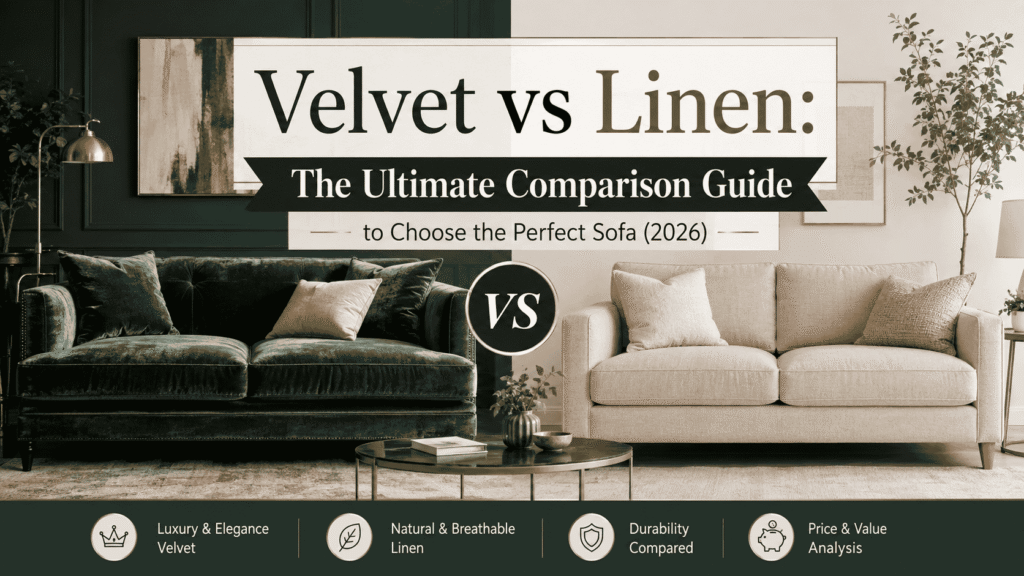
Choosing a sofa fabric is one of those decisions that quietly shapes how a living room looks, feels, and holds up for years to come. Two of the most requested options in 2026 are velvet and linen — and for good reason. Both are timeless, both photograph beautifully, and both come with very different personalities once real life (kids, pets, sunlight, spilled coffee) enters the picture.
In this velvet vs linen comparison, we’ll break down everything from texture and durability to maintenance, pricing, and which fabric suits which type of home. By the end, you’ll know exactly which one belongs in your living room.
Table of Contents
Quick Verdict: Velvet vs Linen
If you don’t have time to read the full guide, here’s the short answer.
Choose velvet if you want a bold, luxurious statement piece, you love rich jewel tones, and you’re willing to vacuum a little more often to keep the pile looking sharp.
Choose linen if you want a relaxed, breathable, lived-in look, you live somewhere warm, and you’d rather have a fabric that hides everyday wrinkles and casual living without much fuss.
Which is best overall? Neither wins outright — it depends on your household. Velvet wins on luxury and softness; linen wins on breathability, ease of care, and everyday practicality.
| Feature | Velvet | Linen |
|---|---|---|
| Appearance | Rich, glossy, formal | Casual, textured, natural |
| Texture | Plush, dense pile | Slightly nubby, woven |
| Comfort | Soft, cozy | Light, breathable |
| Softness | Very soft | Moderately soft |
| Breathability | Low-moderate | High |
| Durability | High (performance types) | Moderate-high |
| Water Resistance | Low (unless treated) | Low-moderate |
| Stain Resistance | Moderate | Low-moderate |
| Scratch Resistance | Low-moderate | Moderate-high |
| Wrinkle Resistance | High | Low |
| Pet Friendliness | Moderate | Moderate |
| Child Friendliness | Moderate | Moderate-high |
| Maintenance | Moderate-high | Low-moderate |
| Fade Resistance | Moderate | Moderate |
| Lifespan | 10–15+ years | 7–12 years |
| Price | Mid-high | Low-mid |
| Luxury Appeal | Very high | Moderate |
| Eco-Friendliness | Depends on fiber | High (natural fiber) |
| Best For | Formal, statement rooms | Casual, everyday living |
What Is Velvet Fabric?
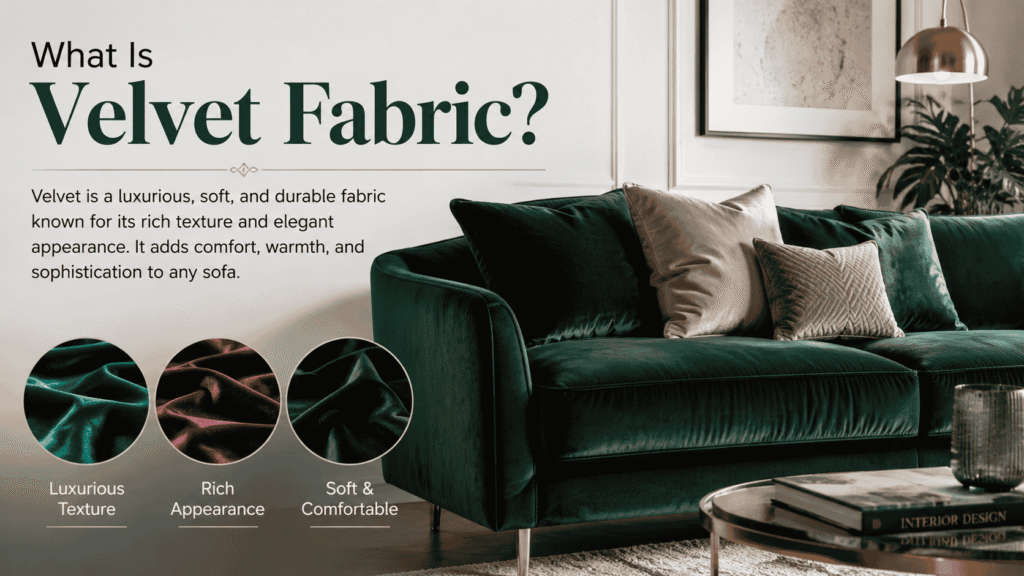
Velvet is a woven fabric defined by its short, dense pile, which gives it a soft hand-feel and a distinctive sheen that shifts depending on the light and the direction you brush it.
How Velvet Is Made
Velvet is created using a special loom that weaves two layers of fabric simultaneously, then cuts them apart to create the signature upright pile. This construction is what gives velvet its plush texture and its light-reflecting quality — the same reason a velvet sofa can look like it changes shade as someone walks past it.
Types of Velvet Used on Sofas
Cotton Velvet – A natural-fiber velvet with a soft, matte finish. It’s breathable but can crush or water-stain more easily than synthetic options.
Polyester Velvet – The most common velvet used in modern furniture. It’s affordable, colorfast, and more resistant to crushing than cotton.
Performance Velvet – Engineered specifically for stain resistance and everyday wear, making it a popular choice for families and pet owners who still want a velvet look.
Crushed Velvet—Pressed or twisted during manufacturing to create a permanent, shimmering, uneven pile pattern—a favorite for glam and maximalist interiors.
Pros of Velvet Sofas
- Luxurious, high-end appearance
- Extremely soft to the touch
- Naturally wrinkle-resistant
- Reflects light beautifully, adding depth to a room
- Performance versions hold up well to daily use.
Cons of Velvet Sofas
- Can show water marks and pressure lines
- Attracts dust and pet hair more visibly than flat weaves
- Higher price point for natural-fiber versions
- Requires more careful, specific cleaning methods
What Is Linen Fabric?
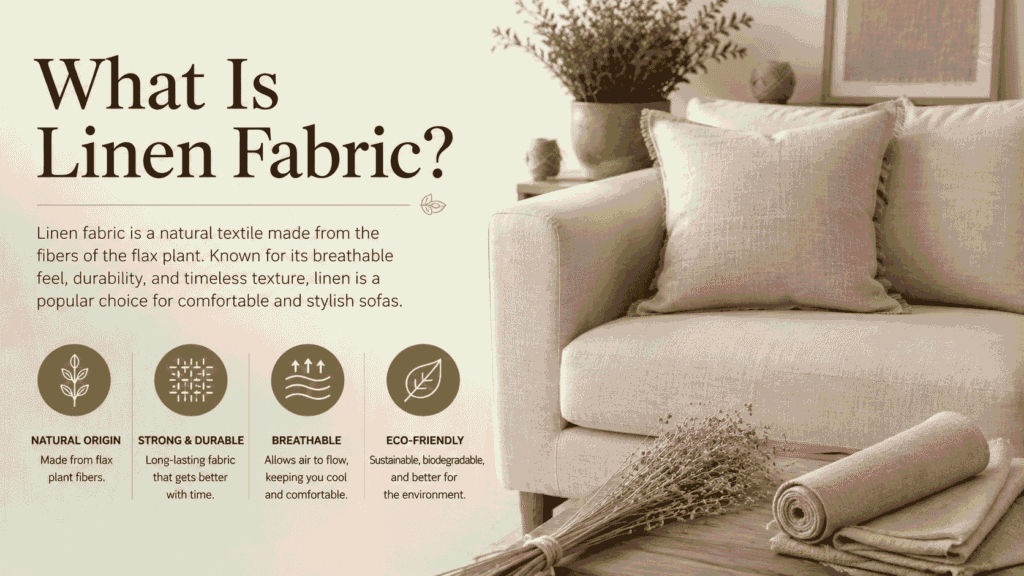
Linen is a natural fabric woven from the fibers of the flax plant. It has a light, slightly textured weave that gives sofas a relaxed, breathable, and effortlessly elegant look.
How Linen Is Made
Flax stalks are harvested, processed to separate the fibers, then spun into yarn and woven into fabric. This natural process is part of why linen has a distinct, slightly irregular texture compared to synthetic upholstery fabrics — and why it tends to be viewed as one of the more sustainable upholstery choices on the market.
Types of Linen Upholstery
Pure Linen – 100% flax fiber, prized for its breathability and natural texture, though it wrinkles more and is less resistant to stains.
Linen Blend – Linen combined with cotton, polyester, or rayon to boost durability and reduce wrinkling while keeping the natural linen look.
Performance Linen—Treated or woven with synthetic fibers for improved stain and water resistance, ideal for busy households.
Pros of Linen Sofas
- Breathable and cool, especially in warmer climates
- Casual, timeless aesthetic that suits many interior styles
- Naturally hypoallergenic and low in synthetic chemicals
- Softens and develops character over time
- Generally more affordable than natural velvet
Cons of Linen Sofas
- Wrinkles easily and shows creasing
- More prone to staining without a protective treatment
- Can feel rougher than velvet
- Pure linen may weaken or thin over many years of heavy use.
Appearance: Velvet vs. Linen
Which Looks More Luxurious?
Velvet is the clear winner here. Its dense pile catches light in a way no other upholstery fabric does, giving sofas a rich, almost jewel-like appearance. Linen, by contrast, has a more understated, textural look — beautiful, but far less dramatic.
Which Matches Modern Interiors Better?
This depends on the style you’re going for. Velvet suits maximalist, glam, and art-deco-inspired spaces, while linen fits effortlessly into Scandinavian, coastal, farmhouse, and minimalist interiors. If your home leans toward clean lines and neutral palettes, linen will likely blend in more naturally.
Comfort: Velvet vs. Linen
Which Feels Softer?
Velvet feels softer to the touch thanks to its plush pile. Running a hand across velvet upholstery has an almost cushiony quality that linen simply doesn’t replicate.
Which Is Better for Everyday Relaxation?
Linen has the edge for day-to-day comfort in warm climates because it’s breathable and doesn’t trap heat the way a dense velvet pile can. For colder rooms or evening lounging, velvet’s cozier feel often wins out.
Durability: Velvet vs. Linen
Which Lasts Longer?
Performance velvet is generally more durable than standard linen, especially in high-traffic households, because the dense weave resists abrasion well. Pure linen, while strong, can thin out faster with heavy daily use — though linen blends close that gap considerably.
Which Handles Heavy Daily Use Better?
For homes with constant use—think a shared family room sofa—performance velvet or a linen blend will both outperform pure linen or delicate natural-fiber velvet. If durability is your top priority, look specifically for “performance” labeling on either fabric.
Maintenance: Velvet vs. Linen
Which Is Easier to Clean?
Linen is generally easier for quick, everyday cleanups, since spills can often be blotted without leaving a permanent watermark. Velvet requires more care — cleaning it with the wrong technique can crush the pile or leave visible pressure marks, so it’s worth learning proper velvet cleaning methods before tackling a stain.
Which Requires Less Maintenance?
Linen wins on day-to-day upkeep, but it does need more frequent attention to wrinkles and creasing. Velvet needs less frequent attention overall but more careful handling when it does need cleaning—regular light vacuuming with a soft brush attachment, as recommended by upholstery specialists, helps keep the pile looking fresh between deep cleans.
Stain Resistance: Velvet vs. Linen
Neither fabric is naturally stain-proof in its untreated form. Performance versions of both velvet and linen are treated to repel liquids and resist staining, making them a smart upgrade for households with kids or frequent entertaining. Between the two untreated fabrics, velvet’s dense pile tends to hide minor stains slightly better than linen’s flatter weave, though both benefit enormously from a fabric protector spray.
Water Resistance: Velvet vs. Linen
Both fabrics are vulnerable to water spotting when untreated. Velvet is particularly prone to visible watermarks because moisture can flatten or darken the pile unevenly. Linen absorbs water quickly, which can lead to staining if not blotted immediately. Performance-treated versions of either fabric significantly reduce this risk.
Scratch Resistance: Velvet vs. Linen
Linen’s tighter, flatter weave generally resists scratches from pet claws better than velvet, whose pile can snag or pull. If you have cats in particular, this is worth factoring in — see our guide on the best sofa materials for pets for more detail.
Pet Friendliness: Velvet vs. Linen
Both fabrics can work in pet-friendly homes, but with caveats. Performance velvet resists claws and fur buildup reasonably well and hides pet hair thanks to its texture, though it does attract visible dust and hair on the surface. Linen sheds pet hair more easily but is more vulnerable to snagging and staining from accidents. For serious pet households, performance-treated fabric—velvet or linen—is the safer bet over natural, untreated versions.
Best Fabric for Families with Kids
For families with young children, performance fabrics are the real deciding factor rather than velvet versus linen alone. That said, linen blends tend to forgive spills and everyday messes more easily, while velvet hides visible dirt and small marks well between cleanings. If your kids are prone to spills, a treated performance linen or performance velvet will outperform either fabric in its natural, untreated form.
Which Fabric Is Better for Hot and Cold Climates?
Linen is the better choice for hot and humid climates thanks to its breathable, lightweight weave that doesn’t trap body heat. Velvet, with its dense pile, tends to feel warmer and cozier, making it a natural fit for colder climates or rooms that don’t get much natural airflow.
Which Sofa Fabric Is Better for Allergies?
Linen is generally considered more allergy-friendly. Its flatter, tighter weave traps less dust and pet dander than velvet’s deep pile, and natural linen fibers are less likely to harbor synthetic chemical residues. If allergies are a household concern, linen—particularly untreated, natural linen—is usually the safer choice, alongside regular vacuuming regardless of fabric.
Velvet vs. Linen Price Comparison
Budget Options
Polyester velvet and linen blends are the most affordable entry points for either fabric, often available on budget-friendly sofas without sacrificing much in appearance.
Mid-Range Sofas
At the mid-range level, performance velvet and performance linen become more common, offering better durability and stain resistance for a moderate price increase.
Premium Sofas
Natural cotton velvet and pure Belgian or European linen sit at the top of the price range, prized for their authentic texture, richer color depth, and higher-quality construction.
Long-Term Value
Velvet often delivers better long-term value in formal or lower-traffic spaces because it resists wrinkling and holds its shape well over time. Linen delivers strong value in casual, high-use spaces where its relaxed texture and breathability matter more than pristine appearance.
Lifespan Comparison
With proper care, a good-quality velvet sofa can last 10 to 15 years or more, especially performance velvet in a moderately used room. Linen sofas typically last 7 to 12 years, with pure linen on the shorter end and linen blends extending that range. Rotating cushions, avoiding direct sunlight, and cleaning spills promptly will extend the life of either fabric significantly.
Environmental Impact
Is Velvet Eco-Friendly?
It depends on the fiber. Cotton velvet is biodegradable and made from a renewable resource, though cotton farming can be water-intensive. Polyester velvet, while durable and affordable, is petroleum-based and not biodegradable, making it the less sustainable option of the two.
Is Linen More Sustainable?
Yes, generally. Flax—the plant linen is made from—requires significantly less water and fewer pesticides than cotton, and nearly every part of the plant can be used, minimizing waste. Pure linen is also biodegradable, making it one of the more environmentally friendly upholstery fabrics available.
Design & Color Options
Popular Velvet Colors
Emerald green, sapphire blue, burgundy, mustard yellow, and blush pink are among the most popular velvet sofa colors, largely because velvet’s sheen makes deep, saturated tones look especially rich.
Popular Linen Colors
Oatmeal, cream, soft gray, sage green, and dusty blue are common linen shades, favoring muted, earthy tones that complement linen’s natural texture.
Which Offers More Design Flexibility?
Linen tends to offer more flexibility for eclectic or evolving interiors since its neutral, textured look pairs easily with almost any style. Velvet offers more design impact — it’s better suited to becoming the focal point of a room rather than blending into the background.
Best Rooms for Velvet Sofas
Velvet shines in formal living rooms, media rooms, and statement spaces where you want a cozy, dramatic centerpiece. It also works beautifully in low-traffic guest rooms or reading nooks where its softness can be appreciated without heavy daily wear.
Best Rooms for Linen Sofas
Linen is ideal for casual family rooms, sunrooms, coastal-style spaces, and any room that gets a lot of natural light and everyday use. Its breathable, relaxed nature makes it a natural fit for warm-climate homes and laid-back interiors.
Pros and Cons Summary
Velvet Pros: luxurious appearance, soft texture, wrinkle resistance, strong light reflection, and durable performance options.
Velvet Cons: shows watermarks, attracts visible dust, higher cost for natural fibers, needs careful cleaning.
Linen Pros: breathable, natural and sustainable, casual timeless look, generally more affordable, hypoallergenic.
Linen Cons: wrinkles easily, more prone to staining, shorter average lifespan for pure linen, feels less plush.
Velvet vs. Linen: Which Should You Buy?
- Families — Performance linen blend for easy cleanup and everyday resilience.
- Pet owners—Performance velvet or performance linen, both treated for stain and scratch resistance.
- Luxury lovers — Natural cotton or crushed velvet for maximum visual impact.
- Budget shoppers — Polyester velvet or a linen-polyester blend.
- Modern homes—Linen for its clean, understated texture.
- Traditional homes—Velvet for its classic, formal richness.
- Small apartments—Linen, which tends to keep spaces feeling light and airy.
- Warm climates—Linen for its breathability.
- Cold climates—Velvet for its cozy, insulating feel.
If you’re still deciding between fabric families entirely, it’s worth comparing both against other options like a chenille sofa or exploring our full breakdown of sofa materials explained.
Frequently Asked Questions (FAQ)
Is velvet better than linen for sofas? Neither is objectively “”better”—velvet offers more luxury and softness, while linen offers more breathability and easier everyday care. The right choice depends on your lifestyle and the room’s use.
Does velvet last longer than linen? Generally, yes, especially performance velvet, which tends to outlast pure linen due to its dense, tightly woven pile. Linen blends narrow this gap significantly.
Which fabric is easier to clean? Linen is typically easier for quick spot-cleaning, while velvet requires more specific techniques to avoid crushing the pile or leaving pressure marks.
Is linen good for homes with pets? Linen can work well for pets, though performance-treated linen is strongly recommended to resist scratches, stains, and fur buildup.
Does velvet attract dust? Yes, velvet’s dense pile tends to trap and visibly show dust more than flatter fabrics like linen, which is why regular vacuuming is important.
Which fabric is cooler in summer? Linen is the cooler, more breathable option, making it a better fit for hot climates or homes without much airflow.
Which sofa fabric is more luxurious? Velvet is widely considered the more luxurious fabric thanks to its plush texture and light-reflecting sheen.
Does linen wrinkle easily? Yes, wrinkling is one of linen’s most common drawbacks, though many people embrace this as part of its relaxed, natural charm.
Which fabric is more durable for everyday use? Performance velvet generally edges out standard linen for heavy daily use, though performance linen blends are a close second.
Which sofa fabric offers the best value? It depends on the room. Velvet offers strong long-term value in formal, lower-traffic spaces, while linen offers better value in casual, high-use spaces where breathability and easy styling matter more.
Final Verdict
When it comes down to velvet vs. linen, the decision really comes down to lifestyle over aesthetics alone. Velvet delivers unmatched softness and a luxurious, statement-making look, but it demands a bit more care and works best in lower-traffic, formal spaces. Linen offers breathability, natural charm, and easier everyday living, making it the practical choice for busy households and warm climates.
If you want your sofa to make a bold impression and don’t mind a little extra upkeep, velvet is your fabric. If you’re after comfort, ease, and a relaxed everyday feel, linen is the smarter fit. Either way, choosing between velvet and linen ultimately comes down to how you live — so pick the fabric that matches your home, not just the trend.
Related reading: Leather vs. Velvet Sofa· Velvet vs Bouclé· Leather vs. Linen· How to Choose the Right Sofa Material· Luxury Sofa Materials
Explore related guides
Want to learn more about sofa upholstery? Continue exploring our guides on Sofa Materials Explained, Leather Sofa Material, Fabric Sofa Material, Velvet Sofa Material, and Faux Leather Sofa Material to compare your options and choose the best material for your home and lifestyle.