
Introduction
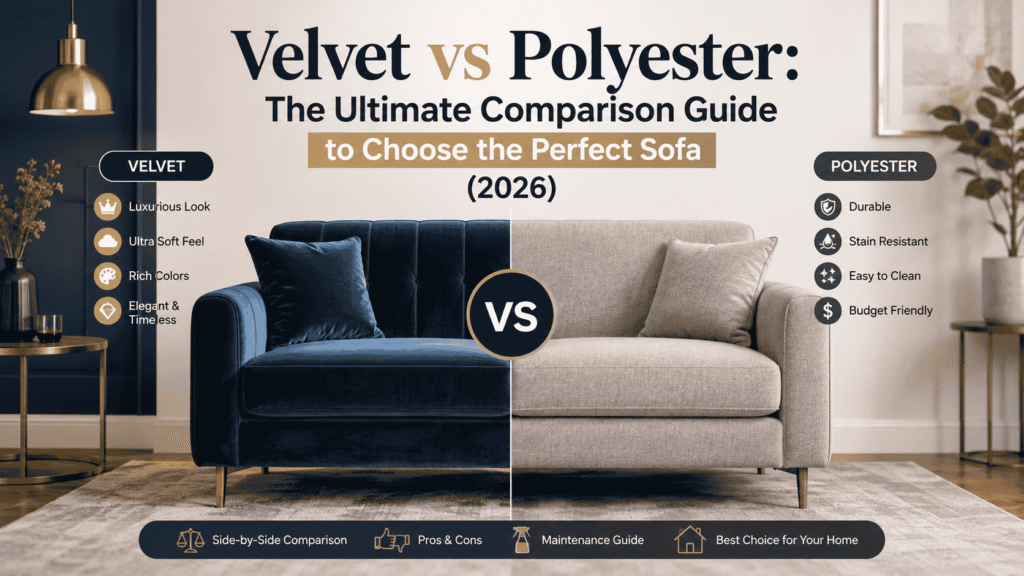
Velvet vs Polyester is an important comparison for anyone choosing a sofa fabric that balances style, comfort, and long-term performance. Velvet offers a luxurious look and soft feel, while polyester provides durability, affordability, and easy maintenance.
Choosing between these two fabrics depends on your lifestyle, budget, and how you use your sofa every day. In this guide, we’ll compare velvet vs polyester based on comfort, durability, cleaning, stain resistance, pet-friendliness, and overall value to help you find the perfect sofa material for your home.
Table of Contents
Quick Verdict: Velvet vs. Polyester
Choose velvet if you want a statement piece with a plush, light-catching texture, you’re prepared for a bit more upkeep, and your living room isn’t a daily obstacle course for kids, muddy paws, and spilled juice boxes.
Choose polyester if you want a practical, budget-friendly workhorse that shrugs off spills, holds its color, and can handle a chaotic household without complaint.
| Category | Velvet | Polyester |
|---|---|---|
| Best for | Style-first buyers, formal or accent rooms | Busy households, rentals, high-traffic rooms |
| Feel | Plush, soft, warm | Smooth, crisp, slightly less soft |
| Price | Mid to high | Low to mid |
| Maintenance | Moderate to high | Low |
Editor’s recommendation: If you’re outfitting a primary family sofa that needs to survive daily life, lean towards polyester (or a polyester-blend performance velvet, which gives you the best of both). If you’re adding a statement accent chair or a sofa in a lower-traffic living or dining area, velvet is worth the extra care.
What Is Velvet Fabric?
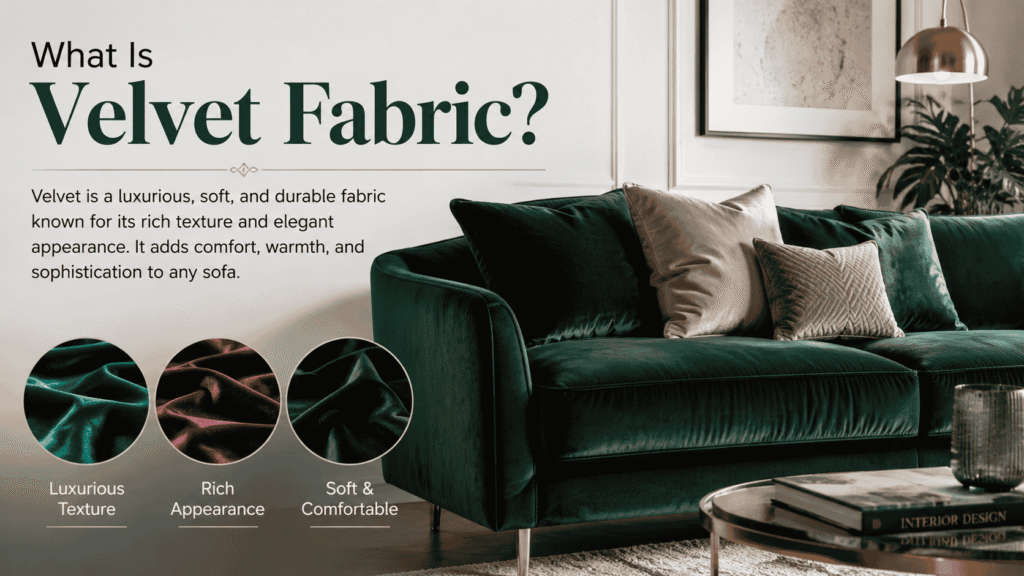
Velvet isn’t a fiber—it’s a weave. That distinction matters, because it’s why velvet can be made from cotton, silk, polyester, or a blend and still be called “velvet.”
How Velvet Is Made
Velvet is woven on a special loom as a double cloth: two layers of fabric are constructed simultaneously and then cut apart, creating the dense, upright pile that gives velvet its signature soft hand and light-reflecting sheen. That construction process is more labor- and material-intensive than a standard flat weave, which is part of why velvet upholstery tends to cost more than simpler fabrics.
The quality of a velvet sofa comes down almost entirely to what happens at this weaving stage. Premium velvet is produced on purpose-built looms with tight, consistent pile density and even color saturation across the full width of the fabric roll. Cheaper velvets, by contrast, often have inconsistent pile height or looser backing, which is why two sofas that both say “velvet” on the tag can feel worlds apart in person. When you’re shopping, it’s worth running your hand across the fabric and checking how evenly the pile catches the light—an uneven sheen is usually a sign of lower-grade construction.
Manufacturers also grade velvet upholstery using a rub test known as the Martindale test, which measures how many rubbing cycles a fabric can withstand before visible wear appears. Standard decorative velvets might be rated in the tens of thousands of rubs, while performance velvet engineered specifically for heavy-use furniture is often rated at 50,000 rubs or higher—a useful number to ask about if durability is a top priority.
Types of Velvet Used for Sofas
- Cotton Velvet — A natural-fiber velvet with a matte, soft finish. Beautiful, but less stain-resistant and more prone to watermarking.
- Polyester Velvet — The most common velvet used on modern sofas. It mimics the classic velvet look while adding durability and easier cleaning.
- Performance Velvet — Engineered specifically for upholstery, often treated or woven with synthetic fibers designed to resist spills, fading, and wear. This is the category most “pet-friendly velvet” or “stain-resistant velvet” sofas fall into.
- Crushed Velvet — Velvet with the pile pressed in different directions, creating a rumpled, shimmering, two-tone effect. While crushed velvet is striking, it shows pressure marks and fingerprints more easily.
Pros of Velvet
- Instantly elevates a room with a luxurious, tactile appearance
- Soft, warm, and inviting to sit or lie on
- Rich, deep color saturation that other fabrics struggle to match
- Modern performance versions hold up well to daily use.
Cons of Velvet
- Higher maintenance than most alternatives
- Generally more expensive
- Can attract and show pet hair on certain weaves
- If not properly cared for, polyester can be prone to crushing, pressure marks, and shading.
What Is Polyester Fabric?
Unlike velvet, polyester is a fiber, not a weave—meaning it can be woven flat, brushed into microfiber, or even woven into a velvet pile (hence “polyester velvet”). When people say “polyester sofa,” they usually mean a flat- or textured-weave upholstery made from 100% polyester or a polyester-dominant blend.
How Polyester Is Made
Polyester is a synthetic fiber derived from petroleum-based polymers, spun into thread and then woven or knitted into fabric. Because it’s man-made from the fiber level up, manufacturers can engineer it for specific traits — tighter weaves for durability, finer fibers for softness, or chemical treatments for stain resistance.
Polyester is engineered from the molecule up, while velvet is defined by its weave, not fiber. That means polyester manufacturers have a huge amount of control over the final product’s characteristics. Fiber thickness can be adjusted to create anything from a rugged, tightly woven upholstery-grade fabric to an ultra-soft microfiber that mimics suede. Chemical finishes can be applied during or after weaving to boost stain resistance, reduce static, or improve colorfastness under UV exposure.
This flexibility is also why “polyester” as a category covers such a wide quality range. A budget polyester blend woven loosely with thin yarns will pill and thin out far faster than a tightly woven, solution-dyed performance polyester designed for commercial or heavy residential use. When shopping, look for terms like “performance fabric,” “solution-dyed,” or a stated rub count—these are much better indicators of real-world durability than the word “polyester” alone.
Types of Polyester Upholstery
- Microfiber Polyester — Ultra-fine polyester fibers (thinner than silk) woven into a suede-like, soft finish. More breathable than standard polyester and popular for family sofas.
- Woven Polyester—A classic flat-weave fabric, often blended with cotton, linen-look yarns, or rayon for texture and visual interest.
- Performance Polyester—Treated or tightly woven polyester engineered for heavy-use furniture, often marketed as scratch-resistant or stain-proof.
Pros of Polyester
- Affordable relative to natural fibers and velvet
- Naturally water- and stain-resistant, since spills tend to bead on the surface rather than soak in
- Resists fading, wrinkling, and shrinking
- Wide range of colors, patterns, and textures available
Cons of Polyester
- Less luxurious feel than natural fibers or high-pile velvet
- Can trap heat and feel less breathable in warm climates
- Vulnerable to melting or scorching from very hot spills or objects
- Quality varies significantly between cheap and performance-grade polyester.
Velvet vs Polyester: Side-by-Side Comparison
| Feature | Velvet | Polyester |
|---|---|---|
| Appearance | Rich, lustrous, light-reflecting | Smooth, matte to semi-sheen |
| Softness | Plush, deep pile | Soft to firm, depending on weave |
| Comfort | Warm, cushiony feel | Comfortable, slightly crisper |
| Durability | Good, especially performance velvet | Very good, especially performance polyester |
| Lifespan | 7–15 years with care | 7–15 years, often more forgiving of neglect |
| Maintenance | Moderate to high (professional cleaning often recommended) | Low (spot-clean with mild detergent) |
| Stain Resistance | Moderate (better on performance weaves) | Good to excellent |
| Water Resistance | Low to moderate | Good |
| Scratch Resistance | Moderate | Good |
| Pet Friendliness | Good on tight-pile performance velvet | Very good |
| Breathability | Lower, can feel warm | Lower, can trap heat in humid climates |
| Fade Resistance | Good on synthetic velvet | Very good |
| Wrinkle Resistance | Good, but prone to crushing/shading | Excellent |
| Color Options | Especially rich in jewel tones and deep neutrals | Extremely wide range |
| Luxury Feel | High | Moderate |
| Eco-Friendliness | Depends on fiber (natural vs synthetic) | Lower (petroleum-based, though recycled options exist) |
| Cost | Mid to high | Low to mid |
| Best For | Statement pieces, formal living rooms | Everyday family sofas, rentals, high-traffic spaces |
Appearance and Style
Velvet Look
Velvet’s dense pile catches light differently depending on the angle you view it from, which is what gives it that shifting, almost liquid depth of color. It photographs beautifully and tends to make jewel tones—emerald, sapphire, and burgundy—look richer than they would in a flat-weave fabric.
Polyester Look
Polyester upholstery is generally more understated. Woven and microfiber polyesters have a smoother, more consistent surface, and they take dye well, which is why you’ll see polyester sofas in an enormous range of colors and printed patterns. It’s a more neutral, versatile look that fits a wider variety of interior styles without demanding attention.
Which Fabric Looks More Luxurious?
Velvet, without much competition. Its light-catching pile and depth of color are difficult to replicate in a flat weave, which is exactly why designers reach for it when a room needs a focal point.
Comfort Comparison
Velvet Comfort
Velvet’s dense, upright pile creates a genuinely plush seating surface—it’s soft against skin and holds a bit of warmth, which makes it especially pleasant in cooler climates or for a cozy reading nook.
Polyester Comfort
Polyester (particularly microfiber polyester) is comfortable but has a crisper, less enveloping feel than velvet. It’s not unpleasant by any means, just less indulgent—more of a “comfortable everyday seat” than a “sink into it” experience.
Which Is Better for Everyday Use?
For pure lounging comfort, velvet edges ahead. For all-day, everyday family use where the sofa needs to bounce back from constant activity, polyester’s practicality tends to win out.
It’s also worth thinking about comfort in terms of temperature regulation and skin contact, not just softness. Velvet’s dense pile retains a bit of body heat, which makes it a wonderful choice for a cozy den or a colder climate but can feel a touch stuffy during a summer movie marathon. Polyester, especially a brushed microfiber weave, tends to feel more temperature-neutral against skin, which some people prefer for year-round use. And if anyone in the household has sensory sensitivities, it’s worth noting that velvet’s texture is more distinctive—some people find the plush pile soothing, while others find a raised-nap fabric mildly irritating against bare skin, particularly in warm weather when skin has more direct contact with the fabric.
Durability and Lifespan
Which Lasts Longer?
Both fabrics can last well over a decade with proper care, but the type of durability differs. Modern performance velvet is engineered with synthetic fibers that resist wear, and high-quality polyester velvet can last a lifetime with reasonable care, while performance polyester weaves are prized for their resistance to abrasion, oils, and everyday grime.
Resistance to Daily Wear
Industry rub tests (Martindale ratings) are the standard way to measure upholstery durability, and both performance velvet and performance polyester can score in the 50,000+ rub range, considered suitable for heavy residential use—the key is buying the performance-grade version of either fabric, not the budget one.
Which Ages Better?
Polyester tends to age more predictably — it resists fading and doesn’t develop the pressure marks or shading that velvet can show over time. Velvet ages beautifully if it’s cared for (regular brushing, no direct sun), but neglect shows up faster and more visibly on velvet than on polyester.
There’s also a structural durability question worth considering: how well does the fabric hold up to the friction of getting on and off the sofa, kids climbing over the arms, or a dog jumping up repeatedly? Synthetic fibers in both performance velvet and performance polyester have what textile engineers call “shape memory”—the individual fibers spring back after being compressed rather than staying permanently flattened. That’s a meaningful upgrade over older natural-fiber velvets, which could develop a visibly “bruised” or matted look in high-contact areas like the seat cushions and armrests. If longevity in a heavily used piece is the priority, look specifically for synthetic or synthetic-blend versions of either fabric rather than 100% natural-fiber velvet, which tends to show wear the fastest of all the options discussed here.
Maintenance and Cleaning
Cleaning Velvet Sofas
Velvet needs a gentler touch: regular vacuuming with a soft brush attachment, blotting (never rubbing) spills, and steering clear of direct sunlight to prevent fading. For deeper cleans or set-in stains, professional upholstery cleaning is usually the safer bet, since at-home cleaners can flatten or discolor the pile.
Cleaning Polyester Sofas
Polyester is far more forgiving. Most spills can be wiped away with a damp cloth, and mild detergent handles the rest. Because polyester repels liquid rather than absorbing it, you generally have more time to react before a spill becomes a stain.
Which Is Easier to Maintain?
Polyester, clearly. If low-maintenance living is a priority, it’s one of the strongest arguments in polyester’s favor.
That said, “low maintenance” doesn’t mean “no maintenance” for either fabric. Even polyester benefits from a weekly vacuum with an upholstery attachment to prevent dust and debris from working into the weave, and both fabrics should be kept out of prolonged direct sunlight to protect against fading. A simple maintenance routine — vacuuming weekly, blotting spills immediately rather than letting them sit, and rotating cushions periodically to even out wear — will meaningfully extend the life of either fabric. The real difference is what happens when maintenance lapses: a few months of neglect on a polyester sofa is usually reversible with a thorough clean, while the same neglect on velvet can leave more lasting texture changes in the pile.
Stain and Water Resistance
Velvet Performance Against Spills
Velvet’s dense pile actually offers some natural stain resistance since it’s less absorbent than looser weaves, but a raised pile also means spills can seep between fibers if not addressed quickly. Performance velvet closes much of this gap versus standard velvet.
Polyester Performance Against Spills
Polyester is genuinely one of the better performers here — liquids tend to bead on the surface, giving you a real window to blot them up before they set. Its main weak spot is greasy or oily stains, which resist even polyester’s water-repellent surface.
Best Fabric for Busy Homes
Polyester. Between its water resistance and simple cleaning routine, it’s built for the realities of a busy household.
Scratch Resistance and Pet Friendliness
Velvet with Cats and Dogs
Because velvet is a cut-pile fabric rather than a looped one, there are fewer exposed loops for claws to catch—which is why a well-constructed synthetic velvet is often more pet-resistant than people assume. That said, some pile heights show pet hair more visibly than others, so a tighter, shorter pile is the safer choice for pet owners.
Polyester with Pets
Polyester’s tight weave generally resists claw snags well, and many polyester blends are formulated to release pet hair more easily during cleaning, making it a dependable option for multi-pet households.
Which Fabric Handles Pet Hair Better?
Polyester tends to have a slight edge for hair pickup and everyday resilience, but a short-pile performance velvet is a very close second and offers more visual richness for pet owners who don’t want to sacrifice style.
Breathability and Temperature
Is Velvet Hot?
Somewhat. Velvet’s dense pile traps a bit of warmth, which is cozy in winter but can feel less pleasant during a humid summer or in a warm climate.
Is Polyester Breathable?
Not particularly—as a synthetic fiber, polyester doesn’t circulate air as well as natural fabrics like linen or cotton, and it can feel warm or slightly sticky in hot, humid conditions.
Best Choice for Warm Climates
Neither fabric is a standout for breathability, but lighter-weave, brushed polyesters (like microfiber) tend to feel marginally cooler than a deep velvet pile.
Which Fabric Is Better for Families?
- Kids: Polyester’s stain and spill resistance makes cleanup faster and less stressful.
- Pets: Polyester or short-pile performance velvet both perform well; avoid loosely woven or crushed velvet.
- Heavy daily use: Polyester’s low-maintenance profile suits nonstop activity better.
- Entertaining guests: Velvet brings the visual drama that impresses at dinner parties and gatherings.
Which Fabric Is Better for Allergy Sufferers?
- Dust accumulation: Velvet’s dense pile can hold onto dust and allergens more than a flat weave, requiring more frequent vacuuming.
- Cleaning frequency: Polyester’s smoother, tighter surface is easier to keep allergen-free with routine wiping.
- Indoor air quality: Synthetic fibers like polyester are generally less likely to harbor allergens compared to some natural fabrics, making it a reasonable pick for sensitive households — though regular cleaning matters more than fiber choice either way.
Sustainability and Environmental Impact
Is Velvet Eco-Friendly?
It depends entirely on the fiber. Cotton or silk velvet has a more natural origin but comes with its own water and land-use footprint, while polyester velvet — the most common option on sofas today — carries the same petroleum-based sustainability trade-offs as any other polyester fabric.
Is Polyester Sustainable?
Polyester is petroleum-derived and not biodegradable, which are legitimate environmental drawbacks. On the upside, recycled polyester (often labeled rPET, made from recycled plastic bottles) is increasingly common in upholstery and offers a lower-impact alternative to virgin polyester.
Which Is Better for Eco-Conscious Buyers?
Neither fabric is a clear environmental winner by default. Buyers who prioritize sustainability should look specifically for certified recycled-polyester upholstery or natural-fiber velvets (cotton or linen-blend) from mills with transparent, responsible sourcing practices, rather than assuming one fabric category is automatically greener than the other.
It’s also worth thinking about longevity as part of the sustainability equation. A fabric that lasts fifteen years before needing replacement generally has a lower lifetime environmental footprint than one that needs replacing every three or four years, even if the second fabric is technically made from a “greener” fiber. This is one area where performance-grade fabrics — whether velvet or polyester — can actually be the more sustainable choice, simply because they keep furniture out of landfills longer. If sustainability is a top priority, ask retailers directly about fiber sourcing, dye processes (solution-dyeing uses significantly less water than traditional dyeing), and whether the frame and cushioning underneath the fabric are also built to last, since the upholstery is only one part of a sofa’s total environmental footprint.
Price Comparison
Velvet Sofa Price Range
Velvet sofas typically sit in the mid-to-high price bracket. Cotton and silk velvets push costs higher due to material and weaving complexity, while polyester velvet offers a more accessible entry point into the look without the premium natural-fiber price tag.
Polyester Sofa Price Range
Polyester is one of the most budget-friendly upholstery options on the market, largely because it’s inexpensive to produce at scale and doesn’t require the specialized double-cloth weaving process that velvet does.
Long-Term Value
Because polyester tends to need less professional cleaning and resists staining and fading, its lower upfront cost is often matched by lower costs over the sofa’s lifetime. Velvet can still be excellent long-term value if you choose a performance-grade version and are willing to invest in occasional professional care.
Pros and Cons
Velvet Pros and Cons
Pros
- Luxurious appearance
- Soft texture
- Elegant finish
- Rich color depth
Cons
- Higher maintenance
- More expensive
- Can attract pet hair
- Prone to crushing or shading over time
Polyester Pros and Cons
Pros
- Affordable
- Durable
- Easy to clean
- Stain-resistant
Cons
- Less luxurious feel
- Can retain heat
- Quality varies significantly by grade.
- Weak against oil-based stains
Velvet vs. Polyester: Which One Should You Choose?
- Luxury lovers: Velvet, ideally a performance-grade weave for practicality
- Budget-conscious buyers: Polyester
- Families: Polyester, or a tight-pile performance velvet if style is a priority
- Pet owners: Polyester or short-pile performance velvet
- Small apartments: Polyester (easier upkeep in compact, high-use spaces)
- High-traffic living rooms: Polyester
- Rental properties: Polyester, for low maintenance and easy replacement value
- Modern interiors: Either polyester for minimalist schemes or velvet for a bold accent
- Traditional interiors: Velvet, for its classic, formal richness
How to Choose Between Velvet and Polyester: A Practical Checklist
If you’re still torn, walk through these questions before you buy:
- Who uses this room, and how often? A sofa in a formal living room used a few times a week can handle more delicate fabric than a family room sofa used daily.
- Do you have pets or young kids? If yes, prioritize stain resistance and easy cleaning—lean on polyester or a short-pile performance velvet.
- What’s your climate like? In consistently warm, humid regions, a lighter woven polyester or microfiber will feel more comfortable than a deep velvet pile.
- How much time can you realistically spend on upkeep? Be honest here. Velvet rewards a bit of regular care; if that’s not realistic for your household, polyester will serve you better long-term.
- What’s the room’s overall style? A minimalist, casual space may not need velvet’s drama, while a formal or eclectic room can really benefit from the texture and depth velvet brings.
- What’s your budget, including long-term care? Factor in not just the sticker price but the cost of occasional professional cleaning if you go with velvet.
- Is this a rental or a long-term home? In a rental or a home you plan to sell soon, the lower-risk, lower-maintenance choice is usually polyester.
Running through this list usually makes the decision much clearer — most people find they already know which fabric fits their life once they see the trade-offs laid out plainly.
Frequently Asked Questions (FAQs)
Is velvet better than polyester for sofas? Neither fabric is objectively “”better”—velvet wins on look and feel, while polyester wins on practicality, cleaning, and price. The right choice depends on your household’s daily use.
Which sofa fabric lasts longer? Both can last well over a decade when properly cared for. Polyester tends to be more forgiving of neglect, while velvet needs consistent care to look its best over the long term.
Does velvet attract pet hair? Some velvet weaves can, especially longer or looser piles. A short, tightly woven performance velvet minimizes this issue significantly.
Is polyester good for everyday use? Yes—its stain resistance, durability, and low-maintenance profile make it one of the most practical fabrics for daily family use.
Which fabric is easier to clean? Polyester, by a clear margin. Most spills wipe away with a damp cloth, whereas velvet often benefits from professional cleaning for anything beyond light dust and blotting.
Which is more comfortable? Velvet offers a plusher, warmer feel, while polyester leans crisper and more consistently even-textured—comfort here comes down to personal preference.
Which fabric is more affordable? Polyester is generally the more budget-friendly option across the board.
Is velvet worth the extra cost? If style, texture, and visual impact matter to you — and you’re willing to invest a bit more time in care — yes. If practicality and low maintenance are the priority, polyester delivers more value per dollar.
Can you mix velvet and polyester in the same room? Absolutely, and many designers do exactly this. A polyester sectional as the main family seating paired with a velvet accent chair or throw pillows lets you get the practicality where you need it most while still bringing in velvet’s visual richness.
Does velvet fade in sunlight? Yes, prolonged direct sun exposure can fade and dry out velvet fibers over time, particularly natural-fiber velvets. Positioning a velvet sofa away from south-facing windows, or using UV-filtering window film, helps preserve its color.
Is polyester safe for households with allergies? Generally yes — synthetic fibers like polyester are less prone to harboring dust mites and allergens compared to some natural fabrics, though regular cleaning matters more than fiber choice for anyone with significant allergy concerns.
What’s the difference between velvet and polyester velvet? “Velvet” describes the weave, while “polyester velvet” specifies that the fibers used in that weave are polyester rather than cotton or silk. Most modern upholstery velvet is actually polyester velvet, combining the classic look with better durability and easier care than natural-fiber versions.
Final Verdict
Velvet and polyester serve two different purposes in a home, and that’s really the heart of the velvet vs. polyester debate. Velvet brings texture, depth, and a sense of occasion to a room—it’s the fabric you choose when you want your sofa to be the centerpiece. Polyester brings resilience, easy care, and everyday practicality—it’s the fabric you choose when your sofa needs to survive real life without complaint.
If you’re outfitting a busy family room, a rental, or a high-traffic space, polyester is the more sensible long-term choice. If you’re adding a statement sofa or accent chair to a formal living room, dining nook, or bedroom seating area, velvet—particularly a performance-grade version—delivers a level of visual richness polyester simply can’t match. Many buyers land somewhere in between with polyester velvet, which borrows the practicality of synthetic fibers while keeping the plush, light-catching look that makes velvet so appealing in the first place.
Related Reading
- Velvet Sofa Material Explained
- Polyester Sofa Material Explained
- Velvet vs Chenille
- Velvet vs Linen
- Velvet vs Bouclé
- Leather vs Velvet Sofa
- Fabric vs Velvet Sofa
- Best Sofa Materials for Pets
- How to Choose the Right Sofa Material
- Sofa Materials Explained
Further Sources
- Velvet Upholstery: Durability, Cleaning and Colours – FibreGuard
- Velvet Upholstery Pros, Cons & Best Picks – SohoMod
- Is Polyester Fabric Good for Upholstery? Pros & Cons – MH Chine
- Polyester Sofa Durability: Investment or Design Risk? – FCI London
- Top 10 Stain-Resistant Fabrics for Furniture – The Fabric Mill