
Introduction
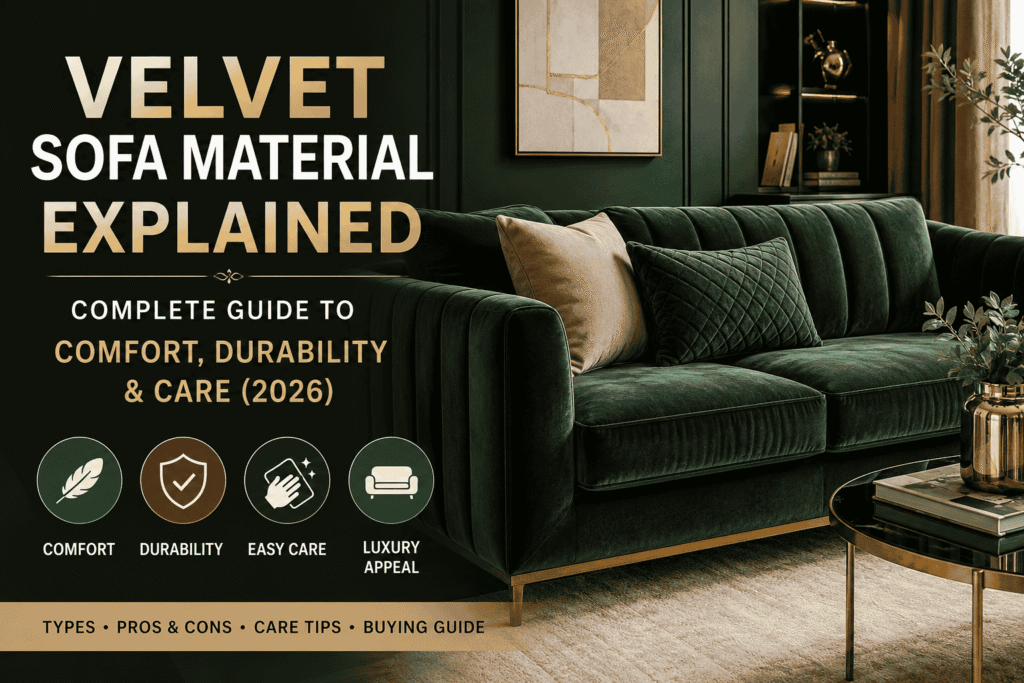
Velvet sofa material is a woven fabric defined by its short, dense pile, which gives it a soft surface, a rich appearance, and a subtle sheen that shifts as light hits it from different angles. Unlike flat-woven fabrics, velvet upholstery is built using an extra set of yarns that are cut or looped to create that signature plush texture.
Velvet sofas remain a top choice in modern and luxury interiors because they instantly add warmth, depth, and a sense of comfort to a room. A velvet couch fabric works equally well in a minimalist apartment, a glam living room, or a traditional family home, which is part of why designers keep returning to it year after year.
This guide breaks down everything you need to know: comfort and feel, appearance and texture, durability across different velvet types, day-to-day maintenance, and the key factors to weigh before buying. By the end, you’ll understand exactly what velvet sofa material is, how it compares to other fabrics, and which type suits your lifestyle best.
Table of Contents
Velvet Sofa Material Explained: What Is Velvet Upholstery?
Understanding Velvet Fabric Construction
Velvet is technically a weave structure, not a single fiber type. It’s made on a special loom that weaves two layers of fabric simultaneously, connected by extra yarns. These connecting yarns are then cut apart, leaving a dense, upright pile on both layers. This is why velvet can be made from cotton, polyester, silk, mohair, or blends — the construction method, not the fiber, is what makes it velvet.
How Velvet Differs From Regular Sofa Fabrics
Standard sofa fabrics like cotton-poly blends, linen, or chenille are typically flat or lightly textured weaves. Velvet stands apart because of its raised pile, which traps light and creates color depth that flat fabrics can’t replicate. This pile also affects how the fabric handles wear, cleaning, and touch, making velvet behave differently from everyday upholstery materials in both look and care.
Why Velvet Feels Soft and Luxurious
The softness comes directly from the density and length of the pile fibers. Thousands of tiny, tightly packed fibers create a cushioned surface that feels smooth in one direction and slightly resistant in the other. This same density is what gives velvet its characteristic “shadow” effect, where pressing or brushing the pile changes its color tone temporarily.
Types of Velvet Sofa Materials
Cotton Velvet
Features: Made from natural cotton fibers, cotton velvet has a soft, matte-to-low-sheen finish and a breathable, traditional feel.
Pros and cons: It’s soft, breathable, and has a classic look, but it tends to wrinkle, crush easily, and is less resistant to stains and spills than synthetic alternatives.
Best use cases: Cotton velvet suits low-traffic formal living rooms or bedrooms where appearance matters more than heavy daily use.
Polyester Velvet
Polyester velvet is one of the most common choices for modern sofas because it balances affordability with solid durability. The synthetic fibres resist wrinkling and fading better than cotton, hold their shape well, and are generally more budget-friendly, making this a practical pick for everyday households.
Synthetic Velvet
Beyond polyester, broader synthetic velvet blends (including microfiber-based versions) are engineered for easy maintenance and consistent performance. These fabrics are typically more resistant to moisture, easier to spot-clean, and less prone to pilling, which makes them a strong option for busy, modern homes.
Performance Velvet
Performance velvet is specifically treated or woven to resist stains, moisture, and fading, often using technologies similar to those found in performance fabrics for outdoor or pet-friendly furniture. It’s an excellent choice for family-friendly use, since spills can usually be blotted away before they set.
Crushed Velvet
Crushed velvet is created by twisting or pressing the pile in different directions during manufacturing, which produces a shimmering, slightly uneven texture with a more dramatic visual effect than standard velvet. It adds bold style to a room but can show pressure marks more visibly due to its already-textured surface.
Mohair Velvet
Mohair velvet, made from goat hair fibers, is considered a premium option known for exceptional durability, resilience, and a naturally lustrous finish. It resists crushing and matting better than most other velvet types, which is why it’s often used in high-end, heirloom-quality furniture, though it comes at a higher price point.
Key Features of Velvet Sofa Material
Softness and Comfort
The dense pile structure makes velvet one of the most tactile upholstery options available, offering a cushioned, plush feel that invites lounging.
Rich Texture and Appearance
Velvet’s raised surface creates visual depth and a layered look that flat fabrics simply can’t achieve, giving sofas an instantly elevated appearance.
Color Depth and Light Reflection
Because the pile fibers stand upright and catch light differently depending on the viewing angle, velvet colors appear deeper, richer, and more saturated than the same color on a flat-weave fabric.
Warm and Cozy Feel
Velvet has natural insulating properties due to its dense pile, making it feel warmer to the touch compared to thinner or smoother fabrics, especially appealing in cooler seasons.
Modern and Luxury Appeal
Velvet bridges both contemporary and classic design styles, which is why it remains a favorite among interior designers for statement sofas, accent chairs, and luxury living spaces.
Pros and Cons of Velvet Sofa Material
Advantages of Velvet Sofas
- Elegant appearance that elevates any room’s design
- Comfortable seating with a soft, plush surface
- Variety of colors with rich, saturated tones
- Adds visual warmth through texture and depth
Disadvantages of Velvet Sofas
- Requires regular care, including brushing and vacuuming
- May show marks and pressure lines where the pile is flattened
- Can collect dust faster than smoother, flat-weave fabrics
Velvet Sofa Material vs Other Sofa Materials
Velvet vs Leather Sofa
Leather is more resistant to spills and easier to wipe clean, but it lacks the warmth and softness of velvet and can feel cold or sticky in extreme temperatures. Velvet wins on comfort and visual richness; leather wins on cleaning simplicity and longevity with minimal care.
Velvet vs Linen Sofa
Linen has a relaxed, casual texture and breathes well, but it wrinkles easily and lacks velvet’s plushness. Velvet offers more luxury appeal, while linen suits a more laid-back, natural aesthetic.
Velvet vs Fabric Sofa
Standard fabric sofas (cotton-poly blends) are generally easier to maintain and more affordable, but they don’t offer the same depth of color or soft touch. Velvet provides a more premium feel, while standard fabric prioritizes practicality.
Velvet vs Chenille Sofa
Chenille has a similarly soft, textured surface but with a looser, more nubby weave compared to velvet’s dense, upright pile. Chenille tends to be more stain-resistant and budget-friendly, while velvet offers a more refined, luxurious look.
Comparison Table
| Material | Comfort | Maintenance | Durability | Cost |
|---|---|---|---|---|
| Velvet | Very High | Moderate-High | Moderate-High | Mid-High |
| Leather | Moderate | Low | High | High |
| Linen | Moderate | Moderate | Moderate | Mid |
| Standard Fabric | Moderate | Low | Moderate | Low-Mid |
| Chenille | High | Low-Moderate | Moderate-High | Low-Mid |
Is Velvet Sofa Material Durable?
Average Lifespan
A well-made velvet sofa, properly cared for, typically lasts between 7 and 15 years depending on the fiber type, quality of construction, and how frequently it’s used.
Factors That Affect Durability
Durability is influenced by fiber type (synthetic blends generally outlast natural cotton), pile density, frame and cushion quality, frequency of use, and exposure to direct sunlight, which can fade and weaken fibers over time.
Which Velvet Type Lasts Longest
Mohair velvet is widely regarded as the most durable option due to its naturally resilient fibers, followed closely by high-quality polyester and performance velvet blends, which resist wear and matting better than pure cotton velvet.
Is Velvet Sofa Material Easy to Clean?
Daily Cleaning Routine
A quick once-over with a soft brush or vacuum attachment keeps surface dust from settling into the pile and helps maintain the fabric’s appearance between deeper cleanings.
Removing Dust and Pet Hair
A rubber-bristled brush or a slightly damp microfiber cloth works well to lift dust and pet hair without damaging the pile, since standard lint rollers can sometimes flatten the fibers unevenly.
Spot Cleaning Tips
Blot spills immediately with a clean, dry cloth rather than rubbing, which can push liquid deeper into the pile. For most velvet types, a small amount of mild soap diluted in water, applied with a soft cloth, is sufficient for light stains — always test on a hidden area first.
Cleaning Mistakes to Avoid
Avoid soaking the fabric, using harsh chemical cleaners, scrubbing aggressively, or applying excessive heat, as these can crush the pile permanently, cause discoloration, or leave visible watermarks.
Best Velvet Sofa Material for Different Needs
Homes With Kids
Performance velvet or polyester velvet blends are ideal, since they resist stains and handle frequent cleaning without losing their texture or color.
Pet Owners
Synthetic or performance velvet works best for pet owners, as these fabrics are more resistant to scratches, moisture, and odor absorption compared to natural cotton velvet.
Luxury Interior Designs
Mohair velvet or high-quality crushed velvet delivers the premium look and long-term resilience that luxury interiors demand.
Small Living Rooms
Lighter-colored cotton or polyester velvet in a smaller-scale sofa design helps maximize the sense of space while still adding texture and warmth.
Budget Buyers
Polyester velvet offers the best balance of affordability, durability, and that signature plush look without the higher price tag of mohair or premium blends.
How to Choose the Best Velvet Sofa Material
Check Fabric Composition
Look closely at whether the velvet is cotton, polyester, synthetic blend, or mohair, since this single factor determines most of the sofa’s durability and care requirements.
Evaluate Durability Ratings
Many manufacturers list a “rub count” or abrasion rating; higher numbers generally indicate a fabric built to withstand more frequent use.
Select the Right Color
Darker, richer tones tend to hide pressure marks and minor stains better than very light or pastel velvet shades.
Match Lifestyle and Usage
Consider how the sofa will actually be used — daily family lounging, occasional formal seating, or a statement piece — and choose the velvet type that matches that level of wear.
Consider Maintenance Requirements
Be honest about how much upkeep you’re willing to commit to, since natural velvets generally require more attentive care than synthetic or performance blends.
Common Mistakes to Avoid When Buying a Velvet Sofa
- Choosing appearance over durability, which often leads to disappointment once everyday wear sets in
- Ignoring cleaning needs, resulting in a sofa that looks worn faster than expected
- Selecting unsuitable colors that show every mark in high-traffic households
- Overlooking room conditions, such as direct sunlight exposure, which accelerates fading
Velvet Sofa Care and Maintenance Checklist
Weekly care routine: Vacuum with a soft brush attachment and gently brush the pile in one direction to keep it looking fresh and even.
Monthly maintenance: Check for any pressure marks or flattened areas and gently steam or brush them out; rotate cushions if applicable to even out wear.
Long-term preservation tips: Keep the sofa out of direct sunlight where possible, address spills immediately, and consider a professional deep clean once a year for heavily used pieces.
Frequently Asked Questions
Is velvet a good material for sofas?
Yes, velvet is an excellent sofa material thanks to its softness, rich appearance, and ability to suit both modern and traditional interiors, provided you’re willing to maintain it properly.
Does velvet sofa material last long?
With proper care, a quality velvet sofa can last 7 to 15 years, especially when made from durable fibres like mohair or polyester blends.
Is velvet difficult to clean?
Velvet requires more attention than basic fabrics but isn’t difficult to clean once you understand the right techniques, such as blotting spills and brushing the pile regularly.
Does velvet attract dust?
Yes, velvet’s dense pile structure does collect dust more readily than flat-weave fabrics, which is why regular vacuuming and brushing are recommended.
Is velvet suitable for homes with pets?
Yes, particularly performance or synthetic velvet, which resists scratches, stains, and odour better than natural cotton velvet.
Which velvet sofa material is best?
For most households, polyester or performance velvet offers the best overall balance of comfort, durability, and ease of care, while mohair remains the top choice for long-term luxury investment.
Conclusion
Velvet sofa material earns its popularity through a genuine combination of comfort, visual richness, and design versatility that few other fabrics can match. Its main trade-off is the need for consistent care, since the pile structure that makes it look and feel so luxurious is also what makes it more prone to dust, marks, and crushing over time.
For most buyers, the advantages clearly outweigh the drawbacks: a soft, warm, elegant seating option that elevates any room. Families and pet owners are better served by performance or polyester velvet, while those seeking a long-term luxury piece should look toward mohair. Ultimately, the right choice comes down to matching the specific velvet type to your household’s lifestyle and how much maintenance you’re realistically prepared to commit to.