
Introduction
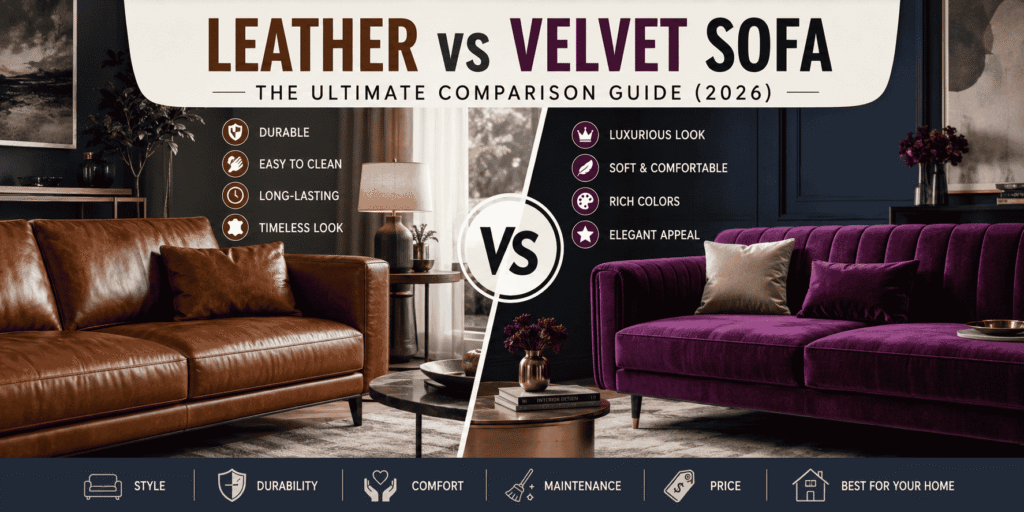
Picking between a leather vs velvet sofa comes down to one question: do you want a material that’s tough and low-maintenance, or one that’s soft, warm, and dressed to impress? Both are premium upholstery choices, but they behave very differently once daily life takes over. This guide compares them side by side — style, comfort, durability, cleaning, and cost — so you can pick the right one for your home.
Table of Contents
Leather vs Velvet Sofa: Quick Comparison Table
| Feature | Leather Sofa | Velvet Sofa |
|---|---|---|
| Appearance | Sleek, structured, timeless | Plush, glamorous, rich in texture |
| Comfort | Firm at first, softens with use | Soft and cushioned from day one |
| Durability | Excellent (10–25 years) | Good (7–15 years) |
| Maintenance | Low — wipe clean | Moderate — regular vacuuming |
| Pet Friendliness | Resists fur, but scratches easily | Traps fur, resists claw marks |
| Stain Resistance | High (non-porous) | Low to moderate (absorbent) |
| Scratch Resistance | Low | Moderate |
| Lifespan | Long, ages with character | Moderate, pile flattens over time |
| Price | Mid to high | Wide range, budget to premium |
| Best For | Busy homes, offices, easy cleanup | Formal rooms, statement pieces |
What Is a Leather Sofa?
A leather sofa is upholstered in treated animal hide, prized for its clean look and long-term toughness. Unlike woven fabrics, leather won’t fray, pill, or hold onto smells, which is why it remains one of the most trusted materials in furniture buying. It has been a staple in living rooms, offices, and studies for generations, valued as much for its practicality as its polished appearance, and it continues to hold its place as a top choice for anyone comparing leather vs velvet sofa options.
Types of Leather Used in Sofas
Full-Grain Leather The top-tier grade, cut from the outer layer of the hide with its natural markings left intact. It hasn’t been sanded or buffed, so every full-grain sofa carries slightly unique texture and character. It’s the most durable option and only looks better with age, developing a rich patina that many owners come to love.
Top-Grain Leather Sanded and finished for a more uniform, polished surface, with imperfections buffed away and a protective coating applied. It costs less than full-grain but still holds up well against everyday wear, offering a strong middle ground between price and durability.
Genuine Leather Made from bonded, lower-quality hide layers, despite the name suggesting a premium product. It’s more affordable upfront but doesn’t last nearly as long as full-grain or top-grain, and it’s more prone to cracking or peeling over time.
Faux Leather A synthetic, animal-free alternative made from polyurethane or PVC. It’s budget-friendly and cruelty-free, but wears out faster and doesn’t age the way real hide does, often showing signs of peeling within a few years of regular use.
Pros of Leather Sofas
- Wipes clean in seconds, even after significant spills
- Holds up to years of daily use without significant wear
- Doesn’t trap dust, odors, or pet dander the way fabric does
- Develops a rich patina over time rather than simply wearing out
- Simple to match with most decor styles, from modern to traditional
Cons of Leather Sofas
- Vulnerable to scratches from claws, keys, or sharp objects
- Feels cold in winter and can turn warm or sticky in summer
- Genuine, full-grain leather represents a bigger upfront investment
- Fades or dries out if left in direct sun too long
- Limited in bold color options compared to fabric alternatives
What Is a Velvet Sofa?
A velvet sofa is covered in a woven fabric with a short, dense pile that gives it a soft feel and a signature sheen. It’s the go-to choice for anyone chasing a luxurious, statement-making living room, and it has seen a strong resurgence in recent years as maximalist and glam interior styles have grown in popularity.
Types of Velvet Fabric
Cotton Velvet Soft and breathable, made from natural cotton fibers, though it crushes and shows watermarks more easily than synthetic blends.
Polyester Velvet The most common choice for modern sofas — affordable, fade-resistant, and easier to maintain than natural velvet, while still delivering a genuinely luxurious feel.
Crushed Velvet Twisted while wet to create a shimmering, textured finish that catches light dramatically. It looks striking but shows pressure marks and sitting impressions more visibly than smooth velvet.
Performance Velvet Treated to resist stains and, in some cases, water. Built specifically for households with kids or pets, it offers the classic velvet look with meaningfully better practicality.
Pros of Velvet Sofas
- Soft, cushioned feel right away, with no break-in period needed
- Comes in bold, rich colors rarely available in leather
- Adds instant depth and warmth to a room’s overall look
- Catches light beautifully, creating visual dimension
- Performance versions handle spills and everyday wear well
Cons of Velvet Sofas
- Crushes and shows pile marks over time, especially in high-use areas
- Needs more careful, regular cleaning to stay looking fresh
- Attracts pet hair and dust more readily than leather
- Can fade with prolonged sun exposure, particularly natural fibers
- Water stains are difficult to remove on untreated natural velvet
Leather vs Velvet Sofa: Detailed Comparison
Now that you know the basics of each material, let’s break down exactly how leather and velvet perform across the factors that matter most in everyday use — from comfort and durability to how each one handles heat, spills, and years of wear.
Appearance & Style
Leather brings sharp, structured lines that suit modern and minimalist spaces. Its smooth, uniform surface photographs beautifully and works equally well in a sleek city apartment or a rustic cabin, depending on the tone and finish you choose. Velvet leans soft and romantic, fitting glam, eclectic, and traditional interiors better. Its light-catching pile adds visual depth that flat materials simply can’t replicate, which is why designers often use a single velvet sofa as the focal point of a room.
Comfort
Velvet feels plush the moment you sit down, thanks to its dense, cushioned pile that gives instant softness against the skin. Leather starts firmer but breaks in and molds to your shape over months of use, eventually offering a supportive, contoured comfort that many owners come to prefer over fabric. The difference really comes down to whether you want immediate softness or comfort that develops gradually.
Durability
Full-grain or top-grain leather generally outlasts velvet, holding up better in high-traffic homes thanks to its dense, non-woven structure that resists everyday friction. Lower-grade leather, though, can wear out faster than a good performance velvet, so grade matters more than material type alone. A cheap bonded leather sofa may crack within a few years, while a well-made performance velvet piece can comfortably outlast it.
Softness & Feel
Velvet wins here — its dense pile creates a tactile softness leather can’t match, especially when you run a hand across the fabric and see the color shift with the light. Leather feels smooth and cool but never quite as plush, though a well-oiled full-grain hide does develop a soft, buttery texture over years of use.
Maintenance & Cleaning
Leather needs little more than a wipe-down with a damp cloth to stay looking fresh, and it doesn’t require the same level of routine attention as fabric upholstery. Velvet requires regular vacuuming with a soft brush and careful, immediate blotting when spills happen, since letting a stain sit even briefly can make it far harder to remove later.
Stain Resistance
Leather’s non-porous surface keeps liquids on top long enough to wipe away before they soak in, giving you a real safety margin during accidents. Velvet’s fibers absorb spills fast, making stains harder to manage without a protective treatment — this is exactly why performance velvet, engineered with a stain-repellent finish, has become so popular for busy households.
Scratch Resistance
This is leather’s weak spot — claws, keys, and sharp edges leave lasting marks that are often impossible to fully repair, especially on smooth, pristine leather grades. Velvet’s pile is more forgiving and can often be brushed back into place after light scratches or pressure marks, making it a safer choice around active pets.
Pet Friendliness
Leather doesn’t hold onto fur, but it scratches easily, which can be a dealbreaker in homes with cats or larger dogs. Velvet traps hair more but resists visible claw damage — a better choice for households with scratch-prone cats or dogs, though regular vacuuming becomes non-negotiable.
Water Resistance
Leather resists light spills naturally since water beads on the surface rather than soaking straight in, buying you time to wipe it away. Standard velvet absorbs it quickly, though performance velvet closes much of that gap with its water-repellent coating.
Heat & Cold Performance
Leather reacts to room temperature — cool in winter, warm in summer, and occasionally uncomfortable without proper climate control. Velvet stays consistently cozy year-round, which is one reason it’s a favorite in colder climates and homes with less reliable heating.
Breathability
Full-grain leather breathes reasonably well thanks to its natural pore structure, keeping you more comfortable during long sitting sessions. Velvet’s dense pile traps more heat, which can feel warm in summer, though it adds a welcome layer of coziness in winter.
Lifespan
A well-cared-for full-grain leather sofa can last 15–25 years, often outliving several other pieces of furniture in the same room. Velvet sofas typically last 7–15 years before the pile visibly flattens, though performance velvet with proper care can push toward the higher end of that range.
Cost & Value for Money
Leather costs more upfront but often pays off with longevity, spreading the cost over many more years of use. Velvet spans a wider price range, from budget polyester to premium designer pieces, giving shoppers more flexibility to match a specific budget.
Eco-Friendliness
Leather involves livestock farming and tanning, though its long lifespan offsets frequent replacement, which matters for overall environmental impact. Velvet, especially polyester versions, is petroleum-based; cotton velvet is a lower-impact alternative but more water-intensive to produce. Neither is a clear environmental winner, so sustainability-conscious buyers should look for certifications on either material.
Leather vs Velvet Sofa: Which Is Better for Different Homes?
The right material also depends heavily on where the sofa will live and who will be using it daily. Here’s how leather and velvet stack up across common household situations.
Best for Families with Kids
Leather’s easy wipe-down surface handles spills and messes better than velvet, making it a practical pick for homes with young children who are still learning to eat carefully or handle markers responsibly. Performance velvet narrows this gap somewhat, but leather remains the lower-effort choice.
Best for Pet Owners
Velvet is safer around cats or dogs prone to scratching, since its woven pile hides light marks far better than leather’s smooth surface. Leather is easier for managing shedding, since fur brushes off rather than embedding into the fabric.
Best for Luxury Interiors
Velvet delivers instant glamour, especially in jewel tones like emerald, sapphire, and deep burgundy that catch the light and add drama to a room. Leather offers a more refined, understated luxury, particularly in rich cognac or espresso finishes.
Best for Modern Homes
Leather’s clean lines pair naturally with contemporary and minimalist design, especially in neutral tones like black, white, or tan that complement open floor plans.
Best for Small Apartments
Velvet’s soft silhouette can make compact rooms feel cozy rather than cramped, particularly with curved or rounded designs. Leather offers a sleek, space-efficient look that suits open-plan layouts and smaller footprints equally well.
Best for Cold Climates
Velvet’s warmth makes it a natural fit for colder regions, adding a cozy, insulated feel to a room both visually and physically.
Best for Warm Climates
Leather breathes better and feels less stifling in hot, humid weather, especially compared to the dense, heat-trapping pile of velvet.
Leather vs Velvet Sofa Care Tips
How to Clean a Leather Sofa
Wipe regularly with a soft, damp cloth to remove dust and everyday grime before it builds up. Blot spills immediately rather than rubbing, since rubbing can push liquid deeper into seams and stitching. Use a leather-specific cleaner every few months for a deeper clean, and condition the leather twice a year to keep it supple and prevent cracking. Keep the sofa away from direct sunlight and heat sources like radiators or vents, both of which can dry out and damage the hide over time.
How to Clean a Velvet Sofa
Vacuum weekly with a soft brush attachment, moving in one direction to prevent matting and keep the pile looking uniform. Blot spills gently — never rub — and always work from the outside of the stain inward to avoid spreading it further. Use a fabric-safe cleaner or a mild soap-and-water solution for spot treatment, testing on a hidden area first to confirm it won’t cause discoloration. For tough or set-in stains, call a professional upholstery cleaner rather than risking damage with DIY methods.
Common Mistakes to Avoid
Don’t place either sofa in direct sunlight for long periods — both leather and velvet fade and discolor over time when exposed to UV rays. Avoid harsh chemicals, bleach, or ammonia-based cleaners on either material, since these can strip leather’s protective finish or damage velvet’s delicate fibers. Skipping routine care — conditioning for leather, vacuuming for velvet — is the fastest way to age either sofa before its time, and it’s a mistake that’s far easier to prevent than to fix later.
Leather vs Velvet Sofa Price Comparison
Price is often the deciding factor for many buyers, so here’s how leather and velvet sofas compare across different budget tiers.
Entry-Level: Faux leather and polyester velvet sit in a similar budget-friendly bracket, making both accessible options for first apartments, rental homes, or secondary living spaces where longevity matters less than upfront cost.
Mid-Range: Top-grain leather and performance velvet both become available in this tier, striking a solid balance between durability, comfort, and price for most everyday households.
Premium: Full-grain leather and designer velvet pieces command the highest prices, driven by material quality, craftsmanship, and brand reputation. At this level, you’re paying for a piece meant to last decades rather than years.
Long-Term Maintenance Costs: Leather typically costs less to maintain over time since it needs less frequent professional cleaning and holds up better against daily wear and tear. Velvet may require more frequent professional cleaning, especially in households prone to spills, which can add up over the life of the sofa.
Overall Value: When you factor in lifespan alongside upfront cost, leather often wins on long-term value, spreading its higher initial price across more years of use. Velvet wins on style flexibility and upfront affordability, especially for buyers who like to update their decor more frequently.
Leather vs Velvet Sofa: Pros and Cons Summary
Before making a final decision, it helps to see every strength and weakness laid out side by side. The table below summarizes everything covered in this guide so you can weigh both materials at a glance.
| Leather Sofa Pros | Leather Sofa Cons | Velvet Sofa Pros | Velvet Sofa Cons |
|---|---|---|---|
| Highly durable | Prone to scratches | Extremely soft and cozy | Traps pet hair and dust |
| Easy to wipe clean | Can feel cold or sticky | Wide range of bold colors | Prone to crushing/matting |
| Resists odors and dust mites | Higher upfront cost | Reflects light beautifully | Harder to remove stains |
| Ages with a rich patina | Fades in direct sunlight | Available at many price points | Can fade in sunlight |
| Low daily maintenance | Cracks without conditioning | Feels warm and inviting | Needs regular vacuuming |
Leather vs Velvet Sofa: Which One Should You Choose?
Still torn between the two? Here’s how to match your decision to your specific situation, based on the factors that matter most to real households.
By Budget: Velvet offers more flexibility across price points, from affordable polyester options to high-end designer pieces. Leather costs more upfront, but its durability often makes it a better long-term investment if your budget allows.
By Lifestyle: Busy households that value quick cleanup and low upkeep tend to favor leather, while those who want a cozy, lived-in feel often prefer velvet’s soft, inviting texture.
By Pets: Choose velvet if your pets scratch furniture; choose leather if shedding and fur are your main concern.
By Children: Leather’s wipe-clean surface is more practical for homes with young kids who are still prone to spills and messes.
By Maintenance Preference: If minimal upkeep matters most, leather is the more forgiving material. If you don’t mind vacuuming regularly and treating occasional spots, velvet is entirely manageable.
By Design Style: Modern, minimalist, and industrial interiors typically suit leather best, while glam, eclectic, and traditional-luxury spaces lean toward velvet.
By Long-Term Durability: For a sofa meant to last 15-plus years without major wear, high-quality full-grain or top-grain leather is generally the safer bet.
Frequently Asked Questions (FAQs)
Is a leather sofa better than a velvet sofa?
Neither is universally better — it depends on your priorities. Leather typically wins on durability and easy cleaning, while velvet wins on comfort, softness, and style versatility. The right choice comes down to your household’s habits more than either material’s inherent quality.
Which sofa lasts longer, leather or velvet?
High-quality full-grain or top-grain leather generally lasts longer than velvet, often 15 to 25 years compared to velvet’s typical 7 to 15 year lifespan, though the exact numbers depend heavily on grade and care.
Is velvet harder to clean than leather?
Yes, in most cases. Leather’s non-porous surface allows for quick wipe-downs, while velvet requires more careful spot-cleaning and regular vacuuming to prevent staining and matting from setting in.
Which sofa is better for pets?
It depends on the pet’s behavior. Velvet is better for households with pets that scratch, while leather is better for managing shedding and loose fur around the home.
Does velvet get dirty easily?
Velvet can show dust, dirt, and pile marks more visibly than leather because of its absorbent, textured surface, though performance velvet significantly reduces this issue with its protective treatment.
Which sofa is more expensive?
It varies widely by grade. Faux leather and polyester velvet are similarly priced at the entry level, but full-grain leather and designer velvet can both reach premium price points depending on the brand and craftsmanship involved.
Is leather or velvet better for hot weather?
Leather, particularly full-grain, tends to breathe better in hot and humid climates compared to the denser, heat-trapping pile of velvet.
Which sofa feels more luxurious?
This is subjective, but velvet is widely associated with a plush, glamorous feel, while leather offers a more refined, tailored sense of luxury that some buyers find equally appealing.
Can velvet sofas last for many years?
Yes, especially performance velvet with proper care, though the pile may show more visible wear over time compared to high-grade leather.
Which sofa offers the best value for money?
For long-term durability, leather generally offers better value per year of use. For upfront affordability and style flexibility, velvet often wins, especially for buyers who redecorate more frequently.
Final Verdict
There’s no single winner in the leather vs velvet sofa debate. Leather is the smarter pick for durability, easy cleaning, and long-term use — ideal for busy households, pet owners dealing with shedding, and modern interiors that favor clean, structured lines. Velvet wins on comfort, warmth, and visual impact, making it perfect for cozy, glam-inspired living rooms where softness and drama matter more than low-maintenance living.
Think about your household’s daily habits — pets, kids, climate, and how much upkeep you’re willing to handle — before deciding, rather than choosing based on trends alone. If possible, sit on both materials in person, since photos rarely capture how a sofa actually feels once you’re settling in for the evening. Whichever you choose, a well-made sofa in either material will serve your home beautifully for years, rewarding the investment with comfort, style, and lasting value.
Explore our related guides on leather sofa material, velvet sofa material, full-grain leather, top-grain leather, and luxury sofa materials to find your perfect match.
For more independent buying guidance, see Consumer Reports’ guide on avoiding common couch-buying mistakes and their guide to finding high-quality furniture.