
Introduction
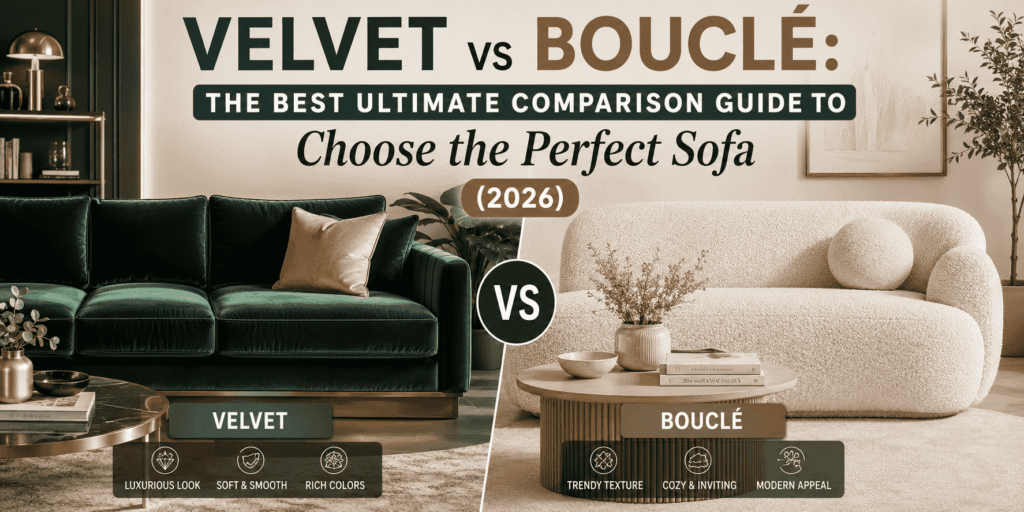
Choosing a sofa fabric is one of those decisions that feels small until you’re three years in, staring at a stain that won’t budge or a cushion that’s gone flat and shiny. The fabric you choose determines how your sofa looks on day one, but more importantly, how it holds up on day one thousand. Two fabrics dominate the conversation in 2026: velvet and bouclé. Both are having a real moment in interior design, and both show up constantly in showrooms, on Pinterest boards, and in “best sofa fabric” searches—which is exactly why the velvet vs. bouclé debate keeps coming up for anyone furnishing a living room right now.
Velvet has been a symbol of luxury for centuries, prized for its soft pile and deep, saturated colours. Bouclé, on the other hand, has surged in popularity over the last few years thanks to its cozy, textured look that fits effortlessly into Scandinavian, Japandi, and modern minimalist interiors. Both fabrics can transform a room, but they behave very differently in daily life — especially if you have kids, pets, or a busy household.
Part of why this comparison matters so much is that a sofa is rarely a quick or cheap purchase. It’s usually the largest single piece of furniture in a living room, and it’s expected to hold up to years of movie nights, dinner parties, kids piling on after school, and pets curling up in the corner. Choosing the wrong fabric doesn’t just mean a less attractive sofa — it can mean an expensive reupholstering job or an early replacement.
The good news is that both velvet and bouclé have matured significantly as upholstery fabrics. Manufacturers now offer performance-treated versions of both, engineered specifically to handle spills, scratches, and daily wear far better than the delicate versions of these fabrics from a decade ago. That means the old assumption that “velvet and bouclé are only for showrooms, not real life,” no longer holds true—but it also means the specific type and grade of fabric you choose matters just as much as the fabric family itself.
In this guide, you’ll learn exactly how velvet and bouclé compare across appearance, comfort, durability, maintenance, pet-friendliness, and cost. We’ll walk through the pros and cons of each, break down which fabric suits different lifestyles, and end with a clear, practical verdict so you can shop with confidence instead of guesswork.
Table of Contents
What Is Velvet Fabric?
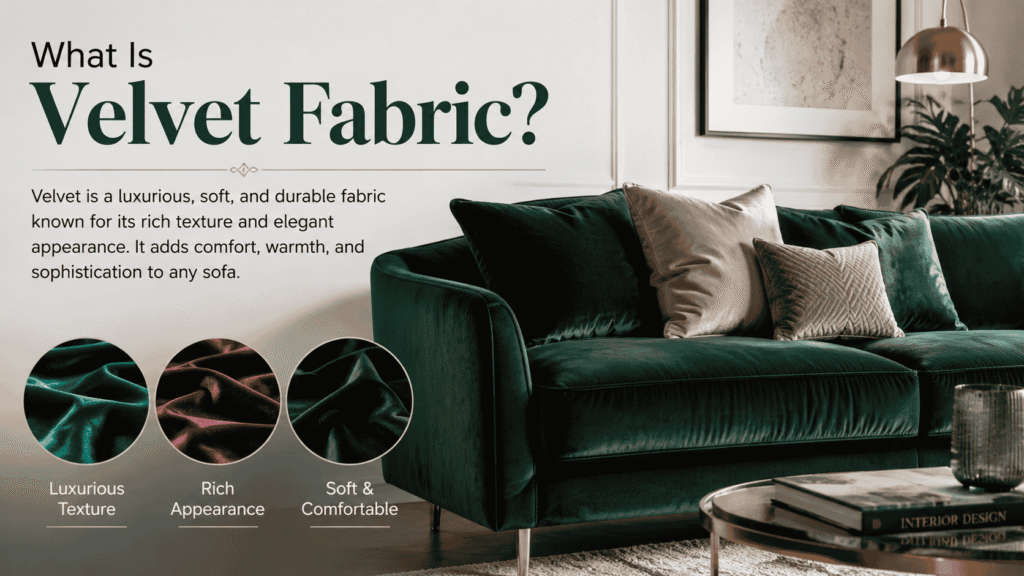
Velvet is a woven fabric defined by its short, dense pile, which gives it a soft, smooth surface and a subtle sheen that shifts depending on the angle of light. It’s been associated with luxury furnishings since the medieval period, and that reputation has carried straight into modern sofa design. Today’s velvet sofas are just as likely to appear in a minimalist apartment as in a grand, traditional living room, because manufacturers now produce velvet in countless finishes, weights, and performance grades.
What keeps velvet relevant decade after decade is its versatility. A single fabric family can look sleek and contemporary on a low-profile, curved sofa or formal and traditional on a rolled-arm Chesterfield. That flexibility, combined with how well velvet takes rich, saturated dye, is a big reason designers keep coming back to it for statement pieces.
How Velvet Is Made
Velvet is created using a special weaving technique that involves two layers of fabric woven simultaneously, then cut apart to create the raised pile on each side. This is what gives velvet its signature soft touch and light-reflecting quality. The density and length of the pile, along with the fiber used, determine how the fabric looks, feels, and performs over time.
Types of Velvet Used on Sofas
- Cotton Velvet – Soft and breathable with a natural matte look, but prone to watermarking and less durable under heavy use.
- Polyester Velvet – The most common choice for modern sofas; it is affordable, stain-resistant, and holds color well.
- Performance Velvet – Engineered specifically for durability and easy cleaning, often treated to resist spills and fading; a strong pick for families and pet owners.
- Crushed Velvet – Pressed or twisted during manufacturing to create a rumpled, light-catching texture; dramatic but shows pressure marks easily.
- Mohair Velvet—A premium option made from goat hair, known for exceptional durability and a slightly coarser, richer texture than standard velvet.
Advantages of Velvet Sofas
Velvet’s biggest draw is how it looks and feels. It has a plush, inviting texture that instantly reads as upscale, and it takes dye exceptionally well—which is why velvet sofas come in such deep, saturated jewel tones. It also drapes beautifully over curved silhouettes, which is part of why velvet is so popular on rounded, statement-making sofa designs right now.
Disadvantages of Velvet Sofas
Velvet isn’t without drawbacks. Lower-grade velvet can show pressure marks and shading where the pile gets flattened or brushed in different directions. Some types, especially cotton velvet, are more vulnerable to water stains and require careful spot-cleaning. It can also attract pet hair and dust more than tightly woven fabrics, simply because of its pile structure.
What Is Bouclé Fabric?
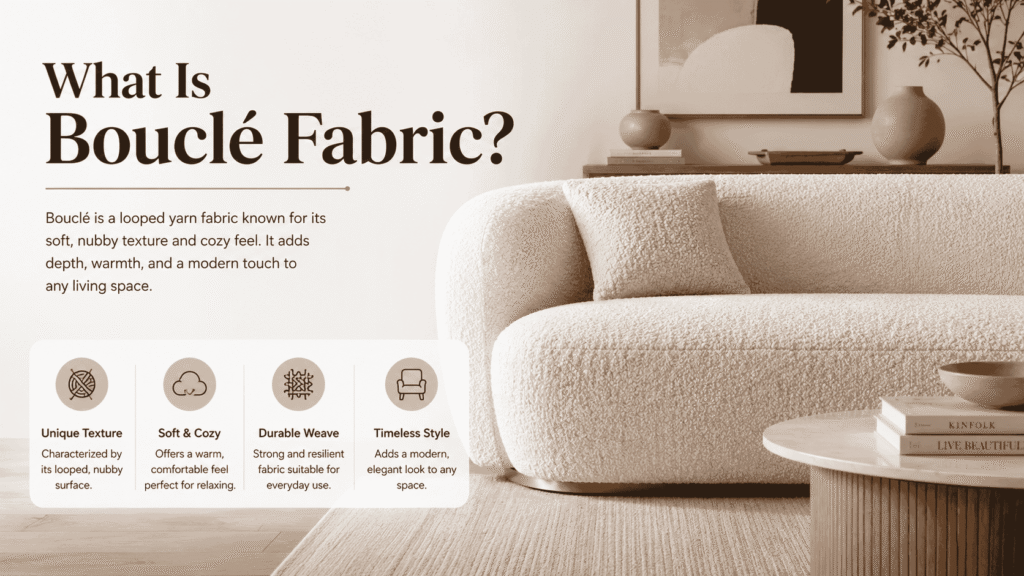
Bouclé (from the French word for “curled” or “buckled”) is a looped, textured fabric traditionally associated with Chanel tweed but now widely used in furniture. Instead of a smooth pile, bouclé has small, curly loops on its surface, giving it a nubby, tactile texture that looks almost sculptural on furniture. It’s become one of the defining fabrics of contemporary interior design, especially for rounded, sculptural sofa shapes.
Bouclé’s rise in the furniture world has closely tracked the popularity of curved, organic sofa silhouettes. Because the fabric has texture built into the weave itself rather than relying on colour or pattern, it pairs naturally with the soft, rounded shapes that have dominated modern furniture design over the past several years. This is part of why bouclé and curved sofas are so often marketed together — the texture and the shape reinforce each other visually.
What Makes Bouclé Unique
The looped construction is what sets bouclé apart. Rather than being cut and brushed like velvet, bouclé yarns are spun with small, irregular loops that stay on the surface of the weave. This creates texture and depth without needing pattern or color variation, which is part of why bouclé pairs so well with neutral, minimalist color palettes.
Materials Used in Bouclé
- Wool Bouclé – The traditional choice; warm, durable, and naturally stain-resistant, though it can be pricier.
- Polyester Bouclé – A budget-friendly, easy-care alternative that mimics the wool look with added stain resistance.
- Cotton Blend Bouclé – Softer and more breathable, often blended with synthetic fibers for added durability.
- Acrylic Bouclé – Lightweight and affordable, closely resembling wool bouclé at a lower price point, though slightly less durable long-term.
Advantages of Bouclé Sofas
Bouclé’s textured surface does a great job of hiding minor dirt, crumbs, and everyday wear, which makes it a practical choice for busy households. It has a cozy, tactile appeal that photographs beautifully and fits naturally into Scandinavian and Japandi-inspired rooms. Its neutral, earthy color palette also makes it easy to style with almost any existing décor.
Disadvantages of Bouclé Sofas
The looped texture that makes bouclé so appealing is also its biggest weakness — those loops can snag on rings, zippers, buttons, or pet claws. Bouclé is also generally harder to deep clean than smoother fabrics, since dirt can settle into the loops. Premium wool bouclé sofas can carry a higher price tag than standard upholstery fabrics.
Velvet vs. Bouclé: Quick Comparison Table
| Feature | Velvet | Bouclé |
|---|---|---|
| Appearance | Sleek, glamorous, light-reflecting | Textured, nubby, sculptural |
| Texture | Smooth, soft pile | Looped, curly texture |
| Softness | Very soft to the touch | Soft but slightly coarser |
| Comfort | Plush and cushiony feel | Cozy, warm feel |
| Durability | Moderate to high (varies by type) | High, especially wool bouclé |
| Scratch Resistance | Moderate | Lower (loops can snag) |
| Pet Friendliness | Moderate (attracts hair) | Lower (claws can catch loops) |
| Stain Resistance | Good with performance velvet | Moderate, depends on fiber |
| Water Resistance | Low to moderate | Low to moderate |
| Maintenance | Regular vacuuming and brushing | Occasional vacuuming, spot-clean |
| Lifespan | 7–15 years depending on grade | 8–15 years depending on fiber |
| Breathability | Moderate | Good |
| Warmth | Warm, cozy in cold seasons | Very warm and insulating |
| Color Options | Wide, rich, saturated tones | Mostly neutral, earthy tones |
| Luxury Feel | High, classic luxury | High, modern luxury |
| Price | Mid to high | Mid to high |
| Best For | Formal living rooms, statement pieces | Casual, modern, minimalist spaces |
Velvet vs Bouclé: Detailed Feature-by-Feature Comparison
Appearance
Velvet leans elegant and traditional, even in a modern silhouette—it has that light-catching sheen that instantly signals luxury. Bouclé leans casual and contemporary, with a matte, textured look that feels more relaxed and lived-in. If you want a formal, statement-making sofa, velvet usually wins. If you want something that feels warm, modern, and approachable, bouclé tends to be the better fit.
Texture
This is where the two fabrics diverge most obviously. Velvet has a smooth, brushable pile that feels silky under your hand. Bouclé has a bumpy, looped surface that feels more like a cozy sweater than a fine fabric. Neither is “better”—it depends entirely on the tactile experience you want in your living room.
Comfort
Both fabrics are genuinely comfortable, but in different ways. Velvet feels plush and soft against skin, which is why it’s often chosen for lounge-style seating. Bouclé feels warm and huggable, almost like sitting on a soft blanket, which makes it especially popular for reading nooks and cozy family rooms.
Durability
Durability depends heavily on the specific fiber and weave. Performance velvet and mohair velvet can be extremely durable and are often rated for high-traffic use. Wool bouclé is also highly durable and naturally resilient to compression, meaning it holds its shape well over years of use. Lower-grade versions of either fabric—thin cotton velvet or loosely woven acrylic bouclé—will wear out faster under daily use.
Maintenance
Velvet needs regular vacuuming with a soft brush attachment to prevent flattening and dust buildup, and it benefits from being brushed in one direction to maintain its even sheen. Bouclé is generally lower-maintenance day-to-day since its texture hides minor dirt, but the loops require a gentler touch when vacuuming to avoid snagging. Both fabrics typically benefit from professional cleaning for deep stains rather than DIY methods.
Water Resistance
Neither fabric is naturally waterproof. Untreated velvet, especially cotton velvet, can develop visible watermarks when liquid soaks in unevenly. Bouclé can absorb moisture into its loops, which may take longer to dry and can sometimes trap odors if not addressed quickly. Performance-treated versions of either fabric offer meaningfully better protection, so it’s worth asking about treatment options before buying.
Stain Resistance
Performance velvet, treated specifically for spill resistance, tends to outperform standard bouclé on stain resistance—spills can often be blotted away before they set. Bouclé’s texture can actually work in its favor for hiding minor stains visually, even if the stain itself is harder to fully remove from the loops.
Scratch Resistance
Velvet’s smooth pile is more forgiving of light scratching since fibers naturally lie back down. Bouclé’s raised loops are far more vulnerable to snagging on sharp edges, jewelry, or claws, which is a genuine consideration if you have cats.
Pet Friendliness
This is a common concern for pet owners comparing velvet vs. bouclé. Velvet, particularly performance velvet, tends to resist pet hair pilling better than people expect, though loose hair can cling to the pile. Bouclé’s looped texture is more prone to snagging from claws, so households with cats that scratch furniture may want to choose velvet or a tightly woven performance fabric instead.
Child Friendliness
Performance velvet is often a strong choice for families with young kids, thanks to its stain-resistant treatments and easier spot cleaning. Bouclé can also work well for families, especially in neutral tones that hide everyday marks, but sticky spills need faster attention since they can settle into the loops.
Fade Resistance
Both fabrics can fade with prolonged direct sunlight exposure, though solution-dyed synthetic velvets and polyester bouclé blends tend to hold color better over time than natural fiber versions like cotton velvet or wool bouclé.
Wrinkle Resistance
Velvet is more prone to visible creasing and pressure marks where it’s regularly sat on or leaned against. Bouclé’s looped construction naturally disguises wrinkles and compression marks far better, which is part of why it looks fresher for longer with everyday use.
Breathability
Bouclé tends to be more breathable thanks to its open, looped weave, making it comfortable in warmer climates. Velvet’s dense pile traps more heat, which feels wonderful in winter but can feel warm in summer without air conditioning.
Seasonal Comfort
Velvet’s warmth and richness make it a natural fit for fall and winter interiors, while bouclé’s breathability and lighter, neutral tones tend to feel fresh and versatile year-round.
Lifespan
A well-made velvet sofa, particularly performance or mohair velvet, can last 10–15 years with proper care. Wool bouclé sofas offer similarly strong longevity, often 10–15 years, thanks to wool’s natural resilience. Lower-grade versions of either fabric will typically need replacing sooner, closer to the 5–8-year mark.
Sustainability & Eco-Friendliness
Natural fiber options—cotton velvet and wool bouclé—are generally more biodegradable and environmentally friendly than their synthetic counterparts, though they usually come at a higher price point. Polyester velvet and acrylic bouclé are budget-friendly but less sustainable, since synthetic fibers take much longer to break down.
Cost Comparison
Pricing for both fabrics varies widely by fiber quality and brand. Polyester velvet and acrylic bouclé sit at the more affordable end. Performance velvet and cotton-blend bouclé fall in the mid-range. Mohair velvet and pure wool bouclé are premium options, often priced similarly to each other at the high end of the market.
Velvet Sofa Pros and Cons
Pros
- Luxurious, elegant appearance
- Soft, plush feel
- Rich, saturated color options
- Comfortable, cushiony seating
- Elegant finish that suits both classic and modern rooms
Cons
- Can show pressure marks and shading over time
- Requires regular brushing and vacuuming
- May attract and hold pet hair
- Some varieties stain more easily without treatment
Bouclé Sofa Pros and Cons
Pros
- Trendy, designer-approved appearance
- Cozy, tactile texture
- Naturally durable weave, especially in wool
- Hides minor dirt and everyday wear well
- Adds visual depth and interest to neutral rooms
Cons
- Loops can snag on claws, buttons, or jewelry.
- Harder to deep clean than smoother fabrics
- Less ideal for households with cats that scratch
- Premium wool versions can be expensive.
Which Fabric Lasts Longer?
Daily Use
For everyday sitting and general household use, both performance velvet and wool bouclé perform similarly well, with high resistance to compression and wear.
Family Homes
Families juggling spills, snacks, and constant use tend to get strong results from performance velvet, thanks to its spot-cleaning ease, though quality bouclé also holds up well if spills are cleaned quickly.
Pet Owners
Velvet generally edges ahead for pet owners, particularly households with cats, since it resists snagging better than bouclé’s looped surface.
Luxury Interiors
For a formal or high-end living room where the sofa is more of a statement piece than a daily workhorse, mohair velvet or premium wool bouclé both offer excellent longevity with proper care.
Which Fabric Is Easier to Clean?
Everyday Cleaning
Velvet responds well to a soft brush and regular vacuuming to keep the pile looking fresh. Bouclé needs gentler vacuuming to avoid pulling at the loops but generally shows dirt less obviously between cleanings.
Spill Management
Performance velvet is typically easier to blot and clean quickly. Bouclé requires faster action since liquid can travel deeper into the looped texture before it’s fully absorbed.
Dust and Allergens
Bouclé’s more open weave allows for slightly easier dust removal compared to velvet’s dense pile, which can trap more dust and allergens over time.
Professional Cleaning
Both fabrics benefit from professional upholstery cleaning every 12–18 months, especially in households with kids, pets, or heavy daily use, to maintain color and texture.
Which Fabric Is Better for Different Buyers?
Best for Families
Performance velvet, thanks to its stain resistance and easier cleanup for everyday spills.
Best for Pet Owners
Velvet, particularly performance-treated versions, due to better snag resistance against claws.
Best for Small Apartments
Bouclé, since its neutral tones and soft texture make small spaces feel warm without visually overwhelming the room.
Best for Luxury Homes
Mohair velvet, for its rich texture and timeless, upscale appeal.
Best for Modern Interiors
Bouclé, which naturally complements minimalist, Scandinavian, and Japandi aesthetics.
Best for Classic Interiors
Velvet, especially in deep jewel tones that suit traditional and transitional décor.
Best for Cold Climates
Both fabrics offer excellent warmth, though velvet’s dense pile provides a slightly cozier feel in colder rooms.
Best for Warm Climates
Bouclé, thanks to its more breathable, looser weave.
Popular Velvet Sofa Colors
Popular Bouclé Sofa Colors
- White
- Cream
- Beige
- Camel
- Gray
- Black
Styling Tips for Velvet Sofas
Pair a velvet sofa with brass or gold accents to lean into its inherent glamour, and add contrasting textured cushions—like linen or leather—to balance the smoothness of the fabric. A glass or marble coffee table complements velvet’s sheen beautifully, while a plush area rug grounds the look without competing for attention. For lighting, warm, low ambient lighting enhances velvet’s natural depth and richness far more than harsh overhead lighting, since the fabric’s sheen tends to look flat under cool, bright light and glows under warmer tones.
If you’re working with a jewel-toned velvet sofa, keep surrounding wall colors relatively neutral—soft whites, warm grays, or deep charcoal—so the sofa remains the visual anchor of the room rather than competing with a bold accent wall. For lighter velvet shades like cream or beige, you have more freedom to introduce color elsewhere through art, cushions, or a patterned rug.
Styling Tips for Bouclé Sofas
Bouclé thrives in minimalist, Scandinavian, and Japandi-style rooms where neutral tones and natural materials take center stage. Pair it with wood-toned coffee tables, woven or jute rugs, and soft, oversized floor cushions to enhance the cozy, tactile theme. Bouclé also pairs beautifully with curved, sculptural accent chairs that echo its soft, rounded silhouette.
Because bouclé already brings texture to a room on its own, it works best when the rest of the space leans simple. Avoid piling on too many competing patterns; instead, let the fabric’s natural loop texture stand out against smooth, matte surfaces like unlacquered wood, linen curtains, or stone. Layering in a mix of neutral tones—oatmeal, ivory, taupe, and soft gray—rather than a single flat color also helps keep a bouclé-heavy room from feeling monotone.
Velvet vs. Bouclé: Side-by-Side Buying Guide
Before purchasing either fabric, weigh the following factors carefully:
- Budget – Both fabrics range from affordable to premium depending on fiber quality.
- Lifestyle – Busy households may lean toward performance-treated fabrics in either category.
- Children – Stain-resistant velvet is often easier for spot-cleaning sticky messes.
- Pets – Households with scratching cats should lean toward velvet over bouclé.
- Maintenance expectations – Bouclé hides everyday dirt better; velvet needs more regular brushing.
- Climate – Velvet suits colder climates; bouclé is more breathable for warmer ones.
- Interior design style – Velvet suits classic and glam interiors; bouclé suits modern and minimalist spaces.
- Long-term durability – Both can last 10+ years in high-quality, well-cared-for versions.
- Comfort preferences – Choose velvet for a silky, plush feel or bouclé for a warm, textured hug.
A useful exercise before buying is to picture your sofa in six months, not on delivery day. Will the fabric still look sharp after a toddler climbs on it daily or after the dog claims the middle cushion as a nap spot? Being honest about how the room actually gets used — rather than how you’d like it to be used — is the single best predictor of whether you’ll be happy with velvet or bouclé a year from now.
It’s also worth asking the retailer directly about the fabric’s rub count (a measure of abrasion resistance, often listed in “double rubs”) and whether it’s been treated with a stain-repellent finish. These two details tend to matter more for long-term satisfaction than the fabric name alone.
Common Mistakes to Avoid When Buying a Sofa Fabric
- Choosing based only on appearance, without considering daily use
- Ignoring the specific maintenance requirements of the fabric
- Overlooking pet compatibility, especially with cats that scratch
- Buying without testing a physical fabric sample in your actual lighting
- Forgetting how natural and artificial room lighting affects fabric color
- Ignoring long-term durability ratings in favor of short-term style trends
Frequently Asked Questions (FAQs)
Is velvet better than bouclé for everyday use?
It depends on your household. Performance velvet tends to be easier to spot-clean for everyday spills, while bouclé is better at visually hiding minor dirt between cleanings.
Which fabric is easier to clean?
Velvet is generally easier to clean quickly, especially performance-treated versions, since liquids can be blotted from the surface before soaking in. Bouclé requires more immediate attention to prevent spills from settling into its loops.
Does bouclé snag easily?
Yes, bouclé’s looped texture is more prone to snagging from pet claws, jewelry, zippers, and buttons compared to smoother fabrics like velvet.
Is velvet good for homes with pets?
Yes, particularly performance velvet, which resists snagging better than bouclé and can be cleaned more easily after pet-related messes.
Which sofa fabric lasts longer?
Both high-quality performance velvet and wool bouclé can last 10–15 years with proper care. Lifespan depends more on fiber quality than on the fabric type itself.
Is bouclé still in style in 2026?
Yes, bouclé remains a leading design trend in 2026, especially in modern, Scandinavian, and Japandi-inspired interiors, thanks to its cozy texture and neutral versatility.
Which fabric feels softer?
Velvet generally feels softer and smoother to the touch, while bouclé feels more textured and nubby, though still soft overall.
Which sofa fabric offers better value for money?
Performance velvet often offers stronger value for busy, high-traffic households due to easier cleaning, while wool bouclé offers excellent long-term value for design-focused buyers who prioritize texture and durability.
Final Verdict: Velvet vs. Bouclé — Which Should You Choose?
There’s no universal winner in the velvet vs. bouclé debate—the right choice depends entirely on your lifestyle, room style, and household needs.
- Best overall choice: Performance velvet, for its balance of luxury, comfort, and easier maintenance.
- Best for luxury: Mohair velvet, for its rich texture and timeless appeal.
- Best for families: Performance velvet, thanks to stain resistance and simple spot cleaning.
- Best for pet owners: Velvet, especially performance-treated versions, due to better snag resistance.
- Best on a budget: Polyester velvet or acrylic bouclé, both offering the look of premium fabric at a lower price point.
- Best for modern homes: Bouclé, for its textured, minimalist appeal that fits contemporary interiors effortlessly.
If you want a sofa that feels timeless, glamorous, and cozy in cold months, velvet is the safer choice. If you’re drawn to a warm, tactile, modern look that fits a neutral, minimalist room, bouclé is likely your better match. Whichever you choose, prioritize fabric quality and treatment over trend alone — that’s what will determine how your sofa looks and feels years down the road.
At the end of the day, both fabrics can be excellent choices—the real decision isn’t about which one is objectively “better” but which one fits how you actually live. A design-forward household without pets or young kids has the freedom to choose based purely on aesthetics. A busy family home benefits more from thinking through stain resistance and cleaning ease before falling in love with a color or texture. Take the time to sit on both fabrics in person, request swatches to test at home under your own lighting, and ask about performance treatments—that small bit of due diligence is what separates a sofa you’ll still love in five years from one you’ll be shopping for to replace.
Explore More on SofasExpert.com
- Sofa Materials Explained
- Velvet Sofa Material Explained
- Bouclé Sofa Material Explained
- Leather vs Velvet Sofa
- Velvet vs Chenille
- Velvet vs Linen
- Velvet vs Polyester
- How to Choose the Right Sofa Material
- Luxury Sofa Materials
- Best Sofa Fabrics for Pets
- Best Sofa Fabrics for Families
Ready to find your perfect sofa? Browse our full collection of velvet and bouclé sofas and use our fabric filter to compare options side by side before you buy.