
Introduction
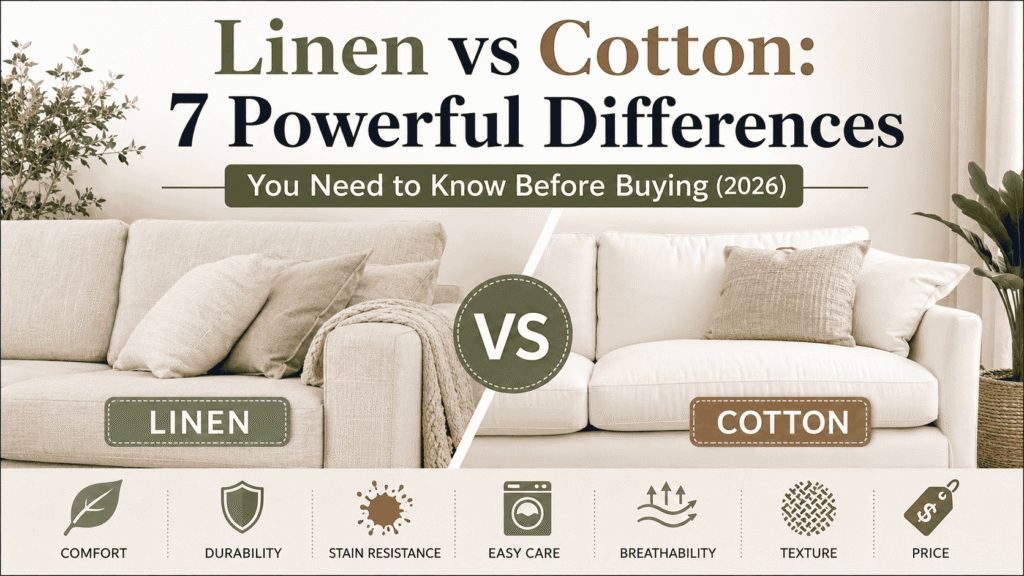
Linen vs Cotton is an important comparison for anyone choosing a natural fabric for a sofa. Both materials offer a comfortable feel, attractive appearance, and timeless appeal, but they perform differently in everyday use. Choosing the right sofa fabric can affect comfort, durability, maintenance, stain resistance, and overall style. Neither linen nor cotton is automatically better for every sofa or lifestyle. In this guide, we’ll explore the key differences between linen and cotton, including their feel, breathability, durability, cleaning needs, appearance, family-friendliness, and overall value, so you can choose the fabric that best fits your home.
Table of Contents
What Is Linen Sofa Fabric?
How Linen Is Made
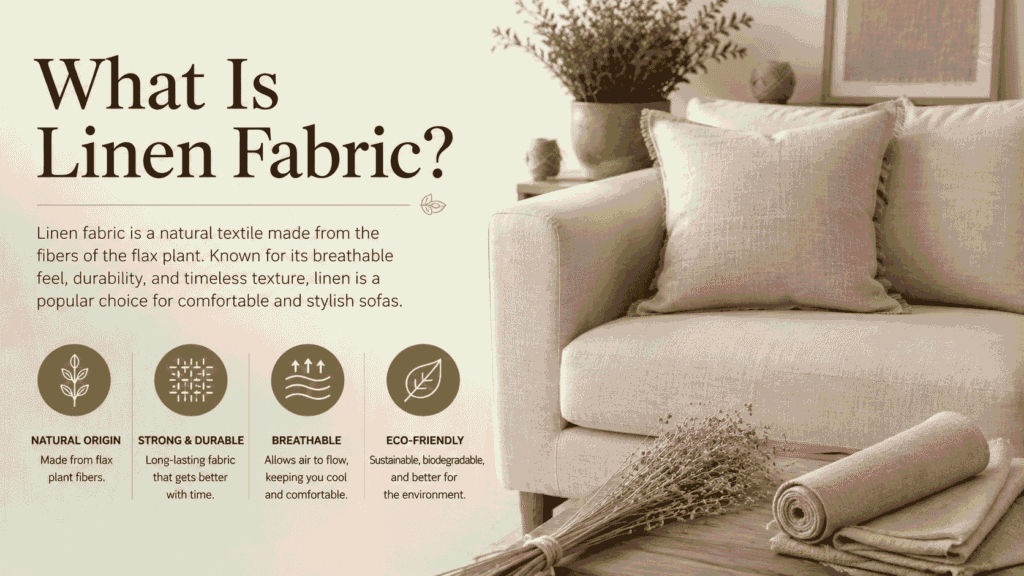
Linen is woven from fibers extracted from the stalk of the flax plant. The stalks are harvested, dried, and processed through a method called retting, which separates the usable fibers from the woody core. Those fibers are then spun into yarn and woven into fabric. Because the process is labor-intensive and flax yields less fiber per plant than cotton, linen tends to sit at a slightly higher price point.
Key Characteristics of Linen
Linen has a distinctive, slightly irregular texture with a natural sheen. It’s a strong fiber — stronger than cotton by weight — and it becomes softer with each wash or use. Linen fibers don’t stretch much, which helps upholstered pieces keep their shape over time.
Advantages of Linen for Sofas
- Breathability — linen fibers allow air to move through the weave, keeping the seating surface cool.
- Natural appearance — the visible slubs and texture give it an organic, relaxed elegance.
- Lightweight feel — linen upholstery doesn’t feel heavy or stiff to the touch.
- Temperature comfort — Its breathable structure helps you stay cool and comfortable during warmer weather without holding onto excess heat.
- Elegant texture — many designers favor linen for its understated, high-end look.
Disadvantages of Linen
- Wrinkling — linen creases easily, so cushions may look relaxed rather than crisp.
- Potential staining — its natural fibers absorb liquid quickly if untreated.
- Can require more care — some linen blends need gentler cleaning methods.
- Wear varies by weave and quality — a loosely woven linen wears differently than a tightly woven one.
What Is Cotton Sofa Fabric?
How Cotton Is Made
Cotton comes from the soft fibers that surround the seeds of the cotton plant. After harvesting, the fibers are cleaned, carded, spun into yarn, and woven into fabric. Cotton is one of the most widely cultivated natural fibers in the world, which keeps supply high and pricing accessible across many quality tiers.
Key Characteristics of Cotton
Cotton fabric is soft, flexible, and takes dye exceptionally well, which is why cotton upholstery comes in such a wide range of colors and printed patterns. It’s a breathable, natural fiber, though slightly less structured than linen.
Advantages of Cotton for Sofas
- Softness—Cotton has a smooth, comfortable hand-feel.
- Comfort — it’s cozy against skin and pairs well with everyday lounging.
- Wide range of colors and patterns — cotton dyes evenly, giving designers more creative options.
- Easy availability — it’s produced at scale, so cotton sofas are easy to find at many price points.
- Natural fiber—like linen, it’s biodegradable and breathable.
Disadvantages of Cotton
- Can absorb spills — untreated cotton soaks up liquids quickly.
- May wrinkle — though usually less than linen, some cotton weaves still crease.
- Fading — certain dyed cotton fabrics can fade with prolonged sun exposure.
- Durability varies by weave — a thin cotton weave wears faster than a heavy-duty cotton canvas or twill.
Linen vs Cotton: Quick Comparison
| Feature | Linen | Cotton |
|---|---|---|
| Material | Natural flax fiber | Natural cotton fiber |
| Feel | Crisp, textured, breathable | Soft, comfortable |
| Appearance | Relaxed, elegant | Casual, versatile |
| Breathability | Excellent | Very good |
| Durability | Good to excellent | Good to excellent |
| Wrinkle Resistance | Lower | Moderate |
| Stain Resistance | Moderate to low | Moderate to low |
| Maintenance | Moderate | Moderate |
| Pet Friendly | Depends on weave | Depends on weave |
| Family Friendly | Good with suitable treatment | Good with suitable treatment |
| Price | Moderate to premium | Budget to premium |
| Best For | Elegant, airy interiors | Comfortable everyday living |
Linen vs Cotton: 7 Powerful Differences
1. Appearance and Texture
Linen has a naturally textured, slightly nubby surface with visible fiber variations — this is what gives it that relaxed, “lived-in luxury” look popular in modern and coastal interiors. Cotton, on the other hand, has a smoother, more uniform surface that reads as casual and versatile, adapting easily to almost any design style.
If you’re after an airy, upscale, textural statement piece, linen tends to look more luxurious. If you want a clean, adaptable base that works with bold prints or patterns, cotton is usually the more flexible choice.
2. Comfort and Softness
Sitting on linen feels crisp and cool, especially in warm rooms, while cotton feels immediately soft and plush against the skin. Both fabrics are breathable, but linen’s open weave structure moves air more efficiently, making it the better pick for hot climates or sun-facing rooms. Cotton wins when the priority is a cozy, huggable feel for everyday lounging and movie nights.
3. Durability and Everyday Wear
By raw fiber strength, linen is actually stronger than cotton. However, real-world sofa durability depends far more on the weave density, thread count, and upholstery construction than on the fiber name alone. A tightly woven, high rub-count cotton can easily outlast a loosely woven linen, and vice versa.
This is why it’s important to check a fabric’s Martindale or Wyzenbeek rub count rather than assuming “linen” or “cotton” alone guarantees durability. For high-traffic living rooms, look for tightly woven versions of either fiber, ideally blended with a small percentage of synthetic fiber for added resilience.
4. Stain and Spill Resistance
Neither linen nor cotton is naturally stain-resistant—both are absorbent natural fibers that will soak up spills quickly if untreated. The real differentiator is whether the fabric has a stain-resistant finish applied during manufacturing and whether the cover is removable and washable.
If spills are a regular concern in your household, prioritize a treated linen or cotton blend, or choose a sofa with removable, machine-washable cushion covers.
5. Cleaning and Maintenance
Everyday maintenance is similar for both fabrics: regular vacuuming to remove dust and debris, prompt blotting (never rubbing) of spills, and occasional professional cleaning for deeper stains. Cotton is generally a bit more forgiving for spot cleaning with mild soap and water, while linen sometimes requires gentler, dry-cleaning-safe methods depending on the finish.
Before using any cleaner on your sofa, check the manufacturer’s care label for its recommended cleaning code, such as W, S, WS, or X. Choosing an unsuitable cleaning method could worsen stains, discolor the upholstery, or damage the fabric fibers.
6. Pet and Family Friendliness
For pet owners, weave tightness matters more than fiber type. A tightly woven linen or cotton resists claw snags and sheds pet hair more easily than a loose, textured weave, which can trap fur and be prone to pulls. For families with young children, look for treated fabrics or removable covers on either material, since both linen and cotton absorb spills quickly without protection.
7. Price and Long-Term Value
Cotton typically spans a wider price range, from budget-friendly to premium, because of its abundant global supply. Linen tends to sit in the moderate-to-premium range due to a more labor-intensive production process. That said, a higher upfront cost doesn’t always mean better long-term value—a well-constructed, tightly woven cotton sofa can outperform a lower-quality linen one (and vice versa). Weigh price against weave quality, warranty, and expected household use rather than fiber type alone.
Linen vs Cotton for Sofas: Which Is More Durable?
Durability is determined by a combination of fiber strength, weave density, and construction quality — not fiber type in isolation. Linen fibers are inherently strong, but a loose, open-weave linen upholstery can pill or thin out faster under heavy use than a tightly woven cotton twill or canvas.
When comparing durability, look for:
- Rub count (Martindale/Wyzenbeek test results) — higher numbers indicate better abrasion resistance.
- Weave tightness — denser weaves resist wear and snagging better.
- Cushion and frame construction — even the toughest fabric wears out faster on a poorly built frame or low-density foam.
For high-traffic rooms with heavy daily use, a tightly woven cotton blend or a heavier linen canvas will generally outperform a lightweight, loosely woven version of either fiber.
Linen vs Cotton: Which Is More Comfortable?
Linen comfort: Crisp, cool, and breathable — ideal for warmer climates and sunny rooms.
Cotton comfort: Soft, plush, and cozy — ideal for households that prioritize a relaxed, huggable feel.
Breathability comparison: Linen edges out cotton slightly due to its more open fiber structure, allowing better airflow.
Warm-weather performance: Linen performs best, staying cool even during long summer afternoons.
Cold-weather performance: Cotton feels warmer and cozier when temperatures drop, making it a popular choice for winter-heavy climates.
Which feels softer? Cotton generally feels softer straight off the shelf, though linen becomes noticeably softer with wear and washing.
Linen vs. Cotton for Families
Families need upholstery that can handle daily sitting, accidental spills, and frequent cleaning. Both linen and cotton can work well in family homes when paired with the right treatment or slipcover system.
- Cotton with a stain-resistant finish handles daily wear and spills reasonably well and is easier to spot-clean.
- Linen offers a more elegant look but may need a bit more careful handling around spills and creasing.
- Choose cotton if you want a low-fuss, everyday fabric that’s easy to source in family-friendly colors.
- Choose linen if your living room sees moderate traffic and you’re willing to maintain it a bit more carefully in exchange for its natural texture.
For very high-traffic households, prioritize tightly woven, treated fabric over fiber type alone.
Linen vs. Cotton for Pet Owners
Pet owners face three main concerns: shedding hair, claw snags, and stains from accidents. Here’s how the two fabrics compare:
- Pet hair: Tightly woven linen or cotton sheds hair more easily during vacuuming than loosely woven or textured versions.
- Claw scratches: Dense, flat weaves in either fiber resist snagging better than open or looped textures.
- Snagging: Linen’s slightly looser natural weave can be more prone to pulls from claws unless it’s a tight upholstery-grade weave.
- Cleaning pet messes: Treated fabrics with washable or removable covers make a significant difference for both materials.
Bottom line: Weave tightness and finish treatment matter more than whether the fabric is technically linen or cotton. A high-quality, tightly woven upholstery-grade fabric in either fiber will outperform a low-quality version of the “better” material.
Linen vs Cotton: Which Is Easier to Clean?
| Cleaning Task | Linen | Cotton |
|---|---|---|
| Dust | Vacuum regularly | Vacuum regularly |
| Food spills | Blot immediately | Blot immediately |
| Liquid spills | Absorbs quickly, blot fast | Absorbs quickly, blot fast |
| Pet stains | Best with treated fabric | Best with treated fabric |
| Odors | Can retain unless treated | Can retain unless treated |
| Regular vacuuming | Weekly recommended | Weekly recommended |
| Spot cleaning | Gentle, fabric-safe cleaner | Mild soap and water typically fine |
| Professional cleaning | Recommended for deep stains | Recommended for deep stains |
Important: Always check your sofa’s manufacturer cleaning code (W, S, WS, or X) before using any cleaning product. Using the wrong method can permanently damage or discolor the fabric.
Linen vs Cotton: Which Is Better for Hot Weather?
Linen is generally the preferred choice for warm climates. Its open weave structure allows better air circulation, keeps moisture from lingering against the skin, and stays cool to the touch even during long, hot afternoons. Cotton performs well too, and it’s breathable, but its denser fiber structure retains slightly more heat and humidity compared to linen. For sun-facing rooms or year-round warm climates, linen typically offers the more comfortable sitting experience.
Linen vs Cotton: Which Looks More Luxurious?
Linen’s natural luxury: Its subtle texture and organic drape give it an effortlessly upscale look that many designers favor for minimalist and coastal spaces.
Cotton’s versatile style: Cotton’s smooth finish and dye versatility make it a strong match for traditional, pattern-driven, or classic interiors.
- Modern interiors: Linen’s clean, textured simplicity fits well.
- Traditional interiors: Cotton’s rich color and pattern options shine.
- Minimalist interiors: Linen’s understated texture supports a pared-back aesthetic.
- Coastal and Scandinavian interiors: Linen is a near-perfect match for these relaxed, natural-toned styles.
Linen vs. Cotton: Pros and Cons
Linen Pros
- Natural, elegant appearance
- Highly breathable
- Distinctive texture
- Comfortable in warm conditions
Linen Cons
- Wrinkles easily
- Requires careful maintenance
- Spill absorption can be an issue without treatment
Cotton Pros
- Soft and comfortable
- Versatile for many design styles
- Available in numerous colors and patterns
- Accessible at multiple price points
Cotton Cons
- Can absorb spills quickly
- May wrinkle over time
- Performance varies considerably by weave and quality.
Linen vs. Cotton: Which One Should You Choose?
Choose linen if you:
- Want a natural, relaxed luxury look
- Prioritize breathability
- Like textured upholstery
- Have a lower-traffic or carefully maintained living room
Choose cotton if you:
- Prioritize softness
- Want design versatility
- Prefer a wide range of color and pattern options
- Want a comfortable, everyday sofa
Choose neither without checking the weave if you:
- Have multiple pets
- Have young children
- Need heavy-duty upholstery
- Expect extremely high daily traffic
Linen vs Cotton vs Other Sofa Fabrics
- Linen vs Polyester: Polyester is more stain- and wrinkle-resistant, while linen offers a more natural, breathable feel.
- Linen vs Velvet: Velvet is plush and formal-looking, while linen is airy and casual.
- Linen vs. Microfiber: Microfiber is highly stain-resistant and budget-friendly, while linen offers a more upscale, natural texture.
- Linen vs Chenille: Chenille is soft and cushiony, while linen is crisper and more breathable.
- Linen vs. Leather: Leather is highly durable and easy to wipe clean, while linen offers softness and warmth that leather can’t replicate.
For a deeper look at how synthetic fabrics compare, this comparison of velvet and polyester upholstery is a useful next read if you’re weighing natural fibers against synthetic alternatives.
How to Choose the Best Linen or Cotton Sofa Fabric
- Check the fabric composition (100% natural fiber vs. blend).
- Check the upholstery weave density.
- Look up abrasion or rub-count information.
- Consider your household size and lifestyle.
- Factor in pets and their behavior.
- Think about how often you’ll need to clean the sofa.
- Check the manufacturer’s cleaning code before buying.
- Test the fabric’s feel in person if possible.
- Consider color choices and fading potential in your space.
- Compare price against expected years of use.
Frequently Asked Questions About Linen vs. Cotton
Is linen better than cotton for sofas? Neither is universally “”better”—linen offers superior breathability and a natural, elegant texture, while cotton offers more softness and design versatility. The right choice depends on your climate, household, and style preference.
Is cotton or linen more durable? Durability depends more on weave density and construction than fiber type. A tightly woven cotton or linen can both perform well in high-traffic settings.
Is linen more comfortable than cotton? Linen feels crisper and cooler, while cotton feels softer and cozier. Comfort ultimately comes down to personal preference and climate.
Is cotton easier to clean than linen? Cotton is often slightly easier to spot-clean, but both fabrics require prompt blotting of spills and should be cleaned according to the manufacturer’s care code.
Is linen good for a family sofa? Yes, especially when treated with a stain-resistant finish or paired with removable, washable covers.
Is cotton good for pet owners? Yes, particularly tightly woven cotton fabrics, which resist snagging and make hair easier to vacuum off.
Does linen wrinkle more than cotton? Yes, linen generally wrinkles more than cotton due to its fiber structure, though this is often part of its relaxed aesthetic appeal.
Which is more breathable, linen or cotton? Linen is typically more breathable thanks to its open weave structure, making it ideal for warm climates.
Is linen more expensive than cotton? Linen is often priced slightly higher due to a more labor-intensive production process, though prices vary widely by quality and blend for both fabrics.
Which fabric is better for a hot climate? Linen tends to perform better in hot climates due to superior airflow and a naturally cool feel.
Can linen and cotton sofas be machine washed? Only if the covers are specifically designed to be removable and machine-washable. Always check the manufacturer’s care instructions first.
Which sofa fabric lasts the longest? Longevity depends more on weave tightness, rub count, and construction quality than on whether the fabric is linen or cotton.
Final Verdict: Linen vs. Cotton
- Best for breathability and natural elegance → Linen
- Best for softness and versatility → Cotton
- Best for busy households → Depends on weave, treatment, and construction
- Best overall choice → The fabric that matches your lifestyle and sofa usage
When it comes down to linen vs. cotton, both are excellent natural choices for sofa upholstery—the deciding factor isn’t which fiber sounds more premium but which one fits how you actually live. If you want a breathable, textured, elegant look and don’t mind a bit of extra care, linen is a strong pick. If you want everyday softness, easy availability, and design flexibility, cotton is the more practical choice. Whichever you choose, prioritize weave quality, a suitable finish, and your household’s real-world needs over fiber type alone.
Related Reading
Good targets include:
- Linen Sofa Material
- Cotton Sofa Material
- Velvet Sofa Material
- Microfiber Sofa Fabric
- Polyester Sofa Material
- Chenille Sofa Material
- How to Choose the Right Sofa Material
- Sofa Materials Explained
- Ultimate Guide to Sofa Cleaning at Home
- Leather vs Fabric Sofa
Recommended external sources
- The Spruce — Upholstery Cleaning Guide
How to Clean Upholstery – The Spruce
Best for: sofa cleaning, upholstery care, stains, vacuuming. - Good Housekeeping — How to Clean a Couch
How to Clean Any Couch – Good Housekeeping
Best for: fabric sofa cleaning, microfiber, leather, cleaning codes and maintenance. - Good Housekeeping — Upholstery Cleaners
Best Upholstery Cleaners – Good Housekeeping
Best for: upholstery-cleaning products and fabric-care guidance. - Consumer Reports — Furniture Quality
How to Find High-Quality Furniture – Consumer Reports
Best for: sofa construction, upholstery durability, fabric quality and furniture buying advice. - EPA — Textile Material Data
Textiles: Material-Specific Data – EPA
Best for: textile waste, recycling and environmental information. - George Washington University Textile Museum — Fiber Information
Fiber Information – George Washington University Textile Museum
Best for: cotton, linen and other fiber characteristics. The page specifically provides information about linen’s strength, moisture-wicking properties and other characteristics.