
Introduction:
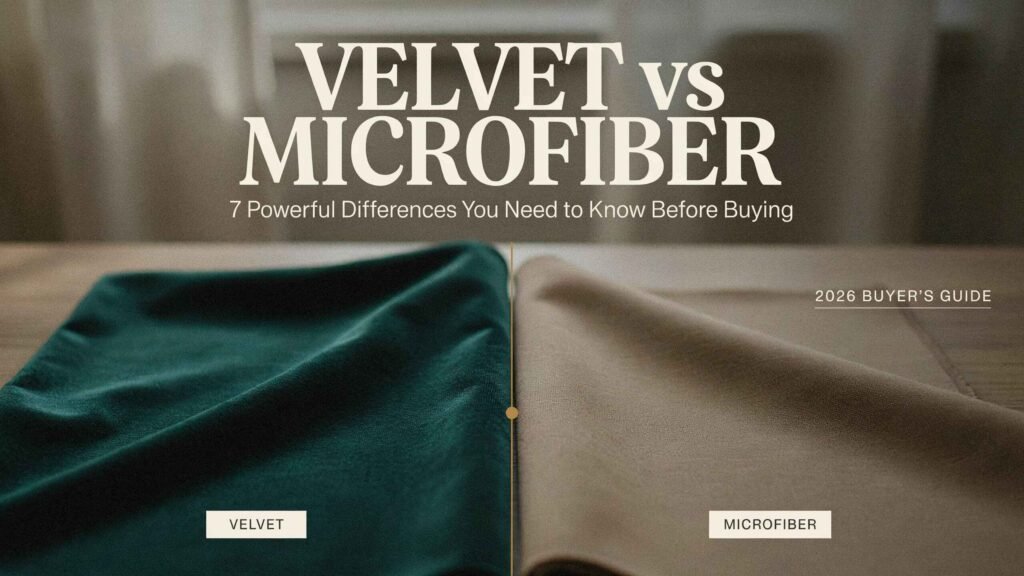
Velvet vs Microfiber is an important comparison to consider when choosing the right sofa fabric for your home. Velvet offers a rich, elegant appearance with a soft, plush texture, while microfiber provides a smooth feel and practical appeal for everyday living.
Both fabrics can look stylish and feel comfortable, but they differ in areas such as durability, cleaning, stain resistance, pet-friendliness, maintenance, and overall appearance. In this guide, we’ll compare velvet and microfiber side by side to help you understand their key differences and choose the sofa fabric that best matches your lifestyle, budget, and home.
Table of Contents
Velvet vs Microfiber at a Glance
When comparing Velvet vs Microfiber, both fabrics can make an attractive and comfortable sofa, but they serve different needs. Velvet is known for its rich appearance, plush texture, and luxurious feel, while microfiber is valued for its smooth surface, practical everyday performance, and relatively easy maintenance.
The better option depends on how you use your sofa. If you want a statement piece with a sophisticated appearance, velvet can be an excellent choice. If your priority is everyday practicality, especially in a busy household, microfiber may be more suitable.
Quick Comparison: Velvet vs Microfiber
| Feature | Velvet | Microfiber |
|---|---|---|
| Overall Look | Luxurious, rich, and elegant | Clean, modern, and understated |
| Softness | Plush and smooth | Very soft and suede-like |
| Everyday Comfort | Excellent | Excellent |
| Durability | Good to excellent, depending on construction | Good to excellent, depending on quality |
| Stain Resistance | Varies by type and finish | Generally practical for everyday spills |
| Water Resistance | Usually not naturally waterproof | Varies by construction and finish |
| Scratch Resistance | Can be affected by rough use | Often practical for everyday use, but not scratch-proof |
| Pet Friendliness | Depends on the velvet type and pet behavior | Often a practical choice for pet households |
| Cleaning | May require more careful treatment | Generally straightforward with the correct method |
| Maintenance | Moderate | Low to moderate |
| Breathability | Depends on fiber and construction | Generally less breathable than many natural fabrics |
| Fading | Can show fading with prolonged sunlight exposure | Can also fade depending on fiber, dye, and sunlight |
| Price | Wide range, often higher for premium velvet | Usually available across a broad price range |
| Luxury Appeal | Excellent | Moderate to high, depending on design |
| Best For | Elegant interiors and statement sofas | Busy homes and practical everyday use |
Which One Should You Choose?
Choose velvet if your main priorities are luxury, visual impact, rich colors, and a plush upholstery feel.
Choose microfiber if you want a soft, practical sofa that fits easily into an everyday living space and does not require as much attention to appearance.
However, fabric quality matters just as much as the material name. A high-quality microfiber can outperform a lower-quality velvet, while a well-made velvet sofa can provide excellent long-term performance. Always check the manufacturer’s care instructions, upholstery specifications, and intended-use recommendations before buying.
What Is Velvet Sofa Fabric?
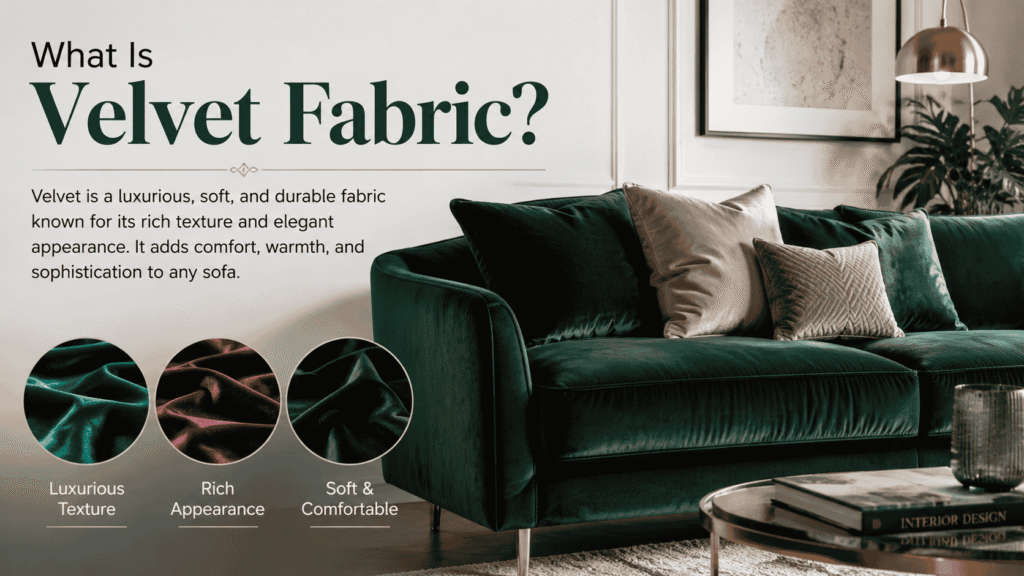
Velvet is a woven upholstery fabric recognized for its soft surface, rich appearance, and distinctive depth of color. It has a short, dense pile that creates a smooth, plush feel when you touch it. This unique surface gives velvet sofas a more decorative and luxurious appearance than many ordinary upholstery fabrics.
When comparing velvet vs. microfiber, velvet is usually the choice for buyers who want their sofa to become a visual feature of the room. However, its elegant appearance does not mean every velvet sofa requires difficult maintenance. The fabric’s performance depends on its fiber type, construction, finish, quality, and the care instructions provided by the manufacturer.
How Velvet Is Made
Velvet is created by forming a raised pile on the surface of the fabric. Unlike a flat woven material, velvet has additional fibers that stand slightly above the base of the fabric. These tiny fibers create the soft surface that imparts velvet its recognizable feel.
The pile also affects how velvet reflects light. When you brush or press the surface in different directions, the fibers can change position, causing the fabric to appear lighter or darker. This is one reason velvet upholstery can look different depending on the viewing angle and lighting in the room.
Why Does Velvet Feel Different From Ordinary Woven Fabrics?
The main difference is the raised pile. Standard flat-woven fabrics have a relatively even surface, while velvet has thousands of fine fibers extending from its base.
That pile creates:
- A noticeably soft hand feel
- A smooth, plush surface
- Greater visual depth
- Subtle changes in color when the pile moves
- A more tactile appearance
The exact feel varies between velvet products. Some are extremely plush, while others have a shorter, firmer pile designed for more practical upholstery use.
What Makes Velvet Look Luxurious?
Velvet has a distinctive appearance that can make even a simple sofa look sophisticated. Its luxury appeal comes from a combination of surface texture, color depth, and the way it interacts with light.
Light Reflection
The raised fibers catch and reflect light differently across the surface. As a result, one section can appear brighter while another looks deeper or darker.
This changing appearance imparts velvet a dynamic quality that flat fabrics often do not have.
Deep Colors
Velvet is particularly effective at creating rich-looking colors. Shades such as emerald green, navy, burgundy, charcoal, and deep blue can appear especially dramatic on a velvet surface.
However, the final appearance also depends on the dye, fiber type, pile direction, and lighting in the room.
Soft Pile
The short pile imparts velvet its characteristic plush appearance. It can make a sofa look softer and more inviting even before you sit on it.
Rich Visual Texture
Velvet does not necessarily need a complicated pattern to stand out. Its surface itself creates texture, allowing a plain velvet sofa to become a focal point in a living room.
Is Velvet Practical for Everyday Sofas?
Yes, velvet can be practical for everyday use, but the right product matters. Modern upholstery velvets are available in different constructions and performance levels, so buyers should not assume that all velvet behaves the same way.
Velvet can work particularly well in the following:
- Formal living rooms
- Stylish family rooms
- Guest rooms
- Reading areas
- Entertainment spaces
- Statement seating areas
It may require more attention in homes where the sofa experiences frequent spills, rough use, or heavy contact with pets. Certain velvet surfaces can also show pressure changes or directional marks, which are part of the fabric’s natural appearance rather than necessarily being signs of damage.
Before purchasing, check the sofa manufacturer’s cleaning instructions and upholstery specifications instead of judging the material by its name alone.
What Is Microfiber Sofa Fabric?
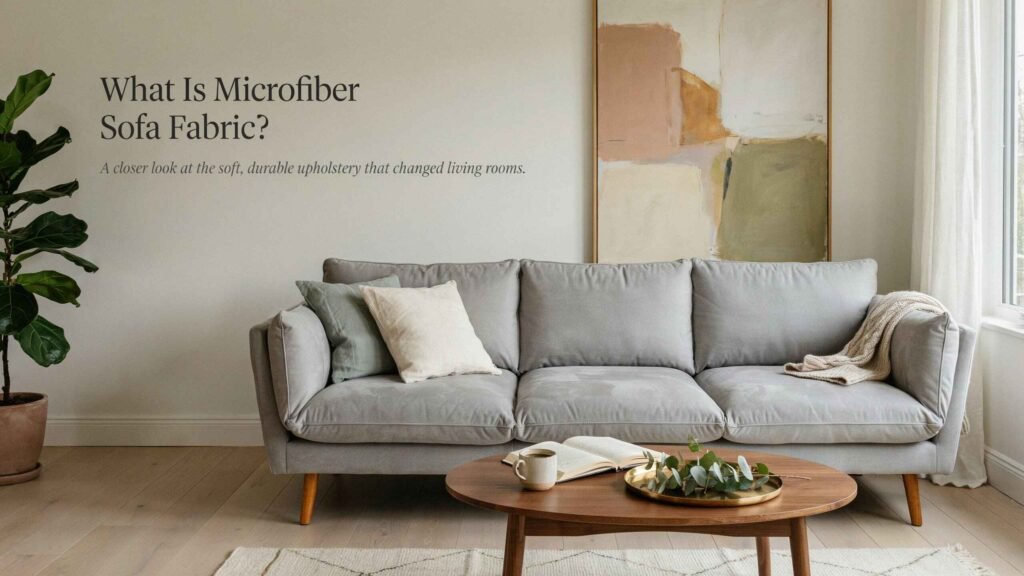
Microfiber is a textile made from extremely fine synthetic fibers. These ultra-fine synthetic strands can be woven closely together, creating a dense upholstery surface that feels exceptionally smooth, soft, and comfortable.
Microfiber upholstery is popular because it can provide a comfortable seating surface while offering practical characteristics for everyday living. It is available in many colors and finishes, making it suitable for both casual and contemporary furniture designs.
In a velvet vs. microfiber comparison, microfiber is often associated with practicality, while velvet is more strongly associated with decorative luxury. However, both materials can be comfortable and attractive when used in well-made furniture.
How Is Microfiber Made?
Microfiber is produced using very fine synthetic fibers, commonly polyester or a polyester blend. These tiny fibers can be tightly woven or constructed to create a dense surface.
The exact performance depends on how the fibers are manufactured and finished. Two sofas labeled as microfiber may therefore feel and perform somewhat differently.
The fine fibers allow manufacturers to create upholstery with characteristics such as the following:
- A smooth surface
- Soft hand feel
- Dense construction
- Consistent appearance
- Easy everyday maintenance in many applications
Always check the individual sofa’s care label because cleaning requirements can vary between microfiber products.
Why Does Microfiber Feel So Soft?
Microfiber feels soft because its fibers are extremely fine and can be packed closely together. Many microfiber upholstery fabrics have a smooth, suede-like surface that feels comfortable against the skin.
Compared with some textured upholstery fabrics, microfiber can feel relatively uniform when you run your hand across it.
Its softness makes it suitable for sofas that are used for:
- Watching television
- Reading
- Relaxing
- Napping
- Long periods of everyday sitting
The final comfort of a sofa still depends on more than fabric. Cushion filling, foam density, suspension, seat depth, and the sofa’s overall construction can have a major effect on how comfortable it feels.
Is Microfiber Good for Everyday Family Use?
Microfiber can be a practical choice for busy households because many microfiber upholstery products are designed with everyday use in mind.
It can work well in living rooms where the sofa is regularly exposed to the following:
- Daily sitting
- Small spills
- Frequent contact
- Children
- Guests
- General household activity
However, microfiber is not automatically stain-proof or maintenance-free. Its performance varies according to construction, finish, color, and quality.
For a family sofa, look beyond the word “microfiber” and check the manufacturer’s cleaning instructions and upholstery specifications.
Velvet vs Microfiber: 7 Differences That Actually Matter
A useful velvet vs. microfiber comparison should go beyond appearance. The right fabric depends on comfort, maintenance, household activity, pets, budget, and the overall style you want.
5.1 Appearance: Which One Creates a Better-Looking Sofa?
Velvet and microfiber create noticeably different visual effects.
Velvet has a richer and more dramatic appearance. Its raised pile catches light and creates subtle shifts in shade. This can make the sofa look elegant and luxurious, particularly in deep or saturated colors.
Microfiber generally has a smoother and more understated appearance. Depending on its construction, it can resemble suede or have a clean, uniform finish.
Velvet works well with:
- Glamorous interiors
- Traditional rooms
- Contemporary statement pieces
- Rich color schemes
- Decorative living spaces
Microfiber works well with the following:
- Modern interiors
- Casual family rooms
- Minimalist spaces
- Neutral color palettes
- Practical everyday furniture
If your main goal is visual drama, velvet usually has the stronger advantage. If you prefer a subtle and versatile appearance, microfiber may be easier to integrate into your room.
5.2 Comfort: Which Fabric Feels Better Against Your Skin?
Both fabrics can be comfortable, but their textures feel different.
Velvet has a plush surface that feels soft and smooth. Its pile can create a warm, cozy impression, making it appealing for relaxing spaces.
Microfiber has a fine, smooth surface that often feels similar to soft suede. It can be especially comfortable when the sofa is used for long periods.
The better choice is subjective. Some people prefer velvet’s plush texture, while others prefer the smooth consistency of microfiber.
It is also important to remember that fabric is only one part of sofa comfort. The cushioning and support underneath the upholstery can matter much more during extended sitting.
5.3 Durability: Which Sofa Fabric Handles Daily Use Better?
There is no universal durability winner based only on the fabric name.
Velvet can be highly durable when it is specifically manufactured for upholstery and constructed to withstand regular use. Microfiber can also provide strong everyday performance because of its dense synthetic fiber construction.
Actual durability depends on factors such as the following:
- Fiber quality
- Fabric construction
- Weave or backing
- Upholstery quality
- Sofa frame
- Cushion construction
- Frequency of use
- Cleaning habits
- Exposure to sunlight
For a busy household, look for upholstery specifications and performance information rather than assuming that one fabric is automatically more durable.
5.4 Stain Resistance: Which Fabric Is Easier to Live With?
Stain resistance varies considerably between individual fabrics.
Microfiber is often considered practical for everyday households because its dense surface can be relatively easy to manage when spills are addressed promptly. However, this does not mean every microfiber sofa is stain-proof.
Velvet can also have protective treatments or performance finishes, but its pile may require more careful cleaning depending on the specific product.
The type of spill matters as well. Water-based liquids, oily substances, food, cosmetics, and ink can behave differently on upholstery.
The most important rule is to deal with spills quickly and follow the sofa manufacturer’s cleaning instructions.
5.5 Cleaning: Which One Is Less Stressful to Maintain?
Both fabrics benefit from regular maintenance, but the correct cleaning method can be different.
Routine Velvet Care
Regular gentle vacuuming can help remove dust and loose debris. A suitable upholstery attachment should be used according to the manufacturer’s instructions.
For small marks, avoid aggressive rubbing. Excessive moisture or an unsuitable cleaning product can affect the appearance of some velvet upholstery.
Routine Microfiber Care
Microfiber sofas can generally benefit from regular vacuuming to remove dust, crumbs, and loose debris.
Spot cleaning should always follow the manufacturer’s recommended method. Some microfiber products have specific cleaning codes or instructions that determine which cleaning solutions are appropriate.
Professional Cleaning
Professional upholstery cleaning may be appropriate for larger or difficult stains, particularly when the manufacturer’s instructions recommend it.
The safest approach for either material is simple: do not assume that a cleaner suitable for one upholstery fabric is automatically safe for another.
5.6 Pets and Children: Which Fabric Handles Real-Life Mess Better?
Homes with children and pets need to consider more than softness and appearance.
Pet hair can be more noticeable on certain colors and textures. Velvet’s pile can also change direction when touched, which may make marks or surface variations more visible.
Microfiber’s dense, smooth surface can be convenient for everyday cleaning, but it is not immune to scratches, stains, or pet-related wear.
For children, consider:
- How frequently spills occur
- How easily the fabric can be spot-cleaned
- Whether the sofa receives heavy daily use
- How visible marks are on the chosen color
For pets, consider:
- Hair color versus sofa color
- Scratching behavior
- Claw contact
- How often the sofa needs cleaning
- Whether your pet spends significant time on the sofa
Neither material should be considered completely pet-proof. The specific fabric construction and your pet’s behavior matter greatly.
5.7 Cost and Long-Term Value: Which One Gives You More for Your Money?
The price of a sofa depends on much more than upholstery fabric.
Frame construction, cushion quality, brand, dimensions, craftsmanship, and design can all influence the final price.
Velvet may be selected for its decorative value and premium appearance, while microfiber can appeal to buyers who prioritize practical everyday performance.
When comparing prices, consider:
- Initial purchase cost
- Expected frequency of use
- Maintenance requirements
- Sofa construction
- Upholstery quality
- Replacement cost
- How well the design fits your home
Paying more for velvet can make sense if its appearance is an important part of the room. Paying more for a well-made microfiber sofa can also be worthwhile if everyday practicality is your priority.
Velvet vs. Microfiber for Different Types of Homes
There is no single best upholstery fabric for every household. Your lifestyle should influence the decision just as much as appearance or price.
For Families With Young Children
Families should prioritize easy maintenance, practical durability, comfortable seating, and a fabric that suits the level of daily activity.
Microfiber can be attractive for households that want a practical, soft surface for everyday use. Velvet can also work, particularly when a performance-oriented upholstery velvet is selected and the family is prepared to follow appropriate care instructions.
For Homes With Dogs or Cats
Pet owners should consider hair, claws, cleaning, and the pet’s habits.
A tightly constructed microfiber can be a practical option for some pet households, while certain velvet fabrics may be less forgiving of rough scratching or frequent surface disturbance.
Color matters too. Light pet hair can stand out strongly against dark upholstery, while dark hair can be obvious on pale fabrics.
For Low-Maintenance Households
If you want to spend as little time as possible worrying about upholstery, microfiber may be appealing because of its practical reputation and smooth surface.
That said, no sofa fabric is completely maintenance-free. Regular vacuuming, prompt spill treatment, and proper cleaning remain important.
For Luxury-Focused Interiors
Velvet has a clear advantage when the primary goal is creating a sophisticated focal point.
Its rich surface, dimensional color, and plush appearance can complement elegant interiors particularly well.
Microfiber can still look stylish, but its strength is generally versatility and practicality rather than dramatic luxury.
For Small Apartments
In a smaller room, fabric color and visual texture can influence how large or compact the sofa appears.
Lighter neutral microfiber can create a clean and simple appearance, while a deep-colored velvet can create a strong statement without requiring additional decorative elements.
Choose according to the room’s lighting, wall color, furniture, and overall design rather than selecting fabric in isolation.
For High-Traffic Living Rooms
A high-traffic sofa needs upholstery that matches the household’s level of activity.
Microfiber may be attractive for people who want a soft, practical everyday surface. Performance-oriented velvet can also work well, but buyers should pay closer attention to its construction and care requirements.
For heavy-use furniture, the frame and cushioning are just as important as the upholstery.
Which Is Easier to Clean: Velvet or Microfiber?
When comparing velvet vs. microfiber for cleaning, microfiber often has the practical advantage, but there is no universal rule. The cleaning requirements depend on the specific upholstery construction and manufacturer’s instructions.
How to Clean a Velvet Sofa
Start with regular dust removal using an appropriate upholstery attachment.
For a small spill:
- Act quickly.
- Gently blot the affected area.
- Avoid aggressive rubbing.
- Use only a cleaning method approved for that upholstery.
- Allow the area to dry properly when moisture is permitted.
Do not saturate velvet unnecessarily. Too much moisture can affect the pile or leave an uneven appearance on some products.
When Professional Cleaning May Be Appropriate
Professional upholstery cleaning may be a better option for large stains, difficult marks, or fabrics with specialized care requirements.
Always check the manufacturer’s recommendations before choosing a professional cleaning method.
How to Clean a Microfiber Sofa
Regular vacuuming can remove crumbs, dust, and loose debris before they become embedded in the upholstery.
For spots:
- Check the sofa’s care label.
- Identify the recommended cleaning method.
- Test any approved product in an inconspicuous area if appropriate.
- Treat the stain gently.
- Avoid excessive moisture unless specifically permitted.
Some microfiber sofas can develop visible marks or rings when cleaned incorrectly, so following the manufacturer’s instructions is especially important.
Common Cleaning Mistakes to Avoid
Regardless of whether you choose velvet or microfiber, avoid the following:
- Using random household cleaners
- Scrubbing stains aggressively
- Applying excessive water
- Ignoring the manufacturer’s cleaning code
- Waiting too long to address spills
- Using harsh chemicals without checking compatibility
Correct cleaning is often more important than simply choosing a particular fabric.
Which Is More Resistant to Stains and Spills?
Stain resistance is one of the most important considerations when selecting sofa upholstery, especially for families and pet owners.
However, velvet vs. microfiber should not be judged using a simple rule that one fabric is always stain-proof and the other is not.
Performance can depend on the fabric’s
- Fiber composition
- Construction
- Surface treatment
- Color
- Finish
- Upholstery quality
- Manufacturer’s specifications
Coffee and Tea Spills
Coffee and tea should be treated promptly. Blotting is generally preferable to aggressive rubbing, but always follow the sofa’s specific care instructions.
Grease and Food Marks
Oily substances can behave differently from water-based spills. Do not immediately apply a household cleaner without checking whether it is suitable for the upholstery.
Ink and Makeup
Ink and cosmetics can be particularly difficult because they may contain pigments or oils. Professional cleaning may be safer for serious stains.
Pet Accidents
Pet accidents should be addressed as quickly as possible. Delayed treatment can make odor and staining more difficult to manage.
Water-Based Spills
Prompt action is important. Blotting rather than rubbing can help prevent the spill from spreading.
Ultimately, stain resistance is not determined by the fabric name alone. A specific performance velvet may outperform a basic microfiber, while a high-quality microfiber may be easier to maintain than a delicate velvet.
Velvet vs. Microfiber for Pet Owners
Pet owners should evaluate upholstery based on their animal’s behavior rather than relying on general fabric labels.
Does Pet Hair Stick to Velvet?
Pet hair can be visible on velvet depending on the fabric’s pile, color, and the type of hair involved. The direction of the pile can also make surface changes noticeable.
Choosing a sofa color that contrasts less with your pet’s fur can make everyday hair less obvious.
Does Microfiber Attract Pet Hair?
Microfiber can also collect pet hair, although its smooth surface may make some loose hair relatively easy to remove with suitable cleaning tools.
Again, color plays a major role in how noticeable the hair appears.
Which Fabric Is Better Against Scratches?
Neither velvet nor microfiber should be considered scratch-proof.
If a cat regularly uses the sofa as a scratching surface, the most important consideration is the specific upholstery construction and the pet’s habits.
Providing a suitable scratching post or alternative resting area can help reduce direct contact with the sofa.
Which Fabric Hides Pet Mess Better?
Medium or patterned colors may hide small marks better than very light or very dark solid colors.
However, hiding mess should not replace proper cleaning. A fabric that makes stains less visible can still require immediate care.
Best Choice for Dogs
For dogs that mainly sleep or sit on the sofa, practical microfiber upholstery may be attractive because of its soft feel and everyday usability.
For dogs that frequently jump, scratch, or create heavy messes, inspect the specific fabric’s performance specifications before purchasing.
Best Choice for Cats
Cat owners should pay particular attention to scratching behavior. A cat that regularly claws furniture can damage many upholstery fabrics.
The best choice therefore depends more on the cat’s habits and the fabric’s construction than on whether the label says velvet or microfiber.
Which Sofa Fabric Is Better for Families?
For families, the best fabric is the one that fits the household’s actual routine.
If You Have Toddlers
Prioritize:
- Easy maintenance
- Comfortable seating
- Practical durability
- Suitable cleaning instructions
- A color that does not make every small mark highly visible
Microfiber may appeal to families focused on practicality, while a durable performance velvet can work for those who also want a more decorative appearance.
If Your Sofa Gets Used Every Day
Look for upholstery designed for regular residential use and pay attention to the sofa’s overall construction.
Daily use can affect cushions, frames, and upholstery simultaneously, so fabric alone should not determine your purchase.
If You Eat on the Sofa
Spills and crumbs are more likely when food is regularly consumed on the sofa.
Practical upholstery that matches your cleaning routine may be preferable. Regardless of fabric, using trays and cleaning spills promptly can reduce long-term problems.
If You Frequently Have Guests
Consider appearance as well as maintenance.
Velvet can create an impressive, sophisticated appearance in a social living room. Microfiber can provide a more relaxed and versatile look.
If Easy Maintenance Is Your Priority
Microfiber may be the more appealing option for buyers who prioritize everyday practicality.
Still, check the exact cleaning instructions before purchasing because microfiber products are not identical.
Does Velvet Fade More Than Microfiber?
Both velvet and microfiber can fade when exposed to prolonged sunlight. The amount of fading depends on several factors rather than simply the fabric category.
What Causes Upholstery Fading?
Common factors include:
- Direct sunlight
- UV exposure
- Fabric dye
- Fiber composition
- Color
- Fabric quality
- Window placement
- Length of exposure
Dark and highly saturated colors can sometimes make fading more noticeable, although actual performance varies by product.
How to Reduce Sofa Fabric Fading
You can reduce unnecessary exposure by:
- Keeping the sofa away from strong direct sunlight when possible
- Using curtains or blinds
- Rotating movable cushions when appropriate
- Following recommended care practices
- Selecting upholstery with suitable performance specifications
If the sofa will sit directly beside a large sunny window, ask the manufacturer about the fabric’s lightfastness or recommended placement before buying.
Which Fabric Feels Cooler or Warmer?
Temperature comfort is often overlooked when comparing sofa fabrics.
The surface fabric can influence how the sofa initially feels, but the overall experience also depends on room temperature, humidity, airflow, cushion materials, and upholstery construction.
Velvet in Warm Weather
Velvet can feel warm and plush because of its dense surface. In a hot room, some people may prefer a lighter-feeling upholstery.
However, the actual experience depends on the specific velvet and the environment.
Microfiber in Warm Weather
Microfiber can also feel warm because many versions have a dense synthetic surface. Its smooth texture may feel comfortable, but it should not automatically be described as a cool fabric.
Velvet in Cold Weather
The soft pile of velvet can create a cozy sensation in cooler rooms, making it appealing for comfortable lounging spaces.
Microfiber in Cold Weather
Microfiber’s smooth, soft surface can also provide comfortable seating during colder months.
For year-round comfort, consider the entire sofa construction and the climate of your room rather than choosing upholstery based only on the fabric label.
Velvet vs. Microfiber: Which One Looks More Expensive?
If luxury appearance is your main concern, velvet generally has the stronger visual advantage.
Velvet’s Luxury Factor
Velvet creates a premium appearance through several characteristics.
Rich Color Depth
The pile reflects light differently across the surface, making colors appear dimensional.
Light-Catching Surface
The way velvet interacts with light gives it a distinctive visual character that can make a sofa stand out.
Decorative Appeal
A velvet sofa can act as a centerpiece in a room without needing an elaborate pattern or additional decoration.
Microfiber’s Modern Practical Look
Microfiber generally has a more understated appearance.
Clean Appearance
Its smooth surface can create a neat, contemporary look.
Suede-Like Finishes
Some microfiber upholstery has a soft, suede-like appearance that adds subtle texture.
Versatile Styling
Microfiber can work with modern, casual, minimalist, and family-oriented interiors.
How Color Changes the Look
Color can dramatically change how either material appears.
Neutral Shades
Beige, gray, cream, and taupe can create a calm and versatile appearance.
Deep Shades
Navy, forest green, burgundy, and charcoal can create a more dramatic effect, particularly on velvet.
Light Colors
Light upholstery can make a room feel brighter but may also make everyday marks more noticeable.
What Are the Biggest Disadvantages of Velvet?
Velvet has many appealing qualities, but it is not ideal for every household.
Potential Downsides
Shows Pressure Marks
The pile can change direction when pressed, causing visible variations in appearance.
Can Require Careful Cleaning
Certain velvet upholstery requires specific cleaning methods, and aggressive treatment can damage its appearance.
May Show Dust or Marks
Depending on the color and pile, dust, fingerprints, or directional changes may be noticeable.
Not Every Velvet Performs the Same Way
There are many types of velvet, and their performance can differ substantially.
May Require More Attention in Busy Homes
If your sofa experiences frequent spills, pets, and heavy activity, you may prefer upholstery designed specifically for easier everyday maintenance.
When Is Velvet Still Worth Choosing?
Velvet can be an excellent choice when you value the following:
- Luxury
- Rich colors
- Soft texture
- Statement furniture
- Sophisticated interior design
If appearance is a major part of your buying decision, velvet can offer a distinctive look that is difficult to replicate with ordinary upholstery.
What Are the Biggest Disadvantages of Microfiber?
Microfiber is practical, but it also has limitations.
Potential Downsides
Less Visually Luxurious for Some Interiors
Microfiber can look stylish, but it may not provide the same dramatic visual depth as velvet.
Can Develop Visible Marks
Some microfiber surfaces can show water marks, pressure changes, or directional variations depending on the finish.
Some Microfiber Can Show Water Rings.
Incorrect spot cleaning may create visible differences on the surface. Always follow the manufacturer’s instructions.
Quality Varies Significantly
Not all microfiber upholstery is manufactured to the same standard.
Not Every Microfiber Sofa Has Identical Performance
Fiber type, construction, finish, backing, and overall sofa quality all matter.
When Is Microfiber Still the Smarter Choice?
Microfiber may be a strong option when you prioritize the following:
- Everyday practicality
- Softness
- Simple styling
- Family use
- Frequent sitting
- A relatively understated appearance
Velvet vs Microfiber: Which One Lasts Longer?
There is no reliable universal lifespan that applies to every velvet or microfiber sofa.
A sofa’s longevity depends on the entire product, not just its upholstery.
What Actually Determines Sofa Longevity?
Fiber Quality
Higher-quality fibers and appropriate upholstery construction can improve performance.
Weave and Construction
How the fabric is constructed can affect resistance to wear and surface changes.
Upholstery Quality
A well-made sofa can provide better long-term performance than a poorly constructed sofa, regardless of fabric.
Frame Construction
The frame supports the entire sofa. A strong frame can contribute significantly to overall longevity.
Cushion Quality
Foam, fiber, springs, and other cushion materials affect how well the sofa maintains its shape.
Frequency of Use
A sofa used for several hours every day will naturally experience more wear than one used occasionally.
Cleaning Habits
Improper cleaning can damage upholstery and reduce its useful life.
Sun Exposure
Long-term direct sunlight can affect some fabrics and colors.
How to Make Either Fabric Last Longer
To protect your sofa:
- Vacuum regularly
- Deal with spills promptly
- Follow the care label
- Avoid unnecessary harsh chemicals.
- Reduce prolonged direct sunlight
- Rotate cushions when appropriate
- Avoid placing excessive stress on the sofa.
- Address damage early
How to Choose Between Velvet and Microfiber in 5 Questions
Still unsure about velvet vs. microvelvet vs. microfiber? Answer these five questions.
Question 1: Do You Prioritize Luxury or Easy Everyday Care?
If luxury and visual impact are your main priorities, velvet may appeal more.
If practical everyday use is more important, microfiber may be the better starting point.
Question 2: Do You Have Children or Pets?
If your sofa faces frequent spills, hair, and heavy activity, prioritize upholstery that matches your cleaning routine and household behavior.
Microfiber may be attractive for practical family use, while performance velvet can work when appearance is equally important.
Question 3: How Frequently Will the Sofa Be Used?
For occasional use, appearance may carry more weight.
For a sofa that is used constantly, durability, maintenance, cushioning, and construction should receive greater attention.
Question 4: Is Your Sofa Exposed to Direct Sunlight?
If yes, research the specific fabric’s lightfastness and recommended placement.
Do not assume that velvet or microfiber is automatically resistant or vulnerable to fading.
Question 5: Which Matters More: Appearance, Maintenance, or Long-Term Practicality?
Think about your priorities in order.
Appearance first: Consider velvet.
Maintenance first: Consider microfiber.
Balanced performance: Compare specific sofa models rather than choosing solely by fabric name.
Velvet vs. Microfiber: Which Sofa Fabric Should You Choose?
The right choice depends on your priorities and lifestyle.
Choose Velvet If You Want:
- A luxurious appearance
- Rich-looking colors
- Statement furniture
- Plush visual texture
- An elegant interior
- A strong decorative focal point
Velvet is particularly appealing when the sofa is an important part of the room’s design.
Choose Microfiber If You Want:
- Practical everyday upholstery
- A soft, smooth texture
- Family-friendly functionality
- A relatively understated appearance
- Easy integration into casual interiors
- A sofa designed around everyday use
Microfiber can be especially appealing when practicality matters more than dramatic visual texture.
Final Verdict: Velvet vs. Microfiber
The best choice between velvet and microfiber (velvet vs. microfiber) depends on what you expect from your sofa.
Best for luxury: Velvet
Best for practicality: Microfiber
Best for statement interiors: Velvet
Best for many high-use households: Microfiber may be the more practical starting point.
Best for pet and family homes: Depends on the specific upholstery, household activity, and pet behavior
Velvet is a strong choice when you want your sofa to make a visual statement and provide a plush, sophisticated feel. Microfiber is often appealing when you want soft upholstery with a practical, everyday character.
Most importantly, do not judge a sofa only by its fabric label. Look at the fabric’s construction, cleaning requirements, performance specifications, cushion quality, frame construction, and the way you actually use your living room.
The best sofa fabric is not necessarily the most expensive or luxurious one—it is the one that fits your lifestyle, maintenance habits, comfort preferences, and design goals.
Frequently Asked Questions About Velvet vs. Microfiber
Is velvet better than microfiber for a sofa?
Neither is universally better. Velvet is often preferred for luxury, rich colors, and visual impact, while microfiber can be attractive for practical everyday use. The best option depends on your household and priorities.
Is microfiber more durable than velvet?
Not automatically. Durability depends on the specific fabric construction, fiber quality, upholstery specifications, sofa construction, and how frequently the furniture is used.
Is velvet harder to clean than microfiber?
Velvet can require more careful cleaning because of its raised pile. Microfiber may be more straightforward for some everyday cleaning situations, but the manufacturer’s instructions should always take priority.
Which is better for pets, velvet or microfiber?
Microfiber may be practical for some pet households, particularly when easy everyday maintenance is important. However, neither fabric is completely pet-proof, and the best choice depends on your pet’s hair, scratching, and sitting habits.
Which sofa fabric is better for kids?
For families with children, practical maintenance and durability are important. Microfiber may be attractive for everyday family use, but a suitable performance velvet can also work when properly cared for.
Does microfiber stain easily?
Microfiber is not automatically stain-proof. Its stain performance varies according to construction, finish, color, and treatment. Prompt cleaning and following the manufacturer’s instructions are important.
Does velvet attract pet hair?
Pet hair can be visible on velvet depending on its pile, color, and the type of hair. Choosing a color closer to your pet’s coat can make loose hair less noticeable.
Which fabric feels softer, velvet or microfiber?
Both can feel very soft. Velvet generally has a plush, raised surface, while microfiber often has a smooth, suede-like feel. Personal preference plays a major role.
Is microfiber cheaper than velvet?
Prices vary widely for both fabrics. The final sofa price also depends on the frame, cushions, size, brand, construction, and design.
Which fabric looks more luxurious?
Velvet generally has a stronger luxury appearance because of its plush pile, rich color depth, and distinctive light reflection.
Which lasts longer, velvet or microfiber?
There is no universal winner. The quality of the upholstery, sofa construction, frequency of use, cleaning habits, and sunlight exposure all influence longevity.
Is velvet good for everyday sofa use?
Yes. Upholstery-grade velvet can be suitable for everyday use, but buyers should check its construction, performance specifications, and care requirements.
Is microfiber a good choice for a family sofa?
Microfiber can be a practical option for family rooms because it is soft and available in many everyday-friendly designs. However, the exact fabric and cleaning instructions should be checked before purchase.
Can you vacuum both velvet and microfiber sofas?
Both can generally benefit from appropriate vacuuming, but the correct attachment and technique depend on the fabric. Follow the manufacturer’s care instructions to avoid damaging the upholstery.
Which fabric should you choose for a high-traffic living room?
For a high-traffic room, focus on the specific upholstery’s performance characteristics rather than choosing only by fabric category. Microfiber may appeal to buyers seeking practicality, while a durable performance velvet can work for those who prioritize luxury and design.
Conclusion
Choosing between Velvet vs Microfiber ultimately comes down to your lifestyle, design preferences, and how much maintenance you are comfortable with. Velvet stands out for its luxurious appearance, rich colors, plush texture, and ability to make a sofa a striking focal point. Microfiber, on the other hand, offers a smooth, comfortable surface and practical appeal for everyday living.
If your priority is elegance and visual impact, velvet may be the better choice. If you have a busy household and value practical, easy-care upholstery, microfiber may be more suitable. However, always consider the specific fabric construction, sofa quality, care instructions, and expected level of use before making your final decision.
The best sofa fabric is not simply the one that looks the most attractive—it is the one that provides the right balance of comfort, durability, maintenance, style, and value for your home.
Internal Linking Opportunities
Since this is pillar content for SofasExpert, naturally link to your related sofa-material articles, such as:
- Velvet Sofa Material
- Cotton Sofa Material
- Polyester Sofa Material
- Linen Sofa Material
- Chenille Sofa Material
- Microfiber Sofa Material
- Leather Sofa Material
- Velvet vs Polyester
- Velvet vs Linen
- Velvet vs Chenille
- Velvet vs Bouclé
- Leather vs Velvet Sofa
- How to Choose the Right Sofa Material
- Best Sofa Materials for Pets
Good authoritative websites to consider
For your SofasExpert.com article, you can link to authoritative sources such as The Spruce, Good Housekeeping, Consumer Reports, or relevant textile/furniture industry organizations.