
Introduction
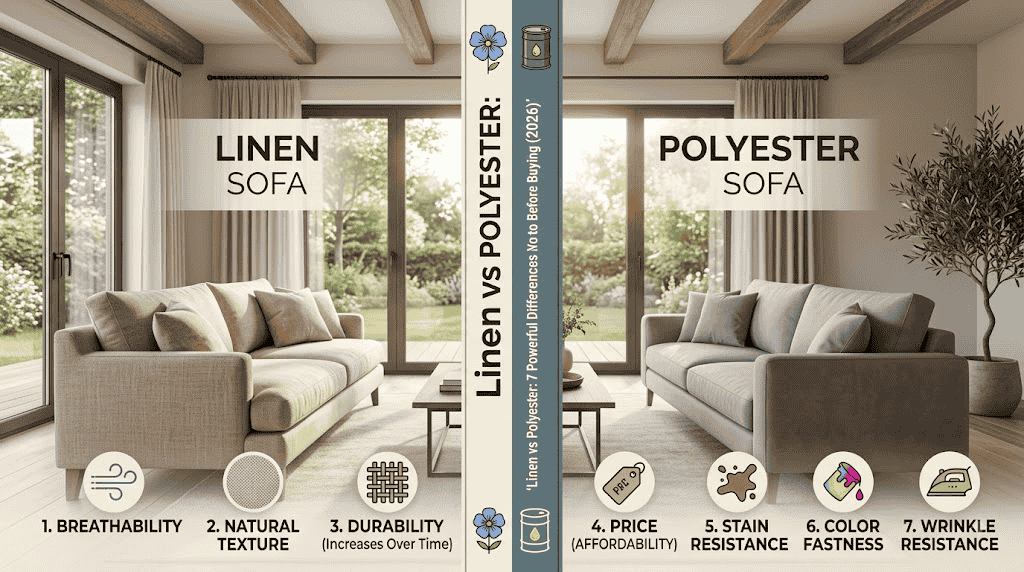
Linen vs Polyester is an important comparison when choosing the right sofa fabric for your home. Linen offers a natural, breathable feel with a relaxed and elegant appearance, while polyester is known for its durability, affordability, and easy maintenance. Both materials can work well for sofas, but they suit different lifestyles and preferences.
Choosing between linen and polyester can affect your sofa’s comfort, appearance, durability, cleaning needs, and overall value. In this guide, we’ll compare linen vs polyester across the key factors you should consider before buying, helping you decide which fabric is the better fit for your home.
Table of Contents
Linen vs Polyester: Quick Comparison
| Feature | Linen | Polyester |
|---|---|---|
| Material Type | Natural fiber | Synthetic fiber |
| Feel | Cool, breathable, textured | Soft, smooth, versatile |
| Appearance | Natural and relaxed | Wide range of styles |
| Comfort | Excellent breathability | Good everyday comfort |
| Durability | Moderate to good | Good to excellent, depending on construction |
| Stain Resistance | Moderate | Generally better |
| Water Resistance | Low | Can be higher with treatments |
| Wrinkle Resistance | Low | High |
| Fade Resistance | Moderate | Generally good |
| Maintenance | More demanding | Usually easier |
| Pet Friendly | Moderate | Often better |
| Family Friendly | Moderate | Often better |
| Price | Moderate to premium | Budget to premium |
| Best For | Natural, relaxed interiors | Busy households and easy maintenance |
It’s worth saying clearly: actual upholstery performance depends far more on weave, backing, finish, and abrasion rating than on the fiber name alone. Two polyester fabrics can perform completely differently depending on how they’re constructed—some real-world polyester upholstery products are rated anywhere from roughly 15,000 up to 100,000+ double rubs, and testing bodies like the Association for Contract Textiles (ACT) caution that results above 100,000 double rubs don’t reliably predict a longer lifespan. In other words, always check the specific fabric’s rating rather than assuming “polyester = durable” or “linen = delicate.”
What Is Linen Sofa Fabric?
How Linen Is Made
Linen comes from the flax plant, one of the oldest cultivated fibers in the world. The flax stalks are harvested and retted (a process that separates the fiber from the woody stem), then combed, spun into yarn, and woven into fabric. Because the process relies on the natural structure of the plant fiber rather than a manufactured filament, linen keeps a slightly irregular, textured surface that’s part of its visual signature.
Key Characteristics of Linen
- Highly breathable, allowing air to move through the weave
- Distinctive, slightly nubby natural texture
- Lightweight yet strong feel
- Relaxed, organic appearance that suits many interior styles
- Naturally temperature-regulating, feeling cool to the touch
- A tendency to wrinkle and crease with use
Pros of Linen Sofa Fabric
- Natural, organic appearance that many homeowners love
- Excellent breathability for warm climates or sun-facing rooms
- Comfortable, soft-yet-substantial hand-feel
- Elegant texture that reads as high-end and understated
- Pairs beautifully with minimalist, coastal, and modern interiors
Cons of Linen Sofa Fabric
- Wrinkles and creases more easily than synthetic fabrics
- Can show wear patterns (like seat impressions) more visibly over time
- Often requires more careful, gentler cleaning methods
- Stains can be harder to fully remove depending on the specific finish.
- Performance varies significantly between different linen upholstery constructions.
If you want a deeper dive into how this fabric performs across different rooms and lifestyles, see our full breakdown of linen sofa material.
What Is Polyester Sofa Fabric?
How Polyester Is Made
Polyester is a synthetic fiber produced from petroleum-based polymers. The raw polymer is melted and extruded into long, continuous filaments, which are then cut, textured, or spun into yarns depending on the desired fabric feel. Because manufacturers control the process from the molecular level up, polyester can be engineered for specific goals—extra softness, extra strength, stain resistance, or a particular sheen—in a way natural fibers can’t be.
Key Characteristics of Polyester
- Strong, durable fiber structure
- Extremely versatile — can mimic linen, velvet, suede, and more
- Generally easier to maintain day to day
- Available in an enormous range of colors, weaves, and textures
- Can be chemically or mechanically engineered for specific performance traits
Pros of Polyester Sofa Fabric
- Strong everyday durability, especially in performance-grade weaves
- Easier maintenance than most natural fibers
- Huge design selection, from budget to designer-level fabrics
- Often better built-in stain resistance
- Well suited to busy, high-traffic households
Cons of Polyester Sofa Fabric
- Generally less breathable than linen, which can feel warmer in summer
- Lower-grade polyester can feel plasticky or less natural against the skin.
- Quality varies enormously across price points.
- Cheaper polyester fabrics may pill or flatten with heavy use.
For more detail on how this fiber is engineered and where it performs best, check out our guide to polyester sofa material.
Linen vs Polyester: 7 Key Differences
1. Appearance and Style
Linen has a naturally uneven, textured surface with visible slubs — small irregularities in the yarn that give it depth and a handmade quality. It tends to look casual-elegant, at home in Scandinavian, coastal, and modern minimalist rooms. Polyester, by contrast, can be woven to look almost like anything: smooth and polished, plush and velvety, or even convincingly linen-like. It suits both casual and more polished, traditional interiors.
Verdict: Linen wins on distinctive natural character; polyester wins on styling flexibility.
2. Comfort and Breathability
Linen’s open weave allows air to circulate, so it feels cool against skin—a real advantage in warm climates or sun-drenched living rooms. Polyester fibers trap more heat and don’t breathe the same way, though well-engineered polyester blends can still feel soft and pleasant for everyday lounging.
Winner: Linen, for breathability and temperature comfort.
3. Durability and Lifespan
This is where fiber type alone is the least reliable guide. Fiber strength matters, but so does weave tightness, backing, thread count, and abrasion rating. A tightly woven, well-constructed linen can outlast a cheaply made polyester, and vice versa. Performance-grade polyester upholstery, tested to industry abrasion standards, tends to hold up especially well in high-traffic family rooms. For a closer look at what actually determines how long a sofa fabric lasts, see our guide on the durability of sofa fabrics.
Verdict: Construction and finish matter more than fiber name — but well-built polyester generally edges out linen for heavy daily use.
4. Cleaning and Maintenance
Linen typically needs gentler handling: regular vacuuming, quick blotting of spills, and occasional professional cleaning for deeper stains. Polyester is usually more forgiving — many polyester upholstery fabrics can be spot-cleaned with mild solutions and hold up to more frequent cleaning without losing their finish. Always check the manufacturer’s cleaning code (W, S, WS, or X) on the specific sofa before using any cleaning product, since the same fiber can carry different codes depending on finish and backing.
5. Stain and Spill Resistance
Everyday life means spills—coffee, wine, cooking oil, and kids’ snacks. Polyester’s fiber structure tends to resist absorption better than linen’s, and many polyester upholstery fabrics now come with additional performance treatments that repel liquids before they soak in. Linen can still perform well, especially with a protective finish, but it generally requires faster action on spills to avoid staining.
Practical takeaway: For households where spills are frequent, polyester is usually the more forgiving, practical option.
6. Pet and Family Friendliness
Pet hair, claws, muddy paws, juice boxes, and crayon marks are the daily reality for many households. Polyester generally handles these better: it resists snagging somewhat more than loosely woven linen, cleans up faster, and many performance polyester fabrics are specifically marketed for pet- and kid-heavy homes. That said, construction still matters—a tightly woven, treated linen can still hold up reasonably well.
Winner for busy households: Usually polyester, though the specific weave and finish still make a real difference.
7. Price and Long-Term Value
Linen ranges from moderately priced to premium, particularly for higher-thread-count or designer weaves. Polyester spans an even wider range, from very affordable to high-end performance fabrics that rival natural fibers in price. The real value calculation isn’t just the sticker price—it’s the price divided by the expected lifespan, plus any cleaning or replacement costs down the road. A cheap fabric that wears out in two years and needs reupholstering isn’t actually the cheaper option over time.
Linen vs. Polyester for Different Lifestyles
Best for Families With Children
Recommended: Polyester. Easier stain cleanup, better resistance to everyday wear, and generally more forgiving of rough daily use make it the safer bet for a family room sofa.
Best for Pet Owners
Recommended: Polyester, in most cases. It generally handles pet hair, occasional claws, and accidental messes better than looser linen weaves—though a tightly woven, treated fabric of either type can work.
Best for Hot Climates
Recommended: Linen. Its breathability and cool touch make it genuinely more comfortable to sit on in warm weather or sun-exposed rooms.
Best for Luxury Interiors
Recommended: High-quality linen. The natural texture and understated richness of a well-made linen upholstery read as elevated and intentional in design-forward spaces.
Best for Low-Maintenance Homes
Recommended: Polyester. Simpler care routines and better everyday resilience suit anyone who wants a sofa that looks good without much fuss.
Best for Minimalist Interiors
Recommended: Linen. Its natural, slightly imperfect texture complements the pared-back, organic aesthetic minimalist design is built around.
Linen vs. Polyester for Sofa Durability
What Determines Sofa Fabric Durability?
Durability is a combination of several factors working together, not just the fiber itself:
- Fiber strength and composition
- Weave tightness and pattern
- Fabric weight (measured in grams per square meter or ounces per yard)
- Abrasion rating
- Seam strength and construction quality
- Protective finishes or treatments
- The underlying sofa frame and cushion construction
Understanding Double Rubs and Abrasion Ratings
In the Wyzenbeek abrasion test, which is a common way to see how well upholstery holds up to wear and tear, a “double rub” means one full back-and-forth motion. Higher double-rub counts generally indicate greater resistance to abrasion, but they shouldn’t be treated as a guarantee of lifespan. According to ACT’s own guidance, a fabric with double the abrasion rating doesn’t necessarily last twice as long, and test results can vary meaningfully even on the same fabric.
As a rough industry benchmark, 15,000 double rubs is generally considered a reasonable minimum for residential upholstery, while 30,000+ is often recommended for heavier daily use. Real polyester upholstery products on the market today are commonly rated anywhere from 15,000 up to 100,000 double rubs—which is exactly why it’s misleading to say “polyester is more durable than linen” as a blanket statement. The specific product’s rating is what actually matters.
Linen vs Polyester: Which Is Easier to Clean?
How to Clean Linen Sofa Fabric
- Vacuum regularly using an upholstery attachment to remove dust and debris
- Blot spills immediately with a clean, absorbent cloth—never rub.
- Always check and follow the manufacturer’s cleaning code.
- Avoid aggressive scrubbing, which can damage the fiber and create visible marks.
- Schedule professional cleaning for tougher or set-in stains
How to Clean Polyester Sofa Fabric
- Vacuum on a regular schedule to keep the weave free of dust and hair
- Spot clean spills promptly using an approved solution.
- Use only cleaning products recommended for the specific fabric and code
- Follow the manufacturer’s instructions closely, since finishes and treatments vary.
Which Fabric Handles Everyday Spills Better?
In most everyday scenarios, polyester holds up better against spills, largely because of its lower absorbency and the performance treatments commonly applied to it. Linen can still be spill-resistant with the right finish, but it typically demands quicker action and gentler handling to avoid a lasting mark.
Linen vs. Polyester for Pets
Living with cats or dogs adds another layer to the decision—hair, claws, mud, drool, and the occasional accident all put fabric to the test.
Is Linen Good for Cats and Dogs?
Linen can work for pet owners, especially a tightly woven, treated variety, but its texture can be more prone to snagging from claws, and pet hair tends to embed into the weave.
Is Polyester Good for Cats and Dogs?
Polyester generally performs better around pets. Many performance polyester fabrics are specifically engineered to resist snagging, shed hair more easily during vacuuming, and clean up faster after accidents.
Which Is Better for Pet Owners?
For most pet households, polyester is the more practical everyday choice, though a well-constructed, tightly woven linen can still be a workable option for lighter pet traffic.
Linen vs. Polyester for Families With Kids
Kids bring juice spills, food stains, mud, and constant use to a sofa. Over time, that adds up:
- Juice and food spills are more easily managed on treated polyester.
- Mud and dirt tend to brush off synthetic fibers more readily.
- Frequent sitting and jumping wear differently depending on weave tightness
- Cleaning routines are generally simpler on polyester upholstery.
- Long-term appearance holds up better on performance-rated fabrics.
Practical recommendation: Polyester is generally the easier choice for a high-traffic family sofa, particularly when the upholstery carries a suitable performance finish and abrasion rating.
Linen vs. Polyester: Pros and Cons
Linen Pros: Natural fiber, breathable, distinctive texture, elegant appearance, comfortable in warm weather.
Linen Cons: It wrinkles more easily, can require more careful care, stains can be more challenging, and performance varies by construction.
Polyester Pros: Durable options widely available, easy-care, versatile styling, wide range of finishes, often well suited to busy households.
Polyester Cons: Synthetic feel in lower grades, generally less breathable, quality varies significantly, and some versions can pill or feel less natural.
Is Linen or Polyester Better for a Sofa?
There’s no single universal answer—the right fabric depends entirely on how you actually live in your space.
Choose linen if you want:
- Natural materials and an organic, tactile feel
- Excellent breathability, especially in warmer climates
- A relaxed, understated sense of luxury
- Distinctive natural texture
- A fit for elegant, design-forward interiors
Choose polyester if you want:
- Easier day-to-day maintenance
- Strong everyday durability
- Family-friendly, high-traffic performance
- Practical pet-friendly resilience
- More consistent stain resistance
The Simple Decision
Choose linen for comfort, breathability, and natural style. Choose polyester for practicality, durability, and easier maintenance.
Linen vs. Polyester: Which One Should You Buy?
Choose linen → if you want a natural look and breathable comfort and you’re furnishing a design-focused, lower-traffic room.
Choose polyester → if your household includes children or pets, has frequent spills, or you simply want a lower-maintenance lifestyle.
Choose a linen-polyester blend → if you want some of linen’s natural appearance while adding the practical performance benefits of a synthetic fiber. Blended upholstery fabrics can combine characteristics from both fiber types—softness and texture from linen, added strength and easier care from polyester—so you don’t always have to pick a strict either/or. If you’re weighing blends more broadly, our comparison of linen vs. cotton covers another common natural-fiber pairing worth considering.
Linen vs. Polyester: Frequently Asked Questions
Is linen better than polyester for sofas? It depends on your priorities. Linen is better for breathability and natural texture; polyester is generally better for durability and easy maintenance.
Is polyester more durable than linen? Often, but not always—durability depends heavily on the specific weave, weight, and abrasion rating of the fabric, not just the fiber type.
Is linen good for everyday sofa use? Yes, especially a well-constructed, tightly woven linen, though it typically requires more careful cleaning than polyester.
Is polyester sofa fabric easy to clean? Generally yes. Most polyester upholstery can be spot cleaned fairly easily, though you should always follow the manufacturer’s specific cleaning code.
Which is better for pets, linen or polyester? Polyester is usually the more practical choice for pet owners, thanks to better resistance to snagging and easier cleanup.
Which fabric is cooler, linen or polyester? Linen is cooler and more breathable, making it a better fit for warm climates or sun-facing rooms.
Does linen wrinkle more than polyester? Yes. Linen wrinkles and creases naturally, while polyester resists wrinkling much more effectively.
Which fabric lasts longer on a sofa? It depends on the specific product’s construction and abrasion rating more than the fiber name alone—a high-quality linen can outlast a low-quality polyester.
Is linen more expensive than polyester? Generally, yes, though both fabrics span a wide price range from budget to premium depending on quality and finish.
Can linen and polyester be blended? Yes. Linen-polyester blends combine natural texture with added durability and easier care, offering a middle ground between the two.
Which is better for families with children? Polyester is typically the more practical choice for family households due to easier stain cleanup and better everyday resilience.
Which sofa fabric is easiest to maintain? Polyester is generally easier to maintain day to day, thanks to its stain resistance and simpler cleaning routines.
Final Verdict: Linen vs. Polyester
Linen wins for natural beauty, breathability, relaxed luxury, and distinctive texture.
Polyester wins for easy maintenance, everyday practicality, busy households, and performance-oriented upholstery.
The best sofa fabric isn’t simply the one with the “better” fiber—it’s the one whose real-world performance matches the way you actually live. If you’d like to compare more materials side by side, take a look at our guides on velvet sofa material, chenille sofa material, microfiber sofa material, and leather vs. fabric sofas to find the fit that’s right for your home.
Sources: Fiber and material classifications are referenced from the Textile Exchange, and upholstery abrasion and performance testing standards are referenced from the Association for Contract Textiles (ACT).