
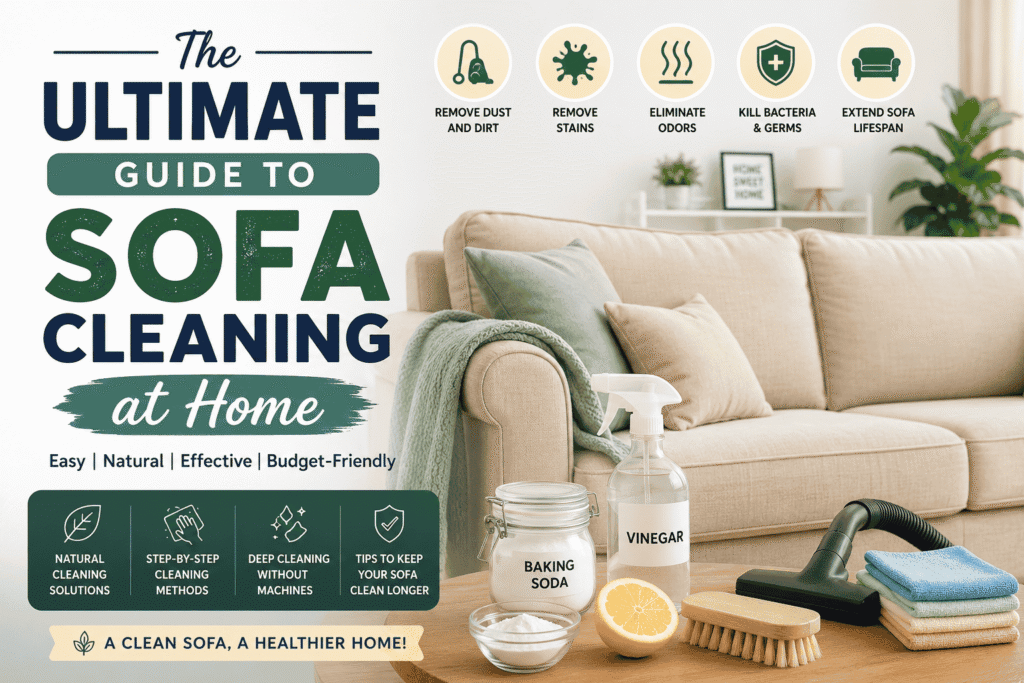
Introduction
Your sofa collects dust, stains, pet hair, bacteria, and bad smells every day. Without regular cleaning, it can quickly look dirty and affect the freshness of your home. The good news is that you can clean your sofa easily at home using simple DIY methods and natural ingredients.
Table of Contents
The Ultimate Guide to Sofa Cleaning at Home
Improves Indoor Air Quality
Sofas trap dust, dirt, pollen, and airborne particles over time. Every time someone sits down, these particles can spread into the air and reduce indoor air quality. Regular cleaning helps remove hidden dust and keeps the air inside your home cleaner and healthier.
Removes Allergens and Dust
Dust mites, pet dander, and allergens often build up deep inside sofa cushions and fabric fibres. These allergens can trigger sneezing, coughing, skin irritation, and allergies, especially for children and sensitive individuals.
Vacuuming and deep cleaning your sofa regularly helps reduce allergen buildup and makes your living space more comfortable.
When cleaning your sofa at home, it is always helpful to follow trusted home care advice from expert sources. Websites like The Spruce provide detailed guides on stain removal, fabric care, and general cleaning methods that can help you achieve better results while cleaning your sofa safely. You can explore more at https://www.thespruce.com.
Extends Sofa Lifespan
Dirt and debris can slowly damage sofa fabric and cushions. Small particles rub against the material and cause wear over time. Proper cleaning protects the fabric, keeps colours looking fresh, and helps your sofa last for many years.
Regular maintenance also prevents stains from becoming permanent and reduces the risk of fabric damage.
Keeps Your Home Fresh and Hygienic
A clean sofa instantly makes your living room look more inviting. It also helps eliminate unpleasant smells caused by sweat, food spills, pets, or moisture. Keeping your sofa hygienic improves both comfort and cleanliness in your home.
Know Your Sofa Material Before Cleaning
Before using any cleaning method, it is important to understand your sofa material. Different materials require different cleaning techniques.
Fabric Sofas
Fabric sofas are soft and comfortable but tend to absorb dust, stains, and odours easily. Mild soap solutions, baking soda, and vacuum cleaning usually work well for fabric upholstery.
You may also like our detailed tutorial on How to Clean a Fabric Sofa Naturally: Easy DIY Methods That Work for safe DIY cleaning methods.
Leather Sofas
Leather sofas require gentle cleaning to avoid cracking or discolouration. Use a soft cloth with a leather-safe cleaner and avoid excessive water.
For detailed leather care instructions, check our complete guide on How Can I Clean Leather Sofa?
Velvet Sofas
Velvet sofas are delicate and should be cleaned carefully. Always use a soft brush or microfibre cloth to avoid damaging the texture.
Microfibre Sofas
Microfibre sofas resist stains better than many other materials, but they still need regular cleaning. Light soap solutions and gentle brushing work best.
Wooden Sofa Frames
Wooden frames should be dusted regularly using a dry or slightly damp cloth. Avoid soaking wood with water because it may cause swelling or damage.
Essential Sofa Cleaning Tools You Need
Having the right tools makes sofa cleaning easier and safer.
Vacuum Cleaner
A vacuum cleaner removes loose dirt, crumbs, dust, and pet hair from deep inside the cushions.
Soft Brush
A soft-bristled brush helps loosen dirt without damaging the sofa fabric.
Microfibre Cloth
Microfibre cloths are excellent for wiping surfaces because they trap dust effectively and do not scratch delicate materials.
Baking soda
Baking soda naturally absorbs odours and helps freshen up sofas without harsh chemicals.
White Vinegar
White vinegar works as a natural cleaner and deodoriser for removing stains and smells.
Mild dish soap
Mild dish soap helps break down grease and dirt while remaining safe for most fabrics.
Spray Bottle
A spray bottle allows you to apply cleaning solutions evenly without soaking the sofa.
How to Clean a Sofa at Home Step-by-Step
Step 1 – Remove Dust and Loose Dirt
Start by removing cushions and brushing away loose dust, crumbs, and dirt from the sofa surface.
Step 2 – Vacuum the Entire Sofa.
Use a vacuum cleaner with an upholstery attachment to clean cushions, corners, armrests, and hidden crevices thoroughly.
Step 3 – Spot Test Cleaning Solution
Before applying any cleaner, test it on a hidden area of the sofa to make sure it does not damage or discolour the fabric.
Step 4 – Remove Stains Naturally
Use a mixture of warm water, mild dish soap, and white vinegar to gently blot stains. Do not scrub the stain harshly, as this may push it deeper into the fabric and make it harder to remove.
If you are dealing with stubborn marks or old spills, read our complete guide on How to Remove Stains from Sofa at Home.
Step 5 – Deodorise the sofa
Sprinkle baking soda over the sofa and leave it for 20–30 minutes. Vacuum thoroughly afterward to remove odours naturally.
Step 6 – Dry the sofa properly.
Allow the sofa to air dry completely before using it again. Open windows or use a fan to improve airflow and speed up drying.
Best Homemade Sofa Cleaning Solutions
Baking Soda and Vinegar Mix
Mix baking soda and white vinegar with warm water to create a natural cleaning solution that removes stains and odours effectively.
Lemon and Warm Water Cleaner
Lemon juice helps remove light stains and leaves a fresh smell. Mix lemon juice with warm water and use a microfibre cloth for cleaning.
Dish Soap Solution for Fabric Sofas
A few drops of mild dish soap mixed with warm water can safely clean most fabric sofas.
Natural Leather Sofa Cleaner
Mix equal parts water and white vinegar to gently clean leather surfaces. Always wipe dry afterward to prevent moisture damage.
How to Remove Common Sofa Stainsbgvc
Food and Drink Stains
Blot spills immediately using a clean cloth. Apply mild soap solution and gently dab the stain until it lifts.
Pet Stains and Odours
Use baking soda and vinegar to neutralise odours and clean pet-related stains naturally.
Ink Marks
Rubbing alcohol applied carefully with a cotton swab may help remove ink stains from certain fabrics.
Oil and Grease Stains
Sprinkle baking soda or cornflour on greasy spots to absorb oil before cleaning with a soap solution.
Sweat and Body Odour
Vacuum the sofa regularly and use baking soda to absorb body odours trapped in the cushions.
How to Remove Bad Smell from Sofa Naturally
Using Baking Soda
Baking soda is one of the easiest and safest ways to remove sofa odours naturally.
Sun Drying Method
Placing cushions in sunlight helps kill odour-causing bacteria and removes moisture trapped inside.
Vinegar Spray Technique
A light vinegar spray helps neutralise unpleasant smells without leaving harmful chemical residue.
Essential Oils for Fresh Smell
Add a few drops of lavender or lemon essential oil to your cleaning solution for a pleasant fragrance.
Deep Cleaning Sofa Without a Machine
Many homeowners prefer machine-free cleaning methods because they are affordable and simple. You can read our detailed article How to Clean a Sofa Without a Machine: Quick, Natural & Budget-Friendly Tips for more easy DIY techniques.
Manual Cleaning Method
Use a soft brush, microfibre cloth, and homemade cleaner to deep clean the sofa by hand.
Steam Cleaning Alternatives
A warm damp cloth can help loosen dirt when steam cleaning equipment is unavailable.
Quick Drying Tips
Use fans, open windows, and proper ventilation to dry your sofa faster and prevent mould growth.
Sofa Cleaning Mistakes to Avoid
Using Too Much Water
Excess water can soak into cushions and lead to mould or unpleasant smells.
Scrubbing Stains Aggressively
Harsh scrubbing may damage the fabric and spread stains further.
Skipping Patch Testing
Always test cleaning products on a hidden area before full use.
Using Harsh Chemicals
Strong chemicals can fade colours and weaken sofa materials.
Not Drying Properly
A damp sofa may develop mildew or bad odours if not dried completely.
How Often Should You Clean Your Sofa?
Weekly Cleaning Routine
Vacuum and dust your sofa every week to prevent dirt buildup.
Monthly Deep Cleaning
Deep clean your sofa once a month to remove hidden dirt and allergens.
Seasonal Maintenance Tips
Wash removable covers and inspect your sofa every season for stains or damage.
Professional Sofa Cleaning vs DIY Cleaning
Pros and Cons
DIY cleaning is affordable and convenient, while professional cleaning may provide deeper stain removal for heavily soiled sofas.
Cost Comparison
Professional sofa cleaning can be expensive, especially for large sectional sofas. Home cleaning methods are usually much more budget-friendly.
When to Hire Professionals
Consider professional cleaning for delicate materials, severe stains, or heavy odour problems.
Tips to Keep Your Sofa Clean Longer
Cushion maintenance is equally important for keeping your sofa fresh. Read our step-by-step guide on 7 Proven Ways to Clean Sofa Cushions Properly.
Use sofa covers.
Sofa covers protect against spills, dust, and everyday wear.
Vacuum Regularly
Frequent vacuuming prevents dirt from settling deep into the fabric.
Keep Pets Off the Sofa.
Pet hair and accidents can quickly make sofas dirty and smelly.
Avoid Eating on the Sofa.
Food crumbs and spills often lead to stains and bacteria buildup.
Rotate Cushions Frequently
Rotating cushions helps maintain even wear and extends sofa life.
Conclusion
Keeping your sofa clean is essential for maintaining a healthy, fresh, and comfortable home. Regular cleaning helps remove dust, allergens, stains, bacteria, and bad odours while also extending the lifespan of your furniture.
By following the methods in this ultimate guide to sofa cleaning at home, you can safely clean and maintain your sofa using simple household ingredients and easy DIY techniques.
For best results, create a regular cleaning schedule and deal with stains immediately before they become permanent.
You can also explore more detailed sofa care guides on your website, including:
- How to Clean a Fabric Sofa Naturally
- How to Remove Smell from Sofa
- How to Protect Sofa from Dust
- Best DIY Sofa Cleaning Methods
- How Often Should You Clean a Sofa
Frequently Asked Questions (FAQs)
What is the best homemade sofa cleaner?
A mixture of warm water, mild dish soap, white vinegar, and baking soda is one of the best natural sofa cleaners for most fabrics.
Can I clean my sofa without a vacuum?
Yes, you can use a soft brush and microfibre cloth to remove dust and dirt manually.
How do I remove old stains from a sofa?
Apply a gentle cleaning solution and blot the stain slowly. Tough stains may require repeated treatment.
Is baking soda safe for all sofas?
Baking soda is generally safe for most sofas, but always test it on a hidden area first.
How long does a sofa take to dry after cleaning?
Most sofas take between 4 and 12 hours to dry completely, depending on ventilation and moisture levels.
How often should I clean my sofa?
A good rule is to clean your sofa in three layers of frequency:
Weekly (basic cleaning):
Vacuum your sofa to remove dust, crumbs, and pet hair.
Monthly (light deep clean):
Wipe surfaces and clean small stains before they settle.
Every 6–12 months (deep cleaning):
Do a full deep clean using fabric-safe cleaners or professional cleaning if needed.
If you have pets, kids, or heavy use, increase deep cleaning to every 3–6 months.
Can baking soda remove sofa smell?
Yes — baking soda is one of the simplest and most effective ways to remove sofa odors.
How it works:
Baking soda absorbs moisture, bacteria, and trapped smells from fabric.
How to use it:
Sprinkle a thin layer of baking soda evenly over the sofa
Let it sit for 15–30 minutes (for strong smells, up to 2–3 hours)
Vacuum thoroughly using an upholstery attachment
Works best for:
Pet odours
Sweat smell
Food smells
General mustiness
Limitations:
It won’t remove deep stains or liquid damage
Strong odours may need vinegar or professional cleaning