
Introduction
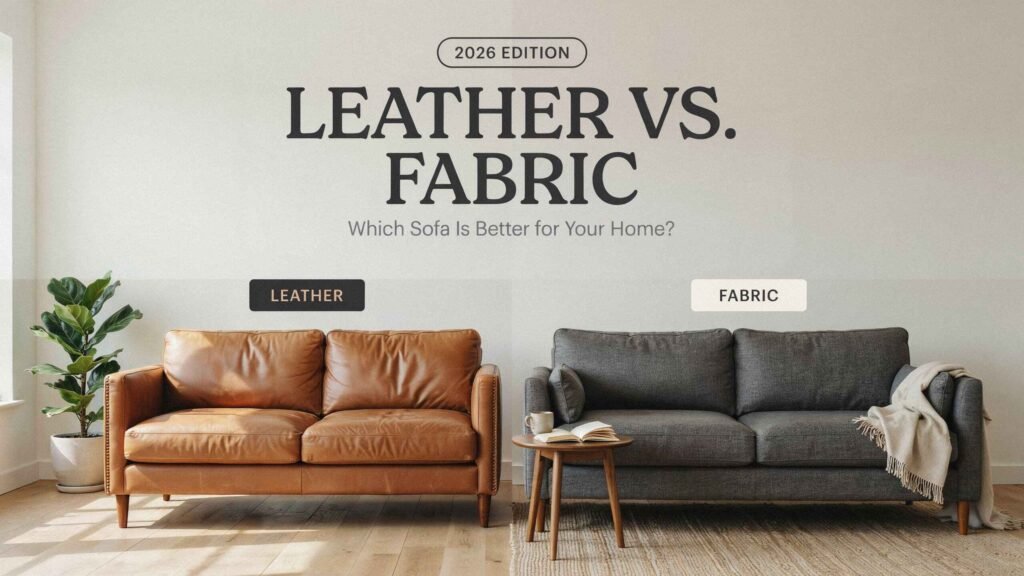
Buying a new sofa usually comes down to one big fork in the road: a leather vs. fabric sofa. It’s one of the first decisions you’ll make when furniture shopping, and it shapes almost everything else—comfort, upkeep, style, budget, and how the piece will hold up once real life (kids, pets, and spilled coffee) happens to it.
Table of Contents
What This Comparison Covers
This guide walks through every angle of the leather vs. fabric sofa debate: comfort, durability, cleaning, appearance, price, pet and kid friendliness, and climate suitability. Instead of declaring one material an outright winner, we’ll break down where each one genuinely performs better so you can match the material to your own household.
Why Choosing the Right Sofa Material Matters
A sofa is usually one of the most expensive and most-used pieces of furniture in a home. Pick the wrong material and you may be looking at a worn, stained, or sagging centerpiece within a couple of years. Pick the right one, and it can stay comfortable and good-looking for a decade or more. The material you choose affects daily comfort, long-term durability, resale value, and how much maintenance becomes part of your routine.
Who Should Choose Leather or Fabric
Broadly speaking, leather tends to suit households that want durability, easy wipe-downs, and a polished look, while fabric tends to suit households that prioritize softness, warmth, variety of colors and patterns, and a lower upfront cost. But there are exceptions on both sides, which is exactly why this comparison exists.
Quick Answer for Readers in a Hurry
If you want the short version: leather is generally more durable and easier to wipe clean, while fabric is generally softer, warmer, and more affordable. Leather tends to win for pet owners and low-maintenance households; fabric tends to win for families who want coziness and budget flexibility. Read on for the full breakdown.
It’s also worth remembering that “leather” and “fabric” aren’t single materials—each covers a whole spectrum of options. A full-grain leather sofa behaves very differently from a bonded leather one, just as a performance polyester weave behaves very differently from a delicate silk blend. So while this guide gives you the general rules of the leather vs. fabric sofa debate, the specific grade or fiber you choose within each category will shift the comparison in real, practical ways. Keep that in mind as you read through each section, and use the internal links throughout this guide to dig deeper into any material that catches your interest.
Leather vs Fabric Sofa: Quick Comparison
| Feature | Leather Sofa | Fabric Sofa |
|---|---|---|
| Comfort | Cool and slightly firm at first, softens with use | Soft and plush from day one |
| Durability | Very high, especially full-grain and top-grain | Moderate to high, depends on weave and fiber |
| Maintenance | Wipe clean, occasional conditioning | Vacuuming, spot cleaning, sometimes professional cleaning |
| Appearance | Sleek, polished, timeless | Wide range of colors, patterns, and textures |
| Cost | Higher upfront investment | Generally more budget-friendly |
| Lifespan | 15–25+ years with care | 7–15 years depending on fabric quality |
| Pet Friendly | High (resists scratches, wipes clean) | Moderate (fur clings, snags possible) |
| Kid Friendly | High for spills, moderate for comfort | High for comfort, moderate for stains |
| Best For | Busy households, pet owners, long-term buyers | Families, cozy interiors, budget-conscious buyers |
What Is a Leather Sofa?
A leather sofa is upholstered in tanned animal hide (most commonly cowhide) rather than woven or knitted fabric. Leather has been used in furniture for centuries because of its natural durability, and it remains one of the most requested upholstery types for anyone wanting a sofa that ages well rather than wearing out.
Types of Leather Used in Sofas
Full-Grain Leather — The highest quality leather, made from the entire top layer of the hide with its natural grain and markings left intact. It develops a rich patina over time and is prizes for longevity. Learn more in our Full-Grain Leather Explained guide.
Top-Grain Leather — Sanded and finished for a more uniform look, top-grain leather offers excellent durability at a more accessible price than full-grain. See our Top-Grain Leather Explained breakdown for details.
Genuine Leather — Despite the reassuring name, genuine leather is actually a lower grade, made from leftover layers of the hide bonded or treated to look uniform. It’s more affordable but doesn’t last as long as full-grain or top-grain.
Faux Leather — A synthetic alternative made from polyurethane or PVC designed to mimic real leather. It’s budget-friendly and animal-free, though it doesn’t develop the same natural patina and tends to crack sooner. Our Faux Leather Sofa Guide covers this in depth.
What Is a Fabric Sofa?
A fabric sofa is upholstered in woven, knitted, or looped textile rather than hide. Fabric sofas dominate the market because they offer far more variety in color, pattern, and texture than leather ever could, and they tend to feel warmer and softer to sit on.
Common Fabric Sofa Materials
Cotton — Breathable and soft, though it wrinkles easily and stains more readily without treatment. Details in our Cotton Sofa Material guide.
Linen — A natural, textured fabric with a relaxed, airy look, best suited to lower-traffic rooms. See Linen Sofa Material.
Polyester — Affordable, stain-resistant, and widely used in performance fabrics for busy households. Read our Polyester Sofa Material guide.
Velvet — Plush, densely piled, and visually rich, velvet adds drama but can show pile marks over time. Full details in Velvet Sofa Material.
Chenille — Soft and textured with a slightly fuzzy surface, chenille is comfortable and moderately durable. See Chenille Sofa Material.
Microfiber — A synthetic, tightly woven fabric that resists stains and is popular for family rooms. Learn more in Microfiber Sofa Material.
Bouclé — A looped, nubby wool-based fabric associated with modern, minimalist interiors. Covered in our Bouclé Sofa Material guide.
Silk Blend — Silk fibers combined with sturdier materials for a soft, elegant sheen, best for formal, low-traffic rooms. See Silk Blend Sofa Material.
Leather vs Fabric Sofa: Comfort Comparison
Softness: Fabric wins on initial softness. Most woven and looped fabrics feel plush and inviting the moment you sit down, while leather starts out firmer and only softens as it breaks in over months of use.
Breathability: Fabric is generally more breathable, letting air pass through the weave. Leather can feel warm in summer, though high-quality full-grain leather does breathe better than bonded or faux versions.
Temperature: Leather tends to feel cool to the touch initially and can become warm with prolonged contact, while fabric maintains a more neutral temperature regardless of the season.
Long-term comfort: Fabric holds its plush feel with less “training” needed, while leather often becomes more comfortable over years of use as it molds slightly to the body and softens.
Winner: Fabric, for most households — though leather lovers often say the initial firmness is a fair trade for how it feels once broken in.
It’s also worth noting that comfort isn’t purely about the upholstery surface — cushion fill, frame construction, and seat depth all play a role too. A fabric sofa with cheap foam can feel less comfortable than a well-built leather sofa with high-density cushioning, so don’t judge comfort by material alone. If possible, sit on both types in a showroom for at least a few minutes before deciding, since photos and product descriptions rarely capture how a sofa actually feels under real body weight.
Leather vs Fabric Sofa: Durability Comparison
Wear resistance: Full-grain and top-grain leather are exceptionally resistant to daily wear and rarely show signs of thinning. High-performance fabrics like polyester and microfiber also hold up well, though natural fibers like cotton and linen wear faster.
Scratch resistance: Leather can show scratches from pets or sharp objects, but light surface marks often blend into the natural grain over time. Fabric doesn’t scratch the same way, though loops in materials like bouclé can snag.
Fading: Both materials can fade with prolonged sun exposure, but leather is often more visibly affected since color changes show clearly across a solid surface, while patterned fabrics can hide fading better.
Lifespan: A well-cared-for leather sofa can last 15 to 25 years or more, while fabric sofas typically last 7 to 15 years depending on fiber quality and household traffic.
Winner: Leather, particularly full-grain and top-grain varieties, for sheer long-term structural durability.
That said, durability is never just about the material — it’s also about grade and construction quality. A poorly tanned genuine leather can wear out faster than a tightly woven, high-denier performance fabric. When comparing durability in a showroom or online listing, look past the broad “leather” or “fabric” label and check the specific grade, weave density, or rub count (a textile industry measure of abrasion resistance) whenever it’s listed, since this tells you far more than the material category alone.
Leather vs Fabric Sofa: Maintenance & Cleaning
Cleaning: Leather can usually be wiped down with a soft, slightly damp cloth. Fabric requires vacuuming and, depending on the material, specific cleaning codes (water-based, solvent-based, or dry-clean only).
Stains: Leather is more stain-resistant on the surface since spills tend to sit on top rather than soak in immediately, provided they’re wiped up quickly. Fabric can absorb spills faster, making prompt blotting essential.
Water resistance: Leather handles light moisture better than most untreated fabrics, though prolonged water exposure can still damage it. Performance fabrics with stain-resistant treatments can rival leather here.
Conditioning: Leather needs conditioning roughly every six to twelve months to prevent drying and cracking. Fabric doesn’t require conditioning but may need occasional professional cleaning for deeper stains or odor removal.
Daily maintenance: Leather generally needs less day-to-day upkeep — a quick wipe is often enough. Fabric benefits from weekly vacuuming to prevent dust and debris from settling into the weave.
Winner: Leather, for households that want minimal day-to-day maintenance.
One thing many first-time leather buyers overlook is that not all leathers are maintained the same way. Aniline leather, prized for its natural, untreated look, is more absorbent and stains more easily than pigmented or semi-aniline leather, which has a protective topcoat. Similarly, not all fabrics are equally demanding — performance fabrics treated for stain resistance can often be cleaned with nothing more than mild soap and water, closing much of the maintenance gap with leather. Always check the manufacturer’s care tag before assuming how demanding a specific sofa will be to maintain.
Leather vs Fabric Sofa: Appearance & Style
Modern homes: Leather suits sleek, contemporary, and industrial interiors particularly well, offering clean lines and a polished finish.
Traditional homes: Both materials work in traditional spaces — leather often channels a classic study or library look, while fabrics like velvet and linen suit softer, more ornate interiors.
Luxury interiors: Full-grain leather and rich fabrics like velvet or silk blends are both considered luxury-tier upholstery, so the choice here comes down to personal taste rather than one being objectively more upscale.
Color options: Fabric wins decisively here, offering virtually unlimited colors, prints, and textures. Leather is typically limited to natural hide tones, though dyed and pigmented options expand the palette somewhat.
Texture choices: Fabric again offers more variety — from the looped texture of bouclé to the pile of velvet — while leather offers a more uniform tactile experience with variation mainly in grain and finish.
Winner: Fabric, for style versatility; leather, for timeless polish. This one is genuinely a tie depending on your design goals.
If you’re torn between the two, consider a hybrid approach: many designers pair a leather sofa with fabric accent chairs, or vice versa, to get the best of both worlds — durability in the main seating piece and pattern or texture variety elsewhere in the room. This is a common trick in both residential and commercial interior design, since it avoids the “showroom matched set” look while still keeping the space cohesive.
Leather vs Fabric Sofa: Price Comparison
| Sofa Type | Average Price |
|---|---|
| Fabric Sofa | $600 – $2,500 |
| Genuine Leather Sofa | $800 – $2,000 |
| Top-Grain Leather Sofa | $1,500 – $4,000 |
| Full-Grain Leather Sofa | $2,500 – $8,000+ |
Fabric sofas generally offer the widest price range and the most accessible entry point, while full-grain leather sits at the top of the market. Top-grain leather often represents a middle ground — genuine leather quality without the full-grain price tag.
Prices above are general market ranges and will vary by brand, region, and construction quality. A well-built fabric sofa with a solid hardwood frame can easily cost more than an entry-level leather sofa with a lower-grade frame, so price alone isn’t a reliable stand-in for quality. When comparing two sofas at a similar price point, check the frame material, cushion fill, and stitching quality in addition to the upholstery type — these details often matter more to long-term satisfaction than the leather-versus-fabric decision itself.
Leather vs Fabric Sofa for Pets
Scratch resistance: Leather, particularly top-grain, resists claw damage better than most fabrics, though very sharp claws can still leave marks.
Pet hair: Leather sheds pet hair easily with a simple wipe, while fabric — especially looped or textured weaves — tends to trap hair, requiring more frequent vacuuming.
Odor: Leather doesn’t absorb odors the way porous fabrics can, making it easier to keep smelling fresh in a pet-heavy household.
Cleaning accidents: Leather handles accidents far more gracefully since liquids sit on the surface rather than soaking in immediately.
Winner: Leather, especially top-grain leather, for pet owners.
Leather vs Fabric Sofa for Families with Kids
Spills: Leather is more forgiving of spills since it can be wiped clean quickly before liquid sets in. Fabric requires faster action and sometimes leaves residual marks even after blotting.
Stains: Leather resists staining better on the surface, though fabric with a stain-resistant or performance treatment can come close.
Daily use: Both materials can handle heavy daily use if you choose the right grade — top-grain leather or performance fabric are the standout choices for busy family rooms.
Safety: Fabric tends to feel warmer and softer for children lounging or napping, while leather can feel slippery or cool, particularly in air-conditioned rooms.
Winner: It’s close, but leather (specifically top-grain) edges out fabric for stain and spill resistance, while fabric wins on comfort for young kids.
Leather vs Fabric Sofa by Climate
Hot Climate
In warm, humid environments, leather can feel sticky against bare skin and may be more prone to sweat absorption issues. Breathable fabrics like cotton or linen tend to feel more comfortable in hot climates.
Cold Climate
In cooler climates, leather can feel chilly to sit on initially, though it warms up with body heat. Fabric, especially thicker weaves like chenille or bouclé, tends to feel cozier from the moment you sit down.
Winner: Fabric for hot and humid climates; fabric also edges out leather for cold climates thanks to its immediate coziness, though leather remains a strong performer indoors with climate control.
Homes with strong air conditioning or central heating can largely offset climate-related discomfort for either material, which is why climate should be treated as a secondary factor rather than the deciding one. If you live somewhere with high humidity, however, it’s worth knowing that leather can be more prone to mold or mildew in poorly ventilated rooms if moisture isn’t managed, while fabric in humid climates should ideally be a moisture-resistant or performance-treated weave to avoid musty odors over time.
Pros and Cons of Leather Sofas
Pros
- Long lifespan with proper care
- Easy to wipe clean
- Resists pet hair and odor
- Ages into a rich patina (full-grain especially)
- Timeless, versatile look
Cons
- Higher upfront cost, especially full-grain
- Can feel cold or sticky depending on climate
- Susceptible to scratches from sharp claws or objects
- Limited color and texture variety
- Requires periodic conditioning
Pros and Cons of Fabric Sofas
Pros
- Wide range of colors, patterns, and textures
- Soft, cozy feel from day one
- Generally more affordable
- Better breathability in warm climates
- Easier to find a style match for any interior
Cons
- More prone to staining and absorbing spills
- Can trap pet hair and dust
- Shorter average lifespan than leather
- Some fabrics require professional cleaning
- Certain fibers pill or crush with heavy use
Leather vs Fabric Sofa: Which One Lasts Longer?
Expected lifespan: Leather, particularly full-grain and top-grain, typically outlasts fabric by several years, often reaching 15 to 25+ years with proper conditioning. Fabric sofas usually last 7 to 15 years, with performance fabrics on the higher end of that range.
Value for money: While leather costs more upfront, its longer lifespan can make the cost-per-year comparable to or lower than replacing fabric sofas more frequently.
Long-term ownership costs: Leather requires occasional conditioner purchases, while fabric may need more frequent professional cleanings or replacement of covers. Both come with maintenance costs, but leather’s costs tend to be lower in frequency.
Who Should Buy a Leather Sofa?
Best for:
- Luxury homes seeking a polished, timeless centerpiece
- Professionals who want a low-maintenance, wipeable surface
- Pet owners looking for scratch and odor resistance
- Long-term buyers planning to keep a sofa for over a decade
Who Should Buy a Fabric Sofa?
Best for:
- Families who prioritize comfort and softness for young kids
- Budget-conscious buyers wanting more style options at a lower price
- Anyone furnishing a cozy, warm interior
- Buyers who want variety in color, pattern, and texture
Expert Buying Tips Before Choosing
Budget: Decide your ceiling first — fabric offers more flexibility at lower price points, while leather rewards a bigger upfront investment with longevity.
Lifestyle: Busy, high-traffic households benefit from more forgiving materials like top-grain leather or performance fabric.
Maintenance: Be honest about how much upkeep you’re willing to do. Leather needs occasional conditioning; some fabrics need professional cleaning.
Pets: Prioritize leather or tightly woven, pet-resistant fabrics if you have cats or dogs.
Children: Look for stain-resistant fabric or leather that can be wiped clean quickly.
Climate: Choose breathable fabric for hot, humid regions and consider leather with climate control indoors for cooler areas.
Home décor: Match the material to your design style — leather for sleek and classic looks, fabric for texture-rich and colorful interiors.
Test before you commit: Whenever possible, visit a showroom to sit on both leather and fabric options before buying online. Comfort, firmness, and texture are hard to judge from photos alone, and a sofa that looks perfect in pictures can feel completely different in person.
Ask about warranties: Reputable manufacturers typically back their upholstery with a warranty that reflects how confident they are in the material’s durability. A longer warranty period on the frame, cushions, or leather finish is often a good signal of overall build quality, regardless of which material you choose.
Frequently Asked Questions
Is leather better than fabric for a sofa? Neither is universally “better” — leather generally offers more durability and easier cleaning, while fabric offers more comfort, color variety, and a lower price point. The right choice depends on your lifestyle.
Which sofa is easier to clean? Leather is typically easier to clean since spills can usually be wiped away with a damp cloth, while fabric often needs vacuuming and spot treatment.
Which sofa lasts longer? Leather, particularly full-grain and top-grain, generally lasts longer than fabric, often by several years, when properly maintained.
Which is better for pets? Leather, especially top-grain, tends to be better for pets thanks to its scratch resistance, easy cleanup, and resistance to odor absorption.
Which is more comfortable? Fabric is generally considered more immediately comfortable due to its softness, though leather becomes more comfortable as it breaks in over time.
Is leather worth the extra cost? For buyers planning to keep their sofa for a decade or more, leather’s durability often justifies the higher upfront price through a lower cost-per-year of ownership.
Which sofa is best for families? Families often do well with top-grain leather or performance fabric, both of which balance comfort with resistance to spills and daily wear.
Which material offers the best value? Top-grain leather and performance fabrics tend to offer the strongest balance of price, durability, and style for most households.
Final Verdict: Leather vs Fabric Sofa
Choose Leather if… you want a low-maintenance, long-lasting sofa that ages gracefully, you have pets, or you’re furnishing a modern or classic interior where a polished look matters most.
Choose Fabric if… you want a soft, cozy feel from day one, more flexibility in color and pattern, a lower upfront cost, or you’re furnishing a warm-climate home where breathability matters.
Overall recommendation: There’s no single winner in the leather vs fabric sofa debate — it comes down to matching the material to your household. Busy families with pets and a preference for low maintenance tend to lean toward leather, while those who want variety, softness, and budget flexibility often find fabric to be the better long-term fit. Whichever you choose, understanding these trade-offs upfront means you’ll end up with a sofa that truly suits how you live — not just how it looks in the showroom.
For more guidance on premium options, see our Sofa Materials Explained and Luxury Sofa Materials guides, or explore How to Choose the Right Sofa Material and Best Sofa Material for Your Home for additional perspectives.
Further reading on care and buying: Consumer Reports – How to Find Quality Furniture | Good Housekeeping – Leather Couch Buying Guide | Living Spaces – How to Clean a Fabric Sofa | ScS – Leather Sofa Care Guide