
Introduction
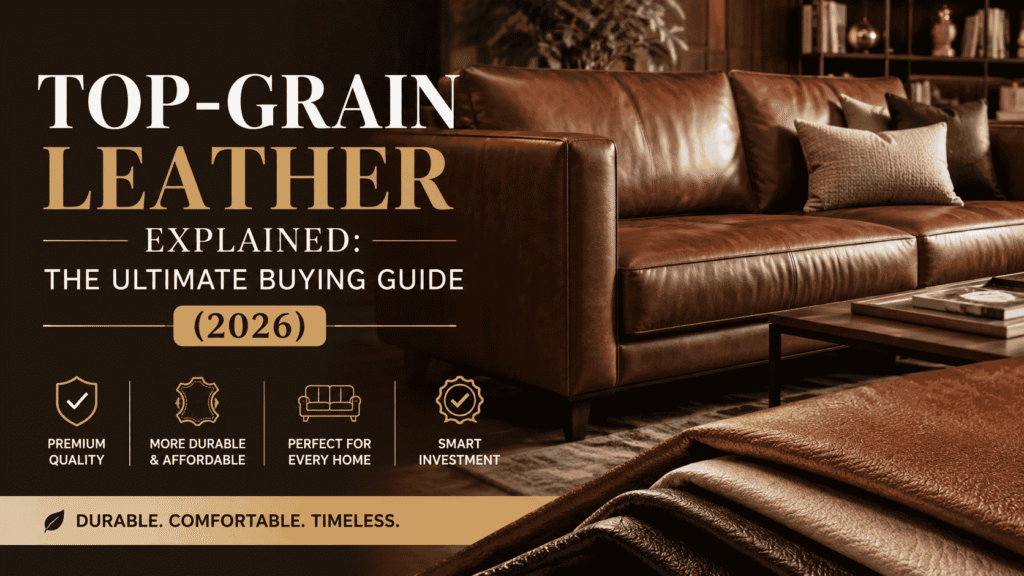
Top-grain leather is one of the most sought-after materials in furniture, bags, and interiors, prized for its balance of durability, softness, and refined appearance. It sits just below full-grain leather in quality rankings, yet for many buyers, it offers a better overall package—a smoother finish, more consistent color, and a price point that’s easier to justify.
It has become one of the most popular premium leather types because it delivers the look and feel of genuine leather without the higher cost or unpredictable surface variations of full-grain hides. Manufacturers favor it for sofas, recliners, and car interiors precisely because it performs well under daily use while still looking polished.
This leather type is best suited for buyers who want genuine leather quality with a more uniform appearance and easier maintenance — think busy households, pet owners, and anyone who wants durability without sacrificing style.
In this guide, you’ll learn exactly what top-grain leather is, how it’s made, how it compares to full-grain, genuine, and bonded leather, its pros and cons, how durable and comfortable it really is, and how to clean, maintain, and buy it with confidence.
Table of Contents
What Is Top-Grain Leather?
Definition of Top-Grain Leather
Top-grain leather is the second-highest quality grade of leather, made from the top layer of a hide after the outermost surface has been sanded down to remove imperfections and then refinished with a protective coating. This process gives it a more uniform, polished look compared to unaltered full-grain leather.
How Top-Grain Leather Is Made
The process begins with splitting the hide into layers. The top layer is separated, then lightly sanded to remove natural blemishes, scars, and inconsistencies. A finishing coat or embossed grain pattern is then applied to create a smooth, even surface, followed by dyeing and sealing to lock in color and durability.
Where It Comes From
Top-grain leather is typically sourced from cattle hides, the same raw material used for full-grain leather. The difference lies not in the source but in how the hide is processed after tanning.
Why It Is Considered Premium Leather
Despite being a step below full-grain, top-grain leather is still considered a premium material because it’s made from genuine, high-quality hide rather than scraps or synthetic layers. Its refined finish, strength, and longevity place it well above genuine and bonded leather in overall quality.
Top-Grain Leather vs. Other Leather Types
Top-Grain vs. Full-Grain Leather
Full-grain leather uses the entire top layer of the hide without sanding, preserving natural markings and developing a rich patina over time. Top-grain leather is sanded and refinished, resulting in a more consistent look but a slightly less “natural” feel. Full-grain is more expensive and generally more durable long-term, while top-grain offers easier maintenance and a more budget-friendly price.
Top-Grain vs. Genuine Leather
Despite its name, “genuine leather” is actually a lower grade, made from leftover layers of the hide bonded together. Top-grain leather is significantly more durable, more attractive, and longer-lasting than genuine leather, which tends to wear out and peel much faster.
Top-Grain vs. Bonded Leather
Bonded leather is made from shredded leather scraps mixed with adhesive and bonded onto a fabric backing. It’s the lowest-quality leather product on the market and often cracks or peels within a few years. Top-grain leather, by contrast, is a solid, genuine hide product built to last far longer.
Comparison Table
| Leather Type | Quality | Durability | Appearance | Price | Best For |
|---|---|---|---|---|---|
| Full-Grain | Highest | Very High | Natural, varied | $$$$ | Long-term investment pieces |
| Top-Grain | High | High | Smooth, consistent | $$$ | Everyday furniture and interiors |
| Genuine Leather | Moderate | Moderate | Uniform but thin | $$ | Budget-conscious buyers |
| Bonded Leather | Low | Low | Artificial look | $ | Short-term or low-use items |
Advantages of Top-Grain Leather
Soft and Comfortable
The sanding and finishing process gives top-grain leather a smooth, supple feel that’s comfortable to sit on and touch.
Durable for Everyday Use
It withstands daily wear, pressure, and movement far better than genuine or bonded leather, making it ideal for busy households.
Easy to Maintain
Its finished surface makes it simple to wipe clean, requiring less specialized care than full-grain leather.
Elegant Appearance
The refined, even finish gives furniture and accessories a polished, upscale look that suits both modern and traditional interiors.
Stain and Moisture Resistance
The protective coating applied during finishing helps top-grain leather resist spills and moisture better than untreated leather types.
Consistent Color and Finish
Because natural imperfections are sanded away, top-grain leather offers a more uniform color and texture across the entire piece.
Disadvantages of Top-Grain Leather
More Expensive Than Lower-Grade Leather
While more affordable than full-grain, it still costs significantly more than genuine or bonded leather.
Doesn’t Develop Patina Like Full-Grain Leather
Because the natural grain is sanded away, top-grain leather doesn’t age with the same rich, evolving character that full-grain leather develops over time.
Surface Can Scratch
The finished coating can be scratched by sharp objects or pet claws, sometimes revealing a lighter layer underneath.
Requires Proper Care
While easier to maintain than full-grain, it still needs regular cleaning and occasional conditioning to stay in top condition.
How Durable Is Top-Grain Leather?
Expected Lifespan
With proper care, top-grain leather furniture can last 10 to 20 years, making it a strong long-term investment.
Wear Resistance
Its finished surface holds up well against everyday friction, pressure, and general household use.
Pet Friendliness
Top-grain leather is one of the more pet-friendly leather options, as it resists scratches better than unfinished leather and is easy to wipe clean.
Family-Friendly Performance
Its resistance to stains and general wear makes it a practical choice for households with children and frequent daily use.
Is Top-Grain Leather Comfortable?
Breathability
Top-grain leather is moderately breathable, helping to reduce the sticky feeling associated with lower-quality synthetic materials.
Softness
The sanded, finished surface gives it a smooth, soft-to-the-touch quality that improves with light use.
Temperature Performance
It adjusts reasonably well to room temperature, staying more comfortable in varying climates than vinyl or bonded leather alternatives.
Long-Term Comfort
Unlike synthetic leathers that can stiffen or crack, top-grain leather tends to remain comfortable and supple for years with proper conditioning.
Common Uses of Top-Grain Leather
Sofas
One of the most popular applications, offering durability and style for living room furniture.
Recliners
Its flexibility and comfort make it well-suited for furniture that requires frequent movement and reclining.
Dining Chairs
Provides an easy-to-clean, elegant surface for chairs exposed to spills and daily use.
Office Furniture
Common in executive chairs and office seating for its professional appearance and durability.
Car Interiors
Widely used in mid-to-premium vehicle interiors for its balance of comfort and resilience.
Bags and Accessories
Frequently used in handbags, wallets, and belts due to its combination of strength and refined finish.
How to Identify Genuine Top-Grain Leather
Check the texture.
Genuine top-grain leather has a smooth, slightly uniform texture without the plastic-like feel of synthetic alternatives.
Feel the Surface
Authentic leather feels warm and slightly soft to the touch, while synthetic materials often feel cooler and stiffer.
Smell Test
Real leather typically carries a distinct, natural leather scent, whereas synthetic materials often lack this or smell chemical.
Read Product Labels
Look for labeling that explicitly states “top-grain leather,” as vague terms like “leather look” or “leather match” often indicate synthetic or blended materials.
Verify Manufacturer Information
Reputable manufacturers typically provide detailed sourcing and material information, which can help confirm authenticity.
How to Clean and Maintain Top-Grain Leather
Weekly Cleaning
Wipe down the surface with a soft, dry, or slightly damp cloth to remove dust and surface debris.
Monthly Maintenance
Use a leather-specific cleaner once a month to remove any buildup without damaging the finish.
Conditioning Tips
Apply a quality leather conditioner every three to six months to keep the surface supple and prevent drying or cracking.
Removing Common Stains
Blot spills immediately with a clean, dry cloth, and use a leather-safe cleaning solution for tougher stains rather than household detergents.
Mistakes to Avoid
Avoid harsh chemicals, direct heat sources, and excessive water exposure, all of which can damage the finish and shorten the leather’s lifespan.
Best Top-Grain Leather Sofa Buying Guide
Frame Quality
Look for hardwood or engineered wood frames, which offer better long-term stability than particleboard alternatives.
Cushion Material
High-density foam or a foam-and-fiber blend provides better support and longevity than low-density filling.
Leather Thickness
Thicker leather generally indicates better durability and resistance to punctures or tearing.
Stitching Quality
Tight, even stitching is a sign of quality craftsmanship and helps prevent seams from loosening over time.
Warranty
A solid warranty reflects manufacturer confidence in the leather’s quality and construction.
Budget Considerations
Top-grain leather typically offers the best value among genuine leather types, balancing quality and affordability.
Is Top-Grain Leather Worth the Price?
Cost vs. Value
Given its durability, easy maintenance, and polished appearance, top-grain leather generally delivers strong value relative to its cost.
Long-Term Investment
Its extended lifespan often makes it more cost-effective over time compared to cheaper materials that require frequent replacement.
Who Should Buy It?
Ideal for households wanting genuine leather quality with easier upkeep, including families, pet owners, and those furnishing high-traffic spaces.
Who Should Consider Other Options?
Buyers seeking the natural patina and unique character of leather may prefer full-grain, while those on a tighter budget might consider genuine leather.
Frequently Asked Questions
Is top-grain leather real leather?
Yes, top-grain leather is genuine leather made from the top layer of an animal hide, processed and finished for a smoother appearance.
Is top-grain leather better than genuine leather?
Yes, top-grain leather is a higher-quality material than what’s labeled “genuine leather,” offering better durability and a more refined finish.
Does top-grain leather crack over time?
With proper conditioning and care, top-grain leather resists cracking well, though neglecting maintenance can lead to dryness and surface damage.
How long does top-grain leather last?
With regular care, top-grain leather furniture typically lasts between 10 and 20 years.
Is top-grain leather waterproof?
It is moisture-resistant due to its protective finish, but it is not fully waterproof and should be protected from prolonged water exposure.
Can pets damage top-grain leather?
Pets can scratch the surface, though top-grain leather is more resistant to damage than unfinished or lower-grade leather types.
Is top-grain leather good for families?
Yes, its durability, stain resistance, and easy-clean surface make it a practical choice for family households.
Final Verdict
Top-grain leather strikes an effective balance between quality, durability, and affordability, making it one of the most practical premium leather choices available today. It offers a smooth, consistent finish, strong resistance to everyday wear, and a level of comfort that holds up well over years of use.
Pros recap: Soft and comfortable, durable, easy to maintain, elegant appearance, stain-resistant, consistent finish.
Cons recap: More expensive than lower-grade leather, doesn’t develop patina, surface can scratch, still requires proper care.
Top-grain leather is best suited for families, pet owners, and anyone furnishing high-traffic spaces who wants genuine leather quality without the higher price or upkeep demands of full-grain leather. For those seeking a unique, evolving patina, full-grain remains the better choice — but for most buyers, top-grain leather offers the smartest balance of style, durability, and value.