
Introduction
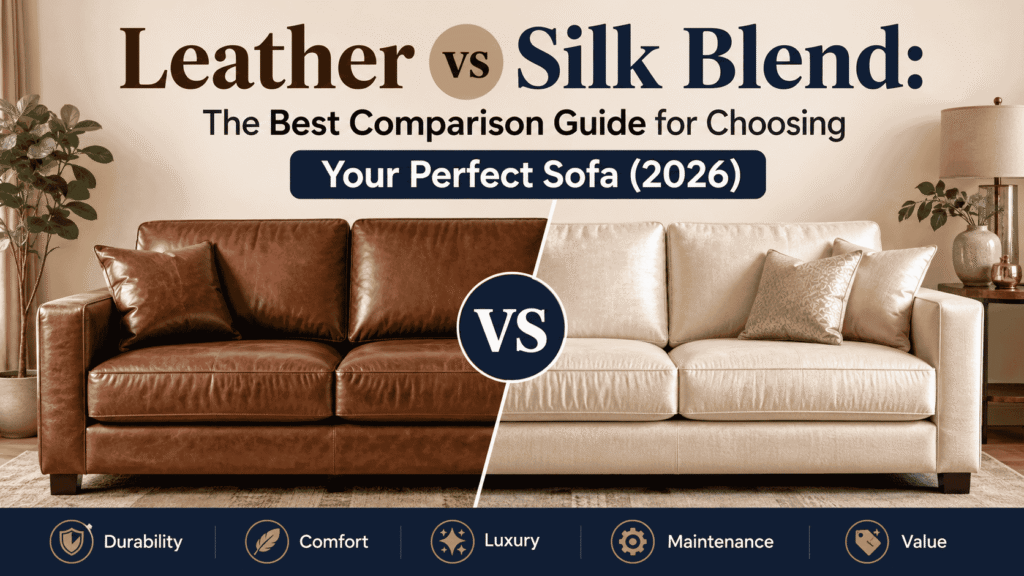
Choosing a sofa is never just about how it looks in the showroom. The material you pick affects how your living room feels, how much time you’ll spend cleaning, how long the piece will last, and how much money you’ll ultimately spend over its lifetime. Two of the most popular—and most different—options on the market today are leather and silk-blend upholstery. This leather vs. silk blend comparison breaks down everything you need to know before you buy.
Leather has long been the go-to choice for durability and a masculine, timeless look. Silk blends, on the other hand, have grown in popularity for their soft hand-feel, elegant sheen, and versatility in modern and traditional interiors alike. Both materials sit at the higher end of the upholstery spectrum, but they serve very different lifestyles.
A sofa is typically one of the largest furniture investments in any home, and unlike a rug or a set of curtains, it isn’t something most people swap out every year or two. That means the material decision you make today will shape your daily comfort, your cleaning routine, and your budget for years—sometimes decades—to come. Pick a material that doesn’t match your lifestyle, and you could end up with a sofa that stains within the first month, sags within a couple of years, or simply doesn’t hold up to the realities of kids, pets, or daily use.
This guide is for anyone actively shopping for a new sofa and trying to decide between these two premium materials—whether you’re furnishing a family room, a formal living space, a pet-friendly home, or a luxury interior. By the end of this leather vs. silk blend comparison, you’ll understand the strengths and weaknesses of each material across appearance, comfort, durability, maintenance, and price, so you can make a confident, informed decision that fits both your design vision and your day-to-day reality.
Here’s what you’ll learn in this guide:
- What leather and silk blend sofas actually are, and how they’re made
- A feature-by-feature comparison covering more than 15 categories
- Which material suits different homes, lifestyles, and climates
- Pros and cons of each option
- Maintenance and cleaning tips
- A full price comparison across budget tiers
- Answers to the most common questions buyers ask
- A final verdict to help you choose with confidence
Table of Contents
Leather vs. Silk Blend: Quick Comparison Table
If you’re short on time, here’s a quick side-by-side snapshot of how leather and silk blend sofas compare across the factors that matter most to buyers.
| Feature | Leather | Silk Blend |
|---|---|---|
| Appearance | Rich, classic, masculine | Elegant, soft sheen, luxurious |
| Feel | Firm, smooth, cool to the touch | Soft, plush, warm to the touch |
| Comfort | Firm support, molds over time | Cushiony, gentle against skin |
| Durability | Very high, resists daily wear | Moderate, delicate fibers |
| Maintenance | Low to moderate | Moderate to high |
| Water Resistance | Good (with proper finish) | Poor to moderate |
| Stain Resistance | Good | Poor to moderate |
| Scratch Resistance | Moderate (pets/nails can mark it) | Poor |
| Pet Friendliness | High | Low |
| Breathability | Moderate (can feel warm in summer) | High |
| Lifespan | 15–25 years | 5–10 years |
| Price | Higher upfront cost | Mid to high, varies by blend |
| Luxury Appeal | Classic luxury | Refined, romantic luxury |
| Best For | Families, pets, heavy use | Formal rooms, low-traffic spaces |
Keep in mind that this table is a general overview—the sections below go into detail on why each material scores the way it does and where exceptions apply.
What Is a Leather Sofa?
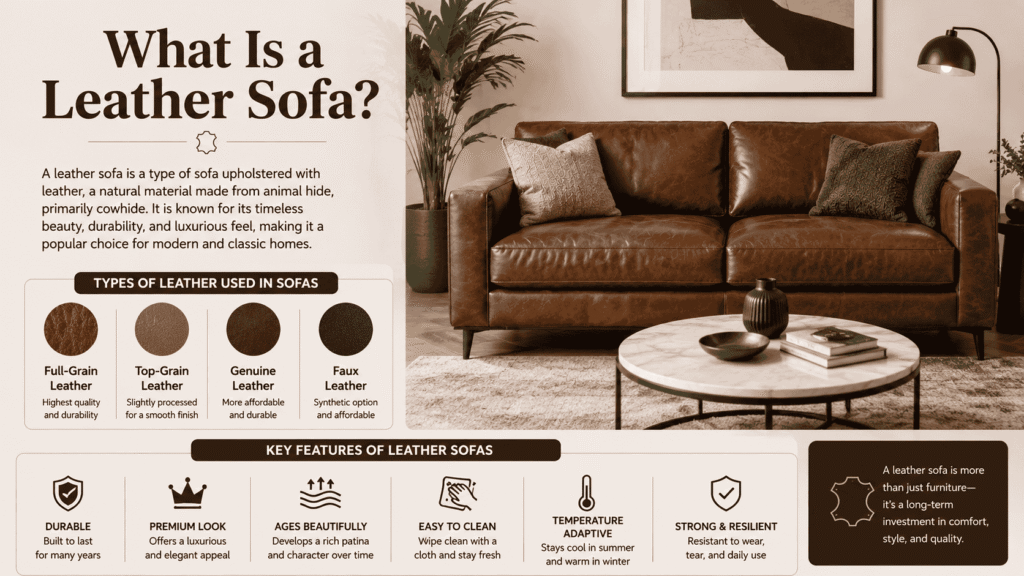
A leather sofa is upholstered using tanned animal hide, most commonly cowhide, though sheep, goat, and buffalo leather are also used in furniture manufacturing. Leather has been used for seating for centuries due to its natural durability, and it is still one of the most popular upholstery materials for sofas its natural durability, and it remains one of the most requested upholstery materials for sofas today.
How Leather Upholstery Is Made
Raw hides go through a tanning process that stabilizes the material and prevents it from decomposing. After tanning, the leather is dyed, conditioned, and sometimes coated with a protective finish. Higher-grade leathers retain more of the hide’s natural surface and texture, while lower grades are sanded, corrected, or blended with synthetic materials to create a more uniform, budget-friendly product. The type of leather used has a major impact on how the sofa looks, feels, and performs over time.
Types of Leather Used for Sofas
Full-Grain Leather The highest quality leather available. It uses the entire hide, including natural grain, marks, and texture. It’s the most durable and develops a rich patina as it ages, but it’s also the most expensive option.
Top-Grain Leather The top layer of the hide is sanded and refined to remove imperfections, then a finish coat is applied. It’s slightly less durable than full-grain but more resistant to stains and easier to clean, making it a popular mid-to-high-tier choice.
Genuine Leather: Despite the name, this is a lower-tier product made from leftover layers of the hide after the top layers are removed. It’s more affordable but less durable and doesn’t age as gracefully.
Split leather is made from the lower, fibrous layers of the hide after the top grain has been separated. It’s often embossed or coated to mimic higher-grade leather, but it’s less resistant to wear.
Bonded Leather A composite material made from shredded leather scraps bonded together with adhesive and backed with fabric. It’s the most budget-friendly option but has the shortest lifespan and can peel or crack within a few years.
Pros of Leather Sofas
- Exceptional durability and long lifespan
- Ages well and develops character over time (full-grain and top-grain)
- Resists spills and stains better than most fabrics
- Easy to wipe clean
- Naturally resistant to dust mites and allergens
- Doesn’t trap pet hair the way fabric does
- Classic, timeless appearance that suits many interior styles
Cons of Leather Sofas
- Higher upfront cost, especially for full-grain and top-grain
- Can feel cold in winter and warm/sticky in summer
- Susceptible to scratches from pets’ claws
- Fades with prolonged sun exposure
- Lower-grade leathers (bonded, genuine) can crack or peel over time.
- Repairs can be costly and require a professional
What Is a Silk Blend Sofa?
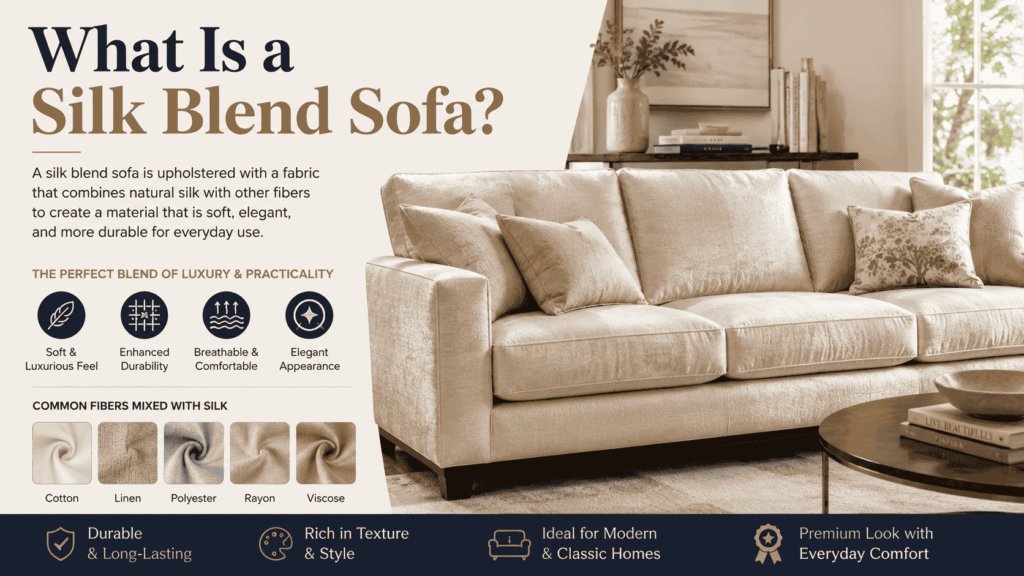
A silk blend sofa is upholstered in fabric that combines silk fibers with other natural or synthetic fibers. Pure silk is rarely used on its own for upholstery because it’s too delicate and expensive for daily seating use, so manufacturers blend it with sturdier fibers to improve durability while keeping the soft texture and subtle sheen silk is known for.
What Is Silk Blend Fabric?
Silk blend fabric is woven by combining silk threads with other yarns, typically at a ratio where silk constitutes a smaller percentage of the overall fabric. This blending process retains silk’s luxurious drape, softness, and light-reflecting quality while adding strength, resistance to wrinkling, and a lower price point than 100% silk.
Common Fibers Mixed with Silk
Cotton adds breathability and a matte softness while keeping costs reasonable. Cotton-silk blends are common in casual-luxury furniture.
Linen adds a textured, relaxed look and improves durability, though it can wrinkle more easily than other blends.
Polyester is the most common blending fiber for upholstery-grade silk fabrics. It significantly boosts durability, wrinkle resistance, and colorfastness while keeping the fabric affordable.
Rayon: A semi-synthetic fiber made from wood pulp that mimics silk’s sheen closely. Rayon-silk blends are soft and drape beautifully but are more prone to water spotting.
Viscose: Similar to rayon, viscose adds a silky sheen and smooth hand-feel at a lower cost, though it’s one of the more delicate blending options in terms of moisture resistance.
Pros of Silk Blend Sofas
- Luxurious, soft texture that feels gentle against skin
- Elegant sheen that reflects light beautifully
- Wide range of rich colors and subtle patterns
- Lightweight and breathable, ideal for warm climates
- Adds a refined, formal aesthetic to any room
- Available at a range of price points depending on the blend ratio
Cons of Silk Blend Sofas
- Prone to staining, especially from water and oil-based spills
- Not ideal for homes with pets or young children
- Can fade with direct sunlight exposure
- Shorter lifespan than leather under heavy use
- Requires professional cleaning for most stains
- Delicate fibers can snag or pull
Leather vs Silk Blend: Detailed Feature-by-Feature Comparison
Now that you understand what each material is, let’s compare leather and silk blend sofas across the specific features that matter most when making a purchase decision.
Appearance & Style
Leather brings a bold, structured look to a room. It works well in masculine, industrial, mid-century, and rustic interiors, and it tends to anchor a space rather than blend into it. A silk blend, in contrast, offers a softer, more romantic aesthetic with a subtle sheen that catches light beautifully. It suits formal living rooms, glam interiors, and traditional or transitional design styles. Neither is objectively better here—it comes down to the mood you want your space to convey.
Texture & Feel
Leather feels smooth, firm, and slightly cool to the touch, warming up with body contact. A silk blend feels soft, light, and slightly plush, offering a gentler sensory experience. If you prioritize a cozy, huggable feel, a silk blend wins. If you prefer a sleek, substantial feel, leather is the better choice.
Seating Comfort
Leather sofas tend to have firmer cushioning that molds to your body shape over months of use, offering excellent long-term support. Silk blend sofas are typically paired with softer, more cushioned foam, giving an immediately plush seating experience. Comfort preference here is subjective, but a silk blend generally feels more inviting right out of the box.
Durability
This is where leather has a clear advantage. Full-grain and top-grain leather can withstand decades of daily use, resisting punctures, abrasion, and general wear far better than silk-blend fabric. Silk blend fibers, even when reinforced with polyester or cotton, are more prone to pilling, thinning, and fiber breakdown over time, especially in high-traffic households.
Breathability
Silk blend fabric is naturally breathable and doesn’t trap heat, making it more comfortable to sit on for extended periods in warm climates. Leather, while not inherently non-breathable, can feel warm and slightly sticky in humid or hot conditions, particularly with prolonged skin contact.
Water Resistance
Leather offers decent water resistance, especially when treated with a protective finish, and spills can usually be wiped away before they soak in. Silk blend fabric is far more vulnerable to water damage — moisture can leave visible rings or stains, particularly on blends with higher silk or rayon content.
Stain Resistance
Leather is significantly easier to keep stain-free, since most spills sit on the surface rather than absorbing into the material. Silk blend fabric absorbs liquids quickly, and stains — especially oil-based ones — can be difficult or impossible to fully remove without professional cleaning.
Scratch Resistance
Neither material is scratch-proof, but leather holds up better against everyday scuffs. However, leather is more vulnerable to pet claws, which can leave permanent marks. Silk blend fabric snags and pulls easily, and a single sharp scratch can create a visible run in the weave.
Fade Resistance
Both materials fade with prolonged direct sunlight exposure, but leather generally handles gradual fading more gracefully, often developing an attractive patina rather than looking worn out. Silk blend fabric can fade unevenly and lose its sheen more noticeably over time.
Wrinkle Resistance
Leather doesn’t wrinkle in the traditional sense, though it can crease at stress points over years of use. Silk blend fabric, particularly linen-silk blends, is more prone to visible wrinkling and creasing, especially in humid environments.
Pet Friendliness
Leather is the clear winner for pet owners. It doesn’t trap hair, is easy to wipe down, and resists odor absorption better than fabric. A silk blend is a poor choice for homes with pets, as claws can snag the fibers and accidents are difficult to clean thoroughly.
Child Friendliness
Leather is more forgiving of spills, crayon marks, and general roughhousing, making it a practical choice for families with young children. Silk blends require more careful supervision, as stains from juice, food, or markers can set in quickly and permanently.
Maintenance Requirements
Leather requires occasional conditioning to prevent drying and cracking, along with regular dusting and immediate spill wipe-downs. A silk blend requires more frequent, gentler care—vacuuming with a soft brush attachment, avoiding direct sunlight, and professional cleaning for most stains.
Cleaning Difficulty
Leather can typically be cleaned with a damp cloth and a leather-specific cleaner, making day-to-day maintenance simple. Silk blend often requires dry cleaning or specialized upholstery cleaning products, and improper cleaning attempts can cause discoloration or water spotting.
Lifespan
With proper care, a full-grain or top-grain leather sofa can last 15 to 25 years, often outliving other pieces of furniture in the home. Silk blend sofas typically last 5 to 10 years before showing significant wear, fading, or fiber breakdown, depending on usage and blend quality.
Eco-Friendliness
This comparison is nuanced. Leather production involves tanning chemicals and has a larger environmental footprint at the manufacturing stage, but its long lifespan means less frequent replacement. Silk-blend fabrics vary widely—natural fiber blends (cotton and linen) are more biodegradable, while polyester-heavy blends rely on synthetic, petroleum-based materials.
Cost & Value for Money
Leather sofas typically cost more upfront but offer better long-term value due to their durability and lifespan. Silk blend sofas can be more affordable initially, particularly with polyester-heavy blends, but may need replacement or reupholstering sooner, affecting long-term value.
Leather vs. Silk Blend Comparison Table
| Feature | Leather | Silk Blend | Winner |
|---|---|---|---|
| Appearance & Style | Bold, structured, classic | Soft, elegant, romantic | Tie (style-dependent) |
| Texture & Feel | Smooth, firm | Soft, plush | Silk Blend |
| Seating Comfort | Firm, molds over time | Cushiony, immediately soft | Silk Blend |
| Durability | Very high | Moderate | Leather |
| Breathability | Moderate | High | Silk Blend |
| Water Resistance | Good | Poor | Leather |
| Stain Resistance | Good | Poor | Leather |
| Scratch Resistance | Moderate | Poor | Leather |
| Fade Resistance | Good, ages gracefully | Moderate, uneven fading | Leather |
| Wrinkle Resistance | Excellent | Moderate | Leather |
| Pet Friendliness | High | Low | Leather |
| Child Friendliness | High | Moderate | Leather |
| Maintenance | Low to moderate | Moderate to high | Leather |
| Cleaning Difficulty | Easy | Moderate to hard | Leather |
| Lifespan | 15–25 years | 5–10 years | Leather |
| Eco-Friendliness | Moderate impact, long life | Varies by blend | Tie |
| Cost & Value | Higher upfront, better long-term value | Lower upfront, shorter lifespan | Tie (budget-dependent) |
Which Sofa Material Is Better for Different Homes?
The right choice in the leather vs. silk blend debate often depends less on which material is “better” overall and more on how it fits your specific household and lifestyle.
Best for Families
Leather is the more practical choice for families with active kids. It resists spills, wipes clean easily, and holds up to daily jumping, sitting, and general wear far better than silk-blend fabric.
Best for Homes with Pets
Leather again takes the win. It doesn’t trap pet hair, resists odor, and is easier to clean after accidents. Silk blends are best avoided in pet-heavy households due to their vulnerability to scratches and stains.
Best for Luxury Interiors
This one’s closer. Full-grain leather delivers classic, old-money luxury, while a silk blend delivers a softer, more romantic opulence. For formal, low-traffic living rooms or parlors, silk blends often win on sheer visual elegance.
Best for Hot Climates
A silk blend’s breathability makes it more comfortable in warm, humid environments where leather can feel sticky against skin.
Best for Cold Climates
Leather performs well in cooler climates, especially when paired with throws and cushions, and it doesn’t feel as cold once warmed by body contact as commonly assumed.
Best for Low Maintenance
Leather requires far less day-to-day upkeep. A quick wipe-down handles most spills, whereas a silk blend often needs specialized cleaning products or professional service.
Best for Budget Buyers
Silk blends, particularly polyester-heavy blends, tend to offer a lower entry price point, making them more accessible for buyers furnishing on a tighter budget.
Best for Long-Term Investment
Leather is the stronger long-term investment thanks to its extended lifespan and ability to age gracefully rather than degrade.
Leather vs. Silk Blend: Pros and Cons
Leather Pros & Cons
Pros: Long lifespan, easy to clean, stain- and water-resistant, pet- and family-friendly, ages well, classic style.
Cons: Higher upfront cost, can feel warm in summer, vulnerable to scratches from claws, requires conditioning.
Silk Blend Pros & Cons
Pros: Soft and luxurious feel, elegant sheen, breathable, wide range of colors and patterns, often lower entry cost.
Cons: Prone to staining and water damage, shorter lifespan, not pet- or child-friendly, requires careful, frequent maintenance.
How to Choose Between Leather and Silk Blend
When deciding between leather and a silk blend for your sofa, weigh the following factors:
- Your lifestyle: Active households with lots of daily use lean toward leather; formal, low-traffic spaces suit silk blends.
- Budget: Consider both upfront cost and long-term replacement cost, not just the sticker price.
- Climate: Hot, humid regions favor silk blend’s breathability; leather performs well in most other climates.
- Interior design: Match the material to your design style — bold and classic (leather) versus soft and elegant (silk blend).
- Maintenance expectations: Be honest about how much time you’re willing to spend on care and cleaning.
- Pets and children: Leather is significantly more forgiving for homes with pets or young kids.
- Frequency of use: A sofa used daily needs the durability leather provides; an occasional-use formal sofa can afford to prioritize aesthetics with a silk blend.
Care and Maintenance Tips
How to Care for Leather Sofas
- Dust weekly with a dry, soft cloth to prevent buildup.
- Wipe spills immediately with a clean, damp cloth.
- Condition every 6–12 months with a leather-specific conditioner
- Keep away from direct sunlight and heat sources to prevent drying and cracking.
- Use a leather cleaner (not household soap) for deeper cleaning.
- Avoid placing sharp objects or pet claws in direct contact with the surface.
How to Care for Silk Blend Sofas
- Vacuum regularly using a soft brush attachment on low suction
- Blot spills immediately—never rub, as it can spread the stain and damage fibers.
- Avoid direct sunlight to prevent fading and fiber weakening.
- Rotate and fluff cushions regularly to maintain their shape.
- Schedule professional upholstery cleaning at least once a year
- Test any cleaning product on a hidden area before full application
Cleaning Mistakes to Avoid
- Using household cleaners or baby wipes on leather, which can strip its finish
- Scrubbing stains on silk-blend fabric instead of blotting
- Using excess water on either material, which can cause warping or water spots
- Skipping conditioning on leather, leading to premature cracking
- Placing either sofa in direct, prolonged sunlight without protection
Leather vs. Silk Blend Price Comparison
Entry-Level
At the entry level, silk blend sofas (especially polyester-heavy blends) tend to be more affordable than leather, since bonded or faux leather options can sometimes still cost more due to the layering process involved in manufacturing.
Mid-Range
In the mid-range tier, top-grain leather and higher-silk-content blends are fairly comparable in price, though leather typically edges slightly higher due to material sourcing costs.
Premium
At the premium level, full-grain leather commands a significantly higher price than even high-silk-content blends, reflecting its superior durability and the labor-intensive tanning process.
Long-Term Ownership Cost
When you factor in lifespan, leather often proves more cost-effective over time. A leather sofa that lasts 20 years effectively costs less per year of use than a silk blend sofa that needs replacing every 7–8 years, even if the silk blend option had a lower upfront price.
To put this in perspective, imagine a mid-range leather sofa priced higher than a comparable silk blend sofa. If the leather sofa lasts roughly twice as long, its true annual cost of ownership can end up lower than the silk blend option, even before factoring in the extra spending most silk blend owners put toward professional cleaning, spot treatments, and eventual reupholstering. This is an important consideration for buyers who tend to think only in terms of the upfront price tag rather than the total cost across the sofa’s lifespan.
That said, long-term cost isn’t the only factor worth weighing. If you know a sofa is destined for a formal, rarely used room, the wear-and-tear advantage of leather becomes far less relevant, and the lower upfront cost of a silk blend option may represent the smarter financial choice for that specific use case.
Frequently Asked Questions
Is leather more durable than a silk blend?
Yes. Leather, particularly full-grain and top-grain varieties, is significantly more durable than silk-blend fabric, resisting daily wear, scratches, and general abrasion far better over time.
Which sofa is easier to clean?
Leather is easier to clean day-to-day, since most spills can be wiped away with a damp cloth. Silk blend often requires blotting and, for tougher stains, professional cleaning.
Does a silk blend wrinkle easily?
Silk blend fabric, especially linen-silk blends, is more prone to wrinkling than leather, particularly in humid conditions or with frequent use.
Is leather suitable for hot weather?
Leather can feel warm or slightly sticky in hot, humid climates, though this improves with body contact over time. A silk blend is generally more breathable and comfortable in warmer weather.
Which material lasts longer?
Leather lasts significantly longer, typically 15–25 years, compared to a silk blend’s 5–10-year average lifespan.
Which is better for pets?
Leather is the better choice for pet owners. It resists odor, doesn’t trap hair, and is far less likely to be permanently damaged by claws compared to a silk blend.
Which sofa offers a more luxurious look?
Both offer distinct forms of luxury—leather delivers classic, structured elegance, while a silk blend offers a softer, more romantic sheen. The “more luxurious” option depends on personal taste and interior style.
Is a silk-blend sofa worth buying?
Yes, for the right setting. A silk blend is an excellent choice for formal, low-traffic living rooms where its soft texture and elegant appearance can be enjoyed without the wear and tear of daily family use.
Can leather and silk blend be combined in the same room?
Absolutely. Many designers pair a leather sofa with silk blend accent pillows, drapery, or a silk blend accent chair to balance durability with softness. This combination lets you enjoy the practicality of leather on high-use pieces while adding the elegance of a silk blend through lower-contact accents.
Does leather smell different from silk-blend fabric?
New leather typically has a distinct, natural scent that fades over the first few weeks as the sofa airs out. Silk blend fabric generally has little to no inherent smell, though it can absorb odors from its environment — including pets, food, and smoke — more readily than leather does.
Common Myths About Leather and Silk Blend Sofas
Before you make your final decision, it’s worth clearing up a few misconceptions that often influence buyers unnecessarily.
Myth: All leather sofas are equally durable. In reality, durability varies enormously depending on the grade. Full-grain and top-grain leather can last decades, while bonded or genuine leather may crack or peel within just a few years. Always check the leather type before assuming long-term durability.
Myth: Silk blend sofas are too fragile for everyday living rooms. While a silk blend isn’t ideal for heavy daily use, high-polyester blends with tighter weaves can hold up reasonably well in moderate-traffic spaces, especially with a fabric protector applied.
Myth: Leather always feels cold and uncomfortable. Leather does start out cool to the touch, but it warms quickly with body contact and, when paired with high-quality cushioning, offers excellent long-term comfort and support.
Myth: Silk blend can’t be cleaned at home. Light dusting and blotting can be done at home safely; it’s only deeper stains and heavier soiling that typically require professional attention.
Final Verdict: Should You Choose Leather or Silk Blend?
Who should buy leather?
Choose leather if you have a busy household with kids or pets, want a sofa that lasts decades, prefer low day-to-day maintenance, and appreciate a classic, timeless look that only improves with age.
Who should buy a silk blend?
Choose a silk blend if you’re furnishing a formal or low-traffic living space; prioritize a soft, elegant aesthetic; live in a warmer climate; and don’t mind investing extra time into careful maintenance.
Expert recommendation
For most households, leather offers the better overall value thanks to its durability, ease of cleaning, and long lifespan. However, a silk blend remains an excellent choice for design-forward spaces where comfort of touch and visual softness take priority over heavy daily use.
Best choice based on lifestyle and budget
If you want one sofa to handle years of real life — kids, pets, guests, and daily lounging — leather is the smarter long-term investment. If you’re decorating a formal sitting room or want a luxurious accent piece that won’t see heavy traffic, a silk blend delivers unmatched softness and elegance. Ultimately, the best material in this leather vs. silk blend comparison comes down to how—and where—you plan to use your sofa.
Related Guides
- Leather Sofa Material Explained
- Silk Blend Sofa Material Explained
- Sofa Materials Explained: A Complete Guide
- Leather vs. Fabric Sofa: Which Should You Choose?
- Leather vs. Velvet Sofa Comparison
- Leather vs. Linen Sofa Comparison
- Leather vs. Microfiber Sofa Comparison
- How to Choose the Right Sofa Material
- Luxury Sofa Materials Guide
Further Reading
For additional guidance on furniture materials and care, these trusted resources offer helpful third-party insights: