
Introduction
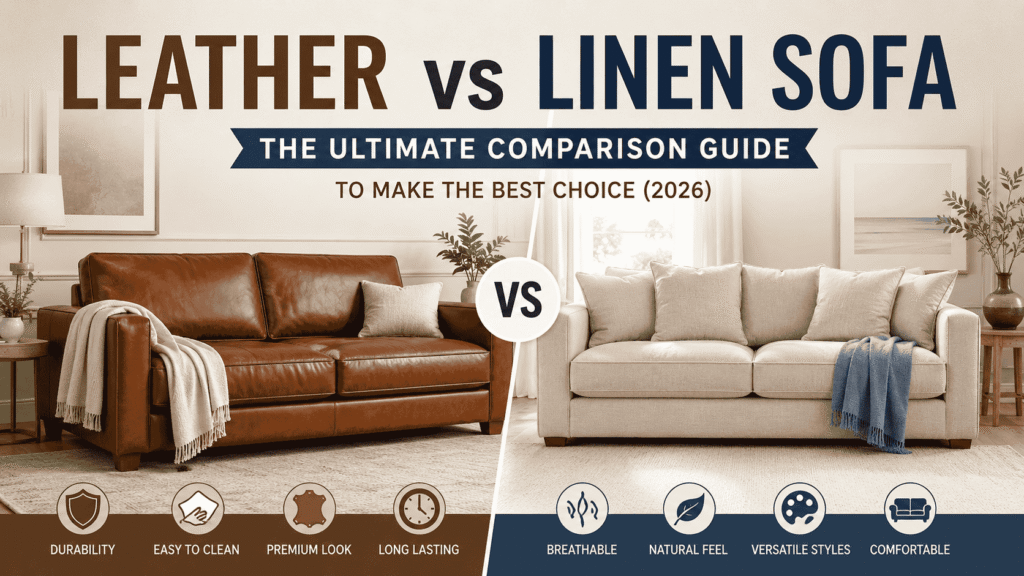
Choosing between a leather vs linen sofa is one of the biggest decisions you’ll make when furnishing your living room, because the material you pick shapes how your sofa looks, feels, and holds up for the next decade. Both materials have loyal fans — leather for its rugged, wipe-clean elegance, and linen for its soft, breathable charm — but the “right” choice depends entirely on your household, climate, and budget. This guide breaks down every angle of the leather sofa vs linen sofa debate so you can buy with confidence instead of guesswork.
Table of Contents
Leather vs Linen Sofa at a Glance
Before diving into the details, here’s a quick snapshot of how the two materials stack up.
| Category | Leather Sofa | Linen Sofa |
|---|---|---|
| Best for families | Good, if you seal spills quickly | Good, but needs fabric protection |
| Best for pets | Moderate (can scratch) | Weaker (traps hair and odour) |
| Best for luxury interiors | Excellent | Good, more casual luxury |
| Best for hot climates | Fair (can feel sticky) | Excellent (naturally cooling) |
| Best value for money | Higher upfront, lasts longer | Lower upfront, needs more upkeep |
If your priority is durability and a polished look, leather usually wins. If breathability, softness, and a relaxed aesthetic matter more, linen tends to be the better fit. We’ll unpack why below.
What Is a Leather Sofa?
A leather sofa is upholstered in tanned animal hide (or a synthetic imitation), prized for its durability, natural texture, and the way it ages gracefully with a soft patina. Not all “leather” is created equal, though — the grade of leather used has a huge impact on price, feel, and lifespan.
Types of Leather
Full-Grain Leather – The highest-quality grade, cut from the outermost layer of the hide with its natural markings left intact. Because the fibres are untouched, this grade is widely regarded as the strongest and most durable type of leather, and it develops a rich patina over decades of use (see this full-grain leather guide for a deeper technical breakdown), making it the top pick for a sofa you plan to keep for life.
Top-Grain Leather – The second-highest grade. Manufacturers sand the surface to remove blemishes, which creates a smoother, more uniform finish that’s slightly thinner and easier to work with than full-grain. It’s a popular middle-ground choice for sofas that need a clean, consistent look without the full-grain price tag.
Genuine Leather – Despite the reassuring name, this is actually a lower grade made from the split layers beneath the top of the hide. It’s more affordable but wears out faster and won’t develop the same rich patina as full- or top-grain leather.
Faux Leather – A synthetic alternative made from polyurethane or PVC. It mimics the look of real leather at a lower price point and resists water well, but it doesn’t breathe as naturally and tends to crack sooner under heavy daily use.
Key Features
- Appearance: Sleek, glossy to matte finishes that read as modern, formal, or industrial depending on the tone and stitching.
- Texture: Smooth and cool to the touch initially, softening with use.
- Lifespan: With proper care, a good-quality leather sofa can last well over a decade — our sofa lifespan guide covers how frame quality affects this further.
- Maintenance: Low daily effort (a wipe-down handles most spills), but periodic conditioning is essential to prevent cracking.
What Is a Linen Sofa?
A linen sofa is upholstered in fabric woven from the fibres of the flax plant, one of the oldest textiles in the world. It’s known for its relaxed, textured look and its ability to keep a room feeling airy and lived-in rather than showroom-stiff.
Natural Linen Fabric
100% natural linen is prizes for its breathability and Eco-credentials. Its open weave allows air to circulate freely, making it ideal for hot and humid climates, and the fibres can hold a surprising amount of moisture without ever feeling damp against the skin (this flax fibre guide explains the science in more detail) — which is exactly why linen sofas feel so much cooler to sit on during summer than most other fabrics.
Linen Blends
Pure linen wrinkles easily and can feel slightly stiff when new, so many sofa manufacturers blend it with cotton or synthetic fibres to improve softness, reduce creasing, and add a bit more resistance to everyday wear — a good compromise if you love the linen look but want less upkeep.
Key Features
- Breathability: Linen’s hollow fibre structure lets air pass through the weave, which is why it’s consistently recommended for warmer climates.
- Softness: Slightly textured when new, but softens noticeably with every wash and use.
- Eco-friendliness: Flax requires comparatively little water and few pesticides to grow, and linen is biodegradable at the end of its life.
- Casual appearance: Linen has a relaxed, “lived-in” elegance that suits farmhouse, coastal, and Scandinavian interiors especially well.
Leather vs Linen Sofa: Detailed Comparison
Appearance & Style
Leather leans modern, formal, and structured — think city apartments, minimalist living rooms, or classic Chesterfield-style seating. Linen leans casual and textural, suiting boho, coastal, farmhouse, and Scandi-inspired spaces. Leather is generally available in a narrower range of natural tones (tan, brown, black, cognac), while linen comes in a much wider colour palette, since it takes dye more easily.
Comfort
In summer, linen has the clear advantage — its breathable weave keeps you cool rather than sticking to your skin the way leather sometimes can in humid weather. In winter, leather often feels colder to sit on at first but warms quickly with body heat, while linen stays consistently cosy but can feel a little rough against bare skin in dry, cold air. Cushion feel is fairly similar between the two and depends more on the foam and frame underneath than the upholstery itself — something we cover in more depth in our sofa buying guides.
Durability
A well-maintained full-grain leather sofa can outlast a linen sofa by many years, since leather resists everyday wear, doesn’t fray, and actually looks better as it ages. Linen, while strong as a fibre, is more prone to pilling, sagging at friction points, and general wear from years of daily use — particularly in high-traffic households.
Maintenance
Leather is far easier to keep clean day-to-day — most spills wipe straight off the surface if caught quickly. Linen requires more consistent care: regular vacuuming, prompt blotting of spills, and occasional professional cleaning to keep it looking fresh. For step-by-step instructions, see our dedicated sofa cleaning and care guides.
Pet Friendliness
Neither material is completely pet-proof. Leather resists hair build-up (it just wipes off) but can be scratched by claws, especially on softer genuine or faux leather. Linen traps pet hair in its weave, is harder to fully deodorise, and offers little resistance against determined scratchers.
Kid Friendliness
Leather is generally the safer bet for young children, since most spills and marker mishaps wipe away without soaking in. Linen needs a fabric protector spray and quick action on stains, or juice and food spills can set in permanently.
Breathability
This category strongly favours linen. Its open, hollow-fibre weave allows continuous airflow, which is why linen sofas are consistently recommended for hot, humid climates, while leather can feel warm and slightly tacky in the same conditions.
Water & Stain Resistance
Leather has a natural edge here — its surface is largely non-porous, so liquids sit on top rather than soaking in immediately. Linen is absorbent by nature, which is great for comfort but means spills need to be blotted fast before they set into the fibres.
Scratch Resistance
Leather can show scratches from pets, keys, or belt buckles, though full-grain leather tends to hide minor marks better than lower grades. Linen doesn’t “scratch” in the same way, but it can snag or pull if caught on something sharp.
Fade Resistance
Both materials can fade with prolonged direct sunlight exposure. Leather may dry out and crack under UV rays if not conditioned, while linen can lighten unevenly. Keeping either sofa out of direct sun — or using UV-blocking curtains — extends the life of both.
Eco-Friendliness
Linen generally has the more sustainable profile, since flax needs relatively little water and few chemical inputs to grow, and the fabric is biodegradable. Leather’s environmental impact depends heavily on the tanning process, though full-grain leather sofas’ long lifespan does offset some of that footprint by reducing how often the sofa needs replacing.
Allergies & Dust Resistance
Leather is the better choice for allergy-prone households, since its smooth, non-porous surface doesn’t hold onto dust mites or pet dander the way woven fabric does. Linen, while naturally more hypoallergenic than many synthetic fabrics, still has an open weave that can trap airborne particles over time.
Repairability
Leather can often be professionally repaired — small scratches, scuffs, and even minor tears can be patched, recoloured, or conditioned back to life. Linen tears and heavy stains are harder to invisibly repair, though reupholstering panels is usually possible.
Lifespan
With good care, full-grain and top-grain leather sofas frequently last 15–25 years. Linen sofas typically last 7–15 years, depending on the weave quality, blend, and how heavily the sofa is used.
Price Comparison
Leather sofas — particularly full-grain — command a higher upfront price, often 30–70% more than a comparable linen sofa. Linen sofas are more budget-friendly to buy initially but may need reupholstering or professional cleaning more often over time, which can narrow the long-term cost gap.
Pros and Cons of Leather Sofa
Pros
- Luxurious, polished appearance that suits formal and modern interiors
- Long lifespan, especially full-grain and top-grain grades
- Easy to wipe clean day-to-day
- Can add perceived home value in resale or rental listings
Cons
- Higher price point, especially for full-grain leather
- Can scratch from pets, keys, or sharp objects
- Needs periodic conditioning to avoid cracking
- May feel cold in winter or warm and sticky in summer, depending on climate
Pros and Cons of Linen Sofa
Pros
- Soft, breathable, and naturally cooling in warm weather
- More eco-friendly production and biodegradable at end of life
- Comfortable in summer and humid climates
- Elegant, natural texture that suits casual and relaxed interiors
Cons
- Wrinkles and creases more easily than leather
- Stains and absorbs spills faster if not treated
- Requires more regular maintenance and occasional professional cleaning
- Shorter typical lifespan than premium full-grain leather
Leather vs Linen Sofa: Side-by-Side Comparison Table
| Feature | Leather Sofa | Linen Sofa |
|---|---|---|
| Price | Higher | Lower |
| Comfort | Warmer/cooler with temperature | Consistently breathable |
| Durability | Very high (full/top-grain) | Moderate |
| Maintenance | Low, occasional conditioning | Higher, regular care |
| Pet Friendly | Moderate | Lower |
| Kid Friendly | High | Moderate |
| Breathability | Lower | High |
| Eco-Friendly | Moderate | High |
| Luxury Look | High | Moderate-High |
| Lifespan | 15–25 years | 7–15 years |
| Best Climate | Cool/temperate | Hot/humid |
| Cleaning Difficulty | Easy | Moderate |
| Stain Resistance | High | Moderate |
| Scratch Resistance | Moderate | High |
| Overall Winner | Durability & easy care | Comfort & sustainability |
Which Sofa Is Best for Different Lifestyles?
Best for Families: Leather generally wins for busy households thanks to easy spill clean-up, though a linen blend with a protective treatment is a strong runner-up.
Best for Pet Owners: Leather is usually more forgiving for pet hair, though owners of scratch-prone pets may want a distressed or top-grain leather that hides marks better.
Best for Luxury Homes: Full-grain leather delivers the most premium, timeless look and typically holds value best in higher-end interiors.
Best for Apartments: Linen’s lighter, casual look works well in smaller spaces, and it’s generally easier to move without the weight of a full leather frame.
Best for Modern Interiors: Leather’s clean lines and structured finish suit contemporary and minimalist design schemes.
Best for Traditional Homes: Linen’s soft texture pairs naturally with classic, cottage-style, and heritage interiors.
Best for Hot Climates: Linen is the clear winner thanks to its breathable, moisture-wicking fibres.
Best for Cold Climates: Leather retains warmth well once it adjusts to body heat, making it a cosy choice in colder regions.
Best for Budget Buyers: Linen typically offers a lower entry price, though genuine or faux leather can also fit tighter budgets. See our broader sofa materials comparisons — including our leather vs fabric sofa guide and leather vs velvet sofa guide — for more budget-friendly alternatives.
Common Mistakes to Avoid When Choosing Between Leather and Linen Sofas
- Choosing based only on appearance — a sofa that looks perfect in a showroom might not suit your daily lifestyle.
- Ignoring maintenance requirements — underestimating upkeep leads to a tired-looking sofa within a couple of years.
- Not considering pets — scratch- or hair-prone households need to weigh this heavily before buying.
- Overlooking climate — a leather sofa in a hot, humid room can feel uncomfortable for much of the year.
- Buying low-quality materials — bonded leather or thin linen blends may look similar in photos but wear out far faster than genuine full-grain leather or quality woven linen.
Expert Buying Tips
- Check frame quality — hardwood or solid metal frames outlast softwood and particleboard by years.
- Test seat cushions — sit for a few minutes in-store; high-density foam (1.8 lb/ft³ or higher) holds its shape longer.
- Examine upholstery stitching — tight, even stitching signals better construction on both leather and linen sofas.
- Consider long-term costs — factor in conditioning products for leather or cleaning services for linen, not just the sticker price.
- Match your lifestyle — be honest about pets, kids, and how often the sofa will be used daily.
- Review warranty and return policy — a solid warranty on the frame and upholstery protects your investment either way.
Frequently Asked Questions (FAQs)
Is a leather sofa better than a linen sofa? Neither is universally “better” — leather generally wins on durability and ease of cleaning, while linen wins on breathability, softness, and eco-friendliness. The right choice depends on your climate, household, and style preference.
Which sofa lasts longer, leather or linen? Full-grain and top-grain leather sofas typically outlast linen sofas, often lasting 15–25 years compared to linen’s 7–15 years with regular use.
Is linen harder to clean than leather? Yes, in most cases. Leather can usually be wiped clean, while linen often needs blotting, spot treatment, or occasional professional cleaning to fully remove stains.
Which sofa is better for pets? Leather tends to be more practical for pet owners since it doesn’t trap hair or odours the way woven linen fibres can, though it can be scratched by claws.
Which sofa is more comfortable in summer? Linen is significantly more comfortable in summer thanks to its breathable, moisture-winking flax fibres, which help prevent that sticky feeling common with leather in hot weather.
Which sofa is more eco-friendly? Linen is generally considered more sustainable, since flax cultivation uses less water and fewer chemicals, and the fabric is biodegradable.
Does leather crack over time? Yes, if it isn’t conditioned regularly. Leather can dry out and crack, especially in sunlight or dry indoor heating, which is why periodic conditioning is essential.
Can linen sofas be professionally cleaned? Yes. Most linen and linen-blend sofas can be professionally steam or dry cleaned, which helps remove deep-set stains and refresh the fabric’s texture.
Which sofa offers better value for money? Leather often delivers better long-term value thanks to its longevity, while linen offers better short-term value with a lower upfront cost. Your ideal “best value” depends on how long you plan to keep the sofa.
Final Verdict: Leather vs Linen Sofa
Both materials have real strengths. Leather brings durability, easy maintenance, and a polished, long-lasting finish that suits modern, formal, and pet-conscious households willing to invest a bit more upfront. Linen brings breathability, a relaxed natural texture, and a lower price point that suits warmer climates, casual interiors, and eco-conscious buyers.
If you want a low-maintenance sofa built to last for well over a decade and don’t mind the higher price, leather is the smarter long-term investment. If comfort, softness, and sustainability matter more to you — especially in a warm climate — a linen sofa is likely the better everyday fit.
Whichever material you lean toward, take the time to check frame quality, test the cushions in person, and match the sofa to how your household actually lives day to day. For more detailed comparisons and cleaning guides to help you decide, browse our full library of sofa buying guides at SofasExpert.
Related reading: Sofa Materials Explained | Velvet Sofa Material Explained | Leather Sofa Material Explained | Bouclé Sofa Material Guide | How to Choose the Right Sofa Material | Best Sofa Material for Your Home
Further reading on care and buying: Consumer Reports – How to Find Quality Furniture | Good Housekeeping – Leather Couch Buying Guide | Living Spaces – How to Clean a Fabric Sofa | ScS – Leather Sofa Care Guide