
Introduction
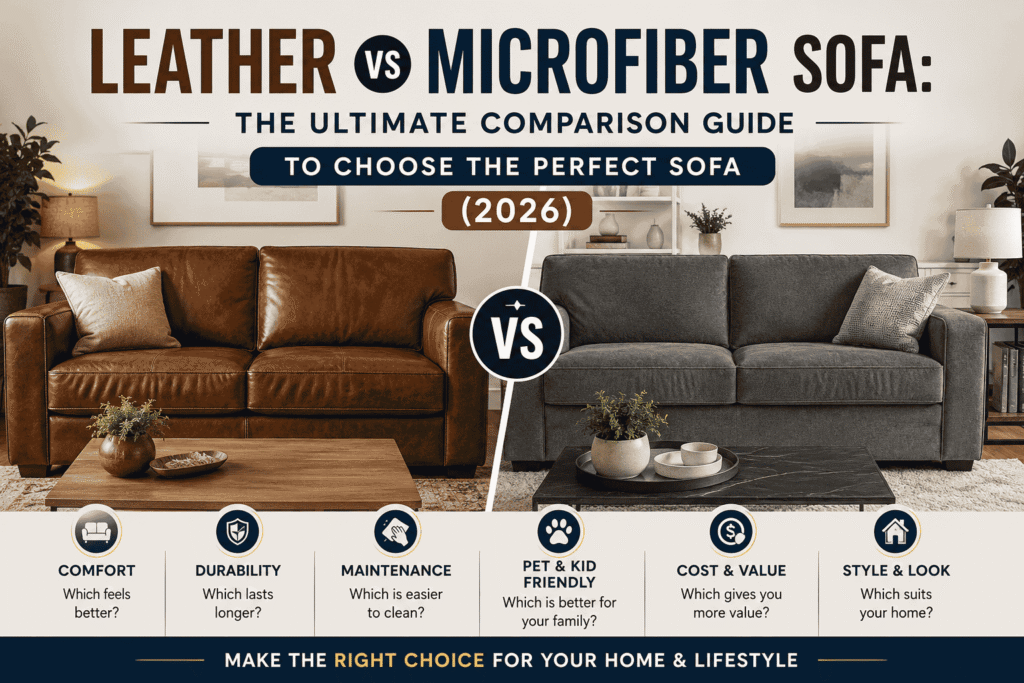
Leather vs microfiber sofa — which one is actually right for your home? It’s one of the most common questions homeowners ask when furniture shopping, and for good reason. Your sofa isn’t just a piece of furniture; it’s where you relax after work, where your kids pile up for movie night, and where your pets probably sneak a nap when you’re not looking. Getting the material wrong means dealing with years of regret, so this comparison matters more than most people realize before they buy.
In short: leather tends to suit buyers who want a long-term, upscale investment piece, while microfiber tends to suit families, pet owners, and anyone who wants an easy-care, budget-friendly option. But the full answer depends on your lifestyle, climate, and priorities — which is exactly what this guide breaks down.
By the end of this article, you’ll understand the real differences between leather and microfiber sofas, including durability, comfort, maintenance, cost, pet- and kid-friendliness, and which one wins for your specific situation. If you’re also exploring other materials, our fabric sofa buying guide is a helpful companion read.
Leather vs Microfiber Sofa at a Glance
| Factor | Leather | Microfiber |
|---|---|---|
| Appearance | Classic, upscale | Soft, casual, versatile |
| Comfort | Firm, temperature-sensitive | Warm, consistently cozy |
| Durability | 15–25 years | 5–10 years |
| Maintenance | Moderate–high | Low |
| Cost | Higher | Lower |
| Best For | Luxury homes, long-term investment | Families, pet owners, budget buyers |
Quick verdict: If longevity and prestige matter most, leather wins. If everyday practicality and affordability matter most, microfiber wins. There’s no single “best” material overall — only the best material for your household.
What Is a Leather Sofa?
A leather sofa is upholstered with hide-based material, prized for its durability and classic look. Not all leather sofas are made equal, though — the type of leather used significantly affects price, feel, and lifespan.
Types of Leather Used in Sofas
Full-Grain Leather The highest quality option, made from the outermost layer of the hide with its natural grain intact. It develops a rich patina over time and is the most durable, but also the most expensive.
Top-Grain Leather Slightly processed to remove imperfections, offering a smoother, more uniform finish. It’s more affordable than full-grain while still being highly durable.
Genuine Leather Despite the name, this is a lower grade made from leftover layers of the hide, bonded or coated. It’s more affordable but less durable than full-grain or top-grain.
Bonded Leather Made from shredded leather scraps fused together with adhesive and a polyurethane coating. It’s the most budget-friendly leather option but wears out the fastest, often cracking or peeling within a few years.
Pros of Leather Sofas
- Long lifespan with proper care
- Ages gracefully, developing character over time
- Doesn’t trap dust, dander, or odors easily
- Timeless, upscale appearance
- Wipes clean easily for most spills
Cons of Leather Sofas
- Higher upfront cost
- Can crack or fade without regular conditioning
- Feels cold in winter, sticky in summer
- Prone to scratches from pets
- Limited color and texture variety compared to fabric
What Is a Microfiber Sofa?
Microfiber is a synthetic textile, typically made from polyester, engineered to replicate the soft feel of suede. It’s a popular choice for households that prioritize comfort, affordability, and low-maintenance living.
How Microfiber Is Made
Microfiber is woven from ultra-fine synthetic fibers — often finer than a strand of human hair. These tightly woven fibers create a dense fabric surface that resists liquid penetration and gives the material its soft, brushed texture.
Types of Microfiber Upholstery
- Standard woven microfiber – The most common type, durable and affordable.
- Suede-style microfiber – Mimics the look and feel of genuine suede.
- Performance microfiber – Treated with stain-resistant coatings for extra durability, often used in family-friendly furniture lines.
Pros of Microfiber Sofas
- Budget-friendly compared to leather
- Soft, warm feel year-round
- Highly stain- and scratch-resistant
- Wide range of colors and patterns
- Easy to clean with mild soap and water
Cons of Microfiber Sofas
- Shorter lifespan than leather
- Can attract pet hair and lint
- Prone to pilling over time
- Less “premium” appearance than leather
- Synthetic material, less breathable in humid climates
Leather vs Microfiber Sofa: Side-by-Side Comparison
Appearance & Style
Leather delivers a polished, sophisticated look that suits modern, industrial, and traditional interiors alike. Microfiber offers more flexibility with color and pattern, making it easier to match specific decor themes, from cozy farmhouse to playful family rooms.
Comfort
Microfiber tends to feel warmer and softer immediately, while leather feels firm and cool at first touch, warming up as you sit. Comfort preference here is largely subjective and depends on personal taste.
Durability
Leather, especially full-grain and top-grain, is the more durable material long-term, resisting daily wear better than microfiber. Microfiber holds up well against scratches and spills but tends to show signs of aging — like pilling or flattening — sooner than leather.
Softness & Feel
Microfiber wins here for immediate plush comfort. Leather feels smooth and structured rather than soft, though high-quality leather softens slightly with age.
Maintenance & Cleaning
Microfiber requires less day-to-day effort — most stains lift with mild soap and water. Leather needs regular conditioning and more careful spill management to avoid long-term damage.
Stain Resistance
Microfiber generally resists stains better thanks to its tightly woven fibers, especially performance-treated varieties. Leather can stain if spills aren’t cleaned quickly, particularly on untreated or aniline finishes.
Water Resistance
Neither material is fully waterproof, but microfiber’s dense weave repels liquids slightly better in the short term. Leather can absorb moisture if not sealed or treated, potentially leading to staining or warping.
Scratch Resistance
Microfiber is more resistant to scratches, making it a safer choice around pets with claws. Leather can show visible scratch marks, especially lighter-colored or untreated leather.
Pet Friendliness
Microfiber resists scratching but attracts more pet hair. Leather sheds pet hair easily and resists odor absorption, but is more vulnerable to claw damage.
Child Friendliness
Both materials handle spills reasonably well, but microfiber is generally considered more forgiving for messy, high-traffic family use due to its stain resistance and lower cost if damaged.
Breathability
Leather is less breathable in humid conditions and can feel sticky in warm weather. Microfiber, being synthetic, also has limited breathability but doesn’t develop the same sticky sensation.
Allergy Considerations
Leather is often recommended for allergy sufferers since it doesn’t trap dust mites, pet dander, or allergens the way woven fabrics can. Microfiber’s tight weave helps somewhat, but it still holds more allergens than leather over time.
Colour & Design Options
Microfiber is the clear winner for variety, available in nearly unlimited colors, patterns, and textures. Leather is typically limited to natural, neutral, or classic tones.
Lifespan
Leather sofas typically last 15–25 years with proper care. Microfiber sofas usually last 5–10 years, depending on quality and usage.
Cost & Value
Microfiber sofas cost significantly less upfront, often 30–50% cheaper than comparable leather options. Leather requires a higher initial investment but can offer better long-term value due to its extended lifespan.
Environmental Impact
Leather is a natural material but its production involves livestock farming and chemical tanning processes with environmental costs. Microfiber is synthetic and petroleum-based, raising different sustainability concerns. Neither material is a clear environmental winner — buyers focused on sustainability should look for certified ec-friendly leather or recycled microfiber alternatives.
Leather vs Microfiber Sofa Comparison Table
Leather vs Microfiber Sofa Comparison Table
| Feature | Leather Sofa | Microfiber Sofa |
|---|---|---|
| Appearance | Classic, luxurious, and elegant | Soft, casual, and versatile |
| Comfort | Firm at first, softens over time | Soft and cozy from day one |
| Durability | Excellent (15–25 years) | Good (7–15 years) |
| Maintenance | Needs regular conditioning | Easy to clean and maintain |
| Water Resistance | Good if spills are cleaned quickly | Moderate |
| Stain Resistance | Moderate | Excellent |
| Pet Friendly | Can scratch easily | Better for pets and pet hair |
| Child Friendly | Easy to wipe clean | Soft and stain-resistant |
| Lifespan | 15–25 years | 7–15 years |
| Cost | Higher | More affordable |
| Best For | Luxury homes and long-term value | Families, pet owners, and budget buyers |
Which Sofa Is Easier to Clean?
Cleaning Leather Sofas
- Dust weekly with a soft, dry cloth.
- Apply a leather conditioner every 6–12 months.
- Blot spills immediately without rubbing.
- Avoid direct sunlight and heat sources to prevent cracking or fading.
Cleaning Microfiber Sofas
- Vacuum regularly using an upholstery attachment.
- Spot-clean with mild soap and water, or rubbing alcohol for tougher stains (check the manufacturer’s cleaning code first).
- Brush gently after cleaning to restore texture.
- Avoid soaking the fabric to prevent watermarks.
Which One Requires Less Maintenance?
Microfiber generally requires less ongoing maintenance. It doesn’t need conditioning like leather does, and most spills can be handled quickly without special products. For busy households, this makes microfiber the lower-effort choice.
Which Sofa Lasts Longer?
Average lifespan: Leather typically outlasts microfiber, with full-grain and top-grain leather lasting 15–25 years compared to microfiber’s 5–10 years.
Wear over time: Leather develops a natural patina that many buyers see as a feature, not a flaw. Microfiber, on the other hand, tends to pill, flatten, or fade with heavy use.
Repairability: Leather can often be professionally repaired, re-dyed, or reconditioned. Microfiber is harder to repair once damaged and is usually more cost-effective to replace than fix.
Long-term value: Despite the higher upfront cost, leather can offer better long-term value for buyers planning to keep their sofa for over a decade.
Leather vs Microfiber Sofa for Pet Owners
Dog owners: Leather resists odor absorption better, which is useful for dogs prone to shedding or occasional accidents. However, dog claws can scratch leather surfaces.
Cat owners: Microfiber’s scratch resistance makes it a safer bet for households with cats, since leather is more vulnerable to claw marks.
Scratch resistance: Microfiber outperforms leather here, especially for pets who like to knead or scratch furniture.
Hair removal: Leather sheds pet hair with a simple wipe-down, while microfiber’s textured surface tends to hold onto hair, requiring more frequent vacuuming.
Odour resistance: Leather doesn’t absorb pet odors as readily as microfiber, which can retain smells over time if not cleaned regularly.
Leather vs Microfiber Sofa for Families with Kids
Spill resistance: Microfiber’s tight weave handles spills better in the moment, especially with performance-treated fabric.
Easy cleaning: Microfiber is more forgiving for kid-related messes — most stains lift with mild soap and water.
Safety: Both materials are generally safe, though leather can feel slippery for younger kids, while microfiber offers better grip.
Daily durability: Microfiber tends to handle rough, everyday family use — jumping, spills, crayon marks — better than leather, which requires more careful handling.
Which Sofa Is Better for Different Climates?
Hot Weather
Microfiber performs better in hot climates since leather can feel sticky and uncomfortable in high heat and humidity.
Cold Weather
Microfiber retains warmth better, making it more comfortable in cold climates, while leather can feel cold to the touch initially.
Humid Areas
Leather is more sensitive to humidity, which can lead to mold growth or material degradation if not properly ventilated. Microfiber handles humidity slightly better but still benefits from good airflow.
Cost Comparison
Initial purchase price: Microfiber sofas are typically 30–50% cheaper than comparable leather sofas.
Maintenance costs: Leather requires ongoing investment in conditioners and professional cleaning, while microfiber’s maintenance costs are minimal.
Long-term investment: Leather’s longer lifespan can offset its higher initial price over a decade or more of use.
Best value for money: For buyers who replace furniture every 5–10 years, microfiber often delivers better value. For those planning to keep a sofa for 15+ years, leather can be the smarter financial choice.
Who Should Buy a Leather Sofa?
Ideal for:
- Luxury homes and upscale interiors
- Modern or classic design aesthetics
- Buyers looking for a long-term investment piece
- Allergy-conscious buyers who want a material that doesn’t trap dust or dander
Who Should Buy a Microfiber Sofa?
Ideal for:
- Families with young children
- Pet owners, especially those with cats
- Budget-conscious buyers
- Busy households that want low-maintenance furniture
Leather vs Microfiber Sofa: Pros and Cons
Leather Sofa Pros & Cons
Pros: Long lifespan, ages well, doesn’t trap allergens, timeless look, easy to wipe clean. Cons: Higher cost, needs conditioning, temperature-sensitive, scratch-prone, limited color options.
Microfiber Sofa Pros & Cons
Pros: Affordable, soft and warm, stain- and scratch-resistant, wide color variety, low maintenance. Cons: Shorter lifespan, attracts pet hair, prone to pilling, less premium look, less breathable.
Common Buying Mistakes to Avoid
- Choosing based only on appearance — factor in durability and maintenance, not just looks.
- Ignoring maintenance requirements — leather needs conditioning; skipping it shortens lifespan significantly.
- Not considering pets and children — the wrong material can mean constant repairs or replacements.
- Buying low-quality upholstery — bonded leather and low-grade microfiber wear out much faster than premium versions.
- Overlooking room climate — humidity and temperature affect both materials differently.
For more on avoiding costly furniture mistakes, check out our complete sofa buying guide.
Frequently Asked Questions (FAQs)
Is leather better than microfiber for sofas? It depends on your priorities. Leather is better for durability, longevity, and a premium look, while microfiber is better for comfort, affordability, and easy maintenance.
Which sofa lasts longer: leather or microfiber? Leather generally lasts longer, with a typical lifespan of 15–25 years compared to microfiber’s 5–10 years.
Is microfiber easier to clean than leather? Yes. Microfiber requires less specialized care and handles spills and stains more easily with mild soap and water, while leather needs regular conditioning and careful spill management.
Which sofa is better for pets? It depends on the pet. Microfiber is more scratch-resistant, making it better for cats, while leather resists odor and hair better, making it a good option for dog owners.
Which sofa is more comfortable? Comfort is subjective, but microfiber tends to feel softer and warmer immediately, while leather feels firmer and takes time to adjust to body temperature.
Does microfiber look as luxurious as leather? Modern microfiber can look refined, but leather still holds the edge for a premium, high-end aesthetic in most interior design contexts.
Which sofa is best for allergy sufferers? Leather is generally better for allergy sufferers since it doesn’t trap dust mites, pet dander, or other allergens the way woven fabrics can.
Is leather worth the extra cost? For buyers planning to keep their sofa long-term, leather’s durability and lifespan can justify the higher upfront price. For shorter-term use or tighter budgets, microfiber often delivers better overall value.
Conclusion
There’s no universal winner in the leather vs microfiber sofa debate — the right choice depends entirely on your household’s needs.
- Best choice for luxury: Leather, for its timeless look and long-term durability.
- Best choice for families: Microfiber, for its stain resistance and easy cleanup.
- Best choice for pet owners: Microfiber for cats (scratch resistance); leather for dogs (odor and hair resistance).
- Best budget option: Microfiber, with significantly lower upfront and maintenance costs.
Final recommendation: If you want a durable, upscale investment piece and don’t mind extra maintenance, choose leather. If you want everyday comfort, easy care, and a lower price tag — especially with kids or pets at home — microfiber is the smarter pick.
Ready to find your perfect match? Browse our full sofa collection or explore our pet-friendly furniture guide for more tailored recommendations.
Related Reading
- Leather Sofa Material Explained
- Polyester Sofa Material Explained
- Full-Grain Leather Explained
- Top-Grain Leather Explained
- Leather vs. Fabric Sofa
- Leather vs. Linen Sofa
- Leather vs. Velvet Sofa
- How to Choose the Right Sofa Material
- Luxury Sofa Materials
- Sofa Materials Explained