
Introduction
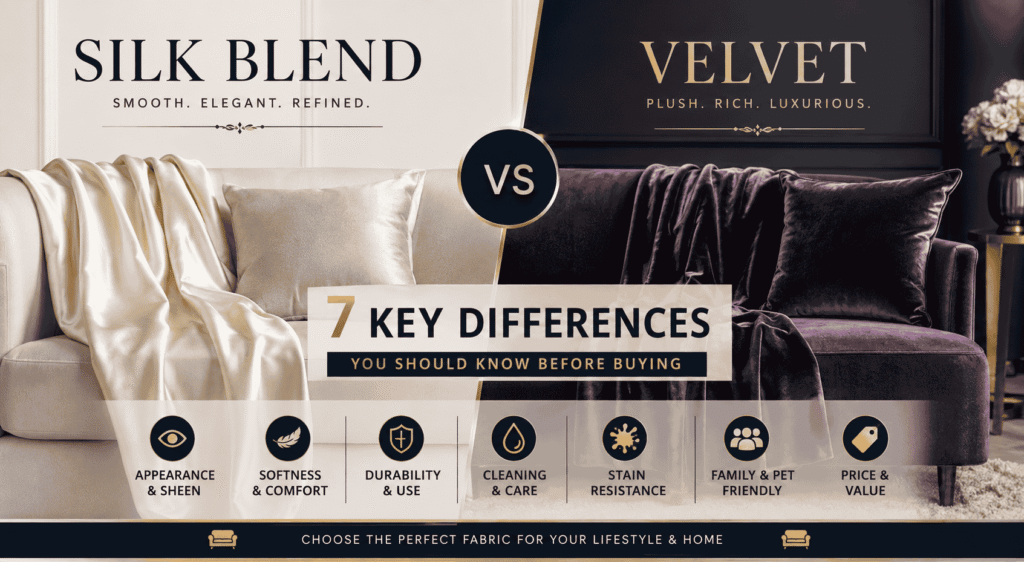
Choosing a sofa fabric is about more than color and texture — it affects how your sofa feels, how long it lasts, and how much upkeep it needs. Two of the most popular choices for a luxurious living room are silk blend and velvet, and the silk blend vs. velvet decision trips up many buyers because both fabrics look and feel premium, yet they perform very differently in day-to-day life.
This guide breaks down silk-blend sofa fabric and velvet sofa fabric side by side, covering appearance, comfort, durability, cleaning, stain resistance, pet-friendliness, and price—so you can pick the fabric that actually fits your household, not just your Pinterest board.
Table of Contents
Silk Blend vs Velvet at a Glance
| Feature | Silk Blend | Velvet |
|---|---|---|
| Appearance | Elegant, subtle sheen | Rich, plush, dramatic |
| Texture | Smooth and refined | Soft and tactile |
| Comfort | Lightweight and smooth | Plush and cozy |
| Durability | Depends heavily on blend | Depends on fiber and construction |
| Stain Resistance | Usually lower | Varies by fiber |
| Maintenance | Often requires more care | Moderate to high |
| Pet-Friendly | Usually not ideal | Depends on velvet type |
| Best For | Luxury, low-traffic spaces | Statement sofas and everyday luxury |
One important note before we go further: “velvet” describes how a fabric is woven, not a single fiber. Polyester velvet, cotton velvet, and viscose velvet can behave in completely different ways — so “velvet” as a category is much broader than it first appears, and the same is true for silk blends.
What Is Silk Blend Sofa Fabric?
How Silk Blend Fabric Is Made
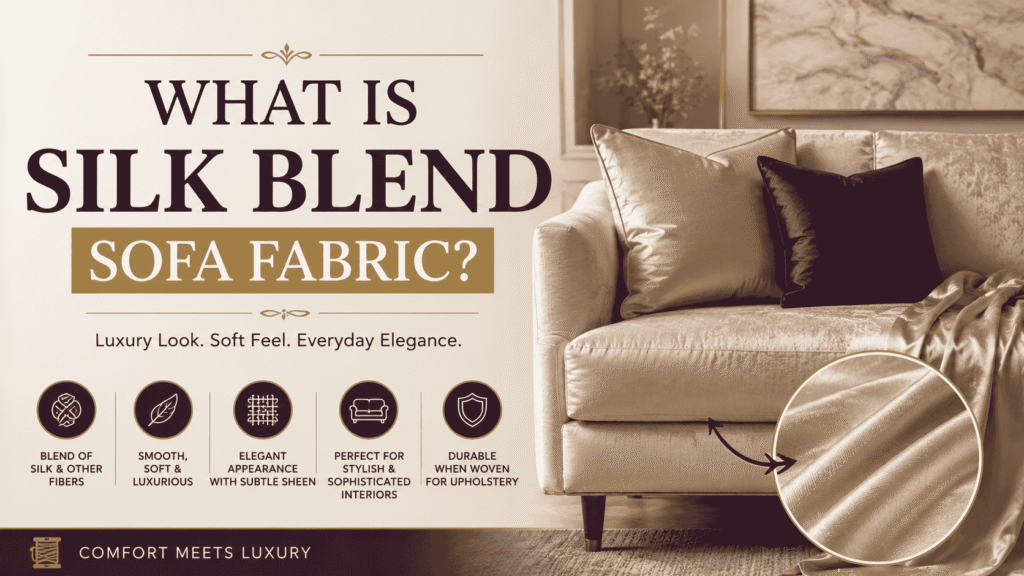
A silk blend combines silk fibers with other materials — commonly polyester, cotton, viscose, or linen — to create a fabric that keeps some of silk’s signature sheen and softness while gaining strength, structure, or affordability from the second fiber. Manufacturers blend silk this way because pure silk upholstery can be delicate and expensive; blending balances beauty with practicality.
Main Characteristics of Silk Blend
- Smooth, refined surface
- Elegant, understated sheen
- Soft hand feel
- Lightweight, airy appearance
- Premium, formal visual appeal
Silk itself has notable natural properties, including moisture absorption and impressive tensile strength for a natural fiber. But once it’s blended, the fabric’s real-world performance depends far more on the other fiber and how the textile is constructed than on the silk content alone.
Pros and Cons of Silk Blend
Pros
- Sophisticated, high-end appearance
- Soft and smooth to the touch
- Luxurious feel that elevates a room
- Beautiful drape and fluid texture
Cons
- Can require careful, consistent maintenance
- May be less suited to heavy-use sofas
- Spills can be tricky to manage if not treated quickly.
- Performance varies considerably depending on the blend ratio.
What Is Velvet Sofa Fabric?
How Velvet Is Made
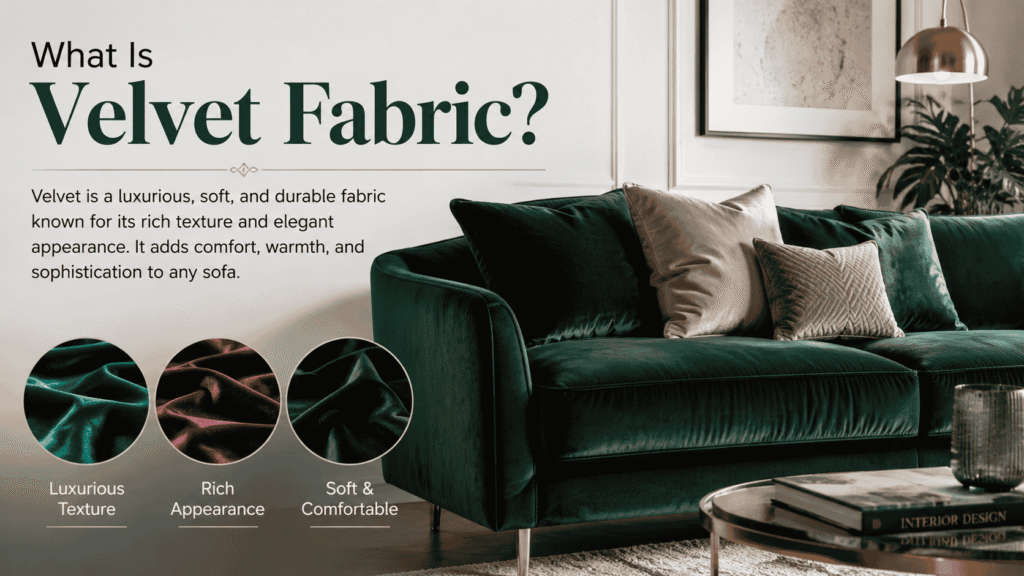
Velvet isn’t a fiber—it’s a weaving technique. It’s constructed with a dense pile of upright fibers, which is what gives it that soft, brushed surface. Because the pile catches and reflects light differently depending on which direction you run your hand across it, velvet can look like it changes shade in different lighting or from different angles. The specific fiber used (polyester, cotton, viscose, or a blend) has a major impact on how the finished velvet performs.
Main Characteristics of Velvet
- Plush, dense surface
- Deep, saturated color appearance
- Soft, tactile feel
- Distinctive light reflection and shading
- Statement-making, dramatic look
Pros and Cons of Velvet
Pros
- Luxurious, eye-catching appearance
- Exceptionally soft feel
- Rich, deep color depth
- Excellent for statement furniture pieces
Cons
- A pile can show pressure marks and seating impressions.
- Some varieties are harder to clean than others.
- Can attract dust and pet hair
- Performance and durability vary a lot by fiber type.
Silk Blend vs Velvet: 7 Key Differences
1. Appearance and Visual Appeal
A silk blend leans toward subtle, refined elegance—a soft sheen that reads as formal and understated. Velvet, by contrast, delivers rich color depth and a dramatic, plush look that changes with the light. If your room favors a quiet, polished aesthetic, a silk blend tends to fit better; if you want a sofa that makes a statement, velvet usually wins. For more on how fabric choice shapes a room’s overall feel, see our guide to luxury sofa materials.
2. Softness and Comfort
A silk blend feels smooth and cool to the touch, with a lightweight, gliding quality. Velvet feels plush, warm, and cozy, with a tactile depth that a silk blend lacks. Neither is objectively “softer”—it comes down to whether you prefer a smooth glide or a plush sink-in feel. Our guide on how to choose the right sofa material walks through comfort priorities in more depth.
3. Durability and Everyday Use
Durability is determined by the fiber composition and fabric construction, rather than the fabric’s name. A polyester velvet built for heavy-use upholstery can easily outlast a delicate silk-blend fabric, and vice versa. Don’t judge durability from appearance alone; check the fiber content and, where available, the fabric’s abrasion (rub count) rating. Velvet’s durability, in particular, varies substantially depending on whether it’s made from polyester, cotton, viscose, or another fiber. For a broader breakdown of fiber performance, see sofa materials explained.
4. Cleaning and Maintenance
Both fabrics need regular dusting and prompt attention to spills, but their care routines differ:
- Silk blend often calls for gentler handling, professional cleaning for larger stains, and strict adherence to the manufacturer’s care label.
- Velvet generally tolerates a bit more everyday handling but needs care around pile direction and pressure marks.
Always check the manufacturer’s care instructions before using water, solvents, or steam on either fabric—different textiles require different care, and mismatched cleaning methods are one of the most common causes of accidental damage. For sofa-specific routines, see our ultimate guide to sofa cleaning at home.
5. Stain and Spill Resistance
Silk blends can be vulnerable to moisture and staining depending on the blend ratio, since silk itself isn’t especially stain-resistant. Velvet can show temporary water marks or pile changes when liquid is spilled, though these often brush out once dry. In both cases, blot—don’t rub—and always follow the sofa’s care code (W, S, WS, or X) before applying anything.
6. Pet and Family Friendliness
For pet hair, claws, food spills, and constant use from kids, fiber content matters more than fabric name. A performance-oriented velvet (often polyester-based) tends to hold up better against snags, spills, and daily wear than a delicate silk blend. Best for busy households: choose a durable, performance-rated velvet or another resilient upholstery fabric rather than assuming every velvet or silk blend behaves the same way.
7. Price and Long-Term Value
Initial price is only part of the equation. Factor in fabric quality, expected maintenance costs, how the sofa will actually be used, and how soon you might need to replace or reupholster it. The cheapest fabric up front isn’t necessarily the best value if it wears out or stains within a year or two.
Silk Blend vs Velvet: Which Is More Durable?
In most everyday-use scenarios, a well-constructed velvet tends to outlast a delicate silk blend—but this isn’t a hard-and-fast rule. Durability comes down to the following:
- Fiber composition (natural vs. synthetic vs. blended)
- Upholstery construction and weave density
- Rub or abrasion test results, when published
- How the sofa fits into your everyday routine and regular use.
A high-quality, sturdy silk blend can outperform a poorly made velvet, and a delicate viscose velvet can wear faster than a well-blended silk fabric. Always check the specific fiber and rub count rather than relying on the fabric category alone.
Which Fabric Is Easier to Clean?
Cleaning Silk Blend
- Vacuum gently using a soft brush attachment
- Deal with spills immediately — don’t let them sit
- Follow the manufacturer’s care instructions exactly.
- Avoid experimenting with household cleaners
Cleaning Velvet
- Vacuum gently, brushing in the direction of the pile
- Blot spills rather than rubbing them
- Avoid aggressive scrubbing, which can flatten or damage the pile.
- Pay attention to pile direction when spot-cleaning
- Follow the manufacturer’s cleaning code.
As a general rule, always check the furniture’s cleaning code and test any product in an inconspicuous spot first.
Which Is Better for Different Lifestyles?
Best for Luxury Formal Living Rooms
Winner: Silk Blend — its refined sheen suits low-traffic, design-forward spaces.
Best for a Plush, Statement Sofa
Winner: Velvet — its depth of color and texture makes it the centerpiece of a room.
Best for Families
Focus on fiber composition and construction rather than choosing by fabric name alone—a performance fabric in either category will serve a busy household better than a delicate one.
Best for Pet Owners
Compare shedding resistance, claw/snag resilience, cleaning ease, and overall durability rather than assuming one fabric category is automatically better.
Best for Low-Traffic Rooms
Silk blend is an attractive option here, particularly when appearance and formality are the priority over heavy daily use.
Silk Blend vs Velvet: Which One Should You Choose?
| If You Prioritize… | Better Choice |
|---|---|
| Smooth luxury | Silk Blend |
| Plush texture | Velvet |
| Dramatic appearance | Velvet |
| Subtle elegance | Silk Blend |
| Statement furniture | Velvet |
| Low-traffic luxury | Silk Blend |
| Easy-care potential | Depends on fiber/blend |
| Family use | Performance-oriented option |
How to Choose the Right Silk Blend or Velvet Sofa
Use this checklist before you buy:
- Check the exact fiber composition, not just the fabric name.
- Check the upholstery care code (W, S, WS, X)
- Consider how much daily use the sofa will get.
- Ask the retailer about abrasion or rub test results.
- Look at the fabric in your room’s actual lighting.
- Factor in children and pets realistically
- Request a physical fabric sample before committing
- Check warranty information for fabric coverage
- Compare maintenance requirements against your lifestyle
- Think about long-term value, not just upfront price
For a full walkthrough of the buying process, see our sofa buying guide.
Frequently Asked Questions
Is a silk blend better than velvet for a sofa? Neither is universally “better”—a silk blend suits formal, low-traffic rooms with its refined sheen, while velvet suits spaces where you want a plush, dramatic statement piece.
Is velvet more durable than a silk blend? Often, yes, especially performance-rated synthetic velvets—but durability really depends on the specific fiber and construction, not the fabric category alone.
Is a silk blend good for everyday sofas? It can be, if it’s a sturdy blend, but silk blends generally suit lower-traffic settings better than heavy daily use.
Is velvet difficult to maintain? Velvet needs regular gentle vacuuming and care around pile direction, but it’s generally manageable with routine upkeep and prompt spill response.
Which is softer, a silk blend or velvet? A silk blend feels smooth and cool; velvet feels plush and warm. It’s a matter of preference rather than one being objectively softer.
Which fabric is better for pets? A performance-oriented velvet is typically more resilient against pet hair, claws, and spills than a delicate silk blend.
Which sofa fabric looks more luxurious? Both read as luxurious—a silk blend leans elegant and understated, while velvet leans rich and dramatic.
Does velvet fade in sunlight? Some velvets, especially those with natural fibers, can fade with prolonged direct sun exposure. Check the fiber content and consider window treatments for sun-facing rooms.
Can silk blend upholstery be cleaned at home? Light dusting and prompt blotting are usually fine, but always check the care label first, and consider professional cleaning for larger stains.
Is velvet worth the extra cost? For many buyers, yes — its texture, richness, and durability (in performance fabrics) often justify the investment, especially for a sofa that gets daily use.
Final Verdict: Silk Blend vs Velvet
- Choose a silk blend if refined elegance, a smooth texture, and a premium, formal appearance are your top priorities.
- Choose velvet if you want plush softness, rich color depth, and a visually dramatic sofa that anchors the room.
- For heavy everyday use, look past the fabric name entirely and focus on the specific fiber, construction, durability rating, and care requirements — that’s what determines how your sofa will actually hold up over time.
Related reading: Velvet Sofa Material · Silk Blend Sofa Material · Sofa Fabric Cleaning Guide · Leather vs Fabric Sofa ·
Further Reading & Sources: