
Introduction
When you’re shopping for a new sofa, polyester vs. cotton is one of the first decisions you’ll face—and it’s a bigger decision than most buyers realize. The fabric covering your sofa affects how it feels, how long it lasts, how easy it is to clean, and how well it holds up to daily life with kids, pets, or guests.
Polyester is a man-made synthetic fiber prized for strength and easy care. Cotton is a natural fiber loved for its softness and breathability. Neither one is automatically “better”—the right choice depends on your household, your climate, and how you actually use your living room. This guide breaks down every major difference so you can make a confident, informed decision instead of guessing.
Here’s what we’ll cover:
- Comfort and softness
- Durability and everyday wear
- Stain resistance and spill handling
- Breathability and temperature comfort
- Cleaning and maintenance
- Appearance and style
- Price and long-term value
- Best choice for kids, pets, and hot climates
- Polyester-cotton blends
- How other sofa fabrics compare
Table of Contents
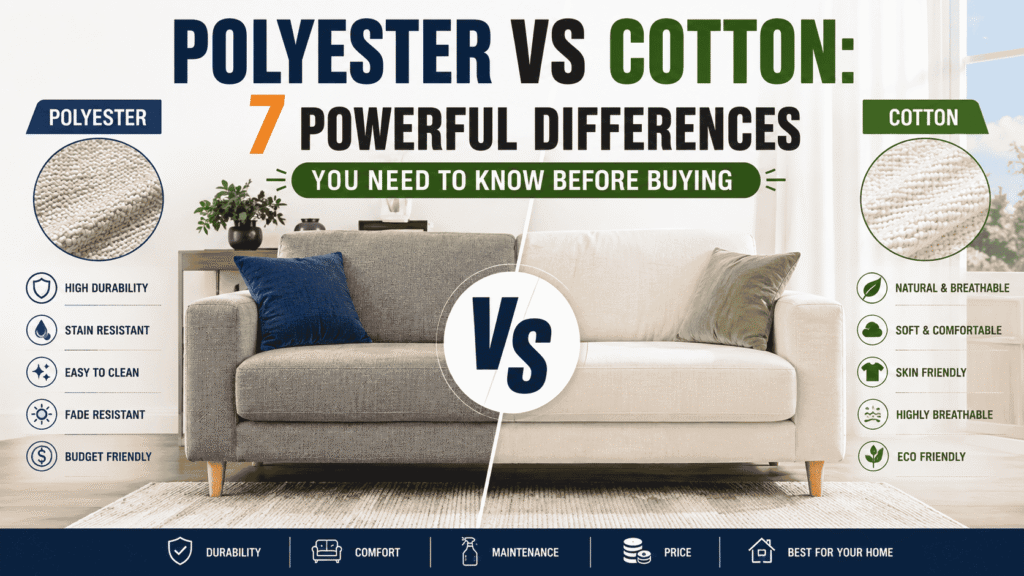
Polyester vs Cotton at a Glance
| Feature | Polyester | Cotton |
|---|---|---|
| Fiber Type | Synthetic | Natural |
| Comfort | High | Very High |
| Breathability | Moderate | High |
| Durability | High | Moderate–High |
| Stain Resistance | Better | Lower |
| Moisture Absorption | Low | High |
| Cleaning | Easier | More demanding |
| Wrinkle Resistance | Excellent | Moderate |
| Fade Resistance | Generally strong | Moderate |
| Pet Friendly | Better | Moderate |
| Kid Friendly | Better | Moderate |
| Price | Budget–Mid | Budget–Mid |
| Best For | Busy households | Natural-fabric lovers |
Keep in mind: fabric quality, weave, and construction can shift these results. A tightly woven, high-grade cotton can outperform a cheap, thin polyester — and vice versa.
What Is Polyester Sofa Fabric?
What Is Polyester?
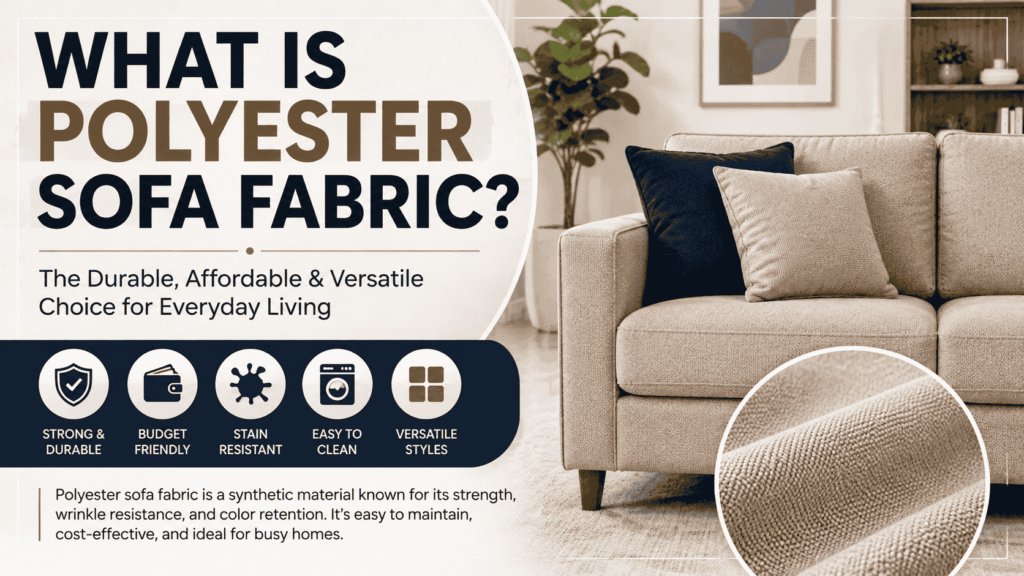
Polyester is a synthetic fiber made from polyethylene terephthalate (PET), a type of plastic polymer. Manufacturers spin PET into fine threads that are then woven or knitted into upholstery fabric. Because it’s engineered rather than grown, polyester can be manufactured to very consistent standards of strength, thickness, and finish.
Why Is Polyester Popular for Sofas?
Furniture makers reach for polyester because it offers a practical combination of qualities that hold up well in real living rooms:
- Strong resistance to abrasion and daily wear
- Low moisture absorption, which limits staining
- Quick drying after spills or cleaning
- Excellent color retention, even in direct sunlight
- Strong resistance to wrinkling and creasing
- Simple, low-effort maintenance
According to Textile Exchange, a global nonprofit that tracks fiber production, polyester remains the most widely produced fiber in the world—a scale that reflects how dependable manufacturers find it for durable, easy-care textiles like upholstery.
Related guide: Polyester Sofa Material
What Is Cotton Sofa Fabric?
What Is Cotton?
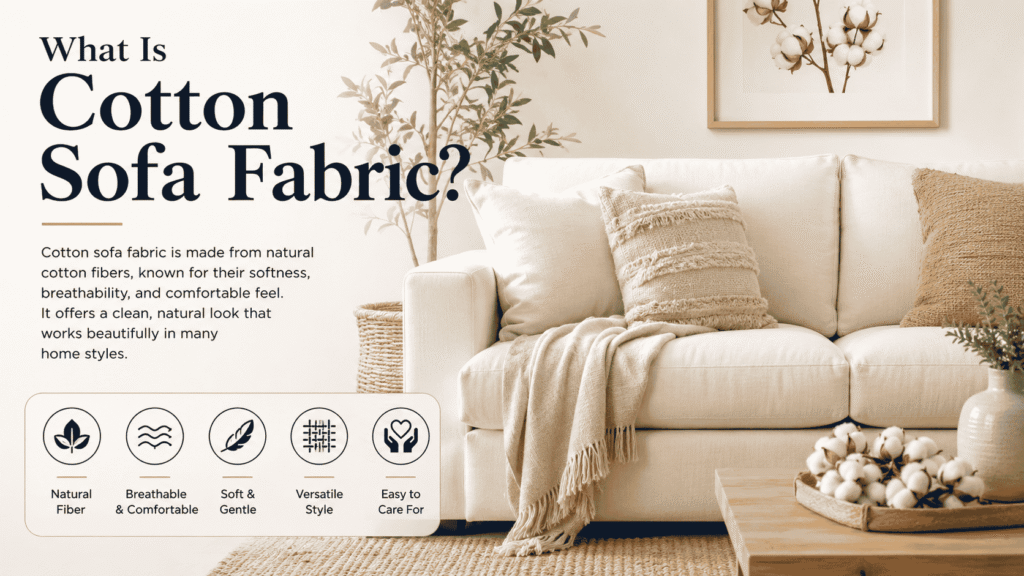
Cotton is a naturally sourced fiber made from the soft, cellulose-rich fibers surrounding the seeds of the cotton plant. It has been used in textiles for thousands of years because of its soft hand-feel, breathability, and versatility. Unlike polyester, cotton’s characteristics vary somewhat with growing conditions, fiber length, and processing.
Why Is Cotton Used for Sofas?
Cotton remains a favorite for upholstery for several reasons:
- Naturally soft, comfortable texture
- Breathable, so it doesn’t trap heat against skin
- Warm, natural appearance that suits many interior styles
- Comfortable to sit on for long periods
- Absorbs dye well, producing rich, even colors
A textile engineering study published via Wiley found that raising the cotton share of a cotton-polyester composite fabric improved comfort-related properties such as air permeability, abrasion resistance, and pilling resistance, while a higher polyester share improved strength and structural stability—the trade-off that explains why so many upholstery fabrics blend the two fibers.
Related guide: Cotton Sofa Material
Polyester vs Cotton: 7 Key Differences
1. Comfort and Softness
Polyester has a smooth, consistent feel. Modern performance polyesters can be engineered to feel quite soft, though the texture depends heavily on the specific weave and finish used.
Cotton is naturally soft against the skin and tends to feel more breathable during extended use, which many people associate with a more “natural” comfort.
Winner: Cotton, for its natural softness and breathability — though high-quality polyester can come close.
2. Durability and Everyday Wear
Durability comes down to how a fabric handles abrasion, repeated sitting, stretching, and years of use without pilling or losing its shape.
Polyester generally offers strong wear resistance and holds its shape well over time, which is why it’s a common choice for heavily used furniture. Materials research on polyester-cotton fabrics notes that these blends are prized specifically for their dimensional stability, easy laundering, and quick-drying behavior—properties rooted in the polyester component. That said, actual durability always depends on the thread count, weave tightness, and overall construction quality of the specific fabric—not the fiber type alone.
Winner: Polyester, for most high-traffic, everyday-use sofas.
3. Stain Resistance and Spill Handling
Spills happen—coffee, juice, food, and pet accidents. How a fabric handles them matters more than almost any other factor for busy households.
Because polyester absorbs very little moisture, liquids tend to sit on the surface long enough to blot up before they set in. Cotton, being more absorbent, tends to pull spills deeper into the fibers more quickly, which can make stains harder to fully remove.
Winner: Polyester.
For any spill, always check the manufacturer’s cleaning code first and blot—never scrub—to avoid spreading the stain or damaging the fibers.
4. Breathability and Temperature Comfort
In warm weather or during long movie nights, breathability affects how comfortable a sofa actually feels.
Cotton’s natural fiber structure allows air to move more freely, which helps prevent that “sticky” feeling on hot days. Polyester is less breathable by comparison, though thinner weaves and performance-treated polyesters can narrow this gap.
Winner: Cotton.
5. Cleaning and Maintenance
Day-to-day care matters as much as any single spill.
Both fabrics benefit from regular vacuuming to prevent dust and debris buildup. Polyester generally responds well to spot cleaning and dries quickly, while cotton may need more careful spot treatment and can take longer to dry fully. Sofas with removable, washable covers make maintenance easier regardless of fiber type.
Whatever fabric you choose, the care label on your sofa always takes priority over general advice. Resources like CB2’s Fabric Care Guide are useful references since they walk through cleaning codes and stress blotting spills gently rather than scrubbing or over-wetting the fabric.
Related guide: How to Remove Oil, Water & Sweat Stains From a Sofa
6. Appearance, Texture, and Style
Polyester can be woven or finished to mimic many looks, from velvet-style plush to crisp linen-like textures, and it holds color and pattern very well over time. Cotton has a naturally soft, matte, textured look that many people associate with a warm, lived-in, natural interior style.
In practice, the weave and finish of a fabric often affect its appearance more than the fiber type itself—a coarse cotton weave and a smooth polyester weave can look nothing alike even from the same base material. For a broader look at how fiber type shapes look and feel, see our general Fabric Sofa Material guide.
7. Price and Overall Value
Neither fiber is consistently cheaper than the other—pricing depends far more on weave complexity, brand, finish treatments, and overall fabric grade than on whether the base fiber is polyester or cotton.
When judging value, factor in more than the sticker price: consider expected lifespan, how often you’ll need professional cleaning, and how soon you might need to replace or reupholster the piece. A slightly pricier fabric that lasts twice as long is often the better long-term value.
Polyester vs. Cotton for Families With Kids
Kids bring juice spills, food stains, crayon marks, and constant use to a sofa. Here’s how the two fabrics compare:
- Spills: Polyester’s low absorption makes quick cleanups easier.
- Frequent sitting and jumping: Polyester’s strong abrasion resistance handles this well.
- Cleaning: Polyester generally requires less effort for everyday messes.
- Durability: Polyester tends to hold its shape better under constant use.
Verdict: Polyester is usually the more practical choice for busy family rooms, though a tightly woven, treated cotton can still work well for less chaotic households.
Polyester vs. Cotton for Pet Owners
Pet owners deal with a different set of challenges—hair, claws, and accidents.
- Pet hair: Smooth polyester weaves often release hair more easily than looser cotton weaves.
- Claw scratches and snagging: Tightly woven polyester tends to resist snagging better.
- Stains and odors: Polyester’s low absorption helps limit how deeply accidents soak in.
- Cleaning: Polyester generally wipes clean faster.
Verdict: Polyester usually has the edge for pet households, though the specific weave and pile height matter as much as the fiber itself.
Polyester vs. Cotton for Hot and Humid Climates
Climate can shift the calculation entirely.
- Breathability: Cotton allows more airflow, which helps prevent that clammy feeling in humid weather.
- Moisture handling: Cotton absorbs and releases moisture more naturally.
- Drying speed: Polyester dries faster after cleaning or humidity exposure.
Verdict: Cotton has the comfort advantage in hot, humid climates, while polyester still holds the maintenance advantage.
Polyester vs. Cotton: Pros and Cons
Polyester Pros
- Durable and long-lasting
- Easy to clean and maintain
- Strong color retention, resists fading
- Low moisture absorption
- Dries quickly
- Often budget-friendly
- Well-suited to high-use spaces
Polyester Cons
- Less breathable than cotton
- Synthetic origin, less “natural” feel to some buyers
- Quality can vary significantly between products.
Cotton Pros
- Natural fiber
- Soft, comfortable texture
- Highly breathable
- Natural, warm appearance
- Excellent tactile feel
Cotton Cons
- More absorbent, so stains can set faster
- May wrinkle over time
- Can be less dimensionally stable than polyester
- Generally needs more careful maintenance
Polyester vs. Cotton: Which Is Better?
There’s no single universal winner, but here’s a direct answer based on your priorities.
Choose Polyester If You:
- Have young children
- Have pets
- Want low-effort maintenance
- Need strong everyday performance
- Prefer better stain resistance
- Want a practical, worry-free sofa
Choose Cotton If You:
- Prioritize natural materials
- Live in a warm or humid climate
- Want maximum breathability
- Prefer a soft, natural feel
- Don’t mind extra maintenance
What About Polyester-Cotton Blend Sofa Fabric?
For many buyers, the smartest answer isn’t “polyester or cotton”—it”‘s both. Blended fabrics combine cotton’s softness with polyester’s strength, aiming to capture the best of each fiber.
Benefits of Polyester-Cotton Blends:
- Cotton’s natural softness
- Polyester’s strength and durability
- Better dimensional stability (less stretching or sagging)
- Improved overall comfort
- Easier maintenance than pure cotton
- Versatile performance across different households
Textile studies on cotton-polyester composite fabrics consistently show that adjusting the fiber ratio changes strength, comfort, and air permeability—which is exactly why blends are so widely used in upholstery.
Is a 65/35 Polyester-Cotton Blend Good for Sofas?
A 65/35 polyester-to-cotton blend is a common upholstery ratio, and it can work very well, but the ratio alone isn’t the full story. Before buying, also check:
- The weave type and tightness
- Fabric weight (heavier often means more durable)
- Abrasion or “rub” rating
- Cleaning code
- Colorfastness
- Manufacturer specifications
A well-constructed 65/35 blend can outperform a poorly made 100% polyester or 100% cotton fabric.
Polyester vs Cotton vs Other Sofa Fabrics
Polyester and cotton aren’t the only options. Here’s how they stack up against other common upholstery materials:
| Material | Comfort | Durability | Cleaning | Breathability | Best For |
|---|---|---|---|---|---|
| Polyester | High | High | Easy | Moderate | Families |
| Cotton | Very High | Moderate | Moderate | High | Natural comfort |
| Linen | High | Moderate | Moderate | Excellent | Warm climates |
| Microfiber | High | High | Easy | Moderate | Pets & kids |
| Velvet | Very High | Moderate | Difficult | Low–Moderate | Luxury |
| Leather | High | Very High | Easy–Moderate | Moderate | Premium use |
Want to explore further? See our guides on Linen Sofa Material, Microfiber Sofa Material, or our full breakdown of Leather vs Fabric Sofa.
How to Choose Between Polyester and Cotton for Your Sofa
Use this simple framework to guide your decision:
- Lifestyle: Busy or relaxed household?
- Children: Frequent spills and rough play?
- Pets: Hair, claws, or accidents to plan for?
- Climate: Hot and humid, or mild?
- Cleaning habits: How much maintenance are you willing to do?
- Budget: Upfront cost vs. long-term value
- Appearance: Natural texture vs. smooth, consistent finish
- Daily use: Occasional guest room sofa or everyday family seating?
Buying Checklist Before You Choose
For a deeper walkthrough of the decision process, see our full guide on How to Choose the Right Sofa Material. Before you commit to a fabric, run through this checklist:
- Check the fiber composition label.
- Check the upholstery cleaning code (W, S, WS, or X)
- Check the abrasion or rub rating
- Check colorfastness information
- Inspect the weave in person if possible.
- Feel the fabric before buying, not just look at photos.
- Consider your children and pets.
- Consider sunlight exposure in the room
- Compare warranty coverage
- Check the sofa’s frame and cushion quality, not just the fabric.
Frequently Asked Questions
Is polyester better than cotton for a sofa? Polyester is generally better for durability, stain resistance, and easy maintenance, making it a strong choice for busy households. Cotton is better for natural softness and breathability. The “better” option depends on your priorities.
Is cotton more comfortable than polyester? Cotton is often considered more comfortable due to its natural softness and breathability, though high-quality polyester can feel very comfortable as well.
Which lasts longer, polyester or cotton? Polyester generally offers stronger long-term durability and shape retention, especially in high-use areas, though fabric quality and construction matter just as much as fiber type.
Which is easier to clean, polyester or cotton? Polyester is generally easier to clean because it absorbs less moisture, allowing spills to be blotted up before they set in.
Is polyester or cotton better for pets? Polyester is usually better for pet owners thanks to easier cleaning and better resistance to stains and snagging, though tightly woven cotton can also work.
Is polyester or cotton better for kids? Polyester is generally the more practical choice for households with kids due to its easier cleaning and stronger stain resistance.
Which sofa fabric is better for hot weather? Cotton is better for hot or humid climates because it’s more breathable and helps prevent that sticky, overheated feeling.
Does polyester stain less than cotton? Yes, polyester’s low moisture absorption generally makes it more resistant to staining than cotton, though no fabric is completely stain-proof.
Is cotton more breathable than polyester? Yes, cotton is a more breathable natural fiber, which makes it feel cooler and more comfortable over long periods of sitting.
Is a polyester-cotton blend good for sofas? Yes, blends combine cotton’s softness with polyester’s durability, often resulting in a well-balanced, practical upholstery fabric.
Is polyester cheaper than cotton? Not always — pricing depends more on the weave, finish, and overall fabric grade than on the fiber type itself.
Which sofa fabric should I choose? Choose polyester if you want durability and easy care, especially with kids or pets. Choose cotton if you prioritize natural softness and breathability and don’t mind extra maintenance.
Final Verdict: Polyester vs. Cotton
Polyester wins for durability, easier maintenance, and busy households, while cotton wins for natural softness, breathability, and comfort. Neither fiber is universally superior—the right choice depends on your lifestyle, climate, and how your sofa will actually be used day to day.
If you’re still unsure, a polyester-cotton blend often offers the best of both worlds, balancing comfort with practicality. Whatever you choose, always check the weave quality, cleaning code, and construction—these details often matter more than the fiber type alone.