
Introduction
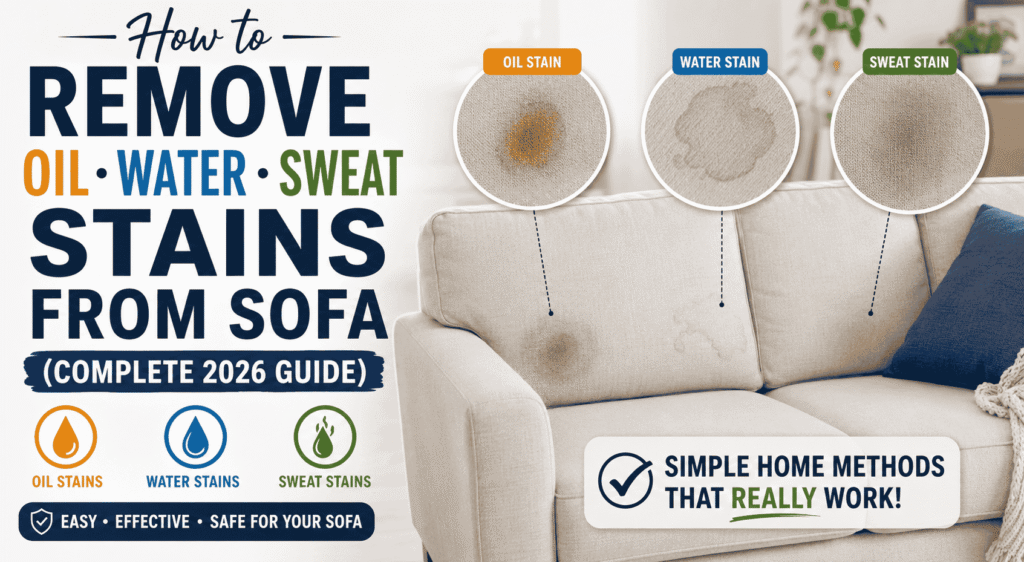
If you are searching for how to remove oil water sweat stains from sofa, you are not alone. Sofas collect everyday stains from food oils, accidental spills, body sweat, and regular use, making them look dirty and worn over time. The good news is that most of these stains can be removed at home using simple cleaning methods and safe household ingredients.
In this guide, you will learn step-by-step ways to clean oil, water, and sweat stains from your sofa without damaging the fabric. We will also cover common cleaning mistakes to avoid, homemade stain-removal solutions, and practical tips to keep your sofa looking fresh for longer.
Keeping your sofa clean does not stop at stain removal. Regular care habits and proper cleaning methods can also help maintain fabric quality and reduce future buildup. Read our guide on how to clean a fabric sofa naturally for more maintenance tips.
Table of Contents
Why Sofas Get Oil, Water and Sweat Stains
If you are searching for how to remove oil, water, and sweat stains from a sofa, the first step is understanding why these stains appear in the first place. Sofas are one of the most frequently used pieces of furniture in any home, which means they naturally collect dirt, moisture, and body oils over time.
Different types of stains build up for different reasons, and knowing the source helps you choose the right cleaning method without damaging the fabric.
Oil Stains from Food and Daily Contact
Oil stains are one of the most common sofa problems. They usually happen because of food spills, greasy hands, hair products, skin oils, lotions, or pets sitting on the couch. Unlike regular dirt, oil can soak deep into fabric fibres and leave dark marks if not cleaned quickly.
Over time, repeated contact with body oils can make sofa cushions look dull, discoloured, and harder to clean.
Water Stains and Moisture Rings
Water may seem harmless, but it can leave visible marks on sofa fabric. Water stains often appear after accidental spills, cleaning with too much liquid, or drying unevenly.
When water evaporates, it can leave behind minerals and create circular marks or light-coloured rings. Unpleasant odours or fabric discoloration can also result from trapped moisture in humid environments.
Sweat Stains from Everyday Use
Sweat stains usually develop slowly and are easy to overlook at first. Body sweat contains moisture, natural oils, and small amounts of salt that transfer onto sofa fabric during daily use.
Areas where people sit most often—such as armrests, back cushions, and seat cushions—are more likely to develop yellowish or darker patches over time. Warm weather and long sitting periods can make sweat stains appear faster.
The good news is that most of these stains can be removed safely at home using the correct cleaning method and the right products for your sofa material.
Why Sofas Get Oil, Water, and Sweat Stains
Before you start cleaning, take a few minutes to inspect your sofa carefully. Many people try random cleaning methods and end up making stains worse or damaging the fabric. If your goal is to learn how to remove oil, water, and sweat stains from a sofa safely, these simple checks can help you get better results.
Identify Your Sofa Fabric Type
Not every sofa should be cleaned the same way. Different materials react differently to water and cleaning products.
Common sofa materials include:
- Fabric Sofa: Usually handles water-based cleaning but can absorb stains quickly.
- Microfiber Sofa: Requires gentle cleaning to avoid water marks.
- Velvet Sofa: Needs extra care because rubbing may damage the texture.
- Leather Sofa: Avoid excess moisture and use leather-safe products only.
If you are unsure, check the product label or manufacturer instructions before cleaning.
Taking a few seconds to check the care instructions can prevent permanent fading, fabric damage, and unnecessary cleaning mistakes. Different sofa materials react differently to moisture and cleaning products, so using the correct method gives safer and more reliable results.
Read the sofa cleaning label codes.
Most sofas include cleaning instructions on a hidden tag under the cushions or frame. These codes tell you what type of cleaner is safe.
- W – Use water-based cleaners.
- S – Use solvent-based cleaners only.
- WS – Water or solvent cleaners are safe.
- X – Vacuum only; avoid liquid cleaning.
Ignoring these labels can cause discoloration, fabric damage, or permanent marks.
For additional upholstery care and fabric cleaning guidance, you can also refer to the official cleaning recommendations from Good Housekeeping.
Check How Old the Stain Is
Fresh stains are usually easier to remove than dried ones.
- Fresh oil stains should be treated quickly before they soak deeper.
- Water stains may leave visible rings if left to dry unevenly.
- Sweat stains can build up over time and create odour.
Knowing the stain type helps you choose the right cleaning method instead of using unnecessary products.
Test Any Cleaner on a Hidden Area First
Even natural cleaners can react differently depending on the sofa fabric.
Before applying any solution:
- Choose a hidden spot behind or under the sofa.
- Apply a small amount of cleaner.
- Wait 10–15 minutes.
- Check for fading, texture changes, or colour transfer.
This small step can prevent expensive mistakes.
Gather Basic Cleaning Supplies
Prepare everything before starting the cleaning process:
- Microfiber cloth
- Soft brush
- Vacuum cleaner
- Spray bottle
- Mild dish soap
- Baking soda
- Clean water
Once you complete these checks, you’ll be ready to safely remove stains without damaging your sofa.
How to Remove Oil Stains from Sofa
Oil stains are one of the most difficult sofa stains to clean because oil quickly absorbs into fabric fibres. Whether the stain comes from food, body oils, hair products, or accidental spills, acting quickly gives you the best chance of removing it completely.
If you are searching for how to remove oil, water, and sweat stains from a sofa, start with the oil stain first because oil can trap dirt and make cleaning harder later.
Method 1: Use Baking Soda to Absorb Fresh Oil
Baking soda works well because it absorbs excess oil before it spreads deeper into the sofa.
Steps:
- Blot the stain gently using a dry paper towel or clean cloth.
- Avoid rubbing because it pushes oil deeper into the fabric.
- Sprinkle a generous layer of baking soda directly over the stained area.
- Leave it for 20–30 minutes so it can absorb the oil.
- Vacuum the powder carefully.
If the stain becomes lighter but does not disappear completely, repeat the process once more.
Method 2: Clean Remaining Oil with Mild Dish Soap
After absorbing surface oil, remove leftover residue with a gentle cleaning solution.
Steps:
- Mix a few drops of mild dish soap with warm water.
- Dip a microfiber cloth into the mixture.
- Wring out excess water.
- Dab the stained area slowly.
- Use another clean damp cloth to remove soap residue.
- Allow the sofa to air dry naturally.
This method is especially helpful for fabric sofas and recent stains.
Method 3: Remove Old Oil Stains from Sofa
Older oil stains may need extra attention because they settle deeper into the upholstery.
If stains remain after spot cleaning, a more complete cleaning process may help. See our detailed guide on how to deep clean sofa at home.
Steps:
- Apply baking soda and leave for 1 hour.
- Vacuum thoroughly.
- Dab with a small amount of dish soap solution.
- Repeat only if necessary.
- Let the sofa dry completely before using it.
Mistakes to Avoid When Removing Oil Stains
- Do not scrub aggressively.
- Do not pour water directly onto the sofa.
- Avoid bleach or harsh chemicals.
- Never use heat to dry the stain.
- Always test cleaners on a hidden area first.
Quick Tip
For the best results when learning how to remove oil, water, and sweat stains from a sofa, clean stains as soon as possible. Fresh stains are easier to remove and reduce the chance of permanent marks.
How to Remove Water Stains from Sofa
Water stains can leave visible rings and dull patches on sofa fabric, especially if spills dry unevenly. If you are searching for how to remove oil, water, and sweat stains from a sofa, the good news is that water marks can usually be cleaned at home without expensive products.
Method 1 – Even Damp Cloth Technique
This method works well for light water marks and fabric sofas.
Steps:
- Use a clean microfiber cloth and lightly dampen it with plain water.
- Gently blot the stained area instead of rubbing.
- Slightly extend cleaning beyond the visible ring to blend the fabric evenly.
- Continue until the stain softens.
- Use a dry towel to absorb excess moisture.
Tip: Avoid soaking one small section because this may create another water ring.
Method 2 – Vinegar and Water Solution
If water stains remain after basic cleaning, try a mild vinegar solution.
You will need:
- 1 cup lukewarm water
- 1 tablespoon white vinegar
- Spray bottle
- Soft cloth
Steps:
- Mix the solution.
- Lightly spray onto the stain (do not saturate).
- Blot gently using circular motions.
- Repeat only if needed.
- Wipe with a clean damp cloth.
White vinegar helps reduce mineral marks and restore fabric appearance.
Drying Tips
Drying is as important as cleaning.
- Use a dry microfiber towel after cleaning.
- Allow air circulation in the room.
- Open windows if possible.
- Avoid direct heat because high temperatures may damage fabric.
- Let the sofa dry completely before use.
How to Remove Sweat Stains from Sofa
Sweat stains usually appear slowly due to body oils, moisture, and daily use. They can leave yellowish marks and unpleasant odours if ignored.
Method 1 – Mild Soap Method
This is one of the safest cleaning methods.
Steps:
- Mix a few drops of mild liquid soap with warm water.
- Dip a cloth and wring out extra water.
- Dab the stained area gently.
- Continue blotting until the stain lifts.
- Wipe again using a clean damp cloth.
Avoid using strong detergents because they may fade upholstery.
Method 2 – White Vinegar Cleaning
For stubborn sweat buildup:
Mix:
- Equal parts white vinegar and water
How to use:
- Spray lightly over the affected area.
- Let it sit for 5–10 minutes.
- Blot with a clean towel.
- Repeat if necessary.
This method may also reduce lingering smells.
If your sofa still smells after removing sweat stains, check our guide on how to remove smell from sofa for additional odour removal methods.
If you want to learn more about safe household cleaning practices, see the cleaning advice available at The Spruce
Removing Odours After Cleaning
After removing stains:
- Sprinkle baking soda lightly.
- Leave for 20–30 minutes.
- Vacuum thoroughly.
- Keep cushions in fresh air.
This helps your sofa feel cleaner and fresher.
Best Homemade Sofa Stain Cleaner (Optional Recipe)
If you want a simple DIY solution for how to remove oil, water, and sweat stains from a sofa, try this balanced homemade cleaner.
Ingredients
- 1 cup warm water
- 1 tablespoon white vinegar
- ½ teaspoon mild dish soap
- Spray bottle
Mixing Instructions
- Pour water into the bottle.
- Add vinegar.
- Add dish soap last.
- Shake gently.
How to Apply Safely
- Test on a hidden area first.
- Spray lightly.
- Blot instead of scrubbing.
- Never over saturate fabric.
- Dry fully after cleaning.
For homeowners who prefer manual cleaning methods, you may also like our guide on how to clean sofa without machine.
Common Mistakes That Make Sofa Stains Worse
Cleaning mistakes can make stains harder to remove.
Scrubbing Too Hard
Aggressive scrubbing pushes stains deeper and may damage fibres.
Using Too Much Water
Too much moisture can create new water marks and longer drying times.
Applying Bleach
Bleach may discolour upholstery and weaken fabric.
Skipping Patch Testing
Always test cleaners on an unseen area first.
How to Prevent Oil, Water, and Sweat Stains on a Sofa
Prevention reduces future cleaning work.
Weekly Maintenance
- Vacuum once per week.
- Rotate cushions.
- Remove dust regularly.
Use sofa covers.
Washable covers protect against daily wear and accidental spills.
Immediate Spill Cleanup
The faster you clean spills, the lower the chance of permanent stains.
For more home cleaning and upholstery care tips, you may also explore expert cleaning resources from Better Homes & Gardens.
Conclusion
Learning how to remove oil, water, and sweat stains from a sofa does not require expensive equipment. Most stains respond well to gentle cleaning, proper drying, and regular maintenance.
Keep in mind that homemade cleaning methods work best for light to moderate stains. If your sofa has delicate upholstery, old set-in stains, or widespread discoloration, professional upholstery cleaning may be a safer option.
Start with the mildest method, avoid over-wetting the fabric, and act quickly when stains appear. A few minutes of routine care can help your sofa stay cleaner, fresher, and last longer.
FAQs
Can baking soda remove oil stains from a sofa?
Yes, baking soda may absorb fresh oil and reduce greasy residue. Leave it briefly before vacuuming.
How do you remove water rings from couch fabric?
Use an evenly damp cloth and blend beyond the visible edge to avoid creating another ring.
Can sweat permanently stain a sofa?
Older stains can become difficult to remove, but early cleaning improves results.
Is vinegar safe for fabric sofas?
Usually yes in diluted form, but always patch test first.
How often should sofas be deep cleaned?
Most sofas benefit from deep cleaning every 6–12 months depending on use.