
Introduction
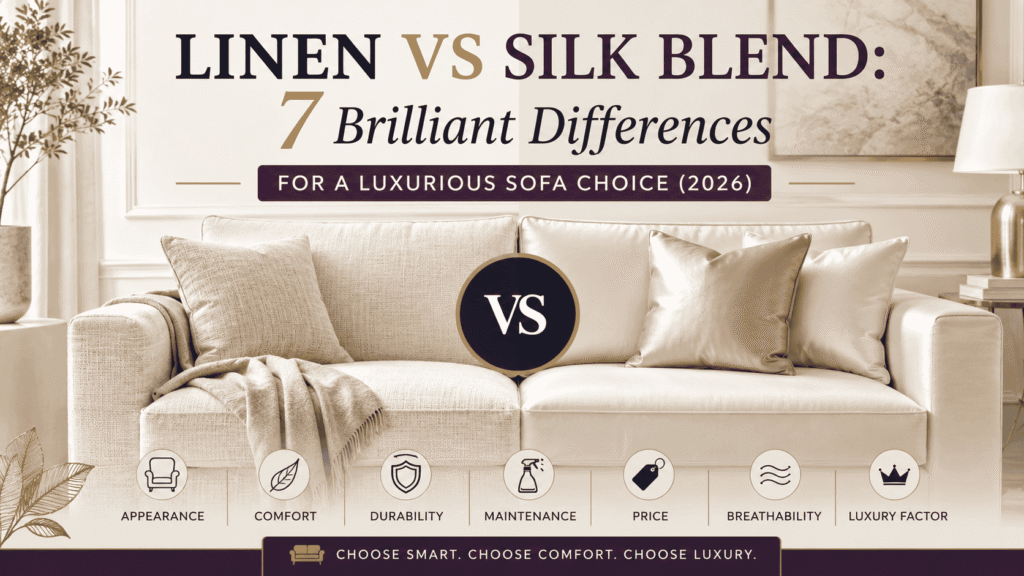
When choosing between a linen and silk blend for a new sofa, the key question is whether you prefer a fabric that looks effortlessly elegant and withstands daily life or one that feels smooth and formal but requires more care. Both fabrics can make a sofa look genuinely upscale, but they behave very differently once they’re actually in your living room.
This guide breaks down the seven differences that matter most — appearance, texture, breathability, durability, cleaning, cost, and long-term wear — so you can pick the fabric that actually fits how you live, not just how a showroom sofa looks under gallery lighting.
If you haven’t settled on a fabric family yet, it’s also worth reading our guide on how to choose the right sofa material before you commit to either option.
Table of Contents
Linen vs Silk Blend at a Glance
| Feature | Linen | Silk Blend |
|---|---|---|
| Material origin | Flax plant | Silk fiber blended with another fiber |
| Look | Natural, relaxed | Smooth, refined |
| Texture | Crisp, breathable | Soft, subtly lustrous |
| Durability | Strong for everyday use when properly rated | Varies significantly by blend |
| Comfort | Cool and airy | Soft and elegant |
| Maintenance | Moderate | Often more demanding |
| Wrinkling | More likely | Usually smoother-looking |
| Luxury appearance | High | Very high |
| High-traffic suitability | Good with the right upholstery grade | Often better suited to lighter use |
| Best for | Everyday, casual-elegant sofas | Formal or low-traffic furniture |
A quick note before we go further: it’s easy to assume “silk blend” automatically means delicate, and “linen” automatically means tough. Neither is quite true. The specific fibers used alongside the silk, the weave, and the upholstery-grade finishing all change how a fabric actually performs on a sofa — more on that below.
What Is Linen Sofa Fabric?
Where Linen Comes From
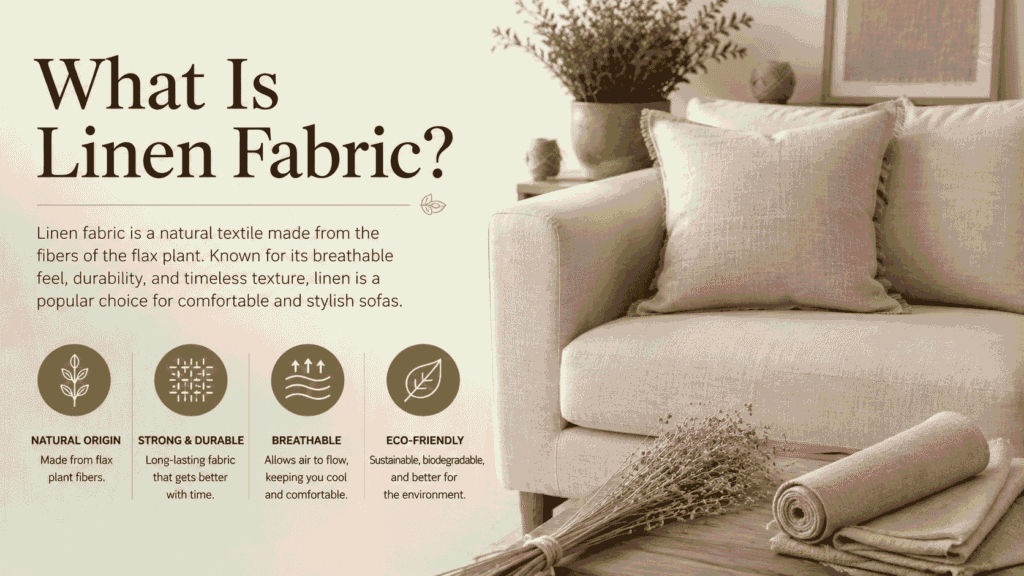
Linen is a natural textile woven from fibers of the flax plant. The flax stalk is processed and spun into yarn, and that yarn becomes the linen cloth used in clothing, bedding, and upholstery. It’s one of the oldest textile fibers in use, and it’s still widely recognized as a plant-based material suited to home textiles.
What Linen Feels Like
- Crisp to the touch
- Breathable and airy
- Naturally textured rather than perfectly smooth
- Slightly relaxed, never overly polished
- Feels pleasantly cool and comfortable, even in warm spaces Why Linen Is Popular for Sofas
Linen has become a go-to upholstery choice because it delivers a natural, lived-in elegance without trying too hard. It suits modern, Scandinavian, coastal, and minimalist interiors particularly well, since its texture already carries that relaxed, unfussy character these styles Modern, Scandinavian, coastal, and minimalist interiors particularly benefit from linen’s texture, which embodies the relaxed, unfussy character that defines these styles. around.
If linen’s natural texture appeals to you, our linen sofa material page goes deeper into weaves, colors, and finish options.
What Is Silk Blend Sofa Fabric?
What Does “Silk Blend” Mean?
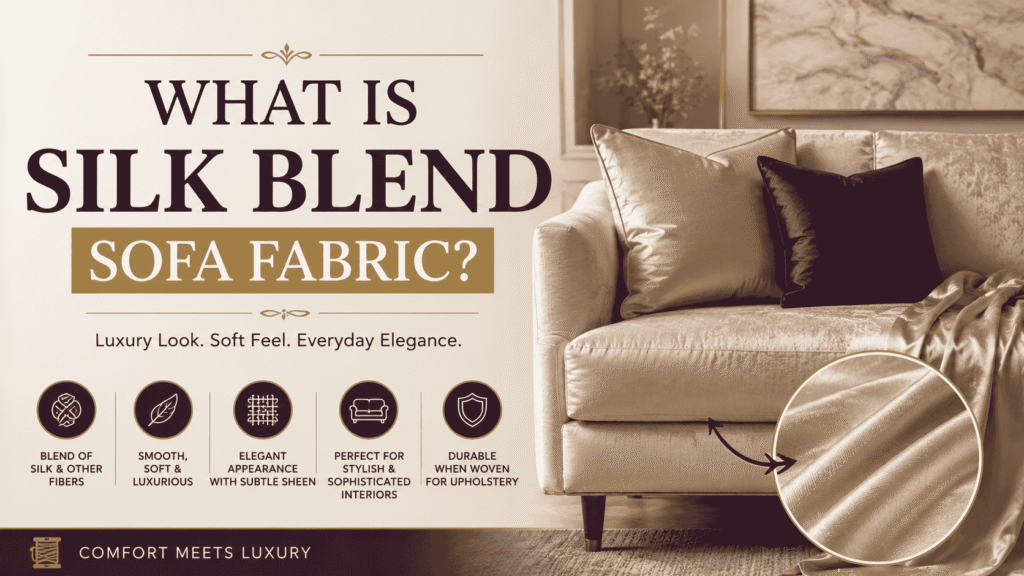
“Silk blend” isn’t one single, standardized fabric — it’s a category. Silk fiber is combined with another fiber (cotton, linen, polyester, viscose, or others) to adjust its texture, strength, cost, and performance. That means two sofas, both labeled “silk blend,”” can behave completely differently depending on what silk is blended with and how much of it is actually in the weave. Always check the fiber composition label before assuming you know what you’re getting.
What Does Silk Blend Feel Like?
- Smooth and soft
- Refined, with a subtle sheen
- More visually luxurious than most casual upholstery fabrics
- Slightly cool and slippery to the touch depending on the blend
Why Designers Use Silk Blends
Interior designers reach for silk blends when a room calls for sophistication — a formal living room, a statement accent chair, or a sofa that’s meant to be admired more than lived on daily. The subtle sheen and smooth hand catch light in a way that reads as instantly upscale.
For more ideas on pairing this fabric with a room, see our luxury sofa materials guide.
Linen vs Silk Blend: 7 Key Differences That Actually Matter
1. Appearance and Overall Style
Linen brings a relaxed, natural look with visible texture and a slightly imperfect, organic character. It tends to develop a lived-in appearance over time, which many people find adds charm rather than wear.
A silk blend looks smoother and more formal and often carries a subtle sheen depending on the weave and finishing. It reads as more polished and more luxurious in a traditional sense.
Which looks better? It genuinely depends on the room. Choose linen for casual, natural, minimalist spaces and silk blends for elegant, formal, statement-making interiors.
2. Texture and Feel
Run your hand across each fabric, and the difference is immediate. Linen has a crisp, slightly nubby surface with real tactile texture. A silk blend feels smoother and softer, with less surface grain and more of a glide to it. If you gravitate toward a relaxed, natural texture underfoot and under your palm, linen will feel more like “you.” If you’re after a smoother, more sensory luxury feel, silk blend wins that comparison.
3. Comfort and Breathability
This is where linen has a clear physical advantage. Its open weave allows air to circulate, which keeps the fabric feeling cool rather than clingy—a genuine benefit in warmer climates or for sofas that get heavy daily use. Silk blends can feel wonderfully soft and elegant against skin, but breathability depends heavily on what silk is blended with, and many blends trap more heat than linen does.
Winner for breathability: Linen: Winner for a smooth luxury feel: Silk blend
4. Durability and Everyday Use
This is the section most buyers actually care about, and it’s also the one where oversimplifying does the most damage.
Durability isn’t determined by fiber name alone—it comes down to fiber strength, weave density, fabric weight, upholstery backing, and independently tested abrasion (rub) performance. A heavy, tightly woven, upholstery-grade linen can genuinely outperform a lightweight, loosely woven silk blend in a high-traffic household. But a poorly specified “linen” fabric can also underperform a well-constructed silk blend designed specifically for upholstery use.
Industry guidance on furniture fabric commonly points to a rub count or wearability rating as the real indicator of how a fabric will hold up, rather than relying on the fiber name printed on the label.
Generally best for frequent everyday sofa use: linen, but only when it’s properly specified and rated for upholstery—always check the rub count, not just the fiber name.
5. Cleaning and Maintenance
Linen
- Wrinkles naturally and shows creases quickly
- Generally responds well to spot cleaning
- May shrink slightly depending on the specific weave and finishing
- Professional cleaning is sometimes recommended for stubborn stains.
- Always follow the manufacturer’s specific care code.
Silk blend
- Requires more careful, gentler handling overall
- Cleaning risk varies significantly depending on what the silk is blended with.
- No single set of care instructions applies to every silk blend—check the label every time.
Winner for easier maintenance: Linen, generally—but the upholstery care code on any specific fabric should always be your final word, not a fiber name assumption.
6. Cost and Perceived Luxury
Cost is driven by more than the raw fiber. Weave complexity, fabric weight, brand, upholstery grade, and design all factor into the final price. Silk blends often create a premium look and feel, but that doesn’t automatically mean every silk-blend fabric costs more than every linen fabric—high-grade upholstery linen can be just as much of an investment as a mid-range silk blend.
Best value: Genuinely depends on the specific fabric quality and how the sofa will actually be used, not on the fiber name alone.
7. Wrinkling, Fading, and Long-Term Appearance
Linen is naturally prone to wrinkling, which most people come to see as part of its relaxed character rather than a flaw. Direct, prolonged sunlight can cause visible fading over time, so window placement is worth thinking about before you buy.
Silk blends tend to hold a smoother, more consistent appearance day to day, though some constructions are just as sensitive—sometimes more sensitive—to light exposure and abrasion. Performance really does come down to the specific blend and finishing process used.
Linen vs Silk Blend: Which Is More Durable?
This question deserves its own answer because it’s the single biggest factor in most sofa-buying decisions.
Durability depends on:
- Fiber properties — strength and resilience of the base fibers
- Fabric construction — how tightly and densely the yarns are woven
- Weave density — a tighter weave generally resists wear better
- Abrasion (rub) rating—the industry standard way to measure how many rubs a fabric can withstand before visible wear appears.
- Upholstery backing — added reinforcement that extends fabric life
- Usage frequency—a sofa used daily needs a higher-performance fabric than a formal piece used occasionally.
- Household conditions — pets, kids, and sunlight exposure all accelerate wear
Key takeaway: Don’t judge a sofa’s durability by the fiber name alone. Two fabrics both called “linen”—or both called “silk blend”—can have completely different rub ratings. Always ask for the specific abrasion rating before buying, especially for a sofa that will see daily use.
Linen vs. Silk Blend for Different Lifestyles
Best for Families
Everyday practicality and easy maintenance matter more than pure appearance here. A properly rated, tightly woven linen upholstery fabric is usually the more forgiving choice for a household with regular sofa traffic.
Best for Homes With Pets
Snagging, shedding hair, claws, and frequent cleaning all favor a durable, easy-to-clean fabric. Linen with a solid rub rating tends to handle these conditions better than delicate silk blends, though tightly woven, treated silk blends can hold up reasonably well too.
Best for Formal Living Rooms
If the sofa is more of a design statement than a daily workhorse, a silk blend’s smooth, formal appearance can be a genuine advantage — lighter use means less pressure on durability.
Best for Everyday Lounging
A properly specified, upholstery-grade linen is generally the more practical everyday option, offering comfort and resilience without sacrificing style.
Best for Warm Climates
Linen’s natural breathability makes it a strong choice where comfort against the skin matters, especially in homes without heavy air conditioning.
Linen vs. Silk Blend for Sofa Styles
- Modern sofas—both fabrics work well; linen leans casual-modern, and silk blend leans polished modern.
- Minimalist sofas—linen’s texture complements the pared-back aesthetic naturally
- Scandinavian sofas—linen is a near-perfect match for this style’s natural, relaxed sensibility.
- Traditional sofas—a silk blend’s refined sheen suits classic, formal furniture shapes
- Luxury sofas — silk blend adds an unmistakably upscale finish
- Curved sofas—both fabrics can drape well over curves; check how each specific weave handles tension.
- Sectional sofas—Linen’s durability generally makes more sense for large, heavily used pieces.
- Accent chairs—a silk blend shines here, where lighter use allows for a more delicate fabric.
Pros and Cons of Linen Sofa Fabric
Pros
- Natural, relaxed appearance
- Genuinely breathable and cool
- Casual luxury that suits many interior styles
- Softens attractively with age
- Versatile across design aesthetics
Cons
- Wrinkles noticeably
- Can require more attentive care depending on the weave
- Prone to fading in direct sunlight
- Performance varies by construction—always check the rub rating.
See more on weaves and finishes in our linen sofa material guide.
Pros and Cons of Silk Blend Sofa Fabric
Pros
- Luxurious, refined appearance
- Smooth, soft texture
- Elegant finish that elevates a room
- Excellent for sophisticated, formal interiors
Cons
- Often requires more careful maintenance
- Performance varies significantly depending on the specific blend.
- Some constructions aren’t suited to heavy daily use.
- Can be sensitive to sunlight and abrasion
Explore more upscale fabric options in our luxury sofa materials guide.
Linen vs Silk Blend: Which Is Better for a Sofa?
Choose linen if you want:
- Everyday practicality
- Genuine breathability
- Natural texture
- Casual elegance
- A relaxed, lived-in sofa aesthetic
Choose a silk blend if you want.
- A luxury, statement-making appearance
- Smooth, refined texture
- Formal elegance
- A lower-traffic showpiece rather than a daily workhorse
How to Choose Between Linen and Silk Blend
Ask yourself these five questions before deciding:
- How often will the sofa be used? Daily use points you toward a practical, higher-durability upholstery fabric.
- Do you have children or pets? Prioritize cleanability and a strong abrasion rating over pure appearance.
- Is the sofa near a window? If so, pay close attention to each fabric’s fade resistance.
- Do you prefer a relaxed or polished style? Relaxed leans linen; polished leans silk blend.
- Are you willing to do more maintenance? If yes, more delicate luxury fabrics become a realistic option.
What to Check Before Buying Linen or Silk Blend Upholstery
Check the fiber composition.
Don’t buy based on the words “linen” or “silk blend” alone—ask for the exact fiber percentages and construction details.
Check the abrasion (rub) rating.
This single number tells you more about real-world durability than any fiber name. Upholstery-specific wearability codes exist for exactly this reason.
Check the cleaning code.
Most upholstery fabrics carry a simple cleaning code (indicating water-based, solvent-based, or vacuum-only cleaning). Knowing this before you buy saves a lot of frustration later.
Ask About Lightfastness
It’s especially important if the sofa will sit near a window—ask how the specific fabric handles prolonged sun exposure.
Request a Fabric Sample
Always test the actual swatch in your room’s lighting before committing to a full sofa order.
Check the manufacturer’s warranty.
A solid warranty is a useful signal of how much confidence the manufacturer has in the fabric’s real-world performance.
Common Mistakes When Choosing Between Linen and Silk Blends
- Choosing based only on appearance — a fabric that looks stunning in a showroom may not perform the same at home
- Ignoring upholstery performance data — the rub rating matters more than the fiber name
- Assuming all linen is automatically durable—construction and weave still matter enormously
- Assuming all silk blends are automatically fragile—some are specifically engineered for upholstery use
- Forgetting about sunlight exposure—both fabrics can fade; plan sofa placement accordingly.
- Ignoring cleaning requirements—a fabric that needs professional cleaning only can be a real hassle for busy households
- Buying without testing a sample—colors and textures can look different at home than in a showroom.
Linen vs Silk Blend: Quick Decision Guide
| If You Prioritize… | Better Choice |
|---|---|
| Natural appearance | Linen |
| Breathability | Linen |
| Relaxed style | Linen |
| Smooth texture | Silk Blend |
| Formal luxury | Silk Blend |
| Everyday practicality* | Linen |
| Statement furniture | Silk Blend |
| Easygoing aesthetic | Linen |
*Assuming the linen fabric is properly rated and constructed for upholstery use.
FAQs About Linen vs Silk Blend
Is linen better than silk blend for a sofa? It depends on how the sofa will be used. Linen generally suits everyday, high-traffic living rooms better, while silk blend suits formal or lightly used spaces where appearance takes priority over daily durability.
Is silk blend durable enough for upholstery? It can be, but performance varies widely by blend. Always check the specific fabric’s abrasion rating rather than assuming based on the “silk blend” label alone.
Is linen more breathable than silk blend? Yes, in most cases. Linen’s open weave allows more air circulation, making it feel cooler in everyday use.
Which is easier to clean, linen or silk blend? Linen is generally more forgiving for spot cleaning, but always follow the specific care code on the fabric you buy — it varies by construction for both fiber types.
Does linen sofa fabric wrinkle easily? Yes, wrinkling is a natural characteristic of linen. Many people consider it part of the fabric’s relaxed charm rather than a drawback.
Does silk blend fade in sunlight? It can, depending on the blend and finishing. Some silk blends are just as sensitive to UV exposure as linen, so window placement matters for both fabrics.
Which is more luxurious, linen or silk blend? Silk blend generally reads as more formally luxurious due to its smoothness and subtle sheen, while linen offers a more understated, natural kind of luxury.
Is linen or silk blend better for everyday use? Linen, when it’s a properly rated upholstery-grade fabric, tends to hold up better to daily sitting, sunlight, and cleaning.
Which sofa fabric is better for pets? A tightly woven, upholstery-grade linen with a strong abrasion rating is usually the safer choice for homes with pets.
How do I choose between linen and silk blend? Base your decision on how often the sofa will be used, whether kids or pets are involved, how close it sits to sunlight, and how much maintenance you’re willing to do — then match that lifestyle profile to the fabric’s real performance specs, not just its name.
Final Verdict: Linen vs Silk Blend
Linen wins for natural style, breathability, and everyday practicality — it’s the more forgiving choice for a sofa that gets real daily use. Silk blend wins for refined texture and formal luxury, making it a strong pick for statement pieces and lower-traffic spaces.
Neither fabric is universally “better.” The right choice comes down to the specific upholstery construction, its tested performance rating, its care requirements, and — most importantly — how you actually plan to use the sofa day to day.
Related guides: Linen Sofa Material · Bouclé Sofa Material · Cotton Sofa Material · Polyester Sofa Material · Chenille Sofa Material · Microfiber Sofa Material · Luxury Sofa Materials · Linen vs Cotton · Ultimate Guide to Sofa Cleaning at Home
Sources: Textile Exchange – Fiber and Materials Matrix, The Spruce – Fabric Wearability Codes