
Introduction
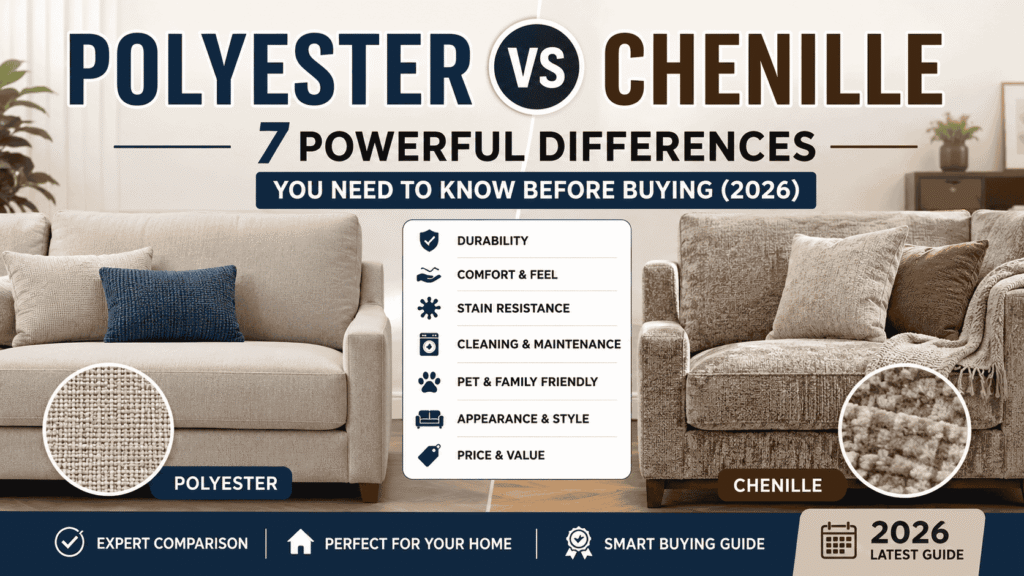
Polyester vs Chenille is an important comparison to make before choosing upholstery for your next sofa. While both fabrics can offer comfort, style, and everyday durability, they have noticeably different textures, maintenance needs, and performance characteristics. Polyester is often valued for its practicality and easy-care qualities, while chenille stands out for its soft, plush feel and distinctive textured appearance. But which one is actually better for your home? In this guide, we’ll compare polyester and chenille across durability, comfort, cleaning, stain resistance, pet and family use, appearance, price, and overall value so you can confidently choose the sofa fabric that fits your lifestyle.
Table of Contents
Polyester vs Chenille at a Glance
| Feature | Polyester | Chenille |
|---|---|---|
| Material | Synthetic fiber | Textured yarn/weave construction |
| Feel | Smooth to moderately soft | Plush, fuzzy, and soft |
| Texture | Usually flat and smooth | Distinctive raised, caterpillar-like texture |
| Durability | Generally strong, consistent | Good, but depends heavily on construction |
| Stain resistance | Often good, especially performance grades | Varies by fiber blend and finish |
| Cleaning | Usually easier | Can require more careful handling |
| Pet friendliness | Generally practical | Can snag on claws depending on weave |
| Style | Versatile, works in most interiors | Cozy, textured, and visually rich |
| Price | Often budget-friendly | Usually mid-range |
| Best for | Busy, high-traffic households | Comfort- and texture-focused living rooms |
One important distinction worth knowing before you shop: chenille isn’t a single fiber — it’s a yarn and weave style. Chenille upholstery can be made from cotton, polyester, olefin, rayon, or blends of these, which is why two “chenille” sofas can perform very differently depending on what’s actually woven into the yarn.
What Is Polyester Sofa Fabric?
How Polyester Is Made
Polyester is a synthetic fiber, most commonly made from PET (polyethylene terephthalate), a petroleum-based polymer. It’s spun into thread and woven or knitted into upholstery fabric, often blended with other fibers to fine-tune texture, stretch, or stain resistance. Polyester is the most widely produced fiber in the world, accounting for roughly 80% of all synthetic fiber use, and it shows up everywhere from clothing to furniture because it’s inexpensive to produce and performs consistently (Textile Exchange).
Key Characteristics of Polyester
- Durable and resistant to everyday wear
- Dries quickly and resists wrinkling
- Relatively easy to clean and maintain
- Holds color well and resists fading
- Available in countless colors, weaves, and finishes — including versions that mimic linen, velvet, or wool
Pros of Polyester Sofa Fabric
- Affordable compared to natural fibers and specialty weaves
- Practical for everyday, high-traffic use
- Many “easy-care” and performance-treated options available
- Extremely wide design selection
- Performs consistently when properly constructed
Cons of Polyester Sofa Fabric
- Can feel less natural or breathable than cotton or linen
- Lower-quality polyester weaves may attract lint or pill over time.
- Quality varies significantly between budget and performance-grade fabrics.
- Virgin (non-recycled) polyester is fossil-fuel-based, which matters to sustainability-minded buyers.
What Is Chenille Sofa Fabric?
How Chenille Is Made
Chenille gets its name from the French word for “caterpillar,” which describes the fuzzy, textured yarn at its core. The yarn is created by twisting short lengths of fiber around a core thread and then weaving it into fabric—a process that creates a soft, raised pile that shifts and catches light differently depending on which direction you brush it. That pile is what gives chenille its signature plush handfeel and subtle sheen.
Key Characteristics of Chenille
- Soft, plush, and warm to the touch
- Distinctive textured surface with visual depth
- Comfortable, cozy seating experience
- Available in rich colors and patterns
- Can be woven from cotton, polyester, olefin, rayon, or blends
Pros of Chenille Sofa Fabric
- Excellent tactile comfort — one of the softer upholstery options available
- Adds visual richness and depth to a room
- Works in both traditional and modern interiors
- Texture helps disguise minor everyday wear.
- Performs well in day-to-day durability when properly constructed
Cons of Chenille Sofa Fabric
- The textured surface can require more careful cleaning.
- Some weaves are prone to snagging, especially around sharp claws or buttons.
- Performance depends heavily on the specific fiber and weave used.
- Heavy daily use can flatten or wear down the pile over time.
Polyester vs Chenille: 7 Key Differences That Actually Matter
1. Durability and Everyday Wear
Polyester upholstery, particularly tightly woven or performance-grade versions, tends to hold up consistently under daily use—resisting abrasion, tearing, and general wear. Chenille’s durability depends much more on construction: a densely woven, well-built chenille can handle daily seating just fine, while a loosely woven or delicate version may show wear sooner.
You’ll often see fabric durability described using a “rub count” or Martindale rating, but a higher number doesn’t automatically mean a longer-lasting sofa. The Association for Contract Textiles, which sets the industry’s voluntary abrasion guidelines, is explicit that abrasion test results are not a reliable stand-alone predictor of how long a fabric will actually last in your home—construction quality, maintenance, and how the sofa is used day to day matter just as much (ACT Performance Guidelines).
Winner for consistent durability: Polyester, especially performance-treated fabric — though a well-constructed chenille can come close.
2. Softness, Texture, and Comfort
This is Chenille’s home turf. Its raised, plush pile gives it a noticeably softer, cozier feel than most polyester weaves, which tend to be smoother and flatter to the touch. If you’re after a sofa that feels like a warm hug, chenille usually wins on first touch. Polyester can be engineered to feel soft too (some blends mimic velvet or suede), but it rarely matches chenille’s natural plushness.
Which feels softer? Chenille, in most side-by-side comparisons.
3. Stain Resistance and Spill Performance
Neither fabric is automatically stain-proof just because of its fiber name. A budget polyester weave can stain just as easily as a loosely constructed chenille—what actually matters is the weave density, any factory-applied stain treatment, and how quickly a spill is cleaned up. That said, tightly woven and performance-treated polyester generally resists everyday spills (coffee, food, dirt) better than an untreated chenille, whose textured surface can trap liquid and crumbs more easily.
4. Cleaning and Maintenance
Polyester is typically the easier fabric to maintain day to day—most spills can be blotted and spot-cleaned without much fuss, and many polyester upholsteries are machine-washable if the covers are removable. Chenille needs a slightly gentler touch: brushing in the direction of the pile, avoiding oversaturation, and checking the manufacturer’s care tag before using any cleaner.
How to clean polyester sofa fabric:
- Vacuum with a soft brush attachment weekly.
- Quickly absorb any spills using a fresh, dry cloth, and avoid rubbing the fabric.
- Spot clean with mild soap and water if the care label allows it.
- Before applying any cleaning solution, try it on a small, concealed section to make sure it won’t damage or discolor the fabric.
How to clean chenille sofa fabric:
- Vacuum gently and regularly to prevent dust buildup in the pile.
- Brush in one direction to keep the texture even.
- Blot spills right away and avoid soaking the fabric.
- Check the cleaning code on the tag (W, S, WS, or X) before applying any product.
For a full walkthrough of removing tougher stains, see our guide on how to remove oil, water, and sweat stains from a sofa.
Winner for easier maintenance: Polyester, generally — though the cleaning code and fabric treatment matter more than the fiber name alone.
5. Pet and Family Friendliness
Both fabrics can work in a home with kids or pets, but they fail differently. Polyester (especially performance-grade) tends to resist stains and clean up quickly, which matters more with young kids. Chenille can actually resist showing pet fur and minor wear reasonably well because of its textured surface, but its looped or fuzzy construction can snag on claws more easily than a flat polyester weave.
If your household deals with frequent spills, crumbs, and heavy daily use, tightly woven or performance polyester is usually the safer bet. If your main concern is comfort for a family that lounges rather than roughhouses, chenille can work well too—just budget for slightly more careful cleaning.
6. Appearance, Style, and Color Options
Polyester’s biggest style advantage is versatility — it comes in countless finishes, including ones designed to mimic linen, velvet, or boucle, which makes it easy to match almost any interior style. Chenille has a more distinctive, textured look that adds depth and a cozy, lived-in warmth to a room, which suits traditional and transitional interiors especially well.
Which looks better, polyester or chenille? Ultimately, the choice between chenille and polyester depends on personal preference: chenille has a richer and more textured appearance, while polyester provides greater flexibility to match a specific aesthetic.
7. Price and Overall Value
Polyester is generally the more budget-friendly option, particularly at entry-level price points, while chenille tends to sit in the mid-range once you account for its more complex yarn construction. That said, a cheap, thin polyester weave can wear out faster than a well-built chenille—so price alone isn’t a reliable guide to value. Factor in expected durability, maintenance, and how long you plan to keep the sofa before comparing sticker prices directly.
Polyester vs Chenille Comparison Table
| Category | Polyester | Chenille |
|---|---|---|
| Texture | Smooth | Raised, plush |
| Softness | Moderate | High |
| Durability | High (especially performance grades) | Moderate–High (construction-dependent) |
| Abrasion resistance | Generally strong | Varies by weave |
| Stain resistance | Good, especially treated fabrics | Moderate |
| Cleaning | Easy | Moderate care needed |
| Pet friendliness | Good | Moderate (snag risk) |
| Kid friendliness | Good | Moderate |
| Breathability | Lower | Moderate |
| Fade resistance | High | Moderate |
| Pilling risk | Low–Moderate | Low |
| Snagging risk | Low | Moderate |
| Maintenance effort | Low | Moderate |
| Price | $ | $$ |
| Best room | High-traffic family rooms | Formal or comfort-focused living rooms |
| Best household | Busy families, pet owners | Adults, lower-traffic spaces |
Which Is More Durable: Polyester or Chenille?
For most households, polyester — especially a tightly woven or performance-treated version — edges out chenille in raw durability. But don’t judge durability by fiber name alone. What actually determines how long a sofa fabric lasts is the following:
- Fiber quality and yarn construction
- Weave tightness and fabric weight
- Any applied finish or stain treatment
- How the sofa is used and maintained day to day
Understanding Double Rubs and Martindale Ratings
You’ll often see upholstery fabric marketed with a “double rub” (Wyzenbeek) or Martindale cycle count. These come from industry abrasion tests, and higher numbers generally suggest a fabric can withstand more rubbing before visible wear. But the organization that sets these benchmarks is careful to note that abrasion numbers shouldn’t be treated as a precise lifespan prediction—real-world factors like sunlight exposure, spills, and how often the sofa gets used matter just as much (ACT Performance Guidelines).
Is Polyester or Chenille Better for Families With Kids?
For high-demand family rooms — think spilled juice, crumbs, and daily use — polyester, particularly a performance-treated version, is generally the more practical choice. It’s easier to spot-clean, resists staining better in most cases, and holds up well to frequent use. That doesn’t mean every polyester fabric is automatically superior; a poorly constructed budget weave can still wear out fast.
Is Polyester or Chenille Better for Pet Owners?
This one depends on the pet and the specific fabric. Polyester’s flatter weave generally resists snagging and pet hair buildup better, while chenille’s textured surface can catch on claws, especially with cats. If you love the look of chenille but have an active dog or cat, look for a tightly woven, high-durability chenille blend rather than a loose, delicate one—construction matters more here than the fiber label.
Which Is Easier to Clean?
Polyester wins for everyday maintenance in most comparisons — it typically tolerates spot cleaning and mild soap-and-water treatment well. But the cleaning code on the tag (W, S, WS, or X) matters more than the fiber name, and chenille’s textured surface simply requires a gentler hand and more frequent brushing to keep it looking fresh.
Which Is Better for Hot and Cold Weather?
Polyester’s smoother surface tends to feel cooler and more breathable in warm climates, while chenille’s plush pile traps a bit more warmth, which can feel cozier in colder seasons or air-conditioned rooms. Neither fabric is dramatically better across all climates—this comes down mostly to personal comfort preferences.
Which Sofa Fabric Looks More Luxurious?
Chenille typically wins for a plush, textured, high-end look—its dimensional surface photographs and feels more elevated than a flat weave. Polyester’s advantage is versatility: it can be engineered to mimic linen, velvet, or boucle, which gives you more flexibility to match a specific style without chenille’s higher care requirements.
Polyester vs Chenille: Which Is More Eco-Friendly?
Neither fabric has a clean sustainability edge by default. Virgin polyester is derived from fossil-based feedstocks, though recycled polyester (often made from post-consumer PET bottles) significantly reduces that footprint, and the industry is gradually shifting more production toward recycled and lower-impact alternatives (Textile Exchange). Chenille’s environmental impact depends entirely on what fiber the yarn is made from—a cotton or rayon chenille has a different footprint than a polyester-based one. If sustainability matters to you, look past the fabric name and check the specific fiber content and any recycled-content certification on the label.
Polyester vs Chenille for Different Lifestyles
| Your Priority | Better Choice |
|---|---|
| Busy family | Polyester |
| Frequent spills | Polyester |
| Easy maintenance | Polyester |
| Plush comfort | Chenille |
| Textured, luxe appearance | Chenille |
| Cozy formal living room | Chenille |
| Heavy everyday use | Depends on performance rating |
| Pets | Depends on weave/construction |
| Tight budget | Usually Polyester |
| Luxury texture | Chenille |
Polyester vs. Chenille: Which One Should You Buy?
Choose Polyester If You Want:
- Easy, low-effort maintenance
- Practical, everyday performance
- A more affordable upholstery option
- Maximum design flexibility
- A family-friendly fabric for a high-traffic room
Choose Chenille If You Want:
- Exceptional softness and plush comfort
- A cozy, textured, elevated look
- More visual depth in a formal or lounge-focused living room
- A statement fabric for a lower-traffic space
Choose Neither Until You Check:
- The fabric’s cleaning code
- Its abrasion/rub-count rating
- The actual fiber composition (not just the fabric name)
- The warranty terms
- A physical swatch, in person, under real lighting
How to Choose the Best Sofa Fabric Before Buying
- Identify your household traffic level — daily lounging vs. occasional formal use changes what fabric makes sense.
- Consider kids and pets honestly — be specific about spill frequency and clawing risk.
- Check the fabric composition, not just the marketing name—”chenille” and “polyester” both cover a wide quality range.
- Check the cleaning code on the tag before you buy, not after a spill.
- Look for abrasion/rub-count information if it’s available, while remembering it’s only part of the picture.
- Order a physical swatch and test it at home in natural light before committing.
- Compare warranty terms and construction quality, since these often say more about long-term durability than the fabric name alone.
If durability over the sofa’s full lifespan is your main concern, our guide on how long a sofa should last breaks down what actually affects lifespan beyond the fabric choice.
Polyester vs Chenille: Common Buying Mistakes
- Choosing based only on appearance — a fabric that looks great in photos may not suit your lifestyle.
- Assuming “expensive” automatically means more durable—construction quality matters more than the price tag.
- Ignoring the cleaning code on the tag until after a spill happens.
- Treating rub count as the only durability metric—real-world use varies from lab testing.
- Skipping the physical swatch test — texture and color can look very different in person versus online.
- Assuming all chenille is the same, the base fiber changes how it performs.
- Assuming all polyester is the same—budget and performance-grade versions behave very differently.
Frequently Asked Questions
Is polyester better than chenille for a sofa?
It depends on your priorities. Polyester is generally more practical, durable, and easier to clean, making it a strong choice for busy households. Chenille offers superior softness and a more luxurious texture, which suits comfort-focused, lower-traffic living rooms.
Is chenille more durable than polyester?
Not typically. Tightly woven or performance-grade polyester usually outperforms chenille on raw durability, though a well-constructed chenille can hold up well under normal daily use.
Which is easier to clean, polyester or chenille?
Polyester is usually easier to clean and more forgiving of spot cleaning. Chenille requires a bit more care because of its textured surface, including gentle brushing and checking the cleaning code before applying any product.
Is chenille good for families with kids?
Chenille can work for families, but performance-treated polyester is generally the more practical choice for high-traffic rooms with frequent spills and heavy daily use.
Is polyester good for pets?
Yes, in most cases. Polyester’s flatter weave tends to resist snagging and pet hair buildup better than chenille’s more textured surface, though tightly woven chenille can also perform reasonably well.
Does chenille snag easily?
It can, particularly looser weaves or chenille exposed to sharp claws or buttons. A tightly constructed, higher-quality chenille resists snagging better than a loose, delicate weave.
Does polyester sofa fabric pill?
Lower-quality polyester weaves can pill over time, especially with heavy friction. Higher-grade and performance-treated polyester fabrics resist pilling much better.
Which fabric is softer, polyester or chenille?
Chenille is generally softer to the touch, thanks to its raised, plush pile. Some polyester blends are engineered to feel soft as well, but they rarely match chenille’s natural plushness.
Which sofa fabric lasts longer?
Tightly woven or performance-grade polyester tends to last longer on average, though a well-built chenille sofa can offer comparable longevity with proper care.
Is chenille more expensive than polyester?
Usually, yes. Chenille’s more complex yarn construction typically puts it in a mid-range price bracket, while polyester is often available at more budget-friendly price points.
Which is better for everyday sofa use?
Polyester is generally the more practical everyday fabric thanks to its durability and easy cleaning, though a well-constructed chenille can still handle daily use comfortably.
Is polyester or chenille better for a living room?
Both work well — it depends on the room’s purpose. High-traffic family living rooms usually do better with polyester, while a formal or comfort-focused living room can make the most of chenille’s plush texture.
Final Verdict—Polyester vs. Chenille
There’s no single winner in the polyester vs. chenille comparison—the right choice depends on how your household actually uses its sofa.
- Best for practicality: Polyester
- Best for plush comfort: Chenille
- Best for easy maintenance: Polyester
- Best for textured luxury: Chenille
- Best for families: Usually performance-oriented polyester
- Best for pets: Depends on construction and household behavior
- Best overall: The fabric that matches your lifestyle and the sofa’s actual performance specifications — not just the name on the tag
Before you buy, compare the cleaning code, check the fiber composition, and always test a physical swatch. A well-chosen fabric — polyester or chenille — can keep your sofa looking and feeling great for years.
Related reading: Fabric Sofa Material Explained · Chenille Sofa Material Explained · Microfiber Sofa Material Explained · Velvet Sofa Material Explained · Linen Sofa Material · How Long Should a Sofa Last? · Leather vs Velvet Sofa
Sources: Textile Exchange — Polyester · Association for Contract Textiles — Abrasion Guidelines · Consumer Reports — How to Find High-Quality Furniture