
Introduction
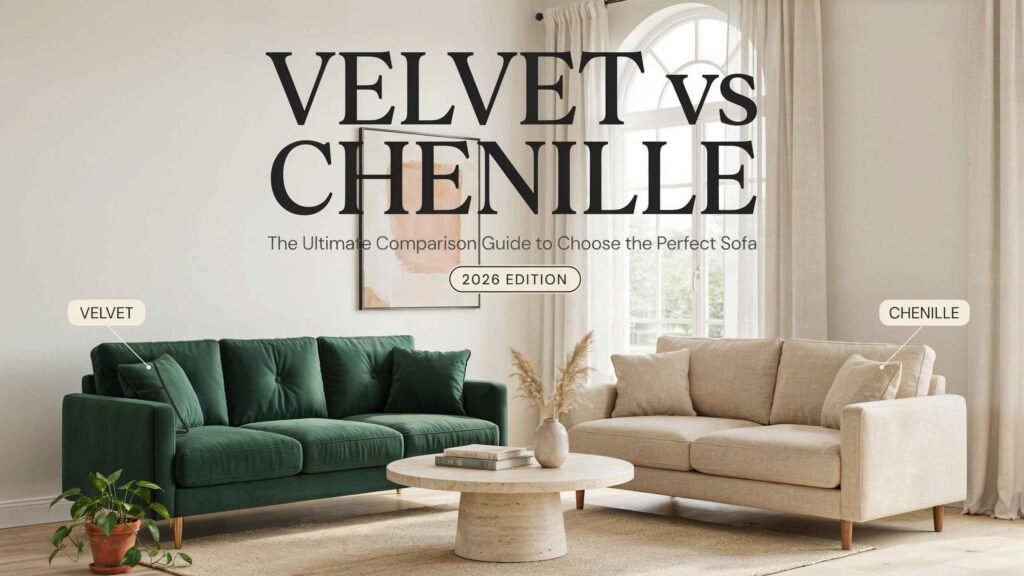
Choosing the right sofa fabric can completely transform your living space, but deciding between Velvet vs Chenille can be challenging. Both materials offer a luxurious look, comfortable feel, and unique style, making them popular choices for modern sofas. Velvet brings a rich, elegant appearance with its smooth texture, while chenille offers a soft, cozy feel with excellent durability for everyday use.
In this guide, we’ll compare velvet and chenille sofas based on comfort, durability, maintenance, pet-friendliness, appearance, and overall value. Whether you’re furnishing a luxury home, upgrading your family room, or buying your first sofa, this detailed comparison will help you choose the perfect sofa material for your lifestyle in 2026.
Table of Contents
Quick Verdict: Velvet vs Chenille
If you’re looking for a fast answer to the velvet vs. chenille debate, the best choice depends on your lifestyle, budget, and design preferences. Both fabrics are excellent sofa materials, but each has unique strengths that make it better suited for different homes.
Choose velvet if you want a luxurious, elegant sofa with a smooth texture and rich color depth. Velvet is ideal for modern, classic, and upscale interiors where appearance is a top priority. High-quality performance velvet is also more durable and stain-resistant than traditional velvet, making it a practical option for busy households.
Choose chenille if comfort and everyday durability matter most. Chenille has a soft, cozy feel and a textured finish that hides minor wear better than velvet. Families often prefer it because it provides excellent comfort for daily use while maintaining a warm, inviting look.
Which Fabric Wins?
- Best Overall: Velvet – It offers the perfect balance of luxury, comfort, and style, especially with modern performance fabrics.
- Best for Luxury Homes: Velvet – Its rich texture and elegant sheen create a premium, sophisticated appearance.
- Best for Families: Chenille – Soft, durable, and comfortable for everyday living.
- Best for Pet Owners: Performance Velvet – Tightly woven fibers are less likely to trap pet hair and are easier to clean than traditional chenille. However, homes with pets that scratch furniture should consider using protective covers regardless of fabric choice.
- Best for Durability: Chenille – High-quality chenille generally withstands everyday use well and disguises light wear thanks to its textured surface.
- Best for Easy Maintenance: Performance Velvet – Spills and dust are typically easier to remove from tightly woven performance velvet than from standard chenille fabrics.
- Best Value for Money: Chenille – Usually more affordable while offering excellent comfort and durability for everyday use.
Final Recommendation
When comparing velvet vs. chenille, there is no one-size-fits-all winner. If you want a sofa that makes a bold style statement with a luxurious finish, velvet is the better investment. If you prefer a warm, family-friendly fabric that delivers outstanding comfort and long-lasting performance at a more budget-friendly price, chenille is an excellent choice.
In the sections below, we’ll compare velvet vs. chenille in detail, including appearance, comfort, durability, maintenance, pet friendliness, lifespan, cost, and overall value, so you can confidently choose the perfect sofa for your home.
Velvet vs Chenille Comparison Table
The table below provides a quick side-by-side comparison of Velvet vs Chenille to help you understand the strengths and weaknesses of each sofa fabric at a glance.
| Feature | Velvet | Chenille |
|---|---|---|
| Appearance | Luxurious, smooth, and elegant with a subtle sheen | Soft, textured, and cozy with a casual look |
| Feel | Silky, plush, and smooth | Soft, fuzzy, and slightly textured |
| Comfort | Extremely comfortable with a premium feel | Highly comfortable and warm for everyday use |
| Durability | Good to excellent, especially performance velvet | Very good for daily use; textured surface hides wear |
| Lifespan | 10–15+ years with proper care | 8–15 years depending on quality and maintenance |
| Water Resistance | Performance velvet offers good water resistance; traditional velvet absorbs spills | Moderate; absorbs liquids if not treated |
| Stain Resistance | Performance velvet resists stains well | Fair to good; stains should be cleaned promptly |
| Scratch Resistance | Better than traditional velvet but can show claw marks | Can snag if exposed to sharp pet claws |
| Pet Friendliness | Good with performance velvet; pet hair is easier to remove | Moderate; textured fibers may trap pet hair |
| Breathability | Good, but can feel warmer in hot weather | Excellent airflow and comfortable year-round |
| Maintenance | Regular vacuuming and gentle brushing required | Easy to maintain with routine vacuuming |
| Fade Resistance | Good indoors; avoid prolonged direct sunlight | Good, though long-term sun exposure may cause fading |
| Cost | Medium to premium | Budget-friendly to mid-range |
| Luxury Appeal | Excellent; ideal for elegant and high-end interiors | Moderate; creates a cozy and welcoming atmosphere |
| Best For | Luxury homes, modern interiors, statement furniture | Families, everyday living rooms, and budget-conscious buyers |
Key Takeaways
When comparing Velvet vs Chenille, both fabrics offer excellent comfort and style, but they cater to different needs.
- Velvet stands out for its luxurious appearance, rich colors, and sophisticated finish, making it a top choice for homeowners who want an elegant statement sofa.
- Chenille excels in comfort, everyday durability, and affordability, making it a practical option for busy families and high-traffic living spaces.
- If you prioritize luxury and visual appeal, velvet is the clear winner.
- If you value coziness, durability, and overall value, chenille is often the better choice.
In the next section, we’ll take a closer look at what velvet is, how it is made, the different types available, and the pros and cons of choosing a velvet sofa.
What Is Velvet?
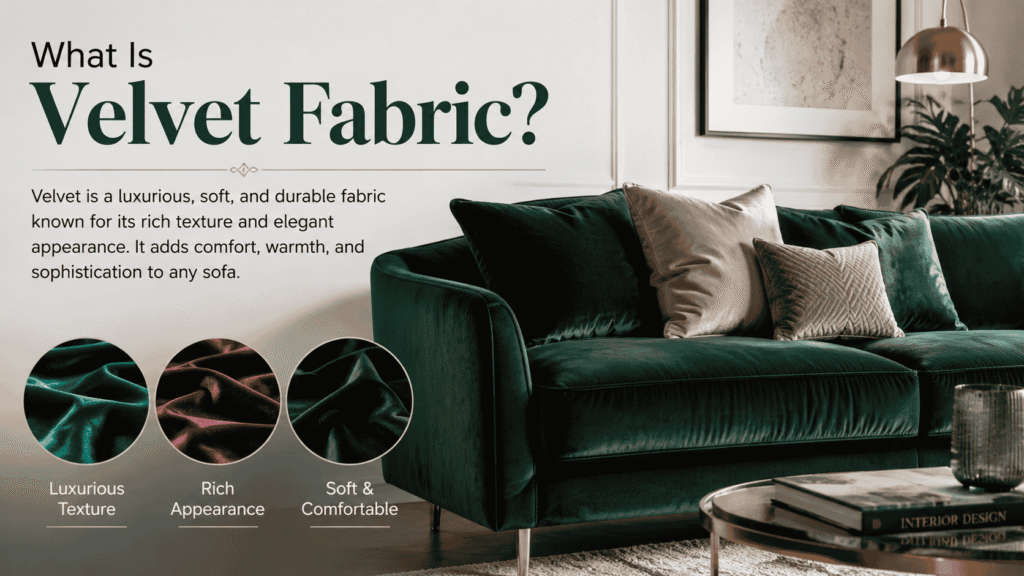
Velvet is a premium upholstery fabric known for its soft texture, luxurious appearance, and rich color depth. It is made using a unique weaving process that creates a dense, short pile on the fabric’s surface, giving velvet its signature smooth feel and elegant sheen. Thanks to its sophisticated look, velvet has long been a popular choice for sofas, armchairs, ottomans, and other high-end furniture.
When comparing velvet vs. chenille, velvet stands out for its refined style and ability to elevate almost any interior. Whether you’re decorating a modern apartment, a traditional home, or a luxury living room, a velvet sofa can become the centerpiece of the space.
Today’s velvet upholstery is available in several materials, including cotton, polyester, and performance blends, making it more durable and easier to maintain than traditional velvet. This means homeowners can enjoy the luxurious look of velvet without sacrificing practicality.
How Velvet Is Made
Velvet is produced using a specialized weaving technique in which two layers of fabric are woven together at the same time. These layers are then carefully cut apart, creating thousands of tiny, upright fibers known as the pile. The dense pile reflects light from different angles, giving velvet its distinctive color variation and soft, plush texture.
After weaving, the fabric is brushed and finished to ensure the pile stands evenly, resulting in the smooth surface that velvet is famous for. Depending on the fiber used—such as cotton, polyester, or silk—the finished fabric can vary in softness, durability, and price.
Modern manufacturing techniques have also introduced performance velvet, which is designed to resist stains, moisture, and everyday wear. This makes velvet a more practical option for busy households than it was in the past.
Types of Velvet
Not all velvet is the same. Different fibers and manufacturing methods create unique types of velvet, each with its own advantages.
Cotton Velvet
Cotton velvet is made primarily from natural cotton fibers. It has a soft, breathable feel and a matte finish that offers a classic, understated elegance.
Best for:
- Traditional homes
- Formal living rooms
- Homeowners who prefer natural fabrics
Pros:
- Soft and breathable
- Natural fiber
- Comfortable year-round
Cons:
- Wrinkles more easily
- Less stain-resistant than synthetic velvet
Polyester Velvet
Polyester velvet is one of the most popular upholstery fabrics because it combines luxury with durability. It closely resembles natural velvet while offering improved resistance to stains, fading, and everyday wear.
Best for:
- Family homes
- Everyday sofas
- Budget-conscious buyers
Pros:
- Durable
- Affordable
- Easy to clean
- Fade-resistant
Cons:
- Less breathable than cotton
- Not as luxurious as silk velvet
Crushed Velvet
Crushed velvet is created by twisting or pressing the fabric while the pile is still soft, producing a textured surface that reflects light in multiple directions. This gives the fabric a dramatic, shimmering appearance.
Best for:
- Glamorous interiors
- Accent chairs
- Statement furniture
Pros:
- Unique visual texture
- Eye-catching appearance
- Rich color variation
Cons:
- Can look overly decorative for minimalist spaces
- Texture may not suit every décor style.
Performance Velvet
Performance velvet is engineered for modern lifestyles. It features tightly woven synthetic fibers and protective finishes that improve resistance to stains, moisture, and daily wear.
Best for:
- Families with children
- Pet owners
- High-traffic living rooms
Pros:
- Excellent stain resistance
- Easy maintenance
- Durable for everyday use
- Retains its appearance over time
Cons:
- Usually more expensive than standard polyester velvet
- Slightly less soft than luxury velvet varieties
Silk Velvet
Silk velvet is considered the most luxurious type of velvet. Made from natural silk fibers, it has an exceptionally soft texture and a beautiful natural sheen that is difficult to replicate.
Best for:
- Luxury furniture
- Formal sitting rooms
- Decorative pieces
Pros:
- Ultra-soft feel
- Premium appearance
- Elegant drape and shine
Cons:
- Very expensive
- Delicate and requires careful maintenance
- Not ideal for everyday family use
Pros of Velvet
Velvet remains one of the most sought-after upholstery fabrics because it combines beauty with comfort.
Luxurious Appearance
Velvet instantly adds elegance and sophistication to any room. Its rich texture and subtle sheen create a premium look that enhances both modern and classic interiors.
Exceptionally Soft
The dense pile makes velvet incredibly soft and comfortable, making it perfect for relaxing after a long day.
Rich, Vibrant Colors
Velvet absorbs and reflects light beautifully, making colors appear deeper and more vibrant than many other upholstery fabrics.
Comfortable All Year
Despite its plush feel, modern velvet provides excellent comfort in both warm and cool seasons, especially when made with breathable fibers.
Good Durability
High-quality and performance velvet can withstand everyday use while maintaining its luxurious appearance for many years with proper care.
Excellent Style Versatility
Velvet complements a wide range of interior styles, including the following:
- Modern
- Contemporary
- Traditional
- Art Deco
- Scandinavian
- Luxury interiors
Cons of Velvet
While velvet offers many advantages, it also has a few drawbacks that buyers should consider.
Requires Regular Maintenance
Velvet benefits from routine vacuuming and occasional brushing to keep the pile looking smooth and fresh.
Can Show Pressure Marks
Heavy use may leave temporary shading or pressure marks where the pile changes direction. These are usually cosmetic and can often be brushed out.
Traditional Velvet Absorbs Spills
Unless treated or made as performance velvet, traditional velvet can absorb liquids quickly, so spills should be cleaned immediately.
Premium Options Can Be Expensive
High-quality cotton and silk velvet are among the more expensive upholstery materials, although polyester and performance velvet provide more affordable alternatives.
Sensitive to Direct Sunlight
Prolonged exposure to strong sunlight can gradually fade the fabric, so placing velvet furniture away from direct UV light or using window coverings is recommended.
Understanding what velvet is and the different types available makes it easier to evaluate velvet vs. chenille. While velvet excels in luxury, elegance, and rich color, the next section explores chenille to see how its cozy texture, durability, and everyday practicality compare.
What Is Chenille?
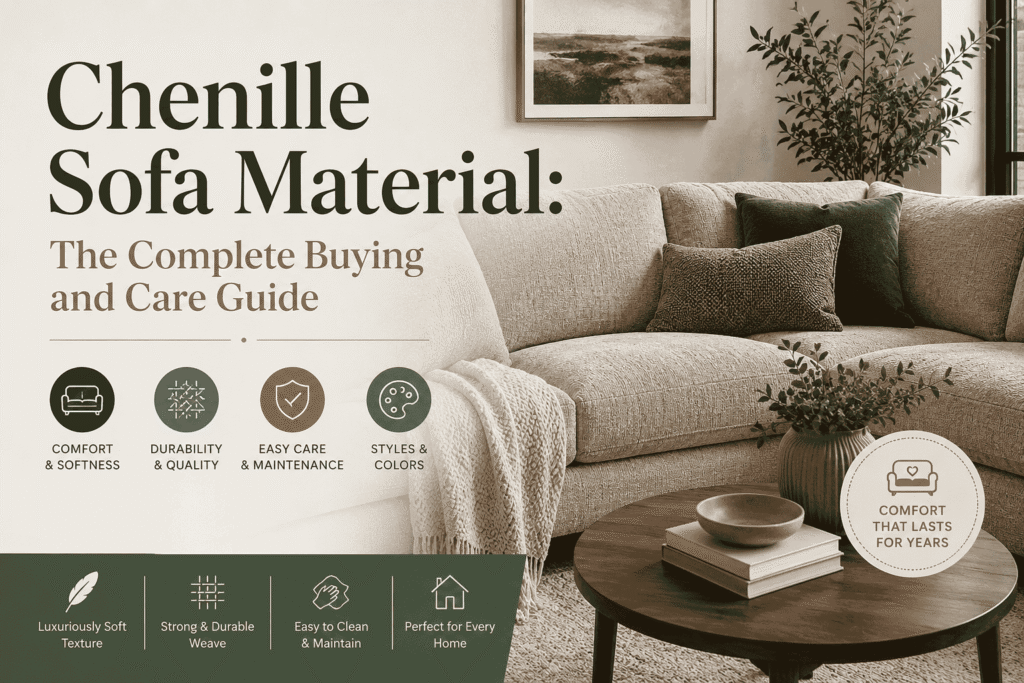
Chenille is a soft, textured upholstery fabric known for its cozy feel, excellent comfort, and durable construction. The word “chenille“ comes from the French word for “caterpillar,” referring to the fabric’s fuzzy, raised yarn that resembles a caterpillar’s soft body. This unique texture gives chenille its signature plush appearance and makes it a popular choice for sofas, armchairs, sectionals, and accent furniture.
When comparing Velvet vs Chenille, chenille stands out for its warm, inviting texture and practicality. Unlike velvet’s smooth, shiny surface, chenille has a more casual and relaxed look that suits family homes, cozy living rooms, and everyday seating areas.
Modern chenille is commonly made from cotton, polyester, rayon, or blended fibers, allowing manufacturers to create fabrics that balance softness, durability, and affordability. Thanks to its thick pile and textured weave, chenille offers exceptional comfort while helping conceal minor signs of everyday wear.
How Chenille Is Made
Chenille is produced by twisting short lengths of yarn between two core threads. Once the yarn is secured, the fibers stick out evenly around the core, creating the fabric’s distinctive fuzzy texture. These yarns are then woven or knitted into upholstery fabric.
The raised fibers create a soft, plush surface that feels warm and comfortable to the touch. Depending on the materials used, chenille can range from lightweight and breathable to heavy-duty fabrics designed for high-traffic furniture.
Today, many manufacturers use synthetic blends to improve chenille’s durability, stain resistance, and color retention, making it a practical choice for modern homes.
Types of Chenille
Not all chenille fabrics are the same. Different fiber blends offer varying levels of softness, durability, maintenance, and cost.
Cotton Chenille
Cotton chenille is made primarily from natural cotton fibers. It is soft, breathable, and comfortable, making it an excellent choice for homeowners who prefer natural materials.
Best for:
- Casual living rooms
- Traditional homes
- Eco-conscious buyers
Pros:
- Soft and breathable
- Natural fiber
- Comfortable throughout the year
Cons:
- Can wear faster in high-traffic areas
- More likely to absorb spills than synthetic chenille
Polyester Chenille
Polyester chenille is one of the most popular upholstery options because it combines softness with excellent durability. It resists fading, stretching, and everyday wear better than many natural fabrics.
Best for:
- Family homes
- High-traffic living rooms
- Budget-conscious shoppers
Pros:
- Durable
- Affordable
- Easy to maintain
- Resistant to fading
Cons:
- Less breathable than cotton
- May feel slightly warmer in hot climates
Rayon Chenille
Rayon chenille has a silky texture and a subtle sheen that gives furniture a refined appearance. It offers a softer and more luxurious feel than some other chenille fabrics but requires extra care.
Best for:
- Decorative furniture
- Formal sitting rooms
- Low-traffic areas
Pros:
- Very soft
- Elegant appearance
- Smooth texture
Cons:
- Less durable than polyester chenille
- More sensitive to moisture
Blended Chenille
Blended chenille combines two or more fibers, such as cotton and polyester or rayon and polyester, to create a fabric that balances softness, strength, and affordability.
Best for:
- Everyday sofas
- Busy households
- Long-term use
Pros:
- Balanced comfort and durability
- Better stain resistance than pure cotton chenille
- Good value for money
Cons:
- Quality varies depending on the fiber blend
- Lower-quality blends may flatten over time
Pros of Chenille
Chenille is a favorite upholstery fabric because it offers outstanding comfort while remaining practical for everyday use.
Extremely Soft and Cozy
Chenille’s plush texture creates a warm and inviting seating experience, making it ideal for relaxing with family or watching movies.
Comfortable for Daily Use
Its thick, cushioned surface provides lasting comfort, even when used frequently.
Durable for Busy Households
High-quality chenille is designed to withstand everyday wear, making it a reliable option for families with children.
Hides Minor Wear
The textured surface helps disguise small wrinkles, pressure marks, and everyday signs of use better than many smooth fabrics.
Budget-Friendly
Compared to many premium upholstery fabrics, chenille offers excellent value by combining comfort, durability, and affordability.
Available in Many Colors and Styles
Chenille comes in a wide range of colors, patterns, and textures, making it easy to match different interior design styles, from traditional to contemporary.
Cons of Chenille
Although chenille has many advantages, it also has some limitations to consider before purchasing a sofa.
Can Snag Easily
The raised yarns may catch on sharp objects or pet claws, potentially causing pulls or loose threads.
May Flatten Over Time
Frequent use can compress the soft pile, especially in heavily used seating areas. Regular fluffing and rotation of cushions can help maintain its appearance.
Absorbs Spills
Standard chenille is not naturally water-resistant, so liquids should be cleaned promptly to prevent stains.
Can Trap Dust and Pet Hair
Its textured surface may collect dust, lint, and pet hair more easily than tightly woven fabrics, requiring regular vacuuming.
Less Formal Appearance
While cozy and inviting, chenille lacks the elegant sheen and luxurious look that make velvet a popular choice for upscale interiors.
After understanding both materials individually, it’s easier to see why the Velvet vs Chenille comparison is so important. Velvet delivers timeless elegance and luxury, while chenille offers unmatched coziness and everyday practicality. In the next section, we’ll compare Velvet vs Chenille side by side across key factors such as appearance, comfort, durability, maintenance, pet friendliness, cost, and long-term value to help you choose the perfect sofa fabric.
Velvet vs. Chenille: Side-by-Side Comparison
Choosing between velvet and chenille depends on more than just appearance. A sofa is a long-term investment, so factors like comfort, durability, maintenance, lifestyle, and budget all matter. In this detailed velvet vs. chenille comparison, we’ll look at how both fabrics perform in real-world situations.
Appearance
Velvet
Velvet is known for its elegant, luxurious appearance. Its smooth surface reflects light differently depending on the direction of the fibers, creating a rich depth of color and a sophisticated finish.
A velvet sofa can instantly become a statement piece in a room. It works especially well in the following:
- Modern interiors
- Luxury homes
- Glam-style décor
- Classic living spaces
Chenille
Chenille has a softer, more textured appearance. Instead of velvet’s smooth shine, chenille offers a cozy, woven look that creates a relaxed and welcoming atmosphere.
Chenille works well in the following:
- Family rooms
- Casual living spaces
- Traditional homes
- Comfortable everyday interiors
Winner: Velvet for luxury appeal, Chenille for cozy styling
Texture and Feel
Velvet
Velvet has a smooth, plush surface created by its dense pile. Running your hand across velvet feels soft and silky, which is one of the main reasons it remains a popular luxury sofa fabric.
Chenille
Chenille has a fuzzy, slightly raised texture that feels warm and comfortable. Its softness comes from the twisted yarns that create its unique surface.
Winner: Tie—Velvet feels smoother, while chenille feels warmer and cozier.
Comfort
Velvet
Velvet provides excellent comfort because of its soft surface and plush feel. It feels inviting and luxurious, especially when paired with high-quality sofa cushions.
However, some velvet fabrics may feel warmer because the dense pile can hold heat.
Chenille
Chenille is highly comfortable for everyday seating. Its thick texture creates a cozy feeling that many families prefer for lounging, relaxing, and extended use.
Winner: Chenille for everyday comfort and velvet for luxury comfort
Softness
Velvet
Velvet is one of the softest upholstery fabrics available. Premium options like cotton velvet and silk velvet provide an exceptionally smooth touch.
Chenille
Chenille is also very soft but has a different feel. Instead of a silky surface, it offers a plush, fuzzy texture.
Winner: Velvet for silky softness, chenille for plush softness
Warmth
Velvet
Velvet’s dense fibers create a warm and comfortable feel, making it a great choice for cooler climates. However, it may feel slightly warmer during hot weather.
Chenille
Chenille naturally feels warm and cozy because of its thick textured yarns. It is especially popular in homes where comfort is the main priority.
Winner: Chenille for cozy warmth
Breathability
Velvet
Breathability depends on the fiber type. Cotton velvet allows better airflow, while synthetic velvet may feel less breathable.
Chenille
Chenille generally offers good airflow because of its woven construction. Natural chenille fabrics, especially cotton blends, tend to feel more breathable.
Winner: Chenille
Durability
Velvet
Modern velvet, especially performance velvet, can be highly durable and resistant to everyday wear. It maintains its color and appearance well when properly cared for.
Traditional velvet varieties, however, may require more maintenance.
Chenille
Chenille is naturally durable because of its thick yarn construction. It handles daily use well and hides minor wear better due to its textured surface.
Winner: Chenille for heavy everyday use; Velvet for premium durability with performance fabrics
Lifespan
Velvet
A high-quality velvet sofa can last around 10–15 years or longer with proper care. Performance velvet can provide excellent longevity in busy households.
Chenille
Quality chenille sofas can also last 8–15 years depending on fiber type, construction quality, and maintenance habits.
Winner: Slight advantage to Velvet when using premium materials
Scratch Resistance
Velvet
Velvet has a smooth surface that does not easily catch on objects. Performance velvet is often a good choice for homes with pets because it has tightly woven fibers.
However, sharp claws can still damage the fabric.
Chenille
Chenille’s raised fibers can be more vulnerable to snagging from pet claws or sharp objects.
Winner: Velvet
Water Resistance
Velvet
Traditional velvet absorbs liquids quickly, but performance velvet options offer improved moisture resistance and easier cleanup.
Chenille
Chenille is generally absorbent and should be treated quickly after spills. Fabric protection treatments can improve resistance.
Winner: Performance Velvet
Stain Resistance
Velvet
Performance velvet performs well against stains because many versions are treated with protective finishes. Spills are usually easier to clean when addressed quickly.
Chenille
Chenille can resist everyday wear but may hold onto stains because of its textured fibers.
Winner: Velvet
Fade Resistance
Velvet
Synthetic velvet, especially polyester velvet, offers good color retention. However, prolonged direct sunlight can cause fading.
Chenille
Chenille also performs well against fading, particularly polyester blends, but natural fibers may fade faster.
Winner: Tie
Wrinkle Resistance
Velvet
Velvet generally resists wrinkles because of its dense pile, but it can develop visible pressure marks from sitting.
Chenille
Chenille hides wrinkles and minor imperfections well because of its textured surface.
Winner: Chenille
Maintenance
Velvet
Velvet requires gentle care:
- Regular vacuuming
- Brushing the pile
- Quick stain removal
- Avoiding harsh cleaners
Chenille
Chenille is easier for everyday maintenance:
- Routine vacuuming
- Cushion rotation
- Spot cleaning
Winner: Chenille for simple maintenance
Cleaning Requirements
Velvet
Velvet requires more careful cleaning methods. Aggressive scrubbing can damage the pile and affect the fabric’s appearance.
Chenille
Chenille is easier to clean but still requires gentle treatment to protect the fibers.
Winner: Chenille
Pet Friendliness
Velvet
Performance velvet is often a better choice for pet owners because pet hair is easier to remove and the tight weave reduces snagging.
Chenille
Chenille is comfortable but may attract pet hair and can be more vulnerable to claw damage.
Winner: Velvet
Child Friendliness
Velvet
Performance velvet works well for families, but traditional velvet may require extra care around spills.
Chenille
Chenille is naturally family-friendly because it is comfortable, durable, and hides everyday wear.
Winner: Chenille
Allergy Considerations
Velvet
The dense surface of velvet does not trap as much dust as some textured fabrics, making it a good option for people who prefer smoother upholstery.
Chenille
Chenille’s textured surface can collect more dust and pet hair, requiring regular cleaning.
Winner: Velvet
Sustainability
Velvet
Sustainability depends on the fiber used. Cotton and recycled polyester velvet options can be more environmentally friendly choices.
Chenille
Chenille made from natural fibers like cotton can be sustainable, while synthetic blends depend on manufacturing processes.
Winner: Tie
Color Options
Velvet
Velvet is famous for rich, deep colors because its surface enhances color intensity.
Popular velvet sofa colors include:
- Emerald green
- Navy blue
- Charcoal gray
- Burgundy
- Beige
Chenille
Chenille is available in many colors but usually provides a softer, more muted appearance.
Winner: Velvet
Style and Interior Design
Velvet
Best suited for:
- Luxury interiors
- Modern apartments
- Elegant living rooms
- Statement furniture
Chenille
Best suited for:
- Family homes
- Cozy interiors
- Casual designs
- Comfortable spaces
Winner: Depends on your design style
Cost
Velvet
Velvet sofas range from affordable polyester options to expensive luxury silk versions.
Chenille
Chenille is generally more budget-friendly while still offering excellent comfort and durability.
Winner: Chenille for affordability
Long-Term Value
Velvet
Velvet offers strong long-term value for buyers who prioritize luxury, style, and timeless design.
Chenille
Chenille provides excellent value for families who need a comfortable, durable, and practical sofa fabric.
Winner: Tie — depends on your lifestyle
Final Comparison Summary
The velvet vs. chenille decision comes down to your priorities:
- Choose velvet if you want luxury, elegance, rich colors, and a premium look.
- Choose chenille if you want comfort, durability, affordability, and a family-friendly fabric.
Both materials can make beautiful sofas, but the right choice depends on how you use your living space and what features matter most to you.
Velvet vs Chenille for Different Buyers
The best sofa fabric is not the same for everyone. Your lifestyle, family size, pets, climate, and interior style all influence whether velvet or chenille is the better choice. In this section, we compare velvet vs. chenille for different types of buyers to help you find the right option for your home.
Families with Kids
Chenille
For families with children, chenille is often the more practical choice. Its soft texture, durability, and ability to hide minor wear make it ideal for busy living rooms where sofas receive daily use.
Chenille works well for families because
- It feels comfortable for long sitting sessions.
- Its textured surface hides small marks and signs of use.
- It provides a cozy place for children to relax.
- It is generally affordable to replace or maintain
However, spills should be cleaned quickly because standard chenille can absorb liquids.
Velvet
Velvet can also work for families, especially performance velvet, which is designed to resist stains and everyday wear. It offers a more elegant appearance while still providing practical benefits.
Best Choice for Families: Chenille
Best Luxury Family Option: Performance Velvet
Pet Owners
Velvet
When comparing velvet vs. chenille for pet owners, velvet—especially tightly woven performance velvet—often has an advantage. Its smooth surface makes pet hair easier to remove, and there are fewer loose fibers for claws to catch.
Benefits of velvet for pet owners:
- Pet hair is easier to vacuum.
- Smooth texture does not trap as much debris
- Performance versions offer better stain resistance.
However, no fabric is completely scratch-proof. Pets that frequently scratch furniture can damage any upholstery material.
Chenille
Chenille provides excellent comfort but may not be the best option for homes with active pets. The raised fibers can collect hair and may snag from sharp claws.
Best Choice for Pet Owners: Performance Velvet
Luxury Living Rooms
Velvet
For luxury interiors, velvet is the clear winner. Its rich texture, elegant shine, and deep color appearance create a premium look that few fabrics can match.
Velvet sofas are commonly used in the following:
- Modern luxury homes
- Designer interiors
- Formal living rooms
- Statement furniture arrangements
Popular luxury velvet colors include the following:
- Emerald green
- Deep navy
- Champagne
- Burgundy
- Black
Chenille
Chenille can create a beautiful and comfortable luxury space, but it offers a softer, more relaxed appearance rather than a glamorous one.
Best Choice for Luxury Living Rooms: Velvet
Apartments
Velvet
Velvet can be an excellent choice for apartments because it adds style without requiring a large amount of space. A velvet sofa can act as a statement piece in smaller rooms.
Advantages:
- Creates a high-end appearance
- Available in many colors
- Works well with modern décor
Chenille
Chenille is also a great apartment choice, especially for people who prioritize comfort. Its cozy appearance can make smaller spaces feel warm and inviting.
Best Choice for Apartments: Depends on Style
- Choose velvet for elegance
- Choose chenille for comfort.
Budget Buyers
Chenille
For shoppers looking for maximum value, chenille is often the better option. It provides softness, durability, and comfort at a reasonable price.
Benefits include:
- Lower average cost
- Good everyday performance
- Comfortable texture
- Long-lasting value
Velvet
Affordable polyester velvet options are available, but premium velvet varieties can become expensive.
Best Choice for Budget Buyers: Chenille
Cold Climates
Velvet
Velvet performs very well in colder climates because its dense pile creates a warm and comfortable seating surface.
Benefits:
- Plush feel
- Warm texture
- Cozy appearance
Chenille
Chenille is also excellent for cold climates because its thick yarn construction creates a soft, warm feeling.
Best Choice for Cold Climates: Tie
- Velvet for luxury warmth
- Chenille for everyday coziness
Warm Climates
Chenille
In warmer areas, chenille can be a comfortable option because its woven construction often allows better airflow compared to dense velvet.
Velvet
Some velvet fabrics, especially synthetic versions, may feel warmer because the dense pile can hold heat.
However, cotton velvet and breathable performance options can still work well.
Best Choice for Warm Climates: Chenille
Quick Buyer Guide: Velvet vs Chenille
| Buyer Type | Recommended Fabric | Reason |
|---|---|---|
| Families with kids | Chenille | Durable and comfortable |
| Pet owners | Performance Velvet | Easier hair removal and cleaning |
| Luxury homeowners | Velvet | Premium appearance |
| Apartment owners | Depends | Velvet for style, chenille for comfort |
| Budget buyers | Chenille | Better value |
| Cold climates | Both | Warm and cozy options |
| Warm climates | Chenille | More breathable |
Final Thoughts for Different Lifestyles
The right choice in the Velvet vs Chenille comparison depends on what you value most.
- Choose velvet if your priority is luxury, elegance, and a sophisticated design.
- Choose chenille if you need a comfortable, durable, and practical sofa for everyday living.
- Choose performance velvet if you want a balance between luxury and easier maintenance.
Next, we will look at when you should choose velvet, including its best use cases, ideal buyers, and situations where another fabric may be a better option.
When Should You Choose Velvet?
Velvet is one of the most visually striking upholstery fabrics available. Its smooth texture, deep colors, and luxurious appearance make it a popular choice for homeowners who want their sofa to become a centerpiece of their living space.
In the velvet vs. chenille comparison, velvet is the better option when style, elegance, and premium design are your top priorities. Modern velvet options, especially performance velvet, also provide improved durability and easier maintenance, making them more practical than traditional velvet.
Best Use Cases for Velvet
1. Luxury and Designer Interiors
Velvet is an excellent choice for high-end interiors because it adds sophistication and character to a room. The fabric’s light-reflecting surface creates a rich, elegant appearance that makes furniture look more expensive.
Velvet works especially well with:
- Modern luxury décor
- Art Deco interiors
- Contemporary spaces
- Classic designs
A velvet sofa can instantly elevate a simple room and create a designer-inspired look.
2. Statement Sofas
If you want your sofa to be the focal point of your living room, velvet is a strong choice. Its bold colors and unique texture naturally attract attention.
Popular statement velvet sofa choices include the following:
- Emerald green velvet sofas
- Navy blue velvet sofas
- Deep charcoal velvet sofas
- Burgundy velvet sofas
These colors create a dramatic and stylish atmosphere.
3. Formal Living Rooms
Velvet is ideal for spaces that are designed for entertaining guests rather than heavy everyday use. Its elegant appearance creates a refined environment perfect for social gatherings.
It pairs beautifully with:
- Marble tables
- Brass accents
- Wooden furniture
- Decorative lighting
4. Modern Apartments
Velvet can work extremely well in apartments because one stylish piece of furniture can transform the entire space.
A velvet sofa can
- Add personality to small rooms
- Create a luxury feel without major renovations
- Provide a fashionable centerpiece
Choosing lighter velvet colors, such as beige, cream, or soft gray, can help smaller spaces feel open and bright.
5. Homes Without Heavy Daily Wear
Velvet is a great option for homeowners who want beauty and comfort but do not need a heavy-duty family sofa.
It is especially suitable for:
- Couples
- Adults without young children
- Low-traffic living rooms
- Guest rooms
Who Should Buy Velvet?
Velvet is the right choice for buyers who:
Prefer Luxury Over Casual Style
If you love elegant furniture with a premium appearance, velvet offers a level of sophistication that few fabrics can match.
Want Rich and Vibrant Colors
Velvet enhances color depth, making shades appear deeper and more luxurious.
Enjoy Soft, Plush Comfort
The smooth pile provides a comfortable and relaxing seating experience.
Care About Interior Design
For homeowners who view furniture as part of their home’s design statement, velvet is an excellent investment.
Want a Timeless Sofa Style
A well-designed velvet sofa can remain stylish for many years because velvet has a classic appearance that does not quickly go out of fashion.
When to Avoid Velvet
Although velvet is beautiful, it may not be the best choice for every household.
Avoid Velvet If You Have Very Active Pets
Pets with sharp claws may damage velvet upholstery. While performance velvet is more durable, no fabric is completely resistant to scratches.
Avoid Traditional Velvet in High-Spill Areas
Homes with young children or frequent spills may find traditional velvet more challenging to maintain.
For these situations, choose:
- Performance velvet
- Stain-resistant treatments
- More durable upholstery fabrics
Avoid Velvet If You Want Zero Maintenance
Velvet requires more attention than some textured fabrics. Regular cleaning and proper care are necessary to maintain its smooth appearance.
Avoid Velvet in Extremely Hot Environments.
Some synthetic velvet fabrics can feel warmer because of their dense surface. In very hot climates, breathable fabrics like cotton blends or chenille may provide more comfort.
Velvet Buying Tips
If you decide velvet is the right choice for your sofa, consider these factors:
Choose Performance Velvet for Everyday Use
Performance velvet offers better resistance to the following:
- Stains
- Moisture
- Fading
- Daily wear
It is a practical upgrade for families and busy households.
Check the Fabric Quality
High-quality velvet should have:
- Dense, even pile
- Smooth texture
- Strong backing
- Good color consistency
Consider Your Lifestyle
Before buying, think about:
- How often the sofa will be used
- Whether you have children or pets
- How much maintenance you are willing to do
Final Verdict: When Velvet Is the Better Choice
In the velvet vs. chenille debate, velvet wins when you want a sofa that delivers luxury, elegance, rich colors, and a premium design statement.
Choose velvet if your priority is:
- ✔ Luxury appearance
- ✔ Soft texture
- ✔ Designer style
- ✔ Elegant living spaces
- ✔ A statement piece of furniture
If your main goal is comfort, durability, and everyday family use, chenille may be the better option. In the next section, we’ll explore when you should choose chenille and why it is a favorite for practical, comfortable homes.
When Should You Choose Chenille?
Chenille is one of the most popular upholstery fabrics for homeowners who want a combination of comfort, durability, and affordability. Its soft, textured surface creates a warm and inviting feel, making it an excellent choice for sofas used every day.
In the velvet vs. chenille comparison, chenille is often the better option for families, busy households, and buyers who want a practical sofa fabric that can handle regular use while still looking stylish.
Unlike velvet, which focuses more on luxury and elegance, chenille offers a relaxed and cozy appearance that works well in comfortable living spaces.
Best Use Cases for Chenille
1. Family Living Rooms
Chenille is an excellent choice for families because it is soft enough for relaxation while being durable enough for everyday activities.
It works well for:
- Movie nights
- Family gatherings
- Daily lounging
- High-use seating areas
Its textured surface helps hide small signs of wear, making it easier to maintain the sofa’s appearance over time.
2. Everyday Sofas
If your sofa is used several hours every day, chenille is a practical choice. Its thick yarn construction provides comfort and resilience, making it suitable for frequently used furniture.
Chenille sofas are ideal for:
- Main living room sofas
- Sectional sofas
- Large family couches
- Relaxation spaces
3. Homes With Children
For households with children, chenille offers several advantages:
- Soft and comfortable surface
- Durable construction
- Less formal appearance
- Better at hiding minor marks and wear
However, spills should still be cleaned quickly because standard chenille can absorb liquids.
4. Cozy and Casual Interiors
Chenille creates a warm and welcoming atmosphere. It works especially well with interior styles that focus on comfort and relaxation.
Popular design styles for chenille sofas include the following:
- Farmhouse
- Traditional
- Transitional
- Scandinavian-inspired interiors
- Casual modern homes
5. Budget-Friendly Furniture Upgrades
Chenille provides excellent value because it offers a premium soft feel without the higher price of some luxury fabrics.
It is a smart option for buyers who want:
- Comfort
- Good durability
- Attractive appearance
- Reasonable pricing
Who Should Buy Chenille?
Chenille is the right choice for buyers who:
Want Maximum Comfort
Chenille’s plush, fuzzy texture creates a comfortable seating experience that is perfect for relaxing.
If your sofa is where you
- Watch TV
- Read books
- Spend time with family
- Take naps
Chenille can be an excellent choice.
Need a Family-Friendly Fabric
Families who need a practical sofa material often prefer chenille because it balances softness and durability.
It is especially suitable for:
- Homes with children
- High-traffic living rooms
- Everyday furniture
Prefer a Cozy Look
If you want your home to feel warm and inviting, chenille is a strong option. Its textured surface adds depth and softness to your interior design.
Want Better Value for Money
Compared with premium velvet options, chenille often provides more comfort and durability at a lower cost.
It is a good choice for buyers who want a long-lasting sofa without paying luxury fabric prices.
Prefer Low-Stress Maintenance
Chenille does require regular care, but its textured surface naturally hides minor imperfections better than smooth fabrics.
This makes it easier to keep looking good in busy households.
When to Avoid Chenille
Although chenille is a great sofa fabric, it may not be suitable for every situation.
Avoid Chenille If You Have Pets That Scratch Furniture.
Chenille’s raised fibers can catch on sharp claws. Cats and dogs that scratch sofas may cause the following:
- Loose threads
- Snags
- Surface damage
For pet owners, performance velvet or tightly woven fabrics may be a better choice.
Avoid Chenille If You Want a Formal Luxury Look
Chenille creates a cozy and relaxed appearance, but it does not have the same elegant shine and sophistication as velvet.
If your goal is
- A designer-style living room
- A glamorous interior
- A luxury statement sofa
Velvet may be the better choice.
Avoid Chenille in High-Spill Areas Without Protection.
Standard chenille can absorb liquids. Homes with frequent spills should consider:
- Fabric protection treatments
- Removable washable covers
- Stain-resistant chenille blends
Avoid Low-Quality Chenille
Not all chenille sofas offer the same performance. Poor-quality chenille may:
- Flatten quickly
- Lose texture
- Show wear faster
Always check fabric quality, construction, and manufacturer details before purchasing.
Chenille Buying Tips
Choose High-Quality Fiber Blends
Blended chenille, especially polyester and cotton combinations, often provides a good balance of:
- Softness
- Durability
- Easy maintenance
Look for Strong Fabric Construction
A quality chenille sofa should have:
- Dense woven fibers
- Even texture
- Strong stitching
- Durable backing
Consider Your Room Usage
Before choosing chenille, think about the following:
- How often the sofa will be used
- Number of people in your household
- Presence of children or pets
- Cleaning expectations
Final Verdict: When Chenille Is the Better Choice
In the velvet vs. chenille comparison, chenille is the winner when you need a sofa fabric that combines comfort, durability, affordability, and everyday practicality.
Choose chenille if your priority is
✔ Family-friendly comfort
✔ Everyday durability
✔ Cozy appearance
✔ Budget-friendly value
✔ Easy lifestyle maintenance
If you want a luxurious sofa that creates a premium visual impact, velvet may be the better option. However, for most busy households looking for a comfortable and reliable sofa fabric, chenille remains one of the best choices.
Next, we’ll cover how to maintain velvet and chenille sofas, including daily care, cleaning methods, stain removal, and tips to extend your sofa’s lifespan.
How to Maintain Velvet and Chenille Sofas
Proper maintenance plays an important role in extending the life and appearance of your sofa. Whether you choose velvet or chenille, regular care helps prevent stains, fading, dust buildup, and fabric damage.
In the velvet vs. chenille comparison, both materials require attention, but the cleaning approach is slightly different. Velvet needs more gentle handling to protect its smooth pile, while chenille benefits from regular vacuuming to prevent dust and debris from settling into its textured fibers.
Following the right maintenance routine can help your sofa stay comfortable, attractive, and durable for many years.
Daily Care
Velvet Sofa Care
Velvet has a delicate pile that can show marks if not maintained properly. Simple daily habits can help preserve its luxurious appearance.
Recommended daily care:
- Avoid placing sharp objects on the sofa.
- Remove crumbs and dust immediately.
- Gently smooth the fabric after heavy use.
- Keep pets from scratching the surface
- Avoid pressing the same seating area repeatedly.
For velvet sofas, avoid rubbing the fabric aggressively because it can damage the pile direction.
Chenille Sofa Care
Chenille is more forgiving than velvet, but its textured surface can collect dust and pet hair.
Daily care tips:
- Remove loose debris quickly
- Fluff cushions regularly
- Keep food and drinks away when possible.
- Use throws or covers in high-use areas
- Rotate cushions to prevent uneven wear
Weekly Cleaning
Cleaning Velvet Sofas
Weekly maintenance helps velvet maintain its smooth, elegant finish.
Steps:
- Use a soft upholstery brush or vacuum attachment.
- Vacuum gently in the direction of the fabric pile.
- Remove pet hair using a soft lint roller.
- Brush the surface lightly to restore the texture.
Avoid using stiff brushes because they may flatten or damage the fibers.
Cleaning Chenille Sofas
Chenille requires regular vacuuming because its raised fibers can trap dust and hair.
Weekly cleaning steps:
- Vacuum the sofa using a soft brush attachment.
- Clean between cushions and seams.
- Remove lint and pet hair.
- Rotate cushions if possible.
Regular cleaning prevents dirt from becoming embedded in the fabric.
Removing Stains
Quick action is important when dealing with sofa stains. The longer a spill remains, the harder it becomes to remove.
Removing Stains From Velvet
For velvet sofas:
- Blot spills immediately with a clean cloth.
- Do not rub the stain.
- Use a fabric-safe cleaner recommended for velvet
- Test cleaning products on a hidden area first
Common mistakes to avoid:
- Applying too much water
- Scrubbing the pile
- Using harsh chemicals
For valuable velvet sofas, professional cleaning may be the safest option.
Removing Stains From Chenille
Chenille is easier to clean but still requires gentle treatment.
Steps:
- Blot liquid spills immediately.
- Remove excess moisture.
- Use mild upholstery cleaner if needed.
- Allow the fabric to dry completely.
Avoid soaking chenille because excess moisture can affect the texture and create water marks.
Deep Cleaning
Deep Cleaning Velvet Sofas
Velvet usually requires careful deep cleaning because the pile can be affected by incorrect methods.
Recommended options:
- Professional upholstery cleaning
- Manufacturer-approved cleaning solutions
- Steam cleaning only if recommended
After cleaning:
- Allow the sofa to dry completely
- Brush the fabric gently.
- Restore the pile direction
Deep Cleaning Chenille Sofas
Chenille can usually handle deeper cleaning better than traditional velvet.
Deep cleaning options include:
- Professional upholstery cleaning
- Fabric-safe cleaning products
- Gentle extraction cleaning
Always check the sofa manufacturer’s care instructions before deep cleaning.
Tips to Extend Sofa Life
Regardless of whether you choose velvet or chenille, these habits can significantly increase your sofa’s lifespan.
1. Protect From Direct Sunlight
Long-term sunlight exposure can fade upholstery colors.
To reduce fading:
- Place sofas away from direct sunlight
- Use curtains or blinds
- Consider UV-protective window treatments
2. Rotate Cushions Regularly
Rotating cushions helps distribute pressure evenly.
Benefits:
- Prevents uneven flattening
- Maintains comfort
- Extends cushion life
3. Avoid Eating Directly on the Sofa
Food crumbs and spills can attract dirt and create stains.
Using a coffee table or tray can help protect the fabric.
4. Use Fabric Protection Treatments
Fabric protectors can improve resistance against the following:
- Spills
- Stains
- Everyday wear
This is especially useful for homes with children or pets.
5. Follow Manufacturer Instructions
Different fabrics have different cleaning requirements.
Always check:
- Cleaning codes
- Recommended products
- Warranty guidelines
Velvet vs Chenille Maintenance Comparison
| Maintenance Factor | Velvet | Chenille |
|---|---|---|
| Daily Care | Requires gentle handling | Easier everyday care |
| Vacuuming | Gentle vacuuming needed | Regular vacuuming recommended |
| Stain Removal | Requires extra caution | Easier but needs quick action |
| Pet Hair Removal | Easier on performance velvet | Can collect more hair |
| Deep Cleaning | More delicate | Slightly easier |
| Overall Maintenance | Moderate | Low to moderate |
Which Fabric Is Easier to Maintain?
When comparing Velvet vs Chenille, chenille is generally easier for everyday maintenance because its textured surface hides minor wear and imperfections better.
However, performance velvet has improved significantly and can be a practical choice for families who want luxury with easier cleaning.
Choose velvet if:
✔ You are willing to provide regular care
✔ You want a premium appearance
✔ You prefer elegant interiors
Choose chenille if:
✔ You need a family-friendly sofa
✔ You want easier daily maintenance
✔ Your sofa receives heavy use
Proper maintenance ensures that both velvet and chenille sofas remain beautiful, comfortable, and durable for years. Next, we’ll discuss the common mistakes to avoid when caring for these sofa fabrics
Common Mistakes to Avoid When Caring for Velvet and Chenille Sofas
Even high-quality sofa fabrics can lose their beauty and durability if they are not cared for correctly. Whether you choose velvet or chenille, avoiding common maintenance mistakes can help protect your investment and extend the life of your furniture.
In the velvet vs. chenille comparison, both fabrics have unique care requirements. Velvet needs extra attention because of its delicate pile, while chenille requires protection from snagging and deep dirt buildup.
Below are the most common mistakes sofa owners should avoid.
Using Harsh Cleaners
One of the biggest mistakes homeowners make is using strong cleaning chemicals on upholstery fabrics.
Products containing:
- Bleach
- Strong detergents
- Harsh solvents
- Household disinfectants
can damage fabric fibers, remove color, or leave permanent marks.
For Velvet Sofas
Velvet is especially sensitive to harsh cleaners. Strong chemicals can:
- Flatten the pile
- Create discoloration
- Damage the soft texture
Always use a fabric-safe cleaner designed for upholstery and test it on a hidden area first.
For Chenille Sofas
Chenille can also be affected by aggressive cleaners. Strong chemicals may weaken the fibers and change the fabric’s texture.
Better approach: Use gentle cleaning solutions and follow the manufacturer’s care instructions.
Scrubbing Stains
Many people instinctively scrub spills, but this can make the problem worse.
Scrubbing can
- Push stains deeper into the fabric
- Damage fibers
- Create uneven texture
- Affect the appearance of the sofa
Correct Method: Blot, Don’t Rub
When a spill occurs:
- Use a clean, dry cloth.
- Gently blot the affected area.
- Remove excess liquid.
- Apply a suitable upholstery cleaner if needed.
This method works better for both velvet and chenille sofas.
Ignoring Care Labels
Every sofa comes with specific cleaning instructions, and ignoring them can lead to unnecessary damage.
Care labels usually include information about the following:
- Recommended cleaning methods
- Suitable products
- Water restrictions
- Professional cleaning recommendations
Common upholstery cleaning codes include:
- W: Water-based cleaners allowed
- S: Solvent-based cleaners recommended
- WS: Both water and solvent cleaners allowed
- X: Professional cleaning only
Always check the care label before cleaning your sofa.
Excessive Sun Exposure
Direct sunlight is one of the biggest causes of upholstery fading.
Continuous exposure can:
- Reduce color intensity
- Weaken fabric fibers
- Make the sofa look older
Protecting Velvet Sofas
Velvet’s rich colors can fade if exposed to strong sunlight for long periods.
Protecting Chenille Sofas
Chenille can also fade, especially lighter-colored fabrics made from natural fibers.
Prevention Tips:
- Position sofas away from direct windows
- Use curtains or blinds
- Install UV-protective window films
- Rotate furniture placement when possible
Skipping Regular Vacuuming
Many homeowners only clean their sofas when they notice visible dirt, but regular vacuuming prevents long-term damage.
Dust, crumbs, and debris can
- Wear down fibers
- Cause unpleasant odors
- Reduce fabric softness
Velvet Vacuuming Tips
- Use a soft upholstery attachment
- Vacuum gently in the direction of the pile
- Avoid pressing too hard
Chenille Vacuuming Tips
- Vacuum seams and cushions regularly
- Remove trapped pet hair
- Clean textured areas carefully
Not Rotating Cushions
Using the same seating position every day can cause uneven wear.
Problems include:
- Flattened cushions
- Uneven appearance
- Reduced comfort
To prevent this:
- Rotate cushions weekly or monthly
- Change seating positions
- Fluff cushions regularly
This simple habit can significantly improve sofa longevity.
Allowing Spills to Sit Too Long
Quick action is important for both velvet and chenille.
The longer a spill remains:
- The deeper it absorbs
- The harder it becomes to remove
- The greater the chance of permanent staining
Best practice:
✔ Clean spills immediately
✔ Keep a clean microfiber cloth nearby
✔ Avoid delaying stain treatment
Using the Wrong Tools
Incorrect cleaning tools can damage upholstery.
Avoid:
❌ Hard brushes
❌ Rough towels
❌ Abrasive cleaning pads
❌ Excessive steam without approval
Use:
✔ Soft brushes
✔ Microfiber cloths
✔ Upholstery attachments
✔ Fabric-approved cleaners
Placing Furniture in High-Risk Areas
Where you place your sofa affects its lifespan.
Avoid placing velvet or chenille sofas near the following:
- Open fireplaces
- Extremely sunny windows
- Areas with frequent moisture
- Spaces where pets scratch regularly
A suitable location helps maintain fabric quality.
Final Care Tips for Velvet vs. Chenille
When comparing Velvet vs Chenillevelvet vs. chenille, both fabrics can last for many years with proper care.
Velvet requires:
✔ Gentle cleaning
✔ Protection from pressure marks
✔ Careful stain removal
✔ Regular brushing
Chenille requires:
✔ Regular vacuuming
✔ Protection from snagging
✔ Cushion rotation
✔ Quick spill cleaning
By avoiding these common mistakes, you can keep your sofa looking attractive, comfortable, and durable for a long time.
Next, we’ll summarize the velvet vs. chenille pros and cons to help you quickly compare the advantages and disadvantages of each fabric.
Velvet vs Chenille: Pros and Cons Summary
Before choosing between these two popular sofa fabrics, it is important to understand the main advantages and disadvantages of each option. The right choice depends on your priorities, whether you value luxury, comfort, durability, maintenance, or affordability.
This Velvet vs Chenille summary highlights the key strengths and weaknesses of both materials so you can make a confident buying decision.
Velvet Pros
Luxury Appearance
One of the biggest advantages of velvet is its premium and elegant appearance. The smooth surface and light-reflecting texture create a sophisticated look that can instantly upgrade a living room.
Velvet sofas are especially popular for:
- Luxury interiors
- Modern homes
- Designer spaces
- Statement furniture pieces
Soft Texture
Velvet offers an exceptionally smooth and plush feel. Its dense pile creates a comfortable surface that feels soft against the skin.
This makes velvet a great option for homeowners who want:
- Premium comfort
- A relaxing seating experience
- A luxurious touch
Rich Colors
Velvet enhances color depth better than many other upholstery fabrics. The fabric’s unique surface creates a beautiful variation in shades depending on lighting and viewing angle.
Popular velvet sofa colors include:
- Emerald green
- Navy blue
- Charcoal gray
- Cream
- Burgundy
Elegant Finish
Velvet adds a refined finish to furniture. Even a simple sofa design can look more expensive and stylish when covered in velvet.
It pairs well with:
- Gold accents
- Marble surfaces
- Wooden furniture
- Modern décor
Velvet Cons
Shows Pressure Marks
Because velvet has a directional pile, pressure from sitting or placing objects on the surface can create visible marks.
These marks are usually temporary but may require brushing to restore the original appearance.
Requires More Maintenance
Velvet needs more careful maintenance compared with some textured fabrics.
It requires:
- Gentle vacuuming
- Careful stain removal
- Protection from harsh cleaning products
Can Attract Pet Hair
Traditional velvet can collect pet hair, although performance velvet performs better because of its tighter weave.
Pet owners should consider:
- Regular vacuuming
- Fabric protection
- Performance velvet options
Chenille Pros
Cozy Feel
Chenille is known for its soft, warm, and inviting texture. It creates a comfortable atmosphere that makes living spaces feel relaxed and welcoming.
It is ideal for:
- Family rooms
- Everyday sofas
- Relaxation areas
Durable
High-quality chenille is highly durable and can handle regular use. Its thick yarn construction helps it maintain comfort and appearance over time.
It works well for:
- Busy households
- High-traffic areas
- Daily seating
Family-Friendly
Chenille is a practical choice for families because it balances comfort and durability.
Benefits include:
- Soft texture for children
- Comfortable seating
- Ability to hide minor wear
Comfortable
Chenille provides excellent cushioning and softness, making it a favorite for people who spend a lot of time relaxing on their sofa.
It is especially suitable for:
- Movie nights
- Lounging
- Large family sofas
Chenille Cons
Can Snag
Chenille’s raised fibers can catch on sharp objects, including pet claws.
Potential problems include:
- Loose threads
- Surface pulls
- Fabric damage
Pet owners should choose carefully and consider their pets’ behavior.
May Flatten Over Time
With frequent use, chenille’s soft texture may become compressed in heavily used areas.
To reduce flattening:
- Rotate cushions regularly
- Avoid sitting in the same spot every day
- Choose high-quality chenille
Less Formal Appearance
Chenille offers a cozy and casual appearance, but it does not provide the same luxurious shine as velvet.
It may not be the best choice for:
- Glamorous interiors
- Formal luxury rooms
- Designer statement furniture
Velvet vs Chenille: Quick Pros and Cons Comparison
| Feature | Velvet | Chenille |
|---|---|---|
| Luxury Look | Excellent | Good |
| Softness | Excellent | Excellent |
| Everyday Comfort | Very Good | Excellent |
| Durability | Very Good | Excellent |
| Maintenance | Moderate | Easier |
| Pet Friendliness | Better with performance velvet | Moderate |
| Family Use | Good | Excellent |
| Cost | Medium to High | Budget to Medium |
| Style | Elegant and premium | Cozy and relaxed |
Which Fabric Should You Choose?
The best choice in the Velvet vs Chenille comparison depends on your lifestyle.
Choose Velvet If You Want:
✔ Luxury appearance
✔ Rich colors
✔ Elegant interior design
✔ A statement sofa
✔ Premium texture
Choose Chenille If You Want:
✔ Everyday comfort
✔ Family-friendly durability
✔ Better value for money
✔ Cozy living spaces
✔ Easy maintenance
Both velvet and chenille can be excellent sofa materials when matched with the right lifestyle. Velvet focuses on elegance and style, while chenille focuses on comfort and practicality.
Next, we’ll answer the most common Velvet vs Chenille FAQs to help you make the final decision.
Frequently Asked Questions (FAQ): Velvet vs Chenille
Choosing the right sofa fabric can be challenging because both velvet and chenille offer unique benefits. Below are answers to the most common questions buyers ask when comparing velvet vs. chenille.
Is Velvet Better Than Chenille for Sofas?
It depends on your priorities.
Velvet is better if you want the following:
- A luxurious appearance
- Rich colors
- A smooth, premium feel
- A designer-style sofa
Chenille is better if you want the following:
- Everyday durability
- Cozy comfort
- Family-friendly performance
- Better value for money
For luxury interiors, velvet is usually the better choice. For busy households, chenille may be more practical.
Which Fabric Lasts Longer: Velvet or Chenille?
Both fabrics can last many years when they are made with high-quality materials and properly maintained.
However, chenille often performs better in heavy-use environments because its textured surface hides wear more effectively.
High-quality performance velvet can also offer excellent durability and may last 10–15 years or longer with proper care.
Winner: Slight advantage to chenille for everyday durability.
Which Is Easier to Clean: Velvet or Chenille?
Chenille is generally easier to maintain because its textured surface hides minor marks and daily wear.
However, performance velvet has improved stain resistance and can be easier to clean than traditional velvet.
Winner: Chenille for general maintenance; performance velvet for stain resistance.
Which Is More Pet-Friendly: Velvet or Chenille?
For pet owners, performance velvet is usually the better option.
Reasons:
- Pet hair is easier to remove.
- Tightly woven fibers reduce snagging.
- Some performance versions resist stains better.
Chenille is comfortable, but its raised fibers can attract hair and may be damaged by sharp claws.
Winner: Performance velvet.
Which Is Softer: Velvet or Chenille?
Both fabrics are soft, but they feel different.
- Velvet provides a smooth, silky, luxurious feel.
- Chenille provides a fluffy, warm, and cozy feel.
The better choice depends on personal preference.
Winner: Tie — velvet for silky softness, chenille for plush comfort.
Which Is More Expensive: Velvet or Chenille?
The price depends on the quality and type of fabric.
Velvet can be more expensive, especially
- Silk velvet
- Premium cotton velvet
- Designer upholstery velvet
Chenille is usually more affordable while still providing excellent comfort and durability.
Winner: Chenille for affordability.
Does Velvet Attract Dust?
Velvet does not necessarily attract more dust than other fabrics, but its dense pile can hold small particles if it is not cleaned regularly.
To reduce dust buildup:
- Vacuum weekly
- Use a soft upholstery attachment
- Keep windows and rooms clean
Performance velvet is often easier to maintain than traditional velvet.
Does Chenille Wear Out Quickly?
High-quality chenille does not wear out quickly. It is designed to handle everyday use and is commonly used for sofas and sectionals.
However, lower-quality chenille may:
- Flatten faster
- Lose texture
- Show wear in high-use areas
Choosing a well-made chenille sofa with durable fibers will improve its lifespan.
Which Fabric Is Better for Everyday Use?
For daily family use, chenille is often the better choice because it offers the following:
- Comfortable seating
- Good durability
- Easy maintenance
- A relaxed appearance
However, performance velvet can also work well for everyday use if you want a more luxurious style.
Winner: Chenille for practicality.
Which Sofa Fabric Offers the Best Value?
The answer depends on what you value most.
Velvet offers better value if you want the following:
- Luxury design
- Premium appearance
- A stylish statement piece
Chenille offers better value if you want the following:
- Comfort
- Durability
- Affordable pricing
- Everyday performance
For most families, chenille provides excellent overall value. For homeowners focused on interior design, velvet may be worth the investment.
Is Velvet More Durable Than Chenille?
Traditional velvet and chenille have different strengths.
- Velvet performs well when made from durable synthetic fibers or performance materials.
- Chenille naturally handles everyday wear because of its thick construction.
For heavy household use, chenille often has an advantage.
Is Chenille Better Than Velvet for a Family Room?
Yes, in many cases.
Chenille is a popular family room choice because it provides the following:
- Soft comfort
- Durability
- A casual appearance
- Better ability to hide everyday wear
However, families who want a more elegant look can choose performance velvet.
Final Verdict: Velvet vs Chenille – Which Sofa Fabric Should You Choose?
After comparing every important factor, the winner of the Velvet vs Chenille debate depends on your lifestyle, design preferences, and how you plan to use your sofa.
Both fabrics offer excellent comfort and style, but they serve different purposes. Velvet focuses on luxury, elegance, and visual impact, while chenille focuses on comfort, durability, and everyday practicality.
Choose Velvet If You Want Luxury and Style
Velvet is the better choice for homeowners who want a sofa that makes a strong design statement.
Choose velvet if you prioritize:
✔ Premium and elegant appearance
✔ Rich, vibrant colors
✔ Smooth and luxurious texture
✔ Modern or classic interior design
✔ A statement piece for your living room
Velvet works especially well in luxury homes, apartments, formal living rooms, and spaces where furniture design is a major focus.
For the best everyday performance, consider performance velvet, which offers improved resistance to stains, moisture, and daily wear compared with traditional velvet.
Choose Chenille If You Want Comfort and Everyday Durability
Chenille is the better option for homeowners who need a practical sofa fabric that can handle regular use.
Choose chenille if you prioritize:
✔ Soft and cozy comfort
✔ Family-friendly durability
✔ Affordable pricing
✔ Easy everyday maintenance
✔ A warm and inviting atmosphere
Chenille is especially suitable for:
- Families with children
- High-traffic living rooms
- Everyday sofas
- Relaxed home environments
Its textured surface helps hide minor wear, making it a reliable choice for busy households.
Best Choice Based on Your Lifestyle
| Your Priority | Best Choice |
|---|---|
| Luxury appearance | Velvet |
| Everyday family use | Chenille |
| Pet owners | Performance Velvet |
| Budget-friendly option | Chenille |
| Designer interiors | Velvet |
| Maximum comfort | Chenille |
| Rich colors and elegance | Velvet |
| Easy maintenance | Chenille |
| Statement sofa | Velvet |
| Long-term practicality | Chenille |
Overall Winner: Velvet vs Chenille
There is no single winner for every buyer.
Velvet wins for:
- Luxury
- Style
- Sophisticated interiors
- Premium appearance
Chenille wins for:
- Comfort
- Durability
- Family living
- Better everyday value
If you want your sofa to be the centerpiece of your room and you are willing to provide proper care, velvet is an excellent investment.
If you want a comfortable, durable sofa that can handle daily life while staying affordable, chenille is the smarter choice.
Final Buying Recommendation
When choosing between Velvet vs Chenille, consider how your sofa will be used every day.
- For a luxury living room where appearance matters most → Choose Velvet
- For a busy family home where comfort and durability matter most → Choose Chenille
- For a balance of elegance and practicality → Choose Performance Velvet
The perfect sofa fabric is not just about looks—it should match your lifestyle, maintenance expectations, and long-term needs.
By understanding the differences between velvet and chenille, you can confidently choose a sofa material that delivers the right combination of comfort, durability, style, and value for your home.
Related Sofa Material Guides
Continue learning more about sofa fabrics and buying decisions with these helpful guides:
- Velvet Sofa Material Explained
- Chenille Sofa Material Explained
- Sofa Materials Explained
- Leather vs Velvet Sofa
- Velvet vs Bouclé
- Leather vs Chenille
- Fabric vs Velvet Sofa
- Best Sofa Materials for Pets
- How to Choose the Right Sofa Material
- Luxury Sofa Materials