
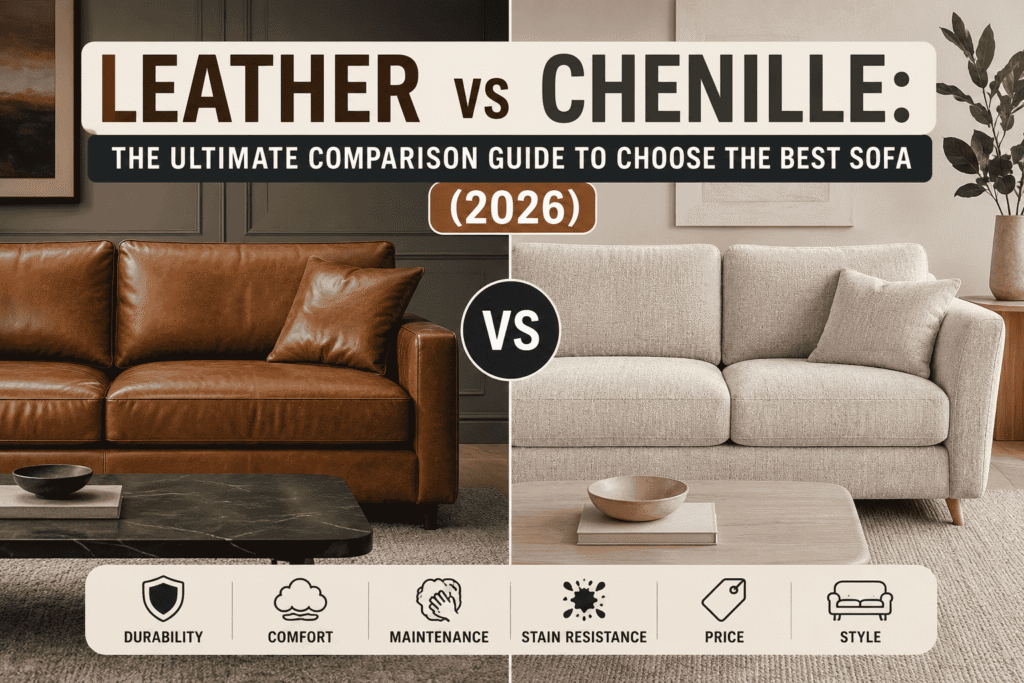
Introduction
Choosing between a leather vs. chenille sofa is one of the toughest decisions a furniture buyer faces, and it’s easy to see why. Both materials sit at the top of their category for very different reasons—leather brings timeless sophistication and rugged durability, while chenille wraps a living room in softness and warmth that’s hard to walk past in a showroom.
This guide is built for anyone standing at that crossroads: first-time homeowners furnishing a living room from scratch, parents balancing style with practicality, pet owners worried about claws and fur, and design-conscious buyers who simply want a sofa that looks as good in five years as it does today. Whether you’re comparing swatches online or sitting on floor models at a store, this comparison will give you the clarity you need.
In this leather vs. chenille guide, we’ll break down everything that actually matters before you spend your money—appearance, comfort, durability, maintenance, cleaning, stain and scratch resistance, pet and child friendliness, breathability, lifespan, price, and long-term value. By the end, you’ll know exactly which material fits your lifestyle, budget, and home.
Table of Contents
Leather vs Chenille at a Glance
If you’re short on time, here’s the quick version of how leather and chenille sofas stack up against each other.
Quick Comparison Table
| Feature | Leather Sofa | Chenille Sofa |
|---|---|---|
| Look & Feel | Sleek, classic, formal | Soft, cozy, casual |
| Comfort | Firm, cool to touch initially | Plush, warm, huggable |
| Durability | Very high (10–25 years) | Moderate (5–10 years) |
| Maintenance | Low effort, needs conditioning | Regular vacuuming, care with spills |
| Cleaning | Wipe-clean, spot treatment | Needs fabric cleaner, harder with liquids |
| Stain Resistance | High (with sealed leather) | Low to moderate |
| Scratch Resistance | Low to moderate (pets/nails) | Moderate to high |
| Pet Friendliness | Good, but scratch-prone | Good, but fur clings to fabric |
| Child Friendliness | Easy to wipe spills | Comfortable but stains easily |
| Breathability | Lower, can feel warm/sticky | High, breathable in most climates |
| Price Range | Mid to high | Budget to mid-range |
| Eco-Friendliness | Depends on tanning process | Often synthetic (polyester-based) |
| Best Climate | Cooler, moderate climates | Cold and temperate climates |
Key Differences Summary
- Leather is the better pick for durability, easy wipe-down cleaning, and a polished, formal aesthetic.
- Chenille wins on comfort, softness, and affordability, making it ideal for cozy, casual living spaces.
- Leather generally outlasts chenille by several years when properly maintained.
- Chenille is more breathable, which makes it more comfortable in colder climates, while leather can feel cool at first touch but warm up with body heat over time.
- Leather resists spills and stains better, while chenille resists scratches better.
What Is a Leather Sofa?
A leather sofa is upholstered using tanned animal hide — most commonly cowhide — or, in the case of faux leather, a synthetic material engineered to mimic leather’s texture and appearance. Leather furniture has been a staple of premium interior design for centuries because of its durability, natural texture, and the way it develops character as it ages.
Not all leather sofas are created equal, though. The type of leather used dramatically affects price, feel, and how long the sofa will last.
Types of Leather
Full-Grain Leather This is the highest quality and most expensive leather available. It uses the entire top layer of the hide, including natural imperfections like grain and texture, without sanding or buffing. Full-grain leather is exceptionally durable, develops a rich patina over time, and is the most breathable of all leather types.
Top-Grain Leather: Top-grain leather is the second-highest quality tier. The top layer is lightly sanded and treated to remove imperfections, giving it a more uniform, polished look. It’s slightly less durable than full-grain but more resistant to stains and easier to clean, making it a popular choice for family sofas.
Genuine Leather: Despite the name suggesting premium quality, genuine leather is actually a lower-tier product made from the leftover layers of hide after the top grain has been removed. It’s more affordable but less durable and prone to peeling or cracking over time.
Faux leather, also known as vegan leather or PU leather, is a synthetic alternative made from polyurethane or PVC-coated fabric. It’s budget-friendly, cruelty-free, and easier to clean, but it doesn’t breathe as well and tends to crack or peel faster than genuine leather.
Pros of Leather Sofas
- Highly durable and long-lasting, especially full-grain and top-grain varieties
- Easy to wipe clean, making it great for spills
- Ages gracefully, often developing an attractive patina
- Naturally resistant to dust mites and allergens
- Adds a timeless, sophisticated look to any room
- Doesn’t absorb odors as easily as fabric
Cons of Leather Sofas
- Higher upfront cost, especially for full-grain leather
- Can feel cold or sticky in extreme temperatures
- Prone to scratches from pets or sharp objects
- Requires occasional conditioning to prevent cracking
- Fewer color and pattern options compared to fabric
- Lower-quality leather (genuine or bonded) can crack or peel within a few years.
What Is a Chenille Sofa?
A chenille sofa is upholstered with a soft, plush fabric known for its velvety texture and slightly fuzzy, caterpillar-like pile—in fact, “chenille” is the French word for “caterpillar,” a nod to how the yarn looks under close inspection. Chenille has become one of the most popular fabric choices for casual and contemporary living rooms because it delivers a luxurious, touchable feel at a fraction of the cost of leather or velvet.
Unlike leather, which is a natural or synthetic hide, chenille is a woven fabric typically made from cotton, polyester, rayon, acrylic, or a blend of these fibers. Its unique construction is what gives it that signature softness and light-catching sheen.
How Chenille Fabric Is Made
Chenille fabric gets its texture from a special weaving process. Short lengths of yarn are twisted between two core threads, creating a fuzzy, pile-like strand. These chenille yarns are then woven into the base fabric, which is what gives the material its soft, slightly raised texture and subtle color-shifting appearance depending on the angle of light. This construction method is also what makes chenille prone to snagging if scratched by sharp claws or jewelry, since the pile threads can pull loose more easily than a tightly woven fabric.
Pros of Chenille Sofas
- Exceptionally soft and comfortable, ideal for lounging and relaxing
- Warm and cozy, making it a great fit for colder climates
- More affordable than leather in most price ranges
- Comes in a wide variety of colors, patterns, and textures
- Highly breathable, reducing that “sticky” feeling in humid weather
- Resistant to minor scuffs and scratches compared to leather
Cons of Chenille Sofas
- Absorbs liquids quickly, making stains harder to remove
- Attracts pet hair and dust more than leather
- Requires more frequent vacuuming and fabric care
- Can flatten or mat down in high-traffic areas over time
- Not naturally water-resistant unless treated
- Some cheaper blends may pill or wear thin faster than higher-grade weaves.
Leather vs. Chenille: Side-by-Side Comparison
Now that you understand what each material is, let’s compare leather vs. chenille sofas across the factors that matter most in real, everyday use.
Appearance & Style
Leather brings a polished, formal look that works beautifully in modern, industrial, or classic interiors. It has a natural sheen and structured presence that instantly elevates a room. Chenille, on the other hand, leans casual and inviting, with a soft matte-to-subtle-sheen finish that suits cozy, contemporary, or Scandinavian-style spaces. If you want a statement piece with sleek lines, leather wins; if you want a warm, huggable centerpiece, chenille is the better fit.
Comfort
Chenille is the clear winner for pure lounging comfort. Its plush texture feels soft against skin, and it doesn’t require a “break-in” period the way stiffer leathers sometimes do. Leather can feel firm and cool to the touch initially, though it does warm up and slightly soften with regular use over the years.
Durability
Leather, especially full-grain and top-grain varieties, is significantly more durable than chenille. It resists daily wear, doesn’t fray, and can last well over a decade with proper care. Chenille is durable for a fabric, but it’s more susceptible to wear patterns, pilling, and flattening in heavily used spots.
Softness
This category belongs to chenille without question. Its fuzzy, velvet-like pile is designed for tactile comfort, whereas leather — while smooth — doesn’t offer the same soft, sink-in feel.
Maintenance
Leather requires periodic conditioning (roughly every 6–12 months) to prevent drying and cracking, but day-to-day upkeep is minimal—a quick wipe usually does the job. Chenille needs more regular maintenance, including frequent vacuuming to remove dust and debris trapped in the pile, plus careful spot-cleaning to avoid watermarks.
Cleaning
Leather is easier to clean overall since spills sit on the surface and can be wiped away before soaking in. Chenille absorbs liquids quickly, so spills must be blotted immediately, and deep cleaning often requires a fabric-safe cleaner or professional service to avoid discoloration or ring marks.
Stain Resistance
Leather, particularly finished or top-grain leather, offers strong stain resistance thanks to its protective coating. Chenille is more porous and absorbent, meaning stains from wine, coffee, or grease can set in quickly if not treated right away.
Scratch Resistance
Here, chenille has the advantage. Its woven texture can hide minor scuffs, while leather is more vulnerable to visible scratches from pet claws, keys, or sharp accessories, especially on lighter-colored full-grain leather.
Water Resistance
Leather has moderate natural water resistance, especially when properly conditioned or sealed, allowing spilled liquids to bead up briefly before being wiped away. Chenille has little to no water resistance on its own and will absorb moisture rapidly unless treated with a fabric protector.
Pet Friendliness
Both materials have trade-offs for pet owners. Leather resists fur and odor better and is easy to wipe down, but it’s vulnerable to claw scratches. Chenille is more scratch-tolerant but tends to trap pet hair deep within its fibers, requiring more frequent vacuuming.
Child Friendliness
Leather is generally more practical for families with young kids since spills, crayon marks, and sticky fingers wipe away easily. Chenille is comfortable and cozy for kids to relax on, but food and drink spills need immediate attention to avoid staining.
Breathability
Chenille is more breathable than leather, allowing better airflow and reducing the sticky or clammy feeling some people experience on leather during warmer months or in humid climates.
Lifespan
With proper care, high-quality leather sofas can last 15–25 years, while chenille sofas typically last 5–10 years, depending on the quality of the weave and how heavily the sofa is used.
Price
Chenille is generally more budget-friendly, making it accessible for buyers furnishing a home without a large upholstery budget. Leather, especially full-grain, sits at a higher price point but often justifies the cost through longevity.
Eco-Friendliness
Eco-friendliness depends heavily on sourcing. Full-grain and top-grain leather, when sourced from responsibly managed tanneries, can be considered a durable, long-lasting natural material. Chenille is often made from synthetic fibers like polyester, which are derived from petroleum, though cotton or recycled-fiber chenille blends offer a more sustainable alternative.
Best Climate
Leather performs best in cooler to moderate climates where it won’t feel overly warm or sticky. Chenille’s breathability and coziness make it a strong choice for cold and temperate climates, where its warmth is a benefit rather than a drawback. -e
Leather vs. Chenille Comparison Table
| Category | Leather | Chenille |
|---|---|---|
| Style | Formal, sleek, classic | Casual, cozy, contemporary |
| Comfort Level | Firm, warms with use | Soft, plush, huggable |
| Durability | 15–25 years (high-quality) | 5–10 years |
| Maintenance | Low, occasional conditioning | Moderate, regular vacuuming |
| Cleaning Ease | Wipes clean quickly | Requires fabric cleaner/blotting |
| Stain Resistance | High | Low to moderate |
| Scratch Resistance | Low to moderate | Moderate to high |
| Water Resistance | Moderate | Low (unless treated) |
| Pet Friendly | Yes, but scratch risk | Yes, but traps fur |
| Child Friendly | Yes, easy cleanup | Yes, but stains easily |
| Breathability | Lower | High |
| Price | Mid to high | Budget to mid |
| Eco Factor | Depends on tanning source | Often synthetic |
| Ideal Climate | Cool to moderate | Cold to temperate |
Which Sofa Material Is Better for Different Needs?
Best for Families
Leather is generally the more practical choice for families since spills, crumbs, and sticky fingers wipe off the surface easily without soaking in or staining.
Best for Pets
This one is close. Chenille is more forgiving of scratches, but leather is easier to clean fur and odor from. If your pet claws furniture often, chenille is safer; if shedding is the bigger concern, leather is easier to maintain.
Best for Luxury Homes
Full-grain leather is the gold standard for luxury interiors, offering a rich, structured look that ages beautifully and signals long-term investment in quality furniture.
Best for Small Apartments
Chenille works well in smaller spaces since it comes in a wider variety of colors and softer tones that can make a compact room feel warmer and more inviting.
Best for Cold Climates
Chenille’s breathable yet insulating texture makes it the cozier option when temperatures drop, offering warmth without feeling stiff or cold to sit on.
Best for Hot Climates
Leather can feel sticky in extreme heat, while chenille’s breathability makes it more comfortable in humid conditions—though very hot, dry climates may favor leather’s cooling surface feel once seated.
Best for Low Maintenance
Leather requires less frequent care overall — a simple wipe-down handles most day-to-day needs, with conditioning only once or twice a year.
Best Value for Money
Chenille typically offers better upfront value for budget-conscious buyers, while leather offers better long-term value thanks to its extended lifespan.
Leather vs Chenille: Pros and Cons
Leather Pros & Cons
Pros:
- Long-lasting and highly durable
- Easy to wipe clean
- Timeless, sophisticated appearance
- Resists odors and allergens
Cons:
- Higher price point
- Can feel cold or sticky in extreme temperatures
- Prone to visible scratches
- Requires periodic conditioning
Chenille Pros & Cons
Pros:
- Extremely soft and comfortable
- Budget-friendly
- Wide range of colors and patterns
- Breathable and warm
Cons:
- Absorbs stains quickly
- Traps pet hair and dust
- Shorter lifespan than leather
- Needs more frequent cleaning
How to Choose Between Leather and Chenille
Budget: If you’re working with a tighter budget, chenille offers a soft, stylish look without the higher cost of genuine leather.
Lifestyle: Busy households with frequent spills and high traffic often benefit more from leather’s wipe-clean surface.
Maintenance: Choose leather if you want minimal day-to-day upkeep; choose chenille if you don’t mind regular vacuuming and spot-cleaning.
Pets: Consider chenille if scratching is your main concern or leather if shedding and odor control matter more.
Kids: Leather is generally more forgiving of accidental spills and stains from young children.
Climate: Chenille suits cooler, drier climates, while leather performs best in moderate temperatures without extreme humidity.
Interior Design: Match leather with modern, industrial, or classic interiors, and chenille with cozy, casual, or Scandinavian-inspired spaces.
Long-Term Value: If you’re furnishing a forever home, leather’s durability often pays off over time, while chenille suits those who like to refresh their decor more frequently.
Frequently Asked Questions (FAQs)
Is leather better than chenille?
It depends on your priorities. Leather is better for durability, easy cleaning, and a formal look, while chenille is better for comfort, softness, and affordability.
Is chenille good for everyday use?
Yes, chenille is a popular choice for everyday use thanks to its comfort and durability against light wear, though it does require more regular maintenance than leather.
Which sofa lasts longer?
Leather generally lasts longer, with high-quality full-grain leather sofas often lasting 15–25 years compared to chenille’s typical 5–10-year lifespan.
Which is easier to clean?
Leather is easier to clean since spills can be wiped off the surface before they soak in, while chenille requires blotting and fabric-safe cleaners.
Which is better for pets?
Chenille resists scratches better, while leather resists fur and odor better—the right choice depends on whether your pet scratches or sheds more.
Which is better for allergy sufferers?
Leather is generally better for allergy sufferers since it doesn’t trap dust, pet dander, or allergens the way porous fabric like chenille can.
Which sofa is more comfortable?
Chenille is typically considered more comfortable due to its soft, plush texture, though leather becomes more supple and comfortable with regular use.
Which offers better value for money?
Chenille offers better short-term value with a lower upfront cost, while leather offers better long-term value due to its extended durability.
Final Verdict: Leather vs. Chenille – Which Should You Choose?
Best Overall: Leather, thanks to its unmatched durability, timeless style, and easy maintenance.
Best Budget Choice: Chenille, for its lower price point and stylish variety.
Best for Families: Leather, for its wipe-clean practicality.
Best for Pets: Chenille, for its scratch resistance.
Best for Luxury: Full-grain leather, for its premium look and long-term investment value.
Editor’s Recommendation: If you want a sofa that balances longevity with low daily upkeep, go with top-grain leather. If comfort, warmth, and affordability matter more to you than long-term durability, chenille is the smarter pick. Ultimately, the best choice in the leather vs. chenille debate comes down to matching the material to your household’s lifestyle, budget, and climate.
Internal Linking Opportunities
- Leather Sofa Material Explained
- Chenille Sofa Material Explained
- Sofa Materials Explained
- Leather vs. Fabric Sofa
- Leather vs. Velvet Sofa
- Leather vs. Linen Sofa
- Leather vs. Microfiber Sofa
- How to Choose the Right Sofa Material
- Luxury Sofa Materials
Suggested External References
- Consumer Reports — furniture durability and care testing standards
- The Spruce — fabric and upholstery maintenance guides
- Good Housekeeping — stain removal and cleaning tips for home fabrics
Further reading on care and buying: Consumer Reports – How to Find Quality Furniture | Good Housekeeping – Leather Couch Buying Guide | Living Spaces – How to Clean a Fabric Sofa | ScS – Leather Sofa Care Guide