
Introduction
Choosing a new sofa is never just about looks. It is about comfort, durability, and how well the piece fits your daily life. Two materials that keep coming up in living room design right now are leather and bouclé. Both look stunning in photos, but they behave very differently once pets, kids, spilled coffee, and years of daily use enter the picture.
This leather vs. bouclé sofa comparison breaks down everything you need to know before you buy. We look at appearance, comfort, durability, maintenance, pet and child friendliness, cost, and long-term value. By the end, you will know exactly which material fits your home, your budget, and your lifestyle.
Whether you want the timeless, structured look of leather or the soft, textured warmth of bouclé, this guide gives you a clear, practical answer.
Table of Contents
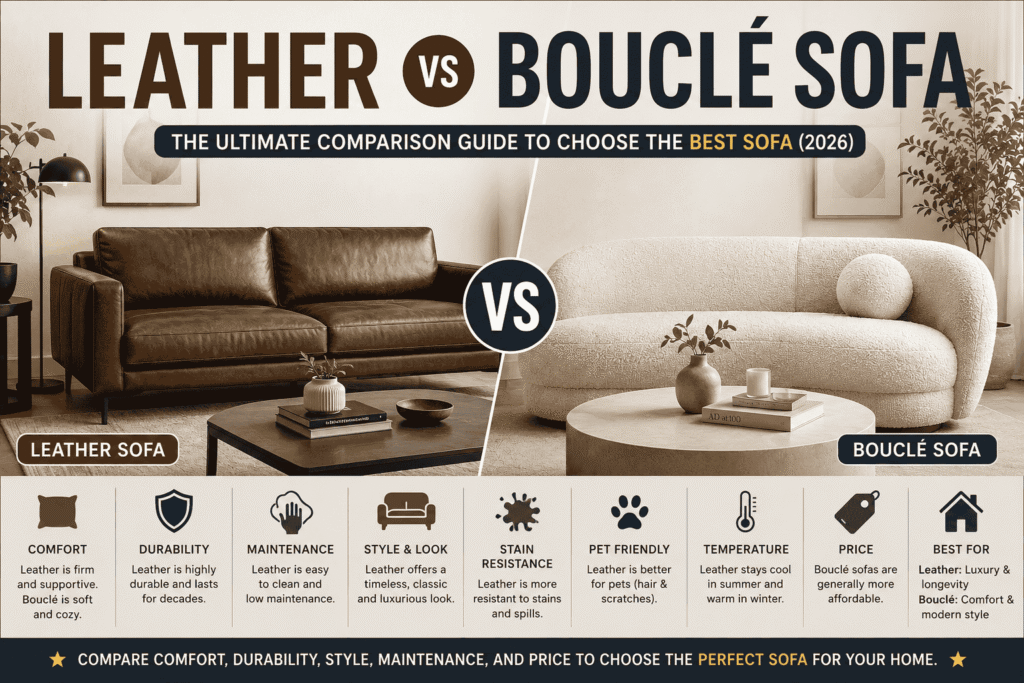
Leather vs. Bouclé Sofas at a Glance
Before we go deep into each material, here is a quick side-by-side summary. This table is useful if you are short on time and just want the headline differences.
Quick Comparison Table
| Feature | Leather Sofa | Bouclé Sofa |
|---|---|---|
| Appearance | Sleek, structured, classic | Soft, textured, cozy |
| Comfort | Firm, cools in winter, warms in summer | Plush, warm, cloud-like softness |
| Durability | Very high with care | Moderate to good |
| Lifespan | 15–25 years | 7–15 years |
| Maintenance | Low, occasional conditioning | Moderate, needs vacuuming and spot care |
| Water Resistance | Good (varies by leather type) | Low to moderate |
| Stain Resistance | Good, wipes clean easily | Fair, absorbs spills quickly |
| Pet Friendliness | High (resists claws better, easy wipe-down) | Moderate (fabric can snag or pill) |
| Child Friendliness | High, easy to wipe | Moderate, stains show more |
| Breathability | Moderate | High |
| Price | Mid to high | Mid range |
| Luxury Feel | High, classic luxury | High, modern luxury |
| Best For | Busy households, pet owners, long-term investment | Cozy interiors, texture lovers, modern aesthetics |
Now let’s look at each material in detail.
What Is a Leather Sofa?
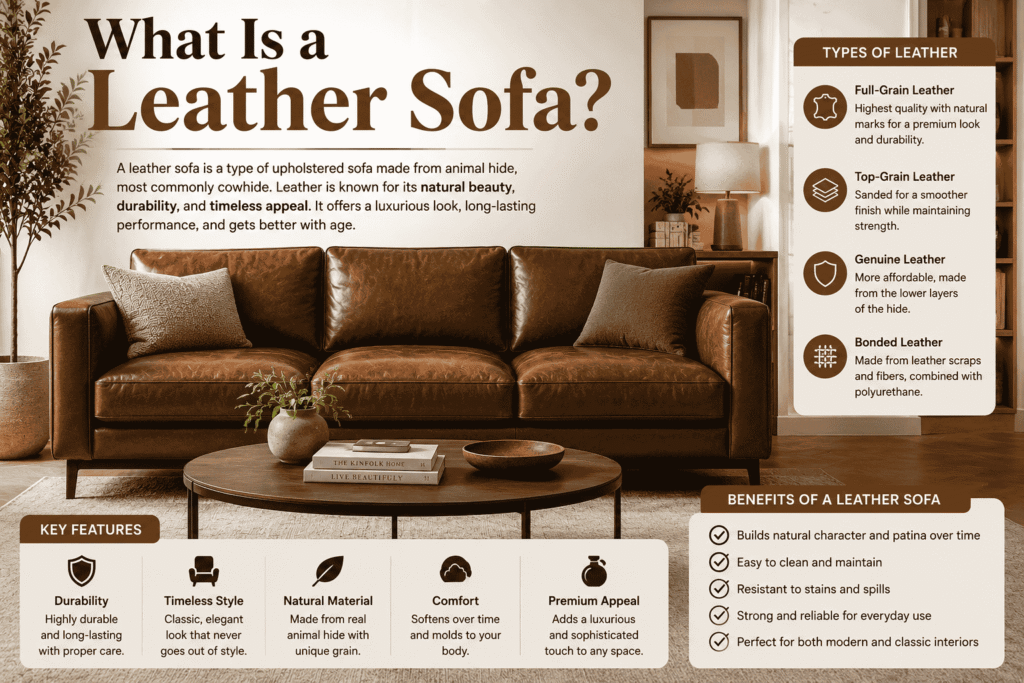
A leather sofa is upholstered in genuine or manufactured animal hide, prized for its durability, natural texture, and classic appeal. Leather has been a go-to sofa material for centuries because it ages well, resists daily wear, and develops a rich patina over time. If you want to understand leather at a deeper level, our guide on leather sofa materials explains the tanning process and quality grades in detail.
Types of Leather
Full-Grain Leather This is the highest-quality leather available. It uses the entire hide, including natural markings, making each sofa unique. Full-grain leather is the most durable option and improves with age. Learn more in our full-grain leather explained guide.
Top-Grain Leather Slightly more processed than full-grain, top-grain leather is sanded to remove imperfections and then finished with a protective coating. It is softer to the touch and more resistant to stains. Read our full breakdown of top-grain leather explained.
Genuine Leather: Despite the name, genuine leather is a lower grade made from layers of leftover hide bonded together. It is more affordable but less durable than full-grain or top-grain options.
Bonded Leather Bonded leather is made from shredded leather scraps mixed with synthetic materials. It is the most budget-friendly option but has the shortest lifespan, often peeling or cracking within a few years.
Advantages of Leather Sofas
- Extremely durable when properly maintained
- Ages beautifully, developing character over time
- Easy to wipe clean, resisting most spills
- Naturally resistant to dust mites and allergens
- Timeless look that suits both classic and modern interiors
- Higher resale value compared to most fabric sofas
Disadvantages of Leather Sofas
- Higher upfront cost, especially for full-grain leather
- Can feel cold in winter and warm up quickly in summer
- Susceptible to scratches from pets with sharp claws
- Requires occasional conditioning to prevent cracking
- Not naturally breathable like fabric options
What Is a Bouclé Sofa?
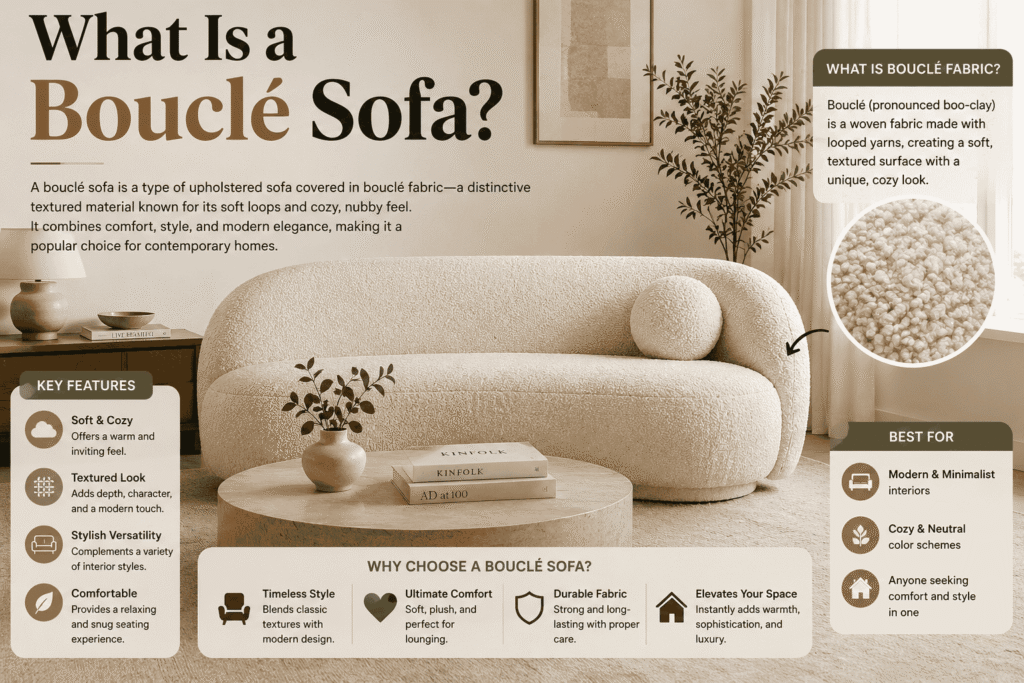
Bouclé is a textured fabric characterized by small, looped yarns that create a soft, curly surface. Originally popular in mid-century French design, bouclé has made a major comeback in modern interiors thanks to its cozy, tactile appeal. It’s often seen on curved, statement-piece sofas in neutral tones.
What Makes Bouclé Fabric Unique?
The word “bouclé” comes from the French term for “curled.” The fabric is woven with looped fibers, usually wool, cotton, or a synthetic blend, giving it a nubby, three-dimensional texture. This texture is what makes bouclé sofas feel warm, soft, and visually interesting compared to flat woven fabrics.
Advantages of Bouclé Sofas
- Extremely soft and comfortable to sit on
- Naturally breathable and cozy in cooler climates
- Adds visual texture and a modern, curated look
- Works beautifully with minimalist and Scandinavian interiors
- Generally more affordable than high-grade leather
Disadvantages of Bouclé Sofas
- More prone to staining and absorbing spills
- Can pill or snag, especially with pets
- Requires more frequent cleaning and upkeep
- Shorter lifespan compared to quality leather
- Not ideal for humid or very sunny rooms, as fibers can fade or mat
Leather vs. Bouclé Sofa: Detailed Comparison
Appearance & Style
Leather offers a sleek, structured, and classic appearance that fits traditional, industrial, and modern interiors alike. Bouclé, on the other hand, brings texture and softness, making it a favorite for warm, inviting, contemporary spaces. If your home leans toward minimalism with tactile interest, bouclé wins. If you want polished sophistication, leather is the better choice.
Comfort
Bouclé sofas generally feel softer straight out of the box, with a plush, huggable texture. Leather sofas, especially top-grain and full-grain, become more comfortable as they break in and mold to your body shape. Leather can feel cold in winter and slightly sticky in summer, while bouclé stays temperature-neutral year-round.
Durability
Leather is the more durable material overall, particularly full-grain and top-grain varieties, which can last decades with basic care. Bouclé fabric is durable for everyday use but is more vulnerable to snags, pilling, and wear in high-traffic households.
Maintenance & Cleaning
Leather requires simple wiping with a damp cloth and occasional conditioning every 6 to 12 months. Bouclé needs more regular vacuuming and prompt spot cleaning, since its textured surface traps dust and absorbs liquid faster.
Stain Resistance
Leather has a natural edge here. Most spills sit on the surface long enough to be wiped away before soaking in. Bouclé fabric absorbs liquids quickly, so stains from wine, coffee, or oil can be more stubborn to remove.
Water Resistance
Top-grain and full-grain leather, especially with a protective finish, resist water reasonably well. Bouclé is more porous and can hold moisture, which may lead to mildew if not dried properly.
Scratch Resistance
Leather can scratch from pet claws, keys, or sharp objects, though minor scratches often blend in over time. Bouclé doesn’t scratch the same way, but loops can snag and pull, creating a similar visual issue.
Pet Friendliness
Leather is generally considered more pet-friendly because fur doesn’t stick to it and spills wipe away easily. However, cats and dogs with sharp claws can damage the surface. Bouclé’s looped texture can attract pet hair and is more prone to snagging from claws.
Child Friendliness
For homes with young children, leather is easier to manage thanks to quick clean-up and stain resistance. Bouclé requires more vigilance, as crayon marks, juice, and food stains can set into the fabric quickly.
Breathability
Bouclé is the clear winner for breathability. Its woven fibers allow airflow, making it more comfortable to sit on for long periods, especially in warm climates. Leather is less breathable and can feel warm or sticky against skin during extended use.
Warmth
Bouclé naturally retains warmth, making it ideal for cold climates and cozy living rooms. Leather feels cool to the touch initially but warms up with body heat over time.
Longevity
With proper care, a full-grain leather sofa can last 20 to 25 years or longer. Bouclé sofas typically last 7 to 15 years, depending on fabric quality and household use.
Sustainability
Leather production has a significant environmental footprint due to livestock farming and tanning processes, though vegetable-tanned and full-grain leather tend to be more sustainable long-term investments because they last longer. Bouclé made from natural wool can be a more sustainable choice, while synthetic bouclé blends have a lower environmental profile.
Eco-Friendliness
Neither material is perfectly eco-friendly, but longevity matters. A leather sofa that lasts 20 years reduces landfill waste compared to replacing a fabric sofa every decade. Choosing wool-based bouclé over synthetic blends improves its eco credentials.
Cost
Bouclé sofas are generally more budget-friendly at the entry level, while leather spans a wider price range depending on grade. Genuine and bonded leather can be cheaper than premium bouclé, but full-grain leather sits at the top of the price spectrum.
Resale Value
Leather sofas typically hold resale value better due to their durability and timeless appeal. Bouclé, while trendy, can lose value faster as fabric wears and trends shift.
Leather vs. Bouclé Sofa: Pros and Cons
Leather Sofa Pros
- Long-lasting and durable
- Easy to clean and maintain
- Classic, versatile style
- Better resale value
- Resistant to allergens and dust mites
Leather Sofa Cons
- Higher price for quality grades
- Can feel too warm or too cold
- Scratches from pets are possible.
- Requires occasional conditioning
Bouclé Sofa Pros
- Soft, cozy, and comfortable
- Great texture and modern aesthetic
- Naturally breathable
- More affordable entry point
Bouclé Sofa Cons
- Prone to staining and pilling
- Shorter lifespan
- Requires frequent cleaning
- Less pet and child friendly
Which Sofa Material Is Best for Different Homes?
Best for Families
Leather is generally better for busy families due to easy cleanup and durability against daily wear and tear.
Best for Pet Owners
Leather again takes the edge, since it resists fur buildup and wipes clean, though scratch-resistant fabric protectors can help either material.
Best for Luxury Homes
Both materials offer luxury appeal. Full-grain leather suits classic luxury interiors, while bouclé suits modern, curated luxury spaces.
Best for Modern Interiors
Bouclé is the go-to choice for contemporary, Scandinavian, and minimalist interiors thanks to its textured, sculptural look.
Best for Small Apartments
Bouclé sofas, often designed with curved or rounded silhouettes, work well as statement pieces in compact spaces.
Best for Cold Climates
Bouclé’s natural warmth and breathability make it ideal for colder regions and cozy winter living rooms.
Best for Hot Climates
Leather, particularly lighter-colored and breathable grades, tends to perform better in warmer climates when paired with proper ventilation.
Leather vs. Bouclé Sofa: Cleaning and Maintenance Tips
Leather Care Tips
- Wipe spills immediately with a soft, dry cloth.
- Condition leather every 6 to 12 months to prevent cracking
- Avoid placing leather sofas in direct sunlight for long periods.
- Use a leather-specific cleaner, never harsh chemicals.
- Keep pets’ nails trimmed to reduce scratching risk.
Bouclé Care Tips
- Vacuum weekly using an upholstery attachment
- Blot spills immediately, never rub, to avoid pushing liquid into the fibers.
- Use a fabric-safe cleaner and test it on a hidden area first.
- Rotate cushions regularly to even out wear
- Avoid direct sunlight to prevent fading and fiber matting.
For more detailed cleaning routines, check out our guides on how to clean a sofa at home naturally, how often should you clean a sofa, and how to maintain a sofa at home. You can also review trusted external resources like The Spruce’s sofa care and cleaning guides and Good Housekeeping’s furniture buying and maintenance advice for additional tips.
Leather vs. Bouclé Sofa: Price Comparison
Budget Options
At the lower end, genuine or bonded leather sofas and synthetic bouclé blends offer an affordable way to get either look, though both trade off some durability.
Mid-Range Options
Top-grain leather and quality wool-blend bouclé sofas offer a strong balance of comfort, durability, and price for most households.
Premium Options
Full-grain leather sofas and designer bouclé pieces from premium furniture brands sit at the top of the price range, offering the best materials, craftsmanship, and longevity.
For further guidance on choosing materials within your budget, see our articles on sofa materials explained, luxury sofa materials, and how to choose the right sofa material.
Frequently Asked Questions
Is a leather sofa better than a bouclé sofa?
It depends on your priorities. Leather is better for durability, easy cleaning, and long-term value. Bouclé is better for comfort, texture, and modern style. Neither is universally “better,” but leather generally performs better for busy households.
Which sofa lasts longer?
Leather sofas, especially full-grain, typically last longer than bouclé, often lasting 15 to 25 years compared to bouclé’s 7 to 15 years.
Which is easier to clean?
Leather is easier to clean since spills sit on the surface and can be wiped away quickly. Bouclé requires more careful, immediate spot cleaning to prevent stains from setting.
Which is better for pets?
Leather is generally more pet-friendly due to easy fur removal and stain resistance, though scratches are a consideration with clawed pets.
Does bouclé fabric wear out quickly?
Bouclé can wear out faster than leather, particularly in high-traffic households, due to pilling and snagging over time. Quality and fiber content play a big role in longevity.
Is leather worth the higher price?
For most buyers, yes. The higher upfront cost of quality leather is offset by its longer lifespan, easier maintenance, and better resale value over time.
Which sofa is more comfortable?
Comfort is subjective. Bouclé offers immediate softness and warmth, while leather offers structured support that improves with use. Many buyers find bouclé more comfortable initially, while leather becomes more comfortable over time.
Which material has better resale value?
Leather sofas generally hold resale value better due to their durability and timeless design, while bouclé sofas may depreciate faster as trends and fabric condition change.
Final Verdict: Leather vs Bouclé Sofa
Both leather and bouclé sofas bring real strengths to the table, and the right choice comes down to how you live day to day. Leather wins on durability, cleaning ease, and long-term value, making it the smarter investment for busy households. Bouclé wins on comfort, warmth, and modern texture, making it ideal for style-focused buyers who prioritize aesthetics and coziness.
Choose leather if you have kids, pets, or a busy household and want a sofa that ages gracefully with minimal upkeep.
Choose bouclé if you want a soft, textured, modern statement piece and are willing to put in a bit more maintenance effort.
Ultimately, this leather vs bouclé sofa decision comes down to your lifestyle, budget, and design goals. Both materials, when chosen from quality sources, can serve your home beautifully for years to come. For more buying guidance, explore our related comparisons on leather vs fabric sofa, leather vs linen sofa, leather vs velvet sofa, leather vs polyester sofa, and leather vs microfiber sofa, or browse general design inspiration from HGTV and Better Homes & Gardens. For unbiased buying research, Consumer Reports is also a helpful resource.
For more guidance on premium options, see our Sofa Materials Explained and Luxury Sofa Materials guides, or explore How to Choose the Right Sofa Material and Best Sofa Material for Your Home for additional perspectives.
Further reading on care and buying: Consumer Reports – How to Find Quality Furniture | Good Housekeeping – Leather Couch Buying Guide | Living Spaces – How to Clean a Fabric Sofa | ScS – Leather Sofa Care Guide