
Introduction
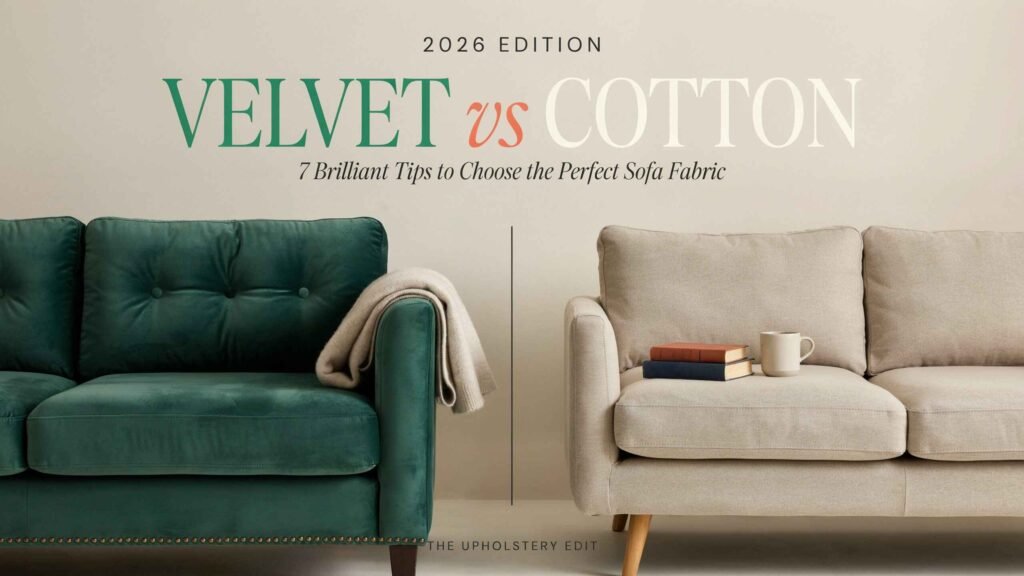
Velvet vs Cotton is an important comparison when choosing the right fabric for your sofa. Velvet offers a plush texture, rich colors, and a luxurious appearance, while cotton provides natural softness, breathability, and versatile everyday comfort. Both fabrics have their own advantages, but the better choice depends on how you use your sofa and what matters most to you.
In this guide, we’ll compare velvet and cotton based on comfort, durability, maintenance, stain resistance, pet-friendliness, appearance, price, and everyday use. By the end, you’ll have a clearer idea of which sofa fabric is the better fit for your home and lifestyle.
Table of Contents
Velvet vs Cotton: Quick Comparison
When comparing velvet vs. cotton, both sofa fabrics have unique strengths. Velvet is known for its luxurious appearance, plush texture, and rich colours, while cotton offers a natural, breathable, and comfortable feel. The better choice depends on your lifestyle, budget, cleaning preferences, and how much daily use your sofa receives.
| Feature | Velvet | Cotton |
|---|
| Material | Usually made from cotton, polyester, rayon, or blends with a short, dense pile | Natural fiber made from cotton plants |
| Appearance | Luxurious, rich, soft, and elegant with a light-reflecting surface | Natural, relaxed, and versatile with a softer matte appearance |
| Feel | Plush, smooth, and velvety | Soft, breathable, and natural |
| Comfort | Very comfortable and cozy | Comfortable and breathable for everyday use |
| Durability | Good to excellent depending on fiber, quality, and construction | Good, but durability varies by weave and fabric quality |
| Breathability | Moderate; depends on the fiber and construction | Excellent due to its natural fiber structure |
| Stain Resistance | Varies; treated velvet can resist stains better | Generally absorbs spills quickly and may stain without treatment |
| Water Resistance | Usually low unless specially treated | Naturally absorbent and generally low in water resistance |
| Scratch Resistance | Moderate; tightly woven velvet can perform well, but some types may show damage | Moderate; depends heavily on the weave and construction |
| Pet Friendliness | Good with the right type and maintenance, but pet hair and marks can be visible | Good for some households, but may absorb stains and show wear |
| Maintenance | Requires regular vacuuming and careful spot cleaning | Generally easy to vacuum and spot clean, but spills should be treated quickly |
| Lifespan | Can last many years when high-quality and properly maintained | Can also last many years, especially when tightly woven and well maintained |
| Price | Moderate to high depending on fiber and quality | Usually budget to mid-range, with premium cotton fabrics costing more |
| Best For | Luxury interiors, statement sofas, rich colors, and plush comfort | Casual interiors, breathable comfort, natural-fiber preferences, and everyday use |
Quick Takeaway
If you want a luxurious, elegant sofa with a soft and plush texture, velvet is an excellent choice. Its opulent look can transform a sofa into a striking focal point.
If you prefer a natural, breathable, and versatile fabric, cotton may be the better option. Cotton works particularly well for relaxed interiors and households that value a soft, comfortable everyday sofa.
Ultimately, velvet vs. cotton comes down to your priorities. Choose velvet for luxury and visual impact, or cotton for breathability, natural comfort, and versatility.
What Is Velvet Sofa Fabric?
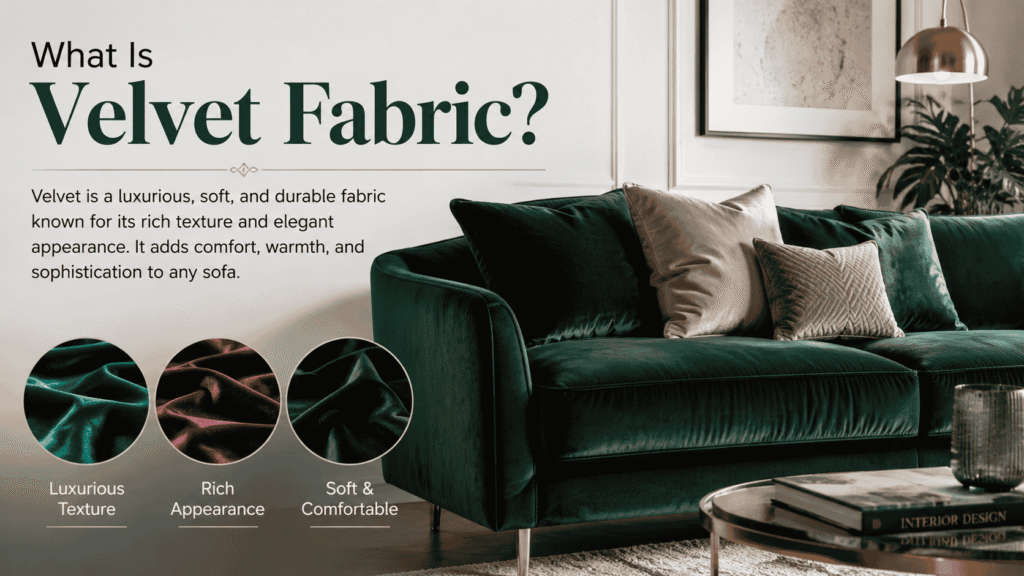
Velvet is a soft upholstery fabric recognized for its smooth surface, dense pile, and luxurious appearance. Unlike flat-woven fabrics, velvet has short fibers that stand upright on the surface, giving it a distinctive texture and allowing it to reflect light in different directions. This is why a velvet sofa can appear slightly different in colour depending on the lighting and the direction of the fabric.
Velvet used for sofas can be made from different fibers, including cotton, polyester, rayon, and blends. The fiber used in the fabric affects important characteristics such as softness, durability, maintenance, and price. For everyday sofa use, performance often depends as much on the quality of the fabric and its construction as it does on the word “velvet” itself.
How Is Velvet Made?
Velvet is created using a special weaving process that produces a raised pile. The pile is then cut to create the smooth, even surface associated with velvet. This construction gives the material its characteristic softness and rich visual depth.
Modern upholstery velvet is available in both natural and synthetic versions. Cotton velvet can provide a soft, traditional feel, while polyester velvet is often chosen for its practical performance and resistance to everyday wear. Blended options can combine characteristics from several fibers.
For a sofa, it is important to look beyond the fabric name and check the manufacturer’s care instructions and performance specifications. Two velvet sofas can feel and perform very differently depending on their fiber content, weave, finishing, and overall quality.
Key Characteristics of Velvet
One of velvet’s most significant advantages is its visual appeal. The raised pile catches and reflects light, creating a deep appearance that can make colors look especially vibrant. This effect is particularly noticeable with darker shades such as emerald green, navy, burgundy, charcoal, and deep blue.
Velvet also has a distinctive tactile quality. Running your hand across the surface produces a smooth, plush sensation that many people associate with premium furniture.
However, the same pile that imparts velvet its character can also make certain marks more noticeable. Pressure from sitting, cushions, or other objects may temporarily change the direction of the pile. These areas can sometimes look lighter or darker until the fibers are brushed back into place.
Pros of Velvet Sofa Fabric
Luxurious appearance: Velvet can give a sofa an elegant and sophisticated appearance without requiring complicated furniture detailing.
Soft texture: Its plush surface feels comfortable and pleasant, making it appealing for sofas, chairs, and other furniture designed for relaxation.
Rich color: Because velvet interacts with light, it can give colors greater depth and visual interest than many flat fabrics.
Wide design range: Velvet is available in numerous colors and styles, making it suitable for both traditional and contemporary interiors.
Statement appeal: A velvet sofa can become a focal point in a living room, particularly when paired with simple surrounding furniture.
Cons of Velvet Sofa Fabric
Can show pressure marks: The pile can change direction when compressed, making certain areas appear different in color or texture.
Needs proper care: Velvet generally benefits from regular vacuuming and careful treatment of spills. Aggressive scrubbing can damage the pile.
Dust and hair can be visible: Depending on the color and construction, lint, dust, and pet hair may stand out against the surface.
Quality varies: Not every velvet fabric offers the same level of durability. A low-quality velvet may not perform as well under heavy daily use as a high-quality upholstery velvet.
Is Velvet Good for a Sofa?
Yes, velvet can be an excellent sofa fabric when you choose a quality upholstery grade that suits your lifestyle. It is especially attractive for people who want a sofa that combines comfort with a luxurious visual style.
However, velvet may require more attention than some practical upholstery fabrics. If your sofa will experience frequent spills, heavy pet activity, or very demanding everyday use, consider the fabric’s specific performance characteristics before making a decision.
When comparing velvet vs. cotton, velvet is generally the stronger choice for shoppers who prioritize plush texture, rich color, and a sophisticated appearance. Cotton, on the other hand, can be more appealing to buyers who prioritize breathability, natural fibers, and a relaxed look.
What Is Cotton Sofa Fabric?
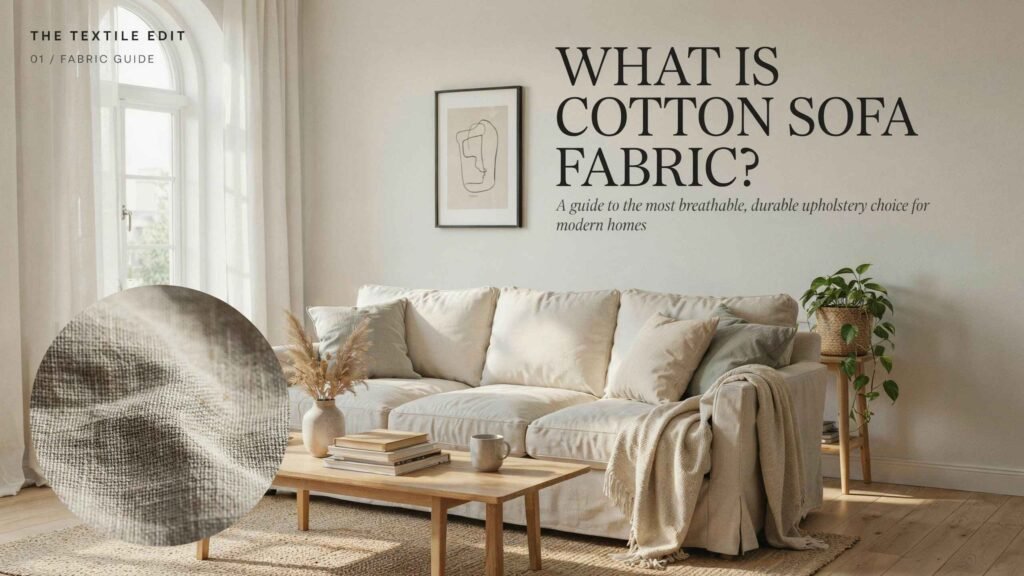
Cotton is a natural upholstery material made from the fibers of the cotton plant. It has been used in home furnishings for generations because it feels soft, allows air to move through the fabric, and works well with many different interior styles. For sofas, cotton may be used on its own or blended with other fibers to improve durability, stretch, stain resistance, or overall performance.
One of the main reasons homeowners choose cotton is its natural feel. Unlike fabrics designed primarily for a luxurious appearance, cotton tends to have a more relaxed and comfortable character. Its appearance can range from smooth and simple to textured, depending on how the fibers are woven.
How Is Cotton Sofa Fabric Made?
Cotton fibers are collected from cotton plants, processed into yarn, and then woven or knitted into fabric. The final characteristics of the upholstery depend on factors such as fiber quality, yarn construction, weave, finishing, and whether the cotton is blended with another material.
For sofa upholstery, tightly woven cotton fabrics are generally more suitable for regular use than loosely woven options. A tighter construction can help the fabric withstand repeated sitting and everyday friction.
Cotton sofa covers may also be treated with protective finishes. These treatments can improve resistance to stains or moisture, but they do not make the fabric completely waterproof or maintenance-free.
Key Characteristics of Cotton
Cotton is best known for its soft, breathable, and natural feel. Because it allows air to circulate relatively well, it can feel comfortable in warmer conditions and during extended periods of sitting.
Another advantage is its versatility. Cotton upholstery can be produced in many colors, patterns, and textures. This makes it easy to use in different decorating styles, from simple and contemporary rooms to traditional and farmhouse-inspired spaces.
However, cotton is absorbent. If a drink or liquid is spilled on an untreated cotton sofa, the fabric can absorb it quickly. Prompt cleaning is therefore important to reduce the chance of permanent staining.
Pros of Cotton Sofa Fabric
Natural fiber: Cotton comes from a plant-based source, making it appealing to people who prefer natural materials in their homes.
Breathable: The fabric allows air to move through its structure, which can make it comfortable for everyday sitting.
Soft and comfortable: Cotton has a naturally pleasant feel and does not have the slick surface associated with some synthetic upholstery materials.
Versatile appearance: It can be produced in a wide range of colors, patterns, and textures, making it suitable for many interior designs.
Good everyday option: A well-made, tightly woven cotton upholstery fabric can work well for sofas used regularly.
Cons of Cotton Sofa Fabric
Absorbs liquids: Cotton can soak up spills quickly, so accidents should be addressed as soon as possible.
Can stain: Without a protective treatment, substances such as coffee, juice, food, and colored drinks may leave visible marks.
May fade in sunlight: Extended exposure to strong direct sunlight can gradually affect the color of cotton upholstery.
Can show wear: Lower-quality or loosely woven cotton may develop visible signs of wear faster when subjected to heavy daily use.
Wrinkling is possible: Depending on the construction, cotton upholstery can develop a slightly relaxed or wrinkled appearance over time.
Is Cotton Good for a Sofa?
Yes, cotton can be a very good choice for a sofa, particularly when comfort, breathability, and a natural appearance are important. A high-quality cotton upholstery fabric with a suitable weave can provide a comfortable surface for everyday living.
The key is to choose cotton based on how the sofa will actually be used. A decorative sofa in a low-traffic room has different requirements from a large family sofa that is used every day.
If you have children or pets, look for cotton upholstery that has a durable construction and, where appropriate, a stain-resistant finish. Always check the manufacturer’s cleaning instructions before using any cleaning product.
Cotton vs. Other Sofa Fabrics
Cotton sits somewhere between luxury-focused fabrics and highly performance-oriented upholstery. It offers a natural feel and good breathability, while other materials may provide stronger resistance to particular types of wear or staining.
In a velvet vs. cotton comparison, cotton is usually the better fit for shoppers who want a breathable, natural, and relaxed sofa fabric. Velvet is often preferred when the main priorities are plush texture, rich color, and a more luxurious appearance.
Neither material is automatically the right choice for every home. The best option depends on your room, lifestyle, maintenance habits, and the level of daily use your sofa will receive.
Velvet vs. Cotton: 15 Key Differences
When choosing upholstery for a new sofa, looking at the fabric’s appearance alone is not enough. A sofa needs to feel comfortable, handle regular use, and fit the maintenance routine of your household. The differences between velvet and cotton become clearer when you compare them across the features that matter in everyday life.
1. Appearance
Velvet has a distinctive, luxurious appearance because its raised pile reflects light as you view it from different angles. This can give the fabric a rich, dimensional look and make bold colors particularly striking.
Cotton usually has a softer and more natural visual character. Depending on its weave, it can look smooth, textured, patterned, or slightly casual. It tends to blend easily with a wide range of decorating styles.
Best choice: Velvet for luxury and visual impact; cotton for a natural and versatile look.
2. Feel and Texture
Velvet is known for its plush surface. Its short pile creates a smooth sensation that feels soft when you run your hand across it.
Cotton has a more natural textile feel. It can also be very soft, but it generally lacks the distinctive plushness associated with velvet.
Best choice: Velvet if you prefer a plush texture; cotton if you prefer a natural fabric feel.
3. Comfort
Both fabrics can be comfortable on a sofa, but they provide a somewhat different sitting experience. Velvet feels cozy and soft against the skin, while cotton tends to feel lighter and more breathable.
The cushion filling and sofa construction also have a major effect on comfort. A high-quality cushion covered in either material can be more comfortable than a poorly constructed sofa with premium upholstery.
Best choice: Velvet for a cozy feel; cotton for breathable everyday comfort.
4. Durability
Durability depends heavily on the quality and construction of the particular fabric. A well-made upholstery velvet can withstand regular use, while a tightly woven cotton can also provide good long-term performance.
Rather than choosing based only on the fabric name, check the manufacturer’s durability information, fabric construction, and recommended use.
Best choice: Neither has an automatic advantage. Quality and construction matter most.
5. Breathability
Cotton generally has the advantage when breathability is important. Its natural fiber structure allows air to pass through the fabric relatively well.
Velvet’s breathability depends on what fibers it contains and how it is constructed. Some velvet upholstery can feel warmer or less airy than lightweight cotton fabrics.
Best choice: Cotton.
6. Stain Resistance
Neither velvet nor untreated cotton should be considered naturally stain-proof. Their performance depends on the specific fibers, fabric construction, finishing treatments, and the type of spill.
Cotton can absorb liquids relatively quickly, which means spills should be addressed promptly. Velvet may also stain, and aggressive rubbing can affect its pile.
Best choice: Look for professionally treated upholstery if stain resistance is a priority rather than relying on the fabric name alone.
7. Water Resistance
Cotton naturally absorbs moisture, so an untreated cotton sofa should not be expected to resist liquid spills.
Velvet is also not automatically waterproof. Some synthetic or specially treated velvet fabrics may offer improved resistance to moisture, but this varies considerably between products.
Best choice: Neither should be considered waterproof without a suitable protective treatment.
8. Scratch Resistance
For homes with pets, scratch resistance deserves special attention. A cat’s claws, for example, can pull or damage upholstery fibers regardless of whether the fabric is natural or synthetic.
Some tightly constructed fabrics may withstand everyday contact better than loosely woven materials. Velvet can also hide minor marks in some colors, although its pile can be affected by repeated contact.
Best choice: Check the specific fabric construction instead of assuming that all velvet or cotton performs the same way.
9. Pet Friendliness
Velvet can work well in pet households when the right upholstery is selected and maintained regularly. Its smooth surface may make some types of pet hair relatively easy to remove, but visible marks can still occur.
Cotton can also be suitable for pets, particularly when it has a durable weave and practical finish. However, its absorbent nature means accidents need quick attention.
Best choice: Depends on the specific upholstery, pet behavior, and cleaning routine.
10. Maintenance
Velvet generally benefits from gentle care. Regular vacuuming with a suitable upholstery attachment can help remove dust and debris. Spills should be handled according to the manufacturer’s instructions rather than aggressively scrubbed.
Cotton is also relatively straightforward to maintain. Regular vacuuming and prompt treatment of spills can help keep it looking fresh.
Best choice: Cotton may feel simpler for everyday maintenance, while velvet requires more attention to its pile and cleaning method.
11. Lifespan
The lifespan of a sofa cannot be predicted from the upholstery material alone. Fabric quality, construction, usage, sunlight, cleaning habits, and the sofa’s frame and cushioning all contribute to how long it remains attractive and functional.
A high-quality velvet sofa can remain beautiful for many years with proper care. A well-constructed cotton sofa can also provide long-lasting service.
Best choice: Quality upholstery and good maintenance matter more than simply choosing velvet or cotton.
12. Price
The price of either fabric can vary considerably. Cotton is available in affordable and premium upholstery grades, while velvet ranges from relatively accessible synthetic options to expensive luxury versions.
The cost of the finished sofa also depends on the frame, cushion filling, brand, construction, size, and design.
Best choice: Cotton often offers affordable options, while velvet provides choices across several price levels.
13. Style and Interior Design
Velvet is particularly effective when you want the sofa to become a visual centrepiece. Its texture and light-reflecting surface can add depth and sophistication to a room.
Cotton has a more adaptable character. It can work with minimalist, casual, traditional, farmhouse, coastal, and many other decorating styles.
Best choice: Velvet for statement interiors; cotton for versatile everyday styling.
14. Color and Fading
Velvet can make colors appear especially deep because of the way its pile reflects light. However, strong direct sunlight can affect upholstery over time, so placement matters.
Cotton is available in an enormous range of colors and patterns. Like many textiles, it can fade when exposed to prolonged direct sunlight.
For either material, consider window placement and use curtains, blinds, or other measures when a sofa receives strong sunlight for extended periods.
Best choice: Velvet for rich visual color; cotton for broader casual styling options.
15. Environmental Considerations
Cotton is a natural plant-based fiber, but its environmental impact depends on factors such as farming practices, water use, processing, and manufacturing.
Velvet is not a single fiber. It can be produced from natural fibers, synthetic fibers, or blends. Therefore, its environmental characteristics vary according to the material used to make it.
For environmentally conscious buyers, looking at the actual fiber content, manufacturing practices, expected lifespan, and care requirements can provide a more useful comparison than simply choosing one fabric category.
Best choice: Compare the specific fabric’s fiber content and production information rather than assuming one option is always more sustainable.
The Bottom Line
The biggest difference between velvet and cotton is the experience each fabric brings to a room. Velvet emphasizes plush comfort, rich color, and luxury, while cotton focuses more on natural softness, breathability, and versatile everyday styling.
If appearance and tactile luxury are your priorities, velvet may be the more appealing choice. If you value breathability and a natural, relaxed feel, cotton may suit your home better. For either option, always consider the fabric’s quality, construction, care requirements, and expected level of use before making your final decision.
Velvet vs. Cotton for Different Lifestyles
The best sofa fabric is not necessarily the one that looks the most attractive in a showroom. Your daily routine matters just as much. A sofa used by a quiet couple may have very different upholstery requirements from one shared by children, pets, or a large family.
When comparing velvet vs. cotton, think about how your sofa will actually be used. Consider your climate, cleaning habits, household size, pets, and the style you want to create.
Best for Families
For a busy family, practical maintenance is often more important than appearance alone. Children can bring food crumbs, drink spills, dirt, and plenty of everyday wear to a sofa.
Cotton can be a practical option because it offers a comfortable, breathable surface and is available in many durable upholstery constructions. However, untreated cotton can absorb spills quickly, so choosing a fabric with a suitable protective finish can be helpful.
Velvet can also work in a family home, particularly when you choose a durable upholstery grade. Its darker colors and textured surface can sometimes make minor marks less obvious, although spills still need prompt attention.
Best choice: Cotton for a practical, breathable feel; quality velvet for families who prioritize style and are comfortable with more careful fabric care.
Best for Pet Owners
Pets can create several upholstery challenges, including fur, muddy paws, claws, and occasional accidents. There is no single fabric that will be perfect for every pet household.
Velvet has a relatively smooth surface, which can make some pet hair easier to remove with regular vacuuming. However, repeated scratching can disturb the pile or damage the fabric.
Cotton can also work with pets, especially when the fabric has a durable, tightly constructed weave. The main concern is its absorbency. Pet accidents can penetrate the fabric quickly if they are not cleaned promptly.
Best choice: Choose based on your pet’s behavior and the specific fabric construction. For destructive scratchers, prioritize durable upholstery designed for heavy use rather than selecting solely by material.
Best for Hot Climates
If you live somewhere with warm weather, the way upholstery feels against your skin can become an important consideration.
Cotton generally has an advantage because it is naturally breathable. Air can move through the fabric, helping it feel lighter during warm conditions.
Velvet can feel warmer and more substantial, although its performance depends on the fibers and construction. Some lightweight velvet upholstery may feel different from thick, dense versions.
Best choice: Cotton for naturally breathable comfort in warmer environments.
Best for Luxury Interiors
If your goal is to create an elegant living room with a strong visual focal point, velvet is difficult to overlook.
The raised pile creates depth and changes appearance as light moves across the surface. Jewel tones, deep neutrals, and rich earthy colors can make a velvet sofa feel especially sophisticated.
Cotton can certainly look premium, particularly when used in high-quality upholstery, but its overall appearance is usually more relaxed than traditional velvet.
Best choice: Velvet for glamorous, elegant, and statement-making interiors.
Best for Minimalist Interiors
Minimalist rooms often benefit from materials that look simple rather than overly decorative. Cotton can fit naturally into this type of space because of its understated texture and wide selection of neutral colors.
A cotton sofa in shades such as cream, beige, gray, or soft white can create a calm foundation without dominating the room.
Velvet can also work in a minimalist interior if used carefully. A simple velvet sofa in a neutral shade can add texture without making the room feel overly elaborate.
Best choice: Cotton for a naturally understated look; velvet for adding subtle texture and contrast.
Best for Everyday Heavy Use
A sofa that serves as the main seat in a household needs upholstery capable of handling repeated friction and regular cleaning.
Neither cotton nor velvet should be selected solely because of its material name. Instead, look at the fabric’s construction, performance rating, care requirements, and manufacturer’s recommended use.
For heavy-use homes, a durable upholstery grade is usually more important than whether the fabric is technically velvet or cotton.
Best choice: Choose the higher-performing fabric based on its specific construction and performance specifications.
Best for People Who Want Easy Styling
Cotton is highly versatile and can fit into many decorating themes. Changing cushions, throws, rugs, or curtains can easily transform the appearance of a cotton sofa.
Velvet creates a stronger visual statement, so it can influence the entire room’s style. This can be an advantage if you want the sofa to be the centerpiece, but it may require more consideration when matching other furniture and accessories.
Best choice: Cotton for flexibility; velvet for a defined, eye-catching style.
Best for First-Time Sofa Buyers
If this is your first major sofa purchase, focus on how the upholstery will fit your lifestyle rather than choosing based solely on trends.
Ask yourself:
- How many hours will the sofa be used each day?
- Do children regularly use it?
- Do you have pets?
- Are spills common in your household?
- Is the room exposed to direct sunlight?
- Do you prefer natural or synthetic fibers?
- How much time are you willing to spend on maintenance?
- Is appearance or practicality your top priority?
Your answers can make the velvet vs. cotton decision much easier.
Lifestyle-Based Verdict
Choose velvet if you prioritize:
- Luxury and elegance
- Plush texture
- Rich, dramatic colors
- A statement sofa
- A sophisticated interior
Choose cotton if you prioritize:
- Breathability
- Natural fibers
- Relaxed comfort
- Versatile styling
- A lighter, casual feel
Ultimately, the right sofa fabric should match the way you live. A beautiful fabric that requires more care than you are willing to provide may become frustrating, while a practical fabric that fits your routine can remain enjoyable for years.
Velvet vs Cotton: Which Is Easier to Clean?
Cleaning is an important part of choosing sofa upholstery because even the best-looking fabric can become difficult to live with if it does not suit your maintenance routine. In the velvet vs. cotton comparison, both materials can be maintained successfully, but they require slightly different approaches.
The most important rule is to check the sofa manufacturer’s care label before using water, detergents, steam, or any cleaning solution. Upholstery can vary significantly depending on its fiber content, backing, dyes, and finishing treatment.
How to Clean a Velvet Sofa
Velvet should generally be handled gently. Its raised pile is part of what gives the fabric its distinctive appearance, but aggressive rubbing can flatten or disturb the fibers.
For routine care, use a vacuum cleaner with a suitable upholstery attachment to remove dust, crumbs, and loose debris. Work gently across the surface rather than pressing heavily into the fabric.
If a small spill occurs, deal with it as soon as possible. Blot the affected area carefully with a clean, absorbent cloth instead of rubbing it. Rubbing can spread the liquid and may change the direction of the pile.
For more difficult stains, follow the manufacturer’s recommended cleaning method. Some velvet upholstery may require professional cleaning, while others may have specific products approved for spot treatment.
How to Clean a Cotton Sofa
Cotton upholstery can also be maintained with regular vacuuming. Pay particular attention to seams, corners, and areas where crumbs and dust tend to collect.
When a spill occurs, act quickly. Blot excess liquid with a clean cloth and avoid soaking the upholstery. Because cotton can absorb moisture, allowing a liquid to remain on the surface can increase the chance of staining.
Some cotton sofa covers are removable and washable, but this should never be assumed. Check the care instructions before putting a cover in a washing machine, as shrinkage, color changes, or damage can occur if it is cleaned incorrectly.
Which Fabric Handles Spills Better?
Neither velvet nor untreated cotton should be considered naturally stain-proof. Their performance depends on the exact fabric, fiber content, weave, and any protective treatment applied by the manufacturer.
Cotton can absorb liquids relatively quickly, which makes immediate spill treatment important. Velvet can also be affected by spills, and excessive rubbing may damage its pile or leave a visible texture change.
If spill resistance is a major priority, look for upholstery specifically designed or treated for improved stain performance rather than choosing based only on whether it is velvet or cotton.
Routine Maintenance Tips for Both Fabrics
Regardless of which upholstery you choose, simple maintenance can help keep your sofa looking better for longer.
- Vacuum the sofa regularly to remove dust and debris.
- Treat spills as soon as they happen.
- Avoid using harsh household cleaners unless the manufacturer recommends them.
- Keep the sofa away from prolonged direct sunlight when possible.
- Rotate or rearrange removable cushions when the design allows it.
- Follow the manufacturer’s cleaning instructions.
- Consider professional upholstery cleaning when the sofa requires a deeper clean.
Which Is Easier to Maintain?
Cotton may be the simpler option for homeowners who prefer a straightforward, everyday fabric, especially when the upholstery has a practical construction and removable covers.
Velvet is not necessarily difficult to maintain, but it benefits from more careful handling because its pile can show changes in direction or texture. If you are willing to follow the correct care routine, a quality velvet sofa can remain attractive for many years.
Quick verdict: Cotton generally offers simpler everyday care, while velvet requires a little more attention to preserve its distinctive surface.
In the end, the easiest sofa fabric to maintain is the one whose care requirements match your household. Before buying, always check the manufacturer’s cleaning code and care instructions rather than relying on general assumptions about the fabric.
Velvet vs. Cotton for Pets
If you share your home with a dog or cat, choosing sofa upholstery requires more thought than simply picking your favorite color. Pet hair, muddy paws, claws, and accidental spills can all affect the appearance and condition of a sofa.
When comparing velvet vs. cotton for pets, neither fabric is automatically the winner. The better option depends on your pet’s behavior, the fabric’s construction, and how much maintenance you are willing to do.
Velvet vs. Cotton for Dogs
Dogs can bring dirt, moisture, hair, and occasional stains onto a sofa. A velvet sofa can work well in a dog-friendly home if you choose a durable upholstery grade and maintain it regularly.
Velvet’s smooth surface can make loose hair relatively easy to remove with a vacuum or upholstery brush. However, dogs that frequently jump on furniture with dirty paws can leave visible marks, and repeated friction can affect the direction of the pile.
Cotton is also a practical option for some dog owners. Its breathable surface feels comfortable, but untreated cotton can absorb moisture and stains. If your dog regularly gets wet or dirty, prompt cleaning becomes particularly important.
Best choice for dogs: Either can work, but prioritize durable construction and easy maintenance over the fabric name alone.
Velvet vs. Cotton for Cats
Cats create a different set of challenges because their claws can catch or disturb upholstery fibers. Cats that frequently scratch furniture can damage many types of fabric, including both velvet and cotton.
Velvet has a smooth surface, but its pile can be affected by repeated scratching. A cat may also leave visible marks where it jumps, stretches, or kneads the fabric.
Cotton performance depends strongly on its weave. A tightly woven cotton upholstery may be more suitable for everyday cat activity than a loose weave that allows claws to catch easily.
Best choice for cats: Look for tightly constructed, durable upholstery and provide an alternative scratching surface near the sofa.
Which Is Better for Pet Hair?
Pet hair behaves differently depending on the hair type, fabric color, and surface texture.
Velvet can sometimes make loose hair relatively easy to remove because the surface is smooth to the touch. However, hair can still become noticeable, particularly on contrasting colors.
Cotton fabrics with a more textured weave may allow hair and small particles to become caught between fibers. Regular vacuuming can help prevent buildup.
If pet hair is a major concern, consider choosing upholstery in a color close to your pet’s coat. This can make loose hair less noticeable between cleaning sessions.
Which Is Better for Pet Accidents?
This is an important consideration for puppies, older pets, or animals that occasionally have accidents.
Cotton is absorbent, so liquids can penetrate the fabric quickly if they are not treated promptly. Velvet can also absorb moisture depending on its fiber content and construction.
The best approach is to respond immediately. Blot the affected area rather than rubbing it, and follow the manufacturer’s instructions for further cleaning.
If accidents are a regular concern, look for upholstery specifically designed with stain-resistant or performance finishes.
How to Protect a Velvet or Cotton Sofa From Pets
A few simple habits can significantly reduce pet-related wear.
Use a washable throw: Place a washable blanket over your pet’s favorite area. It can protect the upholstery from hair, dirt, and everyday contact.
Keep claws trimmed: Regular nail maintenance can reduce accidental scratches and snagging.
Vacuum regularly: Removing pet hair before it accumulates helps keep the sofa cleaner and reduces buildup.
Provide a scratching post: For cats, placing a scratching post near the sofa can help redirect scratching behavior.
Clean muddy paws: Wiping your pet’s paws before they climb onto the sofa can prevent dirt and moisture from reaching the upholstery.
Treat accidents quickly: The sooner a spill or accident is addressed, the better the chance of preventing a lasting mark.
What Should Pet Owners Look for in Sofa Fabric?
If you have pets, don’t choose upholstery based only on whether it is velvet or cotton. Instead, look for characteristics that match your household.
Consider:
- Tight fabric construction
- Good abrasion resistance
- Easy maintenance
- Appropriate stain resistance
- A surface that does not easily catch claws
- A color that works with your pet’s coat
- Manufacturer-approved cleaning methods
Velvet vs Cotton: Pet-Friendly Verdict
For pet owners, velvet vs. cotton is not a simple case of one material always being better. A high-quality, durable version of either fabric can work well when matched to the right household.
Choose velvet if you love its luxurious appearance and are comfortable giving the upholstery careful attention. Choose cotton if you prefer a breathable, natural fabric and want a more relaxed appearance.
Most importantly, pay attention to the specific upholstery construction and performance specifications. A durable fabric with suitable protection can be a better choice for pets than a weaker version of either velvet or cotton.
Velvet vs Cotton: Which Lasts Longer?
When buying a sofa, durability is one of the most important factors to consider. A sofa can look beautiful in a showroom, but its upholstery also needs to handle repeated sitting, movement, cleaning, and everyday household activity.
In the velvet vs. cotton comparison, it is difficult to say that one material will always last longer. The actual lifespan depends on the fabric’s quality, construction, fiber content, usage, maintenance, and the quality of the sofa underneath it.
What Determines Sofa Fabric Durability?
The durability of upholstery is influenced by several factors, not just the type of fiber used.
Fabric construction: A tightly constructed upholstery can generally handle everyday friction better than a loosely constructed fabric.
Fiber quality: Higher-quality fibers and manufacturing can contribute to better long-term performance.
Abrasion resistance: Upholstery designed for frequent use should be able to withstand repeated rubbing from people sitting and moving across the surface.
Sofa usage: A sofa used for a few hours each week will experience less wear than the main family sofa used throughout the day.
Maintenance: Regular cleaning and correct stain treatment can help prevent dirt and spills from causing long-term damage.
Sun exposure: Prolonged direct sunlight can gradually affect some upholstery, particularly its colour.
How Durable Is Velvet?
Good-quality upholstery velvet can be surprisingly durable. Although many people associate velvet with delicate luxury furniture, modern velvet is available in fabrics designed specifically for regular upholstery use.
The key difference is between decorative velvet and performance-oriented upholstery velvet. A fabric designed for furniture should be evaluated according to its intended use and performance specifications.
Velvet’s pile can show changes in direction when an area is repeatedly compressed. This does not necessarily mean the fabric is worn out. Sometimes the fibers simply need to be gently restored according to the manufacturer’s care instructions.
For heavy-use households, choose a velvet with suitable abrasion performance rather than selecting a fabric based solely on its appearance.
How Durable Is Cotton?
Cotton can also provide good durability when it is manufactured as a suitable upholstery fabric. Its performance depends heavily on the weave and construction.
A tightly woven cotton upholstery can handle regular household use, while a loosely woven decorative cotton may be more vulnerable to stretching, snagging, or visible wear and tear.
Cotton’s natural fibers can also be affected by sunlight, moisture, and repeated cleaning. Proper care can help preserve both the appearance and strength of the fabric.
What Is Rub Count?
You may see a sofa described using an abrasion rating or “double rub” count. This measurement is intended to provide information about how well a fabric performs under repeated rubbing.
A higher rating can indicate that a fabric is designed to withstand more abrasion, but the number should not be treated as the only measure of quality.
Other factors matter too, including:
- Fabric construction
- Fiber content
- Weave
- Finishing
- Cleaning requirements
- Intended use
- Overall sofa construction
When comparing two sofas, it is more useful to consider their complete performance specifications rather than choosing the fabric with the biggest number.
Which Is Better for a High-Traffic Living Room?
For a living room that receives constant daily use, both velvet and cotton can be suitable when the upholstery is specifically designed for high-use furniture.
Instead of asking, “Is velvet more durable than cotton?” look for information about the exact fabric being used.
For example, a tightly woven cotton with strong abrasion performance may outperform a low-quality velvet. Likewise, a high-performance velvet may last longer than lightweight cotton upholstery.
The construction of the individual fabric matters more than the category name.
How to Make Either Fabric Last Longer
Regardless of whether you choose velvet or cotton, good maintenance can extend the useful life of your sofa.
- Vacuum regularly to prevent dirt from accumulating.
- Treat spills promptly.
- Follow the manufacturer’s cleaning instructions.
- Avoid placing the sofa in prolonged direct sunlight.
- Keep sharp objects away from the upholstery.
- Protect the sofa from unnecessary pet scratching.
- Rotate removable cushions when recommended.
- Avoid using unsuitable cleaning chemicals.
Velvet vs Cotton: Lifespan Verdict
There is no universal lifespan winner in the velvet vs. cotton comparison. A quality velvet sofa and a quality cotton sofa can both provide many years of service when they are correctly selected and maintained.
If durability is your main concern, focus on the specific fabric’s construction, abrasion performance, care requirements, and intended use. These details provide a much more reliable indication of long-term performance than simply choosing velvet or cotton.
Quick verdict: Choose based on fabric quality and performance specifications rather than assuming that velvet or cotton will automatically last longer.
Velvet vs Cotton: Which Sofa Fabric Is More Comfortable?
Comfort is one of the first things most people notice when they sit on a sofa. While cushion filling, seat depth, back support, and frame construction all play major roles, the upholstery also affects how the sofa feels against your skin.
In the velvet vs. cotton comparison, both fabrics can provide a comfortable seating experience, but they have noticeably different textures and characteristics.
Velvet Comfort
Velvet is best known for its soft, plush surface. The short raised pile creates a smooth texture that feels pleasant against the skin, making it particularly appealing for sofas designed for relaxing and lounging.
The fabric can also give a sofa a cozy and substantial feel. Its rich texture works especially well in living rooms where the sofa is intended to feel like a comfortable focal point.
However, velvet can feel warmer than lightweight, breathable fabrics. The actual experience depends on the type of velvet, its fiber content, and the climate in which the sofa is used.
Velvet is a strong choice if you want a soft, plush, cozy, and luxurious seating surface.
Cotton Comfort
Cotton has a naturally soft and breathable character. It does not have the raised pile of velvet, but good-quality cotton upholstery can still feel very comfortable for long periods of sitting.
One of cotton’s biggest advantages is airflow. In warm environments, breathable upholstery can feel more comfortable than heavier or less breathable materials.
Cotton also tends to have a relaxed appearance, which can make a room feel casual and inviting rather than formal.
Cotton is a strong choice if you want natural softness, breathability, and comfortable everyday seating.
Which Feels Softer?
If softness is your main priority, velvet usually has the more distinctive tactile experience. Its plush pile creates a smooth surface that feels different from standard woven upholstery.
Cotton can also be extremely soft, but its feel varies significantly depending on the weave and finishing. A tightly woven upholstery cotton may feel firmer or more structured than a softer cotton fabric.
Winner for plush softness: Velvet
Which Is Better in Hot Weather?
Cotton generally has an advantage in warm conditions because of its breathable nature. It allows air to move through the fabric and can feel lighter during extended sitting.
Velvet may feel warmer, although not every velvet fabric performs the same way. Fiber content, backing, construction, and the overall sofa design can all influence how warm the upholstery feels.
If you live in a hot climate and spend several hours sitting on your sofa each day, breathability may be more important than plushness.
Winner for warm-weather comfort: Cotton
Which Is Better for Long Sitting Sessions?
Both fabrics can work well for extended sitting, but upholstery is only one part of the equation.
A sofa with supportive cushioning and a suitable seat depth can be comfortable even when covered in a less traditionally soft fabric. Likewise, a beautiful velvet surface cannot compensate for poor cushioning or inadequate back support.
For long periods of use, consider:
- Seat cushion density
- Back support
- Seat depth
- Fabric breathability
- Surface softness
- Room temperature
- Your personal preference
Does the Fabric Affect the Overall Sofa Comfort?
Yes, but it is important not to overestimate its role. The upholstery affects the surface sensation, while the internal construction determines much of the support you feel when sitting.
For example, two sofas could use the same cotton fabric but feel completely different because one has firmer cushions and a deeper seat.
When shopping, sit on the actual sofa if possible. Pay attention to both the upholstery and the underlying cushioning.
Velvet vs Cotton: Comfort Verdict
The better fabric depends on what comfort means to you.
Choose velvet if you prefer:
- Plush softness
- A smooth surface
- A cozy feeling
- Luxurious tactile appeal
Choose cotton if you prefer:
- Breathability
- Natural softness
- A lighter feel
- Comfortable everyday use
Overall, Velvet vs Cotton is less about finding one universal winner and more about choosing the type of comfort that fits your lifestyle. Velvet is ideal for people who love a plush and luxurious surface, while cotton is a strong option for those who value breathable, natural comfort.
Velvet vs. Cotton: Which Looks More Expensive?
The appearance of a sofa can have a major effect on the overall look of a living room. Even when two sofas have a similar shape and size, their upholstery can make them feel completely different. In the velvet vs. cotton comparison, velvet generally creates a more luxurious impression, while cotton offers a natural and understated appearance.
Why Velvet Looks Luxurious
Velvet has a distinctive surface that catches and reflects light. This creates variations in shade as you look at the fabric from different angles, giving the sofa a rich and dimensional appearance.
This effect can make even a simple sofa design look more sophisticated. Deep colors such as emerald, navy, burgundy, forest green, and charcoal can make velvet particularly dramatic.
Velvet also has a strong association with traditional luxury furniture, although modern velvet sofas can fit just as well into contemporary interiors.
Its visual appeal is especially noticeable when paired with:
- Brass or gold-toned details
- Dark wood
- Marble surfaces
- Statement lighting
- Decorative cushions
- Elegant area rugs
The result can be a sofa that becomes the main visual feature of the room.
Why Cotton Looks Natural and Timeless
Cotton usually has a quieter appearance than velvet. Instead of reflecting light through a raised pile, it often displays the texture of its weave or pattern.
This gives cotton sofas a relaxed and approachable character. Neutral cotton upholstery can work particularly well in rooms where the goal is to create a calm and comfortable atmosphere.
Cotton can complement the following:
- Natural wood
- Linen curtains
- Woven accessories
- Neutral rugs
- Minimalist furniture
- Earth-inspired color palettes
Because cotton is available in so many colors, patterns, and textures, it can be adapted to a wide range of decorating styles.
Does Expensive-Looking Mean Better Quality?
Not necessarily.
A velvet sofa may look more luxurious because of its texture, but appearance does not automatically indicate superior construction. The frame, suspension, cushion filling, stitching, fabric quality, and manufacturing all influence the actual quality of a sofa.
Similarly, a high-quality cotton sofa can look sophisticated even though its appearance is more understated.
When buying furniture, separate visual luxury from overall quality. A sofa can look expensive without being particularly durable, while a simple-looking sofa can be extremely well constructed.
Which Fabric Works Better for a Statement Sofa?
If you want your sofa to immediately attract attention, velvet usually has the advantage.
Its texture and color depth naturally draw the eye, particularly when the sofa has a bold silhouette or rich color.
Cotton can also create a statement, but it generally does so through shape, color, pattern, or the surrounding décor rather than through the upholstery’s surface alone.
Winner for statement appeal: Velvet
Which Fabric Is Easier to Style?
Cotton is often easier to style because its natural appearance can blend into many different interior themes. A neutral cotton sofa can remain useful even if you change your décor later.
Velvet creates a stronger design statement. This can be a benefit if you already know the look you want, but it may require more planning when choosing cushions, rugs, curtains, and other furniture.
Winner for styling flexibility: Cotton
Which Looks More Modern?
Both fabrics can look modern when used with the right sofa design.
A clean-lined velvet sofa in a neutral or bold shade can create a contemporary luxury look. Likewise, a simple cotton sofa with minimal detailing can fit beautifully into a modern or Scandinavian-inspired interior.
The fabric alone does not determine whether a sofa looks modern. The shape, color, legs, stitching, proportions, and surrounding furniture all contribute to the final appearance.
Velvet vs Cotton: Style Verdict
If your goal is to make your living room feel luxurious, dramatic, and sophisticated, velvet is usually the stronger choice.
If you prefer a natural, relaxed, timeless, and adaptable look, cotton may be a better match.
In the end, velvet vs. cotton is not simply a choice between expensive and inexpensive-looking furniture. Velvet naturally provides more visual drama, while cotton offers greater styling flexibility. The best choice is the one that complements both your sofa design and the atmosphere you want to create in your home.
Velvet vs. Cotton: Which Looks More Expensive?
The appearance of a sofa can have a major effect on the overall look of a living room. Even when two sofas have a similar shape and size, their upholstery can make them feel completely different. In the velvet vs. cotton comparison, velvet generally creates a more luxurious impression, while cotton offers a natural and understated appearance.
Why Velvet Looks Luxurious
Velvet has a distinctive surface that catches and reflects light. This creates variations in shade as you look at the fabric from different angles, giving the sofa a rich and dimensional appearance.
This effect can make even a simple sofa design look more sophisticated. Deep colors such as emerald, navy, burgundy, forest green, and charcoal can make velvet particularly dramatic.
Velvet also has a strong association with traditional luxury furniture, although modern velvet sofas can fit just as well into contemporary interiors.
Its visual appeal is especially noticeable when paired with:
- Brass or gold-toned details
- Dark wood
- Marble surfaces
- Statement lighting
- Decorative cushions
- Elegant area rugs
The result can be a sofa that becomes the main visual feature of the room.
Why Cotton Looks Natural and Timeless
Cotton usually has a quieter appearance than velvet. Instead of reflecting light through a raised pile, it often displays the texture of its weave or pattern.
This gives cotton sofas a relaxed and approachable character. Neutral cotton upholstery can work particularly well in rooms where the goal is to create a calm and comfortable atmosphere.
Cotton can complement the following:
- Natural wood
- Linen curtains
- Woven accessories
- Neutral rugs
- Minimalist furniture
- Earth-inspired color palettes
Because cotton is available in so many colors, patterns, and textures, it can be adapted to a wide range of decorating styles.
Does Expensive-Looking Mean Better Quality?
Not necessarily.
A velvet sofa may look more luxurious because of its texture, but appearance does not automatically indicate superior construction. The frame, suspension, cushion filling, stitching, fabric quality, and manufacturing all influence the actual quality of a sofa.
Similarly, a high-quality cotton sofa can look sophisticated even though its appearance is more understated.
When buying furniture, separate visual luxury from overall quality. A sofa can look expensive without being particularly durable, while a simple-looking sofa can be extremely well constructed.
Which Fabric Works Better for a Statement Sofa?
If you want your sofa to immediately attract attention, velvet usually has the advantage.
Its texture and color depth naturally draw the eye, particularly when the sofa has a bold silhouette or rich color.
Cotton can also create a statement, but it generally does so through shape, color, pattern, or the surrounding décor rather than through the upholstery’s surface alone.
Winner for statement appeal: Velvet
Which Fabric Is Easier to Style?
Cotton is often easier to style because its natural appearance can blend into many different interior themes. A neutral cotton sofa can remain useful even if you change your décor later.
Velvet creates a stronger design statement. This can be a benefit if you already know the look you want, but it may require more planning when choosing cushions, rugs, curtains, and other furniture.
Winner for styling flexibility: Cotton
Which Looks More Modern?
Both fabrics can look modern when used with the right sofa design.
A clean-lined velvet sofa in a neutral or bold shade can create a contemporary luxury look. Likewise, a simple cotton sofa with minimal detailing can fit beautifully into a modern or Scandinavian-inspired interior.
The fabric alone does not determine whether a sofa looks modern. The shape, color, legs, stitching, proportions, and surrounding furniture all contribute to the final appearance.
Velvet vs Cotton: Style Verdict
If your goal is to make your living room feel luxurious, dramatic, and sophisticated, velvet is usually the stronger choice.
If you prefer a natural, relaxed, timeless, and adaptable look, cotton may be a better match.
In the end, velvet vs. cotton is not simply a choice between expensive and inexpensive-looking furniture. Velvet naturally provides more visual drama, while cotton offers greater styling flexibility. The best choice is the one that complements both your sofa design and the atmosphere you want to create in your home.
Velvet vs Cotton: Which Is Better for Your Home?
Choosing between velvet and cotton becomes much easier when you focus on how the sofa will fit into your home rather than simply comparing the fabrics themselves. Both materials can work beautifully, but they create different experiences in terms of appearance, comfort, maintenance, and everyday practicality.
Choose velvet if you want luxury.
Velvet is an excellent option when you want your sofa to become a noticeable feature in the room. Its plush texture and light-reflecting surface give it a rich appearance that can make even a simple sofa design feel more refined.
Velvet works particularly well with elegant, contemporary, vintage-inspired, and glamorous interiors. It is also a strong choice if you enjoy deep or dramatic colors.
Consider velvet if you want.
- A luxurious appearance
- A soft, plush texture
- Rich and vibrant colors
- A statement sofa
- A sophisticated interior
Choose Cotton If You Want Everyday Versatility.
Cotton is a practical choice for people who prefer a softer, more natural appearance. Its breathable construction and wide range of colors and patterns make it easy to incorporate into different rooms.
It can work especially well in casual, minimalist, farmhouse, Scandinavian, coastal, and traditional interiors.
Consider cotton if you want.
- A natural material
- Breathable comfort
- Relaxed styling
- Flexible color and pattern choices
- An easy-to-live-with sofa fabric
Think About Your Daily Routine
Your lifestyle should have a major influence on the decision. If your sofa is mainly used for occasional relaxing and you prioritize appearance, velvet may be worth considering.
If the sofa is the main seating area for your family and is used throughout the day, focus more heavily on durability, cleaning requirements, and the specific performance characteristics of the upholstery.
Consider Your Climate
Climate can also influence comfort. Cotton generally has an advantage in warm conditions because of its breathability.
Velvet can feel cozier and more substantial, which may be appealing in cooler environments. However, the actual feel depends on the specific fabric and its fiber content.
Consider Children and Pets
Homes with children or pets need upholstery that can handle everyday accidents and wear.
Neither velvet nor cotton is automatically perfect for these situations. Instead, look for a fabric with suitable durability and practical cleaning requirements.
For pets, also consider scratching behavior and how easily hair can be removed. For children, stain resistance and ease of cleaning may be more important.
Final Home-Based Verdict
Velvet is better suited to homes that prioritize luxury, visual impact, and plush comfort. Cotton is better suited to homes that prioritize breathability, natural texture, and flexible everyday styling.
The best choice is ultimately the fabric that fits your household rather than the one that simply looks best in a showroom.
Velvet vs. Cotton: Pros and Cons at a Glance
A quick look at the strengths and weaknesses of each material can make the velvet vs. cotton decision much easier. Neither fabric is perfect for every sofa or household, so it is worth considering both the benefits and potential drawbacks before buying.
Velvet Pros
Luxurious appearance: Velvet has a distinctive surface that can make a sofa look elegant and premium.
Plush texture: The raised pile gives velvet a soft and smooth feel that many people find comfortable.
Rich color: Velvet can make colors appear deep and vibrant because its surface interacts with light.
Strong visual appeal: A velvet sofa can become an attractive focal point in a living room.
Wide range of styles: Velvet works with modern, traditional, glamorous, and vintage-inspired furniture designs.
Velvet Cons
Can show pile marks: Sitting, cushions, and pressure can change the direction of the pile and create temporary variations in appearance.
Requires careful cleaning: Aggressive rubbing or unsuitable cleaning products can affect the surface.
Pet hair can be noticeable: depending on the color and fabric construction, hair and lint may stand out.
Performance varies: Low-quality velvet may not be suitable for heavy everyday use, so upholstery specifications are important.
Can feel warmer: Some velvet fabrics may feel less breathable than lightweight cotton upholstery.
Cotton Pros
Natural fiber: Cotton is derived from the cotton plant and is appealing to people who prefer natural materials.
Breathable: Its natural fiber structure allows airflow, which can make it comfortable in warmer conditions.
Soft feel: Cotton upholstery can provide a comfortable surface for everyday sitting.
Versatile design: It is available in numerous colors, patterns, textures, and fabric constructions.
Relaxed appearance: Cotton can create a comfortable, welcoming atmosphere without looking overly formal.
Cotton Cons
Absorbs moisture: Untreated cotton can absorb liquid quickly after a spill.
May stain: Food, drinks, and other substances can leave marks if they are not treated promptly.
Can fade: Prolonged exposure to strong sunlight may gradually affect the fabric’s color.
Quality varies: Loosely constructed cotton may not be suitable for heavy-use sofas.
May show wear: Everyday friction can eventually affect the appearance of lower-quality upholstery.
Which Has More Advantages?
That depends on what you value most.
Velvet has a clear advantage in luxury, plushness, rich color, and visual impact. Cotton stands out for breathability, natural texture, versatility, and relaxed comfort.
For a formal or stately living room, velvet may be the more attractive choice. For a busy household or a room designed around casual comfort, cotton may be more appealing.
The most important point is that fabric quality matters. A high-quality cotton upholstery can outperform poor-quality velvet, while a well-made performance velvet can be an excellent choice for everyday furniture.
Quick Decision
Choose Velvet if you prioritize:
- Luxury
- Plush texture
- Rich colors
- Statement design
- Sophisticated interiors
Choose Cotton if you prioritize:
- Breathability
- Natural fibers
- Everyday comfort
- Versatile styling
- A relaxed atmosphere
Ultimately, velvet vs. cotton is a lifestyle decision as much as it is a fabric comparison. Consider how the sofa will be used, how often you are willing to clean it, and what kind of atmosphere you want to create before making your final choice.
Velvet vs Cotton: Which Is Better for a Sofa?
There is no single winner in the velvet vs. cotton comparison because the better sofa fabric depends on what you expect from your furniture. One material may be ideal for a stylish formal living room, while the other may be more suitable for a relaxed family space.
The right choice comes down to appearance, comfort, maintenance, durability, climate, household activity, and personal preference.
Choose Velvet for Luxury and Style
Velvet is a strong choice if you want your sofa to make a visual statement. Its plush surface gives furniture a sophisticated appearance, while its ability to reflect light can make colors look deeper and more dynamic.
It is particularly suitable for homeowners who enjoy the following:
- Luxurious interiors
- Bold sofa colors
- Plush textures
- Elegant furniture
- Statement pieces
- A cozy seating experience
A well-chosen velvet sofa can become the centerpiece of a room without requiring an overly complicated design.
Choose Cotton for Breathability and Versatility
Cotton is a better fit for people who want a natural, breathable, and adaptable upholstery material. Its simple appearance allows it to work with many decorating styles.
Cotton may be especially appealing if you want the following:
- Breathable upholstery
- Natural fibers
- Casual comfort
- A relaxed appearance
- Flexible styling options
- A sofa suitable for everyday living
Its wide range of colors and patterns also makes it relatively easy to coordinate with changing décor.
Which Is Better for Families?
For a family sofa, neither material automatically wins. The specific quality and construction of the upholstery matter more than the basic fabric category.
Cotton may appeal to families because of its breathable and comfortable feel, while performance-oriented velvet can offer an attractive option for households that want a more luxurious look.
If children frequently use the sofa, pay close attention to cleaning instructions and stain resistance.
Which Is Better for Pets?
Pet owners should focus on the fabric’s weave, durability, cleaning requirements, and resistance to scratching.
A durable velvet can work well in some pet households, while tightly woven cotton can also be a practical option. However, neither fabric should be selected without considering the behavior of your particular pet.
Which Is Better for Hot Weather?
Cotton generally has the advantage in warm environments because it is naturally breathable.
Velvet may feel warmer, although the exact experience varies depending on the type of velvet and its fiber content.
If your living room becomes hot during the day or you spend long periods sitting on the sofa, cotton may provide a more comfortable surface.
Which Is Better for a Luxury Living Room?
For a luxury-focused interior, velvet is usually the stronger choice. Its texture and rich appearance naturally create a premium visual effect.
Cotton can still look elegant, especially when paired with a high-quality sofa design, neutral colors, and carefully selected accessories. However, it typically creates a more relaxed impression.
Overall Verdict
Velvet is the better choice for luxury, plush texture, rich color, and statement design.
Cotton is the better choice for breathability, natural comfort, versatile styling, and a relaxed atmosphere.
Instead of asking which fabric is universally better, ask which one is better for your home. The best sofa upholstery should match your lifestyle, maintenance habits, climate, budget, and design preferences.
If you are still undecided, compare the specific fabrics offered by the sofa manufacturer. Fiber content, weave, durability rating, stain treatment, and care instructions can make a bigger difference than the fabric name alone.
7 Tips for Choosing Between Velvet and Cotton
Choosing sofa upholstery becomes easier when you focus on the factors that will affect your everyday experience. In the velvet vs. cotton comparison, there is no universal winner. The right fabric depends on how you use your sofa, the environment around it, and the amount of maintenance you are comfortable with.
Use these seven tips before making your final decision.
1. Consider How Often the Sofa Will Be Used
Think about whether the sofa will be used occasionally or become the main seating area in your home.
A sofa that receives several hours of daily use needs upholstery that can handle repeated friction and regular cleaning. Check the fabric’s performance specifications rather than choosing based only on its appearance.
If the sofa is mainly decorative or used occasionally, you may have more freedom to prioritize texture and style.
2. Think About Children and Pets
Children and pets can dramatically change your upholstery needs.
Food, drinks, muddy paws, pet hair, and accidental spills are all common concerns in busy homes. If these situations are likely, look for upholstery that is durable, practical to clean, and appropriate for frequent use.
Neither velvet nor cotton should automatically be considered unsuitable for families or pets. The specific construction and performance of the fabric are more important.
3. Consider Your Climate
Your local climate can influence how comfortable a sofa feels.
Cotton is naturally breathable and can be a good option for warm environments. Its lighter, natural feel may be more comfortable during extended sitting in hot weather.
Velvet can provide a cozy, substantial feel and may be particularly appealing in cooler rooms. However, the actual performance depends on the fiber content and construction.
4. Check the Fabric’s Durability Rating
Before buying a sofa, look for information about the upholstery’s durability and intended use.
A fabric’s abrasion or rub rating can provide useful information about how it is expected to perform under repeated use. However, do not judge the entire fabric by one number.
Also consider:
- Fiber content
- Weave
- Fabric weight
- Construction
- Finishing treatments
- Cleaning requirements
- Manufacturer recommendations
A high-quality fabric with appropriate construction is usually a better investment than simply choosing the material with the most attractive appearance.
5. Look at Cleaning Requirements
Every sofa needs some maintenance, but different fabrics may require different approaches.
Velvet generally benefits from gentle handling because its pile can be affected by aggressive rubbing. Cotton is also relatively straightforward to maintain, but spills can absorb into the fibers quickly.
Before purchasing, find out:
- How should the fabric be vacuumed?
- Can it be spot cleaned?
- Are removable covers washable?
- Does the manufacturer recommend professional cleaning?
- Which cleaning products should be avoided?
Understanding these requirements beforehand can prevent unpleasant surprises later.
6. Match the Fabric to Your Interior Style
Your sofa should work with the overall character of the room.
Choose velvet if you want:
- A luxurious atmosphere
- Deep, rich colors
- A statement piece
- A sophisticated appearance
- More visual texture
Choose cotton if you prefer:
- A natural look
- Relaxed interiors
- Neutral colors
- Casual comfort
- Flexible decorating options
Remember that sofa shape and color also matter. The same fabric can look completely different depending on the design of the sofa.
7. Set a Realistic Budget
Price should be considered alongside long-term value rather than used as the only deciding factor.
Both velvet and cotton are available at different price points. The cost depends on fiber quality, fabric construction, brand, sofa design, and manufacturing.
A cheaper sofa may cost more in the long run if its upholstery wears quickly or requires frequent replacement. Likewise, a premium fabric is not automatically worth the extra money if its features do not match your needs.
Think about how long you expect to keep the sofa and how heavily it will be used.
Final Buying Tip
Before making your decision, order or view fabric samples whenever possible. Look at them under natural and artificial light, feel the surface, and consider how the color will work with your existing furniture.
The velvet vs. cotton decision becomes much easier when you combine your personal style with practical considerations. Choose the fabric that you can comfortably live with—not simply the one that looks best for a few minutes in a showroom.
FAQs About Velvet vs. Cotton
Is velvet better than cotton for a sofa?
Velvet can be better if you prioritize a luxurious appearance, plush texture, and rich colors. Cotton may be a better choice if you prefer breathability, natural fibers, and a more relaxed look. The better option depends on your lifestyle and the specific quality of the upholstery.
Is cotton better than velvet for everyday use?
Cotton can be a good option for everyday use because it is comfortable, breathable, and versatile. However, a high-quality performance velvet can also handle regular use. Always check the fabric’s construction, durability rating, and care instructions before buying.
Which is more durable, velvet or cotton?
Neither material is automatically more durable. Durability depends on the specific fabric’s fiber content, weave, construction, abrasion resistance, and how the sofa is used. A high-quality velvet can outlast a poorly constructed cotton fabric, and the reverse can also be true.
Is velvet or cotton better for pets?
Both can work in pet-friendly homes, but the specific fabric construction matters more than the material name. Velvet may make some pet hair relatively easy to remove, while tightly woven cotton can be a practical choice for everyday use. For cats, prioritize upholstery that is less likely to catch claws.
Which sofa fabric is easier to clean?
Cotton may be simpler for routine maintenance, but cleaning depends on the specific upholstery. Velvet usually requires gentler handling because aggressive rubbing can affect its pile. Always follow the sofa manufacturer’s cleaning instructions.
Is cotton cooler than velvet?
Generally, cotton is more breathable and can feel cooler in warm conditions. Velvet has a denser surface and may feel warmer, although the exact experience depends on its fiber content and construction.
Does velvet stain easily?
Velvet is not naturally stain-proof. Its resistance to spills depends on the fibers, construction, and any protective treatment. If a spill occurs, avoid aggressive rubbing and follow the manufacturer’s recommended cleaning method.
Does cotton sofa fabric fade?
Cotton can fade when exposed to prolonged direct sunlight. The degree of fading depends on factors such as dye, fabric quality, light exposure, and finishing. Positioning the sofa away from strong direct sunlight can help protect its color.
Which is more expensive, velvet or cotton?
The price of both fabrics varies widely. Basic cotton and synthetic velvet can be relatively affordable, while premium versions of either material can be expensive. The final sofa price also depends on its construction, brand, size, and design.
Is velvet good for families with children?
Yes, velvet can work in a family home when the right upholstery is selected. Choose a durable fabric designed for regular furniture use and follow the manufacturer’s cleaning instructions. If spills are frequent, look for upholstery with suitable stain-resistant properties.
Which fabric lasts longer on a sofa?
There is no universal winner. A sofa’s lifespan depends on fabric quality, construction, frequency of use, maintenance, sunlight exposure, and the quality of the furniture itself. Always evaluate the specific upholstery rather than assuming one material will last longer.
Can velvet sofas be machine washed?
Not usually as a general rule. Some removable velvet covers may have specific washing instructions, while others require professional or specialized cleaning. Never machine wash velvet upholstery unless the manufacturer’s care instructions explicitly allow it.
Is cotton sofa fabric suitable for hot weather?
Yes. Cotton is naturally breathable and can feel comfortable in warm environments. It is often a good choice for people who want upholstery that feels lighter and allows airflow during extended sitting.
What is the best sofa fabric for everyday use?
There is no single best fabric for every household. The right choice depends on your lifestyle, pets, children, climate, maintenance preferences, and budget. When comparing velvet vs. cotton, focus on the specific fabric’s durability, construction, cleaning requirements, and comfort rather than the material name alone.
Final Verdict: Velvet vs. Cotton
Choosing between velvet and cotton ultimately comes down to what you want from your sofa. Both fabrics can create a comfortable and attractive piece of furniture, but they suit different priorities and lifestyles.
Velvet is the stronger choice if you want luxury, plush texture, rich colors, and a sofa that stands out as a focal point. Its distinctive surface can give a living room a sophisticated and inviting appearance.
Cotton is a strong choice if you prefer breathability, natural fibers, everyday comfort, and flexible styling. Its relaxed appearance works well in a wide range of interiors and can feel particularly comfortable in warmer environments.
When making your final decision, don’t judge the upholstery by its name alone. Look at the fabric’s construction, fiber content, durability information, cleaning requirements, and intended use. A high-quality version of either material can provide years of comfortable service when properly cared for.
Quick Verdict
- Best for luxury: Velvet
- Best for plush texture: Velvet
- Best for rich colors: Velvet
- Best for statement sofas: Velvet
- Best for breathability: Cotton
- Best for natural fibers: Cotton
- Best for relaxed interiors: Cotton
- Best for warm climates: Cotton
- Best for versatility: Cotton
- Best overall: Depends on your lifestyle and priorities
The velvet vs. cotton decision does not have to be complicated. If your priority is a luxurious, dramatic, and soft sofa, velvet may be the ideal fit. If you value natural comfort, breathability, and a more casual appearance, cotton may be the better choice.
Before buying, compare fabric samples and check the manufacturer’s specifications. The best sofa fabric is ultimately the one that looks good in your home, feels comfortable, fits your budget, and can handle the way you actually live.
Internal Linking Opportunities
Since this is pillar content for SofasExpert, naturally link to your related sofa-material articles, such as:
- Velvet Sofa Material
- Cotton Sofa Material
- Polyester Sofa Material
- Linen Sofa Material
- Chenille Sofa Material
- Microfiber Sofa Material
- Leather Sofa Material
- Velvet vs Polyester
- Velvet vs Linen
- Velvet vs Chenille
- Velvet vs Bouclé
- Leather vs Velvet Sofa
- How to Choose the Right Sofa Material
- Best Sofa Materials for Pets