
1. Introduction
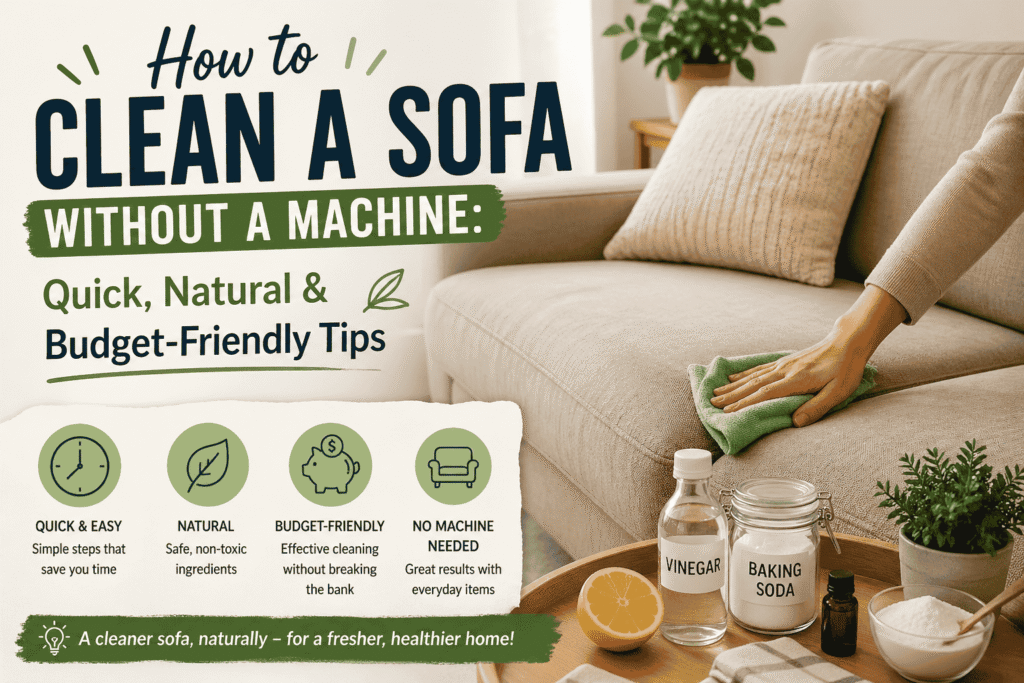
If you are searching for how to clean a sofa without a machine, this guide will show you simple and effective methods you can use at home. You don’t always need expensive equipment to keep your sofa fresh, clean, and stain-free.
In this blog post, you’ll learn easy DIY cleaning techniques, natural solutions, and step-by-step tips to remove dirt, stains, and odours using basic household items.
Table of Contents
2. Why You Should Clean Your Sofa Regularly
Understanding how to clean sofa cushions properly is important, but maintaining a regular cleaning routine is even more essential. Your sofa is used daily, which means it quickly collects dust, sweat, food particles, pet hair, and bacteria without you even noticing.
Regular cleaning helps maintain a healthy home environment by reducing allergens and germs that can affect your family’s health. Dust mites and dirt trapped in cushions can trigger allergies, asthma, and skin irritation if not cleaned frequently.
Another key reason to clean your sofa regularly is to preserve its appearance and durability. Dirt and stains that stay for too long can damage fabric fibres, making your sofa look old and worn out much faster. When you follow proper methods of how to clean sofa cushions properly, you extend the life of your furniture and keep it looking new.
It also helps control bad odours caused by spills, pets, or moisture buildup. A clean sofa always makes your living space feel fresher, more comfortable, and welcoming for guests.
In short, regular sofa cleaning is not just about appearance—it’s about hygiene, comfort, and long-term protection of your furniture.
3. Things You Need to Clean a Sofa Without a Machine
If you want to learn how to clean sofa cushions properly, you don’t always need expensive machines. With a few basic household items, you can effectively clean your sofa and keep it fresh, hygienic, and stain-free.
Here are the essential things you need for cleaning a sofa without a machine:
1. Vacuum Cleaner or Soft Brush
A vacuum cleaner helps remove dust, crumbs, and pet hair from deep inside the fabric. If you don’t have one, a soft brush can also work to loosen dirt from the surface.
2. Microfibre Cloths
Microfibre cloths are gentle on fabric and highly effective for wiping stains and absorbing moisture without damaging the sofa material.
3. Mild Dish Soap or Upholstery Cleaner
A small amount of mild dish soap mixed with water works well for general cleaning. It helps break down dirt and grease without harming the fabric.
4. White Vinegar
White vinegar is a natural cleaner that helps remove stains, kill bacteria, and eliminate bad odours. It is an important part of learning how to clean sofa cushions properly at home.
5. Baking Soda
Baking soda is excellent for deodorising sofa cushions. It absorbs odours and refreshes fabric when sprinkled and left for a few hours before vacuuming.
6. Spray Bottle
A spray bottle helps evenly apply cleaning solutions without over-wetting the fabric, which is important to avoid damage.
7. Soft Scrubbing Brush
A soft brush helps gently lift stains from fabric without causing wear or tearing.
8. Clean Warm Water
Warm water is used to dilute cleaning solutions and rinse away dirt effectively during the cleaning process.
With these simple tools, you can easily follow how to clean sofa cushions properly at home without relying on machines while still achieving a deep and effective clean.
4. How to Clean a Sofa Without a Machine (Step-by-Step Guide)
If you don’t have access to a vacuum cleaner or upholstery machine, you can still achieve great results by learning how to clean sofa cushions properly without a machine using simple household methods. With the right technique, you can remove dirt, stains, and odours effectively at home.
Step 1: Remove Dust and Loose Dirt
Start by taking the cushions off the sofa. Shake them well outdoors to remove loose dust, crumbs, and debris. This helps prevent dirt from spreading during cleaning.
Step 2: Brush the Surface
Use a soft-bristle brush or dry cloth to gently loosen embedded dirt. This step is important when learning how to clean sofa cushions properly because it prepares the fabric for deeper cleaning.
Step 3: Prepare a Mild Cleaning Solution
Combine warm water with a small amount of gentle dish soap until it forms a light cleaning solution. You can also add a small amount of white vinegar for extra stain-fighting power. This homemade solution is safe for most fabric cushions.
Step 4: Spot Clean Stains
Dip a clean microfibre cloth into the solution, wring it out, and gently dab on stained areas. Avoid rubbing harshly, as it may damage the fabric or spread the stain further.
Step 5: Wipe the Entire Cushion Surface
After treating stains, lightly wipe the entire cushion surface with the damp cloth. This ensures an even clean and removes any remaining dirt or soap residue.
Step 6: Deodorise with Baking Soda
Sprinkle a thin layer of baking soda over the cushions and leave it for 20–30 minutes. It helps absorb odours and refresh the fabric. Then gently brush or shake it off.
Step 7: Air-dry Completely
Place the cushions in a well-ventilated area with good airflow. Avoid direct harsh sunlight, as it may fade colours. Proper drying is essential to prevent mould and bad smells.
Final Tip
Even without machines, you can still maintain fresh and clean cushions by following these steps regularly. The key to how to clean sofa cushions properly is consistency, gentle cleaning, and quick action on stains.
5. How to Clean Different Types of Sofas Without a Machine
If you are trying to understand how to clean sofa cushions properly, you also need to know that every sofa material reacts differently to cleaning. The key is using gentle, safe, and machine-free methods that protect the fabric while removing dirt, stains, and odours effectively.
Below is a simple guide for cleaning different types of sofas at home without any machine.
1. Fabric Sofa (Cotton, Linen, Polyester)
Fabric sofas absorb dust and spills quickly, so regular care is important.
- Start by vacuuming the entire surface to remove loose dust and crumbs.
- Mix warm water with a small amount of mild liquid soap
- Dip a clean microfibre cloth into the solution and wring it well
- Gently wipe the surface in small sections.
- For stains, dab softly instead of rubbing
- Allow the sofa to air dry completely
This is one of the safest methods when learning how to clean sofa cushions properly at home.
2. Leather Sofa
Leather requires careful cleaning to avoid cracking or fading.
- Wipe the sofa first with a dry, soft cloth.-dry
- Prepare a mild soap solution using very little detergent and water
- Gently wipe the surface with a slightly moistened cloth.
- Immediately dry with another clean cloth
- Apply a leather conditioner if available to maintain softness.
Never soak leather, as too much moisture can cause damage.
3. Velvet Sofa
Velvet looks luxurious but needs gentle handling.
- Use a soft brush to remove dust from the surface.
- Lightly dab stains using a damp microfibre cloth
- Always clean in the direction of the fabric texture
- Avoid scrubbing or pressing too hard
- Let it dry naturally in open air.
4. Suede Sofa
Suede is delicate and can easily get damaged if cleaned harshly.
- Use a dry suede brush to lift dirt and dust.
- For stains, use a very light mix of vinegar and water.
- Gently dab the affected area without soaking it.
- Once dry, brush again to restore the soft texture.
5. Sofa with Non-Removable Cushions
If cushions cannot be removed, you need a careful surface-cleaning method.
- Vacuum thoroughly, especially in corners and seams
- Use a spray bottle with a mild cleaning solution
- Lightly spray one section at a time
- Wipe gently with a soft cloth
- Ensure proper airflow for quick drying
Final Tip
No matter the sofa type, always test your cleaning solution on a hidden area first. This small step helps you avoid damage while mastering how to clean sofa cushions properly without a machine.
With the right technique, you can keep any sofa fresh, clean, and long-lasting using simple home methods—no expensive equipment needed.
6. Common Mistakes to Avoid
When learning how to clean sofa cushions properly, avoiding common mistakes is just as important as following the right steps. Small errors can damage fabric, leave stains behind, or even create bad odours instead of removing them.
One of the biggest mistakes is using too much water. Over-wetting sofa cushions can push dirt deeper into the foam and lead to mould growth if they are not dried properly.
Another common error is skipping the patch test. Always test any cleaning solution on a hidden area first. This ensures the fabric will not fade, shrink, or get damaged.
Many people also use harsh chemicals or bleach, thinking it will clean better. In reality, strong chemicals can weaken fabric fibres and cause discolouration, especially on delicate materials.
Improper drying is another issue. If cushions are not dried completely, they can develop a musty smell and bacteria buildup, undoing all your cleaning efforts.
Finally, scrubbing too hard is a mistake that can ruin the texture of the fabric. Gentle cleaning is always better when applying methods for how to clean sofa cushions properly.
By avoiding these mistakes, you can safely maintain your sofa cushions and keep them looking clean, fresh, and long-lasting.
7. Natural Cleaning Solutions vs Store-Bought Cleaners
When learning how to clean sofa cushions properly, one of the most common questions is whether to use natural cleaning solutions or store-bought cleaners. Both options can work well, but each has its own advantages depending on the type of stain, fabric, and cleaning needs.
Natural Cleaning Solutions
Natural cleaners like vinegar, baking soda, and mild dish soap are popular because they are safe, affordable, and easy to find at home. They are especially useful for light stains, odours, and regular maintenance.
For example, baking soda helps absorb bad smells from sofa cushions, while a vinegar-water mix can gently break down dirt and kill bacteria. These solutions are ideal if you want to clean your sofa cushions without exposing your home to harsh chemicals.
However, natural cleaners may not always be strong enough for deep or stubborn stains.
Store-Bought Cleaners
Commercial upholstery cleaners are specially designed for tougher cleaning jobs. They often work faster and can remove deep stains like oil, ink, or food spills more effectively.
When used correctly, these products can be very helpful in understanding how to clean sofa cushions properly, especially when dealing with heavily soiled or old cushions. Many also come with fabric-specific formulas for added protection.
On the downside, some store-bought cleaners may contain strong chemicals that can damage delicate fabrics or cause discolouration if not tested properly.
Which One Should You Choose?
The best option depends on your situation. For routine cleaning and light stains, natural solutions are usually enough. For deep cleaning or tough stains, store-bought cleaners may be more effective.
In many cases, a combination of both methods works best. Start with natural cleaning for regular care, and use commercial products only when necessary to keep your sofa cushions fresh, clean, and long-lasting.
8. How Often Should You Clean Your Sofa?
Understanding how to clean sofa cushions properly is important, but knowing how often to clean your sofa is just as essential for keeping it fresh and long-lasting.
In general, your sofa should be lightly cleaned every 1 to 2 weeks. This includes vacuuming the cushions, removing dust, crumbs, and pet hair, and quickly wiping any small spots or spills before they settle into the fabric.
For a deeper clean, you should focus on how to clean sofa cushions properly at least once every 1 to 3 months. This helps remove built-up dirt, body oils, and hidden bacteria that regular cleaning cannot fully eliminate.
If you have pets, children, or heavy daily use, you may need to deep clean your sofa more often—around once a month. High-traffic sofas collect stains and odours faster, so frequent care keeps them hygienic and fresh.
On the other hand, a light-use sofa in a less busy area may only need deep cleaning every 3 to 6 months. However, regular maintenance is still important to prevent long-term damage.
In short, combining regular upkeep with proper knowledge of how to clean sofa cushions properly ensures your sofa stays clean, comfortable, and in good condition for years.
9. Tips to Keep Your Sofa Clean Longer
Once you understand how to clean sofa cushions properly, the next important step is keeping them clean for as long as possible. A few simple habits can significantly reduce dirt, stains, and odours, saving you time and effort in the long run.
Start by using washable sofa covers or throws. These act as a protective layer and catch most dust, spills, and pet hair before they reach the cushions. Washing the covers regularly is much easier than deep cleaning the entire sofa.
Make it a habit to vacuum your sofa cushions at least once a week. This helps remove dust, crumbs, and allergens before they settle deep into the fabric. Use a soft brush attachment for better results.
Avoid eating or drinking on the sofa as much as possible. Food crumbs and accidental spills are one of the main reasons cushions get stained quickly. If spills do happen, clean them immediately to prevent permanent marks.
Another important tip is to rotate and flip your cushions regularly. This ensures even wear and prevents one side from becoming dirtier or flattened over time.
Finally, keep your living space well-ventilated. Good airflow helps reduce moisture buildup, which prevents bad odours and mould growth.
By following these simple habits along with knowing how to clean sofa cushions properly, you can keep your sofa fresh, clean, and long-lasting with minimal effort.
10. When You Might Need Professional Cleaning
Even if you know how to clean sofa cushions properly, there are times when home cleaning is simply not enough. In certain situations, professional cleaning becomes the safer and more effective option to restore your sofa’s freshness and hygiene.
One common reason is deep or stubborn stains. If spills like coffee, ink, wine, or oil have set deep into the fabric and do not respond to regular cleaning methods, professionals have specialised tools and solutions to remove them without damaging the material.
You may also need expert help if your sofa cushions have a strong, long-lasting odour. Smells caused by pets, smoke, mould, or moisture can settle deep inside the foam, making them difficult to eliminate with DIY methods.
Another situation is when dealing with delicate or expensive fabrics. If you are unsure how to clean sofa cushions properly without risking damage, professional cleaners can handle materials like velvet, linen, or designer upholstery safely.
If your home has allergy sufferers, professional deep cleaning can also help by removing dust mites, allergens, and bacteria that regular vacuuming cannot fully reach.
Lastly, if your sofa hasn’t been deep cleaned for a long time or looks dull and worn despite regular care, it’s a good sign that professional cleaning is needed to restore its original condition.
In short, while daily maintenance helps, professional services ensure a deeper, safer, and more thorough clean when your sofa needs extra care.
11. Conclusion
Knowing how to clean sofa cushions properly is essential for maintaining a clean, fresh, and healthy home. With the right methods—regular vacuuming, quick stain treatment, gentle cleaning solutions, and proper drying—you can easily keep your sofa looking new and extend its lifespan.
Small and consistent cleaning habits make a big difference. When you take care of spills quickly and follow a simple maintenance routine, you prevent dirt, odours, and bacteria from building up over time. This not only improves the appearance of your sofa but also enhances the overall comfort of your living space.
However, it is also important to understand your limits. For deep stains, strong odors, or delicate fabrics, professional cleaning can provide a deeper and safer solution when home methods are not enough. For more trusted home care and cleaning guidance, you can also explore helpful resources like https://www.thespruce.com/
12. FAQs (SEO & Featured Snippets Boost)
Is baking soda safe for all sofas?
Yes, baking soda is generally safe for most sofa types when used correctly. It works as a natural deodorizer and helps absorb odors and moisture. However, it should always be used in moderation and vacuumed thoroughly afterward to avoid residue buildup. Always check your sofa’s care label before applying it.
Can I clean a sofa without a machine effectively?
Yes, you can clean a sofa without a machine effectively using simple home methods. Vacuuming, spot cleaning with mild soap solution, vinegar mix, and baking soda can remove dirt, stains, and odors. While machines provide deeper cleaning, regular manual cleaning is enough for maintenance.
What is the best homemade sofa cleaner?
The best homemade sofa cleaner is a mixture of warm water, a few drops of mild dish soap, and a small amount of white vinegar. This solution helps remove stains, kill bacteria, and refresh fabric without damaging it. Always test it on a small hidden area first.
How do you remove stains without a machine?
To remove stains without a machine, first blot the area with a clean cloth (do not rub). Then apply a mild cleaning solution or vinegar mix, gently scrub with a soft brush, and wipe with a damp cloth. Repeat if needed and allow the area to air dry completely.
How long does a sofa take to dry after cleaning?
Drying time usually depends on fabric type and weather conditions. On average, a sofa takes 6 to 24 hours to fully dry. Good ventilation, fans, or indirect sunlight can help speed up the drying process and prevent mould or odour formation.