
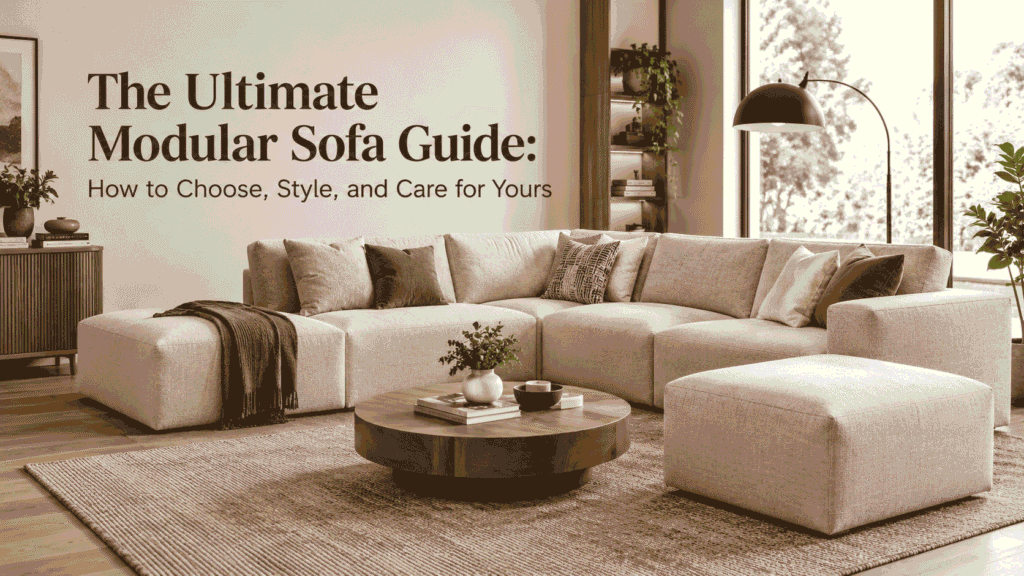
Introduction
Have you ever bought a sofa that looked perfect in the showroom but would not fit through your front door? Have you ever outgrown a couch after moving to a bigger home? Traditional sofas lock you into one shape and one size. A modular sofa solves this problem.
A modular sofa is built from separate pieces that you can arrange, add to, or rearrange whenever your space or lifestyle changes. In this guide you will learn what a modular sofa is, how it compares to a sectional, and how to choose the right size, fabric, and layout. You will also find realistic costs, styling ideas, and simple care tips so your sofa lasts for years.
Table of Contents
What Is a Modular Sofa?
A modular sofa is a seating system made of individual units, called modules, that connect to form one sofa. Each piece stands on its own, so you can use the modules together, apart, or in a different order.
Most modular sofas include a mix of these pieces:
- Corner modules that turn the sofa into an L-shape or U-shape
- Armless (middle) modules that add extra seats
- Chaise modules with an extended seat for stretching out
- Ottomans that work as footrests or extra seating
- Armchair or end modules that finish the ends of the sofa
The modules connect with metal clips, hooks, brackets, or slide-in connectors. Better brands use sturdy connectors that keep the pieces tightly together, while budget options may rely on simple straps. Because every piece is separate, you build the sofa you need today and change it later.
Modular Sofa vs. Sectional Sofa: What’s the Difference?
People often use the terms “modular sofa” and “sectional sofa” as if they mean the same thing. They are related, but not identical. A sectional is a sofa made of connected sections, usually in a fixed L or U shape. A modular sofa takes that idea further by letting you rearrange every piece.
| Feature | Modular Sofa | Sectional Sofa |
|---|---|---|
| Flexibility | Very high; pieces can be rearranged freely | Limited; the layout is mostly fixed |
| Delivery | Easy; small pieces fit through tight spaces | Harder; sections can be large and heavy |
| Expandability | Add or remove modules anytime | Usually cannot be expanded |
| Repairs | Replace one damaged piece | Often need to repair the whole section |
| Price | Can cost more per seat | Often cheaper for the same size |
A sectional is a good choice if you have a fixed layout, a tight budget, and no plans to change your living room. If you want flexibility, a modular sofa is usually the smarter long-term investment.
Benefits of a Modular Sofa
Flexible layouts that change with your space
You can arrange a modular sofa as a straight line, an L-shape, a U-shape, or even two separate seating areas. When you move or redecorate, you simply reconfigure the pieces instead of buying new furniture.
Easy delivery through narrow doors and stairs
Large sofas are hard to move through narrow hallways, tight stairwells, and small elevators. Modules are smaller and lighter, so they are much easier to carry. This is especially helpful in apartments.
Replaceable pieces if one section gets damaged
If a pet scratches one seat or a child spills juice on a cushion, you do not need to replace the whole sofa. Many brands let you buy a single replacement module or cover.
Expandable as your family grows
Start with a small three-seat setup, then add a corner piece or ottoman later. A modular sofa grows with you, which helps spread the cost over time.
Customizable style
Many brands offer modules in different fabrics, colors, and sizes. You can mix and match pieces to match your taste, your room, and your budget.
Drawbacks to Consider Before Buying
A modular sofa is not perfect for everyone. Keep these points in mind:
- Higher cost per seat in some brands. Premium modular systems can cost more than a standard sofa of the same size.
- Pieces may shift. Cheap connectors can let modules slide apart, which is annoying during daily use.
- Visible gaps. Some designs have small seams between modules, which can collect crumbs and look less seamless.
- Lower resale value for some brands. Lesser-known brands can be hard to resell, especially if the modules are discontinued.
The good news is that most of these issues can be avoided by choosing a quality product, which the next section explains.
7 Tips to Choose the Perfect Modular Sofa
1. Measure your room and entryways first.
Measure the room, and also the doors, hallways, stairs, and elevators the pieces must pass through. Mark the sofa’s footprint on the floor with painter’s tape to see how much space it takes. Leave enough walking room, often around 30 to 36 inches (75 to 90 cm) for main paths.
2. Pick the right configuration.
Consider how you plan to use your sofa on a daily basis.
- Straight: best for narrow rooms and a classic look
- L-shape: ideal for corners and open-plan spaces
- U-shape: great for large rooms and family gatherings
- With a chaise: perfect for lounging and naps
Choose a design that can change later, so you are not limited if your needs shift.
3. Choose a fabric that suits your lifestyle
Your fabric affects comfort, looks, and cleaning. Leather is durable and wipes clean. Linen is breathable but wrinkles easily. Velvet feels luxurious but can show wear. High-quality upholstery materials help prevent stains and make everyday cleaning easier, making them a smart choice for households with children or pets. Look for removable, washable covers if you want easy upkeep.
4. Check the frame and cushion quality.
A strong frame decides how long your sofa will last. Look for kiln-dried hardwood or solid plywood frames. For cushions, high-density foam holds its shape longer. Foam wrapped in feather or fiber feels softer but needs regular fluffing. Ask for the foam density rating if the brand lists it.
5. Look at connector quality and stability.
Check how the modules lock together. Metal brackets, hooks, and interlocking systems are more stable than basic straps. If you can test the sofa in a store, push the pieces to see whether they shift. Online, read reviews that mention the pieces sliding apart.
6. Set a realistic budget.
Decide your budget before browsing. Remember that you may want to add pieces later, so check that the brand will keep selling matching modules. Spending a little more on a well-built sofa usually costs less over time than replacing a cheap one.
Have you ever bought a sofa that looked perfect in the showroom but would not fit through your front door? Have you ever outgrown a couch after moving to a bigger home? Traditional sofas lock you into one shape and one size. A modular sofa solves this problem.
A modular sofa is built from separate pieces that you can arrange, add to, or rearrange whenever your space or lifestyle changes. In this guide you will learn what a modular sofa is, how it compares to a sectional, and how to choose the right size, fabric, and layout. You will also find realistic costs, styling ideas, and simple care tips so your sofa lasts for years.
What Is a Modular Sofa?
A modular sofa is a seating system made of individual units, called modules, that connect to form one sofa. Each piece stands on its own, so you can use the modules together, apart, or in a different order.
Most modular sofas include a mix of these pieces:
- Corner modules that turn the sofa into an L-shape or U-shape
- Armless (middle) modules that add extra seats
- Chaise modules with an extended seat for stretching out
- Ottomans that work as footrests or extra seating
- Armchair or end modules that finish the ends of the sofa
The modules connect with metal clips, hooks, brackets, or slide-in connectors. Better brands use sturdy connectors that keep the pieces tightly together, while budget options may rely on simple straps. Because every piece is separate, you build the sofa you need today and change it later.
Modular Sofa vs. Sectional Sofa: What’s the Difference?
People often use the terms “modular sofa” and “sectional sofa” as if they mean the same thing. They are related, but not identical. A sectional is a sofa made of connected sections, usually in a fixed L or U shape. A modular sofa takes that idea further by letting you rearrange every piece.
A sectional is a good choice if you have a fixed layout, a tight budget, and no plans to change your living room. If you want flexibility, a modular sofa is usually the smarter long-term investment.
Benefits of a Modular Sofa
Flexible layouts that change with your space
You can arrange a modular sofa as a straight line, an L-shape, a U-shape, or even two separate seating areas. When you move or redecorate, you simply reconfigure the pieces instead of buying new furniture.
Easy delivery through narrow doors and stairs
Large sofas are hard to move through narrow hallways, tight stairwells, and small elevators. Modules are smaller and lighter, so they are much easier to carry. This is especially helpful in apartments.
Replaceable pieces if one section gets damaged
If a pet scratches one seat or a child spills juice on a cushion, you do not need to replace the whole sofa. Many brands let you buy a single replacement module or cover.
Expandable as your family grows
Start with a small three-seat setup, then add a corner piece or ottoman later. A modular sofa grows with you, which helps spread the cost over time.
Customizable style
Many brands offer modules in different fabrics, colors, and sizes. You can mix and match pieces to match your taste, your room, and your budget.
Drawbacks to Consider Before Buying
A modular sofa is not perfect for everyone. Keep these points in mind:
- Higher cost per seat in some brands. Premium modular systems can cost more than a standard sofa of the same size.
- Pieces may shift. Cheap connectors can let modules slide apart, which is annoying during daily use.
- Visible gaps. Some designs have small seams between modules, which can collect crumbs and look less seamless.
- Lower resale value for some brands. Lesser-known brands can be hard to resell, especially if the modules are discontinued.
The good news is that most of these issues can be avoided by choosing a quality product, which the next section explains.
7 Tips to Choose the Perfect Modular Sofa
1. Measure your room and entryways first.
Measure the room, and also the doors, hallways, stairs, and elevators the pieces must pass through. Mark the sofa’s footprint on the floor with painter’s tape to see how much space it takes. Leave enough walking room, often around 30 to 36 inches (75 to 90 cm) for main paths.
2. Pick the right configuration.
Consider how you plan to use your sofa on a daily basis.
- Straight: best for narrow rooms and a classic look
- L-shape: ideal for corners and open-plan spaces
- U-shape: great for large rooms and family gatherings
- With a chaise: perfect for lounging and naps
Choose a design that can change later, so you are not limited if your needs shift.
3. Choose a fabric that suits your lifestyle
Your fabric affects comfort, looks, and cleaning. Leather is durable and wipes clean. Linen is breathable but wrinkles easily. Velvet feels luxurious but can show wear. High-quality upholstery materials help prevent stains and make everyday cleaning easier, making them a smart choice for households with children or pets. Look for removable, washable covers if you want easy upkeep.
4. Check the frame and cushion quality.
A strong frame decides how long your sofa will last. Look for kiln-dried hardwood or solid plywood frames. For cushions, high-density foam holds its shape longer. Foam wrapped in feather or fiber feels softer but needs regular fluffing. Ask for the foam density rating if the brand lists it.
5. Look at connector quality and stability.
Check how the modules lock together. Metal brackets, hooks, and interlocking systems are more stable than basic straps. If you can test the sofa in a store, push the pieces to see whether they shift. Online, read reviews that mention the pieces sliding apart.
6. Set a realistic budget.
Decide your budget before browsing. Remember that you may want to add pieces later, so check that the brand will keep selling matching modules. Spending a little more on a well-built sofa usually costs less over time than replacing a cheap one.
7. Read the warranty, return policy, and reviews.
Check the warranty on the frame, cushions, and connectors. Read the return policy carefully, since modular sofas are large and returns can be costly. Customer reviews with photos give the most honest picture of comfort and quality after months of use.
Best Modular Sofa Layout Ideas
Modular sofa for small spaces and apartments
For a small room, choose a compact modular sofa for small spaces with low arms and slim modules. A two-piece or three-piece straight layout with an ottoman gives seating without overwhelming the room. Light colors make the space feel larger.
Modular sofa for large living rooms
A big living room can handle a U-shaped layout or a long sofa with a corner and chaise. Float the sofa in the middle of the room to separate the seating area from the dining or entry area.
Modular sofa with chaise for lounging
Add a chaise module at one end for stretching out with your feet up. Because it is a separate piece, you can move it to the other side or turn it into a standalone seat later.
Modular sofa for entertaining and movie nights
Create a deep, wide seating area with a corner module and extra armless seats. Add ottomans that can double as coffee tables or extra seats when guests arrive.
Modular Sofa Materials and Fabrics Compared
The modular sofa fabric you choose changes how the sofa looks, feels, and lasts.
| Material | Durability | Comfort | Maintenance | Best For |
|---|---|---|---|---|
| Leather | Very high | Firm, improves with age | Wipe clean, occasional conditioning | Families, long-term use |
| Performance fabric | High | Soft and comfortable | Very easy; stain-resistant | Homes with kids and pets |
| Linen | Medium | Cool and breathable | Needs gentle care; wrinkles | Warm climates, relaxed style |
| Velvet | Medium | Soft and plush | Needs brushing; shows marks | Stylish, low-traffic rooms |
| Cotton blend | Medium | Soft and natural | Washable covers help | Everyday use |
| Microfiber | High | Smooth and cozy | Easy to wipe | Budget-friendly, busy homes |
For pet owners: Choose tightly woven performance fabric or leather. Avoid loose weaves that claws can snag.
For families with kids: Pick removable, washable covers and stain-resistant fabrics.
How Much Does a Modular Sofa Cost?
Prices vary widely by brand, size, and material. As a rough guide, you can expect these tiers (prices differ by country and change over time):
- Budget: Basic modular sofas with simple frames and foam cushions, usually the lowest cost but with shorter lifespans.
- Mid-range: Better frames, stronger connectors, and more fabric choices. This option offers the best balance of quality and affordability for most buyers.
- Premium: Hardwood frames, high-quality foam or down cushions, designer styling, and long warranties.
What affects the price:
- Frame and cushion quality
- Fabric or leather type
- Brand and design
- Number of modules and overall size
- Customization options
Tips for saving money:
- Shop seasonal sales and holiday promotions
- Start with fewer modules and add more later.
- Factor in delivery fees and setup expenses to understand the sofa’s true overall cost.
- Ask about floor models or discontinued fabrics
How to Style a Modular Sofa
Styling a modular sofa is easy because the shape is already flexible.
- Add a large rug. Choose one big enough that the front legs of the sofa sit on it, which ties the seating area together.
- Layer throw pillows. Mix textures and sizes. Two or three colors are enough to look put together.
- Use side tables. Small tables at the ends of the sofa hold drinks and lamps.
- Choose a clear color palette. Neutral sofas in gray, beige, or cream work with any theme and allow you to change accents. Bold colors like deep green or navy make a statement.
- Float or anchor. A floating layout, with the sofa away from the wall, defines zones in open rooms. A wall-against layout saves space in small rooms.
How to Clean and Maintain Your Modular Sofa
Good care keeps your modular sofa looking new.
Weekly: Vacuum the surface and the gaps between modules. Fluff and flip the cushions.
Monthly: Rotate cushions and swap positions between modules so wear spreads evenly. Check that the connectors are still tight.
Fabric-specific cleaning:
- Leather: Wipe with a slightly damp cloth, then condition every few months.
- Performance Fabrics and Microfiber: Remove small stains using a gentle soap solution and a damp cloth.
- Linen and Cotton: Always check the manufacturer’s care instructions on the label before cleaning to avoid damaging the fabric.Many covers are machine washable.
- Velvet: Brush gently in one direction and avoid soaking.
Extra tips:
- When a spill occurs, gently soak up the liquid with a clean cloth instead of rubbing the affected area.
- Keep the sofa out of direct sunlight to prevent fading.
- Always check the manufacturer’s care label before using any cleaner.
Frequently Asked Questions
Are modular sofas worth it?
Yes, for most people. They are flexible, easy to move, and repairable. If you value long-term use and the ability to change your layout, a modular sofa is a good investment.
How long does a modular sofa last?
A well-made modular sofa can last 10 to 15 years or more with proper care. Lifespan depends on frame quality, cushion density, and how often it is used.
Are modular sofas comfortable?
Yes. Comfort depends on cushion fill and seat depth. Deep seats with high-density foam and a soft top layer give a comfortable feel. Try to test or read detailed reviews before buying.
Can you add more pieces to a modular sofa later?
Usually yes, as long as the brand still sells matching modules. Check this before you buy, because some brands change designs or discontinue pieces.
What is the difference between a modular sofa and a sectional?
A sectional has connected sections in a mostly fixed shape. A modular sofa has independent pieces you can rearrange, add, or remove at any time.
Are modular sofas good for small spaces?
Yes. Compact modules, low arms, and the ability to reconfigure make a modular sofa a practical choice for apartments and small livin
Conclusion
A modular sofa gives you something a traditional sofa cannot: the freedom to change. You can fit it through tight doorways, arrange it to match your room, replace a damaged piece, and expand it as your life changes. To get the best result, measure carefully, choose a fabric that matches your lifestyle, check the frame and connectors, and set a realistic budget.
If you want comfort, flexibility, and long-term value, a modular sofa is a smart choice for almost any home. Ready to find yours? Browse the collection below, read the related guides, or leave a comment with your questions.
Internal links (replace with your real URLs):
- Sectional sofa
- Living room furniture ideas
- Furniture for small apartments
- How to clean a sofa
- Leather vs. fabric sofa
External links (open in a new tab):
Forest Stewardship Council, for responsibly sourced wood: https://fsc.org
Houzz, for living room layout inspiration: https://www.houzz.com
Consumer Reports, for furniture buying advice: https://shopping.yahoo.com/