
Introduction
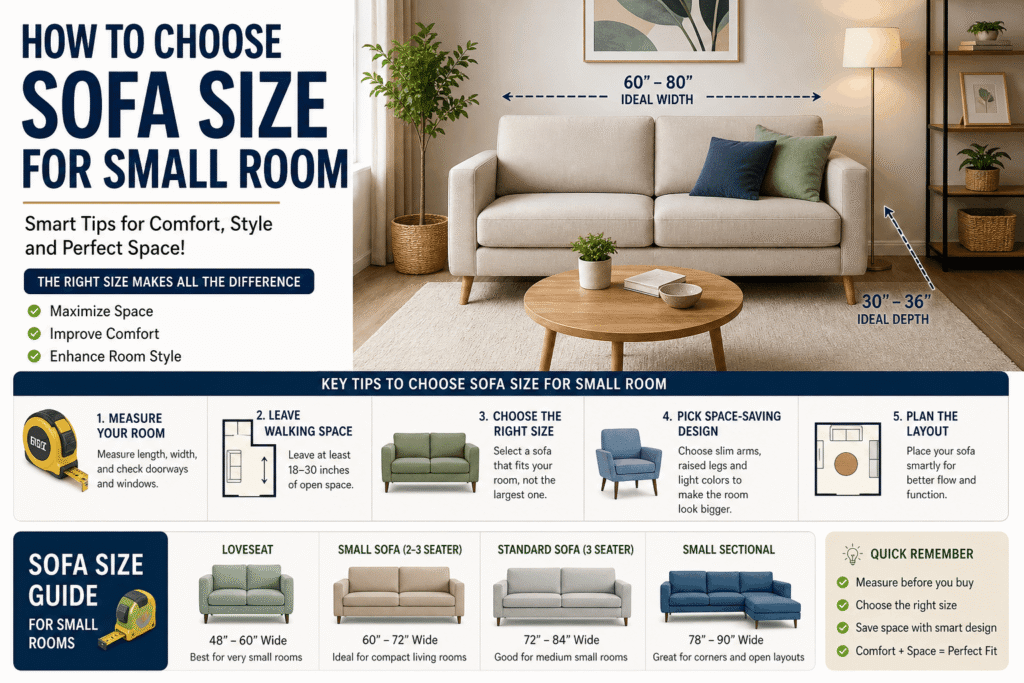
When learning how to choose sofa size for small room, the first step is always measuring your space correctly. Without accurate measurements, you may end up buying a sofa that doesn’t fit your room.
Start by measuring the length and width of your room. Also, check doorways, windows, and walking paths. These factors directly affect how your sofa will fit into the space.
A well-sized sofa can make your room feel open and comfortable. But keeping your sofa clean is just as important. If you already have a sofa, you can also learn How to Clean a Sofa Without a Machine to maintain it easily at home.
Table of Contents
Understand Your Room Size First
Before buying anything, you must understand your room size. This is the most important step when learning how to choose sofa size for a small room. Before choosing a sofa, it’s important to measure your room properly. According to Better Homes & Gardens, accurate room measurements help prevent buying oversized furniture and improve space planning.
Start by measuring your room carefully.
What to measure:
- Length of the room
- Width of the room
- Height (optional but useful)
- Doorways and entry paths
Important spacing rules:
- Leave 18–30 inches for walking space
- Avoid blocking doors or windows
- Keep space between the sofa and the small sofa table
Press the sofa, then the table. Tip:
Use measuring tape and write everything down. You can also draw a simple layout on paper.
Knowing your room size helps you avoid buying a sofa that is too large or too small.
Standard Sofa Sizes Explained
To understand how to choose sofa size for a small room, you need to know basic sofa sizes.
Common sofa types and sizes:
1. Loveseat (2-seater)
- Width: 48–72 inches
- Best for very small rooms
2. Standard 3-seater sofa
- Width: 72–90 inches
- Good for medium-small rooms
3. Compact or apartment sofa
- Width: 68–80 inches
- Designed for small spaces
4. Sectional sofa
- Can vary a lot
- Small sectionals start from 78 inches.
Depth and height:
- Depth: 30–40 inches
- Height: 30–36 inches
For small rooms, always choose compact dimensions instead of bulky designs.
Understanding standard furniture dimensions is essential when learning how to choose sofa size for a small room. You can check general sofa size guidelines on The Home Depot to get a better idea of what fits your space.
Best Sofa Types for Small Rooms
When thinking about how to choose sofa size for small inches. a small room, picking the right type matters just as much as size.
Best options:
1. Loveseats
- Perfect for tight spaces
- Comfortable for 1–2 people
2. Armless sofas
- Take less space visually
- Look modern and clean
3. Small L-shaped sectionals
- Great for corners
- Save space while offering more seating
4. Sofa beds
- Multi-purpose
- Ideal for guests
5. Modular sofas
- Flexible design
- You can adjust pieces based on spaces, a small space.
Tip:
Avoid oversized sofas with wide arms. They waste space without adding comfort.
How to Choose the Right Sofa Size (Step-by-Step)
Here’s a simple step-by-step method to understand how to choose sofa size for a small space. a small room easily.
Step 1: Measure your room
Write down all dimensions clearly.
Step 2: Decide placement
- Against wall
- In a corner
- Centera small centre placement (only if space allows)
Step 3: Choose ideal dimensions
- Width should not exceed 60–70% of the wall
- Centre the wall Depth should allow walking space.
Step 4: Compare with other furniture
Make sure it fits well with:
- Coffee table
- TV unit
- Chairs
Step 5: Use painter’s tape on the wall – the painter’s trick
Mark sized the painter’s sofa on the floor using tape. This helps you visualise the sofa space before buying.
Step 6: Check doorways
Make sure the sofa can enter your home easily.
Ideal Sofa Dimensions for Small Spaces
Understanding ideal dimensions is key when learning how to choose sofa size for a small visual area or a small room.
Recommended sizes:
- Width: 60–80 inches
- Depth: 30–36 inches
- Height: 30–34 inches
What works best:
Low-back sofas
- Make room feel bigger
Slim arms
- Save extra inches
Raised legs
- Create open visual space
What to avoid:
- Deep, bulky sofas
- Thick armrests
- Heavy designs
Choosing the right dimensions helps maintain balance in your room.
Layout Tips to Maximise a Small Space
Even a perfect sofa can look bad if placed incorrectly. That’s why layout matters in how to choose sofa size for a small room. Maximise a small room.
Smart layout ideas:
- Place sofa agaa smallthe sofainst the wall
- Use corners effectively
- Keep pathways clear
- Avoid centring the sofa centre placement in tiny rooms
Pair with smart furniture:
- Use small coffee tables
- Choose nesting tables
- Add wall shelves instead of bulky cabinets
Visual tricks:
- Use mirrors to make room look bigger
- Choose light colours/colours
Space-Saving Sofa Features to Look For
Choosing furniture with smart features can improve both comfort and functionality. Design ideas from IKEA show how compact and modular sofas are ideal for small living rooms.
When selecting furniture, features matter a lot in how to choose sofa size for a small room.
Best features:
1. Storage sofas
- Hidden storage space
- Great for blankets and pillows
2. Slim or no arms
- Save space
- Look modern
3. Raised legs
- Make room feel open
4. Light colours smell
- White, beige, light grey
5. Multi-functional design
- Sofa beds
- Foldable options
These features improve both functionality and design.
Common Mistakes to Avoid
Another common mistake is ignoring maintenance. Over time, sofas can develop bad odours if not cleaned properly. You can fix this by learning how to remove smell from a sofa using simple home methods.
Many people fail at how to choose sofa size for a small room because of simple mistakes.
Avoid these:
- Buying a sofa without measuring
- Choosing oversized furniture
- Ignoring room layout
- Blocking walkways
- Forgetting door size
- Picking dark, bulky designs
Quick advice:
Always plan before you buy. Never rely only on looks.
Quick Sofa Size Chart for Small Rooms
Here’s a simple guide to help you understand how to choose sofa size for a small room quickly:
| Room Size | Recommended Sofa Size |
|---|---|
| 8×10 ft room | Loveseat (48–60”) |
| 10×12 ft room | Small sofa (60–72”) |
| 12×14 ft room | 3-seater (72–84”) |
| Small studio | Compact sofa (60–70”) |
This chart gives a quick idea, but always measure your space.
Conclusion
Now you clearly understand how to choose sofa size for a small room. The key is simple: measure your space, choose compact designs, and focus on smart layout.
A well-chosen sofa can transform your small room into a comfortable and stylish space. Always think about function, size, and placement before making a decision.
Now that you understand how to choose sofa size for small room, don’t forget proper care. Regular cleaning and maintenance—like How to Clean Sofa Cushions or How to Clean a Sofa Without a Machine—will keep your sofa looking new for years.
(FAQs)
1. What size sofa is best for a small room?
A sofa between 60 and 80 inches wide is ideal for most small rooms.
2. Can I use a sectional sofa in a small room?
Yes, but choose a small L-shaped sectional designed for compact spaces.
3. How much space should be around a sofa?
You should leave at least 18–30 inches for walking space.
4. Is a loveseat better than a full sofa?
Yes, loveseats are better for very small rooms because they take less space.
5. Should I choose a low-back or high-back sofa?
Low-back sofas are better because they make the room feel larger.
6. What sofa colour is best for small rooms?
Light colours like white, beige, or light grey make rooms look bigger.
7. How do I know if my sofa will fit?
Use painter’s tape to mark the sofa size on the floor before buying.