
Introduction
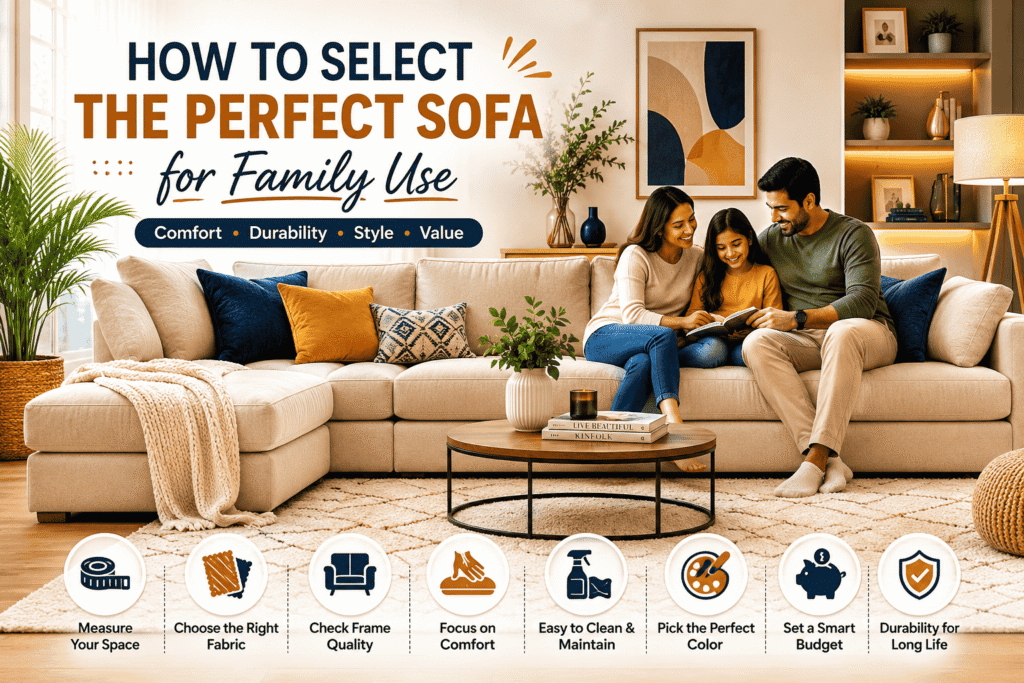
How to select the perfect sofa for family use is one of the most important decisions when creating a comfortable and functional living space. A family sofa should offer the right balance of comfort, durability, size, and easy maintenance for everyday use.
In this guide, you’ll learn how to choose the best sofa shape, frame, fabric, comfort level, and budget so you can invest in a sofa that fits your lifestyle and lasts for years.
Table of Contents
H2: Understand Your Family’s Daily Needs Before Buying
Before comparing designs, fabrics, or prices, take time to understand how your sofa will actually be used every day. One of the biggest mistakes people make is buying a sofa based only on appearance instead of practical family needs.
If your goal is to learn how to select the perfect sofa for family use, start by thinking about lifestyle first. A beautiful sofa may look excellent in a showroom, but it may not stay comfortable or functional after months of daily use.
Choosing a sofa becomes easier when you understand your household’s daily needs. Comfort, room size, and long-term usability all matter. If you’re still unsure where to begin, read our complete guide on how to choose the right sofa for a step-by-step buying process
Ask: Who Will Use the Sofa Most?
Every family uses a sofa differently.
Ask yourself:
- How many family members will sit on it daily?
- Do you have young children?
- Are pets allowed on the sofa?
- Do guests visit often?
- Will someone use it for naps or working from home?
For example, a family of five usually needs more seating and stronger construction than a couple living in a small apartment.
Think About Daily Activities, Not Just Seating
A sofa is no longer just a place to sit.
Many families use their sofa for the following:
- Watching TV
- Reading and relaxing
- Family gatherings
- Kids’ activities
- Casual meals
- Working with a laptop
- Weekend movie nights
The frequency of sofa usage increases the importance of comfort, support, and durability.
Consider Children and Pets
If you have children or pets, your priorities may change.
Look for:
- Easy-to-clean fabrics
- Stain-resistant materials
- Durable stitching
- Removable cushion covers
- Medium to firm seat support
Light-colored fabrics may require more maintenance, while performance fabrics often handle everyday family use better.
Match Sofa Size to Real Family Habits
Buying the biggest sofa isn’t always the best decision.
Think about:
- How everyone usually sits
- Whether people stretch out often
- Room for future family needs
- Walking space around furniture
Choosing the right size now can prevent replacing the sofa too early.
Create a Simple Family Sofa Checklist
Before shopping, answer these five questions:
✓ How many people use the sofa daily?
✓ Do we need kid-friendly materials?
✓ Is simple cleaning important?
✓ How many hours per day will it be used?
✓ Do we want comfort, durability, or both?
Understanding these daily habits makes it much easier to select the perfect sofa for family use and avoid expensive buying mistakes later.
H2: Choose the Right Sofa Size for Your Room
Choose the Right Sofa Size for Your Room
One of the biggest mistakes people make when buying a sofa is choosing a size based only on appearance. A sofa may look perfect in the showroom but feel oversized or too small once it arrives at home. If you want to learn how to select the perfect sofa for family use, choosing the correct size should be one of your first decisions.
The right sofa size improves comfort, movement, and the overall balance of your living space.
Measure Your Room Before You Buy
Before selecting any sofa, measure your room carefully.
Focus on:
- Room length and width
- Doorways and entry points
- Distance between existing furniture
- Walking space around the sofa
A good rule is to leave at least 18–30 inches of free walking space around the seating area. This helps your room feel open instead of crowded.
Understand Standard Sofa Sizes
Knowing common sofa dimensions makes shopping easier.
2-Seater Sofa
- Best for small rooms or apartments
- Typical width: 48–72 inches
3-Seater Sofa
- Ideal for medium-sized family living rooms
- Typical width: 72–90 inches
Sectional Sofa
- Great for larger families and open spaces
- Offers more seating and flexibility
L-Shaped Sofa
- Works well in corners and maximizes seating capacity
The goal is not buying the biggest sofa—it’s choosing one that fits your family and room layout.
Match Sofa Size to Family Lifestyle
Think about how your family actually uses the space.
Ask yourself:
- Do family members watch TV together daily?
- Do children play in the living room?
- Do you host guests often?
- Do you need extra lounging space?
For active households, a larger seating layout may work better. Smaller families may benefit from a compact sofa that keeps the room functional.
Small Room vs. Large Room Recommendations
For smaller rooms:
- Choose slim-armed sofas
- Consider raised legs for a lighter look
- Avoid oversized sectionals.
- Use lighter fabric colors
For larger rooms:
- Try sectionals or modular sofas
- Create conversation zones
- Balance sofa size with rugs and tables
Pro Tip: Use Painter’s Tape First
Before ordering, mark the sofa dimensions on the floor using painter’s tape. This simple step shows how much space the sofa will actually occupy and prevents expensive buying mistakes.
Selecting the right dimensions is an important step in how to select the perfect sofa for family use because comfort starts with proper fit—not just style.
Pick the Best Sofa Shape for Family Comfort
When learning how to select the perfect sofa for family use, shape matters just as much as material or style. The right sofa shape improves comfort, seating capacity, room flow, and everyday usability. Families have different needs, so choosing a layout that fits your lifestyle can make a big difference.
Sectional Sofa
A sectional sofa is one of the most popular choices for modern families because it provides maximum seating and flexibility.
If your living room is the main gathering space for movie nights, guests, or daily relaxation, a sectional can work extremely well.
Benefits:
- Offers more seating than standard sofas
- Great for large families
- Creates a cozy and connected seating arrangement
- Available in multiple configurations
Best for:
Families with larger living rooms and frequent gatherings.
Standard 3-Seater Sofa
A standard 3-seater remains a practical and timeless option for most homes. It balances comfort, affordability, and space efficiency.
This style works especially well for small to medium-sized families that want simplicity without sacrificing comfort.
Benefits:
- Easy to fit into most room layouts
- Budget-friendly compared to larger options
- Works with accent chairs and ottomans
- Easy to rearrange
Best for:
Apartments and medium-size living rooms.
L-Shape Sofa
An L-shape sofa combines style and function while helping maximize corner space.
This sofa design allows multiple family members to sit comfortably without making the room feel crowded.
Benefits:
- Makes better use of room corners
- Adds lounging space
- Creates an open and organized layout
- Suitable for modern interiors
Best for:
Open living spaces and family entertainment areas.
Recliner Sofa
For households that prioritize comfort, a recliner sofa can transform everyday seating.
With adjustable backrests and foot support, recliners provide a more relaxing experience.
Benefits:
- Excellent back and leg support
- Ideal for long sitting sessions
- Comfortable for watching TV
- Available in manual and power options
Best for:
Families focused on comfort and relaxation.
Modular Sofa
Modular sofas are designed with separate pieces that can be moved and rearranged.
They offer flexibility as family needs change over time.
Benefits:
- Customizable layouts
- Easy to expand later
- Works in both small and large spaces
- Convenient for moving homes
Best for:
Growing families who want long-term flexibility.
Select a Durable Sofa Frame That Lasts Longer.
The frame is the foundation of sofa durability. Even beautiful fabric cannot compensate for a weak structure.
Before making a final decision, inspect frame strength, material quality, cushion support, and overall construction. These details directly affect durability and comfort. You can also read what should you check before buying a sofa to avoid expensive buying mistakes.
Solid Wood vs. Engineered Wood
Solid wood frames are generally stronger and built for long-term performance. Hardwood options often provide better durability.
Engineered wood may cost less, but quality varies depending on manufacturing standards.
Solid Wood:
- Longer lifespan
- Strong structure
- Better long-term value
Engineered Wood:
- More affordable
- Lightweight
- Works for lower budgets
Recommendation:
Choose a strong frame if your sofa will be used daily.
Metal Frame Advantages
Metal frames have become increasingly popular because they offer excellent structural support.
Advantages:
- Resistant to warping
- Strong weight capacity
- Long-lasting performance
- Lower maintenance
They work especially well in modern homes and high-use environments.
Frame Quality Checklist
Before buying, inspect:
✓ Frame feels stable with no movement
✓ Joints are secure
✓ Sofa does not creak
✓ Weight feels balanced
✓ Warranty is available
Choose the Best Sofa Fabric for Family Use
Fabric selection affects comfort, cleaning, durability, and appearance.
A durable family sofa should use quality upholstery that can handle daily wear and remain comfortable over time. To understand fabric performance and durability standards, see the guidance from Good Housekeeping.
Fabric Sofa Pros and Cons
Fabric remains one of the most common choices for family homes.
Pros:
- Comfortable and warm
- Large color variety
- Usually budget friendly
Cons:
- Can absorb odors
- Some materials stain easily.
Best for:
Families wanting comfort and design flexibility.
Leather Sofa Pros and Cons
Leather creates a premium appearance while offering durability.
Pros:
- Easy surface cleaning
- Elegant appearance
- Long lifespan
Cons:
- Higher upfront cost
- Can scratch over time
Best for:
Homes wanting easier maintenance.
Performance Fabric for Kids and Pets
Performance fabrics are designed for real-life use.
Benefits:
- Better stain resistance
- Durable under daily use
- Easier maintenance
- Family friendly
This is often one of the smartest choices for active households.
Easy-to-Clean Materials
Look for:
- Performance fabrics
- Microfiber
- Stain-resistant upholstery
- Washable covers
These materials reduce long-term maintenance.
Check Cushion Comfort and Seat Depth
Comfort determines whether your sofa becomes everyone’s favourite seat—or an expensive decoration.
Comfort is not only about appearance—seat depth, support, and posture also matter. For additional home furniture buying considerations, review expert advice from Architectural Digest.
Soft vs. Firm Cushions
Soft Cushions:
- More relaxed feel
- Better for lounging
Firm Cushions:
- Better support
- Maintain shape longer
Most families prefer medium-firm support.
Best Seat Depth for Family Relaxation
Seat depth changes how comfortable the sofa feels.
Shallow seats:
- Easier sitting posture
Deep seats:
- Better for stretching and relaxing
Choose based on family height and sitting habits.
Cushion Filling Options
Popular choices:
- High-density foam
- Memory foam
- Fiber filling
- Foam-fiber blend
High-density foam usually balances support and durability.
Focus on Maintenance and Cleaning
A sofa that looks beautiful but is difficult to clean can become frustrating.
Removable Covers
Benefits:
- Easier washing
- Simple replacement
- Longer sofa appearance
Stain Resistance
Prioritize fabrics with stain-resistant treatment if children or pets use the sofa daily.
Cleaning Routine for Long Sofa Life
Simple maintenance habits:
✓ Vacuum weekly
✓ Rotate cushions monthly
✓ Clean spills immediately
✓ Avoid direct sunlight
✓ Follow manufacturer instructions
Match Sofa Color With Your Living Room
Color affects both appearance and maintenance.
Family-Friendly Color Choices
Popular choices:
- Beige
- Light gray
- Taupe
- Warm brown
- Soft charcoal
Colors That Hide Stains Better
Best practical colors:
- Medium gray
- Brown
- Textured neutrals
- Earth tones
Timeless vs. Trendy Colors
Timeless:
- Neutral shades
Trendy:
- Bold statement colors
For long-term value, timelessness usually wins.
Set a Realistic Sofa Budget
Buying the cheapest sofa often leads to earlier replacement.
Budget Range by Sofa Type
Basic: Entry-level everyday use
Mid-range: Better comfort and durability
Premium: Advanced materials and long lifespan
Features Worth Paying Extra For
Spend more on:
- Strong frame
- Durable fabric
- Comfortable cushions
- Warranty
Avoid Overspending Mistakes
Avoid:
- Paying only for appearance
- Buying oversized sofas
- Ignoring maintenance cost
Family Sofa Buying Checklist (Quick Summary)
Before purchasing, confirm:
✓ Correct Size
✓ Durable Material
✓ Comfortable Seating
✓ Strong Construction
✓ Easy Maintenance
✓ Budget Fit
Common Mistakes to Avoid When Selecting a Sofa
Buying Without Measuring
Measure room size and pathways.
Ignoring Fabric Quality
Good fabric extends sofa life.
Choosing Style Over Comfort
Looks matter—but comfort matters more.
Forgetting Future Family Needs
Choose a sofa that still works years from now.
Conclusion
Knowing how to select the perfect sofa for family use means balancing comfort, durability, maintenance, and practicality—not simply choosing the most attractive design.
Start by selecting the right shape, invest in a durable frame, choose family-friendly fabric, and prioritize comfort for everyday living.
The best family sofa is the one that fits your home, supports your lifestyle, and stays comfortable for years to come.
Frequently Asked Questions
What is the best sofa material for families?
Performance fabric and durable upholstery are excellent for most family homes.
How long should a family sofa last?
A quality family sofa often lasts between 7 and 15 years depending on use and maintenance.
What size sofa is best for a family?
Choose based on room dimensions and household size rather than appearance alone.
Is leather or fabric better for family use?
Leather is easier to wipe clean, while fabric offers more warmth and comfort.
How do I choose a comfortable sofa?
Test cushion support, seat depth, frame quality, and overall sitting posture.