
Introduction
Finding the perfect sofa is exciting—until you realize your living room is too narrow to accommodate it comfortably. Whether you live in a small apartment, a compact home, or simply have an awkward room layout, fitting a sofa into a tight space can be challenging.
The good news is that you don’t need a large living room to create a comfortable and stylish seating area. With the right measurements, furniture choices, and layout strategies, even the narrowest room can feel spacious and functional.
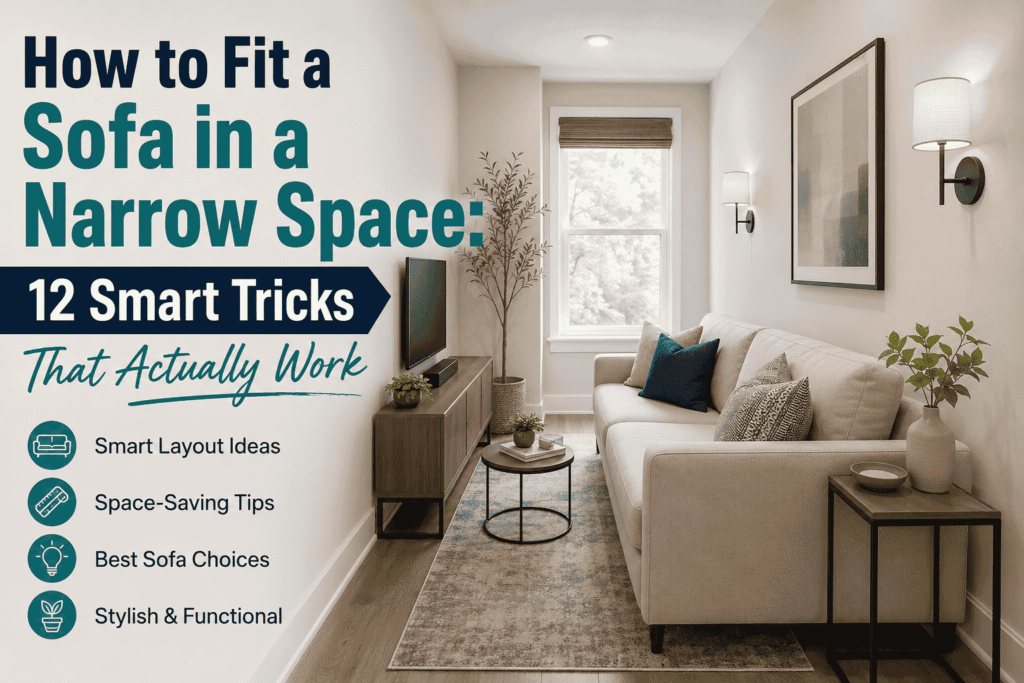
In this guide, you’ll learn how to fit a sofa in a narrow space using 12 practical tricks that interior designers and homeowners use to maximize every inch of available space. From choosing the right sofa size to arranging furniture for better traffic flow, these tips will help you make your room look bigger without sacrificing comfort.
Whether you’re buying a new sofa or trying to make your current one work better, these simple solutions can transform a cramped room into a welcoming and well-designed living space.
If you’re working with a compact living room, our guide on How to Arrange Sofa in Small Room can help you maximise every inch.
Table of Contents
Why Sofa Placement Matters in Small and Narrow Rooms
When decorating a small living room, most people focus on the size of the sofa but overlook where it should be placed. In reality, sofa placement can have a giant impact on how spacious, comfortable, and functional a room feels. Even a perfectly sized sofa can make a narrow room feel cramped if it is positioned incorrectly.
If you’re wondering how to fit a sofa in a narrow space, the first step is understanding the importance of proper placement. A well-positioned sofa improves traffic flow, creates visual balance, and makes the room feel larger than it actually is.
Improves Movement and Traffic Flow
One of the greatest challenges in narrow rooms is maintaining enough space for people to move around comfortably. A sofa that blocks walkways or sits too far into the room can create bottlenecks and make the area feel crowded.
Placing your sofa strategically allows for smooth movement between doors, windows, and other furniture. This simple adjustment can instantly make a tight room feel more open and inviting.
Makes the Room Feel Larger
Smart sofa placement creates the illusion of extra space. Positioning a sofa along the longest wall, choosing a low-profile design, or leaving a small gap between the sofa and the wall can help a narrow room appear wider.
This is one of the most effective techniques used by interior designers when working with small apartments and compact living rooms.
Creates Better Visual Balance
A poorly placed sofa can make a room feel uneven and awkward. On the other hand, placing the sofa in proportion to the room’s size helps create a balanced layout that looks organized and intentional.
When furniture is arranged thoughtfully, the entire room feels more comfortable and visually appealing.
Maximizes Functional Space
In small homes, every inch matters. The right sofa placement can free up valuable floor space for side tables, storage solutions, or additional seating. It can also make the room more versatile for everyday activities such as relaxing, entertaining guests, or working from home.
Prevents Common Decorating Mistakes
Many homeowners buy a sofa that technically fits the room but fail to consider placement. This often leads to blocked pathways, cramped corners, and a cluttered appearance.
Before moving furniture into position, take time to measure your room and plan the layout. A few minutes of planning can save hours of frustration later.
The Bottom Line
Learning how to fit a sofa in a narrow space isn’t just about finding a smaller sofa. It’s about using smart placement strategies that improve comfort, functionality, and visual appeal. With the right positioning, even the narrowest room can feel spacious, stylish, and easy to live in.
Measure Before You Move: The First Step to Success
Before trying any of the tips in this guide on How to Fit a Sofa in a Narrow Space, take time to measure everything carefully. Many homeowners buy a sofa they love only to discover it won’t fit through the front door, hallway, or room itself. A few simple measurements can save you time, money, and frustration.
Accurate measurements help you choose the right sofa size, plan the best layout, and avoid costly mistakes. Whether you’re moving into a small apartment, a narrow living room, or a compact townhouse, measuring first is the smartest step you can take.
Measure Your Sofa Dimensions
Start by measuring the sofa’s width, depth, and height. If you’re shopping online, check the product specifications carefully. Don’t rely on photos alone, as furniture often appears smaller in pictures than it is in real life.
Pay close attention to:
- Overall width from arm to arm
- Seat depth
- Total height
- Armrest size
- Leg height
Slim-profile sofas and apartment-sized models are often better choices for narrow spaces because they provide comfortable seating without taking up excessive room.
Measure Doorways, Hallways, and Staircases
A sofa that fits perfectly in your living room is useless if it can’t get through the entrance. Measure every access point the sofa must pass through before reaching its final destination.
Important areas to check include:
- Front and back doors
- Apartment entrances
- Hallways
- Staircases
- Elevators
- Tight corners and turns
Compare these measurements with the sofa dimensions. If space is limited, consider a modular sofa that can be moved in separate pieces.
Measure the Available Floor Space
Next, measure the exact area where you plan to place the sofa. Use a tape measure to determine both the length and width of the available space.
When planning your layout, leave enough room for:
- Comfortable walking paths
- Coffee tables
- Side tables
- Other furniture pieces
- Door and window access
A good rule is to maintain clear walkways so the room feels open rather than cramped. Even in a narrow room, proper spacing can make a significant difference in comfort and appearance.
Taking these measurements before purchasing furniture will make the rest of the strategies in this guide much easier to apply. In fact, measuring first is one of the most effective ways to successfully fit a sofa in a narrow space without sacrificing comfort, style, or functionality.
12 Smart Tricks to Fit a Sofa in a Narrow Space
If you’re wondering how to fit a sofa in a narrow space, you’re not alone. Many homeowners struggle to arrange furniture in tight living rooms, apartments, hallways, and small family spaces. The good news is that with a few smart design strategies, you can make even the narrowest room feel comfortable, functional, and stylish.
1. Choose a Slim-Profile Sofa
Not all sofas are created equal. Traditional sofas with bulky arms and deep seats can overwhelm a narrow room. Instead, look for slim-profile models with narrow arms and a streamlined design. These sofas provide comfortable seating while taking up less floor space.
2. Measure Everything Before Buying
One of the biggest mistakes people make is purchasing a sofa without measuring the room first. Measure the width of your room, available wall space, doorways, and hallways. This ensures the sofa not only fits the room but can also be moved inside without issues.
3. Place the Sofa Along the Longest Wall
In most narrow rooms, positioning the sofa against the longest wall creates a cleaner layout and improves traffic flow. This arrangement keeps the center of the room open and makes the space appear wider.
4. Consider an Apartment-Size Sofa
Apartment sofas are specifically designed for compact living spaces. They typically have shorter lengths and shallower depths, making them ideal for narrow rooms without sacrificing comfort.
5. Use a Loveseat Instead of a Full-Size Sofa
If space is extremely limited, a loveseat may be a better option than a standard three-seat sofa. A well-chosen loveseat can provide adequate seating while leaving enough room for walking paths and additional furniture.
6. Opt for Sofas with Exposed Legs
Furniture that sits directly on the floor can make a room feel heavy and crowded. Sofas with visible legs create a sense of openness because more floor area remains visible. This simple visual trick can make a narrow room feel noticeably larger.
7. Try a Corner Placement
Sometimes placing the sofa in a corner works better than centring it on a wall. Corner placement can free up valuable floor space and create a more functional room layout, especially in awkwardly shaped spaces.
8. Use a Modular Sofa
Modular sofas offer flexibility that traditional sofas cannot. Because they come in separate sections, you can customize the arrangement to fit your room’s dimensions. They’re also easier to move through tight hallways and doorways.
9. Remove Bulky Side Tables
Large side tables can make a narrow room feel cramped. Replace them with wall-mounted shelves, nesting tables, or slim console tables. This creates more breathing room around the sofa and improves movement throughout the space.
10. Position Furniture to Maintain Walkways
A comfortable room should allow people to move freely. Try to maintain clear walkways around the sofa whenever possible. Avoid placing furniture where it blocks natural traffic paths, as this can make the room feel even narrower.
11. Use Light Colors to Create Openness
Light-coloured sofas such as beige, cream, light Gray, or soft white can make a room feel brighter and more spacious. Dark furniture tends to absorb light and can visually shrink already limited spaces.
In addition to choosing lighter furniture, many small living room design ideas focus on maximising natural light, using mirrors, and reducing visual clutter. These simple strategies can make a narrow room feel much larger and more inviting.
12. Add Mirrors to Increase Visual Space
Mirrors are one of the oldest interior design tricks for small rooms. A large mirror placed opposite a window reflects natural light and creates the illusion of additional depth. Combined with smart sofa placement, mirrors can make a narrow room feel significantly larger.
Final Tip
When learning how to fit a sofa in a narrow space, remember that success comes down to choosing the right sofa size, maintaining clear walkways, and creating visual openness. Small adjustments such as selecting a slim-profile sofa, using lighter colours, or rearranging furniture can completely transform a cramped room into a comfortable and inviting living area.
Best Sofa Types for Narrow Spaces
Choosing the right sofa is just as important as knowing how to fit a sofa in a narrow space. Some sofa styles are specifically designed for compact rooms and can make a small area feel more open, comfortable, and functional. If you’re struggling with limited floor space, consider these sofa types before making a purchase.
Loveseats
Loveseats are one of the best options for narrow rooms because they are smaller than standard three-seat sofas. Typically designed for two people, they provide comfortable seating without overwhelming the room. A loveseat works especially well in apartments, studio flats, home offices, and compact living rooms where every inch matters.
Apartment Sofas
Apartment sofas are built specifically for smaller spaces. They usually feature a slimmer profile, narrower arms, and a shorter overall length than traditional sofas. Despite their compact size, many apartment sofas still offer enough seating for three people, making them an excellent choice for homeowners who want both comfort and space efficiency.
Modular Sofas
Modular sofas consist of separate sections that can be arranged in different ways. This flexibility makes them ideal for narrow spaces because you can customize the layout to fit your room. If you move furniture frequently or have an unusual room shape, a modular sofa allows you to adapt the configuration whenever needed.
Armless Sofas
Traditional sofa arms can take up valuable space. Armless sofas eliminate this issue by providing the same seating area with a smaller footprint. Their sleek design also creates a more open and modern appearance, making narrow rooms feel less cramped.
Compact Sectionals
Many people assume sectionals are only suitable for large living rooms, but compact sectionals can work surprisingly well in narrow spaces. Small L-shaped sectionals can maximize corner areas while providing more seating than a standard sofa. The key is choosing a model specifically designed for apartments or small rooms.
Sofas with Exposed Legs
Furniture that sits directly on the floor can make a room appear crowded. Sofas with exposed legs create visible floor space underneath, which helps the room feel larger and more open. This simple design feature can make a significant difference in a narrow living room.
Sleeper Sofas
If you’re working with limited space, a sleeper sofa can serve two purposes in one piece of furniture. During the day, it functions as a regular sofa, and at night, it converts into a bed for guests. This is an excellent solution for small apartments and multipurpose rooms.
Which Sofa Type Is Best?
For most narrow rooms, apartment sofas, loveseats, and modular sofas offer the best balance of comfort and space-saving design. When deciding how to fit a sofa in a narrow space, focus on models with slim arms, compact dimensions, and lightweight visual designs. The right sofa can improve traffic flow, create a more spacious appearance, and make even the smallest room feel inviting.
How Much Space Should You Leave Around a Sofa?
One of the biggest mistakes people make when trying to fit a sofa in a narrow space is ignoring the clearance around the furniture. Even if your sofa physically fits, the room can still feel cramped and uncomfortable if there isn’t enough space for people to move around easily.
As a general rule, leave at least 18 to 24 inches (45–60 cm) of walking space around the sofa whenever possible. This creates a comfortable traffic flow and prevents the room from feeling crowded.
Here are some recommended spacing guidelines:
- Between the sofa and a coffee table: Leave 14–18 inches.
- Main walkways around the sofa: Leave at least 24–30 inches.
- Between the sofa and a TV unit: Aim for 30–36 inches if space allows.
- Between the sofa and side tables: Leave 2–6 inches for easy access.
If you’re working with a particularly tight room, don’t worry. When learning how to fit a sofa in a narrow space, smart furniture choices often matter more than having a large amount of empty floor space. A slim-profile sofa, exposed-leg design, or compact apartment sofa can make a room feel much larger without sacrificing comfort.
Another useful trick is to avoid blocking natural pathways. People should be able to walk through the room without constantly squeezing between furniture. Keeping walkways clear not only improves functionality but also makes a narrow living room appear more open and inviting.
Before buying a new sofa, measure the room carefully and mark the sofa’s dimensions on the floor using painter’s tape. This simple step helps you visualise how much space will remain around the sofa and can prevent costly mistakes.
Remember, the goal isn’t just to make the sofa fit—it’s to create a balanced layout that feels comfortable, practical, and visually spacious.
Final Thoughts
Learning how to fit a sofa in a narrow space doesn’t have to be difficult. With the right measurements, smart furniture choices, and a well-planned layout, even the smallest room can feel comfortable, functional, and stylish.
The key is to focus on space-saving solutions such as slim-profile sofas, modular designs, strategic placement, and maintaining clear walkways. Small adjustments can make a significant difference in how open and inviting your living room feels.
Before purchasing a new sofa, always measure your room, doorways, and available floor space carefully. Taking a few extra minutes to plan ahead can help you avoid costly mistakes and ensure your sofa fits perfectly.
Whether you’re furnishing a compact apartment, a narrow living room, or a challenging corner space, the 12 smart tricks covered in this guide can help you maximize every inch of your home without sacrificing comfort.
By applying these practical tips, you’ll be able to create a living space that looks larger, functions better, and feels more enjoyable to spend time in every day.
For more expert advice, explore our complete Sofa Buying Guide and other sofa care resources.
Frequently Asked Questions
Can a Large Sofa Fit in a Narrow Room?
Yes, a large sofa can fit in a narrow room if you choose the right layout and measure carefully. Place the sofa against the longest wall, keep walkways clear, and avoid bulky side tables. However, in most cases, a compact or slim-profile sofa will provide better comfort and make the room feel more spacious.
What Is the Best Sofa for a Small Narrow Living Room?
The best sofa for a small narrow living room is typically an apartment sofa, a loveseat, a modular sofa, or a design with slim arms and exposed legs. These styles take up less visual and physical space while still providing comfortable seating. When deciding how to fit a sofa in a narrow space, choosing the right sofa size is often the most important step.
How Do You Move a Sofa Through a Narrow Doorway?
Start by measuring both the sofa and the doorway to ensure they are compatible. Remove cushions, legs, and detachable parts if possible. Tilt the sofa vertically or move it through the doorway at an angle to gain extra clearance. For extremely tight spaces, modular sofas can be easier to transport and assemble inside the room.
Should a Sofa Touch the Wall in a Small Room?
Not necessarily. While placing a sofa against the wall can save space, leaving a few inches between the sofa and the wall can sometimes make the room feel larger and improve airflow. In very small rooms, experiment with different layouts to see which arrangement creates the most open and comfortable feel.
What Sofa Color Makes a Room Look Bigger?
Light colours such as white, beige, cream, light Gray, and soft pastels can make a room appear larger and brighter. These shades reflect more light and create a sense of openness. Pairing a light-coloured sofa with mirrors and natural lighting can further enhance the feeling of space in a narrow room.