
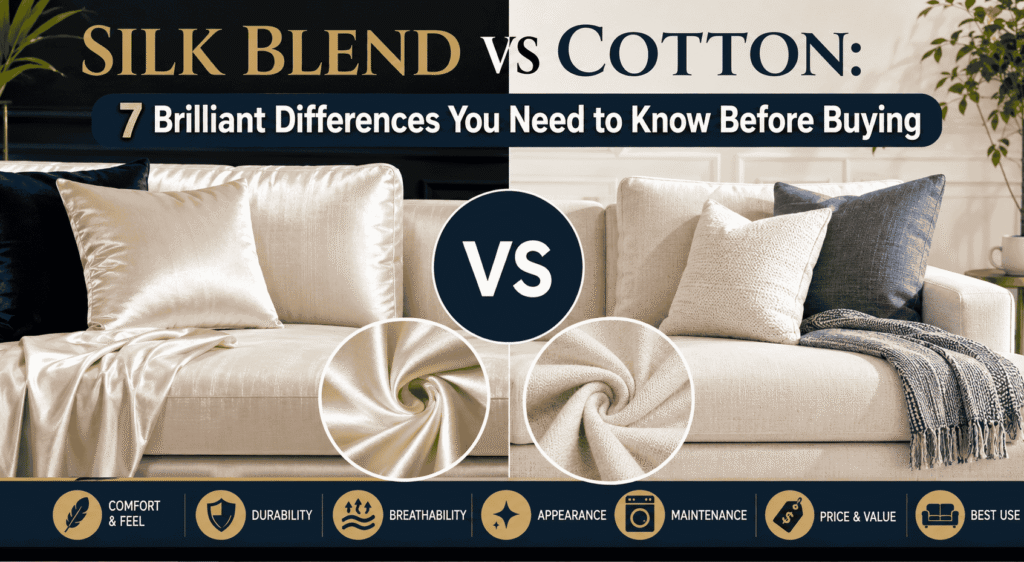
Introduction
hoosing a sofa fabric is one of the most important decisions you’ll make when furnishing a living room, and the silk blend vs cotton debate comes up constantly. Both fabrics look beautiful, but they behave very differently once they’re part of your everyday life.
Silk blend upholstery is usually picked for its soft sheen and luxurious feel, while cotton is loved for being natural, breathable, and simple to live with. In this guide, you’ll learn exactly how these two fabrics compare on comfort, appearance, durability, cleaning, breathability, price, and real-world use—so you can pick the right one with confidence.
Table of Contents
Silk Blend vs Cotton at a Glance
| Feature | Silk Blend | Cotton |
|---|---|---|
| Feel | Smooth, soft, luxurious | Soft, natural, comfortable |
| Appearance | Elegant, subtle sheen | Casual, natural |
| Breathability | Moderate to good | Excellent |
| Durability | Depends on the blend | Moderate to good |
| Maintenance | Often more delicate | Generally easier |
| Moisture handling | Moderate | Absorbent |
| Cost | Usually higher | Usually more affordable |
| Best for | Luxury interiors | Everyday comfort |
One thing to keep in mind: “silk blend” isn’t one single fabric. A silk-cotton blend performs very differently from a silk-polyester or silk-viscose blend. The second fiber in the mix has a huge influence on how the fabric wears, cleans, and holds up over time — so always check the blend composition, not just the word “silk” on the label.
What Is a Silk Blend?
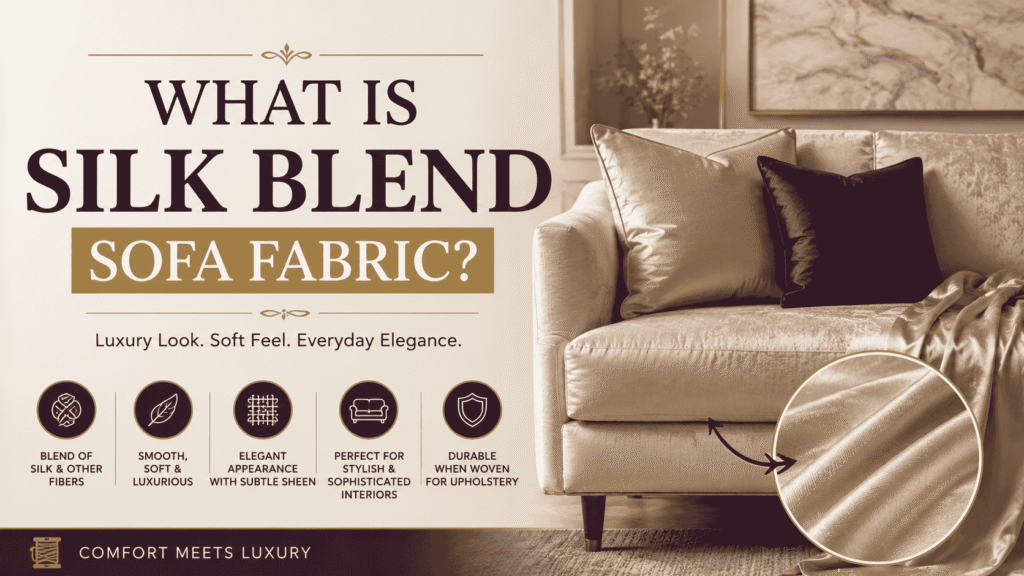
How Silk Blended Fabrics Are Made
A silk-blend fabric is created by weaving silk fibers together with another fiber—commonly cotton, polyester, or viscose. Pure silk is delicate and expensive, so manufacturers blend it with a stronger or more affordable fiber to improve durability, reduce cost, and make it more practical for furniture.
The second fiber does most of the heavy lifting in daily use. Polyester blends tend to resist wrinkling and hold color well. Cotton blends feel more natural and breathable. Viscose blends often add extra drape and shine. This is why two sofas labeled “silk blend” can feel and perform completely differently.
Key Characteristics of Silk Blend Sofa Fabric
- Luxurious, elegant appearance with a subtle sheen
- Smooth, soft hand-feel
- Excellent drapability, which gives upholstery a refined look
- Generally more durable than 100% silk
- Performance varies significantly depending on the blend ratio.
What Is Cotton Sofa Fabric?
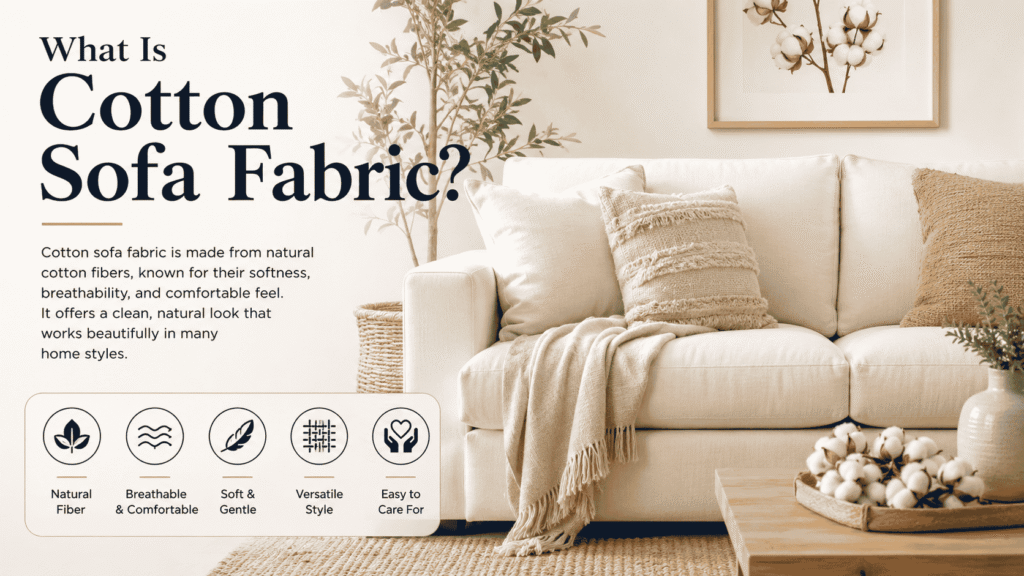
How Cotton Works as Upholstery
Cotton is a natural, plant-based fiber harvested from the cotton plant and spun into yarn. It’s one of the oldest and most widely used textiles in home furnishings because it’s soft, breathable, and reliably comfortable to sit against.
Key Characteristics of Cotton Sofa Fabric
- Natural, breathable feel
- Comfortable for everyday, long-term seating
- Absorbent, which affects how it handles spills
- Widely available and easy to source
- Can wrinkle or stain depending on the weave and finish
Silk Blend vs. Cotton: 7 Differences That Actually Matter
1. Comfort and Feel
Silk blend fabric has a smooth, almost cool touch that feels distinctly luxurious against the skin. Cotton feels warmer and softer in a more relaxed way and tends to feel more “lived-in” over time.
Verdict: If you want a tactile, high-end sitting experience, silk blend wins. If you want natural, everyday comfort that feels casual and cozy, cotton is the better pick.
2. Appearance and Luxury Appeal
A silk blend has a gentle sheen that catches light and adds depth to a room, making it a favorite for formal or upscale interiors. Cotton has a flatter, matte texture that reads as casual, relaxed, and versatile.
3. Durability and Everyday Use
Durability is where the “silk blend vs cotton” comparison gets nuanced. Neither fiber name alone tells you how long a sofa will last — the weave tightness, fabric weight, blend ratio, and upholstery construction matter just as much as the fiber itself.
That said, in general:
- Silk blends with polyester tend to resist wear well but can still be sensitive to abrasion.
- Cotton is moderately durable but performs best in tighter, heavier weaves.
- Homes with pets, kids, or heavy daily use put more strain on delicate silk blends than on sturdy cotton weaves.
To judge durability properly, always check the rub count before you buy.
4. Cleaning and Maintenance
Cotton is generally easier to spot-clean and more forgiving of everyday accidents, though it can stain if spills aren’t addressed quickly. Silk blends often require more careful handling—watermarks, aggressive scrubbing, or the wrong cleaning product can damage the fibers or dull the sheen.
Always follow the manufacturer’s care label and cleaning code rather than assuming based on fiber type.
5. Breathability and Temperature Comfort
Cotton is highly breathable, allowing air to circulate and moisture to be absorbed, which makes it comfortable in warmer climates or for long sitting sessions. Silk blends offer moderate breathability — how well they perform here depends heavily on the second fiber in the blend.
Verdict: For hot weather or households where the sofa gets used constantly, cotton has the edge. Silk blends can still feel refined and comfortable but are usually chosen more for looks than for temperature control.
6. Price and Long-Term Value
Silk blend fabric is typically more expensive than cotton, largely because of the silk content and the more delicate finishing process. Cotton is usually more budget-friendly and widely available, making it an easier choice for cost-conscious buyers.
Long-term value depends on more than the sticker price, though — factor in maintenance costs, expected lifespan, and how the fabric will hold up to your household’s actual use.
7. Best Use Case
Choose a silk blend if you want.
- A luxurious, elegant appearance
- A sophisticated, formal interior
- A smooth, refined texture
- Decorative or low-traffic seating
Choose cotton if you want:
- Natural, everyday comfort
- Strong breathability
- A relaxed, casual look
- Easier sourcing, cleaning, and replacement
Pros and Cons of Silk Blend Sofa Fabric
Pros
- Luxurious, elegant appearance
- Soft, smooth feel
- Combines silk’s elegance with improved performance from the second fiber
- Well-suited to sophisticated interiors
Cons
- Requires more careful maintenance
- Performance varies a lot depending on blend ratio
- Some blends aren’t ideal for heavy everyday wear.
- Generally costs more than basic cotton upholstery
Pros and Cons of Cotton Sofa Fabric
Pros
- Natural fiber
- Comfortable and breathable
- Versatile, casual appearance
- Widely available and budget-friendly
Cons
- Can absorb spills and stains
- May wrinkle over time
- Can fade with prolonged sun exposure, depending on dye and finish
- Durability varies significantly by weave and construction.
Silk Blend vs Cotton: Which Is Better for a Sofa?
There’s no single winner — the right choice depends entirely on how the sofa will be used.
- Best for luxury living rooms: Silk blend
- Best for everyday family rooms: Cotton
- Best for breathability: Cotton
- Best for elegant appearance: Silk blend
- Best for budget-conscious buyers: Cotton
- Best for low-traffic decorative seating: Silk blend
Silk Blend vs. Cotton for Homes With Kids and Pets
This is where fabric choice matters most in real life. Pet claws, shedding hair, food spills, mud, and frequent cleaning all put extra strain on upholstery.
- Silk blends are generally more vulnerable to snags, scratches, and moisture damage from pets and kids.
- Cotton handles spills and cleaning more forgivingly but can still stain without a protective finish.
- In high-traffic homes, a tightly woven performance fabric may outperform both, regardless of fiber name.
How to Choose Between Silk Blend and Cotton
Ask yourself:
- How often will the sofa actually be used?
- Is the room formal or casual?
- Do you have children or pets?
- How much maintenance are you realistically willing to do?
- Is appearance more important than practicality for this piece?
- What’s your budget?
- What does the manufacturer’s care label say?
- What’s the exact blend percentage?
- What’s the fabric’s rub count?
- Is the fabric actually rated for upholstery use?
Silk Blend vs. Cotton: What to Check Before Buying
Before committing to either fabric, check:
- Fiber composition and blend percentage
- Fabric weight
- Weave type
- Rub count
- Cleaning code (W, S, WS, or X)
- Colorfastness
- Warranty terms
- Manufacturer care recommendations
- A physical sample, not just a photo
Frequently Asked Questions
Is a silk blend better than cotton for a sofa? Neither is universally “better.” Silk blend suits luxury, low-traffic, decorative seating, while cotton suits everyday comfort and breathability.
Is cotton more durable than a silk blend? It depends on the weave, blend ratio, and construction—not just the fiber name. Always check the rub count before assuming.
Is silk blend fabric easy to clean? Generally no—it requires more careful maintenance than cotton and is more sensitive to watermarks and harsh cleaning.
Is cotton sofa fabric good for everyday use? Yes, cotton is a popular choice for everyday family sofas because it’s breathable, comfortable, and relatively easy to maintain.
Which is more breathable, a silk blend or cotton? Cotton is more breathable overall, though this varies with silk blends depending on the second fiber used.
Is a silk blend suitable for homes with pets? It’s usually not the best choice for heavy pet use—a tightly woven performance fabric is often a safer option.
Does a silk blend cost more than cotton? Yes, in most cases silk-blend upholstery costs more than cotton due to the silk content and finishing process.
Which fabric looks more luxurious? Silk blend, thanks to its subtle sheen and smooth drape.
Can silk blend and cotton sofas be cleaned the same way? No—always follow the specific cleaning code and manufacturer instructions for each fabric rather than treating them the same.
Which fabric should I choose for a high-traffic living room? Cotton, or a durable performance fabric, is generally a safer choice than a silk blend for high-traffic spaces.
Final Verdict: Silk Blend vs. Cotton
When it comes to a silk blend vs. cotton, the right answer depends on how the sofa will actually live in your home:
- Silk blend is the better choice for luxury, elegance, and refined, low-traffic interiors.
- Cotton is the better choice for natural comfort, breathability, and relaxed, everyday spaces.
For heavy-use sofas, don’t judge by fiber name alone — look closely at the weave, construction, rub count, blend percentage, and care requirements before you buy.
🔗 Recommended Internal Links
- Sofa Materials Explained
- How to Choose the Right Sofa Material
- What Is Silk Blend Sofa Fabric?
- Cotton Sofa Material Guide
- Luxury Sofa Materials
- What Is Rub Count on Sofa Fabric?
- Sofa Fabric Durability Guide
- Ultimate Guide to Sofa Cleaning at Home
- Sofa Cleaning Guide
- How Much Should a Quality Sofa Cost?
- Best Sofa Materials for Pets
- How to Clean a Fabric Sofa
🌐 Recommended External Links
- Textile Exchange — fiber information, sustainability, textile terminology
- USDA – Cotton — authoritative background on cotton production
- American Cleaning Institute — general fabric and textile care principles
- FTC – Textile Labeling Requirements — fiber-content labeling rules
If you’re still deciding between different upholstery materials, explore our Sofa Materials Explained guide (linked above) to compare the most popular sofa fabrics in one place.