
Introduction
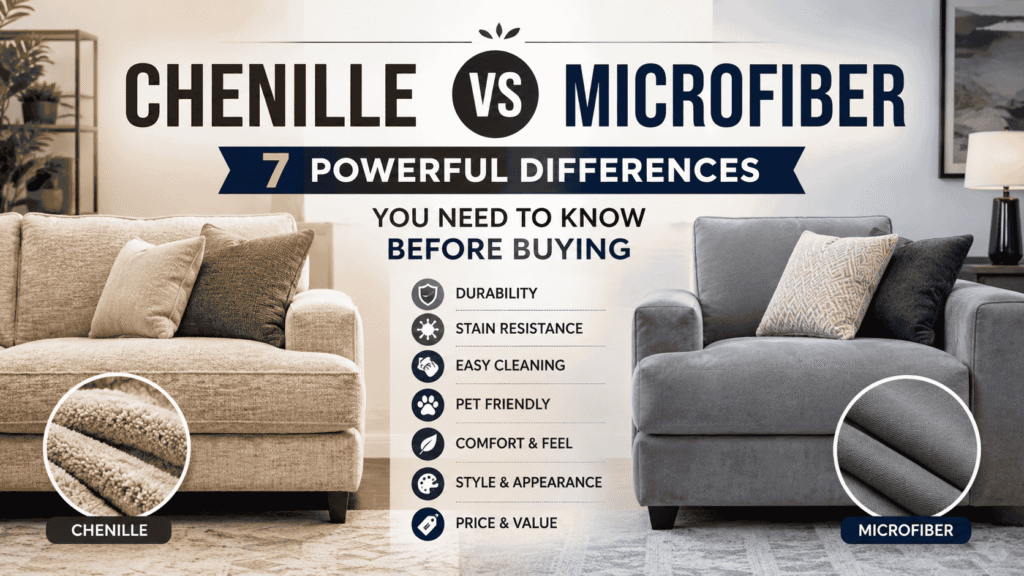
Choosing between chenille and microfiber is one of the most common dilemmas homeowners face when shopping for a new sofa. Both fabrics are popular, both look excellent in photos, and both are marketed as “family-friendly”—but they behave very differently once they’re actually living in your home.
Your choice of sofa upholstery affects far more than looks. It shapes how comfortable your living room feels every evening, how much time you’ll spend cleaning, how well the fabric holds up against kids and pets, and how much value you get out of your furniture over the years.
Chenille is a soft, richly textured fabric known for its plush, almost velvet-like feel and its ability to make a sofa look luxurious. Microfiber, on the other hand, is a finely woven synthetic fabric prized for its smooth surface, everyday durability, and easy maintenance.
Here’s the honest truth: neither fabric is universally “better.” The right choice depends on your household, your lifestyle, and what you value most—softness and style, or practicality and effortless upkeep.
This comparison takes a closer look at the key features you should consider:
- Comfort and softness
- Durability
- Stain resistance
- Cleaning and maintenance
- Pet and kid friendliness
- Appearance and style
- Cost and long-term value
By the end, you’ll have a clear, practical recommendation based on your specific lifestyle—not a generic “one is better” verdict.
For more background on upholstery options in general, see our sofa materials guide.
Table of Contents
Chenille vs Microfiber at a Glance
Before diving deep, here’s a quick side-by-side snapshot to help you compare both fabrics at a glance.
| Feature | Chenille | Microfiber |
|---|---|---|
| Feel | Plush and textured | Soft, smooth, suede-like |
| Appearance | Rich, dimensional | Clean and uniform |
| Durability | Good, depending on construction | Generally very good |
| Stain Resistance | Moderate | Generally higher |
| Cleaning | Requires more care | Usually easier |
| Pet Hair | Can trap hair in the pile | Depends on surface texture |
| Kids | Good with proper care | Excellent for busy households |
| Breathability | Can vary by fiber | Generally lower than natural fibers |
| Maintenance | Moderate | Low to moderate |
| Best For | Style and softness | Practicality and easy maintenance |
Keep in mind: there’s no universal durability number that applies to every chenille or microfiber sofa. Performance depends heavily on the specific fiber blend, weave density, and the manufacturer’s construction quality. Always check the product specifications before assuming one fabric will automatically outperform the other.
What Is Chenille Sofa Fabric?
How Chenille Is Made
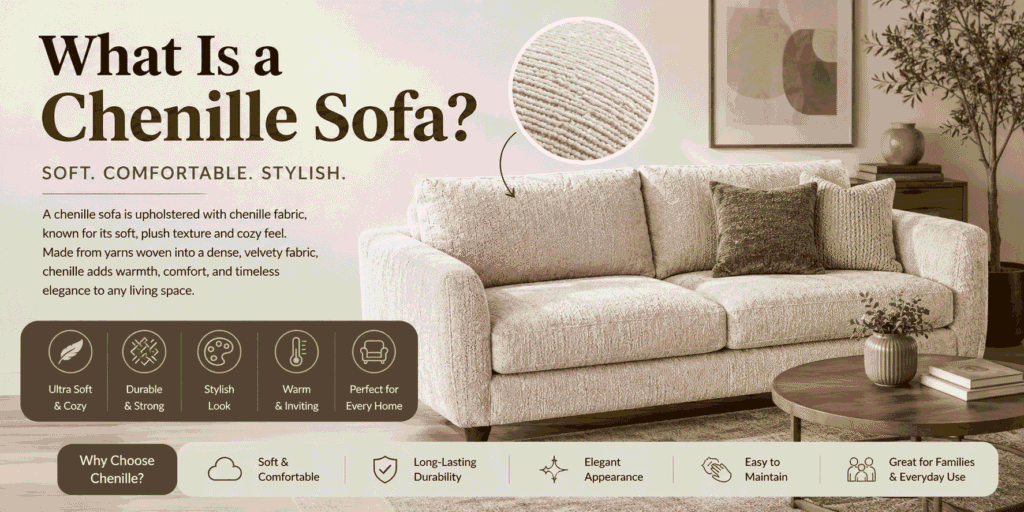
Chenille gets its name from the French word for “caterpillar”—a fitting description once you understand how the yarn is constructed. Short lengths of fiber are twisted between two core threads, creating a fuzzy, pile-like yarn that sticks out in every direction. When this yarn is woven into fabric, it creates chenille’s signature soft, slightly fuzzy surface.
This construction is what gives chenille its unmistakable depth and texture. Light catches the surface differently depending on the angle, which is why chenille sofas often look like they have subtle color variation even when they’re a single solid shade.
What Does Chenille Feel Like?
Chenille is often described as
- Plush — with noticeable depth and cushioning
- Cozy — warm to the touch, especially in cooler rooms
- Soft — comparable to velvet in many constructions
- Textured — has a tactile quality you can feel and see
Chenille Sofa Fabric Pros
- Exceptionally comfortable, plush seating surface
- Rich, attractive texture that adds visual depth
- Creates a warm, inviting appearance
- Offered in countless shades, tones, and distinctive design options.
- Can elevate a room with a premium, upscale look
Chenille Sofa Fabric Cons
- The textured pile can trap dust, crumbs, and pet hair depending on the weave.
- Some constructions are prone to snagging from claws or jewelry.
- Spills need prompt attention to avoid soaking into the pile.
- Performance varies significantly based on the fiber blend and manufacturing quality.
See our chenille sofa material guide. for a deeper breakdown of chenille fiber types and construction quality.
What Is Microfiber Sofa Fabric?
How Microfiber Is Made
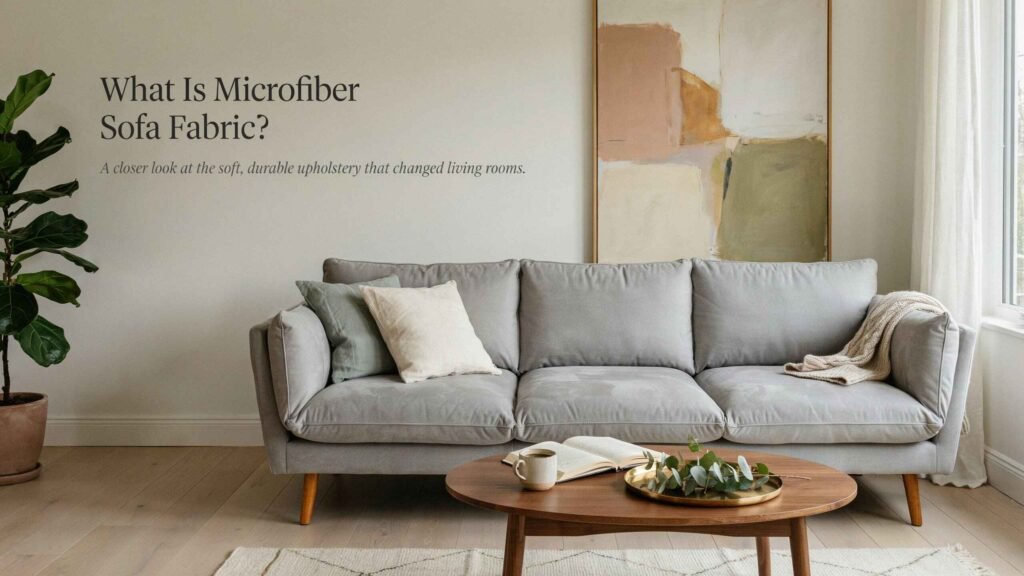
“Microfiber” refers to synthetic fibers—usually polyester, sometimes blended with nylon—that are engineered to be significantly finer than a human hair. These ultra-fine fibers are woven extremely tightly, which is what gives microfiber its smooth, almost suede-like surface.
Because the weave is so dense, microfiber fabrics tend to resist moisture penetration better than many natural or loosely woven fabrics, which is part of why microfiber has built a reputation as a practical, easy-care option.
Not all microfiber is identical, though. Depending on the finishing process, microfiber can range from a soft, brushed-suede texture to a smoother, more matte finish.
What Does Microfiber Feel Like?
- Smooth — a consistent, even surface
- Soft — gentle against skin, without excess texture
- Suede-like — in many popular constructions
- Comfortable — well-suited for everyday, high-use seating
Microfiber Sofa Fabric Pros
- Generally easier to maintain than natural or heavily textured fabrics
- Strong everyday durability for high-traffic households
- Usually offers good resistance to common stains
- Soft, comfortable feel without excessive upkeep
- A practical choice for high-use spaces like family rooms
Microfiber Sofa Fabric Cons
- Some constructions can develop visible watermarks or “watermarking” if not cleaned correctly.
- Cleaning requirements vary by cleaning code, so one-size-fits-all advice doesn’t apply.
- Certain finishes can still attract pet hair.
- The synthetic feel isn’t for everyone who prefers natural-fiber upholstery.
Read more in our microfiber sofa material guide.
Chenille vs. Microfiber: 7 Differences That Actually Matter
1. Chenille vs. Microfiber: Comfort and Softness
Comfort is often the deciding factor for people choosing between these two fabrics.
Chenille tends to feel plush and cushioned right from the first touch. Its raised, textured pile creates a cozy sensation that many people compare to a soft blanket. During long sitting sessions, this texture can feel especially comforting, particularly in colder climates.
Microfiber offers a different kind of comfort — smooth, consistent, and even. There’s no raised texture to notice, which some people prefer for a cleaner tactile experience. It doesn’t have chenille’s “cozy” quality, but its softness holds up consistently across the entire surface.
Verdict: If plush, cozy texture is your top priority, chenille has the edge. If you prefer a smooth, consistent feel, microfiber is the better match.
2. Chenille vs Microfiber: Durability
Durability depends on more than the fiber type alone — it’s shaped by weave density, fiber quality, seam construction, and how the fabric is finished.
Key factors that affect durability in both fabrics:
- Daily sitting and body weight distribution
- Abrasion from regular use
- Pilling over time
- Fraying at high-contact edges
- Snagging from pets, buttons, or jewelry
- Stress at seams
One useful benchmark is the Martindale rub count (or “double rub” rating in the U.S.), which measures how many rubbing cycles a fabric can withstand before showing wear. However, it’s important not to treat rub-count numbers as an automatic winner for either fabric—construction quality varies dramatically between manufacturers, so a well-made chenille can easily outlast a poorly made microfiber, and vice versa.
For a deeper dive into abrasion ratings, see our sofa fabric durability guide.
3. Chenille vs Microfiber: Stain Resistance
Stain performance depends on the type of spill as much as the fabric itself.
| Spill Type | Chenille | Microfiber |
|---|---|---|
| Water-based | Moderate | Generally good |
| Food | Moderate, needs prompt attention | Usually good |
| Oil-based | Can be more difficult | Varies by finish |
| Dirt/dust | Can settle into pile | Easier to wipe off |
| Pet accidents | Requires quick action | Usually easier to manage |
In general, microfiber’s tight weave gives it an edge in resisting surface stains, but fiber type alone doesn’t determine stain performance — the fabric’s finish, weave tightness, and any applied stain-resistant treatment all play a role. Regardless of fabric, spills should be addressed as quickly as possible for the best results.
4. Chenille vs. Microfiber: Cleaning and Maintenance
This is where the two fabrics diverge most in daily life.
General cleaning tasks to expect with either fabric:
- Regular vacuuming to remove dust and debris
- Spot cleaning for fresh spills
- Occasional deep cleaning
- Brushing to maintain texture (more relevant for chenille)
- Managing water marks (more relevant for microfiber)
Every upholstered sofa comes with a cleaning code—W (water-based cleaner only), S (solvent-based cleaner only), W/S (either), or X (vacuum only, no liquid cleaners). This code should always come from the sofa’s care label or manufacturer, never assumed based on the fabric name. A chenille sofa and a microfiber sofa can each carry any of these codes depending on how they were finished.
For step-by-step cleaning instructions, see our ultimate guide to sofa cleaning at home.
5. Chenille vs. Microfiber: Pets and Kids
For Dogs
- Claws: Textured chenille pile can be more prone to snagging than tightly woven microfiber.
- Hair: Both fabrics can trap hair, though smoother microfiber finishes are often easier to wipe clean.
- Dirt: Microfiber’s tighter weave generally sheds surface dirt more easily.
- Accidents: Faster cleanup is critical for both fabrics
For Cats
- Scratching: Smooth, tightly woven microfiber tends to resist claw damage better than raised-pile chenille.
- Hair: Similar considerations as dogs
- Snagging: Chenille’s looped or raised texture can be more vulnerable.
For Children
- Food spills, juice, and crumbs are common with both fabrics.
- Frequent cleaning is inevitable in households with young kids.
- Microfiber’s easier maintenance often makes it the more forgiving option day-to-day.
Verdict: There’s no single winner here — it depends on which specific challenges matter most in your home. Households with heavy scratching risk (cats) or frequent spills (young kids) often lean toward microfiber, while households prioritizing softness over scratch resistance may still prefer chenille.
6. Chenille vs. Microfiber: Appearance and Style
Chenille brings depth and richness to a room. Its raised texture catches light in a way that creates subtle shading and dimension, which is part of why it’s often associated with a more luxurious, traditional, or cozy aesthetic.
Microfiber, in contrast, offers a clean, streamlined appearance. Its smooth, uniform surface fits naturally into modern and minimalist interiors, and it photographs consistently since there’s no texture-based light variation.
Which looks more expensive? It depends on the room. Chenille often reads as more “designer” or opulent thanks to its texture, while high-quality microfiber can look sleek and tailored in a more contemporary space.
7. Chenille vs. Microfiber: Price and Overall Value
When comparing value, consider more than the sticker price:
- Initial purchase price—varies widely by brand, construction quality, and retailer; there’s no fixed rule that one fabric is always cheaper.
- Maintenance cost — microfiber often requires less frequent professional cleaning
- Expected lifespan — depends heavily on construction quality rather than fabric type alone
- Replacement frequency—higher-use households may replace fabric sooner if quality is low.
- Cleaning expenses—chenille may require more careful (and sometimes costlier) cleaning products
- Value for high-use households—microfiber’s easier upkeep often translates to better long-term value in busy homes.
Chenille vs Microfiber: Which Is More Durable?
“Durability” is one of the most searched questions in this comparison, and for good reason—nobody wants to replace a sofa after just a year or two.
Several factors influence how long either fabric will last:
- Abrasion resistance — how well the fabric withstands friction from daily sitting
- Weave and construction—tighter, denser weaves generally outperform looser ones.
- Fiber quality — higher-grade fibers resist pilling and fraying longer
- Fabric density — denser fabrics tend to hold their shape better
- Rub count — a useful (but not definitive) indicator of wear resistance
- Seam construction — reinforced seams reduce the risk of tearing
- Cushion usage—how the sofa is used daily affects wear patterns.
- Manufacturer specifications — always the most reliable source of truth
What Rub Count Should You Look For in a Sofa?
Rub count (measured via the Martindale test or double-rub test) gives you a general sense of a fabric’s wear resistance, but it shouldn’t be treated as an absolute threshold. A higher number generally suggests better durability for heavy use, but real-world performance also depends on construction quality, cushion fill, and frame support. When comparing sofas, ask the retailer or manufacturer for the specific rub count rather than assuming a number based on fabric type alone.
Which Is Easier to Clean: Chenille or Microfiber?
How to Clean Chenille
- Always refer to the manufacturer’s care instructions to identify the appropriate cleaning method for your fabric.
- Vacuum gently using a soft brush attachment
- Treat spills as quickly as possible
- Blot spills rather than scrubbing aggressively
- Test any cleaning product in an inconspicuous area first.
- Follow the manufacturer’s specific instructions.
How to Clean Microfiber
- Check the cleaning code (W, S, W/S, or X)
- Vacuum regularly to remove surface dust.
- Identify the type of stain before treating it.
- Use the cleaning method approved for that code
- Test any product in a hidden area first
- Allow the fabric to dry fully before sitting on it again.
Microfiber cleaning requirements vary substantially depending on the cleaning code assigned to your specific sofa, so it’s best not to rely on a single universal DIY solution for every microfiber piece.
Which Is Better for Pets: Chenille or Microfiber?
Best for Dog Owners
Microfiber’s tighter weave generally makes daily cleanup of hair and dirt easier.
Best for Cat Owners
Smooth, tightly woven microfiber typically holds up better against scratching than raised-pile chenille.
Best for Pet Hair
Results vary by surface finish — some microfiber finishes shed hair easily, while others can trap it. The same is true for chenille depending on pile depth.
Best for Scratching
Microfiber generally offers more scratch resistance thanks to its dense, flat weave.
Best for Pet Accidents
Both fabrics require prompt cleanup, but microfiber’s stain resistance often makes recovery easier.
Key point: Not every chenille or microfiber sofa behaves the same way. Surface texture and construction quality matter as much as the fiber type itself.
Which Is Better for Families With Kids?
Households with children face a predictable set of challenges: juice spills, food stains, mud, and daily wear from active use.
Quick Verdict: Microfiber generally has the practical advantage for households prioritizing easy maintenance and quick cleanup, while chenille can still be a great choice for families who value softness and visual texture and are willing to put in a bit more care.
Which Is Better for Hot or Cold Climates?
Fabric feel can shift depending on your climate and how your home is heated or cooled.
- Surface feel—Chenille’s texture often feels warmer to the touch; microfiber tends to feel cooler and smoother.
- Heat retention — denser, plush fabrics like chenille can retain more warmth
- Breathability — natural-fiber blends generally breathe better than tightly woven synthetics
- Room temperature — plays a bigger role in comfort than most people expect
- Fabric construction — weave density affects airflow regardless of fiber type
It’s best to avoid absolute claims here, since the specific fiber blend, weave, sofa construction, and your home’s climate all influence how a fabric actually feels day to day.
Chenille vs Microfiber: Pros and Cons
Chenille Pros & Cons
| Pros | Cons |
|---|---|
| Soft and plush | Can require more careful cleaning |
| Rich, dimensional texture | May snag depending on construction |
| Attractive, upscale appearance | Can trap debris in textured surfaces |
| Cozy, inviting feel | Performance varies by fiber and blend |
Microfiber Pros & Cons
| Pros | Cons |
|---|---|
| Easy everyday maintenance | Can show water marks on some fabrics |
| Soft, consistent feel | Less naturally textured |
| Good practical durability | Surface behavior varies by finish |
| Often stain-resistant | Synthetic feel isn’t for everyone |
Chenille vs Microfiber: Which One Should You Buy?
Instead of naming a single universal winner, here’s how to match the fabric to your lifestyle.
Choose Chenille If You:
- Prioritize softness and plush comfort
- Want a textured, dimensional appearance
- Prefer a cozy, luxurious aesthetic
- Don’t mind giving the fabric a bit of extra care
Choose Microfiber If You:
- Have young children
- Have pets, especially cats
- Expect heavy daily use
- Want easier routine maintenance
- Prioritize practicality over texture
Chenille vs Microfiber Decision Chart
| Your Priority | Better Starting Choice |
|---|---|
| Soft, plush feel | Chenille |
| Easy maintenance | Microfiber |
| Textured, luxury look | Chenille |
| Busy family room | Microfiber |
| Pet-friendly practicality | Microfiber |
| Cozy appearance | Chenille |
| Heavy everyday use | Microfiber |
| Low-maintenance lifestyle | Microfiber |
Disclaimer: This chart is a starting point, not a guarantee. The specific upholstery construction, fiber quality, and manufacturer specifications of the exact sofa you’re considering can shift the outcome in either direction.
Questions to Ask Before Buying a Chenille or Microfiber Sofa
Is chenille better than microfiber for sofas? It depends on your priorities. Chenille is better for softness and texture; microfiber is better for practicality and easy cleaning.
Is microfiber more durable than chenille? Generally, microfiber offers reliable everyday durability, but a high-quality chenille can be just as long-lasting depending on construction.
Which is easier to clean, chenille or microfiber? Microfiber is typically easier to clean thanks to its tight weave and common stain resistance.
Is chenille good for pets? It can be, but its textured pile may snag under cat claws more easily than a smooth microfiber surface.
Is microfiber good for families with kids? Yes, it’s one of the most popular choices for busy households because of its practical maintenance.
Does chenille stain easily? It can be more prone to visible staining if spills aren’t treated quickly, though this varies by construction.
Does microfiber attract pet hair? Some finishes do, while others shed hair more easily—it depends on the specific weave.
Which sofa fabric lasts the longest? Longevity depends more on construction quality and fiber grade than on fabric type alone.
Which fabric feels softer, chenille or microfiber? Chenille is often described as plusher and more textured; microfiber feels smooth and consistently soft.
Is chenille more expensive than microfiber? Pricing varies widely by brand and quality — there’s no universal rule that one is always more expensive.
Can you steam clean chenille? Only if the care label specifically allows water-based cleaning (W or W/S code). Always check first.
Can you steam clean microfiber? Only if the cleaning code permits water-based methods—some microfiber requires solvent-based cleaning only.
Final Verdict: Chenille vs. Microfiber — Which Is Better?
There’s no single “winner” in the chenille vs. microfiber debate—the better choice depends entirely on what matters most to you.
Choose chenille if softness, texture, and visual richness are your priorities, and you’re comfortable giving the fabric a little extra care.
Choose microfiber if easy maintenance, everyday practicality, and performance in a busy household matter more than plush texture.
Before you buy either fabric, always check:
- Fiber composition
- Fabric construction and weave density
- Abrasion (rub count) rating
- Cleaning code
- Warranty details
- Manufacturer’s specific care instructions
Editor’s Buying Checklist
Before purchasing either fabric, request a physical swatch and check the actual sofa’s fiber composition, abrasion rating, cleaning code, texture, and manufacturer’s care instructions. A swatch tells you far more than a product photo ever can—texture, thickness, and color all look different in person.
How to Check Sofa Fabric Quality Before You Buy
Check the Fabric Composition
Look for the specific fiber blend rather than relying on the general fabric name alone.
Check the abrasion rating.
Ask for the Martindale or double-rub count, and compare it against your expected usage level.
Check the cleaning code.
Confirm whether the fabric is rated W, S, W/S, or X before you commit.
Inspect the Weave
A tighter, denser weave generally signals better durability.
Check Seams and Stitching
Reinforced seams reduce the risk of tearing under regular use.
Ask About Warranty
A solid warranty often reflects the manufacturer’s confidence in the fabric’s durability.
Order a fabric swatch.
Always test the actual texture and color in your home’s lighting before buying.
Test the Fabric Against Your Lifestyle
Consider your household’s specific pets, kids, and daily use patterns — not just the fabric’s general reputation.
Chenille vs Microfiber vs Other Popular Sofa Fabrics
Chenille and microfiber aren’t the only upholstery options worth considering. Here’s how they compare briefly to other popular choices:
- Polyester — Similar synthetic durability to microfiber, though texture can vary widely. See our polyester vs. microfiber comparison.
- Velvet — Offers a similarly plush feel to chenille but with a smoother, sheenier surface. See our velvet vs. microfiber comparison.
- Linen — A natural-fiber option with excellent breathability but generally less stain resistance. See our linen vs. polyester comparison.
- Cotton — Breathable and soft, but typically less durable than synthetic blends for heavy use.
- Bouclé — Textured like chenille but with a distinct looped-yarn appearance.
- Faux leather — Extremely easy to wipe clean, though it lacks the softness of either chenille or microfiber.
For a closer look at chenille specifically against another popular synthetic, see our chenille vs. polyester comparison.
Frequently Asked Questions
Is chenille or microfiber better overall? Neither is universally better—chenille wins on softness and texture, while microfiber wins on practicality and easy maintenance.
Which lasts longer, chenille or microfiber? Longevity depends more on construction quality and fiber grade than the fabric category itself.
Is microfiber easier to clean than chenille? In most cases, yes, thanks to its tighter weave and common stain-resistant finishes.
Is chenille good for pets? It can work well, though households with cats should be cautious of its raised, snag-prone texture.
Is microfiber good for kids? Yes, it’s a popular choice among families for its practical, low-maintenance upkeep.
Which feels softer, chenille or microfiber? Chenille typically feels plusher and more textured; microfiber feels smoothly soft and consistent.
A final note: no article, checklist, or comparison guide can guarantee how a specific sofa will perform in your home. Always verify the fiber composition, cleaning code, and abrasion rating directly with the manufacturer before making your final decision.
External Sources
- Understanding Upholstery Fabric Cleaning Codes – Sailrite
- How to Clean a Microfiber Couch or Sofa – HGTV
- How to Clean a Microfiber Couch – Family Handyman
- How to Clean a Microfiber Couch – The Home Depot
- How to Clean a Microfiber Couch – Lowe’s
- Sofa Fabric Guide – All Types of Sofa Materials – Slumberland