
Introduction
If you’ve been furniture shopping recently, you’ve probably noticed one fabric popping up everywhere: bouclé. From curved statement chairs to oversized sectionals, bouclé sofa material has become the go-to choice for anyone chasing a soft, textured, effortlessly stylish living room.
But before you commit to a bouclé sofa, it helps to understand what the fabric actually is, how it performs day to day, and whether it fits your lifestyle. Bouclé looks incredible in photos, but it also comes with quirks — some wonderful, some worth knowing about in advance.
Bouclé sofas suit people who want a cosy, high-end look without going full velvet or leather. If you love texture, neutral tones, and a relaxed-but-elevated aesthetic, bouclé is likely a strong match. If you have young kids, shedding pets, or a high-traffic household, it deserves a closer look before you buy.
In this guide, you’ll learn what bouclé sofa material is made of, why it’s so popular, its pros and cons, how durable and comfortable it really is, how to clean and maintain it, how it compares to other upholstery fabrics, and how much you should expect to spend. By the end, you’ll know exactly whether a bouclé sofa is the right choice for your home.
Table of Contents
What Is Bouclé Sofa Material?
Bouclé sofa material is an upholstery fabric defined by its looped, knotted texture rather than by a single fibre type. The word describes a weave and yarn structure, not one specific material – which is why bouclé fabrics can vary quite a bit in feel, price, and durability from one sofa to the next.
What Does “Bouclé” Mean?
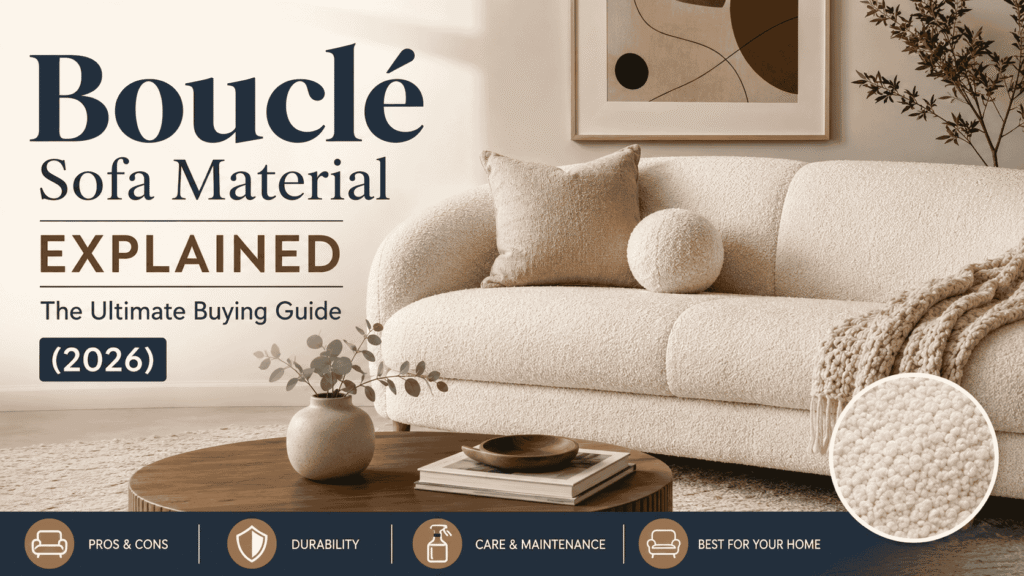
“Bouclé” is French for “curled” or “looped”. It refers to a yarn that’s spun with small loops, curls, and knots along its length, giving the finished fabric a bumpy, textured surface instead of a flat one. That looped structure is what creates bouclé’s signature nubby, almost sheep’s-wool appearance.
How Bouclé Fabric Is Made
Bouclé fabric starts with a special three-ply yarn: one thread stays taut, a second wraps around it loosely to form loops, and a third binds everything together. This yarn is then woven or knitted into fabric, which is why bouclé always has a slightly irregular, hand-crafted look even when it’s produced by machine. The looped construction also traps more air than flat weaves, which contributes to the fabric’s cushioned, cosy feel.
Materials Used to Make Bouclé Upholstery
Because bouclé is a weave style rather than a fibre, it can be made from several different materials, each affecting softness, price, and durability.
Polyester — The most common base for modern bouclé sofas. It’s affordable, resists fading, and holds up reasonably well to everyday wear.
Acrylic — Often used to mimic the look of wool at a lower price point. It’s soft, colourfast, and relatively easy to clean.
Wool — A traditional choice that offers superior softness and a natural, luxurious appearance, but it comes at a higher price and requires more careful cleaning.
Cotton blends – Add breathability and a slightly cooler feel, though pure cotton bouclé tends to wrinkle and wear faster than synthetic blends.
Performance fabric blends – Increasingly popular for bouclé sofas, these blends combine synthetic fibres with stain-resistant and moisture-wicking treatments, making them a smart pick for busy households.
History and Rise of Bouclé Furniture
Bouclé fabric isn’t new — it has roots in mid-century French design and was famously used by designers like Coco Chanel in tweed suits decades before it reached furniture. Its resurgence in home décor really took off in the late 2010s and accelerated through the early 2020s, driven by curved, sculptural furniture silhouettes and a broader shift toward soft minimalism. By 2026, bouclé has moved from a design-forward trend into a mainstream staple found across budget and luxury furniture brands alike.
Why Is Bouclé Sofa Material So Popular?
Bouclé’s popularity isn’t just about aesthetics – it hits a rare combination of comfort, style, and versatility that few upholstery fabrics manage at once.
Soft Teddy-Like Texture
The looped yarn structure gives bouclé a plush, slightly fuzzy hand-feel that many people compare to a teddy bear or sheepskin. This tactile quality makes bouclé sofas feel inviting the moment you touch them, which is a big part of their appeal in showrooms and living rooms alike.
Modern Luxury Appearance
Bouclé has an organic, textured richness that reads as high-end without looking overly formal. It photographs beautifully, which has helped fuel its popularity across interior design content and home décor marketing.
Comfortable for Everyday Use
Beyond looks, bouclé is genuinely pleasant to sit on. The fabric has a bit of give and warmth, making it comfortable for long movie nights, reading, or lounging.
Fits Multiple Interior Styles
One reason bouclé sofas sell so well is their versatility across design aesthetics.
Scandinavian — Bouclé’s neutral tones and soft texture align naturally with Scandinavian design’s focus on comfort and simplicity.
Minimalist — Its understated colour palette (often cream, oatmeal, or grey) complements clean, uncluttered spaces.
Modern — Curved bouclé sofas and chairs have become signature pieces in contemporary modern interiors.
Contemporary — The fabric pairs well with mixed materials like wood, brass, and glass common in contemporary rooms.
Japandi — Bouclé’s tactile warmth fits the Japandi blend of Japanese minimalism and Scandinavian cosiness.
Pros of Bouclé Sofa Material
Extremely Soft
Bouclé’s looped construction gives it a plush, cushioned feel that’s noticeably softer than flat-woven fabrics like linen or cotton canvas.
Elegant Appearance
The textured surface catches light in a way that adds visual depth, giving even simple sofa designs a more refined, expensive look.
Warm and Cosy
Because the loops trap air, bouclé sofas tend to feel warmer to the touch than smooth fabrics, making them especially appealing in cooler climates or seasons.
Comfortable Seating
Bouclé has a gentle give that makes it comfortable for extended sitting, without the slipperiness sometimes associated with velvet or leather.
Available in Many Colours
While neutrals dominate the market, bouclé is increasingly available in deeper tones — sage green, terracotta, navy, and charcoal — giving buyers more flexibility.
Adds Texture to Home Décor
In rooms filled with rigid surfaces and flat fabrics, a bouclé sofa introduces tactile contrast that makes the whole space feel more layered and intentional.
Cons of Bouclé Sofa Material
Can Snag Easily
The looped yarns that give bouclé its texture are also its weak point — pet claws, jewellery, or rough zips can catch and pull loops, creating visible snags.
Traps Dust and Pet Hair
That same textured surface is excellent at holding onto dust, crumbs, and pet hair, meaning bouclé sofas typically need more frequent vacuuming than smooth fabrics.
More Difficult to Deep Clean
Because of the raised loops, stains can settle into the texture rather than sitting on the surface, making deep cleaning more time-consuming than with flat weaves.
May Wear Faster in High-Traffic Homes
In busy households, especially with kids or multiple pets, the loops can flatten or pill faster than more traditional upholstery fabrics.
Usually More Expensive Than Standard Fabrics
Between the specialised yarn and weaving process, bouclé fabric generally costs more than polyester or linen blends, which is reflected in the final price of the sofa.
Bouclé Sofa Material Durability
Is Bouclé Durable?
Bouclé’s durability depends heavily on its fibre content. Polyester and performance-blend bouclé sofas tend to hold up well to daily use, while wool or loosely woven bouclé can show wear more quickly.
Rub Count Explained
Fabric durability for upholstery is often measured using a “rub count” or “double rub” test, which estimates how many rubbing cycles a fabric can withstand before showing wear, based on standards referenced by organisations like the International Organisation for Standardisation (ISO). Fabrics rated above 15,000 double rubs are generally considered suitable for heavy residential use, and it’s worth checking this number before buying a bouclé sofa.
Expected Lifespan
A well-made, properly cared-for bouclé sofa can last 7–10 years with normal residential use, similar to other mid-to-premium upholstery fabrics, though heavy daily use may shorten that range.
Performance in Busy Households
In homes with kids, pets, or frequent guests, bouclé performs best when it’s a performance-fabric blend rather than pure wool or loosely looped cotton, since tighter, synthetic-blend loops resist snagging and matting better.
Commercial vs. Residential Use
Standard bouclé is generally designed for residential settings. For commercial spaces like offices or waiting rooms, look specifically for “contract-grade” or commercial-rated bouclé, which is woven more densely and tested to higher rub counts.
Bouclé Sofa Material Comfort
Softness
Bouclé consistently ranks among the softer upholstery fabrics thanks to its looped, three-dimensional yarn structure, which creates a plush surface rather than a flat one.
Breath ability
Breath ability varies by fibre: cotton and wool-blend bouclé breathe better than fully synthetic polyester versions, which can feel slightly warmer in hot, humid conditions.
Temperature Throughout the Seasons
Bouclé’s air-trapping loops make it feel warm and cosy in colder months, though in very hot climates a lighter cotton-blend bouclé is usually more comfortable than a dense polyester one.
Everyday Sitting Experience
Overall, bouclé strikes a comfortable middle ground — softer and cosier than linen or cotton canvas but with more texture and grip than smooth velvet or leather.
Bouclé Sofa Material Maintenance & Cleaning
Weekly Cleaning Routine
A quick weekly vacuum session is the single most effective habit for keeping a bouclé sofa looking fresh, since it prevents dust and debris from settling deep into the loops.
Vacuuming Correctly
Use a soft upholstery brush attachment rather than a standard vacuum head, and vacuum in the direction of the loops to avoid pulling them loose.
Spot Cleaning Stains
Blot — don’t rub — spills immediately with a clean, dry cloth, then follow the manufacturer’s cleaning code (usually found on the tag) using either a water-based or solvent-based cleaner as specified.
Removing Pet Hair
A rubber pet-hair brush or a slightly damp microfiber cloth run gently over the surface can lift embedded pet hair more effectively than a standard vacuum alone.
Preventing Damage
Trim pet nails regularly; avoid placing bouclé sofas near rough zippers or Velcro; and use a fabric protector spray if the manufacturer approves it to reduce the risk of snagging.
Professional Cleaning Recommendations
For deep stains or annual refreshes, professional upholstery cleaning is recommended, particularly for wool bouclé, which is more sensitive to DIY cleaning methods than synthetic blends. Resources like Good Housekeeping and Consumer Reports regularly publish updated fabric-care comparisons that can help identify safe cleaning products for specific bouclé blends.
Is Bouclé Sofa Material Good for Pets?
Dogs
Bouclé can work well with calm, well-groomed dogs, but active dogs with long or sharp nails increase the risk of snagged loops.
Cats
Cats are generally the bigger risk factor, since their claws can easily catch and pull bouclé’s looped yarns – a tightly woven, synthetic-blend bouclé is safer than a loose wool weave if you have cats.
Pet Hair Issues
The textured surface of bouclé tends to trap pet hair more than smooth fabrics, so pet owners should expect more frequent vacuuming.
Scratch Resistance
Performance-blend or tightly looped polyester bouclé fabrics resist scratching better than loosely spun wool versions.
Best Tips for Pet Owners
Choose a densely woven, synthetic or performance-blend bouclé, keep pet nails trimmed, and consider a washable slipcover or throw for the most-used cushions.
Is Bouclé Sofa Material Good for Families with Kids?
Spill Resistance
Standard bouclé isn’t naturally spill-resistant, but performance-treated bouclé fabrics offer meaningfully better protection against everyday spills like juice or milk.
Cleaning Food Stains
Because stains can settle into the fabric’s loops, quick blotting and prompt spot cleaning are essential in households with young kids.
Long-Term Durability
Kids’ everyday wear and tear – jumping, crumbs, sticky hands – puts more strain on bouclé than adult-only households, so a higher rub count and stain-resistant treatment go a long way.
Practicality for Daily Use
For busy families, a performance-blend bouclé sofa in a mid-tone colour (rather than pure white or very dark) tends to hide daily wear best while still delivering the texture families love.
Bouclé Sofa Material vs Other Sofa Materials
Bouclé vs Velvet
Velvet offers a smooth, shiny luxury look, while bouclé provides a textured, matte cosiness. Velvet is generally more prone to crushing and watermarking, while bouclé is more prone to snagging.
Bouclé vs Chenille
Chenille is soft and durable with a subtle sheen, often at a lower price point than bouclé. Bouclé has more visible texture, while chenille tends to be smoother and slightly easier to clean.
Bouclé vs. Linen
Linen is breathable, casual, and durable but lacks bouclé’s plush softness. Linen also wrinkles more, while bouclé holds its textured shape better.
Bouclé vs. Polyester
Standard flat-weave polyester is typically more affordable, easier to clean, and more stain-resistant than bouclé, but it lacks bouclé’s signature cosy texture.
Bouclé vs Cotton
Cotton is breathable and easy to clean but can look and feel flatter than bouclé’s dimensional loops. Cotton is generally a better fit for hot climates.
Bouclé vs. Microfiber
Microfiber is highly stain-resistant and budget-friendly, making it more practical for high-traffic homes, though it doesn’t match bouclé’s upscale, textured aesthetic.
Comparison Table
| Material | Softness | Durability | Maintenance | Pet Friendly | Luxury Look |
|---|---|---|---|---|---|
| Bouclé | Very High | Medium | Moderate | Medium | Very High |
| Velvet | High | Medium | Moderate | Low | Very High |
| Chenille | High | High | Easy | Medium | High |
| Linen | Medium | High | Moderate | Medium | Medium |
| Polyester | Medium | High | Easy | High | Medium |
| Cotton | Medium | Medium | Easy | Medium | Medium |
| Microfiber | Medium | Very High | Very Easy | High | Low |
Best Rooms for a Bouclé Sofa
Living Room
The living room is the most popular spot for a bouclé sofa, where it can serve as a soft, textural centrepiece for gathering and relaxing.
Bedroom
A smaller bouclé loveseat or accent chair works beautifully at the foot of a bed or in a reading corner, adding warmth without overwhelming the space.
Reading Nook
Bouclé’s cosy, tactile quality makes it a natural fit for a dedicated reading nook or window seat.
Apartment
In smaller apartments, a light-coloured bouclé sofa adds texture and visual interest without taking up excessive visual “weight” the way darker, heavier fabrics can.
Office
In home offices or lounge-style workspaces, a bouclé accent chair introduces a soft, comfortable touch point amid more formal furniture.
How to Choose the Best Bouclé Sofa Material
Fabric Composition
Check whether the bouclé is polyester, acrylic, wool, or a blend — synthetic and performance blends generally offer better durability and easier cleaning for most households.
Colour Selection
Mid-tone neutrals like oatmeal, taupe, or warm grey tend to hide dust, pet hair, and minor stains better than pure white or very dark bouclé.
Cushion Quality
Look for a high-density foam or a foam-and-fibre blend cushion core, which holds its shape longer than basic foam alone.
Frame Quality
A kiln-dried hardwood frame is more durable and less prone to warping over time than particleboard or softwood frames.
Stitching
Inspect seams for tight, even stitching — loose or uneven seams are an early warning sign of a lower-quality sofa that may not hold up well over time.
Warranty
A solid warranty (ideally covering the frame for 5+ years and fabric/cushions for at least 1–2 years) is a good indicator of manufacturer confidence in the product’s durability.
Budget Considerations
Decide upfront whether you’re prioritising look, comfort, or long-term durability, since higher-end bouclé blends and construction typically cost more but last longer.
How Much Does a Bouclé Sofa Cost?
Budget Options
Entry-level bouclé sofas, often made with polyester bouclé over basic foam cushions, typically range from around $400–$900.
Mid-Range Sofas
Mid-range bouclé sofas with better foam, sturdier frames, and performance-blend fabric generally fall between $900 and $2,000.
Luxury Brands
Premium and designer bouclé sofas — often featuring wool blends, hardwood frames, and down-blend cushions — can range from $2,000 to well over $5,000.
Factors Affecting Price
Fibre content, frame material, cushion fill, brand reputation, and additional treatments like stain resistance all influence the final price of a bouclé sofa.
Is Bouclé Sofa Material Worth Buying?
Best for Luxury Homes
Bouclé’s elevated texture and neutral palette make it a strong fit for design-focused, higher-end homes.
Best for Modern Interiors
Its clean, sculptural compatibility with curved and minimalist furniture makes bouclé especially well-suited to modern and contemporary spaces.
Who Should Buy It
Bouclé sofas are a great match for individuals, couples, or low-traffic households who prioritise style, texture, and comfort and who are willing to maintain the fabric properly.
Who Should Avoid It
Households with very active pets, young kids prone to spills, or anyone wanting a low-maintenance, wipe-clean fabric may be better served by a performance polyester or microfibre sofa instead.
Frequently Asked Questions (FAQs)
Is bouclé sofa material durable? It can be, especially in polyester or performance-blend versions, but durability varies significantly depending on fibre content and weave tightness.
Does Bouclé attract pet hair? Yes, its looped texture tends to trap pet hair and dust more than smooth fabrics, requiring more frequent vacuuming.
Is Bouclé difficult to clean? It’s more involved than flat-weave fabrics because stains can settle into the loops, but regular vacuuming and prompt spot cleaning keep most bouclé sofas looking good.
Is Bouclé suitable for everyday use? Yes, particularly performance-blend bouclé, which is designed to withstand daily sitting, lounging, and general household activity.
Does Bouclé pill over time? Lower-quality or loosely woven bouclé can pill or flatten with heavy use, while tightly woven, higher-quality fabrics resist pilling better.
Is Bouclé fabric expensive? It’s generally pricier than basic polyester or cotton fabrics due to its specialised yarn and weaving process, though prices vary widely by brand and quality tier.
Can Bouclé sofas be professionally cleaned? Yes, and professional cleaning is recommended for deep stains or annual maintenance, especially for wool-blend bouclé.
Which colour of bouclé is easiest to maintain? Mid-tone neutrals like taupe, oatmeal, and warm grey tend to hide everyday dust, pet hair, and minor stains best.
Is Bouclé good for hot climates? Cotton-blend bouclé breathes better and feels cooler than dense polyester versions, making it a better choice for warmer climates.
How long does a Bouclé sofa last? With proper care, a good-quality bouclé sofa typically lasts 7–10 years, similar to other mid-to-premium upholstery fabrics.
Final Verdict
Bouclé sofa material earns its popularity honestly: it’s soft, textured, and effortlessly elevates modern and minimalist interiors. Its main drawbacks — snagging, dust retention, and more involved cleaning — are real, but manageable with the right fabric blend and a bit of routine care.
If you love a cosy, high-end aesthetic and don’t mind a little extra maintenance, a bouclé sofa is very likely worth the investment. If you have very active pets, small children prone to spills, or you simply want the lowest-maintenance option possible, a performance polyester or microfibre sofa may serve you better.
Either way, understanding what bouclé sofa material is — and how it performs in real homes — puts you in a much stronger position to choose the right sofa for your space and lifestyle.