
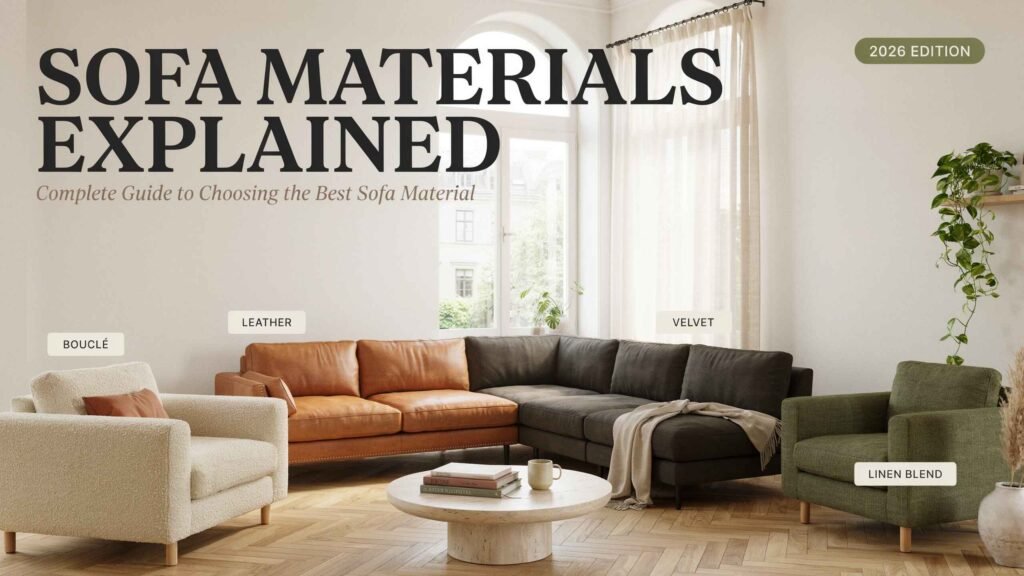
Introduction
Sofa Materials Explained — choosing the best sofa material is one of the most important decisions when buying furniture for your home. The right sofa upholstery affects comfort, durability, maintenance, appearance, and long-term value.
Today, there are many sofa materials available, including leather, fabric, velvet, microfiber, linen, and performance fabrics. Each material comes with different advantages and disadvantages depending on your lifestyle, budget, pets, children, and daily use.
In this complete guide, we explain the most popular sofa materials, compare leather vs fabric sofas, discuss which sofa material lasts the longest, and help you choose the right sofa for your living room. By the end, you’ll know exactly which sofa material fits your home and maintenance needs.
Table of Contents
Why Understanding Sofa Materials Matters
When it comes to buying a sofa, design and colour are important—but material is what truly determines comfort, durability, maintenance, and long-term value. That’s why Sofa Materials Explained is an essential topic for every homeowner before making a purchase.
Different sofa materials perform differently in everyday use. Some fabrics are soft and cosy but require regular cleaning, while others are more durable and easier to maintain. Choosing the wrong material can lead to faster wear, difficult cleaning, fading, or discomfort over time.
Understanding sofa materials helps you make a smarter buying decision based on your lifestyle. For example, families with kids or pets often benefit from stain-resistant and durable fabrics, while someone creating a luxury living space may prefer premium materials with a richer feel and appearance.
Another important factor is maintenance. Some sofa materials need professional cleaning, while others can be cleaned at home using simple methods. Knowing these details in advance can save both time and money in the future.
Sofa materials also affect comfort. Breathable fabrics feel cooler, while plush materials create a warmer and softer seating experience. The right choice depends on your climate, room usage, and personal preference.
In short, understanding sofa materials means choosing a sofa that looks good today and continues to perform well for years. That’s why learning Sofa Materials Explained is the first step toward selecting the perfect sofa for your home.
Different Types of Sofa Materials Explained
Choosing the right sofa is not only about design and color—it also depends on the material. In this Sofa Materials Explained guide, you’ll learn the different types of sofa materials, their advantages, disadvantages, maintenance needs, and which option fits your lifestyle best.
A sofa is one of the most used furniture pieces in any home, so selecting the correct material can improve comfort, durability, and long-term value.
Why Sofa Material Matters
The material of your sofa affects:
- Comfort level
- Durability and lifespan
- Cleaning and maintenance
- Appearance and style
- Cost and value
Some materials work better for families with kids and pets, while others are ideal for luxury interiors.
1. Fabric Sofa Material
Fabric is one of the most popular sofa materials because it offers comfort and variety.
Advantages:
- Soft and comfortable
- Available in many colors and textures
- Budget-friendly options available
- Warm feeling for daily use
Disadvantages:
- Can absorb stains and odors
- Requires regular cleaning
- May fade over time
Best For:
Families, everyday living rooms, and comfortable seating.
2. Leather Sofa Material
Leather sofas are known for their premium look and long lifespan.
Advantages:
- Elegant and luxurious appearance
- Easy to wipe and clean
- Durable when maintained properly
- Resistant to dust buildup
Disadvantages:
- Higher price
- Can scratch easily
- Feels cold in winter and warm in summer
Best For:
Modern homes and long-term furniture investment.
3. Faux Leather (Artificial Leather)
Faux leather offers a leather-like appearance at a lower cost.
Advantages:
- Affordable alternative to leather
- Easy maintenance
- Water-resistant surface
Disadvantages:
- Less durable than real leather
- May crack over time
Best For:
Budget-conscious buyers.
4. Velvet Sofa Material
Velvet gives a soft texture and premium appearance.
Advantages:
- Luxury look
- Extremely soft feel
- Adds elegance to interiors
Disadvantages:
- Attracts dust
- Requires careful maintenance
Best For:
Formal living spaces and decorative interiors.
5. Linen Sofa Material
Linen is a natural fabric that provides a clean and fresh appearance.
Advantages:
- Breathable material
- Lightweight feel
- Natural texture
Disadvantages:
- Wrinkles easily
- Stains can be difficult to remove.
Best For:
Minimalist and modern interiors.
6. Cotton Sofa Material
Cotton sofas are comfortable and commonly used.
Advantages:
- Soft and breathable
- Natural material
- Comfortable for everyday use
Disadvantages:
- Can stain easily
- May fade after long use
Best For:
Casual family homes.
7. Microfiber Sofa Material
Microfiber has become popular because of durability and easy maintenance.
Advantages:
- Resistant to stains
- Easy to clean
- Soft texture
Disadvantages:
- Attracts dust
- Can hold static electricity
Best For:
Homes with children and pets.
8. Chenille Sofa Material
Chenille has a thick, cozy texture.
Advantages:
- Comfortable and warm
- Rich appearance
- Durable construction
Disadvantages:
- Requires gentle cleaning
- May show wear over time
Best For:
Comfort-focused living rooms.
Quick Comparison of Sofa Materials
| Material | Comfort | Durability | Maintenance | Cost |
|---|---|---|---|---|
| Fabric | High | Medium | Medium | $$ |
| Leather | Medium | High | Easy | $$$$ |
| Faux Leather | Medium | Medium | Easy | $$ |
| Velvet | High | Medium | Moderate | $$$ |
| Linen | High | Medium | Moderate | $$$ |
| Cotton | High | Medium | Moderate | $$ |
| Microfiber | High | High | Easy | $$$ |
| Chenille | High | Medium | Moderate | $$$ |
How to Choose the Right Sofa Material
Before buying, ask yourself:
- Do you have children or pets?
- How often will the sofa be used?
- Do you prefer easy cleaning?
- Is durability more important than appearance?
- What is your budget?
For heavy daily use, microfiber and leather are usually practical choices. For comfort and style, fabric and velvet can be excellent options.
Final Thoughts
Understanding different sofa materials helps you choose furniture that matches your lifestyle and budget. This Sofa Materials Explained guide shows that there is no single perfect material—only the one that fits your needs.
Take time to compare comfort, durability, cleaning requirements, and appearance before making your final decision.
Sofa Material Comparison Table
Choosing the right sofa material can make a big difference in comfort, durability, maintenance, and overall appearance. This Sofa Materials Explained comparison table gives you a quick and easy way to understand the strengths and weaknesses of each material before making a decision.
Sofa Material Comparison Table
| Sofa Material | Comfort | Durability | Maintenance | Best For | Average Lifespan |
|---|---|---|---|---|---|
| Fabric | Soft and cozy | Moderate | Needs regular cleaning | Family living rooms | 5–10 years |
| Leather | Firm then soft over time | High | Easy to wipe clean | Luxury and long-term use | 10–15 years |
| Faux Leather | Smooth and modern | Moderate | Easy maintenance | Budget-friendly homes | 5–8 years |
| Velvet | Extremely soft | Moderate | Requires gentle care | Elegant interiors | 5–10 years |
| Linen | Light and breathable | Moderate | Wrinkles easily | Minimalist spaces | 5–7 years |
| Microfiber | Very comfortable | High | Stain-resistant | Homes with kids and pets | 7–10 years |
| Polyester Blend | Balanced comfort | High | Easy to maintain | Everyday use | 7–12 years |
| Chenille | Plush and warm | Moderate | Requires careful cleaning | Cozy living spaces | 6–10 years |
Quick Comparison of Popular Sofa Materials
Fabric Sofa
Fabric sofas offer comfort and a wide range of colors and textures. They are suitable for everyday use but may require more cleaning over time.
Leather Sofa
Leather is known for durability and premium appearance. It becomes softer with age and is easier to maintain than many fabric options.
Faux Leather Sofa
This material gives a leather-like appearance at a lower cost. It works well for modern interiors and easy cleaning.
Velvet Sofa
Velvet adds luxury and softness but usually needs extra care to maintain its appearance.
Linen Sofa
Linen creates a natural and breathable feel. It is ideal for airy interiors but may wrinkle more easily.
Microfiber Sofa
Microfiber is one of the best choices for busy households because it resists stains and handles daily use well.
Which Sofa Material Is Best?
There is no single best sofa material—it depends on your needs:
- Choose leather for durability and premium style.
- Choose microfiber for pets and children.
- Choose fabric for maximum comfort.
- Choose Velvet for luxury interiors.
- Choose a polyester blend for low maintenance.
Final Thoughts
This Sofa Materials Explained comparison table helps simplify the buying process by showing how each material performs in comfort, durability, cleaning, and lifespan. Compare your lifestyle, budget, and maintenance preferences before selecting the right sofa material for your home.
Which Sofa Material Lasts the Longest?
When buying a sofa, one of the biggest questions homeowners ask is, “Which sofa material lasts the longest?” A sofa is a long-term investment, and choosing the right material can save money, reduce maintenance, and keep your living space looking great for years.
The lifespan of a sofa depends mainly on the material quality, daily usage, maintenance, and environmental conditions. Some materials can last more than a decade, while others may show wear much sooner.
According to this furniture buying and durability guide, frame quality and upholstery material both affect sofa lifespan.
1. Leather – The Longest Lasting Sofa Material
Leather is often considered the most durable sofa material available. High-quality genuine leather can last 10–20 years or even longer with proper care.
Why Leather Lasts Longer:
- Strong and resistant to tearing
- Develops a natural aged look over time
- Easy to clean compared to fabric
- Handles daily use well
Best For:
- Families
- Luxury interiors
- Long-term value buyers
Considerations:
- Higher upfront cost
- Needs occasional conditioning
If long-term durability matters most, check our guide on how long should a sofa last to compare lifespan expectations.
2. Microfiber – Best Durable Fabric Option
Microfiber is one of the strongest fabric sofa materials and a popular choice for busy homes.
Benefits:
- Resistant to stains and spills
- Soft and comfortable
- Handles heavy use well
- Easy to maintain
Average Lifespan:
7–15 years
Best For:
- Homes with children
- Pet owners
- Everyday use
3. Polyester Blend – Strong and Budget-Friendly
Polyester blends are designed to improve durability while keeping costs lower than premium materials.
Benefits:
- Wrinkle-resistant
- Holds color well
- Less fading over time
- Affordable option
Average Lifespan:
5–10 years
Best For:
- Budget-conscious buyers
- Modern living rooms
4. Linen – Stylish but Less Durable
Linen creates a premium and breathable look but usually requires more care than other sofa materials.
Benefits:
- Elegant appearance
- Lightweight feel
- Natural fabric texture
Average Lifespan:
5–7 years
Drawbacks:
- Wrinkles easily
- Can wear faster with heavy use
5. Cotton – Comfortable but Moderate Lifespan
Cotton sofas provide comfort and softness but generally do not last as long as leather or microfiber.
Benefits:
- Breathable
- Natural feel
- Comfortable seating
Average Lifespan:
4–8 years
Best For:
- Light-use spaces
- Casual interiors
Quick Comparison Table
| Sofa Material | Durability | Maintenance | Average Lifespan |
|---|---|---|---|
| Leather | Excellent | Medium | 10–20+ Years |
| Microfiber | Very Good | Easy | 7–15 Years |
| Polyester Blend | Good | Easy | 5–10 Years |
| Linen | Moderate | Medium | 5–7 Years |
| Cotton | Moderate | Medium | 4–8 Years |
Factors That Affect Sofa Lifespan
Even the strongest sofa material needs proper care. These habits help extend sofa life:
- Vacuum regularly
- Rotate cushions
- Keep away from direct sunlight
- Clean spills immediately
- Follow manufacturer care instructions
Final Verdict
If you are asking Which Sofa Material Lasts the Longest?, the clear winner is high-quality leather because of its exceptional durability and long lifespan. However, if you want a balance between cost, comfort, and longevity, microfiber is one of the best choices.
Choose the material based on your lifestyle, budget, and how often the sofa will be used.
Best Sofa Materials for Different Needs
Choosing the right sofa is not only about design or colour—it also depends on the material. Different sofa materials offer different levels of comfort, durability, maintenance, and style. If you understand your needs first, selecting the perfect sofa becomes much easier.
In this guide, we explain the Best Sofa Materials for Different Needs so you can choose a sofa that fits your lifestyle and space.
1. Fabric Sofa – Best for Comfort and Everyday Use
Fabric sofas are among the most popular choices because they feel soft and comfortable and come in many colors and textures.
Best for:
- Families
- Everyday living rooms
- Budget-friendly setups
- Cozy interiors
Pros:
- Soft and comfortable
- Wide range of colors
- Usually more affordable
- Works with most interior styles
Cons:
- Can absorb stains
- Requires regular cleaning
- May wear faster than leather
If comfort is your main priority, fabric is one of the best sofa materials for different needs.
2. Leather Sofa – Best for Luxury and Long-Term Durability
Leather sofas create a premium and elegant appearance while offering excellent durability.
Best for:
- Modern homes
- Luxury interiors
- Easy cleaning
- Long-term use
Pros:
- Durable and long-lasting
- Easy to wipe clean
- Ages beautifully
- Resistant to dust
Cons:
- Higher cost
- Can feel cold or warm depending on weather
- Requires leather care
A leather sofa is ideal for homeowners looking for long-term value.
3. Velvet Sofa – Best for Elegant Interiors
Velvet gives a rich and luxurious feel that instantly upgrades a room.
Best for:
- Formal living rooms
- Stylish interiors
- Decorative spaces
Pros:
- Premium appearance
- Soft texture
- Available in bold colors
Cons:
- Needs careful maintenance
- Shows marks more easily
- Requires regular cleaning
For visual impact and elegance, velvet remains one of the best sofa materials for different needs.
4. Linen Sofa – Best for Breathable and Natural Feel
Linen is known for its lightweight and natural appearance.
Best for:
- Minimalist homes
- Warm climates
- Casual spaces
Pros:
- Breathable fabric
- Clean and modern look
- Comfortable in hot weather
Cons:
- Wrinkles easily
- Needs more maintenance
- Less stain resistant
Linen works well if you prefer natural materials and relaxed styling.
5. Microfiber Sofa – Best for Homes with Kids
Microfiber is designed to be practical and easy to maintain.
Best for:
- Families with children
- Daily use
- High-traffic areas
Pros:
- Stain-resistant
- Easy to clean
- Durable
- Comfortable texture
Cons:
- Can attract lint
- Less luxurious appearance
Microfiber is often considered one of the most practical choices among the best sofa materials for different needs.
6. Chenille Sofa – Best for Softness and Warm Feel
Chenille has a textured surface that creates a cozy and inviting look.
Best for:
- Comfortable family spaces
- Relaxed interiors
Pros:
- Extremely soft
- Warm appearance
- Comfortable seating
Cons:
- Requires regular care
- Can flatten over time
If softness matters most, chenille is worth considering.
7. Performance Fabric – Best for Active Households
Performance fabrics are designed for durability and stain resistance.
Best for:
- Homes with pets
- Busy families
- Long-lasting use
Pros:
- Water-resistant
- Easy maintenance
- Durable
- Modern appearance
Cons:
- Higher initial cost
Performance fabric has become one of the strongest options in the list of best sofa materials for different needs.
Quick Comparison Table
| Need | Recommended Sofa Material |
|---|
| Maximum Comfort | Fabric |
| Luxury Appearance | Leather |
| Elegant Interior | Velvet |
| Natural Feel | Linen |
| Kids & Family Use | Microfiber |
| Soft Seating | Chenille |
| Pets & Durability | Performance Fabric |
Final Thoughts
The Best Sofa Materials for Different Needs depend entirely on how you use your sofa. For comfort, choose fabric. For luxury and durability, choose leather. If you have children or pets, microfiber and performance fabrics are excellent options.
Before buying, always consider maintenance, lifestyle, budget, and how often the sofa will be used. A well-chosen material will improve both comfort and the lifespan of your sofa.
Common Mistakes to Avoid When Choosing Sofa Material
Common Mistakes to Avoid When Choosing Sofa Material
Choosing the right sofa material is one of the most important decisions when buying a sofa. Many people focus only on appearance and forget about durability, comfort, and maintenance. In this Sofa Materials Explained guide, you’ll learn the most common mistakes people make and how to avoid them so you can invest in a sofa that lasts for years.
- Choosing Appearance Over Practicality
A sofa may look beautiful in photos or a showroom, but appearance alone should never decide your purchase.
Ask yourself:
Will it match your daily lifestyle?
Is it suitable for children or pets?
Can it handle frequent use?
For example, light-colored fabrics may show stains more easily, while some delicate materials may wear out faster in busy households.
Tip: Balance style with real-life functionality.
- Ignoring Lifestyle and Household Needs
One of the biggest mistakes is choosing sofa material without considering who will use it.
Different homes have different requirements:
Families with kids → stain-resistant fabrics
Pet owners → scratch-resistant materials
Small apartments → easy-to-clean surfaces
Formal living rooms → premium finishes
The right material should fit your lifestyle, not just current design trends.
- Not Checking Durability
Many buyers regret choosing a sofa because they didn’t think about long-term durability.
Before purchasing:
Check fabric quality
Understand expected lifespan
Look for wear resistance
Ask about maintenance requirements
High-traffic homes need stronger upholstery materials that can handle everyday use.
- Forgetting About Cleaning and Maintenance
Some sofa materials require regular professional cleaning, while others are easier to maintain at home.
Questions to ask:
Can spills be cleaned quickly?
Does the material absorb odors?
Is deep cleaning difficult?
Low-maintenance materials often save time and money over the years.
- Overlooking Comfort
Comfort is just as important as appearance.
A sofa may feel perfect for five minutes in a store but uncomfortable after long-term use.
Test:
Texture
Temperature feel
Breathability
Cushion support
Always sit on the sofa before making a final decision whenever possible.
- Ignoring Climate Conditions
Climate affects sofa performance more than many buyers realise.
For example:
Humid environments may impact certain materials.
Hot climates often benefit from breathable fabrics.
Colder areas may work better with warmer textures.
Choose a material that performs well in your local environment.
- Following Trends Instead of Long-Term Value
Trendy materials often lose appeal quickly.
Instead of choosing what is popular today:
Focus on durability
Consider timeless styles
Think about replacement costs
A practical and durable sofa usually delivers better value than trend-driven choices.
- Not Testing Material Samples
Buying without touching or testing the material is another common mistake.
Whenever possible:
Request fabric swatches
Compare textures
View materials in natural lighting
Check color consistency
This small step can prevent expensive regrets later.
Final Thoughts
Understanding sofa materials before buying helps you avoid costly mistakes and choose a sofa that fits your home and lifestyle. This Sofa Materials Explained section shows that the best sofa material is not always the most expensive—it’s the one that matches your comfort, maintenance expectations, and everyday needs.
By avoiding these common mistakes, you can choose a sofa that stays comfortable, attractive, and functional for years.
Sofa Material Care & Maintenance Tips: Keep Your Sofa Looking New for Years
Your sofa is one of the most used pieces of furniture in your home. Whether it is fabric, leather, velvet, linen, or microfiber, proper care can extend its lifespan and maintain its comfort and appearance. These sofa material care & maintenance tips will help you protect your investment and keep your sofa fresh and clean.
Why Sofa Material Care Matters
Different sofa materials react differently to dust, stains, sunlight, moisture, and daily use. Regular maintenance prevents fading, cracking, odors, and premature wear while helping your sofa stay comfortable and attractive.
1. Identify Your Sofa Material First
Before cleaning or maintaining your sofa, understand what material it is made from.
Common sofa materials include:
- Fabric
- Leather
- Velvet
- Linen
- Microfiber
- Synthetic blends
Using the wrong cleaning method may damage the material permanently.
2. Vacuum Your Sofa Weekly
Dust, crumbs, pet hair, and dirt slowly damage sofa fibers.
Tips:
- Use a soft brush attachment.
- Clean cushions and corners carefully.
- Remove debris hidden under cushions.
- Vacuum both visible and hidden areas.
Weekly vacuuming reduces dirt buildup and improves sofa longevity.
3. Clean Spills Immediately
Quick action prevents stains from setting.
How:
- Blot the spill gently with a dry cloth.
- Avoid rubbing because it spreads stains.
- Use mild soap and water if suitable for the material.
- Test cleaning products in a hidden area first.
Fast cleaning is one of the most effective sofa material care & maintenance tips.
4. Protect the Sofa from Direct Sunlight
Continuous sunlight exposure can:
- Fade colors
- Dry out leather
- Weaken fabric fibers
Prevention:
- Place sofas away from windows.
- Use curtains or blinds.
- Rotate cushions regularly.
5. Rotate and Fluff Cushions Regularly
Cushions wear unevenly over time.
Maintenance routine:
- Rotate cushions every 1–2 weeks.
- Flip removable cushions.
- Fluff cushions to maintain shape.
This keeps your sofa comfortable and prevents sagging.
6. Use the Right Cleaning Method for Each Material
Fabric Sofa
- Vacuum regularly
- Spot clean stains
- Avoid excessive water
Leather Sofa
- Wipe with a soft cloth
- Use leather conditioner every few months
- Keep away from heat
Velvet Sofa
- Brush gently in one direction
- Avoid soaking with liquids
Linen Sofa
- Clean stains immediately
- Use gentle cleaning products
Microfiber Sofa
- Use rubbing alcohol for certain stains if manufacturer-approved
- Brush afterward to restore texture
7. Prevent Dust and Odors
Simple habits:
- Open windows for airflow
- Wash removable covers
- Use baking soda occasionally for odor control
- Avoid eating directly on the sofa.
8. Keep Pets Under Control
Pets can cause scratches, fur buildup, and stains.
Try these tips:
- Use washable covers
- Brush pets regularly
- Trim pet nails
- Create a separate pet seating area
9. Schedule Deep Cleaning
Even with regular care, sofas need deep cleaning.
Suggested frequency:
- Every 6–12 months for normal use
- More often for homes with kids or pets
Professional cleaning may be helpful for delicate materials.
Common Sofa Material Care Mistakes to Avoid
- Scrubbing stains aggressively
- Using harsh chemicals
- Overwetting fabric
- Ignoring manufacturer instructions
- Skipping regular maintenance
Final Thoughts
Following these sofa material care & maintenance tips can significantly increase the life of your sofa and preserve its appearance. Small habits like vacuuming, cleaning spills quickly, and protecting materials from sunlight make a big difference over time. Consistent care means your sofa stays comfortable, clean, and stylish for years.
Conclusion
Choosing the right sofa material is one of the most important decisions when buying a sofa because it affects comfort, durability, maintenance, and long-term value. Whether you prefer the luxurious look of leather, the softness of fabric, the durability of microfiber, or the modern appeal of velvet, understanding the pros and cons of each option helps you make a smarter choice.
This complete guide to Sofa Materials Explained showed how different materials perform in everyday use, cleaning requirements, family lifestyles, and budget considerations. The best sofa material ultimately depends on your home, usage needs, and personal style preferences.
Before making your final decision, compare durability, comfort level, maintenance effort, and how well the material fits your living space. A well-chosen sofa can remain comfortable and stylish for many years.
Have questions or experiences with different sofa materials? Share them in the comments and help others choose the perfect sofa.
Frequently Asked Questions
What is the best sofa material?
The best sofa material depends on your needs. For durability and luxury, leather is a strong choice. For comfort and variety, fabric sofas work well. If you want family-friendly performance, microfiber and performance fabrics are popular options.
Which sofa fabric is easiest to clean?
Microfiber is often considered the easiest sofa fabric to clean because it resists stains and can usually be cleaned with mild soap and water. Leather is also easy to wipe down and maintain.
What sofa material is best for pets?
For homes with pets, microfiber, tightly woven fabric, and leather are good choices. These materials resist fur buildup and are generally easier to clean. Avoid delicate fabrics like velvet or loose-weave linen if pets frequently use the sofa.
Is leather better than fabric?
Neither is universally better—it depends on lifestyle. Leather offers durability, easy maintenance, and a premium appearance. Fabric usually feels warmer, provides more colour options, and can be more budget-friendly.
Which sofa material lasts longest?
Genuine leather and high-quality performance fabrics typically last the longest when properly maintained. A well-built sofa with durable upholstery can remain in good condition for 10–15 years or more.