
Introduction
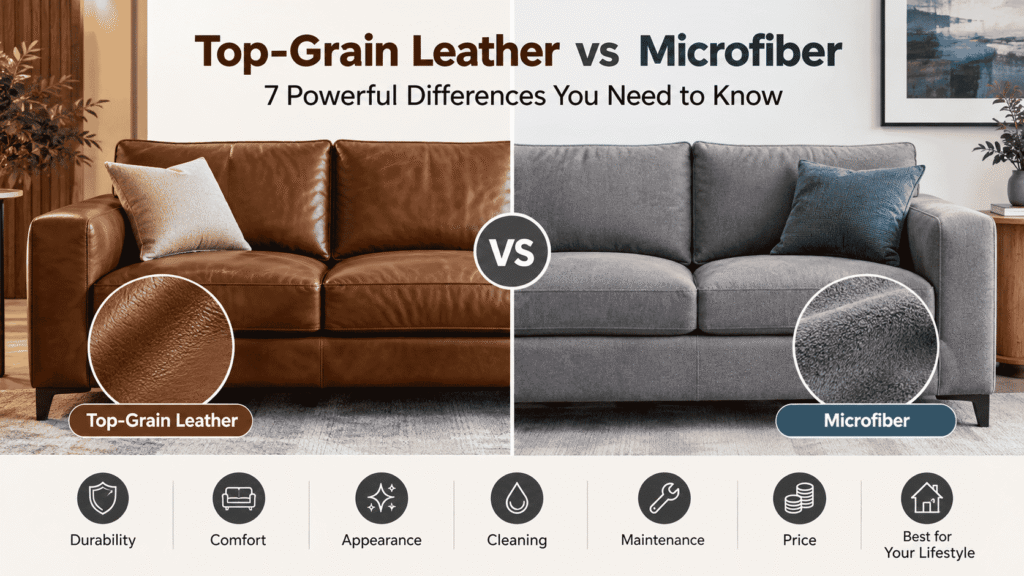
Choosing the right upholstery can make a major difference in how your sofa looks, feels, performs, and lasts. Two materials that often come up when comparing sofa upholstery are top-grain leather and microfiber. Both can be attractive and practical, but they offer very different experiences.
In this guide to top-grain leather vs. microfiber, we will compare these materials across seven important areas, including durability, comfort, appearance, cleaning, maintenance, price, and everyday use. We will also look at which material may suit families, pet owners, busy households, and people looking for a premium sofa.
There is no single upholstery material that is perfect for every home. Your lifestyle, budget, design preferences, and maintenance expectations should all influence your decision.
Let’s explore the differences so you can choose your sofa with greater confidence.
Table of Contents
What Is Top-Grain Leather?
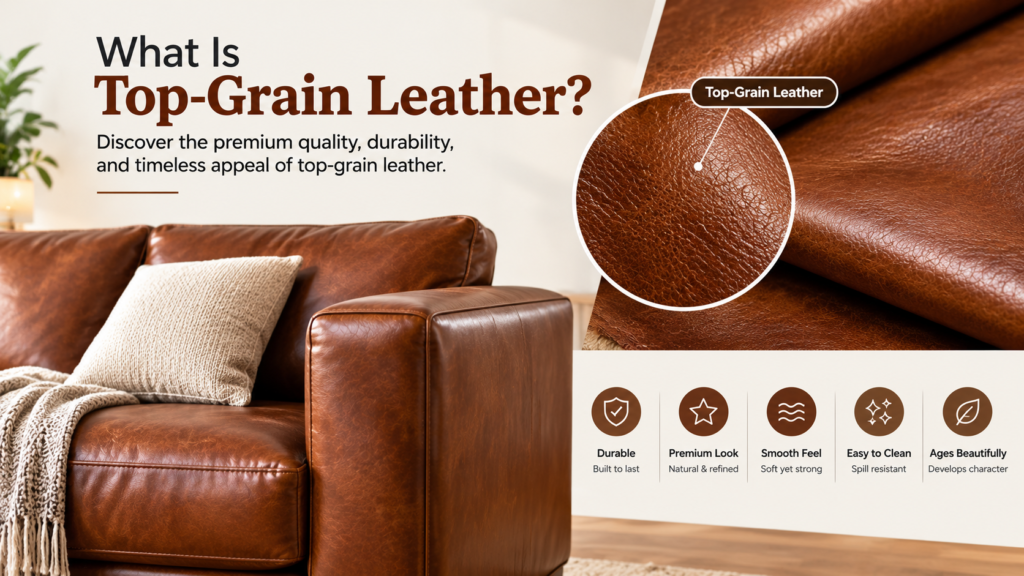
Top-grain leather is a natural leather made from the upper portion of an animal hide. It is generally regarded as a premium upholstery material because it retains much of the hide’s natural structure while receiving surface treatment to improve consistency and appearance.
Unlike heavily corrected leather, top-grain leather can retain natural characteristics such as subtle grain patterns and variations. Depending on the finish, it may have a smooth, refined appearance or a more natural look.
How Is Top-Grain Leather Made?
After the hide is selected and prepared, the surface may be lightly sanded or corrected to remove certain imperfections. It is then finished according to the desired appearance and performance characteristics.
The exact manufacturing process can vary between products, so not every top-grain leather sofa will look or perform exactly the same.
Key Features of Top-Grain Leather
Top-grain leather is commonly valued for:
- Its natural material composition
- Premium appearance
- Smooth or supple feel
- Strong surface
- Potential for long-term use
- Distinctive natural character
- Ability to develop a unique appearance over time
One important point is that leather quality is not determined by the label alone. Thickness, finish, construction, tanning process, stitching, frame quality, and cushion construction can all influence the overall performance of a sofa.
Pros of Top-Grain Leather
- Elegant and premium appearance
- Strong material for furniture upholstery
- Can age attractively
- Generally, leather is easy to wipe clean when it has the appropriate finish.
- Natural variations give each hide character
- Can work well in classic and contemporary interiors
Cons of Top-Grain Leather
- Usually costs more than many synthetic upholstery options
- Can be affected by sharp objects and pet claws
- Requires appropriate care
- Can feel different depending on room temperature
- Improper cleaning products can damage the finish.
What Is Microfiber?
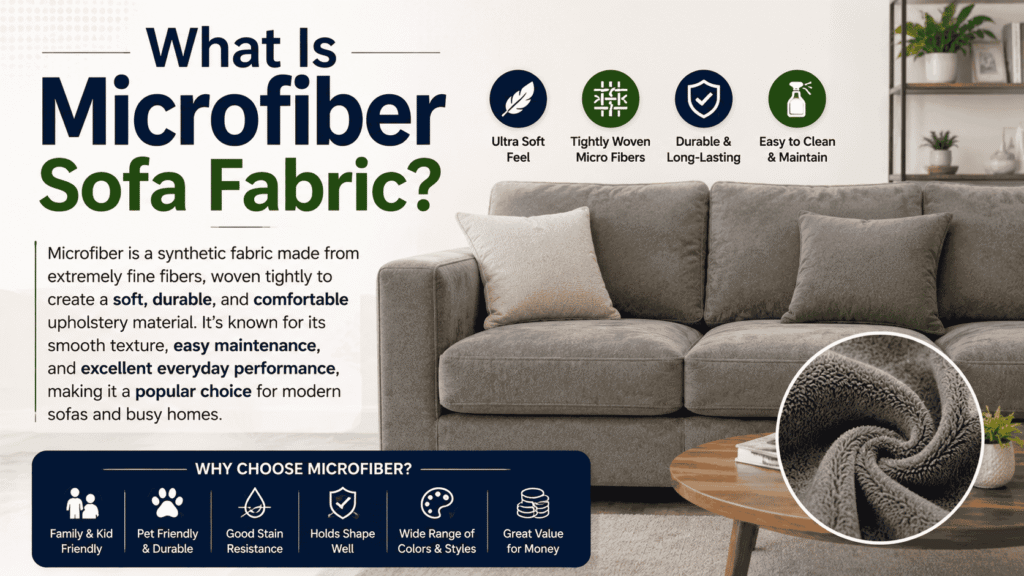
Microfiber is a synthetic textile made from extremely fine fibers. These fibers can be manufactured from materials such as polyester and other synthetic components, depending on the product.
Microfiber upholstery is popular because it can provide a soft, fabric-like surface while offering a practical option for everyday furniture.
Its appearance and performance can vary considerably depending on how the fibers are manufactured, woven, finished, and used in the sofa.
How Is Microfiber Made?
Microfiber uses very fine synthetic fibers that are processed into a textile suitable for different applications. For upholstery, manufacturers can produce different textures, colors, and finishes to create a particular look and feel.
This gives microfiber furniture a wide range of design possibilities.
Key Features of Microfiber
Microfiber is often known for:
- Soft texture
- Fabric-like feel
- Consistent appearance
- Wide color selection
- Practical everyday use
- Relatively straightforward routine care
- Compatibility with many interior styles
However, you should always check the manufacturer’s care instructions because cleaning methods and stain performance can differ between microfiber products.
Pros of Microfiber
- Soft and comfortable feel
- Available in many colors
- Suitable for casual and contemporary rooms
- Often less expensive than premium leather
- Can be practical for everyday use
- Does not have the natural variations found in leather
Cons of Microfiber
- Synthetic rather than natural
- May show wear in heavily used areas
- Texture can change depending on the fabric construction.
- Some stains may still require careful treatment.
- Quality varies significantly between products.
Top-Grain Leather vs. Microfiber: 7 Powerful Differences
Now let’s compare top-grain leather vs. microfiber across the factors that matter most when buying a sofa.
1. Durability and Longevity
Durability is one of the first things to consider when buying a sofa because upholstery must deal with sitting, movement, friction, spills, and everyday use.
Top-Grain Leather
Top-grain leather can be a durable upholstery choice when it is properly manufactured and maintained. Its natural structure gives it strength, while the finish can influence its resistance to everyday wear.
One advantage of leather is that its appearance can change over time rather than simply looking worn. Depending on the leather and finish, regular use may contribute to a deeper, more distinctive appearance.
However, leather is not scratch-proof. Sharp objects, pet claws, rough handling, and unsuitable cleaning products can damage its surface.
Microfiber
Microfiber can also be suitable for everyday sofa use. Its synthetic fibers can provide a practical upholstery surface, but its durability depends on fiber quality, construction, density, and manufacturing.
Heavy use can eventually create signs of wear, especially on cushions and other areas that receive frequent friction.
Which Should You Consider?
For buyers interested in a premium natural upholstery material and long-term ownership, top-grain leather may be appealing.
For buyers looking for a soft synthetic upholstery option designed for everyday use, microfiber may be worth considering.
The sofa’s frame, suspension, cushion filling, stitching, and construction should be evaluated alongside the upholstery.
2. Comfort and Feel
Comfort is highly personal. A material that feels luxurious to one person may not feel ideal to another.
How Top-Grain Leather Feels
Top-grain leather typically has a smooth or supple surface, although the exact feel depends on the finish and quality.
Leather can also respond to room temperature. It may initially feel cool in a cold room and warmer after your body has been in contact with it.
Many people appreciate leather because it feels substantial and develops character through use.
How Microfiber Feels
Microfiber generally has a soft, fabric-like texture. Its surface can feel comfortable for lounging and casual everyday use.
Because microfiber is a textile rather than leather, it provides a different tactile experience. Some people prefer its soft, warm fabric feel, while others prefer the smooth surface of leather.
Comfort Winner?
There is no universal answer.
If you prefer a smooth, premium surface with a natural feel, leather may appeal to you. Microfiber might be a better choice if you like upholstery that feels soft and fabric-like.
Remember that cushion design has a giant impact on sofa comfort. A high-quality cushion can make a bigger difference than upholstery alone.
3. Appearance and Style
Your sofa can become one of the largest visual elements in your living room, so appearance matters.
Top-Grain Leather Appearance
Top-grain leather often provides a refined and sophisticated appearance. Natural variations in the hide can give the material individuality.
Leather sofas can work particularly well in:
- Modern living rooms
- Traditional interiors
- Luxury spaces
- Offices
- Minimalist rooms
- Industrial-style interiors
The color and finish can dramatically change the final look.
Microfiber Appearance
Microfiber provides a more consistent textile appearance. It is available in many colors and can be used with different sofa designs.
It may work well in:
- Casual living rooms
- Family rooms
- Contemporary interiors
- Small apartments
- Modern homes
- Comfortable lounge spaces
Which Looks Better?
That depends entirely on your interior design preferences.
Top-grain leather can create a polished and sophisticated appearance, while microfiber can create a softer and more relaxed atmosphere.
Instead of choosing based only on photographs, consider how the sofa’s color, shape, texture, and upholstery will work with the rest of your room.
4. Cleaning and Stain Resistance
Cleaning is particularly important for households with children, pets, guests, or frequent sofa use.
Cleaning Top-Grain Leather
Leather can be relatively simple to wipe when the specific finish allows it. However, that does not mean every leather sofa should be cleaned with the same product.
A safe basic approach is
- Remove loose dust with a soft cloth or suitable vacuum attachment.
- Follow the manufacturer’s cleaning instructions.
- Use only products designed for the specific leather finish.
- Treat spills promptly.
- Avoid harsh household chemicals.
- Test any approved cleaning product in an inconspicuous area when appropriate.
Different leather finishes can have different cleaning requirements.
Cleaning Microfiber
Microfiber should also be cleaned according to the manufacturer’s instructions.
Before using a cleaning solution, check the sofa’s upholstery care code and product documentation. Some microfiber upholstery may tolerate particular cleaning methods, while other products require a more cautious approach.
A basic routine can include:
- Regular vacuuming
- Prompt removal of spills
- Gentle spot treatment
- Using appropriate upholstery products
- Avoiding excessive moisture
- Testing cleaning products before wider use
Which Is Easier to Clean?
The answer depends on the particular sofa and upholstery finish.
Leather can make certain surface spills easy to wipe, while microfiber can be practical for routine fabric care. Neither material should automatically be considered stain-proof.
The specific upholstery manufacturer’s cleaning instructions should always take priority.
5. Maintenance Requirements
A sofa can last longer when its upholstery and internal components receive appropriate care.
Maintaining Top-Grain Leather
Top-grain leather generally benefits from a consistent care routine.
Important habits include:
- Dusting regularly
- Removing spills quickly
- Using appropriate leather-care products
- Avoiding excessive heat
- Limiting prolonged exposure to harsh direct sunlight
- Keeping sharp objects away from the surface
Conditioning may be appropriate for some leather products, but you should follow the manufacturer’s recommendations rather than automatically applying conditioner to every leather sofa.
Maintaining Microfiber
Microfiber maintenance can include:
- Regular vacuuming
- Removing crumbs and loose dirt
- Treating spills quickly
- Following the correct upholstery cleaning method
- Avoiding unsuitable chemicals
- Brushing or restoring the surface when recommended by the manufacturer
Microfiber can be practical, but it is not maintenance-free.
Maintenance Comparison
The biggest difference is the type of care required.
Leather requires care appropriate to a natural leather surface and its finish. Microfiber requires textile-appropriate cleaning and stain management.
Your ideal choice may therefore depend on which type of maintenance you find easier to manage.
6. Price and Overall Value
Price is another major difference when comparing top-grain leather vs. microfiber.
Top-grain leather sofas are often positioned at a higher price point because natural leather is a premium upholstery material. However, the final price also depends on factors such as
- Leather quality
- Sofa size
- Frame construction
- Cushion quality
- Brand
- Design
- Manufacturing
- Additional features
Microfiber sofas can be available across a wide range of prices and may provide a more accessible option for buyers who want soft upholstery without paying for premium leather.
But the cheapest sofa is not always the best value.
Think Beyond the Initial Price
When comparing sofas, consider:
Purchase price + expected lifespan + maintenance + construction quality + comfort + warranty
A sofa that costs more initially may provide value if it meets your needs for many years. On the other hand, an affordable sofa can be a sensible choice if you want flexibility or expect to replace your furniture sooner.
The key is to compare the complete product rather than the upholstery price alone.
7. Best Choice for Different Homes and Lifestyles
The best upholstery depends heavily on how you use your sofa.
For Families With Children
Families often need upholstery that can handle frequent use and occasional spills.
Microfiber may appeal to families looking for soft, practical fabric upholstery. Top-grain leather can also work well when the household prefers a premium surface that can be wiped according to the leather’s care requirements.
Consider:
- Spill frequency
- Cleaning instructions
- Sofa color
- Daily usage
- Cushion durability
For Pet Owners
Pet owners should pay particular attention to claws, hair, stains, and odors.
Leather does not trap fabric fibers in the same way textiles can, but sharp claws can scratch its surface.
Microfiber can provide a soft surface, but pet hair and stains should still be managed regularly.
Neither material is automatically pet-proof.
For Luxury Interiors
Top-grain leather is often selected for premium interiors because of its natural appearance and refined character.
It can complement:
- High-end furniture
- Wooden flooring
- Minimalist décor
- Statement lighting
- Classic furniture
- Modern architectural spaces
For Casual Family Rooms
Microfiber can be attractive for people who prefer a relaxed, soft, fabric-like appearance.
Its broad selection of colors and textures makes it adaptable to many casual interiors.
For Long-Term Ownership
If you are planning to keep the same sofa for many years, look beyond upholstery.
Check:
- Frame material
- Joinery
- Suspension
- Cushion filling
- Stitching
- Upholstery quality
- Warranty
- Manufacturer reputation
A premium upholstery material cannot compensate for poor sofa construction.
Top-Grain Leather vs. Microfiber Comparison Table
| Feature | Top-Grain Leather | Microfiber |
|---|
| Material | Natural leather | Synthetic textile |
| Texture | Smooth or supple | Soft and fabric-like |
| Appearance | Natural variations | Generally more uniform |
| Durability | Can be highly durable with proper care | Suitable for everyday use depending on quality |
| Comfort | Smooth and substantial | Soft and textile-like |
| Cleaning | Requires leather-appropriate care | Requires upholstery-specific care |
| Maintenance | Regular leather care may be needed | Routine textile care |
| Scratch resistance | Can be vulnerable to sharp objects | Can also show wear from friction |
| Style | Premium, classic, modern | Casual, contemporary, versatile |
| Color options | Wide but finish-dependent | Usually extensive |
| Price | Often higher | Often more accessible |
| Aging | May develop a distinctive patina | Generally retains a textile appearance |
| Best suited to | Premium and long-term furniture | Practical everyday upholstery |
Is Top-Grain Leather Better for Families?
Top-grain leather can be a practical choice for families, but the decision depends on the family’s habits.
If your household frequently eats and drinks on the sofa, surface cleanability may be important. If children are likely to draw on, scratch, or otherwise abuse the upholstery, no material should be considered completely damage-proof.
Before buying, check the leather finish and cleaning instructions.
Also consider choosing a sofa with:
- Strong frame construction
- Durable cushions
- Quality stitching
- A practical color
- Easy-access cleaning areas
The upholstery is only one part of a family-friendly sofa.
Is Microfiber Good for Families?
Microfiber is often considered by families because of its soft texture and practical everyday characteristics.
However, you should still check the specific fabric’s cleaning instructions. Not all microfiber sofas are manufactured in exactly the same way.
For a family sofa, look for:
- Durable upholstery
- Strong seams
- High-quality cushions
- Easy-care instructions
- A color suitable for your household
- A sturdy frame
If your family uses the sofa heavily every day, construction quality should be one of your top priorities.
Is Top-Grain Leather Good for Pet Owners?
It can be, but there are important considerations.
Leather’s smooth surface may make some types of surface cleaning convenient, but claws can cause scratches or punctures. Pets that frequently jump onto furniture can therefore create challenges.
If you own pets and prefer leather, consider:
- Keeping pets’ claws trimmed
- Providing alternative pet furniture
- Cleaning spills quickly
- Protecting the sofa from sharp objects
- Following the leather manufacturer’s care recommendations
Always consider your individual pet’s behavior before choosing the upholstery.
Is Microfiber Good for Pet Owners?
Microfiber may be considered by pet owners because of its soft textile surface and wide range of available styles.
However, it is not automatically resistant to every pet-related problem.
Pet owners should think about:
- Hair
- Claws
- Mud
- Odors
- Accidental spills
- Frequent cleaning
Regular vacuuming and prompt spot treatment can help keep the sofa looking cleaner.
Again, the exact upholstery construction matters.
Which Material Is Easier to Clean?
There is no universal answer for every sofa.
A leather sofa with a suitable finish may allow some spills to be wiped from the surface relatively easily. However, inappropriate cleaning products can damage leather.
Microfiber may allow certain cleaning methods depending on its upholstery code and manufacturer’s instructions.
Therefore, don’t buy a sofa based solely on the assumption that one material is always easier to clean.
Instead, ask the seller:
- What is the upholstery cleaning code?
- Which cleaning products are recommended?
- What should be avoided?
- Is professional cleaning recommended?
- How should common spills be treated?
These questions can prevent expensive cleaning mistakes.
Which Material Is More Comfortable?
Comfort depends on your personal preference and the sofa’s construction.
Top-grain leather can provide a smooth, substantial seating experience. Microfiber tends to provide a softer, fabric-like surface.
But upholstery is only one part of comfort.
Also evaluate:
- Seat depth
- Seat height
- Cushion firmness
- Cushion filling
- Back support
- Armrest height
- Reclining features
- Overall sofa shape
A beautiful sofa can still be uncomfortable if its dimensions do not suit your body and sitting style.
Which Material Is More Stylish?
Style is subjective.
Top-grain leather often creates a sophisticated, structured appearance. It can work particularly well when you want the sofa to act as a strong design feature.
Microfiber can provide a softer and more relaxed look, especially when paired with plush cushions and casual sofa designs.
Think about the atmosphere you want:
For a refined appearance, top-grain leather may fit your design goals.
For a soft and relaxed appearance, microfiber may be worth considering.
The best choice is the one that works with your room rather than simply following a general style rule.
Which Material Should You Choose for a High-Use Sofa?
For a sofa that receives several hours of use every day, durability should be a major consideration.
But don’t focus only on leather versus microfiber.
A high-use sofa should have:
- A sturdy frame
- Reliable suspension
- Quality cushions
- Strong stitching
- Appropriate upholstery
- A suitable warranty
Top-grain leather can be an excellent option for buyers who value natural premium upholstery. Microfiber can be useful for buyers who prefer soft synthetic upholstery.
Your household’s actual usage pattern should determine the final decision.
5 Questions to Ask Before Buying
Before purchasing either type of sofa, ask these questions:
1. What exactly is the upholstery?
Don’t rely only on general terms such as “leather” or “microfiber.” Ask for the specific material and finish.
2. How should it be cleaned?
Get the manufacturer’s recommended cleaning method in writing when possible.
3. What is underneath the upholstery?
Ask about the frame, suspension, cushion filling, and overall construction.
4. What does the warranty cover?
Understand whether the warranty covers upholstery, frame, cushions, and manufacturing defects.
5. How will I use the sofa?
Consider children, pets, guests, working from home, daily lounging, and occasional use.
These questions can help you avoid choosing a sofa based on appearance alone.
Common Mistakes to Avoid When Choosing Sofa Upholstery
Choosing Only by Price
A low price can be attractive, but it does not tell you whether the sofa will provide the comfort and durability you need.
Ignoring the Sofa Frame
The frame supports the entire piece. Poor construction can shorten the useful life of a sofa regardless of upholstery quality.
Assuming Every Leather Sofa Is the Same
Different leather grades, finishes, thicknesses, and manufacturing methods can produce very different results.
Assuming Every Microfiber Sofa Is Identical
Microfiber quality, construction, texture, and care requirements can vary between products.
Ignoring Cleaning Instructions
Using the wrong product can cause discoloration, damage, or premature wear.
Buying Without Testing Comfort
Whenever possible, sit on the sofa before buying. Check seat depth, firmness, back support, and arm position.
Top-Grain Leather vs. Microfiber: Which One Should You Buy?
The answer depends on what matters most to you.
Top-Grain Leather May Suit You If You Want:
- Natural leather upholstery
- A premium appearance
- Smooth or supple texture
- Long-term furniture ownership
- A material that can develop character with age
- A sophisticated living-room style
Microfiber May Suit You If You Want:
- Soft fabric-like upholstery
- A relaxed appearance
- Broad color choices
- A synthetic material
- Practical everyday furniture
- Potentially lower upfront cost
Rather than asking which material is universally better, ask which material better matches your lifestyle, room, budget, and maintenance preferences.
How to Make the Final Decision
Use this simple checklist before placing your order:
Choose top-grain leather when:
You value natural leather, premium styling, and long-term ownership and are comfortable following leather-specific care instructions.
Consider microfiber when:
You prefer soft textile upholstery, want a wide range of colors and styles, and are looking for a practical everyday sofa.
Then look beyond the upholstery and compare the entire sofa.
Check its dimensions, frame, cushions, suspension, stitching, warranty, cleaning instructions, and return policy.
This approach will give you a much better idea of whether the sofa is actually right for your home.
Frequently Asked Questions
Is Top-Grain Leather better than microfiber for sofas?
Give a balanced comparison based on priorities.
Is microfiber more comfortable than leather?
Explain the difference in texture, temperature, and personal preference.
Does top-grain leather last longer than microfiber?
Discuss durability and the importance of sofa construction and care.
Is microfiber easier to clean than top-grain leather?
Explain that cleaning depends on the specific upholstery and manufacturer’s instructions.
Is top-grain leather good for homes with pets?
Discuss benefits and potential concerns such as scratches.
Is microfiber good for families with children?
Explain practical considerations around spills, stains, and maintenance.
Is top-grain leather worth the higher price?
Discuss value in terms of material quality, expected use, appearance, and ownership period.
Can microfiber look like leather?
Explain how synthetic upholstery can reproduce certain visual characteristics while retaining a different texture and construction.
Final Thoughts on Top-Grain Leather vs. Microfiber
The comparison between top-grain leather vs. microfiber comes down to more than appearance or price.
Top-grain leather offers a natural material, distinctive character, and a refined look that can work beautifully in premium living spaces. Microfiber provides a soft, fabric-like alternative with a consistent appearance and a wide variety of design possibilities.
Both materials have advantages and limitations.
Before buying, consider how frequently the sofa will be used, whether you have children or pets, how much maintenance you are willing to perform, what style you prefer, and how much you want to spend.
Most importantly, don’t judge a sofa by its upholstery alone. A quality frame, strong construction, comfortable cushions, appropriate dimensions, and a suitable warranty can have just as much impact on your long-term satisfaction.
Ready to Choose Your Sofa?
If you’re deciding between top-grain leather and microfiber, take a few extra minutes to compare the material, sofa construction, comfort, care requirements, warranty, and total price before purchasing.
The right sofa isn’t simply the one with the most expensive upholstery. It’s the one that fits your home, lifestyle, comfort preferences, and long-term needs.
Compare your options carefully, check the manufacturer’s specifications, and choose the upholstery that makes the most sense for the way you actually
Related Reading
- Linen Sofa Material
- Polyester Sofa Material
- Fabric Sofa Material
- How to Choose the Right Sofa Material
- Velvet Sofa Material
- Cotton Sofa Material
- Microfiber Sofa Material
- Chenille Sofa Material
- Leather Sofa Material
- Linen vs Cotton
- Velvet vs Polyester
- Leather vs Fabric Sofa
- Full-Grain Leather
External Links — Recommended Sequence
- Leather Naturally — leather characteristics and production
- American Leather Chemists Association — leather science and tanning
- Alliance for European Flax-Linen & Hemp — flax and linen information
- Textile Exchange — textile sustainability and natural fibers
- Consumer Reports — furniture buying guidance
- Good Housekeeping — furniture and sofa cleaning guidance