
Introduction
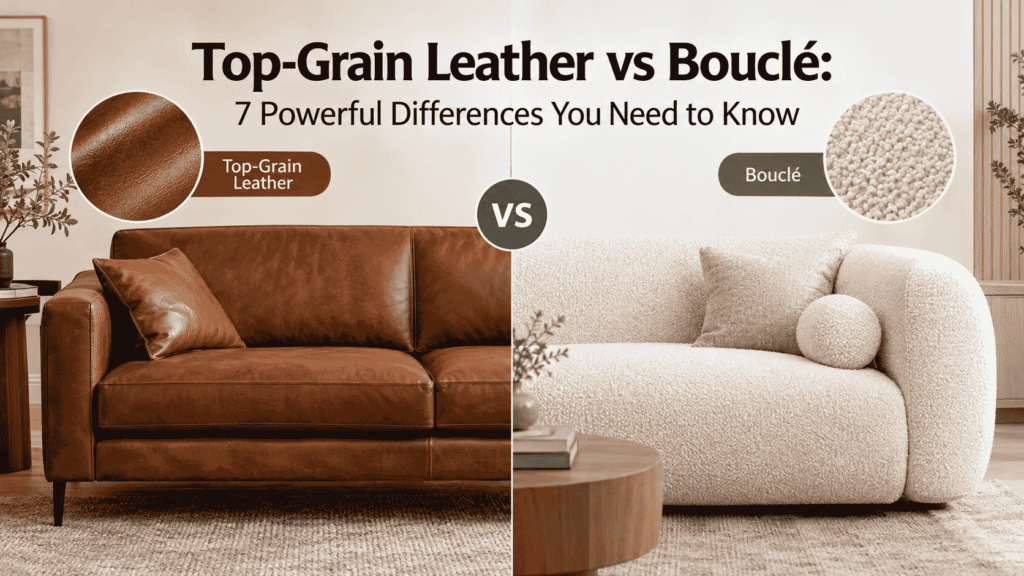
Choosing a sofa is rarely just about picking a color you like in the showroom. The upholstery you choose shapes how the piece looks today, how it feels five years from now, and how much work you’ll put into keeping it presentable. Two of the most requested options right now sit at opposite ends of the spectrum: top-grain leather and bouclé. One is smooth, structured, and classic. The other is soft, looped, and unmistakably modern.
The top-grain leather vs. bouclé decision isn’t about which material is objectively superior—it’s about which one matches your household, your cleaning habits, and the mood you want your living room to have. This guide walks through seven real differences between the two, so you can shop with a clear idea of what you’re actually buying.
Table of Contents
What Is Top-Grain Leather?
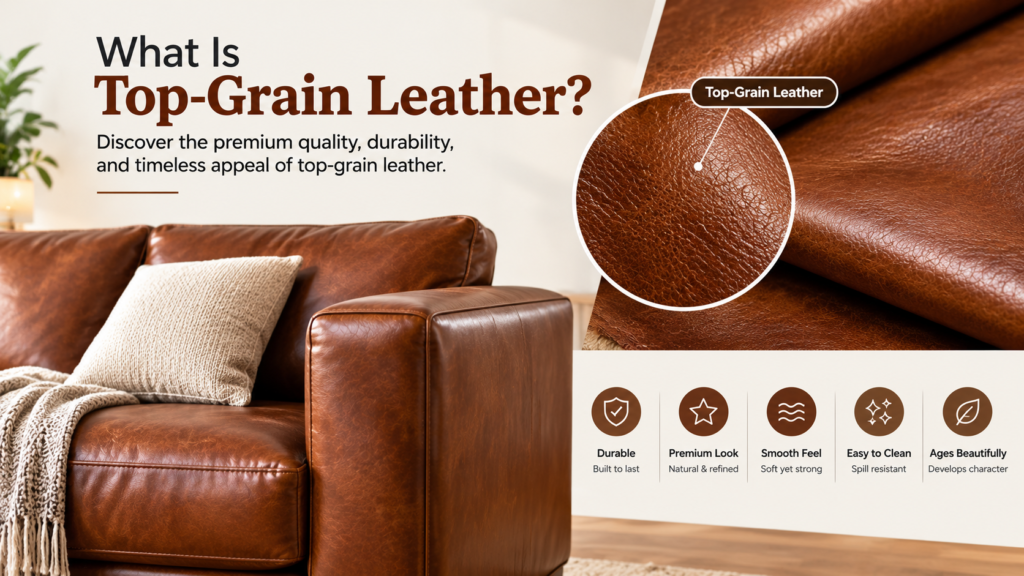
Top-grain leather is real animal hide, taken from the outer layer of the skin and lightly processed to smooth out natural blemishes while keeping much of its original texture. It sits just below full-grain leather in terms of how untouched the surface is, but it’s generally more consistent in appearance and slightly more resistant to staining, which is why furniture makers use it so often.
Not every top-grain leather sofa is finished the same way, though. Some carry an aniline finish that shows more of the hide’s natural markings; others get a pigmented coating that hides imperfections and adds extra surface protection. That single detail — the finish — often matters more to how the sofa performs than the “top-grain” label itself.
Typical characteristics of top-grain leather:
- Genuine hide construction
- Smooth surface, sometimes with light natural texture
- Refined, classic appearance
- Wide range of colors and finish types
- Strong durability when properly finished and cared for
- Develops a patina—a subtle change in appearance—with age and use
- Requires leather-appropriate cleaning products
What Is Bouclé?
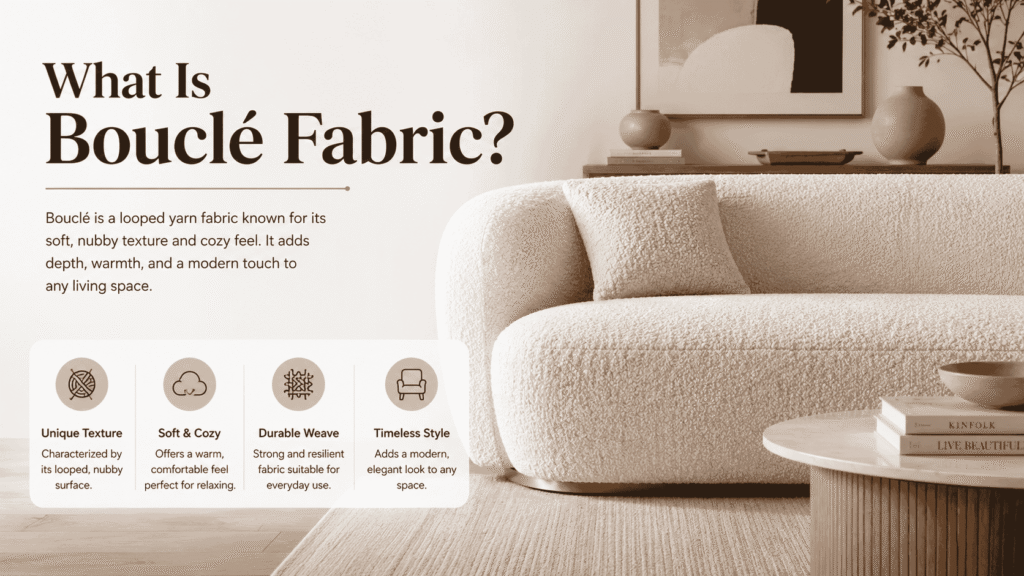
Bouclé isn’t a fiber—it’s a weaving style. The name comes from the French word for “buckled” or “curled,” describing yarn that loops back on itself during weaving instead of running straight. That looping is what gives bouclé its bumpy, textured surface and its reputation as one of the coziest-looking upholstery fabrics on the market right now.
Because bouclé is a construction method rather than a material, it can be made from wool, cotton, polyester, acrylic, or blends of several fibers. That means two bouclé sofas can behave completely differently depending on what’s actually woven into them—one might be a rugged, stain-resistant performance fabric, while another is a delicate decorative textile meant for light use.
Typical characteristics of bouclé:
- Distinctive looped, textured surface
- Soft, tactile feel
- Contemporary, cozy appearance
- Available in multiple fiber blends and colors
- Adds visual depth to plain furniture silhouettes
- Performance varies significantly by construction.
- Needs regular vacuuming and fabric-specific spot cleaning
Top-Grain Leather vs. Bouclé: 7 Key Differences
1. Durability and Longevity
Leather has a built-in advantage here: a well-finished hide is naturally resistant to everyday wear, and small scuffs often blend into the surface rather than standing out as damage. Many leather sofas can also be professionally reconditioned, which stretches their usable life well beyond what most fabrics can manage.
Bouclé’s durability is far less predictable. A dense, tightly woven performance-grade bouclé can genuinely rival leather in a high-traffic living room. A loosely constructed decorative bouclé, on the other hand, may start showing flattened loops and worn patches within a year or two of regular use—especially on the arms and seat edges, where friction is highest.
What to check before buying:
- Fiber content and weave density
- Abrasion or “rub count” ratings, if the manufacturer provides them
- Frame and cushion construction (not just the upholstery)
- Warranty terms
- Whether the fabric is residential or commercial grade
In short: leather tends to age more predictably, while bouclé’s lifespan depends heavily on the specific fabric you’re getting.
2. Comfort and Feel
There’s no universal winner here—comfort is subjective, and sofa design matters just as much as upholstery.
Leather feels cool and firm when you first sit down, then warms with body contact. It has a certain structure to it; you’re aware of the surface itself, not just the padding beneath it.
Bouclé feels soft from the first touch and stays that way. Its looped texture gives it a slightly bumpy, plush quality that many people find more relaxing to lean or curl up against—which is part of why it’s become so popular in cozy, Scandinavian-inspired interiors.
Leather may suit you if you:
- Prefer a smooth, structured surface
- Like a classic, substantial feel
- Want upholstery that doesn’t require a texture-matching throw or cushions
Bouclé may suit you if you:
- Enjoy tactile, textured fabrics
- Want your sofa to feel soft even before you sit down
- Like a relaxed, informal seating experience
3. Appearance and Interior Style
Leather brings a timeless, slightly formal quality to a room. Because its surface is smooth and doesn’t compete visually with other elements, it tends to work across a wide range of interior styles—traditional, industrial, mid-century, and even minimalist spaces.
Bouclé is a texture-first fabric. Its loops create depth and visual interest on their own, without needing pattern or bold color, which is precisely why it’s become a signature choice in modern, soft-minimalist, and Scandinavian-style rooms. It can look slightly out of place in very formal or heavily traditional interiors, where smoother fabrics or leather tend to read better.
Leather generally complements:
- Classic and traditional living rooms
- Industrial and loft-style spaces
- Contemporary and minimalist interiors
- Formal seating areas and home offices
Bouclé generally complements:
- Scandinavian and soft-minimalist interiors
- Modern, neutral-toned living rooms
- Cozy, informal family spaces
- Contemporary furniture pairings
4. Cleaning and Maintenance
This is where the two materials diverge the most in daily practice.
Leather’s smooth, non-porous surface means most spills can simply be wiped away if you act quickly—no absorption, no staining in most cases. The trade-off is that leather is finish-sensitive: using the wrong cleaner, or skipping a spot test, can dull or discolor the surface. A simple leather-care routine looks like this:
- Dust and wipe with a soft, dry cloth regularly.
- Blot spills immediately—don’t rub.
- Use only leather-specific cleaners, and always spot-test first.
- Avoid direct sunlight and heat sources, which can dry and crack the finish.
- Condition occasionally, following the manufacturer’s specific recommendation.
Bouclé needs a more routine approach. Its loops naturally trap dust, crumbs, and pet hair, so it benefits from regular vacuuming with a soft brush attachment. Spills need faster attention than they would on leather, because the textured surface can hold liquid rather than letting it sit on top. Always check the fabric’s cleaning code (W, S, WS, or X) before using any product—bouclé fabrics vary enough that a method that works on one sofa can damage another.
Golden rule: never assume a cleaning method that worked on a friend’s sofa will work on yours, even if the material sounds identical.
5. Stains, Spills, Pets, and Everyday Mess
For households with kids or pets, the material is often the deciding factor.
Leather generally handles quick spills well and doesn’t absorb pet hair the way fabric does—a quick wipe usually keeps it looking clean. Its main weakness is claws: cats and energetic dogs can leave scratches that are difficult to fully reverse, especially on softer or unprotected finishes.
Bouclé’s loops can trap hair and small debris more than a flat weave would, and a determined pet can snag or pull individual loops loose over time. On the plus side, many manufacturers now produce performance bouclé specifically engineered to resist stains, spills, and everyday household wear—closing much of the gap with leather.
Before buying a leather sofa, ask:
- What finish is used, and is it protected or untreated?
- How scratch-resistant is this specific finish?
- What cleaning products does the manufacturer recommend?
- What’s covered under warranty?
Before buying a bouclé sofa, ask:
- What is the fiber content?
- Is this a performance-rated fabric?
- What’s the cleaning code?
- Is it specifically rated for pet households?
6. Price and Overall Value
Genuine leather typically costs more upfront than fabric upholstery—real hide requires more processing, and quality control adds cost. But price isn’t determined by material alone. Frame construction, cushion fill, brand reputation, and finish quality all move the number significantly.
Bouclé spans an equally wide price range. An entry-level bouclé-style fabric on a mass-market sofa can be inexpensive, while a premium performance bouclé from a reputable textile brand can cost as much as, or more than, a mid-tier leather option.
Instead of asking, “Which material is cheaper?” ask:
“Which sofa gives me the right combination of comfort, durability, and maintenance for what I’m willing to spend?”
A cheaper sofa with a weak frame and thin cushions will rarely outlast a well-built sofa in either material.
7.Lifestyle and Best Use
At the end of the day, this comparison comes down to how you actually live.
Top-grain leather tends to work well if you:
- Want a low-effort response to everyday spills
- Prefer a smooth, structured look
- Like the idea of a sofa developing character over time
- Are comfortable following leather-specific care steps
Bouclé tends to work well if you:
- Want a cozy, textured, contemporary look
- Don’t mind a slightly more hands-on cleaning routine
- Are you shopping specifically for a performance-rated fabric if pets or kids are involved?
- Value tactile comfort as much as visual style
Quick Comparison Table
| Feature | Top-Grain Leather | Bouclé |
|---|---|---|
| Material | Genuine animal hide | Looped textile weave |
| Surface feel | Smooth, firm | Soft, textured |
| Appearance | Refined, timeless | Cozy, contemporary |
| Durability | Generally strong, finish-dependent | Varies widely by fiber/weave |
| Cleaning | Wipe-friendly, finish-sensitive | Requires vacuuming + fabric-specific care |
| Pet risk | Scratching | Snagging, trapped hair |
| Price range | Often premium | Wide — budget to premium |
| Best interior fit | Classic, industrial, modern | Scandinavian, soft-minimalist, modern |
Pros and Cons at a Glance
Top-Grain Leather
✅ Premium, timeless look • Generally durable • Straightforward spill cleanup • Develops character with age
❌ Higher upfront cost • Can scratch • Finish-sensitive to cleaning products • Performance varies by finish type.
Bouclé
✅ Soft, inviting texture • Modern, on-trend look • Wide range of fibers/colors • Performance versions available
❌ Traps dust and hair • Cleaning varies by fabric. • Loops can snag. • Not ideal for very formal interiors
For Families
The material label matters less than the specific finish or fabric grade. Leather generally offers faster spill cleanup, which is a real advantage during messy toddler years. Bouclé needs a bit more patience with cleaning but tends to disguise everyday grime—crumbs, smudges—better than a smooth surface does. Either material can work well for a family home as long as you check the specific care requirements before buying.
For Pet Owners
Neither material is automatically “pet-proof.” Leather’s main risk is scratching; bouclé’s is snagging and trapped hair. If pets are a major factor in your decision, look specifically for performance-treated leather or performance bouclé—both categories now exist and are built with exactly this scenario in mind.
How to Decide: 7 Quick Questions
- How heavily will the sofa be used day to day?
- Do you have young children at home?
- Do you have pets, and how active are they?
- Do you prefer a smooth surface or a soft, textured one?
- Does your room lean classic or contemporary?
- How much routine maintenance are you realistically willing to do?
- What’s your total budget for the sofa—not just the upholstery?
Frequently Asked Questions
Is top-grain leather better than bouclé?
Top-grain leather vs. bouclé is not simply a matter of one material being better. They have different characteristics. Top-grain leather offers a smooth, premium appearance, while bouclé provides soft texture and a contemporary look. Your lifestyle and maintenance preferences should guide the decision.
Is bouclé harder to clean than leather?
Bouclé can require careful cleaning because its textured surface may hold dust, hair, and debris. However, performance bouclé fabrics can be designed for easier cleaning. Always check the specific fabric’s care instructions.
Is top-grain leather good for families?
Top-grain leather can be suitable for family homes, but the exact leather finish and sofa construction matter. Families should consider spills, scratches, cleaning requirements, and daily use before buying.
Is bouclé good for homes with pets?
Bouclé can work in homes with pets, but the specific fabric matters. Some looped fabrics may require extra care around claws and hair. Performance upholstery options may offer additional practical features.
Which lasts longer, top-grain leather or bouclé?
There is no universal lifespan for either material. Leather can be highly durable, while bouclé performance depends heavily on its fiber, weave, construction, and usage. The quality of the sofa itself also plays an important role.
Is bouclé more comfortable than leather?
Comfort depends on personal preference and sofa construction. Bouclé generally provides a soft, textured feel, while leather provides a smoother surface. Cushion design and seat construction are also important.
Is top-grain leather worth the price?
Top-grain leather may be worthwhile for buyers who value its appearance, feel, durability characteristics, and long-term use. However, the value of any sofa depends on the complete product, not just its upholstery.
Which is easier to maintain: top-grain leather or bouclé?
Both require appropriate maintenance. Leather generally requires leather-specific cleaning and care, while bouclé requires fabric-specific cleaning. The exact finish and manufacturer’s instructions should always be considered.
Final Thoughts
Top-grain leather vs. bouclé isn’t a contest with one correct answer—it’s a trade-off between two very different upholstery experiences. Leather offers a smooth, classic surface that rewards quick cleanup and ages with character. Bouclé offers a soft, textured, contemporary feel that rewards a bit more routine attention.
Before you buy either, look past the material name. Check the specific finish or fiber content, the frame and cushion quality, the warranty, and the manufacturer’s actual care instructions. The sofa that serves you best isn’t necessarily the one with the more expensive-sounding upholstery—it’s the one built to match how your household actually lives.
Related Reading
- Linen Sofa Material
- Polyester Sofa Material
- Fabric Sofa Material
- How to Choose the Right Sofa Material
- Velvet Sofa Material
- Cotton Sofa Material
- Microfiber Sofa Material
- Chenille Sofa Material
- Leather Sofa Material
- Linen vs Cotton
- Velvet vs Polyester
- Leather vs Fabric Sofa
- Full-Grain Leather
External Links — Recommended Sequence
Further reading on materials and furniture buying:
- Background on leather production: Leather Naturally
- Technical leather science: American Leather Chemists Association
- Furniture buying advice: Consumer Reports
- Textile and fiber sustainability information: Textile Exchange