
Introduction
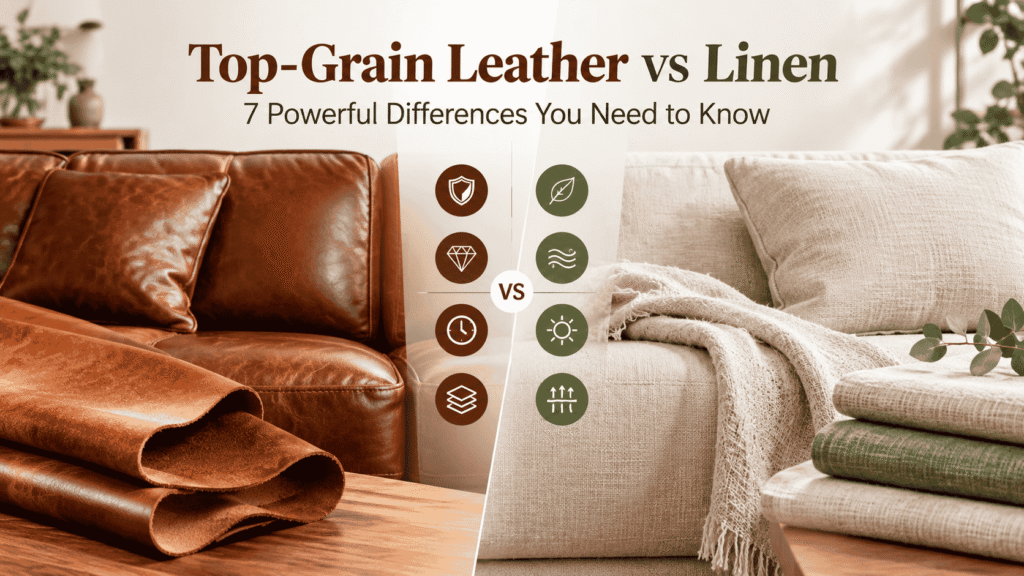
Choosing the right sofa material can make a big difference in comfort, appearance, maintenance, and long-term value. If you are comparing top-grain leather vs. linen, both materials have attractive qualities, but they suit different lifestyles and preferences.
Top-grain leather offers a premium appearance, strong durability, and a smooth feel, while linen provides a natural texture, excellent breathability, and a relaxed look. The better option depends on how you use your sofa, your home environment, your maintenance expectations, and your budget.
In this guide, we compare top-grain leather vs. linen across seven important areas so you can make a confident sofa-buying decision.
Table of Contents
What Is Top-Grain Leather?
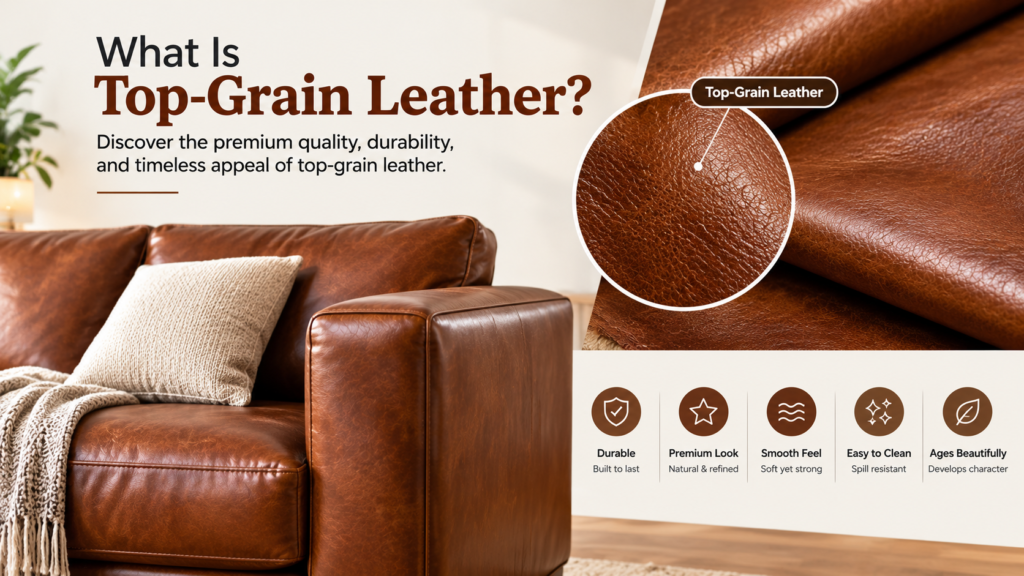
Top-grain leather is a high-quality type of leather commonly used for furniture and premium sofas. It is made from the outer layer of an animal hide, with the surface lightly corrected or finished to create a more consistent appearance.
Compared with heavily corrected leather, top-grain leather generally retains more of the hide’s natural character. It can offer a smooth, refined appearance while still providing the strength expected from a quality upholstery material.
One important point is that top-grain leather and full-grain leather are not exactly the same. Full-grain leather retains the natural grain with minimal surface alteration, whereas top-grain leather may be lightly sanded or finished.
If you want to understand leather grades in more detail, read our complete guide to full-grain leather.
What Is Linen?
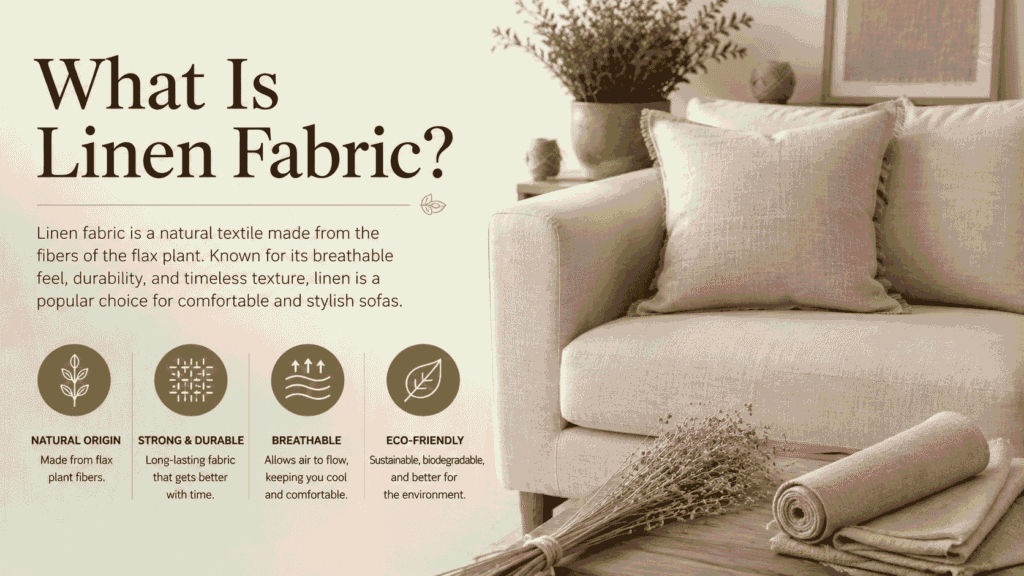
Linen is a plant-based fabric produced from the fibers of the flax plant. It has been used for centuries and remains popular in furniture, clothing, and interior design because of its distinctive texture and breathable qualities.
Linen can provide a light, natural appearance that works particularly well in contemporary, Scandinavian, coastal, rustic, and relaxed interiors.
The material is also known for ventilation and moisture-management properties. The Alliance for European Flax-Linen & Hemp notes that flax-linen has strong breathability, moisture absorption, and thermoregulation characteristics.
However, the performance of a linen sofa depends on more than the word “linen” in the product description. Fiber blend, weave, fabric weight, finishing, and upholstery construction can all affect durability and everyday performance.
Top-Grain Leather vs. Linen: 7 Powerful Differences
1. Durability and Lifespan
Durability is one of the most important factors when comparing top-grain leather vs. linen.
Top-grain leather is generally a strong option for sofas that receive frequent everyday use. Quality leather can handle regular sitting and can develop a more characterful appearance as it ages when properly cared for.
Linen can also be durable, especially when a high-quality upholstery-grade fabric is used. However, linen’s performance can vary considerably depending on the weave and construction.
This means you should not judge a linen sofa simply by the word “linen.” A purpose-made upholstery linen with a suitable construction can perform very differently from a lightweight decorative linen.
Winner for heavy everyday use: Top-grain leather
For a busy living room where the sofa is used every day, top-grain leather is usually the more straightforward choice for long-term durability.
2. Comfort and Breathability
Comfort is another major difference between top-grain leather and linen.
Leather has a smooth surface and can feel luxurious against the skin. However, its temperature can change with the surrounding environment. A leather sofa may feel cool initially in some conditions and warmer after prolonged contact.
Linen has a naturally breathable structure. Flax-linen is recognized for ventilation and thermoregulation, which can contribute to a fresh and comfortable feel.
This can make linen particularly appealing in warm environments.
However, upholstery comfort does not come from the cover alone. The sofa’s cushion filling, foam density, suspension system, seat depth, and overall construction also have a major effect.
Winner for breathability: Linen
If your priority is a light, breathable upholstery surface, linen has an advantage.
3. Cleaning and Maintenance
A sofa can look beautiful when new, but everyday maintenance determines how easy it is to keep that appearance.
Top-grain leather usually requires regular dusting or wiping and appropriate leather-care products when needed. Spills should be dealt with promptly, and harsh household cleaners should be avoided unless the manufacturer specifically recommends them.
Linen requires more attention to spills and stains because liquids and dirt can interact with the fabric fibers and weave. Cleaning instructions vary between fabrics, so always check the sofa manufacturer’s care label before using a cleaning product.
For more practical advice, see our complete sofa cleaning guide.
You can also explore our guide on how to clean sofa cushions for additional maintenance tips.
Winner for easier routine maintenance: Top-grain leather
Leather generally has an advantage when it comes to quick everyday surface cleaning, although proper care remains important.
4. Appearance and Interior Style
When comparing top-grain leather vs. linen, appearance may be just as important as performance.
Top-grain leather usually creates a polished, sophisticated appearance. It can work well in:
- Modern living rooms
- Luxury interiors
- Contemporary homes
- Traditional spaces
- Office-style interiors
- Minimalist rooms
Leather can also become more visually distinctive as it ages.
Linen creates an entirely different atmosphere. Its texture can make a room feel softer, lighter, and more relaxed.
Linen works particularly well in:
- Scandinavian interiors
- Coastal homes
- Farmhouse-style rooms
- Minimalist spaces
- Casual living rooms
- Natural and organic interiors
Linen has become a popular choice for furniture upholstery and interior spaces, and flax-linen is commonly found in products such as sofas, armchairs, and other home furnishings.
Winner for luxury appearance: Top-grain leather
Winner for a natural, relaxed appearance: Linen
There is no universal winner here because the best option depends on your interior style.
5. Cost and Long-Term Value
Price is an important consideration when choosing between top-grain leather vs. linen.
Top-grain leather sofas are often positioned toward the premium end of the market. You are paying not only for the upholstery but also for factors such as leather quality, sofa construction, frame materials, cushioning, craftsmanship, and brand.
Linen sofas can range from relatively affordable to costly. A high-quality linen sofa with a strong frame and premium upholstery can cost considerably more than a basic fabric sofa.
Instead of choosing based only on the initial price, consider:
- Expected lifespan
- Construction quality
- Upholstery quality
- Maintenance requirements
- Cushion durability
- Warranty
- Frequency of use
A cheaper sofa is not automatically better value if it needs replacing much sooner.
Winner for long-term value: Depends on the sofa
A well-made sofa in either material can be a good investment. Look at the whole sofa, not just the upholstery.
6. Families, Children, and Pets
If you have children or pets, the choice between top-grain leather vs. linen becomes more practical.
Leather’s smooth surface is easier to clean than fabric’s woven texture, making it appealing for busy households. Everyday dust, crumbs, and minor spills can often be removed from the surface relatively easily.
However, leather is not scratch-proof. Cats and dogs with sharp claws can damage the surface.
Linen presents a different set of considerations. Its woven structure can provide a soft and comfortable seating surface, but spills and certain stains may require faster attention. Some pets can also snag or pull upholstery depending on the fabric construction.
If you have pets, consider their behavior rather than assuming one material is automatically pet-proof.
For families:
Top-grain leather: Usually easier for quick surface cleanup.
Linen: Comfortable and attractive but may require more careful stain management.
For pets:
Neither material is completely damage-proof. Your pet’s habits, the fabric construction, and the sofa’s care instructions all matter.
7. Environmental and Material Considerations
Environmental considerations can also influence the decision between top-grain leather vs. linen.
Linen is produced from flax, a plant-based fiber. The Alliance for European Flax-Linen & Hemp describes flax-linen as a renewable natural fiber and highlights properties including breathability, strength, and moisture management.
Leather is an animal-derived material, so its environmental considerations are different. Responsible sourcing, tanning processes, manufacturing practices, durability, and product lifespan all need to be considered.
It is therefore too simplistic to say that one material is automatically “eco-friendly” and the other is not.
When buying linen, certifications and traceability can also provide useful information. For example, the Alliance’s certification systems are designed to provide traceability for qualifying flax-linen products.
Winner: Depends on your priorities
If plant-based fibers are important to you, linen may be more attractive. If your priority is long service life and leather’s particular performance characteristics, top-grain leather may appeal more.
Top-Grain Leather vs Linen Comparison Table
| Feature | Top-Grain Leather | Linen |
|---|---|---|
| Durability | Excellent when properly cared for | Good to excellent depending on construction |
| Breathability | Moderate | Excellent |
| Feel | Smooth and luxurious | Soft, textured, natural |
| Appearance | Premium and polished | Relaxed and natural |
| Cleaning | Usually easier for surface spills | Can require more careful stain treatment |
| Maintenance | Regular leather care | Regular fabric care |
| Pet resistance | Can resist everyday mess but may scratch | Can stain or snag depending on construction |
| Style | Luxury, modern, traditional | Natural, casual, contemporary |
| Price | Often premium | Wide price range |
| Aging | Can develop character | Can develop a relaxed, lived-in appearance |
| Best for | Heavy everyday use and premium interiors | Breathable, relaxed and natural interiors |
Pros and Cons of Top-Grain Leather
Pros
- Strong and durable
- Premium appearance
- Smooth, luxurious feel
- Generally easy to wipe clean
- Suitable for many interior styles
- Can develop character with age
- Good option for frequent sofa use
Cons
- Often more expensive
- Can be scratched by pets
- Requires suitable leather care
- Can feel warmer or cooler depending on conditions
- Quality varies between manufacturers.
Pros and Cons of Linen
Pros
- Naturally breathable
- Comfortable texture
- Light and relaxed appearance
- Excellent for natural interior styles
- Made from flax fiber
- Available in many colors and weaves
- Can create a sophisticated but casual look
Cons
- Can wrinkle
- Some linen fabrics require careful cleaning.
- Spills may need prompt attention.
- Performance varies significantly by weave and construction.
- Some lightweight linen fabrics may not be suitable for heavy sofa use
Which Is Better: Top-Grain Leather or Linen?
There is no single answer for every homeowner.
Top-grain leather is usually the better choice if you prioritize durability, premium appearance, easier surface cleaning, and long-term everyday use.
Linen is often the better choice if you prioritize breathability, natural texture, a relaxed appearance, and a softer visual style.
Your lifestyle should ultimately determine the decision.
Choose Top-Grain Leather If You:
- Want a premium-looking sofa
- Expect heavy everyday use
- Prefer easier surface cleaning
- Like the look of natural leather
- Want upholstery that can age gracefully
- Prefer a sophisticated interior
Choose Linen If You:
- Prefer natural-looking upholstery
- Want a breathable seating surface
- Like relaxed or contemporary interiors
- Prefer textured fabric
- Want a lighter visual appearance
- Do not mind more careful fabric maintenance.
Top-Grain Leather vs. Linen for Different Lifestyles
Best for Families
For a busy family living room, top-grain leather can be a practical choice because surface messes are generally easier to address.
However, always check the manufacturer’s cleaning instructions.
Best for Pet Owners
Neither material is completely pet-proof.
Leather may be easier to wipe, but claws can scratch it. Linen can offer a comfortable surface but may be more vulnerable to stains and snagging depending on the weave.
Best for Hot Weather
Linen has a clear advantage in breathability. Flax-linen’s ventilation and thermoregulation properties make it particularly attractive for warm environments.
Best for Luxury Interiors
Top-grain leather is a strong choice when you want a sophisticated, premium aesthetic.
Best for Relaxed Interiors
Linen works exceptionally well when you want a softer, natural, lived-in appearance.
How to Choose the Right Sofa Material
Before purchasing a sofa, ask yourself these questions:
1. How often will the sofa be used?
A sofa used several hours every day needs upholstery designed for regular wear.
2. Do you have children or pets?
Think about spills, scratches, stains, and cleaning habits.
3. What is your climate like?
If breathability and a fresh feel are priorities, linen may be attractive.
4. How much maintenance can you handle?
Choose a material whose care requirements fit your lifestyle.
5. What is your budget?
Compare the complete sofa rather than judging price based only on upholstery.
6. What style do you want?
Leather creates a different visual effect from linen. Choose the material that complements your room.
7. What is underneath the upholstery?
Do not overlook the frame, suspension, cushion filling, seat depth, and construction quality.
For more sofa-buying advice, explore our complete sofa buying guide.
Frequently Asked Questions
Is top-grain leather better than linen for a sofa?
Top-grain leather can be better for buyers who prioritize durability, premium appearance, and easier surface cleaning. Linen may be better for buyers who value breathability and a natural, relaxed appearance.
Is linen more comfortable than top-grain leather?
Not necessarily. Linen is naturally breathable and has a distinctive textile feel, while top-grain leather can feel smooth and luxurious. Cushion construction also has a major impact on comfort.
Which lasts longer, top-grain leather or linen?
A well-made top-grain leather sofa can provide excellent long-term durability. However, the lifespan of both materials depends on upholstery quality, construction, usage, maintenance, and environmental conditions.
Is top-grain leather easier to clean than linen?
For many everyday surface spills, leather can be easier to wipe clean. Linen may require more careful treatment, especially for stains. Always follow the manufacturer’s care instructions.
Is linen good for families with children?
It can be, especially when the sofa uses a durable upholstery-grade linen. However, families should consider stain resistance, fabric construction, and cleaning requirements before purchasing.
Is top-grain leather good for homes with pets?
It can work well in pet-friendly homes, but it is not scratch-proof. Dogs and cats with sharp claws can damage leather.
Which is better for hot weather?
Linen generally has the advantage because flax-linen is known for breathability, ventilation, and moisture-management properties.
Is top-grain leather worth the extra cost?
It can be worth the investment if you value durability, premium appearance, and long-term everyday use. However, the quality of the entire sofa matters more than upholstery grade alone.
Final Verdict
The choice between top-grain leather vs. linen ultimately comes down to your lifestyle and priorities.
Top-grain leather is an excellent choice for buyers who want a premium appearance, strong durability, easy surface maintenance, and a sofa designed for frequent use.
Linen is an attractive alternative for people who prefer natural texture, excellent breathability, and a relaxed interior aesthetic.
If durability and easy everyday cleaning are your biggest priorities, top-grain leather is likely the better fit. If breathability, texture, and a natural appearance matter more, linen may be the better choice.
Before you buy, look beyond the upholstery label. Check the sofa’s frame, cushions, construction quality, warranty, care instructions, and intended use. The best sofa is not simply the one with the most expensive material—it is the one that matches your home, lifestyle, and expectations.
Ready to choose your next sofa? Compare upholstery carefully, consider how your household actually uses its furniture, and choose the material that gives you the right balance of comfort, durability, appearance, and maintenance.
Recommended Resources
For additional information about linen’s properties and certification, the Alliance for European Flax-Linen & Hemp provides technical and traceability information on flax-linen.
For leather-related sofa information, continue exploring the leather guides on SofasExpert before making your final upholstery decision.
Ready to Choose Your Perfect Sofa?
Choosing between top-grain leather and linen comes down to your lifestyle, comfort preferences, maintenance needs, and budget. Take a closer look at the sofa’s upholstery, frame, cushions, and overall construction before making your decision.
If you want a durable, premium sofa that’s easier to maintain, top-grain leather may be the right choice. If you prefer a breathable, natural, and relaxed look, linen could be a better fit.
Ready to find the right sofa for your home? Explore our sofa buying guides and compare materials, styles, comfort, and practical features before you buy.
Recommended Reading
Internal Links — SofasExpert
- Full-Grain Leather
- What Is Full-Grain Leather?
- Luxury Sofa Materials
- Silk Blend Sofa Material
- Leather Sofa Material
- Sofa Materials Explained
- How to Choose the Right Sofa Material
- Leather vs Fabric Sofa
External Sources
Further reading on materials and furniture buying:
- Background on leather production: Leather Naturally
- Technical leather science: American Leather Chemists Association
- Furniture buying advice: Consumer Reports
- Textile and fiber sustainability information: Textile Exchange