
Introduction
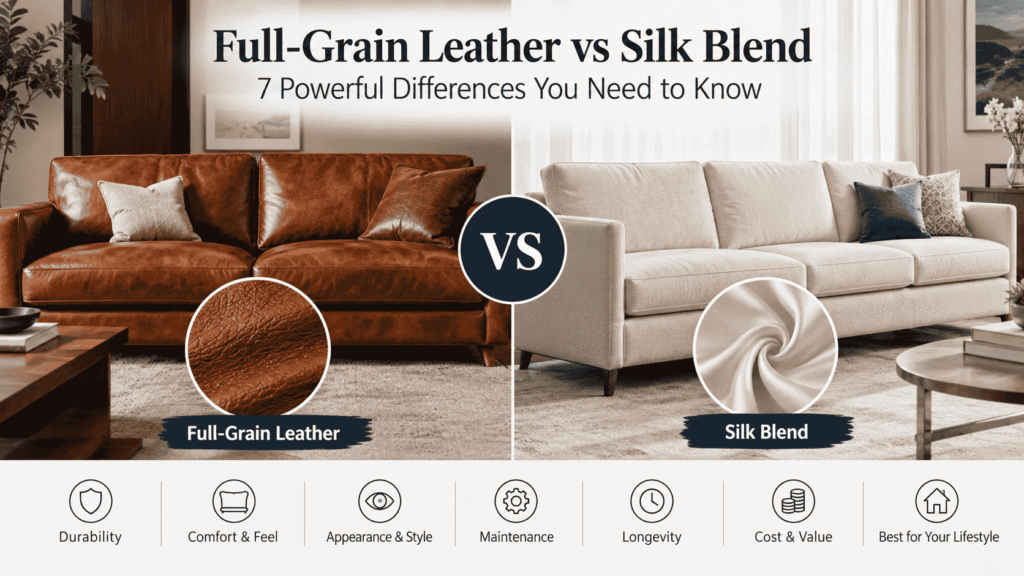
Choosing the rifull-grain leather vs. silk blend,ht upholstery can dramatically change how a sofa looks, feels, and performs over time. When comparing Full-Grain Leather vs Silk Blend, you are choosing between two premium materials with very different strengths.
Full-grain leather is known for its natural grain, durability, distinctive character, and ability to develop a patina as it ages. Silk blend, on the other hand, is valued for its smooth feel, elegant appearance, and luxurious visual texture.
So, which material is better for a sofa?
The answer depends on how you use your sofa, how much maintenance you are willing to provide, your preferred interior style, and whether you prioritize long-term durability or refined softness. In this guide, we will compare full-grain leather vs. silk blend across seven important factors so you can make a confident buying decision.
Table of Contents
Full-Grain Leather vs Silk Blend: Quick Comparison
| Feature | Full-Grain Leather | Silk Blend |
|---|---|---|
| Material type | Natural leather | Silk combined with other fibers |
| Appearance | Rich, natural, distinctive | Elegant, smooth, refined |
| Durability | Excellent | Varies by blend and construction |
| Comfort | Supple and premium | Soft and luxurious |
| Maintenance | Moderate | Usually more delicate |
| Aging | Develops natural patina | May show wear with use |
| Everyday use | Excellent | Better for controlled use |
| Style | Timeless and classic | Sophisticated and decorative |
| Long-term value | High | Depends on quality and use |
| Best for | High-use luxury sofas | Elegant, lower-traffic spaces |
What Is Full-Grain Leather?
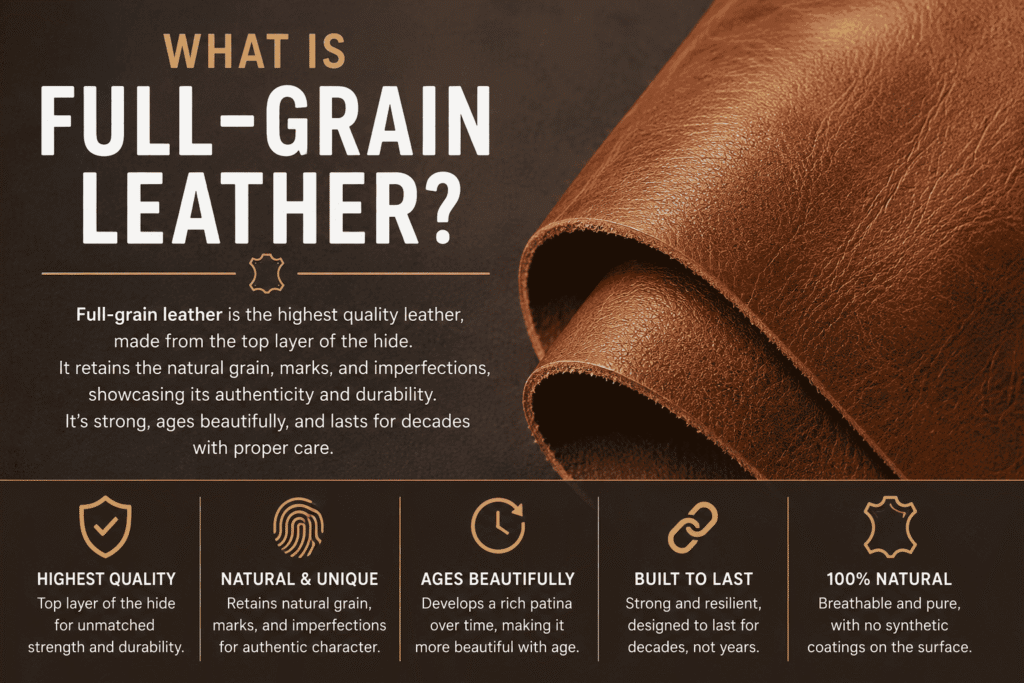
Full-grain leather is leather that retains the natural grain and surface of the hide. Unlike corrected leather, its grain is not heavily sanded away to create a completely uniform surface.
Leather Naturally describes full-grain leather as leather in which the grain remains intact.
Because the natural surface remains visible, full-grain leather can contain natural variations such as subtle markings, grain patterns, and differences in texture. These characteristics are often considered part of its appeal.
Why Is Full-Grain Leather Considered Premium?
The natural grain gives full-grain leather a distinctive appearance that is difficult to reproduce with synthetic or heavily processed materials.
It can also develop a patina over time. Instead of simply looking older, a well-maintained leather sofa can develop changes in color and surface character that make it look more individual.
Full-grain leather is especially popular for:
- Luxury sofas
- Premium chairs
- Traditional interiors
- Modern minimalist interiors
- High-use seating
- Long-term furniture investments
Leather also has properties such as strength, durability, longevity, abrasion resistance, and water-vapor permeability, although performance still depends on the specific leather and finish used.
What Is a Silk Blend?
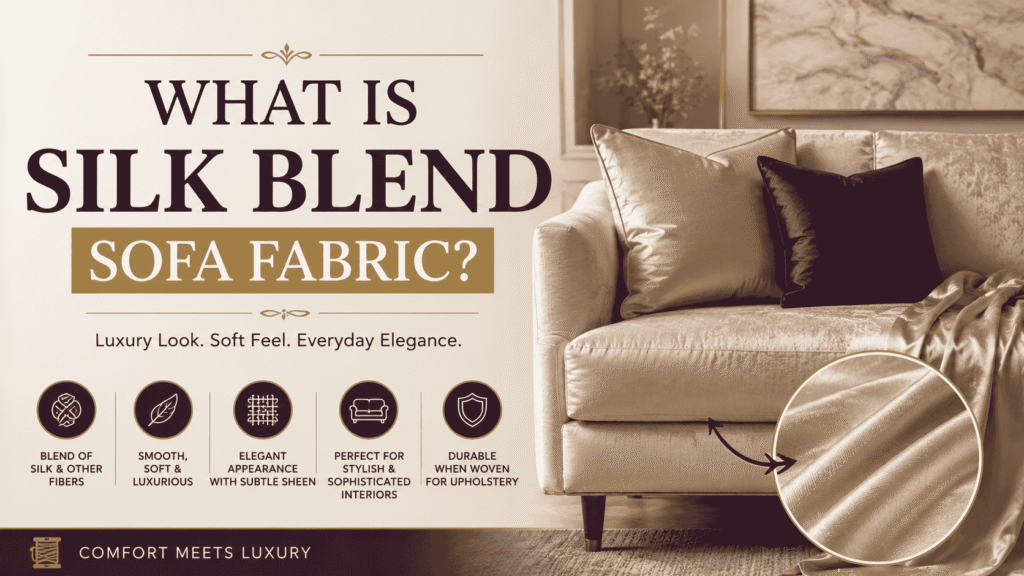
A silk blend is a textile made by combining silk with another fiber or a group of fibers. The other fiber may be selected to change the fabric’s durability, appearance, texture, cost, or performance.
This is important because silk blend is not one single standardized material. Two silk-blend fabrics can behave quite differently depending on their fiber composition, weave, weight, finish, and upholstery construction.
Silk is commonly associated with:
- Smooth texture
- Soft hand feel
- Natural sheen
- Elegant appearance
- Luxurious styling
For upholstery, however, the complete blend matters. A sofa covered in a silk blend should be evaluated based on the manufacturer’s specifications rather than the word “silk” alone.
Is Silk Blend Good for a Sofa?
It can be an excellent choice when appearance and softness are major priorities.
However, before buying a silk-blend sofa, check its intended use, cleaning instructions, fiber composition, and abrasion performance. A beautiful upholstery fabric is not automatically suitable for heavy everyday traffic.
Full-Grain Leather vs Silk Blend: 7 Key Differences
1. Durability
Durability is one of the biggest differences between full-grain leather and silk blends.
Full-grain leather is naturally strong and is widely valued for its durability and longevity. Textile Exchange identifies strength, longevity, durability, abrasion resistance, elasticity, and water-vapor permeability among leather’s valued properties.
That makes full-grain leather particularly attractive for sofas that are used every day.
Silk blends can also be durable, but performance depends heavily on the fibers mixed with the silk and the construction of the fabric. A silk-polyester blend, for example, may perform differently from a silk-cotton or silk-wool blend.
Winner: Full-Grain Leather
For a heavily used sofa, full-grain leather generally offers the more practical durability profile.
2. Comfort and Feel
Comfort is more subjective.
Full-grain leather often feels smooth, substantial, and supple. With time and appropriate care, good leather can become increasingly comfortable.
Silk blend generally has a softer textile sensation. Its smooth surface can provide a luxurious and refined feel, especially when used in a well-padded sofa.
The best choice depends on the experience you prefer.
Choose leather if you like:
- Substantial upholstery
- Smooth natural texture
- A supportive premium feel
- Material that changes with age
Choose silk blend if you prefer:
- Soft textile surfaces
- A delicate hand feel
- Fabric warmth
- Elegant tactile texture
Winner: Silk Blend for softness; leather for substantial feel
This category is largely a matter of personal preference.
3. Appearance and Style
When comparing full-grain leather vs. silk blend, appearance is another major consideration.
Full-grain leather has a natural visual character. Grain variations, subtle marks, and color differences can make each hide look unique.
It works especially well with:
- Classic interiors
- Contemporary spaces
- Industrial designs
- Minimalist rooms
- Rustic interiors
- Luxury living rooms
Silk blend creates a different aesthetic.
Its smooth surface and potential sheen can make a sofa look elegant and sophisticated. It is particularly suitable for rooms where upholstery is intended to be a major decorative element.
Winner: Tie
Choose full-grain leather for natural character and timeless sophistication.
Choose silk blend for refined softness and decorative elegance.
4. Maintenance and Cleaning
Maintenance can strongly influence your choice.
Full-grain leather needs appropriate care, but routine maintenance can be relatively straightforward. Dust and surface debris can usually be removed with suitable cleaning methods, while the specific care routine should follow the manufacturer’s recommendations.
However, not all leather finishes behave the same way. For example, Leather Naturally notes that aniline leather has less protection from soiling than more heavily finished leather types.
Silk blends can require greater caution.
Because silk-blend fabrics vary significantly, you should always follow the upholstery manufacturer’s cleaning instructions. Aggressive cleaning products, excessive moisture, heat, or inappropriate brushing can damage delicate fabrics.
Winner: Full-Grain Leather
For buyers who want a premium sofa without an especially delicate upholstery routine, leather is generally the easier choice.
5. Longevity and Aging
A sofa is a long-term purchase, so consider how its upholstery will look several years from now.
One of full-grain leather’s most distinctive characteristics is the way it can change with age. Instead of trying to remain visually identical to its original appearance, leather can develop a patina and increasingly distinctive character.
Leather Naturally explains that full-grain leather retains the grain layer and is generally finished in ways that allow grain characteristics to remain visible.
Silk blend does not generally develop the same type of leather patina.
Instead, its long-term appearance depends on:
- Fiber composition
- Weave
- Fabric quality
- Amount of friction
- Exposure to sunlight
- Cleaning
- Frequency of use
A high-quality silk blend can remain beautiful for years when used and maintained appropriately, but it may not be the first choice for extremely heavy daily traffic.
Winner: Full-Grain Leather
If your priority is long-term character and aging potential, full-grain leather has a clear advantage.
6. Cost and Long-Term Value
The cheapest option is not always the best value.
When comparing full-grain leather vs. silk blend, consider both the purchase price and how the sofa will perform over its expected life.
Full-grain leather can have a higher initial price because of the material quality and manufacturing involved. Leather Naturally’s modern leather-making guide explains that leather production involves multiple stages from hide structure through tanning, finishing, and quality control.
A silk-blend sofa can also be expensive, particularly when it uses a high-quality blend and premium construction.
Instead of asking only:
“Which one costs less?”
Ask:
“Which material provides the value I need for the way I will use the sofa?”
A high-use household may get more value from durable leather.
A formal living room that receives occasional use may make better use of the visual qualities of silk blend.
Winner: Depends on your priorities
For long-term everyday use, full-grain leather often provides stronger value.
For specialized luxury interiors, silk blend can provide excellent decorative value.
7. Lifestyle and Everyday Use
Your lifestyle may be the deciding factor.
Full-Grain Leather Is Better For:
- Busy households
- Everyday sofa use
- People who prefer durable materials
- Buyers seeking long-term furniture
- High-use living rooms
- People who like natural material variation
Silk Blend Is Better For:
- Formal living rooms
- Lower-traffic spaces
- Luxury-focused interiors
- Decorative seating
- Buyers who prioritize softness
- People willing to follow more careful upholstery-care instructions
If you have a sofa that everyone uses every evening, durability should receive more attention.
If your sofa is primarily used when guests visit, appearance and softness may become more important.
Winner: Depends on your lifestyle
There is no universal winner in this category.
Full-Grain Leather vs Silk Blend: Detailed Comparison
| Factor | Full-Grain Leather | Silk Blend |
|---|---|---|
| Durability | Excellent | Varies |
| Everyday use | Excellent | Moderate to low depending on fabric |
| Texture | Natural and smooth | Soft and refined |
| Visual character | Strong natural variation | Elegant and consistent |
| Patina | Yes | No leather-style patina |
| Cleaning | Moderate | Often more delicate |
| Stain concerns | Depends on finish | Depends on fabric treatment |
| Luxury appearance | Excellent | Excellent |
| Style versatility | High | High |
| Long-term aging | Usually an advantage | Depends on fabric |
| Best environment | High-use rooms | Formal or lower-use rooms |
Pros and Cons of Full-Grain Leather
Pros
Excellent Durability
Full-grain leather is a strong choice for sofas that receive regular use.
Natural Appearance
The visible grain provides a distinctive appearance.
Develops Character
Leather can develop a patina that adds personality as it ages.
Long-Term Appeal
Its classic appearance can work across changing interior trends.
Premium Feel
It provides a substantial and sophisticated upholstery experience.
Good Choice for High-Use Seating
Its durability makes it attractive for everyday furniture.
Cons
Higher Initial Cost
Premium leather sofas can require a larger upfront investment.
Can Scratch
The natural surface can show scratches and marks.
Requires Appropriate Care
Leather should be cleaned and maintained according to the manufacturer’s recommendations.
Natural Variation
If you want perfectly uniform upholstery, the natural variation of leather may not be appealing.
Pros and Cons of Silk Blend
Pros
Soft Feel
Silk blends can provide a smooth and luxurious tactile experience.
Elegant Appearance
The fabric can create a sophisticated visual effect.
Excellent for Decorative Interiors
Silk blends can work beautifully in formal or luxury-focused rooms.
Variety
Blending silk with other fibers can change the fabric’s performance and appearance.
Refined Texture
The textile surface can add softness and visual depth to a room.
Cons
Performance Varies
The term “silk blend” does not tell you everything about durability.
Can Require More Care
Some silk-blend upholstery can be sensitive to improper cleaning.
Friction Matters
Heavy daily use can affect delicate upholstery more quickly.
Staining Can Be a Concern
Always check the manufacturer’s cleaning and stain-treatment instructions.
Not Always Ideal for Busy Homes
A delicate silk blend may not be the best choice for a heavily used family sofa.
Which Is Better for a Sofa: Full-Grain Leather or Silk Blend?
The better material depends on what you expect from your sofa.
Choose Full-Grain Leather If You Want:
- Maximum durability
- Everyday usability
- Long-term value
- Natural texture
- Timeless design
- A material that can develop patina
Choose Silk Blend If You Want:
- Soft upholstery
- Elegant styling
- A refined decorative appearance
- A luxurious textile feel
- A sofa for a lower-traffic room
For most households looking for a sofa that will handle frequent use, full-grain leather is the more practical choice.
For a formal room where visual elegance and softness matter more than heavy-duty performance, silk blend can be an attractive alternative.
Full-Grain Leather vs. Silk Blend for Different Rooms
Living Room
For a primary living room used every day, full-grain leather is usually the safer choice.
It combines durability with a premium appearance and can handle regular seating better than many delicate fabrics.
Formal Sitting Room
Silk blend can work particularly well in a formal sitting room where the sofa is used less frequently.
Its refined appearance can become a major part of the room’s design.
Family Room
Full-grain leather is generally better suited to a busy family room because durability is often more important than delicate texture.
Home Office
Both materials can work.
Choose leather if you want a professional, classic appearance. Choose silk blend if you want a softer, more decorative look.
How to Choose Between Full-Grain Leather and Silk Blend
Before buying, consider these six questions.
1. How Often Will You Use the Sofa?
Daily use favors durability.
Occasional use gives you more freedom to prioritize appearance.
2. Do You Have Children or Pets?
If your sofa will face frequent activity, spills, scratching, or heavy friction, prioritize a material designed for the demands of your household.
3. What Matters More: Durability or Softness?
If durability comes first, lean toward full-grain leather.
If softness and textile elegance are your priorities, consider silk blend.
4. How Much Maintenance Are You Comfortable With?
If you want a relatively straightforward maintenance routine, leather may be preferable.
If you are comfortable following detailed fabric-care instructions, silk blends become more practical.
5. What Is Your Interior Style?
Leather works beautifully in classic, modern, industrial, minimalist, and rustic settings.
Silk blend is especially attractive in sophisticated, formal, elegant, and decorative interiors.
6. Are You Buying for Today or the Long Term?
For a sofa expected to serve as a long-term centerpiece, consider not only how the material looks when new but also how it is likely to age.
5 Questions to Ask Before Buying
Before purchasing a sofa covered in either material, ask the seller or manufacturer:
1. What exactly is the material composition?
For silk blends, find out which fibers are included and in what proportions.
2. Is the upholstery designed for everyday use?
A beautiful fabric may not be designed for heavy residential traffic.
3. What is the recommended cleaning method?
Never assume that a fabric can be cleaned using the same products as another upholstery material.
4. What is the abrasion or durability rating?
This is especially important when buying a silk-blend sofa for frequent use.
5. What type of leather finish is being used?
If you are buying leather, ask whether it is aniline, semi-aniline, pigmented, or another finish because surface protection can vary significantly.
Full-Grain Leather vs Silk Blend: Which One Should You Buy?
There is no single answer for every sofa buyer.
Full-grain leather is the better choice for durability, everyday use, natural character, and long-term furniture value.
Silk blend is the better choice for softness, refined styling, and elegant low-traffic interiors.
If your sofa is the main seating area in your home and receives heavy daily use, full-grain leather is generally the stronger option.
If your sofa is primarily a decorative centerpiece in a formal room, a well-constructed silk blend can provide the luxurious appearance and soft feel you want.
The most important point is to look beyond the material name. Consider the actual construction, upholstery specifications, intended traffic level, cleaning requirements, and overall sofa quality.
Frequently Asked Questions
Is Full-Grain Leather Better Than Silk Blend for Sofas?
For everyday use and durability, full-grain leather is generally the better option. Silk blend may be preferable when softness and decorative luxury are the primary goals.
Is Silk Blend Durable Enough for a Sofa?
It can be, but durability varies significantly depending on the blend, weave, fabric construction, and finish. Always check the manufacturer’s performance specifications before purchasing.
Does Full-Grain Leather Last Longer Than Silk Blend?
Full-grain leather is generally favored for long-term durability and can develop a patina as it ages. The lifespan of a silk blend depends heavily on its fiber composition and how frequently the sofa is used.
Is Silk Blend Difficult to Clean?
Some silk blends require careful cleaning because silk can be more sensitive to heat, moisture, chemicals, and friction. Always follow the manufacturer’s cleaning instructions.
Which Is Easier to Maintain: Leather or Silk Blend?
Full-grain leather is generally easier to maintain for everyday sofa use, although the exact maintenance requirements depend on the leather finish.
Is Full-Grain Leather Worth the Extra Cost?
For buyers who want a durable sofa that can remain useful and attractive for many years, the higher initial investment can be worthwhile.
Which Is Better for a High-Traffic Living Room?
Full-grain leather is generally the stronger choice for high-traffic living rooms because durability is a major advantage.
Which Looks More Luxurious: Leather or Silk Blend?
Both can look luxurious in the right setting. Full-grain leather offers natural character and timeless sophistication, while silk blend offers softness, sheen, and refined textile elegance.
Final Verdict: Full-Grain Leather vs. Silk Blend
The choice between full-grain leather vs. silk blend ultimately comes down to your lifestyle and priorities.
Choose full-grain leather if your main priorities are durability, everyday use, longevity, natural character, and long-term value.
Choose silk blend if your priorities are softness, elegance, visual sophistication, and a luxurious textile feel.
For most everyday sofas, full-grain leather offers the stronger combination of durability and long-term performance. For formal or decorative spaces, silk blend can deliver a distinctive luxury look that leather cannot exactly replicate.
Before making your final decision, compare the actual upholstery specifications—not just the material name. A high-quality sofa needs more than attractive upholstery; the frame, suspension, cushioning, stitching, and construction all contribute to how well it performs over time.
Recommended Reading
Internal Links — SofasExpert
- Full-Grain Leather
- What Is Full-Grain Leather?
- Luxury Sofa Materials
- Silk Blend Sofa Material
- Leather Sofa Material
- Sofa Materials Explained
- How to Choose the Right Sofa Material
- Leather vs Fabric Sofa
External Sources
Further reading on materials and furniture buying:
- Background on leather production: Leather Naturally
- Technical leather science: American Leather Chemists Association
- Furniture buying advice: Consumer Reports
- Textile and fiber sustainability information: Textile Exchange