
Introduction
Choosing the right upholstery can make a major difference in how comfortable, attractive, and durable your sofa will be. Two materials that often appear on furniture shopping lists are full-grain leather and microfiber. Both can work well for sofas, but they offer very different experiences.
When comparing full-grain leather vs. microfiber, the decision is not simply about choosing the more expensive material. Full-grain leather is valued for its natural grain, durability, premium appearance, and ability to develop character with age. Microfiber, on the other hand, is a synthetic upholstery material known for its soft feel, practical everyday performance, and generally accessible price.
So, which one is right for your home?
The answer depends on how you use your sofa, your budget, your cleaning preferences, whether you have children or pets, and the appearance you want. This guide breaks down the seven most important differences between full-grain leather and microfiber so you can make a confident buying decision.
Table of Contents
What Is Full-Grain Leather?
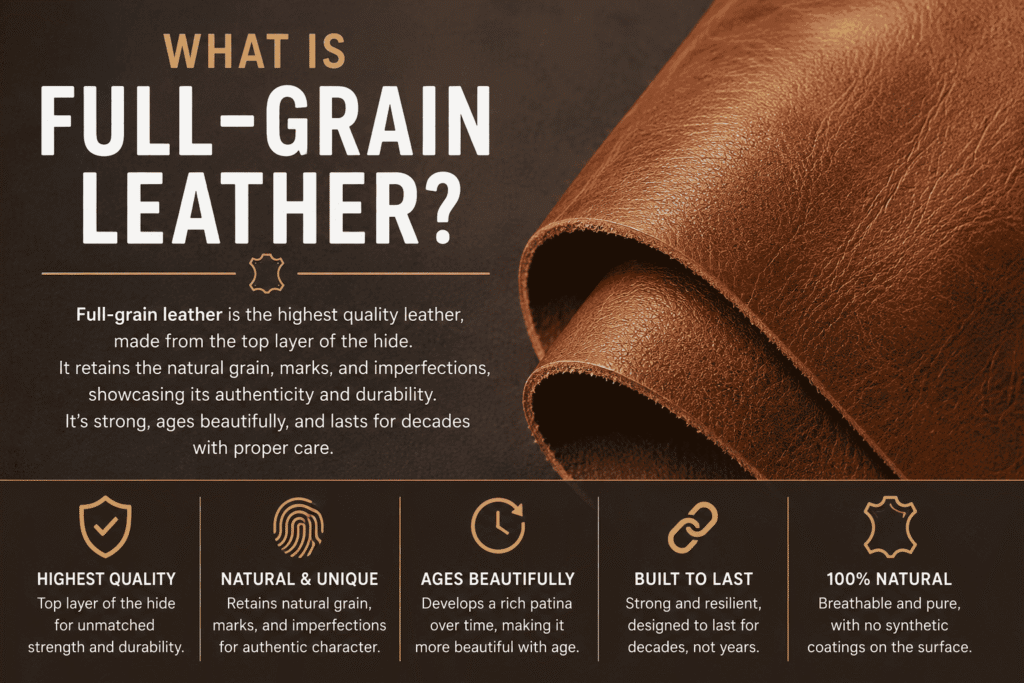
Full-grain leather is made from the outermost layer of an animal hide while preserving the natural grain surface. Unlike leather that has been heavily corrected or sanded, full-grain leather keeps much of the hide’s original texture and natural markings.
Because the surface remains relatively untouched, every piece can have its character. Small variations, wrinkles, pores, and natural markings are not necessarily imperfections; they are part of what makes genuine full-grain leather distinctive.
Full-grain leather is widely regarded as a premium leather grade because the dense natural fiber structure remains intact. This contributes to its strength and ability to withstand long-term use.
For a more detailed explanation, see our guide to Full-Grain Leather Explained.
Key Features of Full-Grain Leather
- Natural grain and texture
- Premium appearance
- Strong fiber structure
- Good long-term durability
- Can develop a patina
- Usually more expensive than fabric upholstery
- Requires appropriate leather care
For shoppers who prioritize natural materials and long-term furniture value, full-grain leather can be an appealing option.
What Is Microfiber?
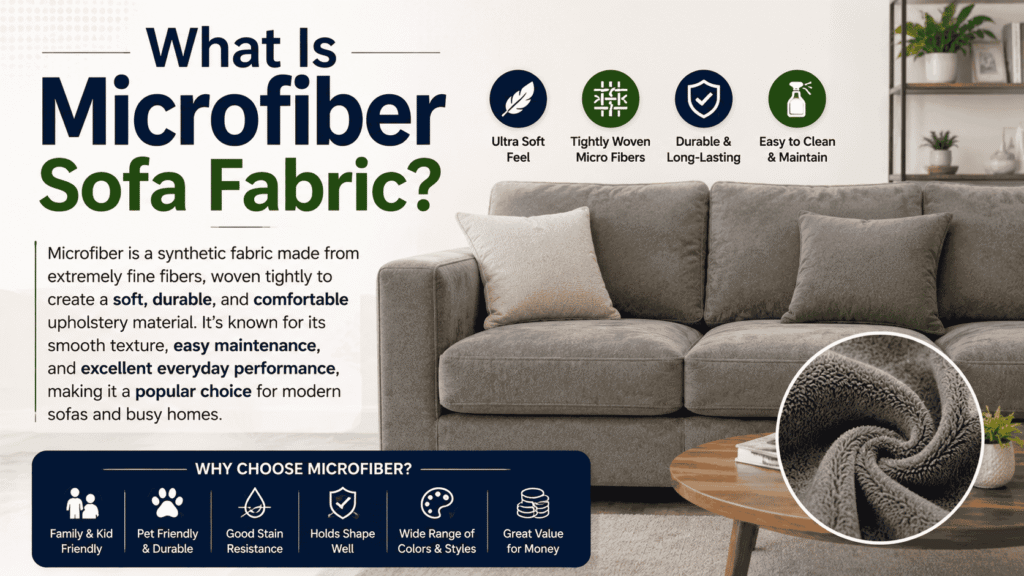
Microfiber is a synthetic upholstery material created by weaving ultra-thin fibers into a soft, durable fabric. Sofa upholstery commonly uses synthetic fibers such as polyester, nylon, or combinations of synthetic materials.
The very fine fibers can be tightly woven to create a smooth, soft surface. Some microfiber upholstery is finished to produce a suede-like texture, which makes it feel different from traditional woven fabrics.
Microfiber has become popular in furniture because it can combine softness with practical everyday performance. Its exact durability, stain resistance, and cleaning characteristics depend on the specific fabric construction and manufacturer’s finish.
You can learn more in our Microfiber Sofa Material guide.
Key Features of Microfiber
- Synthetic upholstery material
- Soft and smooth feel
- Available in many colors
- Generally easy to maintain
- Suitable for everyday furniture
- Can provide excellent resistance to everyday wear
- Performance varies according to construction and quality.
Microfiber is particularly attractive to shoppers who want comfortable upholstery without the maintenance routine associated with some premium materials.
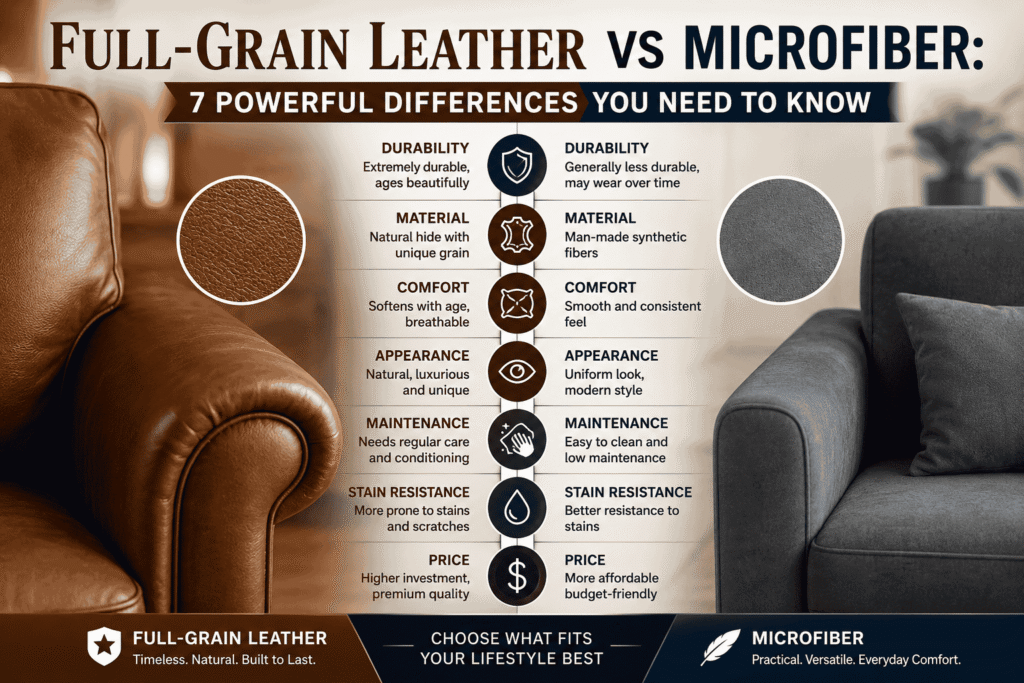
Full-Grain Leather vs Microfiber: 7 Key Differences
The easiest way to understand these materials is to compare them according to the factors that matter most when buying a sofa.
1. Durability and Lifespan
Durability is one of the biggest considerations when comparing full-grain leather vs. microfiber.
Full-grain leather has a strong natural fiber structure and can perform extremely well over many years when properly cared for. Instead of simply looking older, quality leather can develop a patina that many owners consider attractive.
However, leather is not indestructible. Sharp objects, pet claws, excessive sunlight, poor maintenance, and rough use can damage the surface.
Microfiber can also be highly durable, particularly when the fabric is designed for upholstery and heavy everyday use. Its tightly constructed fibers can help it handle regular sitting, lounging, and family activity.
The important point is that microfiber quality varies. A high-quality upholstery microfiber and a low-quality microfiber fabric should not be treated as equivalent.
Winner for long-term premium durability: Full-grain leather
If your main goal is a premium material that can age gracefully and potentially remain useful for many years, full-grain leather has the advantage.
If you want durable fabric upholstery with a softer textile feel and lower initial cost, microfiber can be an excellent alternative.
2. Comfort and Feel
Comfort is subjective, but the physical feel of these materials is noticeably different.
Full-grain leather typically feels smooth and substantial. Depending on the leather finish, climate, and sofa construction, it can feel cool initially and gradually adjust to body temperature.
Over time, quality leather can become softer with use. This creates a broken-in feeling that many leather sofa owners appreciate.
Microfiber tends to feel soft and cozy from the beginning. Some versions have a suede-like surface that provides a particularly comfortable tactile experience.
However, upholstery material is only one part of sofa comfort. Cushion firmness, foam density, suspension, seat depth, back support, and overall sofa design can have an even greater effect on how comfortable the sofa feels.
Winner for soft fabric feel: Microfiber
Winner for natural premium feel: Full-grain leather
If you want a soft, fabric-like surface, microfiber may be more appealing. If you prefer the distinctive feel of natural leather, full-grain leather is the stronger choice.
3. Cleaning and Maintenance
Maintenance is another important difference between these materials.
Full-grain leather generally benefits from regular dust removal and appropriate leather-care products. Spills should be dealt with promptly, and cleaning products should always be compatible with the manufacturer’s care instructions.
You should not assume that every leather cleaner is safe for every leather finish.
Microfiber is often easier to manage as part of a normal household cleaning routine. Regular vacuuming can remove dust, crumbs, and pet hair, while appropriate spot-cleaning methods can deal with many everyday marks.
However, microfiber is not automatically stain-proof. The best cleaning method depends on the fabric’s care code and manufacturer’s instructions.
Basic maintenance for full-grain leather
- Remove dust regularly.
- Wipe spills promptly.
- Use products specifically intended for the leather finish.
- Avoid harsh household chemicals.
- Keep the sofa away from excessive direct sunlight where possible.
- Follow the manufacturer’s care instructions.
Basic maintenance for microfiber
- Vacuum regularly.
- Clean spills as soon as possible.
- Verify the manufacturer’s cleaning code.
- Use suitable upholstery-cleaning products.
- Avoid excessive moisture.
- Test cleaning products on an inconspicuous area first.
For broader sofa-care advice, see our Sofa Material Care & Maintenance guide.
Winner for straightforward everyday maintenance: Microfiber
Microfiber generally has an advantage for buyers who want a simple fabric-care routine.
4. Appearance and Style
The visual difference between full-grain leather and microfiber is significant.
Full-grain leather has a natural appearance. Because the grain is preserved, you may see subtle variations in texture and color. Over time, the surface can develop a patina, giving the sofa a more aged and distinctive appearance.
This makes full-grain leather particularly suitable for:
- Luxury interiors
- Classic living rooms
- Modern minimalist spaces
- Executive-style rooms
- Premium furniture designs
Microfiber provides a more consistent appearance. It can be manufactured in many colors and textures, making it easy to coordinate with different decorating styles.
It can work especially well in:
- Family rooms
- Casual living rooms
- Contemporary interiors
- Apartments
- Comfortable everyday spaces
Winner for natural luxury: Full-grain leather
Winner for fabric versatility: Microfiber
Your choice here is largely a matter of personal taste.
5. Resistance to Stains, Scratches, and Spills
Everyday accidents are unavoidable, especially in homes with children and pets.
Full-grain leather does not absorb liquids in exactly the same way that porous textile upholstery can, but its actual resistance to spills depends on the leather’s finish. A spill should still be addressed promptly.
Leather can also show scratches. Some minor marks may blend into the natural character of the material over time, but deep scratches or damage can require professional attention.
Microfiber can perform well against many everyday spills and marks, especially when the upholstery is specifically designed for easy cleaning. Its dense construction can make it practical for busy households.
But microfiber can still stain, and its resistance varies by product.
Important distinction
Stain-resistant does not mean stain-proof.
Likewise, scratch-resistant does not mean scratch-proof.
No upholstery material should be considered completely immune to damage.
Winner for everyday practicality: Microfiber
Winner for developing character after minor surface marks: Full-grain leather
6. Price and Long-Term Value
Full-grain leather usually commands a higher initial price than microfiber upholstery.
The reason is not simply that leather is considered luxurious. Full-grain leather retains the natural grain layer and requires different processing and material sourcing than synthetic microfiber.
Microfiber is generally more accessible to buyers who want comfortable upholstery without paying the premium associated with high-end leather.
But price should not be the only factor.
Consider value over the entire period you expect to own the sofa.
For example, a more expensive sofa that remains attractive and functional for a long period may offer better value than a cheaper sofa that needs replacement sooner.
At the same time, paying more for leather does not automatically guarantee a better sofa. Frame construction, suspension, cushion quality, stitching, and manufacturing quality all matter.
Choose full-grain leather when:
- You have a larger furniture budget.
- You want a premium natural material.
- Long-term ownership is important.
- You appreciate leather’s aging process.
Choose microfiber when:
- You want to keep the initial price lower.
- You prefer fabric upholstery.
- Easy everyday care is important.
- You want a wide selection of colors and textures.
Winner for lower upfront cost: Microfiber
Winner for premium long-term appeal: Full-grain leather
7. Which Is Better for Families, Children, and Pets?
This is where lifestyle becomes more important than material labels.
Full-Grain Leather for Families
Full-grain leather can be a strong choice for busy households because many everyday spills can be wiped from the surface when handled correctly.
However, parents should remember that leather can scratch and that sharp toys, buckles, or other objects may leave marks.
Microfiber for Families
Microfiber is often attractive to families because it provides a soft surface and can be practical for regular household use.
It can also be easier to find affordable replacement or matching furniture when decorating a larger home.
Full-Grain Leather for Pet Owners
Leather can be appealing because pet hair does not become embedded in the same way it can with many textile surfaces.
The main concern is claws. Cats and dogs can scratch leather, particularly if they jump onto furniture or use the sofa as a resting or playing area.
Microfiber for Pet Owners
Microfiber can also work well for pet owners because its tight surface can make regular vacuuming relatively convenient.
However, pets can still cause abrasion, snagging, staining, or odor problems depending on the specific material.
The best choice depends on your pet.
If your pet frequently scratches furniture, neither material should be treated as completely pet-proof.
Full-Grain Leather vs Microfiber Comparison Table
| Feature | Full-Grain Leather | Microfiber |
|---|---|---|
| Material | Natural leather | Synthetic textile |
| Feel | Smooth, substantial and natural | Soft and fabric-like |
| Appearance | Natural grain and variation | Consistent textile appearance |
| Durability | Excellent when properly maintained | Good to excellent depending on quality |
| Maintenance | Requires leather-specific care | Generally straightforward |
| Spill handling | Depends on finish; clean promptly | Often practical for everyday spills |
| Scratch resistance | Can show scratches | Performance varies |
| Pet hair | Usually easy to remove from surface | Can require regular vacuuming |
| Price | Usually higher | Usually more affordable |
| Aging | Can develop patina | Usually maintains a more consistent look |
| Style | Premium, classic and modern | Casual, modern and versatile |
| Best for | Premium long-term furniture | Practical everyday living |
Pros and Cons of Full-Grain Leather
Pros
- Premium natural appearance
- Strong and durable material
- Can develop an attractive patina
- Distinctive natural grain
- Often suitable for long-term furniture ownership
- Pet hair is generally easy to remove from a smooth surface.
- Can complement luxury interiors
Cons
- Higher initial cost
- Can show scratches
- Requires suitable leather maintenance
- Natural markings may not appeal to buyers seeking a perfectly uniform surface.
- Direct sunlight and unsuitable conditions can affect appearance.
Pros and Cons of Microfiber
Pros
- Soft and comfortable
- Generally affordable compared with premium leather
- Available in many colors
- Practical for everyday use
- Can be relatively easy to maintain
- Suitable for many family living spaces
- Consistent appearance
Cons
- Synthetic rather than natural leather
- Quality varies considerably between products.
- Can still stain
- Can attract dust and pet hair depending on the surface
- Does not develop the same natural patina as leather
- Some low-quality microfiber upholstery may wear faster than premium alternatives.
Which Is Easier to Clean: Full-Grain Leather or Microfiber?
If easy cleaning is your top priority, both materials can be practical, but they require different approaches.
Full-grain leather has a smooth surface that can make routine dust and surface debris removal straightforward. However, you need to use products appropriate for the specific leather finish.
Microfiber can be vacuumed and spot-cleaned according to its upholstery care instructions. Some microfiber products are specifically designed to handle everyday household spills.
The safest approach for either material is simple:
Always follow the sofa manufacturer’s cleaning instructions first.
Avoid experimenting with strong household chemicals because a product that works on one upholstery type may damage another.
For more sofa-care information, explore our Sofa Materials Explained guide.
Is Full-Grain Leather Better for Pets?
There is no universal answer.
Full-grain leather can be a good choice if your main concern is removing pet hair. Hair generally sits on the smooth surface rather than becoming deeply trapped within textile fibers.
However, claws are a different issue. Cats and dogs can scratch leather, and deep scratches may permanently alter the surface.
Microfiber can also be practical for pet owners because it offers a soft surface and can be vacuumed regularly. However, pet hair, dirt, stains, and odors still require routine cleaning.
If your pet rarely scratches furniture, either material could work.
If your pet frequently claws sofas, focus less on marketing claims and more on the specific upholstery’s construction, durability rating, warranty, and care instructions.
Is Microfiber Better for Children?
Microfiber can be a practical option for families with children because it combines softness with everyday usability.
Children can create a lot of mess through food, drinks, muddy clothes, and frequent use. A microfiber sofa designed for family use may be easier to maintain than a delicate upholstery material.
Full-grain leather can also work very well in family homes, particularly when parents value easy surface cleaning and premium durability.
The decision comes down to priorities.
Choose microfiber if you want soft, practical fabric upholstery.
Choose full-grain leather if you want a premium material that can age beautifully and you’re comfortable maintaining it properly.
Which Material Lasts Longer?
A common question in the full-grain leather vs. microfiber debate is which material has the longer lifespan.
The honest answer is that there is no single lifespan that applies to every sofa.
A sofa’s longevity depends on:
- Upholstery quality
- Frame construction
- Cushion quality
- Suspension
- Frequency of use
- Household activity
- Cleaning
- Sun exposure
- Pets
- Manufacturer quality
Premium full-grain leather has excellent long-term potential, especially when maintained properly.
High-quality microfiber can also last for many years when used and maintained correctly.
Therefore, don’t judge a sofa by upholstery material alone.
A poorly constructed leather sofa can perform worse than a well-made microfiber sofa.
Which Is More Comfortable?
Microfiber often wins if you prefer a soft, warm, fabric-like surface.
Full-grain leather may appeal more if you like a smooth, substantial, natural feel that becomes more supple with use.
But remember that the sofa itself matters more than upholstery alone.
Two sofas made from the same material can feel completely different because of their:
- Seat depth
- Cushion filling
- Foam density
- Back support
- Spring system
- Frame design
- Armrest height
Always test the actual sofa whenever possible.
Which Offers Better Value for Money?
Value depends on how you define it.
If you want the lowest reasonable upfront cost, microfiber will often be more attractive.
If you want a premium material that can remain part of your home for a long time and develop a distinctive appearance, full-grain leather may offer stronger long-term value.
Instead of asking only:
“Which sofa is cheaper?”
Ask:
“Which sofa will give me the performance and appearance I want for the amount of time I expect to own it?”
That question leads to a much better purchasing decision.
Full-Grain Leather vs. Microfiber: Which Should You Choose?
The simplest way to decide is to match the material to your priorities.
Choose Full-Grain Leather If You Want:
- A premium natural material
- Excellent long-term durability
- A distinctive natural appearance
- Leather that develops character with age
- A luxury-looking living room
- Easy removal of surface pet hair
- Long-term furniture value
Choose Microfiber If You Want:
- Soft and comfortable upholstery
- Generally lower upfront cost
- Practical everyday performance
- A wide range of colors
- Fabric-like texture
- Straightforward routine cleaning
- A family-friendly upholstery option
How to Choose the Right Sofa Material
Upholstery is important, but it should not be the only thing you inspect before buying.
Before choosing a sofa, consider the following:
1. Sofa Frame
Look for a sturdy frame designed for regular use.
2. Cushion Quality
Sit on the sofa and check whether the cushions provide the support and firmness you prefer.
3. Suspension
A good suspension system can significantly affect comfort and long-term performance.
4. Upholstery Quality
Don’t stop at the material name. Ask about the actual grade, construction, and manufacturer’s specifications.
5. Your Lifestyle
A formal sofa used occasionally has different requirements from a sectional used every day by a family.
6. Children and Pets
Consider spills, scratching, hair, and cleaning requirements.
7. Room Conditions
Think about humidity, temperature, sunlight, and ventilation.
8. Budget
Set a realistic budget that includes the entire sofa rather than focusing only on upholstery.
For more guidance, read our Sofa Materials Explained guide.
You can also compare upholstery categories in our Leather vs. Fabric Sofa guide.
Common Mistakes to Avoid When Choosing Between Leather and Microfiber
Mistake 1: Choosing Based Only on Price
The cheapest sofa isn’t necessarily the best value.
Consider construction, warranty, upholstery quality, and expected use.
Mistake 2: Assuming All Leather Is the Same
Full-grain, top-grain, corrected leather, bonded leather, and faux leather can have very different characteristics.
Learn the leather grade before buying.
Mistake 3: Assuming All Microfiber Is the Same
Microfiber quality can vary according to fiber composition, weave, density, finishing, and manufacturing.
Mistake 4: Ignoring the Sofa Frame
A beautiful upholstery material cannot compensate for a weak frame.
Mistake 5: Believing “Stain-Resistant” Means “Stain-Proof”
Always clean spills promptly and follow the manufacturer’s care instructions.
Mistake 6: Ignoring Your Lifestyle
A material that works perfectly for one household may be inconvenient for another.
Think about how the sofa will actually be used.
Frequently Asked Questions
Is full-grain leather better than microfiber?
Neither is automatically better. Full-grain leather is usually the stronger choice for premium appearance, natural character, and long-term durability. Microfiber can be better for buyers who prioritize soft fabric, practical maintenance, and a lower initial cost.
Is microfiber more durable than full-grain leather?
Generally, high-quality full-grain leather has excellent long-term durability, but microfiber can also be highly durable. The construction and quality of the individual sofa matter significantly.
Which is easier to clean, full-grain leather or microfiber?
Both can be practical, but they require different cleaning methods. Leather needs leather-appropriate care, while microfiber should be cleaned according to its upholstery care code.
Is full-grain leather good for families?
Yes. Full-grain leather can work well in family homes, particularly for buyers who value durability and a surface that can be cleaned relatively easily. However, scratches and sharp objects should be considered.
Is microfiber good for pets?
Microfiber can be a practical choice for pet owners because it is soft and can be maintained through regular vacuuming and appropriate spot cleaning. However, no upholstery is completely resistant to pet damage.
Which lasts longer, leather or microfiber?
High-quality full-grain leather generally has excellent long-term potential. However, actual sofa lifespan depends on material quality, construction, usage, maintenance, and environmental conditions.
Is microfiber cheaper than full-grain leather?
Microfiber is generally available at a lower upfront price than premium full-grain leather, although prices vary significantly depending on sofa construction and brand.
Does full-grain leather scratch easily?
Full-grain leather can show scratches, particularly from sharp objects or pet claws. Some minor marks may become part of the leather’s natural character, while deeper damage may require professional repair.
Which feels softer, leather or microfiber?
Microfiber usually provides a softer, fabric-like feel from the beginning. Full-grain leather has a smoother, more substantial feel and can become softer with use.
Is full-grain leather worth the extra money?
It can be worth the additional investment if you value premium natural material, durability, distinctive appearance, and long-term ownership. If affordability and soft fabric upholstery are more important, microfiber may offer better value for your needs.
Final Verdict: Full-Grain Leather vs. Microfiber
The full-grain leather vs. microfiber decision ultimately comes down to your lifestyle and priorities.
Full-grain leather is the better choice if you want a premium natural material, excellent long-term durability, distinctive grain, and an upholstery surface that can develop a beautiful patina over time. It is particularly attractive for buyers who view a sofa as a long-term furniture investment.
Microfiber is the better choice if you want soft, comfortable upholstery, practical everyday performance, a wide range of design options, and generally lower upfront costs. It can be a particularly sensible option for busy households looking for comfortable fabric upholstery.
There is no universal winner.
Before buying, compare not only the upholstery but also the sofa’s frame, cushions, suspension, construction quality, warranty, and care requirements.
If you’re still deciding, start by comparing your lifestyle with the characteristics of each material. Once you know what matters most—durability, comfort, maintenance, appearance, pets, children, or budget—the right choice becomes much easier.
The best sofa isn’t simply the one with the most expensive material. It’s the one whose material, construction, and design match the way you actually live.
Ready to Choose Your Perfect Sofa Material?
Choosing between full-grain leather and microfiber becomes much easier when you focus on your lifestyle, budget, comfort preferences, and maintenance needs. Take a closer look at each material, compare the features that matter most to you, and choose the sofa upholstery that fits your home.
Ready to find the right sofa for your space? Explore our expert sofa guides and make your next purchase with confidence.
Recommended Further Reading
- Full-Grain Leather Explained
- Microfiber Sofa Material Explained
- Sofa Materials Explained
- Leather vs Fabric Sofa
- Fabric Sofa Material
- Velvet Sofa Material
- Cotton Sofa Material
Further reading on materials and furniture buying:
- Background on leather production: Leather Naturally
- Technical leather science: American Leather Chemists Association
- Furniture buying advice: Consumer Reports
- Textile and fiber sustainability information: Textile Exchange