
Introduction
Choosing the right upholstery can make a major difference in how a sofa looks, feels, and performs over time. Two materials that offer very different experiences are full-grain leather and chenille. One is a premium natural hide known for strength and aging beautifully, while the other is a soft textile valued for its plush texture and comfortable feel.
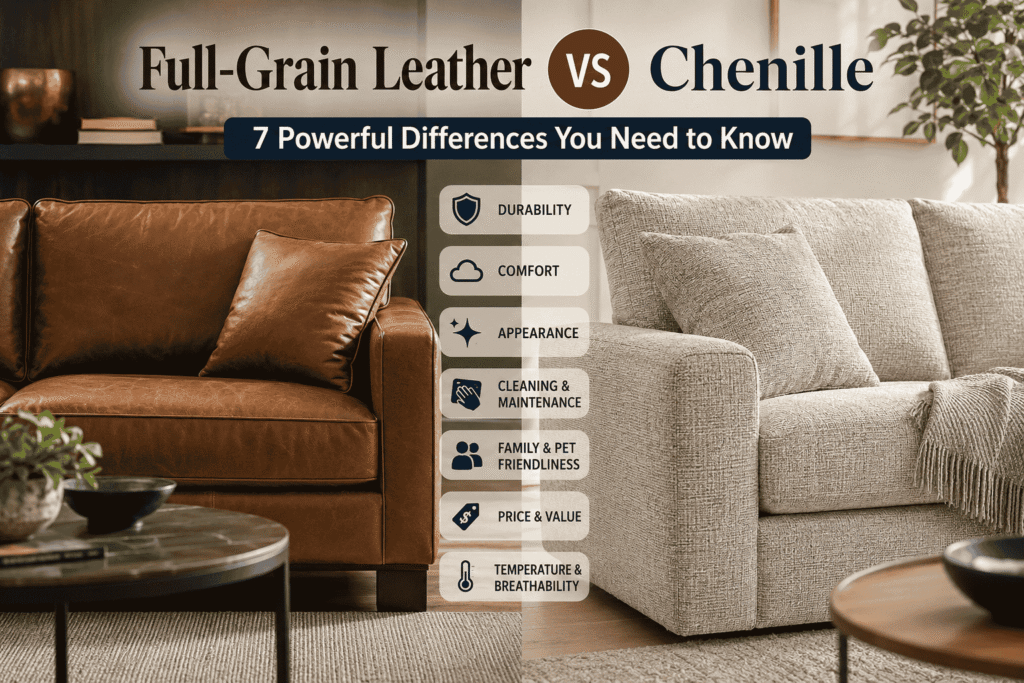
In this Full-Grain Leather vs. Chenille comparison, we’ll look at seven important differences, including durability, comfort, appearance, maintenance, family and pet suitability, price, and temperature. Understanding these differences can help you choose a sofa material that matches your lifestyle rather than simply choosing based on appearance.
Table of Contents
What Is Full-Grain Leather?
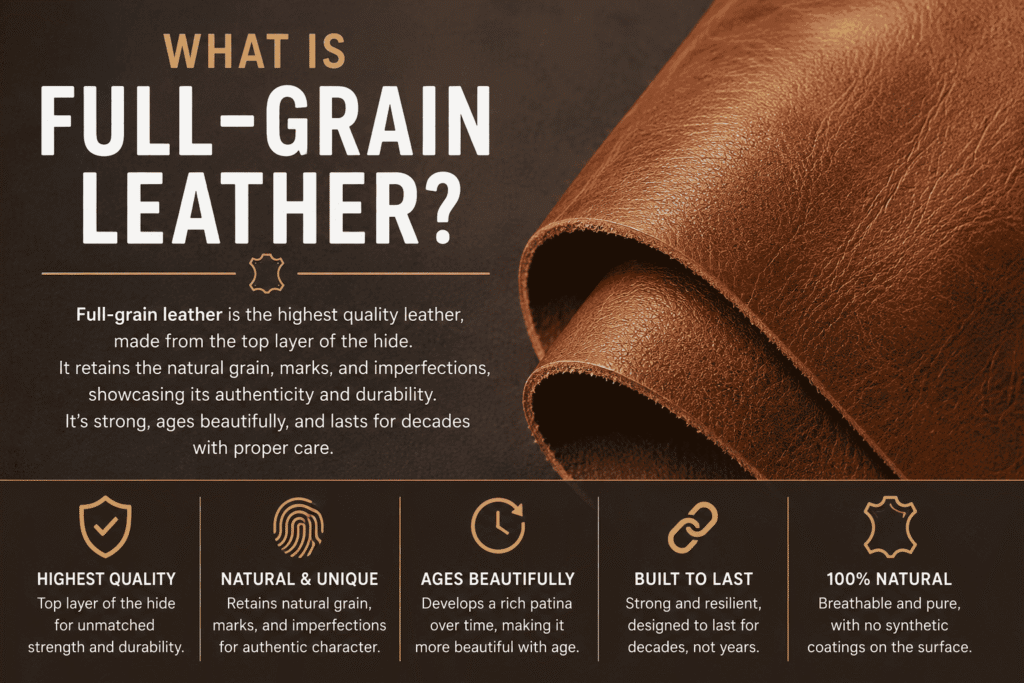
Full-grain leather is leather made from the outer portion of an animal hide while preserving its natural grain surface. Unlike heavily corrected leather, the surface is not extensively sanded to remove natural markings.
This gives full-grain leather a distinctive appearance. Variations such as subtle wrinkles, pores, scars, and grain patterns can remain visible, making every piece somewhat different.
For sofas, full-grain leather is often selected because of its combination of durability, premium appearance, and ability to develop character with age.
Key Characteristics of Full-Grain Leather
- Natural grain surface
- Strong and durable construction
- Premium appearance
- Develops a patina over time
- Generally easy to wipe when spills occur
- Requires appropriate leather care
- Leather upholstery typically costs more than many fabric upholstery options.
If you want to understand how full-grain leather compares with another major leather category, see our guide to Full-Grain Leather vs. Top-Grain Leather.
What Is Chenille?
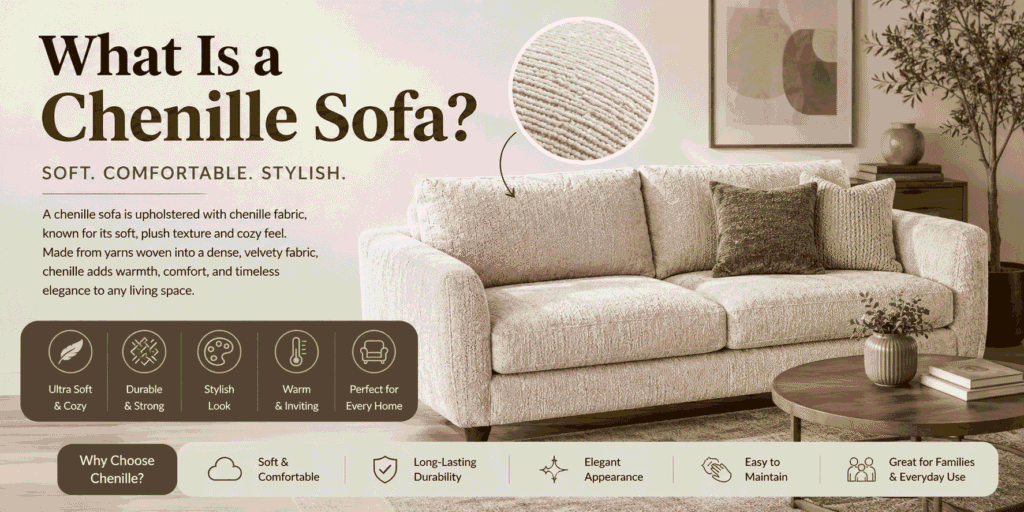
Chenille is a textile made using a special yarn construction that creates a soft, fuzzy surface. Its name comes from the French word for caterpillar, reflecting the yarn’s distinctive appearance.
Chenille is popular for upholstered furniture because it combines softness with an attractive textured appearance. Depending on the fiber composition and construction, chenille can be made from materials such as cotton, polyester, rayon, or blends.
The performance of chenille can therefore vary significantly from one sofa to another. Buyers should check the manufacturer’s specifications instead of assuming that every chenille fabric has identical characteristics.
Key Characteristics of Chenille
- Soft and comfortable texture
- Plush, textured appearance
- Available in many colors
- Works well with casual and traditional interiors
- Can provide a warm, inviting appearance
- Requires suitable stain and fabric care
- Performance varies according to fiber and construction.
For a more profound look at this upholstery option, explore our Chenille Sofa Material guide.
Full-Grain Leather vs Chenille: 7 Key Differences
The biggest differences become easier to understand when the materials are compared according to real-world sofa requirements.
1. Durability and Lifespan
Durability is one of the first factors to consider when comparing full-grain leather vs. chenille.
Full-grain leather is naturally strong because the grain structure remains largely intact. With proper care, quality leather upholstery can handle years of regular use and can develop a more distinctive appearance as it ages.
However, leather is not indestructible. Sharp objects, pet claws, excessive friction, and unsuitable cleaning products can damage its surface.
Chenille can also be durable, but its performance depends heavily on its fiber content, weave, pile, and overall construction. A well-made chenille sofa can perform very well in a busy home, while a lower-quality fabric may show wear sooner.
Durability winner: Full-grain leather
For buyers primarily concerned with long-term material performance, full-grain leather generally has the advantage. However, the quality of the sofa’s frame, stitching, foam, suspension, and construction also matters.
2. Comfort and Feel
Comfort is where chenille becomes particularly attractive.
Chenille has a soft, plush surface that feels comfortable against the skin. Its texture can make a sofa feel warm and inviting, which is especially appealing for people who spend a lot of time relaxing, reading, or watching television.
Full-grain leather has a smoother feel. It can initially feel cool or firm depending on the environment and sofa construction, but quality leather can become more supple with use.
Leather also responds differently to body temperature than fabric. Some people love its smooth, clean feel, while others prefer the softness of textile upholstery.
Comfort winner: Chenille
If your priority is a soft, cozy, fabric-like seating experience, chenille is usually the more appealing option.
3. Appearance and Style
The visual difference between these materials is immediately noticeable.
Full-grain leather has a natural, refined appearance. Its visible grain, subtle variations, and aging process can give a sofa a sophisticated character.
Chenille creates a completely different look. Its textured surface can add depth and softness to a room. It is also available in a wide range of colors, making it easier to coordinate with different decorating styles.
Leather often works particularly well in contemporary, industrial, classic, and luxury-inspired spaces. Chenille can fit comfortably into traditional, transitional, casual, and cozy interiors.
Style winner: It depends on your taste
Choose leather if you prefer natural character and a refined appearance. Choose chenille if you want texture, softness, and more fabric-oriented styling options.
4. Cleaning and Maintenance
Maintenance is another important part of the full-grain leather vs. chenille decision.
Full-grain leather generally has a smooth surface, which can make dealing with many everyday spills relatively straightforward. A fresh spill can often be wiped from the surface before it penetrates deeply.
However, leather still needs proper care. Depending on the manufacturer’s recommendations, occasional cleaning and conditioning may be appropriate. Using the wrong cleaning product can damage the finish.
Chenille requires more attention to the manufacturer’s cleaning instructions. Its textured pile can interact differently with dust, spills, and stains. Some chenille upholstery may also require professional cleaning.
Never assume that all chenille fabrics or all leather finishes should be cleaned in exactly the same way.
Maintenance winner: Full-grain leather for everyday surface spills
Leather usually has an advantage when quick surface cleanup is important. Chenille can still be practical, but the specific fabric’s care code and construction should be checked before buying.
5. Family and Pet Friendliness
Homes with children or pets need to think beyond appearance.
Full-grain leather can be convenient in households where accidental food and drink spills are common because its smooth surface is generally easier to wipe. However, pet claws can scratch leather, and some scratches may become permanent.
Chenille offers a soft and comfortable surface, but food, liquids, fur, and other debris can be more challenging to manage depending on the fabric construction. Pet claws may also pull or damage textile fibers.
Neither material is automatically perfect for every pet-owning or family household.
Best choice: Depends on your household
If quick spill cleanup is your biggest concern, leather may be preferable. If softness and a cozy seating experience are more important, chenille may win.
For additional comparisons involving leather, read our Full-Grain Leather vs. Faux Leather guide.
6. Price and Long-Term Value
Price can strongly influence a sofa purchase.
Full-grain leather usually occupies a higher price category because genuine premium hides require substantial processing and quality control. The cost can be significant, particularly for large sectional sofas.
Chenille is available across a wider price range. The cost depends on fiber composition, quality, construction, brand, and the sofa itself.
The cheapest option is not necessarily the best value. A lower-priced sofa that needs replacement sooner may cost more over its useful life than a higher-quality sofa that lasts longer.
Value winner: Depends on your priorities
Choose full-grain leather if you are comfortable with a larger initial investment and value longevity and premium material character.
Choose chenille if you want a softer upholstery option with a broader range of price points.
7. Temperature and Breathability
The way upholstery feels in different temperatures is another consideration.
Leather can feel cool when you first sit down in a cooler room and may feel warmer in hot conditions. Room temperature, humidity, ventilation, leather finish, and clothing all influence the experience.
Chenille generally has a more textile-like feel and can provide a cozy sensation. Its actual breathability and temperature behavior depend on the fibers and fabric construction.
If you live in a climate with significant seasonal changes, consider the environment where the sofa will be placed rather than relying solely on the material name.
Temperature winner: Depends on climate and personal preference
There is no universal winner here. Your home’s ventilation, room temperature, and personal comfort preferences matter.
Full-Grain Leather vs Chenille Comparison Table
| Feature | Full-Grain Leather | Chenille |
|---|---|---|
| Material type | Natural leather | Textile upholstery |
| Surface | Smooth natural grain | Soft textured pile |
| Durability | Excellent when properly cared for | Varies by construction |
| Comfort | Smooth and supple | Soft and plush |
| Appearance | Refined and natural | Textured and cozy |
| Color variety | Moderate | Usually extensive |
| Spill cleanup | Generally straightforward | Depends on fabric |
| Pet resistance | Can scratch | Can snag or show wear |
| Maintenance | Regular leather care | Fabric-specific care |
| Price | Usually higher | Wide range |
| Aging | Can develop patina | May show pile or wear changes |
| Best feature | Long-term character and durability | Softness and texture |
Pros and Cons of Full-Grain Leather
Pros
Excellent Durability
The natural grain structure can provide impressive strength and longevity.
Premium Appearance
Natural markings and grain variation give each hide a distinctive character.
Develops a Patina
With use and proper care, leather can change in appearance and develop a richer character.
Easy Surface Cleanup
Its relatively smooth surface can make many everyday spills easier to address.
Long-Term Value
A quality leather sofa can remain useful and attractive for many years.
Cons
Higher Initial Cost
Full-grain leather sofas are generally more expensive than many fabric alternatives.
Can Scratch
Sharp objects and pet claws can leave visible marks.
Requires Appropriate Care
Leather should be cleaned and maintained according to the manufacturer’s instructions.
Temperature Sensitivity
Some people may find leather less comfortable during very hot or cold conditions.
Pros and Cons of Chenille
Pros
Exceptionally Soft
Chenille is well known for its plush and comfortable texture.
Cozy Appearance
Its surface adds visual depth and warmth to upholstered furniture.
Many Design Options
Chenille is available in numerous colors, patterns, and constructions.
Comfortable for Everyday Lounging
Its soft texture makes it appealing for family rooms and relaxation spaces.
Broad Price Range
Chenille sofas are available at different price levels.
Cons
Can Be More Difficult to Clean
The textured surface may require careful treatment when spills occur.
Performance Varies
The durability of chenille depends on its specific fibers and construction.
Can Show Wear
Heavy use can affect the appearance of the pile over time.
Vulnerable to Pet Damage
Claws may snag or disturb textile fibers.
Which Is Better for Different Buyers?
There is no single winner in every home. The better material depends on what you value most.
Best for Luxury Interiors: Full-Grain Leather
If you want a sofa with natural character and a premium appearance, full-grain leather is a strong option.
Best for Cozy Family Rooms: Chenille
Chenille is particularly attractive if softness and a relaxed atmosphere are your priorities.
Best for Long-Term Investment: Full-Grain Leather
For buyers willing to spend more initially in exchange for durable premium upholstery, full-grain leather can be an excellent choice.
Best for Softness: Chenille
The plush surface of chenille makes it a natural choice for people who prioritize tactile comfort.
Best for Quick Spill Cleanup: Full-Grain Leather
The smooth surface of leather generally makes many fresh spills easier to wipe away.
Best for Color and Texture Choices: Chenille
Fabric upholstery typically provides extensive options for colors, patterns, and textures.
Full-Grain Leather vs Chenille: Which Should You Choose?
The easiest way to make your decision is to focus on your lifestyle.
Choose Full-Grain Leather If You Want:
- Premium natural upholstery
- Strong long-term performance
- Easy surface cleanup
- A sophisticated appearance
- Material that can develop character with age
- A higher-end sofa investment
Choose Chenille If You Want:
- A soft and plush seating surface
- A cozy appearance
- More fabric colors and textures
- A comfortable family-room sofa
- More flexibility across different price ranges
- Textile upholstery rather than leather
8 Questions to Ask Before Buying
Before making your final decision, ask yourself:
1. How frequently will the sofa be used?
Heavy everyday use makes durability particularly important.
2. Do you have children?
If spills and messes are common, consider how easy the upholstery will be to clean.
3. Do you have pets?
Think about scratching, snagging, fur, and general wear.
4. Do you prefer smooth or soft upholstery?
This simple preference can make your decision much easier.
5. What is your budget?
Consider both the purchase price and expected useful life.
6. How much maintenance are you willing to perform?
Every upholstery material has care requirements.
7. What style suits your room?
Leather and chenille create very different visual effects.
8. What matters most: longevity or softness?
This is often the deciding factor in the full-grain leather vs. chenille comparison.
Frequently Asked Questions
Is full-grain leather better than chenille for sofas?
Not for every buyer. Full-grain leather is generally better suited to people who prioritize durability, premium appearance, and easy surface cleanup, while chenille is often preferred for softness and a cozy feel.
Is chenille more comfortable than full-grain leather?
Many people find chenille softer because of its plush textile surface. However, comfort is subjective and also depends on the sofa’s cushioning, seat depth, support, and construction.
Which lasts longer, full-grain leather or chenille?
Quality full-grain leather generally has an advantage in long-term durability when properly maintained. However, the performance of chenille varies considerably according to its fiber content and construction.
Is chenille good for families with children?
It can be. Look for a chenille upholstery specifically designed for furniture use and follow its cleaning and care instructions. Families should also consider how frequently spills and stains are likely to occur.
Is full-grain leather good for homes with pets?
It can work well, but pet claws can scratch leather. If you have pets, consider their behavior before selecting leather upholstery.
Which is easier to clean, leather or chenille?
Full-grain leather generally has an advantage for quick surface cleanup because of its smooth surface. Chenille requires fabric-specific cleaning methods.
Is full-grain leather worth the higher price?
For buyers who value durability, natural character, and premium upholstery, the higher initial cost can be worthwhile. The decision ultimately depends on your budget and priorities.
Can chenille look as luxurious as leather?
Absolutely. High-quality chenille can create an elegant and sophisticated sofa. Its luxury comes from texture, color, construction, and design rather than a leather-like appearance.
Final Verdict: Full-Grain Leather vs Chenille
The best choice between full-grain leather and chenille depends on the experience you want from your sofa.
Full-grain leather is the stronger choice if your priorities are durability, premium appearance, easy surface cleanup, and long-term material character. It can become more distinctive as it ages and is well suited to buyers looking for a substantial investment.
Chenille is an excellent alternative for people who care more about softness, texture, warmth, and a relaxed atmosphere. It can make a living space feel inviting and comfortable while offering extensive design possibilities.
Before buying, don’t judge upholstery by its name alone. Examine the material’s quality, the sofa’s construction, care requirements, warranty, and suitability for your household.
Ultimately, the best sofa is not necessarily the one with the most expensive upholstery. It is the one that delivers the right combination of comfort, durability, appearance, maintenance, and value for your lifestyle.
Ready to Choose Your Perfect Sofa Material?
Now that you understand the key differences between full-grain leather vs. chenille, it’s time to match the material to your priorities.
Choose full-grain leather if you want a premium sofa designed for long-term use, natural character, and easier everyday surface cleanup.
Choose chenille if softness, cozy comfort, attractive texture, and flexible design options matter most to you.
Before you buy, compare the material quality, sofa construction, care requirements, warranty, and overall value—not just the price tag.
👉 Ready to find your ideal sofa? Explore your options, compare the materials carefully, and choose the upholstery that best fits your home, lifestyle, and budget.
The right sofa isn’t simply the one that looks best in the showroom—it’s the one you’ll still be happy to own years from now.
Related Reading
- Linen Sofa Material
- Polyester Sofa Material
- Fabric Sofa Material
- Velvet Sofa Material
- Cotton Sofa Material
- Microfiber Sofa Material
- Chenille Sofa Material
- Linen vs Cotton
- Velvet vs Polyester
- Leather vs Fabric Sofa
Further reading on materials and furniture buying:
- Background on leather production: Leather Naturally
- Technical leather science: American Leather Chemists Association
- Furniture buying advice: Consumer Reports
- Textile and fiber sustainability information: Textile Exchange