
Introduction
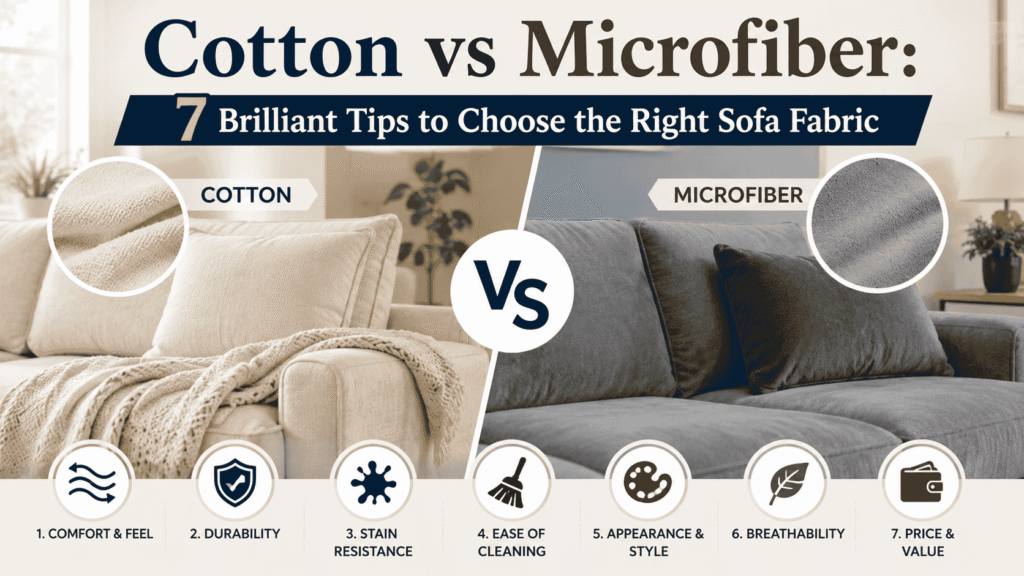
When it comes to cotton vs. microfiber, choosing the right sofa fabric can feel surprisingly difficult. Cotton offers a soft, natural feel and excellent breathability, while microfiber is known for its durability, straightforward maintenance, and practical stain resistance. Both can be excellent choices, but the better option depends on your lifestyle, comfort preferences, and how much everyday wear your sofa will face.
In this guide, we’ll compare cotton and microfiber across seven important factors, from comfort and durability to cleaning, appearance, and value. By the end, you’ll know which fabric makes the most sense for your home.
Table of Contents
Cotton vs Microfiber at a Glance
| Feature | Cotton | Microfiber |
|---|---|---|
| Material Type | Natural fiber | Synthetic fiber |
| Softness | Excellent | Excellent |
| Breathability | Excellent | Moderate |
| Durability | Good | Very good |
| Stain Resistance | Moderate | Generally better |
| Cleaning | Moderate | Generally easier |
| Pet Hair | Can attract hair | Usually easier to maintain |
| Appearance | Natural & textured | Smooth & uniform |
| Price | Moderate | Moderate |
| Best For | Comfort & breathability | Busy households & easy care |
Keep this cotton vs microfiber sofa fabric snapshot in mind as we go deeper into each category below — the details matter more than the fiber name alone.
What Is Cotton Sofa Fabric?
How Cotton Is Made
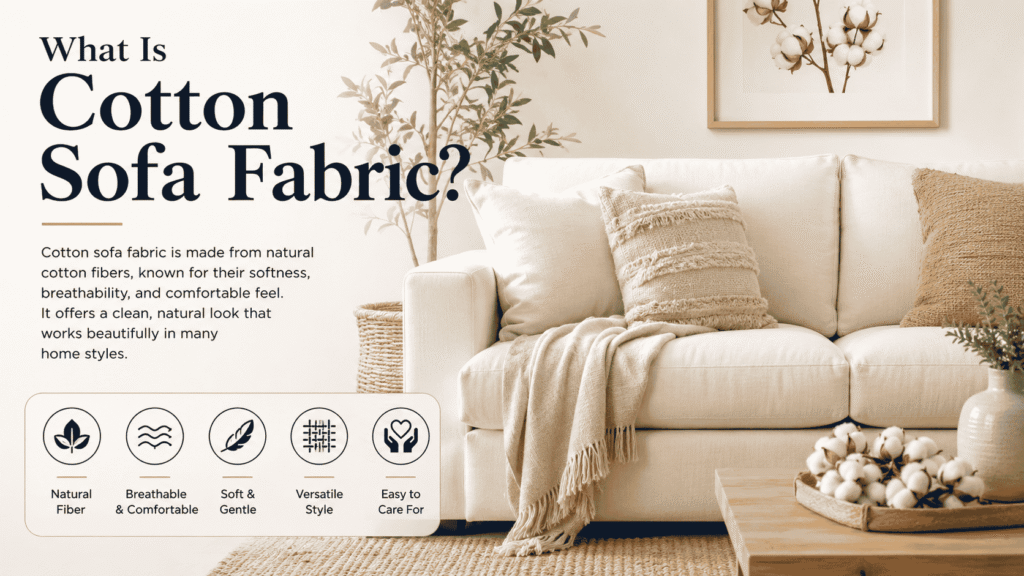
Cotton is a natural, plant-based fiber harvested from the cotton plant’s seed pods. The raw fibers are cleaned, spun into yarn, and then woven or knitted into fabric. For upholstery, cotton is often blended with other fibers or treated with finishes to improve durability, since raw cotton on its own can be less resistant to wear and staining than a treated version.
What Does Cotton Feel Like?
Cotton upholstery has a soft, breathable, slightly textured hand-feel that many people associate with comfort. It doesn’t trap heat the way some synthetic fabrics do, which makes it pleasant for long lounging sessions. The natural fiber structure also gives cotton a look and texture that feels less “manufactured” than smoother synthetic options.
Pros of Cotton Sofa Fabric
- Soft and comfortable against skin
- Breathable, especially in warm weather
- Natural fiber with an organic look and feel
- Attractive, textured appearance
- Available in a wide range of colors and patterns
Cons of Cotton Sofa Fabric
- Can absorb spills quickly, which makes fast cleanup important
- May stain more easily than treated synthetic fabrics
- Requires appropriate, sometimes more careful, cleaning
- Can show wear over time depending on weave and household use
If you want a deeper breakdown of how cotton performs against other materials, our guide to cotton sofa material covers weave types and finishes in greater detail.
What Is Microfiber Sofa Fabric?
How Microfiber Is Made
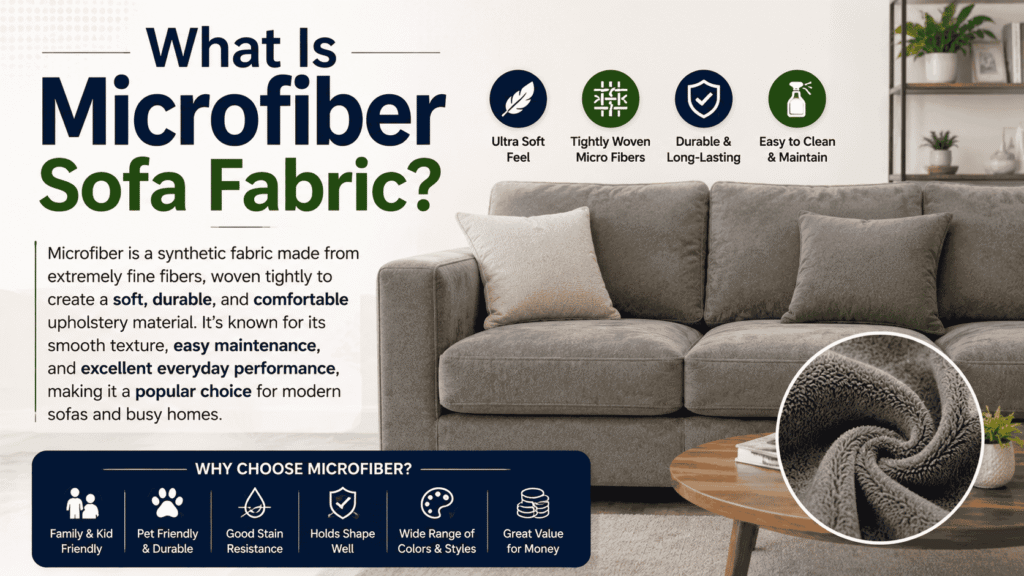
Microfiber is a synthetic textile, usually made from polyester or a polyester-nylon blend, engineered into extremely fine fibers—finer than a human hair. Those ultra-fine fibers are woven tightly together, which creates a dense, smooth surface that resists dirt penetration better than many looser weaves.
What Does Microfiber Feel Like?
Microfiber has a soft, smooth, almost suede-like texture with a consistent surface from panel to panel. Because the fibers are so fine and tightly packed, microfiber often feels plush without being heavy, and it holds its texture well over repeated use.
Pros of Microfiber Sofa Fabric
- Good everyday durability for high-traffic homes
- Smooth, consistent surface texture
- Often easier to maintain than natural fibers
- A practical choice for busy households
Cons of Microfiber Sofa Fabric
- Less breathable than cotton, which can feel warmer in summer
- Can develop visible texture changes (like watermarks or matting) from rubbing or improper cleaning
- Some microfiber fabrics require very specific cleaning methods to avoid damage.
For more on how this fabric is graded and sold, see our microfiber sofa material guide. Good Housekeeping’s current sofa-cleaning guidance also recommends checking upholstery-cleaning codes before choosing a cleaning method—including for microfiber furniture—which we’ll cover in more detail below.
Cotton vs Microfiber: 7 Key Differences
This is the core of the comparison — the factors that actually decide which fabric fits your home.
1. Comfort and Softness
Both fabrics are genuinely soft, but they achieve that softness differently. Cotton offers a natural, breathable softness that feels relaxed against skin, especially during long sitting sessions. Microfiber offers a smooth, almost velvety softness that stays consistent across the whole cushion.
Verdict: If you want a natural, breathable feel, cotton usually wins. If you prefer a smooth, plush surface, microfiber tends to be the better match. This one really comes down to personal preference more than performance.
It also helps to think about how you actually use your sofa. If you spend hours reading or watching movies curled up on the cushions, breathability can matter more than you’d expect—trapped heat becomes noticeable over a long sitting session. If your sofa gets shorter, more frequent use throughout the day, the surface texture (smooth versus natural) may matter more than air flow.
2. Breathability and Temperature
Cotton’s natural fiber structure allows air to circulate more freely, which makes it more comfortable in warm-weather rooms or homes without strong air conditioning. Microfiber’s tight, synthetic weave traps a bit more heat, which some people notice during long summer afternoons.
Winner: Cotton, for breathability.
That said, don’t treat this guideline as an absolute rule. Comfort also depends on the weave, cushion construction, room temperature, and overall fabric weight — a lightweight, well-ventilated microfiber can still feel comfortable in many climates.
3. Durability and Everyday Wear
Both fabrics can hold up well, but they respond to daily wear differently. Cotton is a solid performer, though it can show friction wear, pilling, or fading over time depending on the weave and finish. Microfiber’s dense synthetic weave generally resists pilling and abrasion a bit better in high-traffic use.
What Is a Double Rub Count?
A “double rub count” is an industry rating that measures how many back-and-forth rubs a fabric can withstand before it starts to show wear—it’s a standard way upholstery abrasion resistance gets tested. Higher double rub counts generally indicate more durable fabric, regardless of whether the fiber is natural or synthetic. This is important because fiber type alone doesn’t guarantee durability.
Don’t assume every microfiber sofa automatically outlasts every cotton sofa—fabric construction, weave tightness, and overall upholstery quality matter just as much as the fiber itself. For a closer look at how ratings work, check our sofa fabric durability guide.
As a general reference point, fabrics rated below 15,000 double rubs are usually considered suitable for light use, 15,000–30,000 for general residential use, and anything above that for heavy-use households. These numbers apply to both cotton and microfiber—a well-constructed cotton upholstery can easily out-rate a poorly made microfiber, so it’s always worth asking for the specific rating rather than relying on fiber type as a shortcut.
4. Stain Resistance and Spill Management
Cotton absorbs liquid readily, which means spills — water, food, oil, or pet accidents — can soak in and stain if not treated quickly. Microfiber’s tight synthetic weave often resists surface absorption a bit longer, giving you more time to blot up spills before they set in.
Buyer takeaway: Microfiber is often the more forgiving option for households where quick, low-effort spill cleanup is a daily reality. Still, actual stain resistance depends heavily on the fabric’s construction and any protective finish applied—not the fiber name alone.
5. Cleaning and Maintenance
Routine cleaning looks similar for both fabrics—regular vacuuming and prompt spot cleaning go a long way—but the details differ.
Cotton Cleaning Tips
- Vacuum weekly to remove dust and debris
- Blot spills immediately rather than rubbing
- Use a mild, fabric-appropriate cleaner.
- Avoid oversaturating the fabric with water.
Microfiber Cleaning Tips
- Vacuum regularly to prevent buildup in the tight weave
- Use a soft brush to restore texture after cleaning.
- Test any cleaning product in an inconspicuous spot first.
- Avoid excess water if the fabric is solvent-cleanable only.
Important: Always check your sofa’s upholstery cleaning code before applying water, detergent, steam, or any cleaning product. Current Good Housekeeping guidance identifies the common upholstery codes as W (water-based cleaner), S (solvent-based cleaner only), W/S (either), and X (vacuum only, no liquid cleaners)—and using the wrong method can permanently damage the fabric. For a full walkthrough, see our sofa cleaning guide.
6. Appearance and Style
Cotton has a natural, slightly textured look that pairs well with traditional, farmhouse, and casual interiors. Microfiber has a smooth, uniform surface that often suits modern and contemporary spaces, though both fabrics come in enough colors and patterns to work across most design styles.
Cotton is best suited to readers who prefer a natural textile appearance with visible texture and character.
Microfiber is best suited to readers who prefer a sleek, consistent surface with a more polished look.
7. Price and Overall Value
Both fabrics typically fall in a moderate price range, though the exact cost depends on quality, weave, and brand. The cheapest option upfront isn’t necessarily the best value—factor in expected lifespan, maintenance costs, and how well the fabric will hold up to your household’s actual usage before deciding. A slightly pricier fabric that resists stains and lasts longer can easily out-value a cheaper option that wears out fast.
It’s also worth budgeting for the cost of care over time, not just the sticker price. Professional cleaning, protective treatments, or replacement cushion covers all add up, and some fabrics require more of that ongoing investment than others. When you compare cotton and microfiber on the total cost of ownership rather than just the initial price tag, the more practical option for your household often becomes clearer.
Cotton vs. Microfiber for Different Lifestyles
Beyond the raw comparison, it helps to think about your specific household.
Best for Families With Children
Kids mean spills, food, and heavy daily use. Likely winner: Microfiber, thanks to its easier spot-cleaning and resistance to everyday wear.
Best for Homes With Pets
Pet hair, claws, and the occasional accident are common concerns. Likely winner: Microfiber, though results depend on the specific fabric construction — some tight weaves resist pet hair and claws better than others.
Best for Hot Climates
Likely winner: Cotton, thanks to its superior breathability in warm rooms.
Best for Everyday Heavy Use
This one comes down to construction and abrasion rating more than fiber type — a high-quality cotton can outperform a low-quality microfiber, and vice versa.
Best for a Natural-Looking Interior
Likely winner: Cotton, for its organic texture and appearance.
Best for Easy Maintenance
Likely winner: Microfiber in many cases, though the upholstery cleaning code still determines how easy day-to-day care actually is.
Cotton vs Microfiber: Which Is Better for a Sofa?
Choose Cotton If You Want:
- A natural fiber upholstery
- Strong breathability
- A soft, relaxed feel
- Natural-looking texture
- Comfortable warm-weather seating
Choose Microfiber If You Want:
- Easy everyday maintenance
- A smooth, consistent texture
- Good overall durability
- A practical option for busy homes
- A fabric that’s typically easier to manage after everyday spills
The Bottom Line
There isn’t one universal winner in the cotton vs. microfiber debate. Cotton wins for breathability and natural feel. Microfiber wins for practicality and everyday maintenance. The right choice depends on your household’s real day-to-day demands, not just which fiber sounds nicer.
Cotton vs Microfiber Comparison Table
| Category | Cotton | Microfiber | Winner |
|---|---|---|---|
| Comfort | Excellent | Excellent | Tie |
| Breathability | Excellent | Moderate | Cotton |
| Durability | Good–Very Good* | Very Good* | Microfiber* |
| Stain Management | Moderate | Good* | Microfiber* |
| Maintenance | Moderate | Easy* | Microfiber* |
| Natural Feel | Excellent | Low | Cotton |
| Pet-Friendly Maintenance | Moderate | Good* | Microfiber* |
| Style | Versatile | Versatile | Tie |
| Overall Practicality | Good | Excellent | Microfiber* |
*Depends on the specific upholstery fabric, weave, finish, and construction. A fiber’s name alone doesn’t determine real-world performance—always check the manufacturer’s specifications, cleaning code, and abrasion rating before buying.
How to Choose Between Cotton and Microfiber
Choose Cotton When:
- You prioritize breathability.
- You prefer natural materials.
- Your sofa isn’t exposed to frequent spills.
- You want a softer, more natural appearance.
Choose Microfiber When:
- Your sofa gets heavy daily use.
- You have children or pets.
- Easy maintenance is a top priority.
- You prefer a smooth upholstery surface.
5 Questions to Ask Before Buying
- How often will the sofa actually be used?
- Are children or pets regularly using it?
- How important is easy, low-effort cleaning to you?
- Is the room usually warm or cool?
- What is the upholstery’s cleaning code and abrasion rating?
For a broader walkthrough of picking the right material for your space, check our sofa buying guide and how to choose the right sofa material.
How to Care for Cotton and Microfiber Sofas
Cotton Sofa Care
- Vacuum regularly to prevent dust buildup.
- Blot spills quickly rather than letting them sit
- Follow the manufacturer’s cleaning instructions closely.
- Avoid unnecessary moisture, which can lead to staining or mildew.
- Rotate or remove cushions periodically for even wear
Microfiber Sofa Care
- Vacuum regularly to keep the tight weave from trapping debris.
- Remove surface debris before it works its way into the fabric
- Treat spills promptly with the correct cleaning method.
- Test cleaning products in an inconspicuous area first
- Always follow the upholstery code before applying any liquid.
Good Housekeeping recommends vacuuming sofas regularly and always checking the upholstery tag before cleaning — advice that applies equally to cotton and microfiber. For step-by-step routines, see our full sofa maintenance guide.
Common Mistakes to Avoid When Choosing Sofa Fabric
- Choosing based only on appearance. A fabric that looks great in a showroom might not match your lifestyle.
- Ignoring the cleaning code. Using the wrong cleaning method can permanently damage upholstery.
- Assuming natural means more durable. Durability depends on construction, not just fiber origin.
- Assuming microfiber is automatically stain-proof. No fabric is fully stain-proof without a protective finish.
- Ignoring the fabric’s abrasion rating. Double rub counts tell you more about durability than the fiber name.
- Forgetting about your household’s actual lifestyle. The “best” fabric on paper isn’t the best fit if it doesn’t match how you live.
Frequently Asked Questions About Cotton vs. Microfiber
Is cotton or microfiber better for a sofa? It depends on your priorities. Cotton is better for breathability and a natural feel; microfiber is better for everyday practicality and easier maintenance.
Is microfiber more durable than cotton? Often, yes, thanks to its tight synthetic weave — but actual durability depends on the specific fabric’s construction and abrasion rating, not the fiber type alone.
Is cotton more comfortable than microfiber? Both are comfortable in different ways. Cotton feels more breathable and natural, while microfiber feels smooth and consistently soft.
Is microfiber easier to clean than cotton? Generally, yes, especially for everyday spills, though you should always check the upholstery cleaning code before using any product.
Is cotton good for homes with pets? Cotton can work for pet owners, but it may attract more hair and stain more easily than a tightly woven microfiber, depending on the specific fabric.
Is microfiber good for families with children? Yes, microfiber is often a strong choice for families thanks to its easier spot-cleaning and resistance to everyday wear.
Which is cooler, cotton or microfiber? Cotton is generally cooler and more breathable, making it a better fit for warm climates or rooms without strong air conditioning.
Does microfiber attract pet hair? It depends on the weave—some tightly woven microfibers resist pet hair better than looser weaves, but no fabric is completely hairproof.
Can you wash cotton sofa covers? Many removable cotton covers can be washed, but you should always follow the manufacturer’s specific care instructions and check the cleaning code first.
How long does a microfiber sofa last? With proper care, a quality microfiber sofa can last many years, though lifespan depends heavily on fabric quality, construction, and household use.
Which sofa fabric is easiest to maintain? Microfiber is generally considered easier to maintain day-to-day, but following the correct cleaning code matters more than the fiber type itself.
Final Verdict: Cotton vs. Microfiber
Cotton is the better choice if comfort, breathability, and a natural textile feel are your top priorities. Microfiber is the better choice if easy maintenance, everyday practicality, and durability matter more to your household.
Ultimately, the best choice comes down to how the sofa will actually be used — not simply whether the fabric is natural or synthetic. Think through your climate, your household’s daily habits, and how much time you want to spend on upkeep, and let that guide your decision rather than the fabric name alone.
Looking to compare more options? Browse our guides on sofa materials, fabric sofa material, and luxury sofa materials to find the best fit for your space.
Related Reading
- Cotton Sofa Material
- Microfiber Sofa Material
- Sofa Fabric Durability Guide
- Ultimate Guide to Sofa Cleaning at Home
- Sofa Buying Guide
- How to Choose the Right Sofa Material
- Sofa Materials Explained
- Fabric Sofa Material
- Luxury Sofa Materials