
Introduction
When you’re shopping for a new sofa, the fabric matters just as much as the frame or the cushions. It shapes how the piece feels under your hand, how it looks in your living room, how long it lasts, and how much work it takes to keep clean. Two of the most common upholstery choices buyers compare are silk blend vs. polyester—and they sit at almost opposite ends of the spectrum.
Silk blends bring a soft, luxurious feel and an elegant, refined appearance. Polyester brings practicality — it’s tough, simple to maintain, and generally kinder to your budget. Neither fabric is universally “better.” The right choice depends on how the room is used, who’s using it, and what you value more: everyday resilience or an upscale look and feel.
In this guide, we’ll break down exactly how silk blend and polyester compare across comfort, durability, cleaning, price, and long-term ownership—so you can pick the fabric that actually fits your household, not just the one that photographs well in a showroom.
Quick answer: If you want a formal, low-traffic room with a premium look, a silk blend is the stronger pick. If you need a sofa that can handle kids, pets, and daily use without babying, polyester is usually the safer bet.
Table of Contents
Silk Blend vs Polyester at a Glance
| Feature | Silk Blend | Polyester |
|---|---|---|
| Material Type | Natural + blended fiber | Synthetic fiber |
| Feel | Soft and luxurious | Smooth to textured |
| Appearance | Elegant, refined | Versatile |
| Durability | Moderate to good, depending on blend | Generally strong |
| Daily Use | Better for lower/moderate traffic | Better for everyday use |
| Stain Resistance | Depends heavily on the blend | Generally good |
| Maintenance | Usually more demanding | Usually easier |
| Fade Resistance | Varies by construction | Generally good |
| Price | Usually higher | Usually more affordable |
| Best For | Luxury-focused rooms | Busy households |
If you’re weighing silk blend sofa fabric against polyester sofa fabric for the first time, this table is a good starting point — but the details below explain why each fabric behaves the way it does.
What Is Silk Blend Sofa Fabric?
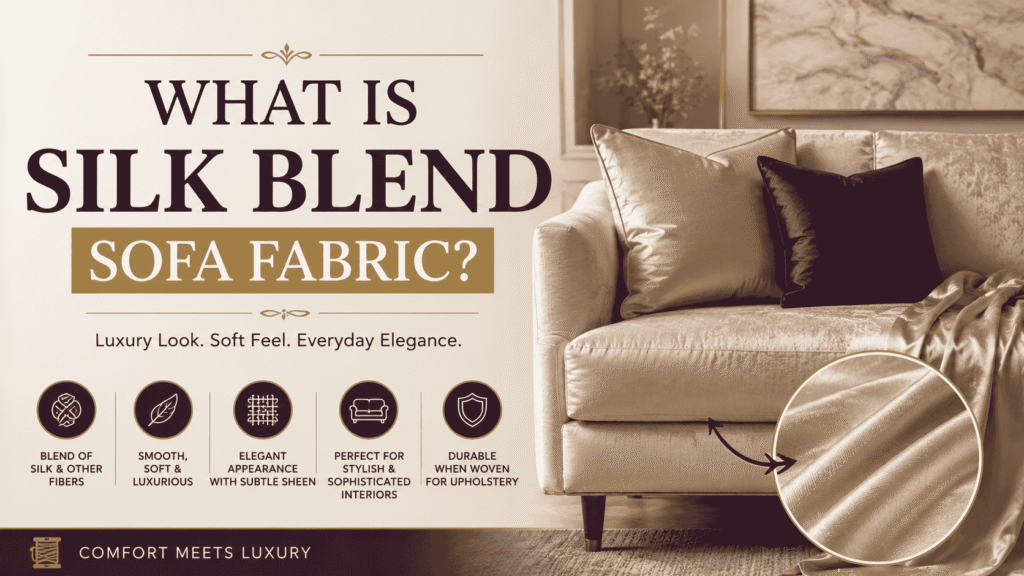
“Silk blend” isn’t a single, fixed fabric—it’s a category. The performance of any silk blend upholstery depends on exactly what the silk is combined with and what percentage of the fabric is actually silk.
Common Silk Blend Combinations
- Silk + polyester
- Silk + cotton
- Silk + wool
- Silk + rayon/viscose
Why Manufacturers Blend Silk
Pure silk is beautiful but delicate and expensive, so manufacturers blend it to
- Improve strength
- Change texture
- Improve dimensional stability
- Reduce cost compared with pure silk
- Create different drape and appearance characteristics.
What Makes Silk Blends Look Luxurious?
Even in blended form, silk tends to bring the following:
- A natural sheen
- A smooth hand feel
- An elegant drape
- A refined visual texture
Research on silk/polyester blended fibers has found that mixing fibers changes properties such as softness, flexibility, drape, moisture behavior, and color performance—which is part of why two “silk blend” fabrics can feel completely different depending on their exact composition.
What Is Polyester Sofa Fabric?
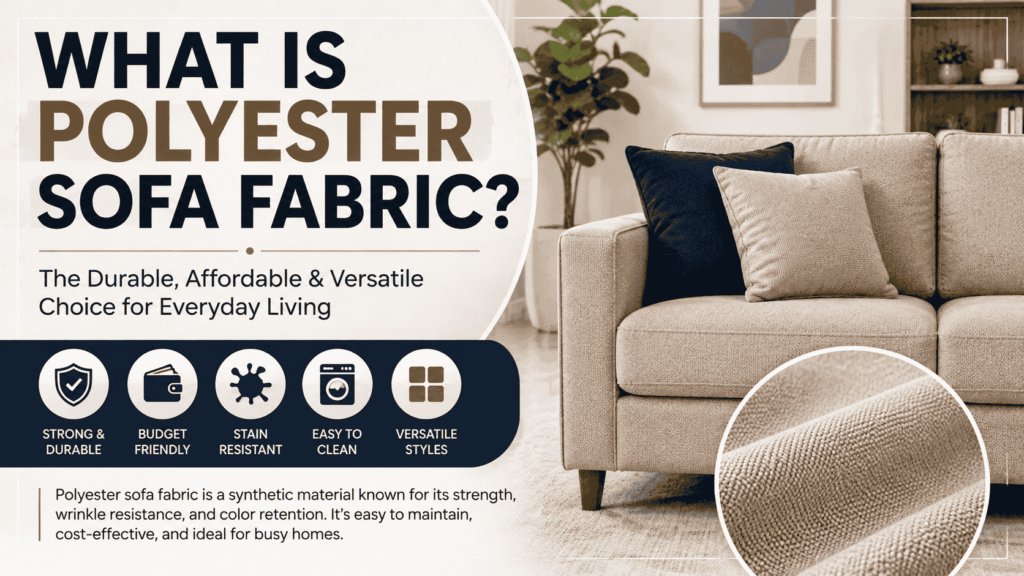
Polyester is a synthetic fiber that’s become one of the most widely used materials in furniture and home furnishings — and for good reason.
Why Polyester Is Popular for Sofas
- Strong fiber structure
- Good abrasion resistance
- Resists wrinkles
- Holds its shape well over time
- Dries relatively quickly
- Offers an extensive selection of colors, finishes, and textures to suit different sofa styles.
- Usually more budget-friendly than natural or blended luxury fabrics
Textile Exchange describes polyester as strong, durable, crease-resistant, and quick-drying, noting that it’s widely used across home furnishings—which lines up with why it’s such a common upholstery default.
Different Types of Polyester Sofa Fabric
- Standard polyester
- Textured polyester
- Performance polyester
- Recycled polyester
- Polyester blends
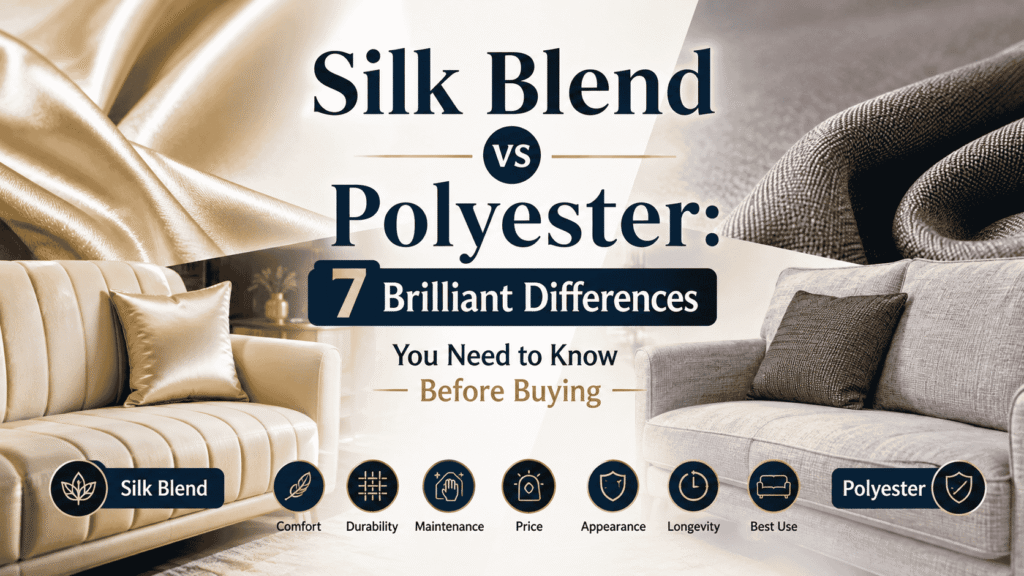
Silk Blend vs. Polyester: 7 Key Differences
Here’s where the silk blend vs. polyester comparison really is relevant for buyers.
1. Feel and Comfort
Silk Blend: Softer, smoother, and generally more luxurious to the touch. It can offer a more premium tactile experience than most everyday upholstery fabrics.
Polyester: The feel varies considerably depending on the weave and finish—it can range from smooth and soft to noticeably textured.
Verdict: Winner — Silk Blend, for luxury feel.
2. Appearance and Luxury Appeal
Compare the two on natural sheen, surface texture, how colors present, and whether the look reads as formal or casual. Silk blends are frequently chosen for designer and luxury interiors because of their sheen and drape.
Verdict: Winner — Silk Blend, for a sophisticated, upscale look.
3. Durability and Everyday Use
Think about abrasion, friction from repeated sitting, stretching, shape retention, and how the fabric holds up in high-traffic rooms. Polyester is generally the more practical choice for everyday upholstery because of its strength and resistance to wear and abrasion.
Verdict: Winner — Polyester, for heavy everyday use.
4. Stain Resistance and Cleaning
Silk Blend: Requires closer attention to the specific blend—some silk-containing fabrics are more delicate and less forgiving with spills.
Polyester: Generally easier to maintain, though performance still varies with weave, finish, and how the upholstery is constructed.
Regardless of fiber type, you should never clean a sofa based on the fabric name alone — always follow the manufacturer’s care code first.
Verdict: Winner — Polyester, for easier maintenance.
5. Fade Resistance and Sunlight
Direct sunlight and UV exposure are a real concern for window-side sofas. It’s important to note that fiber type alone doesn’t determine fade resistance—dye quality, construction, finish, and how much sun exposure the piece actually gets all play a role.
Verdict: Sofas are usually made of polyester, but it is essential to check the specific upholstery’s performance specifications instead of assuming based solely on the fiber type.
6. Price and Overall Value
Silk Blend: Usually positioned toward the premium end, with cost depending heavily on silk percentage and the other fibers used.
Polyester: Often more accessible, with a wide range spanning basic to premium performance-grade upholstery.
It’s worth weighing the initial price against long-term value—a cheaper fabric that wears out fast isn’t necessarily the better deal.
Verdict: Winner — Polyester, for budget-conscious buyers.
7. Maintenance and Long-Term Ownership
| Factor | Silk Blend | Polyester |
|---|---|---|
| Routine Cleaning | More care needed | Usually easier |
| Heat Sensitivity | Higher concern | Can also be heat-sensitive |
| Wrinkling | Depends on blend | Generally low |
| Daily Maintenance | Moderate | Low to moderate |
| Professional Cleaning | May be recommended | Depends on care code |
Verdict: Winner — Polyester, for low-maintenance ownership.
Silk Blend vs Polyester for Sofas: Which One Is More Durable?
Durability deserves its own closer look because it’s one of the biggest concerns for sofa buyers. Real-world durability comes down to more than the fiber name—it depends on:
- Fiber strength
- Upholstery weave
- Abrasion resistance
- Thread construction
- Fabric weight
- Seam construction
- Cushion design
- How frequently the sofa is used
Don’t assume that every polyester fabric automatically outperforms every silk blend. A tightly woven, well-constructed silk blend can outlast a cheap, thin polyester—construction and independent performance testing matter just as much as the raw fiber.
Which Sofa Fabric Is the Best Choice for Homes With Children and Pets?
For households dealing with spills, frequent sitting, pet hair, claw contact, food stains, and high-traffic seating areas, the practical demands are high. Polyester—especially performance-rated polyester—is generally better equipped to handle the following:
- Spills and food stains
- Repeated daily sitting
- Pet hair and claws
- Frequent cleaning
Recommended conclusion: For most busy households with kids or pets, performance-oriented polyester is the safer, more practical choice.
Which Fabric Is the Best Choice for an Elegant Luxury Living Room?
Silk blends shine when the priority is elegance rather than heavy daily wear. They work particularly well for:
- Formal living rooms
- Accent chairs
- Decorative furniture
- Lower-traffic seating areas
- Rooms designed around a polished, sophisticated look
That said, the actual blend percentage and upholstery specifications still matter — always check them before assuming a “silk blend” label guarantees luxury performance.
Silk Blend vs Polyester: Which Fabric Is Easier to Clean?
Silk Blend Cleaning Tips
- Follow the manufacturer’s care label closely.
- Blot spills rather than rubbing aggressively.
- Avoid unapproved cleaning chemicals.
- Consider professional cleaning when the care code recommends it.
Polyester Cleaning Tips
- Vacuum regularly to prevent buildup.
- Blot spills quickly before they set.
- Use the upholstery’s recommended cleaning method (check the care code).
- Avoid excessive moisture.
Which Fabric Is Better for Hot or Cold Climates?
Breathability, moisture handling, and surface feel all affect comfort, along with room temperature and air conditioning. There’s no absolute rule that one fabric is always cooler—weave, upholstery construction, and fabric composition all influence how a sofa feels to sit on, so it’s worth checking the specific product rather than assuming based on fiber type alone.
Silk Blend vs. Polyester: Pros and Cons
Silk Blend Pros
- Luxurious appearance
- Soft hand feel
- Elegant texture
- Premium aesthetic
- Excellent drape
Silk Blend Cons
- Can require more careful maintenance
- Often more expensive
- Performance varies significantly by blend
- May not be ideal for high-traffic upholstery
Polyester Pros
- Durable
- Versatile
- Generally easier to maintain
- Widely available
- Often more affordable
- Suitable for everyday furniture
Polyester Cons
- Some fabrics can feel less luxurious.
- May attract lint or static
- Quality varies substantially between products.
- Environmental concerns exist for conventional polyester
Textile Exchange notes that conventional polyester is derived from fossil-fuel-based chemicals and highlights recycled polyester as one pathway toward reducing reliance on virgin fossil-based synthetics—worth keeping in mind if sustainability factors into your decision.
Silk Blend vs. Polyester: Which One Should You Choose?
Choose Silk Blend If
- You prioritize a luxury look and feel.
- The sofa is in a formal room.
- Appearance matters more than maximum practicality.
- The furniture will receive moderate or low traffic.
- You’re comfortable with more careful, hands-on maintenance.
Choose Polyester If:
- You need everyday durability.
- Your sofa receives heavy use.
- You want easier, lower-effort maintenance.
- You have a tighter furniture budget.
- You want a wide range of color and texture choices.
How to Choose the Right Silk Blend or Polyester Sofa Fabric
Instead of choosing based on the fabric name alone, check these specifications before buying:
- Fiber composition and silk percentage
- Weave and fabric weight
- Abrasion rating
- Colorfastness
- Cleaning code
- Pilling performance
- Manufacturer warranty
- Intended use (formal vs. everyday)
Questions to Ask Before Buying
Is a silk blend better than polyester for a sofa? It depends on your priorities. Silk blend wins on softness and appearance; polyester wins on durability and ease of care.
Is polyester more durable than a silk blend? Generally yes, but the specific fabric construction — weave, weight, and finish — can shift the outcome either way.
Is a silk blend good for everyday sofa use? It can be, but it depends heavily on the blend composition and how much traffic the sofa will see.
Is polyester sofa fabric easy to clean? Usually, but care instructions still depend on the specific upholstery’s cleaning code—always check it first.
Which is more expensive, a silk blend or polyester? A silk blend is typically positioned at a higher price point, though the exact cost depends on the silk percentage and overall construction.
Which fabric is better for pets? Performance-oriented polyester tends to hold up better against claws, hair, and frequent cleaning than most silk blends.
Final Verdict—Silk Blend vs. Polyester
A silk blend is the better choice when luxury, softness, and a sophisticated appearance are your priorities. Polyester is generally the better choice when durability, everyday practicality, easier maintenance, and value matter most.
The key takeaway from this silk vs. polyester blend comparison isn’t simply choosing a fiber name—the specific fabric’s construction, blend percentage, performance rating, and care requirements should ultimately guide your purchase.
Frequently Asked Questions
Is a silk blend better than polyester for sofas? A silk blend offers a softer, more luxurious feel and appearance, while polyester offers stronger everyday durability and easier care—the “better” option depends on your household and how the sofa will be used.
Is a silk blend durable enough for everyday furniture? Some silk blends can handle moderate daily use, especially with a higher percentage of durable fibers like polyester or cotton in the mix, but most perform best in lower-traffic settings.
Is polyester a good sofa material? Yes, polyester is one of the most widely used upholstery fabrics because it’s strong, abrasion-resistant, and relatively easy to maintain.
Which lasts longer, a silk blend or polyester? Polyester generally lasts longer under everyday wear, though a well-constructed silk blend can still hold up well in lower-traffic rooms.
Which is easier to clean, a silk blend or polyester? Polyester is usually easier to clean and maintain, while silk blends often require more careful, label-specific care.
Is a silk blend more expensive than polyester? Typically yes—silk-blend fabrics are usually priced higher than polyester, though the exact cost varies with the silk percentage and overall construction.
Which sofa fabric is better for pets and children? Polyester, particularly performance-rated polyester, is generally the more practical choice for households with pets and children.
Can silk blend and polyester be blended together? Yes, silk-polyester blends are common and are designed to combine silk’s softness and sheen with polyester’s added strength and stability.
Related Guides
- Silk Blend Sofa Material Guide
- Polyester Sofa Material Explained: Complete Guide to Comfort, Durability & Care
- Sofa Materials Explained
- How to Choose the Right Sofa Material
- Ultimate Guide to Sofa Cleaning at Home
- Luxury Sofa Materials