
Introduction
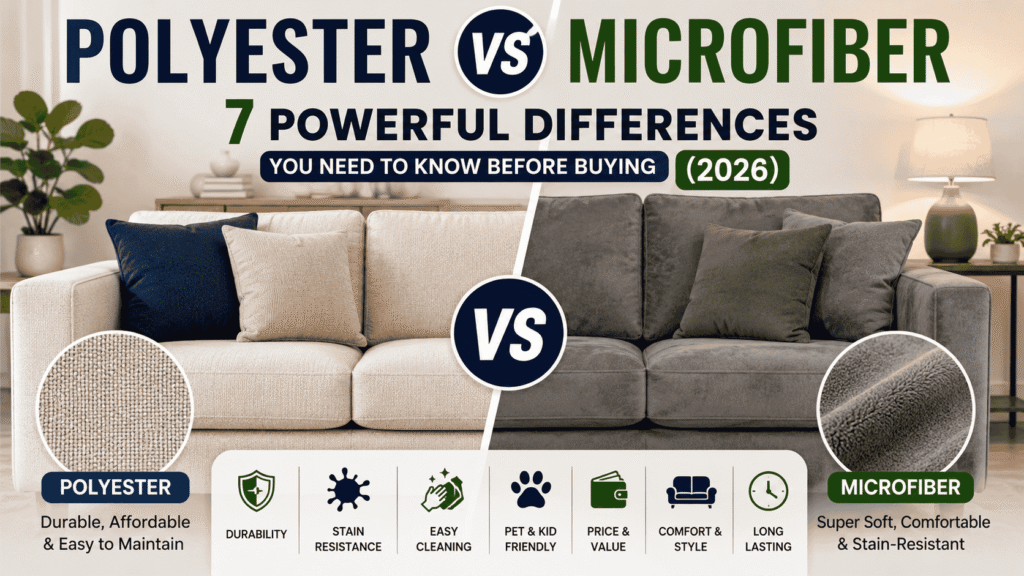
Polyester vs Microfiber is a common comparison for anyone choosing a comfortable, durable, and easy-to-maintain sofa fabric. Although both are synthetic upholstery options, they can feel and perform quite differently depending on their construction, quality, and finish. Polyester is known for its versatility, affordability, and durability, while microfiber is often valued for its exceptionally soft feel and easy everyday maintenance.
So, which one is better for your sofa? The answer depends on your priorities, including comfort, stain resistance, cleaning, durability, pets, children, style, and budget. In this guide, we’ll compare Polyester vs Microfiber across the key factors that actually matter before buying, helping you choose the right fabric for your home.
Table of Contents
1. Polyester vs Microfiber at a Glance
| Feature | Polyester | Microfiber |
|---|---|---|
| Fiber type | Synthetic | Very fine synthetic fiber (often polyester-based) |
| Common softness | Medium | Very soft |
| Durability | High | High |
| Stain resistance | Good | Often very good |
| Water resistance | Often good | Depends on construction |
| Cleaning | Generally easy | Generally easy |
| Pet-friendly | Good | Good, depending on weave |
| Wrinkle resistance | Excellent | Excellent |
| Price | Usually affordable | Affordable to mid-range |
| Best for | Practical, everyday sofas | Soft, cozy upholstery |
Here’s the nuance most buying guides skip: microfiber isn’t necessarily a different fiber family from polyester at all. Many microfiber fabrics are woven from ultra-fine polyester filaments, sometimes blended with nylon (polyamide), which is why the two get compared so often — they overlap more than they compete.
2. What Is Polyester Sofa Fabric?
How Polyester Is Made
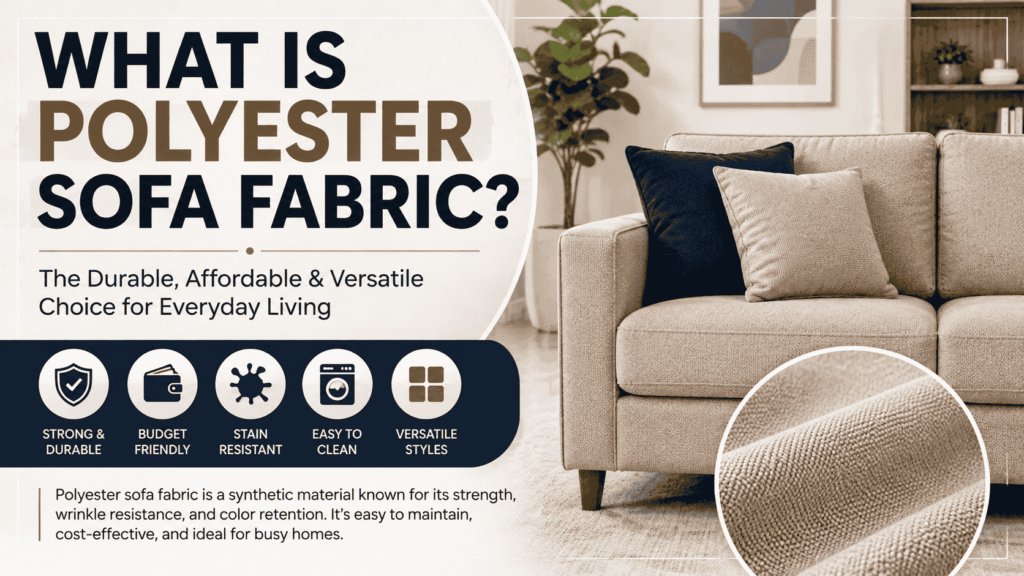
Polyester is a manufactured synthetic fiber, most commonly polyethylene terephthalate (PET), produced from petroleum-based chemicals. It’s one of the most widely used fibers in the world, prized in home furnishings for its strength and low cost.
Key Characteristics of Polyester
- Durable and resistant to abrasion
- Quick-drying
- Wrinkle-resistant
- Affordable relative to natural fibers
- Available in a huge range of colors, weaves, and textures
Standard polyester also holds its shape well and resists sunlight fading better than many natural fabrics, which is part of why it’s a go-to choice for everyday furniture.
Pros of Polyester Sofa Fabric
- Budget-friendly without sacrificing much durability
- Holds color well and resists fading
- Easy to find in nearly any style, from tight weaves to velvet-look finishes
- Naturally resistant to wrinkling and shrinking
Cons of Polyester Sofa Fabric
- Can feel less plush than natural or microfiber alternatives
- Quality varies a lot between low-end and premium weaves.
- Some finishes can build up static.
- Conventional (virgin) polyester is fossil-fuel-based, which matters if sustainability is a priority.
Related reading: Polyester Sofa Material
3. What Is Microfiber Sofa Fabric?
What Makes a Fabric “Microfiber”?
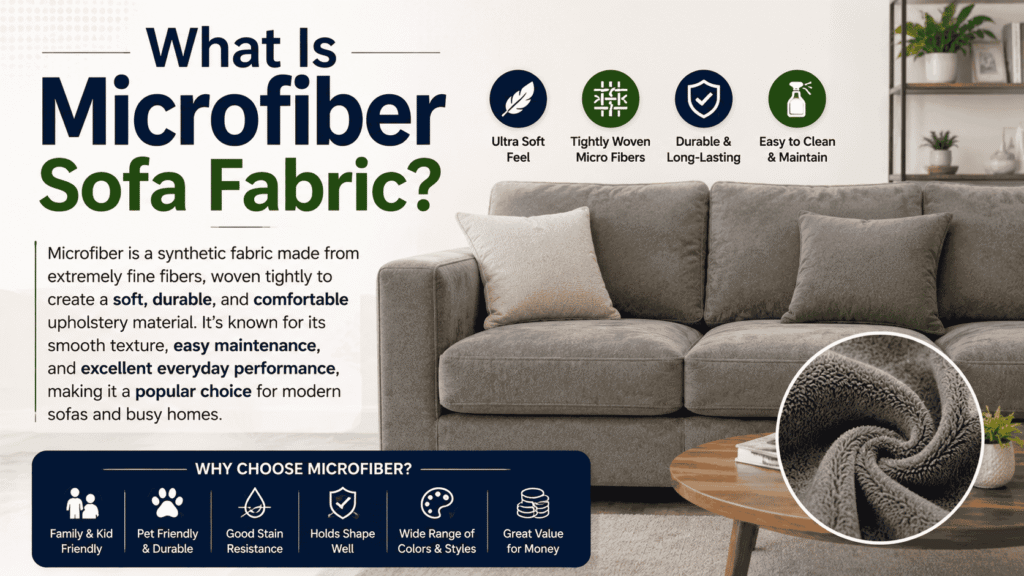
Microfiber isn’t a fiber type on its own — it’s a description of how fine the individual fibers are. To qualify as microfiber, a strand typically needs to be finer than a standard silk fiber. Manufacturers usually spin these ultra-fine strands from polyester, sometimes combined with polyamide (nylon), and weave them into a dense fabric. That density is what gives microfiber its soft, suede-like hand feel.
How Microfiber Is Used in Sofas
- Full upholstery and sectional covers
- Removable cushion covers
- Recliners
- Everyday family-room furniture where comfort matters most
Pros of Microfiber Sofa Fabric
- Noticeably soft, almost suede-like texture
- Comfortable for everyday lounging
- Tight weaves resist everyday spills reasonably well.
- Performs well for casual, high-traffic living spaces
Cons of Microfiber Sofa Fabric
- Can show pressure marks or shading where the pile is disturbed
- Quality ranges widely—cheap microfiber pills and mats faster.
- Loosely woven versions can attract pet hair and lint.
- The cleaning approach depends heavily on the specific fabric’s care code.
Related reading: Microfiber Sofa Material
4. Polyester vs Microfiber: 7 Key Differences
Difference #1: Softness and Comfort
Microfiber generally wins here. Its ultra-fine fibers create a dense, brushed surface that feels soft and warm to the touch—closer to suede than to standard woven fabric. Polyester can also feel soft, especially in velvet-style weaves, but a standard flat-weave polyester tends to feel crisper and less plush against skin.
Verdict: Microfiber wins if softness is your top priority.
Difference #2: Durability and Longevity
Both fibers are strong performers for everyday use, and the fiber alone isn’t the deciding factor—the weave density, thread count, and overall construction matter just as much. A tightly woven, high-denier polyester can easily outlast a thin, low-quality microfiber, and vice versa. For heavy-traffic family rooms, look at the fabric’s rub count (abrasion rating) rather than assuming one fiber name guarantees longer life.
Verdict: Tie — durability depends more on construction and quality than on the fiber label.
Difference #3: Stain Resistance
Neither fabric is automatically stain-proof, no matter what marketing copy implies. Polyester tends to resist absorption reasonably well because it’s not very porous. Microfiber’s dense weave can also keep liquids near the surface long enough to blot them up, which is why it has a reputation for handling everyday spills—coffee, juice, light grease—fairly gracefully. But the specific finish (some fabrics have added stain-resistant treatments) matters more than the fiber name alone.
Verdict: Microfiber often has a slight edge for everyday spills, but a treated polyester can perform just as well.
Difference #4: Cleaning and Maintenance
Both fabrics are generally easy to maintain with routine vacuuming and prompt spot cleaning. The real variable is the fabric’s cleaning code:
- W – water-based cleaners only
- S – solvent-based (dry) cleaners only
- WS – either water-based or solvent cleaners
- X – vacuum only, no liquids
Always check the tag before applying anything, and test any cleaner on a hidden area first. Sailrite’s guide to understanding upholstery cleaning codes breaks down exactly what each code allows and how to spot-clean safely.
Related reading: Ultimate Guide to Sofa Cleaning at Home
Difference #5: Pet-Friendliness
There’s no fabric that’s universally “best for” pets—weave, texture, and color all play a role, as does your specific animal’s behavior. A tight, smooth polyester weave can resist claw snagging better than a textured one. A dense microfiber can resist scratches well but may trap pet hair in its pile more than a smooth-finish polyester. If shedding is your main concern, a smoother, tighter weave (in either fiber) will be easier to keep hair-free than a textured or looped one.
Related reading: How to Choose the Right Sofa Material
Difference #6: Appearance and Style
Polyester is incredibly versatile in appearance — it can be woven to mimic linen, velvet, boucle, or a smooth matte finish, which makes it easy to match almost any interior style. Microfiber has a more distinctive look: a soft, brushed, suede-like surface that reads as cozy and casual rather than formal. If you want a sofa that leans traditional or refined, polyester’s range of finishes gives you more flexibility. If you want a relaxed, tactile, “sink into it” feel, microfiber’s texture does more of that work on its own.
Related reading: Velvet Sofa Material · Linen Sofa Material · Bouclé Sofa Material
Difference #7: Price and Overall Value
Both fabrics sit in the affordable-to-mid-range bracket compared with leather, velvet, or performance fabrics like Crypton. Polyester is often slightly cheaper at the low end and offers the widest range of price points. Microfiber typically costs a bit more for genuinely soft, well-constructed versions, but a quality microfiber sofa can hold its comfort and appearance longer under daily lounging.
Verdict: Both can be excellent value — the right pick depends on whether you’re optimizing for lowest upfront cost (polyester) or long-term comfort (microfiber).
5. Polyester vs. Microfiber: Pros and Cons
Polyester Pros
- Affordable
- Durable
- Easy to maintain
- Wide style and color variety
Polyester Cons
- Can feel less luxurious in basic weaves
- Quality varies significantly by manufacturer.
- Some versions attract static.
- Conventional polyester has environmental downsides.
Microfiber Pros
- Very soft, suede-like feel
- Comfortable for everyday use
- Generally easy to clean
- Performs well on family sofas
Microfiber Cons
- Can show pressure marks or texture changes over time
- Quality varies significantly.
- Some versions attract lint or pet hair.
- Cleaning requirements depend on the specific upholstery.
6. Is Microfiber Actually Polyester?
This is one of the most common points of confusion, and it deserves a direct answer: microfiber and polyester aren’t competing fiber categories. Polyester is a fiber type. “Microfiber” is a fineness—aption of fiber fineness—how thin the individual strands are, regardless of what they’re made from.
In practice:
- Most microfiber upholstery fabric is made from polyester microfilaments.
- Some microfiber blends combine polyester with polyamide (nylon) for extra softness and strength.
- A fabric can honestly be labeled “microfiber” and “100% polyester” at the same time—neither label is wrong.
This is also why product labelling can feel inconsistent between retailers. In the U.S., the FTC’s Textile Fiber Products Identification Act sets the rules for how manufacturers must disclose fiber content and generic names on labels, which is a useful reference if you want to understand exactly what a tag is legally required to tell you.
This section answers common long-tail questions like the following:
- Is microfiber polyester? — Usually, yes, at the fiber level.
- Is microfiber made from polyester? — Most commercial microfiber is.
- Is polyester the same as microfiber? — Not exactly; microfiber describes fiber fineness, not a separate material.
- Is microfiber better than polyester? — It depends on your priority (see the comparison sections above).
7. Which Is More Durable: Polyester or Microfiber?
Don’t judge durability from the fiber name alone. What actually determines how long a sofa fabric lasts:
- Fabric density and weave tightness — a densely woven fabric resists abrasion better than a loose one, regardless of fiber.
- Denier and fiber thickness — thicker fibers generally resist pilling and snagging better.
- Rub count (double rubs) — a standardized abrasion test that’s a far better durability indicator than “polyester” or “microfiber” alone.
- Cushion construction — foam density and frame quality affect how the fabric wears over the life of the sofa, independent of the textile itself.
If durability is your top priority, ask retailers for the fabric’s rub count and check the warranty, rather than relying on the fiber name to make the decision for you.
8. Which Is Easier to Clean?
| Cleaning Concern | Polyester | Microfiber |
|---|---|---|
| Routine vacuuming | Easy | Easy |
| Spot cleaning | Usually easy | Usually easy |
| Pet hair | Depends on texture | Depends on texture |
| Liquid spills | Depends on finish | Depends on finish |
| Deep cleaning | Check care label | Check care label |
The single most important habit for either fabric: check the cleaning code before you touch a spill with anything other than a dry cloth. Using a water-based cleaner on an S-coded fabric (solvent only) can cause water rings or staining, and using a solvent on a W-coded fabric can damage the fibers.
9. Which Sofa Fabric Is the Better Choice for Homes With Children?
For households dealing with frequent spills and heavy daily use, prioritize the fabric’s specific stain treatment, cleaning code, and construction over the fiber name. A well-constructed polyester or microfiber can handle juice boxes, crayons, and crumbs—the deciding factor is usually finish quality and how forgiving the weave is to blotting and light scrubbing.
10. Which Is Better for Pet Owners?
Choose Polyester If:
- You want the widest range of styles and finishes.
- You prefer a smooth, tight weave that resists claw snagging.
- You’re working with a tighter budget.
Choose Microfiber If:
- You prioritize a soft, cozy surface for lounging with your pet.
- You like a suede-like texture.
- You’ve confirmed the specific microfiber has a tight, pet-friendly weave.
A quick warning: loosely woven or heavily textured fabrics in either fiber category are more prone to snagging from claws, so always check the weave in person if scratching is a concern.
11. Polyester vs. Microfiber for Hot and Cold Weather
Breathability and surface feel can vary by construction, so it’s difficult to make an absolute claim for either fiber. In general, standard flat-weave polyester tends to feel a bit cooler to the touch, while microfiber’s dense, brushed surface can feel warmer and cozier—which is part of why it’s popular for family rooms used year-round. Room temperature, air conditioning, and how much skin contact the fabric gets will affect comfort more than the fiber label alone.
12. Polyester vs Microfiber: Which Looks More Luxurious?
Fabric quality outranks the fiber label here. A premium, well-woven polyester — especially in a velvet-style or textured finish — can look and feel more luxurious than a low-grade microfiber. Conversely, a high-quality microfiber with a rich, even pile can look genuinely upscale. If appearance is a top priority, judge the specific fabric sample in person rather than assuming one fiber name automatically outclasses the other.
13. Polyester vs. Microfiber: Which One Should You Choose?
Choose Polyester If You:
- Want affordability across a wide range of styles
- Need durable, easy-care upholstery for everyday use
- Prefer a fabric that resists wrinkling and holds its shape
Choose Microfiber If You:
- Prioritize softness above almost everything else
- Want a suede-like feel for a cozy living room
- Plan to use the sofa heavily for everyday lounging
Choose Neither Automatically If You
- Need a highly breathable, natural-fiber upholstery
- Want genuine leather
- Are set on a specific luxury texture like real velvet or linen
Related reading: Linen vs. Polyester · Velvet vs. Microfiber · Leather vs. Fabric Sofa
14. Polyester vs Microfiber: Which Is Better for Your Sofa?
| Your Priority | Better Choice |
|---|---|
| Softness | Microfiber |
| Affordable price | Polyester |
| Style variety | Polyester |
| Suede-like feel | Microfiber |
| Everyday use | Both |
| Easy maintenance | Both |
| Pet use | Depends on construction |
| Family use | Both |
| Luxury appearance | Depends on quality |
| Best overall | Depends on your priorities |
15. Environmental Considerations
Both fabrics are synthetic, and it’s worth understanding the trade-offs. Conventional (virgin) polyester — including the polyester used in most microfiber — is derived from fossil-fuel-based chemicals, and its production has a meaningful environmental footprint. Recycled polyester is one alternative gaining traction across the textile industry, though recycling doesn’t automatically make a fabric impact-free; production, dyeing, and finishing all still carry some footprint.
The most practical takeaway for shoppers: fabric longevity matters as much as fiber origin. A durable sofa fabric that lasts 10+ years, whether polyester or microfiber, generally has a smaller lifetime footprint than a cheaper fabric that needs replacing every couple of years.
16. How to Choose Between Polyester and Microfiber: 7 Questions
- How often will the sofa actually be used?
- Do you have young children in the household?
- Do you have pets, and how do they behave around furniture?
- How important is softness to you, personally?
- How often do spills or accidents happen in your home?
- What cleaning code does the specific sofa fabric have?
- What’s your realistic budget for this piece?
Answering these honestly will point you toward the right fabric faster than comparing fiber names alone.
17. Frequently Asked Questions
Is microfiber better than polyester for sofas? Neither is universally better—microfiber tends to win on softness, polyester tends to win on style variety and price, and durability depends on construction in both cases.
Is microfiber made from polyester? Most commercial microfiber upholstery is made from very fine polyester fibers, sometimes blended with nylon.
Is polyester or microfiber more durable? It depends on weave density, fiber thickness, and rub count more than on the fiber name itself.
Which is easier to clean, polyester or microfiber? Both are generally easy to maintain, but always follow the fabric’s specific cleaning code (W, S, WS, or X).
Is microfiber good for pets? It can be, especially in a tight weave, but loosely woven or heavily textured microfiber can trap pet hair or snag on claws.
Is polyester good for a sofa? Yes—it’s durable, affordable, wrinkle-resistant, and available in a huge range of finishes.
Does microfiber stain easily? Not typically, but the specific finish matters, and spills should be blotted promptly following the fabric’s care code.
Does polyester fade? Quality polyester resists fading fairly well, though prolonged direct sunlight can affect any fabric over time.
Which sofa fabric lasts the longest? A tightly woven, high-quality fabric — polyester or microfiber — with a good rub count and solid cushion construction will outlast a cheaper version of either fiber.
Is microfiber more expensive than polyester? Quality microfiber is often priced slightly higher than basic polyester, though both span a wide range depending on construction.
Is microfiber hotter than polyester? Microfiber’s dense pile can feel a bit warmer to the touch than a standard flat-weave polyester, though room conditions play a bigger role overall.
Which Sofa Upholstery Is Most Suitable for Family Homes? Whichever specific fabric has a forgiving cleaning code, a durable weave, and a finish that matches how heavily the sofa will be used—the fiber name matters less than these three factors.
18. Final Verdict
Polyester is the practical, versatile, budget-friendly choice with the widest range of styles. Microfiber is the soft, cozy option that tends to shine for everyday lounging and casual family rooms. Neither wins outright in the polyester vs. microfiber debate—the specific fabric’s construction, finish, quality, and cleaning code should drive your final decision more than the fiber name on the tag.
Keep Exploring
- Sofa Materials Explained
- Fabric Sofa Material
- How to Choose the Right Sofa Material
- Cotton Sofa Material
Sources referenced: FTC Textile Fiber Products Identification Act · Sailrite: Understanding Upholstery Fabric Cleaning Codes · CFDA Materials Hub: Polyester · Family Handyman: Microfiber Cleaning Cloths