
Introduction
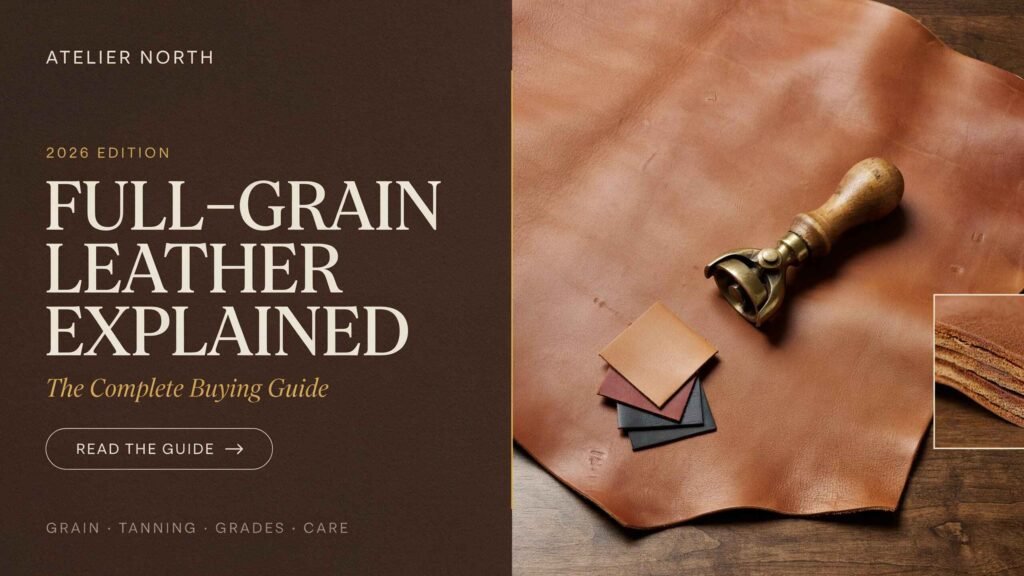
Full-grain leather is the top layer of an animal hide, kept in its natural state with the grain pattern left completely untouched. Because nothing is sanded away or artificially smoothed, it retains the tight fiber structure that makes leather strong in the first place — which is exactly why it’s widely regarded as the highest-quality leather you can buy.
You’ll find this leather type in furniture, handbags, wallets, boots, belts, and even luxury car interiors. It tends to appeal most to buyers who want something that lasts for decades, ages beautifully, and doesn’t need replacing every few years — think homeowners furnishing a sofa for the long haul, or anyone who values craftsmanship over a uniform, factory-perfect look.
This guide walks through everything you need to know before buying: how it’s made, how it compares to top-grain, genuine, and bonded leather, its real-world pros and cons, how to spot the genuine article, how to care for it, and whether it’s the right choice for your next purchase. If you’re specifically furnishing a living room, our Leather Sofa Material Explained guide covers all the leather grades and how to choose between them in more depth.
Table of Contents
What Is Full-Grain Leather?
Simple Definition
Full-grain leather is leather made from the outermost layer of the hide, with the natural grain surface left fully intact — no sanding, buffing, or artificial texture applied.
How Full-Grain Leather Is Made
Hides are split into layers during tanning. The top layer — the one that was closest to the animal’s outer skin — becomes this premium material. Tanners clean and treat this layer, but they deliberately avoid altering its surface, preserving the dense fiber network that gives the material its strength.
Key Characteristics That Make It Unique
Because the grain is untouched, every hide looks slightly different. You’ll notice subtle wrinkles, small scars, and natural texture variation from piece to piece — details that lower-grade leathers sand away entirely.
Why It’s Considered Premium Leather
The tightly packed fibers near the hide’s surface are what give leather its resistance to tearing and wear. Since this leather type keeps that layer whole, it’s inherently tougher and longer-lasting than leather types that remove or resurface it.
Full-Grain Leather vs Other Types of Leather
Full-Grain vs Top-Grain Leather
Top-grain leather is the second-highest quality tier. Manufacturers sand away the outermost layer to remove imperfections, then apply a finished coating for a smoother, more uniform look. It’s more affordable and easier to clean, but it loses some of the strength and natural character that this material keeps. For a full side-by-side look at all leather grades, see Leather Sofa Material Explained.
Full-Grain vs Genuine Leather
Despite the name, “genuine leather” is actually a lower grade. It’s made from layers left over after the top grain is split away, then coated and embossed to imitate a grain pattern. It’s cheaper, but noticeably less durable.
Full-Grain vs Bonded Leather
Bonded leather is the lowest tier — scraps and fibers glued together and bonded to a fabric backing. It looks like leather at a glance but wears out quickly and isn’t a long-term investment.
Quick Comparison Table
| Feature | Full-Grain | Top-Grain | Genuine | Bonded |
|---|---|---|---|---|
| Quality | Highest | High | Moderate | Low |
| Durability | Excellent (decades) | Very Good | Fair | Poor |
| Appearance | Natural, unique | Smooth, uniform | Artificial texture | Fake-looking |
| Price | Highest | Mid-High | Mid | Lowest |
| Lifespan | 20–30+ years | 10–20 years | 3–8 years | 1–5 years |
Benefits of Full-Grain Leather
Exceptional durability — the intact grain layer resists tearing, scuffing, and puncturing far better than processed leathers, so it holds up under years of daily use.
Natural beauty and unique grain patterns — no two pieces look identical, giving furniture and accessories a one-of-a-kind character mass-produced materials can’t replicate.
Develops a rich patina over time — exposure to light, oils from your skin, and everyday handling cause it to darken and soften attractively, a process leather enthusiasts consider a feature, not a flaw.
Breathability and comfort — the natural fiber structure allows the material to breathe, so it doesn’t trap heat or feel sticky the way vinyl or bonded leather can.
Long-term value — while the upfront cost is higher, the extended lifespan often makes this leather type cheaper per year of use than lower grades you’ll need to replace repeatedly.
Drawbacks of Full-Grain Leather
Higher initial cost — you’re paying for quality material and minimal processing, which puts it at the top of the price range.
Requires proper care — periodic conditioning is necessary to keep it supple and prevent drying or cracking over time.
Color and texture variations — natural marks, wrinkles, and shading differences mean the piece you receive won’t look perfectly uniform, which isn’t for everyone.
Heavier than some alternatives — the density that makes it durable also makes it heavier than bonded or synthetic options, worth factoring in for items like bags.
Common Uses of Full-Grain Leather
- Sofas and furniture — a popular choice for pieces meant to last a generation
- Bags and wallets — prized for how well it holds shape and ages with use
- Shoes and boots — valued for durability and the way it molds to the foot over time
- Belts and accessories — chosen for strength and a refined, natural look
- Luxury automotive interiors — used in higher-end vehicles for comfort and long-term wear resistance
Is Full-Grain Leather Good for Sofas?
Comfort and feel: These sofas tend to feel supple and breathable, and they soften further with regular use.
Durability for daily use: For households that use their living room furniture constantly, it generally holds up better than lower grades, resisting the wear that comes from years of sitting, lounging, and general traffic.
Pet and family friendliness: It resists scratches better than most alternatives, though sharp claws or rough play can still leave marks — something to weigh if you have pets or young children.
Long-term appearance: Rather than looking worn out, they typically develop a deeper, richer color over the years, which many owners see as an upgrade rather than damage.
When top-grain may be a better choice: If you prefer a perfectly consistent, blemish-free look, or you’re on a tighter budget, top-grain leather can be a reasonable middle ground.
How to Identify Genuine Full-Grain Leather
Check the Surface Grain
A genuine hide shows visible pores, subtle texture, and natural irregularities — a surface that’s too smooth and perfectly even is a red flag.
Look for Natural Imperfections
Small scars, wrinkles, or slight color variation are signs of authenticity, not defects. Heavily processed leathers are sanded until these disappear.
Examine the Edges
Cut edges on this leather typically show a fibrous, suede-like texture rather than a sealed or painted edge.
Perform the Touch and Smell Test
This leather type has a distinct, rich scent and a firm-but-supple feel. Synthetic or heavily coated leathers often smell chemical or plasticky by comparison.
Read Product Labels Carefully
Look specifically for the words “full-grain” on the label or listing. Vague terms like “genuine leather” or “top-quality leather” often signal a lower grade dressed up in marketing language.
How to Care for Full-Grain Leather
Regular cleaning tips: Dust or vacuum weekly to prevent grit from working into the surface, and wipe spills promptly with a slightly damp, soft cloth.
Conditioning and moisturizing: Apply a quality leather conditioner roughly every 6–12 months to keep the material supple and prevent it from drying out. Check out our Sofa Cleaning & Care section for more step-by-step maintenance guides and product recommendations.
Preventing cracks and dryness: Avoid harsh soaps, alcohol-based cleaners, and excessive water, all of which can strip natural oils from the leather.
Protecting against sunlight and moisture: Keep leather furniture out of direct, prolonged sunlight and away from heating vents, since both can cause fading, drying, or cracking over time.
Recommended maintenance schedule: A quick weekly dusting, a deeper clean as needed, and conditioning once or twice a year is usually enough to keep it in excellent shape.
How Long Does Full-Grain Leather Last?
Average lifespan: With proper care, this leather furniture and other goods commonly last 20 to 30 years or more — often outliving other materials in the same room or wardrobe.
Factors that affect durability: Frequency of use, exposure to sunlight and moisture, how consistently it’s conditioned, and the overall quality of the tanning process all influence how long it lasts.
Tips to extend its life: Rotate cushions or usage areas if possible, condition on schedule, and address spills immediately rather than letting them sit.
Is Full-Grain Leather Worth the Price?
Cost vs value analysis: While the sticker price is higher than other leather grades, the extended lifespan and reduced need for replacement often make it more cost-effective over time.
Who should invest in it: Long-term homeowners, families wanting furniture that can handle daily wear, and anyone who appreciates natural aging and character in their leather goods.
When alternative leather types may be better: If you move frequently, have a tight budget, or strongly prefer a uniform, flawless appearance, top-grain or genuine leather might suit your needs better.
Full-Grain Leather Buying Guide
What to look for before buying: Confirm the “full-grain” label explicitly, inspect for natural grain texture, and check the edges and overall feel of the material.
Important quality indicators: Visible pores, slight color variation, a fibrous cut edge, and a rich (not chemical) leather smell.
Questions to ask manufacturers: Ask where the hides are sourced, how the leather is tanned, and whether the grain has been corrected, sanded, or embossed in any way. For an added layer of confidence, look for tanneries certified by the Leather Working Group, an independent body that audits leather manufacturers for responsible, traceable production.
Red flags to avoid: Perfectly uniform color and texture, an artificial or plastic-like smell, vague labeling such as “leather-look” or “leather match,” and pricing that seems too low for genuine top-tier quality.
Frequently Asked Questions (FAQs)
Is full-grain leather real leather? Yes. It’s considered the most authentic and highest-quality form of real leather available, since it uses the complete top layer of the hide without alteration.
Does full-grain leather crack? It can crack if it dries out from lack of conditioning or prolonged sun exposure, but with regular care it resists cracking far better than processed leathers.
Is full-grain leather waterproof? Not inherently — it’s water-resistant to a degree but can stain or darken if left wet, so spills should be wiped up promptly.
Why is full-grain leather so expensive? It uses the highest-quality section of the hide, undergoes minimal processing, and requires skilled tanning and finishing, all of which add to the cost compared to lower leather grades.
Does full-grain leather scratch easily? It’s more scratch-resistant than most alternatives, though it can still be marked by sharp objects or pet claws; many light scratches blend into the leather’s natural patina over time.
What color of full-grain leather ages best? Darker, richer tones like brown and cognac tend to show the patina effect more attractively and mask minor wear better than very light colors.
Final Verdict
This leather type stands out as the highest-quality, longest-lasting option on the market, thanks to its intact natural grain and superior durability. It costs more upfront and asks for a bit of ongoing care, but in return it offers decades of use, a distinctive natural look, and a patina that only improves with age.
It’s an especially strong choice for sofas, premium furniture, and everyday accessories meant to be used — and loved — for years to come. If you value longevity and authentic character over a flawless, uniform finish, it’s very likely worth the investment. Before you buy, browse our other Sofa Buying Guides to compare it against other materials and find the grain, colour, and finish that fits your space best.
Related reading: Sofa Materials Explained | Velvet Sofa Material Explained | Leather Sofa Material Explained | Bouclé Sofa Material Guide | How to Choose the Right Sofa Material | Best Sofa Material for Your Home