
Introduction
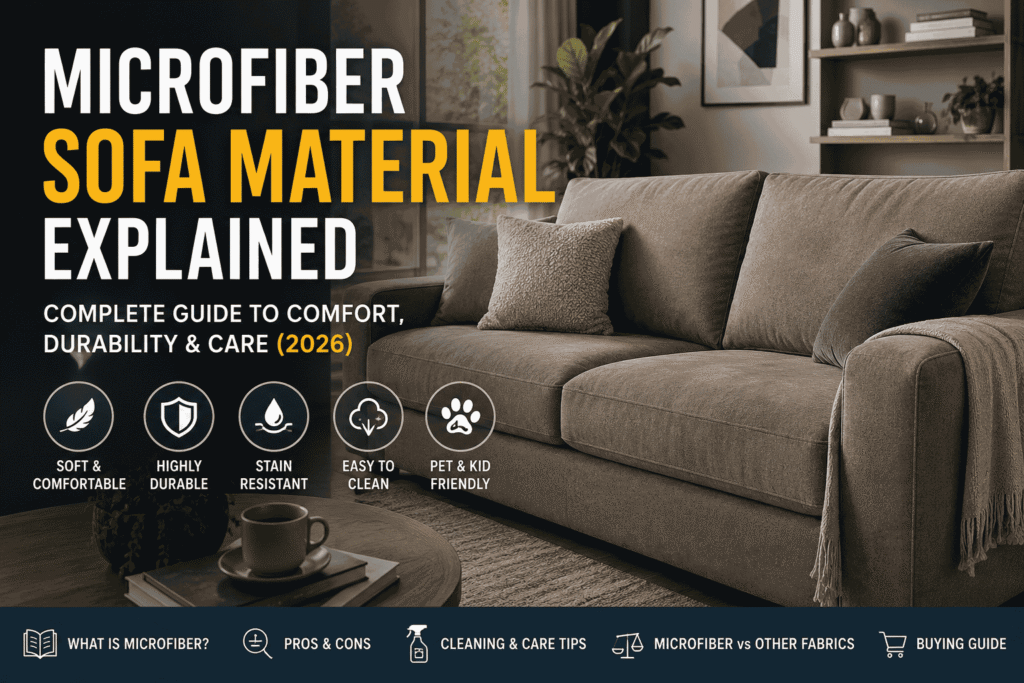
Picking the right upholstery is one of the biggest decisions you’ll make when buying a sofa, and microfiber sofa material has become one of the go-to answers for people who want comfort, style, and practicality in one package. It’s soft to the touch, resists everyday spills, and holds up to years of use without demanding constant attention.
So why has microfiber become one of the most popular upholstery fabrics on the market? Part of it comes down to versatility — it suits nearly any interior style, from casual family rooms to modern apartments. The rest comes down to performance: it resists stains, shrugs off pet hair, and rarely shows wear the way looser fabrics do.
This guide is built for anyone weighing microfiber against other sofa fabric types — busy parents, pet owners, first-time furniture buyers, or anyone simply tired of replacing a couch every few years. Below, you’ll learn exactly what microfiber sofa material is, how it’s made, its pros and cons, how it stacks up against leather, velvet, linen, cotton, and more, plus practical cleaning and buying advice you can actually use.
Table of Contents
What Is Microfiber Sofa Material?
Definition
Microfiber sofa material is a synthetic upholstery fabric made from extremely fine synthetic fibers — thinner than a strand of silk — woven into a tight, durable textile. The name comes from the fiber size itself: each strand is a fraction of the thickness of a standard fabric fiber, which is what gives microfiber its smooth, plush surface.
What Microfiber Is Made Of
Most microfiber sofa material is made from polyester, nylon, or a blend of the two. These synthetic polymers are engineered and split into ultra-fine filaments during production, then spun and woven into upholstery-grade fabric. Some performance versions blend in additional synthetic fibers to boost strength or add water resistance.
Why It Feels Like Suede
The suede-like feel comes from a finishing process called brushing, where the woven fabric surface is mechanically raised to create a soft, napped texture. This is the same basic principle used to create suede from leather, just applied to synthetic fiber instead of animal hide — which is why microfiber is often mistaken for real suede at first touch.
How It Differs From Traditional Fabric
Traditional upholstery fabric — cotton-poly blends, canvas, or woven linen — uses thicker yarns with more open weaves. Microfiber’s fibers are woven far more densely, which reduces how much liquid or dirt can penetrate the surface. That tighter construction is the main reason microfiber consistently outperforms traditional fabric in stain resistance and daily durability.
Common Names (Microsuede, Synthetic Suede, Ultra-Microfiber)
You’ll come across microfiber sofa material under several different names depending on the retailer or manufacturer, including:
- Microsuede – the most common alternate name, referring to the suede-like brushed finish
- Synthetic suede – a more literal description used by some furniture brands
- Ultra-microfiber – used for premium or extra-fine fibres versions with an especially soft hand-feel
All of these terms generally describe the same underlying fabric family, just marketed differently.
How Microfiber Sofa Material Is Manufactured
Ultra-Fine Fiber Technology
Manufacturing begins with synthetic polymer fibers engineered to be split into dozens or even hundreds of finer filaments, often measuring less than one denier — far thinner than a human hair. This ultra-fine fiber technology is what allows microfiber to achieve such a soft, dense texture without adding bulk or weight.
Weaving Process
Once split, the fine fibers are spun into yarns and woven into a tight base fabric. The weaving pattern is deliberately dense, packing more fiber into each square inch than standard upholstery textiles. This density is a major contributor to microfiber’s durability and resistance to everyday wear.
Brushing & Finishing
After weaving, the fabric goes through a brushing or sanding stage that lifts individual fibers to the surface, creating the soft, napped texture associated with suede. Finishing treatments may also be applied at this stage to boost stain resistance, color retention, and fade resistance.
Why the Dense Weave Improves Performance
Because the weave is so tight, spills and dirt have a harder time penetrating past the surface layer, which buys time for cleanup before a stain sets in. The same dense construction also makes the fabric more resistant to abrasion, tearing, and pilling — three of the most common ways upholstery fabric wears out over time.
Types of Microfiber Sofa Material
Polyester Microfiber
The most widely used type, valued for its affordability, wrinkle resistance, and long-lasting color. It’s a solid all-around choice for households that want durability without a premium price tag.
Nylon Microfiber
Known for superior abrasion resistance and a bit more elasticity, making it a strong pick for sofas that see heavy daily traffic, such as family rooms or shared living spaces.
Blended Microfiber
Combines polyester and nylon (and sometimes other synthetics) to balance softness, strength, and cost — often used when manufacturers want the best qualities of both fibers in a single fabric.
Microsuede
A specific finish of microfiber brushed to closely mimic the look and feel of genuine suede. It’s popular for its rich, velvety appearance and is often used on statement pieces or accent sofas.
Performance Microfiber
An upgraded category built with additional treatments for water resistance, stain repellency, or antimicrobial protection. Performance microfiber is common in family- and pet-focused furniture lines that need to withstand heavier daily use.
Key Features of Microfiber Sofa Material
- Soft Texture – A brushed, suede-like surface that feels warm and inviting rather than plasticky.
- Lightweight Construction – Thinner, finer fibers keep the overall fabric weight low without sacrificing strength.
- Tight Fiber Weave – Dense construction that limits how deeply liquids and dirt can penetrate.
- Excellent Abrasion Resistance – Holds up well against rubbing, sliding, and everyday friction.
- Fade Resistance – Maintains color vibrancy even with regular indoor light exposure.
- Wrinkle Resistance – Resists creasing and holds its shape better than many woven fabrics.
- Moisture Resistance – Slows liquid absorption long enough for spills to be wiped away before soaking in.
- Easy Maintenance – Most everyday marks and stains can be cleaned with mild soap and water.
Advantages of Microfiber Sofa Material
- Exceptional Comfort – The brushed nap feels soft against skin, making it pleasant for lounging and everyday use.
- Highly Durable for Daily Use – Performs well under frequent sitting, sliding, and general household activity.
- Stain Resistant – The tight weave slows down staining, giving you time to clean spills before they set.
- Pet-Friendly Surface – Resists claw snags better than looser fabrics and doesn’t trap pet hair as deeply.
- Kid-Friendly Upholstery – Withstands juice spills, crayon marks, and general rough play better than delicate materials.
- Affordable Alternative to Leather – Offers a similar upscale appearance without leather’s higher price tag.
- Scratch Resistant – The dense weave resists snagging from claws, buttons, or zippers.
- Color Retention – Finishing treatments help microfiber hold its original color for years.
- Allergy-Friendly Fabric – The tight weave traps fewer allergens on the surface compared to looser woven fabrics.
- Long Service Life – With basic care, quality microfiber sofas commonly last well over a decade.
Disadvantages of Microfiber Sofa Material
- Can Trap Body Oils – Skin oils and lotions can leave marks that are harder to lift than water-based stains.
- Generates Static Electricity – Synthetic fibers are prone to static buildup, especially in dry indoor air.
- Less Breathable Than Natural Fabrics – Can feel warmer during hot weather compared to cotton or linen.
- Sensitive to High Heat – Direct sun or nearby heat sources can affect certain microfiber finishes over time.
- Water Rings on Some Fabrics – Solvent-only microfiber types can show visible marks if cleaned with water.
- May Flatten in High-Traffic Areas – Heavy daily use can compress the nap where people sit most often.
Microfiber Sofa Material vs Other Sofa Materials
Microfiber vs Fabric Sofa Material
Standard fabric sofas are often cheaper upfront but wear out faster and stain more easily due to a looser weave. Microfiber generally wins on durability, stain resistance, and long-term maintenance, while standard fabric may offer more natural texture variety.
Microfiber vs Leather Sofa Material
Leather brings a premium look and develops a natural patina with age, but it costs significantly more and can crack or dry out over time. Microfiber delivers a comparable appearance for less money, resists cracking entirely, and cleans more easily, though it lacks leather’s natural ageing character.
Microfiber vs Faux Leather Sofa Material
Faux leather often feels more synthetic and is prone to peeling or cracking after a few years. Microfiber tends to be more breathable, more resistant to scratching, and generally more comfortable for extended sitting.
Microfiber vs Velvet Sofa Material
Velvet sofa material offers a luxurious sheen and rich texture but is harder to clean and prone to visible watermarks and pressure marks. Microfiber holds up far better under daily use while still delivering a soft, plush feel, making it the more practical option for busy households.
Microfiber vs Linen Sofa Material
Linen breathes better in warm climates but wrinkles easily and stains more readily. Microfiber is the sturdier, lower-maintenance option overall, especially where spills and daily wear are a concern.
Microfiber vs Cotton Sofa Material
Cotton feels soft and natural but stains easily and can fade faster with sun exposure. Microfiber holds color longer and resists staining more effectively, though cotton offers better breathability in warmer months.
Microfiber vs Polyester Sofa Material
Standard polyester upholstery is a looser weave than microfiber, meaning it doesn’t resist stains or abrasion quite as well. Microfiber is essentially a refined, more tightly woven version of polyester fibres technology, which is why it consistently outperforms standard polyester in day-to-day durability.
Sofa Material Comparison Table
| Material | Comfort | Durability | Cleaning | Pet Friendly | Cost | Best For |
|---|---|---|---|---|---|---|
| Microfiber | High | High | Easy | Yes | $$ | Families, pets, everyday use |
| Fabric | Medium | Medium | Moderate | Moderate | $ | Casual living rooms |
| Leather | High | High | Moderate | Moderate | $$$$ | Formal spaces |
| Faux Leather | Medium | Medium | Easy | Moderate | $$ | Budget-conscious buyers |
| Velvet | High | Medium | Difficult | No | $$$ | Accent or formal seating |
| Linen | Medium | Low | Difficult | No | $$ | Warm climates, low-traffic rooms |
| Cotton | Medium | Low | Moderate | No | $ | Casual, low-traffic spaces |
| Polyester | Medium | Medium | Moderate | Moderate | $ | Budget-friendly everyday use |
Is Microfiber Sofa Material Good for Pets?
Microfiber performs well in pet households thanks to its tight weave, which resists claw snags better than loosely woven fabrics. Pet hair tends to sit on the surface rather than working deep into the fibers, making it easier to lift away with a vacuum or lint roller. Odor resistance is reasonably good, though pet accidents still need prompt cleaning to prevent lingering smells. Darker or patterned microfiber tends to hide light stains and shed hair better than solid pale colors.
Is Microfiber Sofa Material Good for Kids?
Microfiber’s spill resistance makes it a practical choice for households with children. Food and drink spills tend to sit on the surface long enough to blot up before they set in, and the fabric generally handles crayon marks and light ink better than more absorbent materials, especially when cleaned quickly. Daily wear from kids climbing, jumping, or sitting is well within what quality microfiber is built to handle.
How Durable Is Microfiber Sofa Material?
Abrasion Resistance
Microfiber typically scores well on abrasion tests, which measure how many rub cycles a fabric can withstand before showing visible wear — often rating well above the threshold recommended for standard residential use.
Daily Performance
Constant sitting, sliding, and general use will gradually wear any fabric, but microfiber’s dense weave slows this process considerably compared to looser textiles.
Commercial vs Residential Use
Higher-grade microfiber, particularly performance or nylon-based versions, is often rated suitable for light commercial use, such as offices or waiting rooms, in addition to standard residential settings.
Expected Lifespan
With reasonable care, a quality microfiber sofa typically lasts 7 to 15 years, depending on fiber quality, frame construction, and how heavily it’s used.
Is Microfiber Sofa Material Comfortable?
Summer Comfort
Microfiber can feel slightly warmer in hot weather compared to breathable natural fabrics like linen or cotton, since the tight weave limits airflow.
Winter Comfort
The dense fabric retains a bit of warmth, which many people find cozy during colder months.
Softness
The brushed, napped surface gives microfiber a soft, suede-like feel that many describe as more comfortable than smooth leather or coarse woven fabrics.
Breathability
While not as breathable as natural fiber options, most people don’t notice a significant difference during normal indoor use and moderate climates.
Is Microfiber Sofa Material Easy to Clean?
Everyday Cleaning
Routine dust and light dirt lift easily with a vacuum’s upholstery attachment.
Removing Dust
Regular vacuuming — ideally weekly — keeps dust from settling deep into the brushed fibers.
Removing Pet Hair
A lint roller, rubber brush, or vacuum attachment designed for pet hair works well since microfiber doesn’t trap hair as deeply as looped fabrics.
Food Stains
Blot gently with a cloth dampened in mild soapy water, working from the outside of the stain inward.
Oil Stains
Sprinkle baking soda or cornstarch on the stain, let it absorb the oil for a few hours, then vacuum and wipe clean.
Ink Stains
Dab a small amount of rubbing alcohol onto a clean cloth and blot gently, testing an inconspicuous area first.
Water Marks
On solvent-only microfiber, water can leave visible rings. Once dry, gently rub the area with a clean, dry cloth or soft-bristled brush to blend the mark back into the nap.
Deep Cleaning
Always check the manufacturer’s cleaning code before deep cleaning, and steam clean only if the code allows water-based methods.
How to Maintain a Microfiber Sofa
Weekly Care
Vacuum thoroughly and spot-treat any fresh stains before they set.
Monthly Maintenance
Inspect seams, cushions, and high-contact areas for early signs of wear.
Cushion Rotation
Rotate and flip cushions regularly to distribute wear more evenly across the sofa.
Preventing Fading
Keep the sofa out of direct, prolonged sunlight, or use curtains and blinds to limit UV exposure.
Fabric Protection Tips
Apply a manufacturer-approved fabric protector periodically to reinforce stain resistance.
Common Cleaning Mistakes to Avoid
- Using Too Much Water – Can cause visible rings on solvent-only microfiber fabrics.
- Ignoring Cleaning Codes – Using the wrong cleaner for the fabric’s specific code can damage the surface.
- Harsh Chemicals – Bleach or strong solvents can strip color and weaken fibers.
- Scrubbing Too Hard – Aggressive scrubbing can flatten or damage the brushed nap.
- Skipping Regular Vacuuming – Allows dust, oils, and debris to build up in the fibers over time.
How Long Does Microfiber Sofa Material Last?
Average Lifespan
Most quality microfiber sofas last between 7 and 15 years with reasonable care.
Factors That Affect Longevity
Fiber quality, frame construction, cushion fill, household traffic levels, and cleaning habits all play a role in how long the fabric holds up.
Tips to Make It Last Longer
Vacuum consistently, address spills immediately, rotate cushions, and avoid prolonged direct sunlight to extend the sofa’s usable life.
Best Places to Use Microfiber Sofa Material
- Living rooms with everyday family activity
- Family rooms that see heavy daily use
- Apartments where low-maintenance furniture matters
- Rental properties that need durable, easy-care upholstery
- Home offices and shared workspaces
- Pet-friendly homes that need scratch and stain resistance
Buying Guide: How to Choose the Best Microfiber Sofa Material
Check Fabric Quality
Run your hand across the surface to check for even density; thin or patchy areas tend to wear out faster.
Examine the Frame
A hardwood frame typically outlasts particle board or thin metal frames, especially under regular use.
Choose High-Density Cushions
High-density foam or foam-and-fiber blends hold their shape longer than standard low-density foam.
Understand Cleaning Codes
Confirm whether the fabric is coded W, S, W-S, or X, and make sure that matches your cleaning preferences and lifestyle.
Pick the Right Color
Mid-tone or patterned microfiber tends to hide stains and pet hair better than solid pale shades.
Compare Warranty Coverage
A longer warranty often reflects stronger manufacturer confidence in both the fabric and the underlying construction.
Evaluate Fabric Weight
Heavier-weight microfiber generally holds up better to daily wear than thinner, lightweight versions.
Is Microfiber Sofa Material Worth Buying?
Who Should Buy It?
Families, pet owners, renters, and anyone who wants a durable, easy-care sofa without leather’s higher price tag or upkeep demands.
Who Should Avoid It?
Buyers who prioritize natural fiber breathability, or those who specifically want the aging character of genuine leather, may prefer other materials.
Cost vs Value
Given its durability, stain resistance, and relatively affordable price point, microfiber consistently delivers strong long-term value compared to many other upholstery options.
Final Recommendation
For most everyday households, microfiber sofa material strikes one of the best balances available between comfort, durability, and cost.
Microfiber Sofa Care Checklist
- Daily Care: Fluff cushions and check for fresh spills.
- Weekly Care: Vacuum thoroughly and lint-roll any pet hair.
- Monthly Care: Spot-treat lingering marks and rotate cushions.
- Annual Maintenance: Apply a fabric protector and inspect seams and frame condition.
Frequently Asked Questions
What is microfiber sofa material? It’s a synthetic upholstery fabric made from ultra-fine polyester or nylon fibres, woven densely and brushed to create a soft, suede-like surface.
Is microfiber sofa material better than fabric? Generally yes for durability and stain resistance, though traditional fabric may offer more natural texture variety.
Is microfiber better than leather? Microfiber costs less, resists cracking, and cleans more easily, while leather offers a premium look and natural aging patina.
Is microfiber better than polyester? Microfiber is essentially a more tightly woven, finer version of polyester fiber, which gives it better stain and abrasion resistance than standard polyester upholstery.
Is microfiber waterproof? No, it’s spill-resistant but not fully waterproof; liquids should be blotted up quickly to prevent soaking in.
Does microfiber crack like leather? No, since it’s a woven textile rather than an animal hide, microfiber doesn’t crack the way leather can over time.
Is microfiber good for pets? Yes, its tight weave resists claw snags and makes pet hair and light stains easier to remove than looser fabrics.
Is microfiber good for hot weather? It’s less breathable than natural fabrics like cotton or linen, so it may feel warmer during hot weather.
How long does microfiber last? With proper care, most microfiber sofas last between 7 and 15 years.
Can microfiber sofas be steam cleaned? Only if the manufacturer’s cleaning code allows water-based cleaning methods; always check before steam cleaning.
Does microfiber attract dust? It can attract some dust and lint due to its brushed texture, but regular vacuuming keeps this easily manageable.
Is microfiber eco-friendly? Since it’s synthetic and petroleum-based, microfiber is generally less eco-friendly than natural fiber alternatives, though its long lifespan can offset some environmental impact by reducing replacement frequency.
Conclusion
Microfiber sofa material brings together comfort, durability, and affordability in a way that’s hard to match with other upholstery options. It resists stains, holds up well to pets and kids, and stays looking good with simple, routine care — all without the price tag or upkeep leather demands.
It isn’t perfect: it can feel warmer in summer, is prone to static, and isn’t fully waterproof. But for most everyday households, those trade-offs are minor compared to the practicality it offers day to day.
If you’re still weighing your options, it’s worth exploring related guides on fabric, leather, faux leather, velvet, linen, and cotton sofa materials to find the best match for your space, lifestyle, and budget.