
Introduction
Small living rooms can feel difficult to decorate, especially when a large sofa takes up most of the available space. Many homeowners struggle to create a comfortable and stylish layout without making the room look crowded. Learning how to arrange a sofa in a small room properly can completely change the way your living area looks and feels.
The wrong sofa placement can block walkways, reduce natural light, and make the room appear smaller than it actually is. However, with the right arrangement techniques, even a tiny room can feel open, functional, and inviting. In this guide, you will learn practical space-saving tips, smart furniture layouts, and expert decorating ideas to maximise every inch of your small room.
Before arranging furniture, it is important to understand the correct sofa dimensions. You can also read our guide on how to choose sofa size for small room and how to measure space for a sofa to avoid layout mistakes.
Table of Contents
How to Arrange Sofa in Small Room
The way you position your sofa has a giant impact on the appearance and functionality of a small living room. A smart layout can make the space feel larger, brighter, and easier to move around in.According to the American Society of Interior Designers, proper furniture placement can improve both functionality and comfort in compact living spaces.
Makes the Room Look Larger.
Proper sofa placement creates better visual flow and opens up the centre of the room. When furniture is arranged thoughtfully, the room feels more spacious instead of cramped and cluttered.
Improves Walking Space
One of the biggest problems in small rooms is limited walking space. A poorly placed sofa can block pathways and make movement uncomfortable. Keeping clear walkways improves both comfort and functionality.
Creates Better Balance and Comfort
Balanced furniture placement helps the room feel organised and relaxing. Positioning the sofa correctly also improves conversation areas and viewing angles for TVs or windows.
Helps Natural Light Flow
Natural light makes small spaces appear larger. Avoid placing large sofas directly in front of windows because this can make the room feel dark and closed in.
Measure Your Small Room Before Arranging the Sofa
Before moving furniture, it is important to understand the exact dimensions of your room. Careful planning prevents overcrowding and helps you choose the best layout.You can also follow room measurement recommendations from HGTV when planning furniture layouts for
Measure Wall Lengths
Use a measuring tape to calculate the width and length of each wall. This helps determine the ideal sofa size for your room.
Check Door and Window Clearance
Make sure your sofa does not block doors, windows, or storage areas. Make sure there is sufficient space for doors to swing open without obstruction.
Leave Enough Walking Space.
Experts recommend leaving at least 24 to 30 inches of walking space around furniture whenever possible. This prevents the room from feeling tight.
Use painter’s tape to test the layout.
A simple trick is to outline the sofa dimensions on the floor using painter’s tape. This allows you to visualise the arrangement before moving heavy furniture.
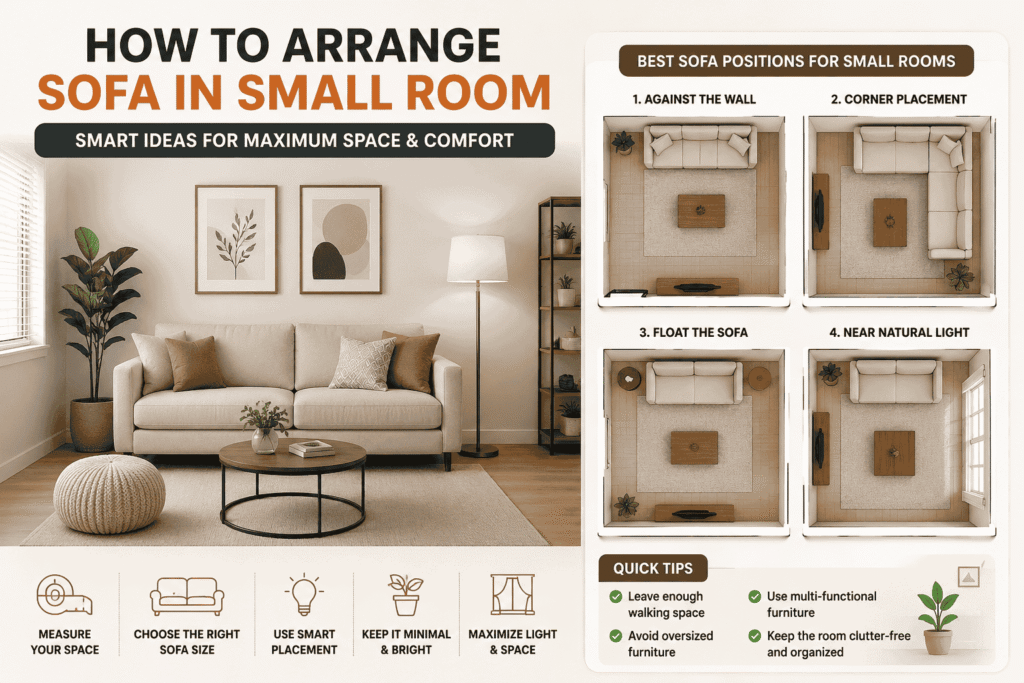
Best Sofa Positions for Small Rooms
Choosing the right sofa position is the most important step when arranging furniture in a small room.
The layout works best when you first understand how to choose the right sofa for your room size and lifestyle.
Place the sofa against the wall.
Placing the sofa against a wall is one of the best solutions for tiny living rooms.
Best for Tiny Rooms
This layout keeps the centre area open and creates more usable floor space.
Creates Open Center Space
With the sofa against the wall, you can add a small coffee table or extra seating without overcrowding the room.
Use a corner placement.
Corners are often underused in small rooms, making them perfect for sofa placement.
Ideal for Sectional Sofas
L-shaped or sectional sofas fit naturally into corners and maximise seating capacity.
Maximises Unused Corners
Corner placement frees up the middle of the room and improves movement throughout the space.
Float the Sofa Away From the Wall
Although many people place sofas directly against walls, floating them can work surprisingly well in some layouts.
Works in Square Rooms
In square-shaped rooms, floating the sofa creates a more balanced furniture arrangement.
Creates Visual Separation
This setup can separate different areas in open spaces, such as dividing the living room from the dining area.
Place the sofa near natural light.
Positioning the sofa near windows can make a small room feel brighter and more open.
Makes Room Feel Airy
Natural sunlight adds warmth and creates the illusion of a larger space.
Avoid Blocking Windows
Choose lower-profile sofas that do not cover windows or block sunlight.
How to Arrange a Sofa in a Small Room With a TV
Adding a TV to a small room requires careful planning to maintain comfort and functionality.
Best Viewing Distance
Keep the sofa at a comfortable viewing distance from the TV. Avoid placing seating too close to large screens.
Avoid Blocking Pathways
Arrange furniture so people can move freely without walking directly in front of the TV.
Wall-Mounted TV Tips
Wall-mounted TVs save floor space and make small rooms look cleaner and more modern.
Use Compact Media Units
Choose slim TV stands or floating shelves instead of bulky entertainment centres.
Space-Saving Furniture Ideas for Small Rooms
The right furniture choices can make a small room feel more practical and less crowded.Before purchasing compact furniture, learn how to check sofa quality before buying to ensure long-term comfort and durability.
Loveseats vs. Full Sofas
Love seats are ideal for tiny apartments or compact living rooms because they take up less space while still providing comfortable seating.
Armless Sofas
Armless sofas create a more open appearance and fit better in narrow spaces.
Storage Ottomans
Storage ottomans provide hidden storage while also working as seating or coffee tables.
Nesting Tables
Nesting tables save space because they can be stacked together when not in use.
Slim Side Tables
Choose narrow side tables with lightweight designs to avoid visual clutter.
Common Sofa Arrangement Mistakes to Avoid
Avoiding common layout mistakes can dramatically improve the appearance of your room.f your furniture feels uncomfortable or damaged, it may be time to learn how often should you replace sofa for better support and appearance.
Oversized Sofa
Large sofas can overwhelm a small room and limit movement.
Blocking Windows
Furniture placed in front of windows reduces natural light and makes the room feel smaller.
Too Much Furniture
Using too many chairs, tables, or decorations creates clutter and reduces functionality.
No Walking Space
Always leave enough room for comfortable movement around the furniture.
Pushing Everything Into Corners
While corner placement can work well, pushing every piece of furniture against the walls can sometimes make the room feel unbalanced.
Small Room Sofa Arrangement Ideas by Room Shape
Different room shapes require different layout strategies.
Narrow Living Room
Use a slim sofa against the longest wall and avoid oversized coffee tables. Vertical storage can help maximise space.
Square Room
A floating sofa arrangement often works best in square rooms because it creates better balance.
Studio Apartment
Use the sofa as a divider between sleeping and living areas to create clear zones.
Open-Concept Space
Position the sofa to separate the living room from the kitchen or dining area without blocking natural flow.
Decorating Tips to Make a Small Room Look Bigger
Smart decorating choices can make even the smallest room feel larger and brighter.Keeping your furniture clean is equally important, so follow these tips on how to maintain sofa at home for longer-lasting sofas.
Design experts at Better Homes & Gardens recommend using mirrors and light colors to make small rooms appear larger.
Use mirrors.
Mirrors reflect light and create the illusion of extra space.
Light-Coloured Sofas
Neutral colours like beige, white, grey, or cream help rooms feel open and airy.
Minimal Decor
Avoid excessive decorations that can make the room feel cluttered.
Vertical Storage
Tall shelves and wall-mounted storage units help free up valuable floor space.
Proper Lighting
Layered lighting with floor lamps and wall lights makes the room feel more welcoming.
Best Sofa Types for Small Rooms
Some sofa styles work much better in compact spaces than others.Reading our guide on how to choose sofa size for small room can help you select the perfect fit for compact living areas.
Apartment Sofas
Apartment sofas are specifically designed for smaller living spaces.
Modular Sofas
Modular sofas can be rearranged easily to fit different layouts.
Sectionals for Corners
Small sectionals maximise seating while efficiently using corner space.
Sleeper Sofas
Sleeper sofas are excellent for studio apartments or guest rooms because they serve multiple purposes.
Compact loveseats
Loveseats provide comfortable seating without taking up too much room.
Related Sofa Care Guides
Keeping your sofa clean and well-maintained is just as important as arranging it properly. These helpful guides will show you how to protect your sofa, remove stains, and keep your living room looking fresh and comfortable.
- How to Clean a Fabric Sofa Naturally
- How to Remove Stains From Sofa at Home
- How to Clean Sofa Without a Machine
- How to Clean Sofa Cushions Properly
- How to Remove Smell From Sofa
Regular sofa care not only improves appearance but also helps extend the lifespan of your furniture while keeping your small room clean and inviting.For additional furniture care recommendations, you can explore cleaning tips from Good Housekeeping.
Final Thoughts
Learning how to arrange a sofa in a small room properly can completely transform your living space. The right sofa placement improves comfort, increases walking space, and makes the room appear larger and more organised.
Start by measuring your room carefully, choosing space-saving furniture, and avoiding common layout mistakes. Whether you place the sofa against the wall, use corner positioning, or create a floating layout, the goal is to balance comfort with functionality.
Even the smallest room can feel stylish, modern, and welcoming when furniture is arranged thoughtfully.
FAQs
What is the best sofa placement for a small room?
The best sofa placement for a small room is usually against the wall or in a corner to maximise open floor space and improve movement.
What is the best sofa placement for a small room?
The best sofa placement for a small room is usually against the wall or in a corner to maximise open floor space and improve movement.
Should a sofa go against the wall in a small room?
Yes, placing a sofa against the wall often works best in tiny rooms because it keeps the centre area open and creates a more spacious appearance.
How do I make my small living room look bigger with a sofa?
Choose a compact sofa, use light colours, avoid blocking windows, and keep enough walking space around furniture.
Can a sectional sofa work in a small room?
Yes, small sectional sofas can work well when placed in corners because they maximise seating without wasting space.
How much space should be between a sofa and a coffee table?
Ideally, leave around 14 to 18 inches between the sofa and coffee table for comfortable movement and easy access.
What colour sofa is best for a small room?
Light colours such as white, beige, light grey, or cream are best because they reflect more light and make the room feel larger.