
Introduction
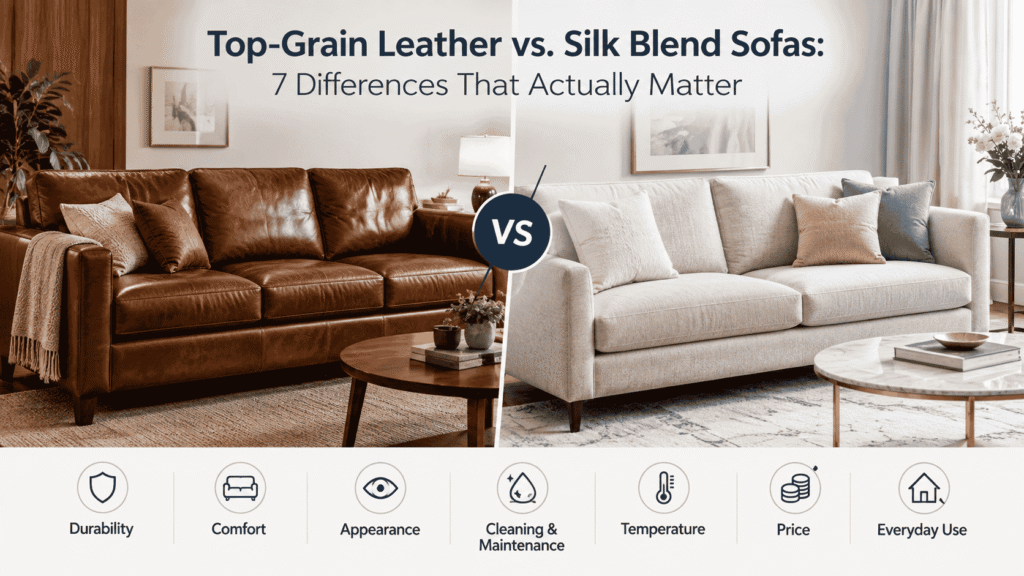
Top-Grain Leather vs Silk Blend is an important comparison for anyone choosing upholstery for a new sofa. These two materials offer very different characteristics in terms of comfort, appearance, durability, maintenance, and everyday use. Top-grain leather provides the distinctive character of natural leather, while silk blend can offer a soft textile feel with an elegant appearance.
Choosing between them should involve more than simply comparing how they look. Your sofa may be used every day for relaxing, entertaining, watching television, or spending time with family, so the upholstery needs to suit your lifestyle as well as your interior design.
Top-grain leather is made from the upper portion of a hide and can have different finishes that affect its appearance and care requirements. Silk blend, meanwhile, combines silk with another fiber, meaning its performance can vary depending on the blend, weave, and construction.
In this guide, we will compare Top-Grain Leather vs Silk Blend across seven important factors, including durability, comfort, appearance, cleaning, temperature, price, and lifestyle suitability. By understanding these differences, you can make a more informed decision before buying your next sofa.
Table of Contents
What Top-Grain Leather Actually Is
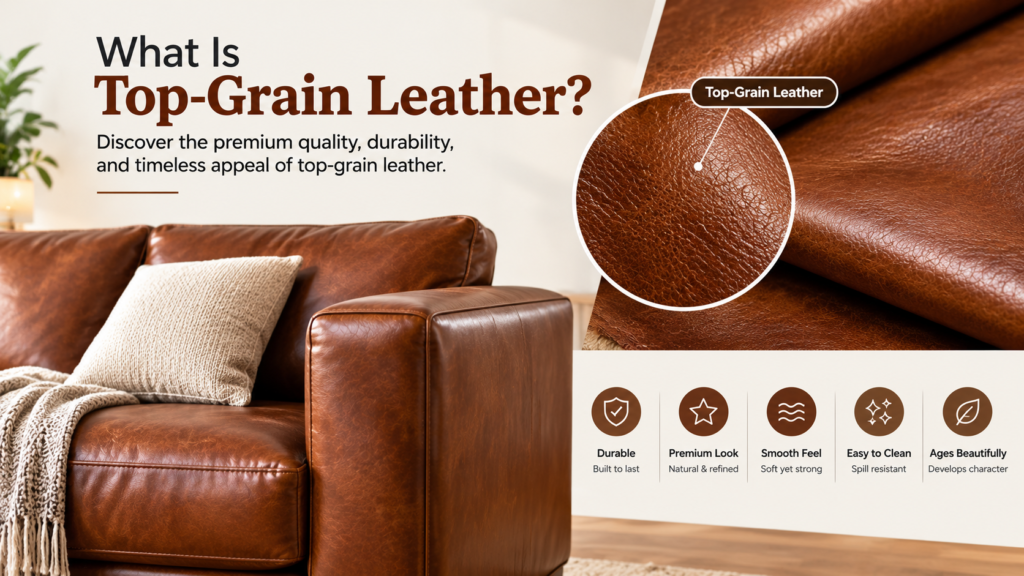
Top-grain leather comes from the outer layer of the hide, just below the very top surface that’s sanded off during processing. That’s the part of the definition manufacturers agree on. What varies enormously—and what most buyers never ask about—is the finish.
An aniline finish leaves the hide almost untouched, so scars, wrinkles, and natural markings stay visible. A semi-aniline finish adds a light protective coat, trading a bit of that rawness for better stain resistance. A pigmented finish goes further, applying a polymer surface layer that hides imperfections and holds up hardest to daily wear—the trade-off is a less “natural” feel underfoot or in hand.
Two sofas can both be labeled “top-grain leather” and behave completely differently once a toddler or a dog gets involved, purely because of this finish decision.
Where It Tends to Shine
- Living rooms with daily foot traffic
- Households with pets, where a pigmented finish resists claw marks and odor better than fabric
- Studies and home offices, where a leather chair or sofa reads as classic rather than trendy
- Homes going for a minimal, architectural look
What Silk Blend Actually Is
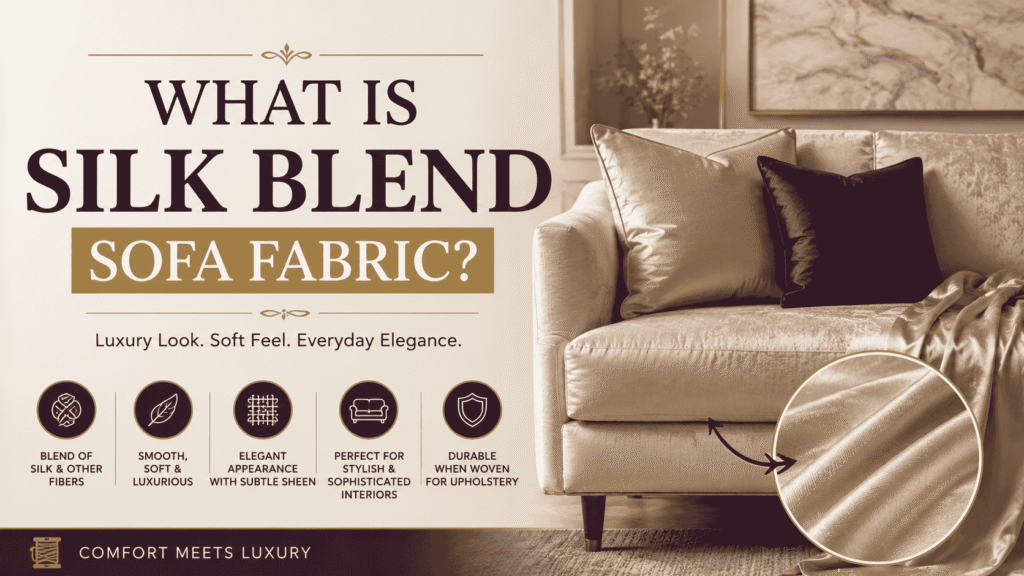
“Silk blend” isn’t a spec—it’s a category. It just means silk fibers are woven together with something else, and that “something else” does most of the practical work. A silk-cotton blend behaves nothing like a silk-polyester blend or a silk-linen blend.
The percentage of silk matters too. A fabric that’s 70% silk will drape, catch light, and wrinkle very differently from one that’s 15% silk with the rest doing the heavy lifting. Before buying, ask for the exact fiber ratio—not just the word “silk” on the tag.
Where It Tends to Shine
- Formal or rarely used sitting rooms
- Rooms built around a textile-heavy look—patterned rugs, layered curtains, decorative cushions
- Accent pieces rather than the main family sofa
- Interiors where a soft sheen matters more than heavy-duty wear resistance
1. Durability Under Daily Use
This is where the two materials genuinely diverge, and it’s worth being specific instead of vague.
Pigmented top-grain leather is engineered for abrasion resistance, tear strength, and seam integrity—the same properties tested for commercial and hospitality furniture. A well-finished leather sofa can absorb years of regular sitting, pet claws, and the occasional spill without visible damage, provided the leather grade matches the intended use.
Silk blend’s durability is entirely dependent on its companion fiber. A silk-polyester blend built for upholstery can hold up reasonably well to moderate use. A delicate, low-thread-count silk-cotton blend meant for drapery repurposed as sofa fabric will pill, thin out, and show wear within a couple of years under daily family use.
Practical takeaway: for a sofa that gets sat on every evening, ask for the specific abrasion rating (Martindale or Wyzenbeek count) rather than trusting the material name alone—this applies to both leather and fabric.
2. Comfort and How It Feels to Sit On
Leather’s surface temperature reacts to the room—it can feel cool against skin in an air-conditioned space and noticeably warmer in direct sun. A well-finished top-grain leather softens with use; a stiff pigmented finish stays firmer for longer, while an aniline finish feels supple almost immediately.
Silk blend brings the more conventional feel of upholstered fabric—softer against bare skin, no temperature shock when you sit down, and a texture that stays consistent regardless of the season.
If bare-skin comfort in summer is a priority, fabric generally wins. If you want a surface that improves with age, leather has the edge.
3. Appearance and Where It Fits Stylistically
Leather reads as structured and intentional. Because each hide is unique, no two leather sofas from the same production run look identical—a detail some buyers love and others find inconsistent. It pairs naturally with wood, metal, and minimalist or industrial interiors.
Silk blend reads as softer and more decorative. It photographs well next to patterned textiles and works best in rooms where the sofa is meant to blend into a broader fabric palette rather than stand apart from it.
Neither is objectively more luxurious—a poorly finished leather sofa can look cheap, and a well-woven silk blend can look expensive. The finish quality matters more than the material category.
4. Cleaning and Maintenance Realities
Leather care depends entirely on finish. Pigmented leather tolerates a damp cloth and mild soap; aniline leather stains permanently if you use the wrong product, since there’s no protective topcoat to catch spills. Buy leather-specific cleaner matched to the exact finish—generic “leather wipes” aren’t interchangeable across finishes.
Silk blend needs the spill wiped immediately (silk stains faster than most synthetic fibers) and typically benefits from professional cleaning for anything beyond light dust. Home-applied water or cleaning solutions can leave permanent rings on silk-heavy blends, so testing in a hidden spot first is non-negotiable.
Neither material is low-maintenance in the way “wipeable” vinyl or performance fabric is—both require reading the actual care label rather than assuming.
5. Temperature and Breathability
Leather is a dense, non-porous surface, so it holds body heat differently than woven fabric—some people find it stickier in humid climates, and others don’t notice a difference once seat cushions are involved.
Woven silk blend fabric breathes more consistently because of its fiber structure, which is part of why it’s often chosen for warmer climates or rooms without strong climate control.
This is genuinely one of the more subjective differences—test both in person if temperature comfort matters to you, since cushion foam and room airflow affect the outcome as much as the upholstery does.
6. Price and Long-Term Value
Top-grain leather sofas usually sit in the mid-to-premium price bracket, and the finish is a major cost driver—pigmented leather is generally more affordable than aniline, because aniline requires higher-grade hides with fewer natural flaws to look right unfinished.
Silk blend pricing swings widely based on silk percentage and companion fiber. A 20%-silk blend with polyester can be priced close to standard fabric; a high-silk-content blend with a fine weave can cost more per yard than mid-range leather.
Long-term value comes down to whether the finish or blend actually matches how the sofa gets used—an expensive material mismatched to daily heavy use will need replacing sooner than a cheaper one correctly specified for the job.
7. Which Fits Your Lifestyle
Leather tends to fit better when:
- The sofa is the main seating in an active household.
- Pets or young kids are part of daily use
- You want a surface that ages rather than one that stays static.
- You’re fine following finish-specific care instructions.
Silk blends tend to fit better when:
- The room is formal, low-traffic, or design-led.
- Fabric texture against skin matters to you.
- The sofa needs to coordinate with existing soft furnishings.
- You’ve confirmed the specific blend is rated for the intended use.
Comparison at a Glance
| Feature | Top-Grain Leather | Silk Blend |
|---|---|---|
| Material | Natural hide, finish varies (aniline/semi-aniline/pigmented) | Woven textile, silk + companion fiber |
| Feel | Smooth to supple, reacts to temperature | Soft, consistent regardless of season |
| Best for | Daily-use, pet/kid households | Formal or low-traffic rooms |
| Cleaning | Finish-specific leather care | Fabric-specific, spill-sensitive |
| Durability | Strong when finish matches use | Depends on companion fiber and weave |
| Price | Mid-to-premium, finish-driven | Wide range, silk % driven |
Pros and Cons of Top-Grain Leather
Advantages of Top-Grain Leather
1. Premium Appearance
Top-grain leather can give a sofa a sophisticated and substantial appearance.
2. Natural Material
It is made from animal hide rather than woven textile fibers.
3. Strong Upholstery Potential
Quality leather designed for furniture can provide strong resistance to everyday wear.
4. Distinctive Character
Natural grain and hide characteristics can make leather visually interesting.
5. Long-Term Appeal
Leather can retain its appeal for many years when the sofa is well made and properly maintained.
6. Repair and Restoration Potential
Leather products can sometimes be repaired or restored, depending on the type and extent of damage. Leather Naturally also highlights repairability as one of leather’s characteristics.
Disadvantages of Top-Grain Leather
1. Higher Initial Cost
A quality leather sofa can cost more than many fabric alternatives.
2. Requires Appropriate Care
Different leather finishes have different maintenance requirements.
3. Temperature Can Affect Comfort
Some people find leather surfaces less comfortable in certain temperature conditions.
4. Natural Variation
Natural leather can contain variations in grain and appearance, which may not appeal to buyers seeking completely uniform upholstery.
Pros and Cons of Silk Blend
Advantages of Silk Blend
1. Soft Textile Feel
Silk blend can provide a smooth and luxurious fabric sensation.
2. Elegant Appearance
The silk component can contribute to a refined visual character.
3. Design Flexibility
Textiles can provide many possibilities in colors, textures, patterns, and finishes.
4. Decorative Appeal
Silk blend can be particularly attractive for formal or design-focused interiors.
5. Variety of Compositions
Different companion fibers can change the fabric’s characteristics, allowing manufacturers to create different performance profiles.
Disadvantages of Silk Blend
1. Performance Varies
The term “silk blend” does not describe one standardized performance level.
2. Cleaning Can Require Care
Some silk-containing fabrics may require careful cleaning and handling.
3. Potentially Less Suitable for Heavy Use
Some silk blends may be better suited to decorative or moderate-use furniture than heavily used family sofas.
4. Price Can Vary
High-quality silk blend fabrics can be expensive, particularly when combined with premium sofa construction.
Beyond the Upholstery: What Else Decides Sofa Quality
Upholstery is one input, not the whole answer. Before buying either material, check:
- Frame: kiln-dried hardwood holds up longer than softwood or particleboard.
- Suspension: Eight-way hand-tied springs or sinuous coils affect long-term seat sag.
- Cushion fill: high-density foam or a foam-and-down mix keeps its shape longer than basic foam.
- Stitching: consistent, reinforced seams at stress points (arms, seat edges)
- Warranty: what it actually covers—frame, upholstery, or both
A premium upholstery material on a weak frame is still a short-lived sofa.
Questions Worth Asking Before You Buy
- What’s the exact leather finish or fiber percentage?
- What’s the abrasion rating (if the seller has one)?
- Is this fabric or leather rated for residential heavy use or light/decorative use?
- What’s the recommended cleaning method—and does it match your household’s habits?
- Will the sofa sit in direct sunlight? (Both materials can fade or dry out with sustained UV exposure.)
- What does the warranty cover, specifically?
The Bottom Line
Top-grain leather and silk blend solve different problems. Leather gives you a surface built to take daily wear and develop character over time, provided the finish matches your household. Silk blend gives you the softness and visual richness of fine textile, provided the blend and weave are actually built for furniture rather than borrowed from drapery fabric.
The material name on the tag tells you less than the finish, fiber ratio, and construction behind it. Ask for those specifics before deciding—the right answer depends on your household, not on which material sounds more premium.
FAQs
Is top-grain leather more durable than silk blend? Usually for daily heavy use, yes—provided the leather has a pigmented or protective finish. A high-quality silk blend built specifically for upholstery can still outperform a poorly finished leather, so check ratings rather than assuming by material alone.
Does silk blend work for a family sofa with kids and pets? Only if the specific blend is rated for upholstery-grade heavy use—check the companion fiber and weave density first. Many silk blends are better suited to formal or low-traffic seating.
Which is easier to clean, leather or silk blend? Pigmented leather tolerates quick surface cleaning better than most silk blends, which stain faster and often need professional cleaning for anything beyond a light spill.
Is top-grain leather worth the extra cost? For households with daily use, pets, or kids, yes—the upfront cost is often offset by a longer usable life. For a low-traffic formal room, a well-made silk blend can deliver comparable long-term value at a different price point.
Can both materials look equally luxurious? Yes. Finish quality and sofa construction matter more to the finished look than the raw material category.
Ready to Choose Your Perfect Sofa?
Choosing upholstery is only one part of buying the right sofa. Once you have decided between Top-Grain Leather vs Silk Blend, look at the complete product.
Compare the sofa’s:
- Size
- Frame
- Cushioning
- Suspension
- Stitching
- Upholstery specifications
- Cleaning requirements
- Warranty
- Price
- Intended use
If you want a sofa with a natural, refined surface and a premium furniture appearance, top-grain leather may deserve closer consideration.
If you prefer a softer textile experience with an elegant decorative appearance, a suitable silk blend may be worth exploring.
The best sofa is ultimately the one that fits your home, lifestyle, comfort preferences, maintenance habits, and budget.
Take your time, check the specifications, and choose the upholstery based on how you will actually live with the sofa—not simply how it looks in a showroom.
Recommended Reading
Internal Links — SofasExpert
- Full-Grain Leather
- What Is Full-Grain Leather?
- Luxury Sofa Materials
- Silk Blend Sofa Material
- Leather Sofa Material
- Sofa Materials Explained
- How to Choose the Right Sofa Material
- Leather vs Fabric Sofa
External Sources
Further reading on materials and furniture buying:
- Background on leather production: Leather Naturally
- Technical leather science: American Leather Chemists Association
- Furniture buying advice: Consumer Reports
- Textile and fiber sustainability information: Textile Exchange