
Introduction
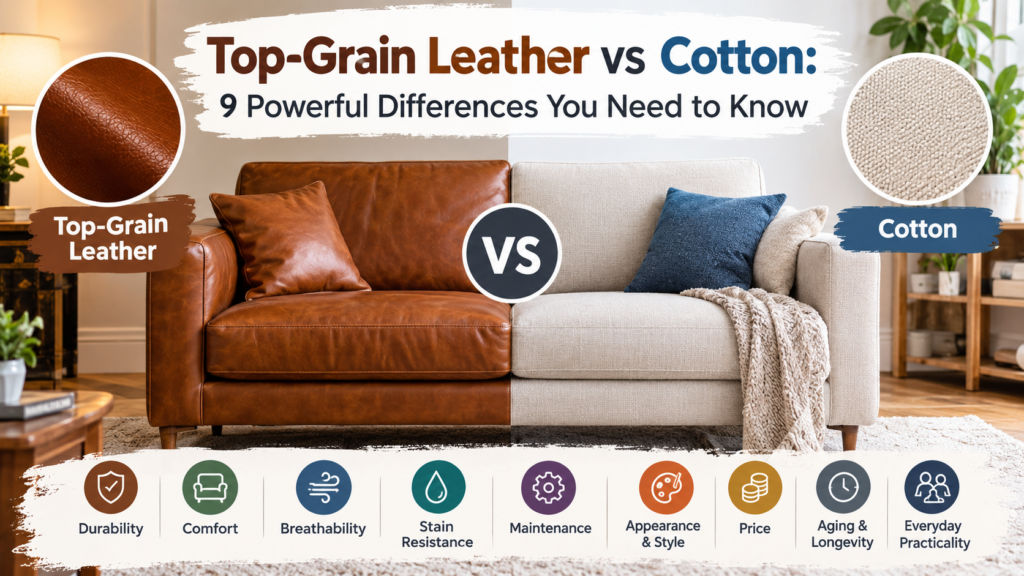
Choosing the right upholstery material can make a major difference in how a sofa looks, feels, and performs over time. Two popular options are top-grain leather and cotton, but they offer very different experiences.
Top-grain leather is known for its refined appearance, durability, and relatively easy surface cleaning. Cotton, meanwhile, is valued for its softness, breathability, and wide range of colors and textures.
So, which one is better?
The answer depends on how you use your sofa, your preferred comfort level, your budget, and how much maintenance you are willing to handle. In this guide, we’ll compare top-grain leather vs. cotton across durability, comfort, maintenance, appearance, price, stain resistance, and everyday practicality.
Table of Contents
Top-Grain Leather vs Cotton at a Glance
| Feature | Top-Grain Leather | Cotton |
|---|---|---|
| Material | Animal hide | Natural plant fiber |
| Feel | Smooth, firm to soft | Soft and breathable |
| Durability | Generally excellent | Varies by fabric construction |
| Spill cleanup | Usually easier | Can absorb liquids |
| Breathability | Good | Excellent |
| Appearance | Premium and refined | Casual and versatile |
| Color choices | Moderate | Extensive |
| Maintenance | Moderate | Moderate to high |
| Price | Usually higher | Wide price range |
| Best for | Durability and premium style | Softness and design flexibility |
One important point is that “cotton” describes a fiber, not a single type of upholstery fabric. The weave, fabric weight, construction, and finishing can all affect performance. Cotton Works explains that cotton fiber quality is evaluated using several characteristics, reinforcing the importance of looking beyond the word “cotton” when comparing fabrics.
What Is Top-Grain Leather?
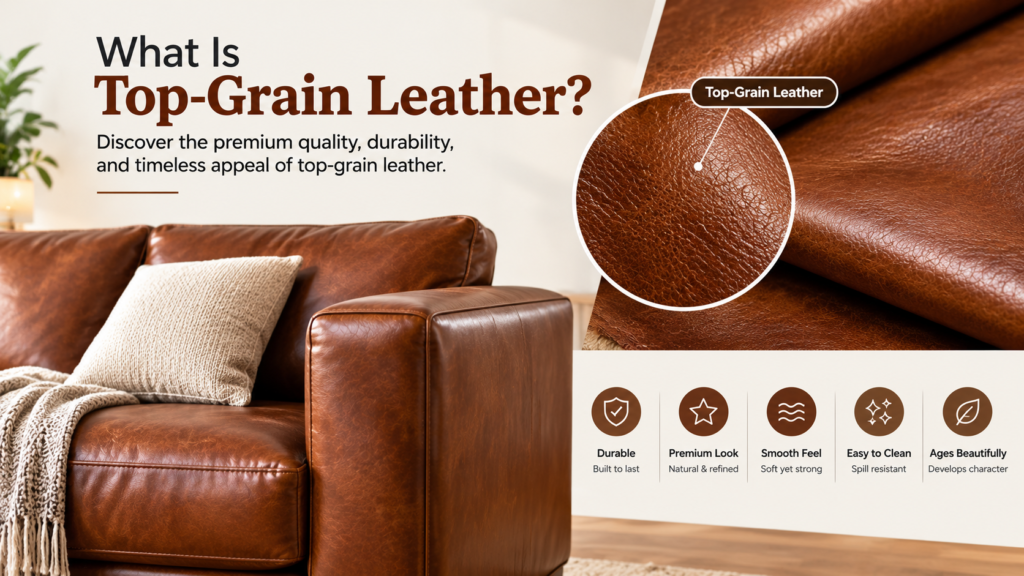
Top-grain leather comes from the upper portion of an animal hide. However, leather terminology can be confusing because different manufacturers and organizations may use grading terms differently.
The Leather Research Laboratory notes that top-grain and full-grain can refer to the same grain surface in industry terminology, while other leather classifications distinguish between full-grain and corrected-grain materials.
For buyers, the most important thing is to verify exactly how the manufacturer defines the leather being sold.
Top-grain leather can have a smooth, refined appearance and may receive finishing treatments designed for its intended use. The thickness and type of finish can vary considerably between leather products.
Why Is Top-Grain Leather Popular?
Top-grain leather is commonly chosen for furniture because it can offer:
- A premium appearance
- A distinctive natural texture
- Good durability
- Easy surface cleaning
- A material that can develop character over time
- A sophisticated look suitable for many interior styles
If you want to understand how leather grades differ, read our guide to Full-Grain Leather vs. Cotton for another detailed material comparison.
What Is Cotton Upholstery?
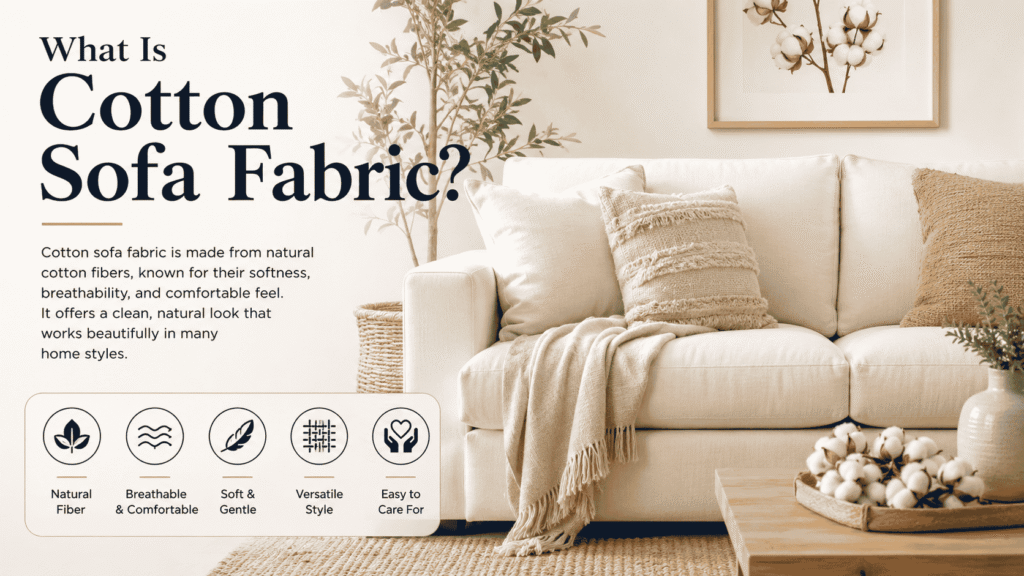
Cotton is a naturally produced textile fiber harvested from the cotton plant. The fiber is processed into yarn and then made into different types of textiles.
For sofas, cotton can be woven into many different fabrics. A tightly woven cotton upholstery fabric can perform very differently from a lightweight or loosely woven fabric.
That means you should never judge a sofa simply because its upholstery is labeled “cotton.”
Consider:
- Fabric weight
- Weave
- Thread construction
- Abrasion resistance
- Finishing treatments
- Cleaning requirements
- Colorfastness
Cotton is popular because it provides a naturally soft feel and can be produced in many colors, patterns, and textures.
Top-Grain Leather vs Cotton: 9 Key Differences
1. Durability
Durability is one of the biggest factors to consider when comparing top-grain leather vs. cotton.
Top-Grain Leather
Quality leather can be highly durable when properly selected and maintained. Its performance depends on the hide, tanning process, finish, thickness, and construction.
Leather can also develop visible character as it ages, which some homeowners consider part of its appeal.
Cotton
Cotton’s durability depends heavily on the actual upholstery fabric. A heavy, tightly woven cotton can be suitable for frequent use, while a delicate cotton fabric may be better suited to lower-traffic furniture.
The sofa’s frame, suspension, cushions, stitching, and overall construction also matter.
Winner: Top-Grain Leather
For buyers primarily concerned with long-term material durability, quality top-grain leather generally has the advantage.
2. Comfort and Softness
Comfort is more subjective.
Cotton usually provides a soft, familiar textile feel immediately. It can feel comfortable against bare skin and works particularly well for relaxed living spaces.
Leather has a different character. It can feel smoother and firmer initially and gradually becomes more supple with use.
Winner: Cotton for softness
If your main priority is a soft, fabric-like seating experience, cotton is likely to be more appealing.
3. Breathability
Breathability can become particularly important in warmer environments.
Cotton is a breathable textile, making it a popular choice for clothing and household textiles. Its fabric construction can allow air movement and create a comfortable feel.
Leather can also have breathable characteristics, but its surface finish and construction influence how it feels in use.
Winner: Cotton
For buyers who prioritize a breathable textile feel, cotton is usually the more attractive choice.
4. Stain and Spill Resistance
Spills are a major concern for many sofa owners.
Top-grain leather generally has a practical advantage because many finished leather surfaces allow liquid spills to remain on the surface long enough to be wiped away.
Cotton, by comparison, can absorb liquids into its fabric. The exact response depends on the fabric construction and any protective treatment.
However, neither material should be considered completely stain-proof.
Winner: Top-Grain Leather
For quick cleanup after everyday spills, leather generally has the advantage.
5. Cleaning and Maintenance
Both materials need proper care, but the type of maintenance is different.
Caring for Top-Grain Leather
Basic care can include:
- Regular dusting
- Promptly wiping spills
- Using products appropriate for the specific leather
- Keeping the sofa away from excessive heat
- Following the manufacturer’s care instructions
Furniture-care guidance from Herman Miller similarly recommends regular dusting and prompt attention to spills, while warning against inappropriate cleaning chemicals and heat.
Caring for Cotton
Cotton upholstery typically benefits from:
- Regular vacuuming
- Prompt spill treatment
- Following the manufacturer’s cleaning code
- Appropriate fabric-cleaning methods
- Professional cleaning when recommended
Never assume that every cotton sofa can be machine washed or treated with the same cleaning products.
Winner: Top-Grain Leather
Leather generally has an advantage when it comes to simple surface cleanup, although it still requires appropriate care.
6. Appearance and Style
Top-grain leather creates a distinctly different visual impression from cotton.
Leather often provides a refined, sophisticated appearance. Natural variations can make each piece look different, while aging can add additional character.
Cotton offers more flexibility in terms of:
- Colors
- Prints
- Patterns
- Textures
- Weaves
This fabric makes cotton particularly useful when you want upholstery that coordinates closely with a specific interior design.
Winner: It depends.
Choose leather for a premium, sophisticated appearance.
Choose cotton when you want maximum decorative flexibility.
7. Price
Price varies considerably for both materials.
Top-grain leather sofas often cost more because quality hides, tanning, finishing, and manufacturing can contribute significantly to the final price.
Cotton upholstery covers a much broader price range. The cost depends on the fabric quality, weave, construction, design, and sofa itself.
However, the cheapest option is not necessarily the best value.
Consider:
- Initial purchase price
- Expected lifespan
- Maintenance
- Repairability
- Replacement costs
- Overall sofa construction
Winner: Cotton for lower initial cost
Cotton gives buyers more opportunities to find an upholstery option within a lower initial budget.
8. Aging and Appearance Over Time
Leather and cotton age in noticeably different ways.
Quality leather can develop changes in color, texture, and sheen as it is used. Over time, the leather develops a distinctive character that many people find appealing.
Cotton can also develop character, but frequent use may eventually result in changes such as fading, compression, or visible wear depending on the fabric.
The amount of sunlight, cleaning, friction, and everyday use can all affect how upholstery ages.
Winner: Top-Grain Leather
If you like the idea of furniture developing a distinctive character over time, leather may be the better choice.
9. Everyday Practicality
Think about how your sofa will actually be used.
For a busy household with frequent spills, a finished leather surface can be convenient because many everyday spills can be addressed quickly.
Cotton can be an excellent choice for a relaxed living room where softness and visual variety are more important.
Neither material is perfect for every household.
Winner: Depends on your lifestyle
The best material is the one that fits your daily habits rather than simply the one that looks best in a showroom.
Top-Grain Leather vs Cotton Comparison Table
| Category | Top-Grain Leather | Cotton |
|---|---|---|
| Durability | Excellent potential | Depends heavily on construction |
| Softness | Moderate to high | High |
| Breathability | Good | Excellent |
| Spill cleanup | Usually easier | Usually more challenging |
| Maintenance | Moderate | Moderate |
| Style | Premium and refined | Casual and highly versatile |
| Colors and patterns | More limited | Very extensive |
| Initial cost | Usually higher | Often more flexible |
| Aging | Can develop character | May show fading and wear |
| Best feature | Durability and appearance | Comfort and versatility |
Pros and Cons of Top-Grain Leather
Pros
- Strong and durable
- Premium appearance
- Easy surface cleanup
- Distinctive natural character
- Can age attractively
- Works with many interior styles
Cons
- Usually costs more
- Can show scratches
- Requires appropriate care
- Finish and quality vary between products
- May not provide the soft textile feel some people prefer
Pros and Cons of Cotton
Pros
- Soft and comfortable
- Breathable
- Available in many colors
- Wide variety of patterns and textures
- Suitable for relaxed interiors
- Available at many price points
Cons
- Can absorb spills
- Some fabrics stain more easily.
- Quality and durability vary.
- May require more frequent cleaning
- Some fabrics can fade with prolonged sunlight exposure.
Which Is Better: Top-Grain Leather or Cotton?
There isn’t one universal winner in the top-grain leather vs. cotton debate.
Choose Top-Grain Leather If You:
- Want a premium appearance
- Prioritize durability
- Expect frequent sofa use
- Want relatively simple spill cleanup
- Like the way leather changes with age
- Have a budget for a higher initial investment
Choose Cotton If You:
- Prioritize softness
- Want breathable upholstery
- Prefer fabric over leather
- Want more colors and patterns
- Prefer a casual, relaxed appearance
- Want a wider range of initial price options
Top-Grain Leather vs. Cotton for Different Households
| Situation | Recommended Choice | Main Reason |
|---|---|---|
| Luxury-style living room | Top-grain leather | Refined appearance |
| Soft, casual family room | Cotton | Comfortable textile feel |
| Frequent spills | Top-grain leather | Easier surface cleanup |
| Warm environment | Cotton | Breathable textile |
| Long-term furniture investment | Top-grain leather | Strong durability potential |
| Maximum color choices | Cotton | More design options |
| Minimal surface cleaning | Top-grain leather | Easier wipe-downs |
| Fabric lovers | Cotton | Soft textile feel |
How to Choose Between Top-Grain Leather and Cotton
Before purchasing your sofa, ask yourself these questions:
1. How often will you use the sofa?
Daily use puts more demands on upholstery than occasional use.
2. Do you prefer softness or durability?
Cotton generally provides a softer textile experience, while quality leather is often chosen for durability.
3. Are spills a major concern?
If drinks, food, children, or pets make spills likely, consider how easily the specific upholstery can be cleaned.
4. What is your budget?
Compare the complete cost rather than looking only at the upholstery material.
5. What style do you want?
Leather creates a different visual character from cotton. Choose the material that complements your room.
6. How much maintenance are you comfortable with?
Every upholstery material requires care. Check the manufacturer’s instructions before buying.
Common Mistakes to Avoid
Avoid choosing upholstery based solely on appearance.
Other common mistakes include:
- Assuming all leather is the same
- Assuming all cotton fabric has the same durability
- Ignoring the sofa frame
- Ignoring cushion construction
- Not checking cleaning instructions
- Buying without checking the actual upholstery specification
- Focusing only on the initial price
- Ignoring sunlight exposure
- Forgetting how the sofa will be used every day
The Leather Research Laboratory also highlights the importance of understanding leather surface classifications because terminology can sometimes be confusing in the marketplace.
Frequently Asked Questions
Is top-grain leather better than cotton for a sofa?
It depends on your priorities. Top-grain leather is generally a strong choice for durability, premium appearance, and easier surface cleanup. Cotton is attractive for buyers who prioritize softness, breathability, and fabric variety.
Is cotton more comfortable than top-grain leather?
Cotton usually provides a softer textile feel. However, comfort also depends on the sofa’s cushion filling, suspension, design, and personal preference.
Which lasts longer, top-grain leather or cotton?
Quality leather generally has strong long-term durability, but the lifespan of any sofa depends on material quality, construction, usage, and maintenance.
Is top-grain leather easier to clean than cotton?
For many everyday surface spills, yes. Finished leather can often be wiped relatively easily, while cotton can absorb liquids. Always follow the manufacturer’s care instructions.
Is cotton good for sofa upholstery?
Yes. Cotton can be an excellent upholstery material when the fabric is appropriately constructed for furniture use. Look beyond the fiber name and check the fabric’s specifications.
Which is better for hot weather, leather or cotton?
Cotton will generally appeal more to people who prioritize a breathable textile feel in warm conditions.
Is top-grain leather worth the extra cost?
It can be, particularly if you prioritize durability, appearance, and long-term use. But the value depends on the quality of the entire sofa, not just its upholstery.
Which material is more luxurious?
Top-grain leather is generally associated with a more premium appearance, while cotton provides greater flexibility in colors, patterns, and textures.
Can cotton upholstery be durable?
Absolutely. A high-quality, tightly constructed cotton upholstery fabric can perform well. The specific fabric construction is more informative than simply knowing that it contains cotton.
What should I choose: top-grain leather or cotton?
Choose top-grain leather if durability, premium style, and easy surface cleanup are your priorities. Choose cotton if softness, breathability, and design flexibility matter more.
Final Verdict: Top-Grain Leather vs. Cotton
The best choice in the top-grain leather vs. cotton comparison ultimately depends on your lifestyle.
Top-grain leather is a strong option for people who want durability, a premium appearance, and relatively straightforward surface cleanup. It can also develop attractive character as it ages.
Cotton is an excellent choice for people who value softness, breathability, and a wide range of colors, patterns, and textures.
Before making your decision, consider the quality of the entire sofa—not just the upholstery. A well-built frame, good suspension, quality cushions, and suitable upholstery can make a much bigger difference to long-term satisfaction than the material name alone.
For more upholstery comparisons, explore our guide to full-grain leather vs. cotton. You can also compare other materials in our Full-Grain Leather vs. Microfiber and Full-Grain Leather vs. Chenille guides.
External Sources
Further reading on materials and furniture buying:
- Background on leather production: Leather Naturally
- Technical leather science: American Leather Chemists Association
- Furniture buying advice: Consumer Reports
- Textile and fiber sustainability information: Textile Exchange