
Introduction
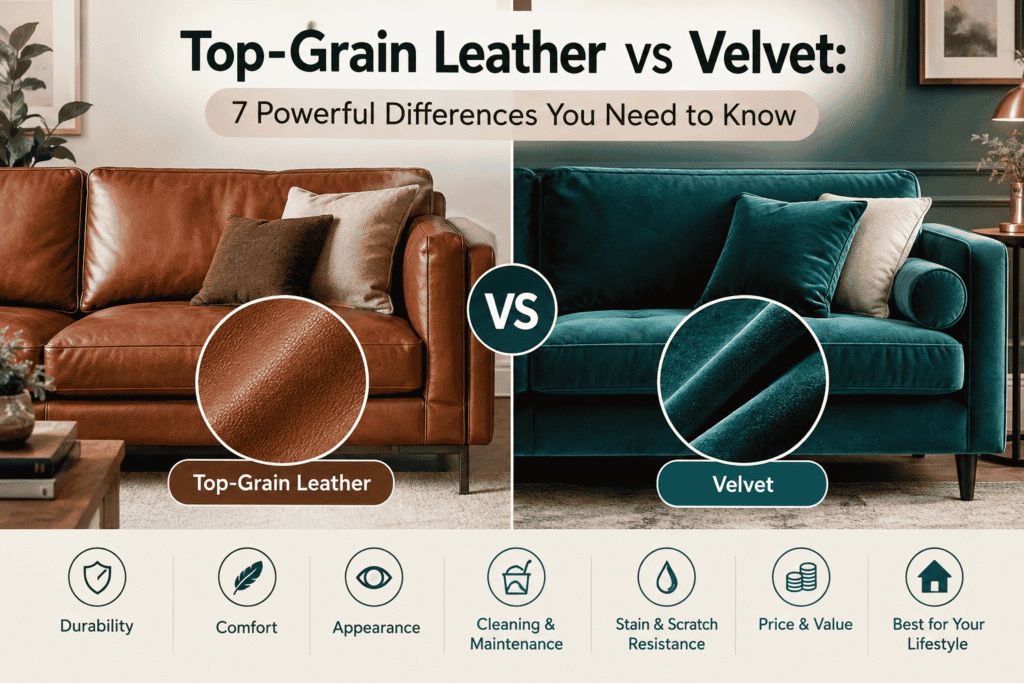
Choosing the right upholstery can make a major difference in how your sofa looks, feels, and performs over time. When comparing top-grain leather vs. velvet, both materials offer a premium appearance, but they have very different characteristics. Top-grain leather is known for its natural look, strength, and long-term appeal, while velvet is loved for its soft texture, rich colors, and luxurious appearance.
The right material depends on more than appearance. Your lifestyle, cleaning habits, budget, household activity, pets, children, and preferred interior style should all play a role in your decision.
In this guide, we will compare top-grain leather vs. velvet across seven important areas, including durability, comfort, appearance, cleaning, stain resistance, cost, and lifestyle suitability. By the end, you will have a clearer idea of which upholstery material may work better for your sofa.
Table of Contents
What Is Top-Grain Leather?
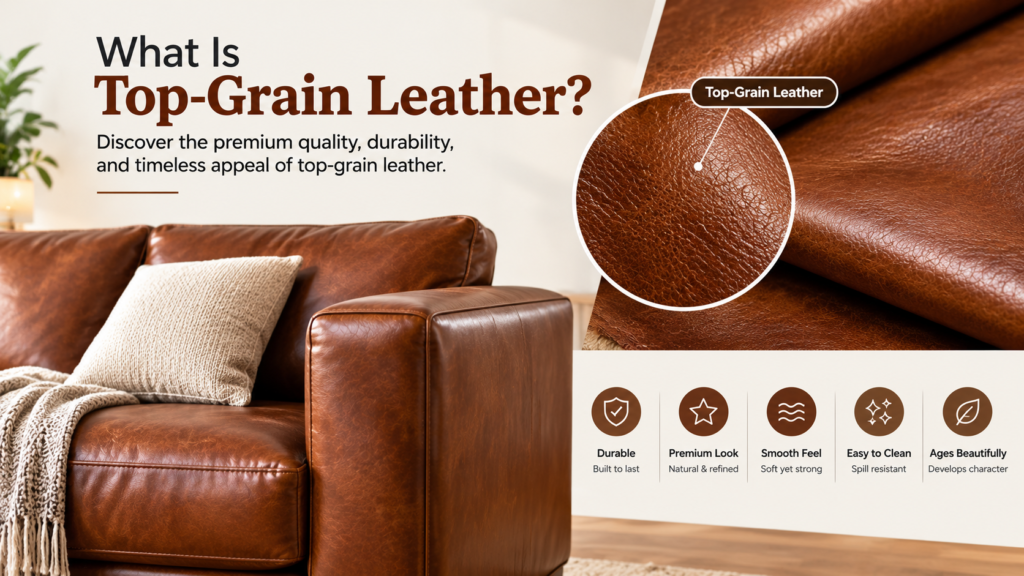
Top-grain leather is a type of genuine leather made from the outer layer of an animal hide. It is generally considered a high-quality upholstery material because it retains much of the hide’s natural structure while being processed to create a consistent surface.
Compared with heavily corrected or coated leather, top-grain leather usually maintains more of the natural character of the hide. Depending on the finish, you may notice subtle variations in grain, texture, or color.
Top-grain leather is widely used in sofas, chairs, sectionals, office seating, and other furniture where durability and appearance are important.
One of its major attractions is the way it can develop character with use. A quality leather sofa can change gradually over the years rather than simply looking worn out.
However, top-grain leather is not maintenance-free. It can be that sharp objects, excessive moisture, sunlight, and unsuitable cleaning products can all affect it. by sharp objects, excessive moisture, sunlight, and unsuitable cleaning products. Proper care can help preserve its appearance for many years.
Key Features of Top-Grain Leather
- Natural-looking surface
- Smooth or lightly textured feel
- Strong upholstery performance
- Premium appearance
- Can develop character with age
- Requires suitable leather care
- Available in many colors and finishes
- Often costs more than basic upholstery fabrics
The quality of the leather finish and the sofa’s construction also matter. A sofa should not be judged by the upholstery material alone.
What Is Velvet?
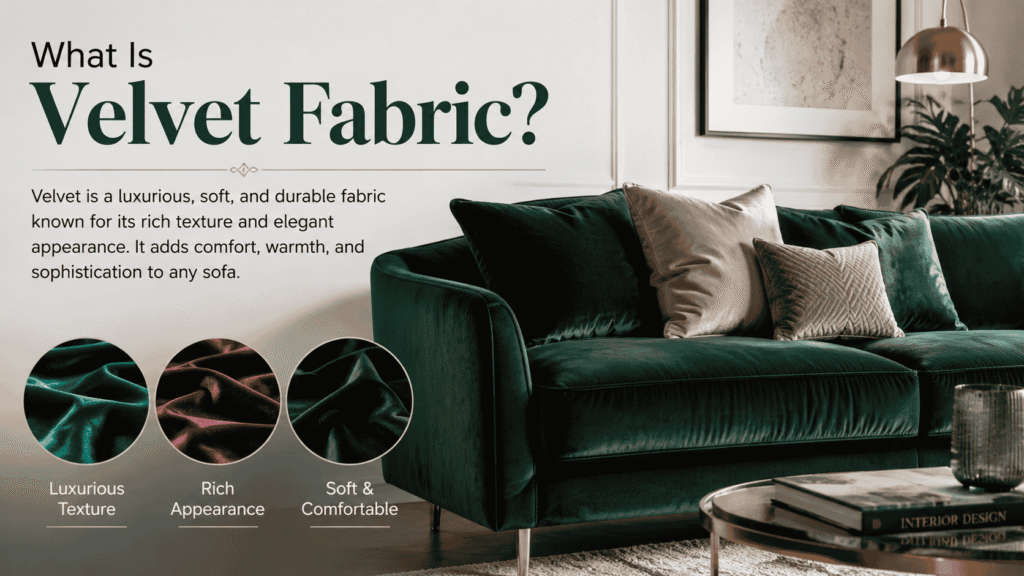
Velvet is a textile recognized for its soft surface and distinctive pile. Unlike flat woven fabrics, velvet has a raised surface that catches light differently depending on the direction of the fibers.
This gives velvet upholstery a rich and sometimes dramatic appearance. It is especially popular in statement sofas, accent chairs, traditional furniture, and contemporary interiors.
Velvet can be produced from different fibers, including polyester and other synthetic or natural fibers. Therefore, not every velvet sofa will perform in exactly the same way.
The quality, fiber content, construction, backing, and finishing of velvet can all affect durability and care requirements.
One of velvet’s biggest strengths is its visual and tactile appeal. It can make a sofa feel warm, elegant, and inviting. At the same time, its pile can show pressure marks or changes in direction, so it may require more attention to keep it looking its best.
Key Features of Velvet
- Very soft surface
- Rich visual depth
- Comfortable tactile feel
- Available in many colors
- Suitable for decorative furniture
- Can show changes in pile direction
- Cleaning requirements vary by construction.
- Quality differs considerably between velvet fabrics.
Understanding the specific type of velvet used on a sofa is important before making a purchase.
Top-Grain Leather vs Velvet: 7 Powerful Differences
Although both materials can create an attractive premium sofa, they behave differently in everyday use. Let’s examine the seven most important differences.
1. Durability and Lifespan
Durability is one of the first things to consider when comparing top-grain leather vs. velvet.
Top-grain leather is generally valued for its ability to handle regular furniture use. A well-made leather sofa can remain attractive for a long period when proper care can keep a well-made leather sofa looking attractive for a long time. Its performance also depends on the quality of the hide, finish, stitching, frame, cushions, and overall construction.
Leather does not have a fabric pile that can become flattened in the same way as velvet. However, it can develop scratches, marks, creases, or changes in finish.
Velvet can also be durable, but its performance depends heavily on the particular fabric. A high-quality upholstery velvet designed for furniture use can withstand regular household activity, while a delicate decorative velvet may be less suitable for a heavily used family sofa.
Velvet’s pile can become compressed in frequently used areas. You may also notice directional changes where people sit, particularly under certain lighting conditions.
Which should you consider?
If your priority is a material with a strong reputation for long-term upholstery performance and a surface that can develop character, top-grain leather may fit your requirements.
If you want a soft and visually rich fabric and are comfortable with more regular attention to its appearance, quality upholstery velvet can be an appealing option.
Remember that sofa construction is just as important as upholstery. A high-quality material cannot compensate for a weak frame, poor stitching, or low-quality cushions.
2. Comfort and Feel
Comfort is highly personal, making this an important part of the top-grain leather vs. velvet comparison.
Top-grain leather usually feels smooth and substantial. Depending on the finish, it may have a soft, supple surface or a firmer feel. Leather can also respond to room temperature, feeling cooler initially in some environments and warming as you sit on it.
Many people enjoy leather because it has a clean, smooth surface that becomes increasingly familiar with regular use.
Velvet offers a very different experience. Its raised pile creates a soft, tactile surface that many people find especially comfortable. The fabric can give a sofa a cozy and inviting appearance.
The type of cushion underneath the upholstery is also extremely important. Two sofas covered in the same material can feel completely different because of their foam, springs, filling, seat depth, and suspension system.
Leather comfort
Top-grain leather may be suitable if you prefer:
- A smooth surface
- A substantial feel
- A refined furniture appearance
- Easy movement across the seating surface
- A material that can develop character over time
Velvet comfort
Velvet may appeal to you if you prefer:
- A soft tactile surface
- A cozy appearance
- A warmer visual feeling
- Plush-looking furniture
- Rich texture under your hands
Neither material automatically makes a sofa more comfortable. The quality of the entire sofa determines the actual seating experience.
3. Appearance and Interior Style
When it comes to appearance, top-grain leather vs. velvet is a comparison between two very different design approaches.
Top-grain leather has a timeless and refined appearance. Its natural surface can add character to a room without requiring bold patterns or colors.
Leather works particularly well in modern, classic, industrial, minimalist, and traditional interiors. Depending on the sofa’s shape and color, it can look casual or highly sophisticated.
Brown, black, tan, cream, and other neutral leather colors are popular because they can work with a wide range of furniture.
Velvet creates a stronger visual statement. Its pile reflects light differently across the surface, producing depth and variation. This effect can make even a simple sofa look more luxurious.
Velvet is available in an extensive range of colors, from subtle neutrals to deep jewel tones and bright shades.
For example, a deep green, navy, burgundy, or charcoal velvet sofa can become a focal point in a living room.
Top-grain leather style
Leather may suit you if you want:
- Timeless furniture
- Natural character
- A sophisticated appearance
- Neutral or classic colors
- A material that can complement many decorating styles
Velvet style
Velvet may suit you if you want:
- A statement sofa
- Strong color options
- Rich texture
- A luxurious atmosphere
- A softer decorative appearance
If your sofa is intended to be the main visual feature of the room, velvet can create a particularly noticeable effect. If you want furniture that blends into different design styles over time, leather may offer greater visual flexibility.
4. Cleaning and Maintenance
Cleaning is another major factor when comparing top-grain leather vs. velvet.
Top-grain leather generally requires a simple but consistent care routine. Dust and surface debris can usually be removed with a soft cloth or suitable vacuum attachment. Depending on the manufacturer’s recommendations, leather may also benefit from periodic conditioning.
The most important rule is to use products specifically appropriate for your leather finish. Household cleaners that are suitable for other surfaces can potentially damage leather.
Spills should also be dealt with promptly. Avoid soaking the material unless the manufacturer specifically recommends a particular cleaning method.
Velvet requires a different approach. Because of its pile, aggressive rubbing can affect its appearance. Dust and crumbs can settle between the fibers, and pressure can change the direction of the pile.
For everyday care, gentle vacuuming using an appropriate upholstery attachment can help remove loose debris. For stains, the correct cleaning method depends on the velvet’s fiber composition and manufacturer’s instructions.
Some velvet upholstery may require professional cleaning for difficult stains.
Leather maintenance
A sensible leather care routine may include:
- Regular dust removal
- Prompt attention to spills
- Appropriate leather cleaner when required
- Suitable conditioning when recommended
- Protection from excessive direct sunlight
- Avoiding harsh chemicals
Velvet maintenance
A practical velvet care routine may include:
- Gentle vacuuming
- Prompt treatment of spills
- Avoiding excessive rubbing
- Following the fabric care label
- Using suitable upholstery products
- Professional cleaning when necessary
The important point is that neither material should be cleaned using a random household product. Always check the manufacturer’s care instructions first.
5. Resistance to Stains, Scratches, and Everyday Accidents
Daily household activity can have a significant impact on your sofa.
In the top-grain leather vs. velvet comparison, leather and velvet respond differently to common accidents.
Leather does not absorb liquid in exactly the same way as many textile surfaces, particularly when it has a suitable protective finish. This can make dealing with certain surface spills more straightforward.
However, leather is not impossible to stain or damage. Scratches from pets, sharp objects, buckles, keys, or rough handling can leave visible marks. Some scratches may become part of the leather’s character, while deeper damage may require professional repair.
Velvet can be vulnerable to visible marks from spills, pressure, and incorrect cleaning. Liquids can penetrate the textile, and rubbing a wet or stained area aggressively can make the problem worse.
The good news is that many modern upholstery velvets are designed for everyday furniture use. Their performance can vary considerably, so checking the fabric’s specifications is worthwhile.
If you have children
Families with children may want to prioritize easy maintenance and practical durability. A sofa should be selected according to the expected level of activity rather than appearance alone.
If you have pets
Pet owners should consider claws, shedding, accidents, and frequent cleaning. Leather’s smooth surface can make removing loose pet hair easy, but claws can scratch the material.
Velvet does not necessarily mean a sofa is unsuitable for pets, but pet owners should carefully consider the specific fabric’s construction and cleaning requirements.
6. Price and Long-Term Value
Price is an important part of any sofa purchase.
Top-grain leather sofas can have a higher initial price because quality leather is a premium upholstery material. The cost can also be affected by the size of the sofa, leather quality, construction, brand, frame, cushioning, and finishing.
Velvet sofas are available across a broad price range. A simple velvet sofa may be relatively affordable, while a high-end sofa with premium upholstery and professional construction can also be expensive.
Therefore, it is not accurate to judge value only by whether the sofa is leather or velvet.
Consider the complete product.
Look at:
- Upholstery quality
- Frame construction
- Cushion materials
- Seat suspension
- Stitching
- Warranty
- Manufacturer reputation
- Expected usage
- Maintenance requirements
A cheaper sofa may not provide better value if it needs replacement quickly. Likewise, paying more does not automatically guarantee better construction.
Long-term leather value
Top-grain leather may appeal to buyers who want a durable premium material and are willing to invest in appropriate maintenance.
Long-term velvet value
Velvet may appeal to buyers who prioritize color, softness, and decorative style while selecting a fabric designed for their expected level of use.
The best value is the sofa that meets your needs and performs well for the period you expect to own it.
7. Best Choice for Different Lifestyles
The final major difference between top-grain leather vs. velvet is how each material fits into your lifestyle.
There is no single upholstery material that works perfectly for every household.
For busy family homes
A busy household may benefit from an upholstery material that fits its cleaning routine and expected level of use.
Top-grain leather can be attractive for people who prefer a smooth surface and straightforward routine care.
Velvet can also work in a family home when the selected fabric is designed for everyday upholstery and the owner is prepared to follow its care requirements.
For homes with pets
Pet owners should think about claws, fur, accidents, and cleaning.
Leather’s smooth surface can make loose hair easy to remove, but scratches may be visible.
Velvet can provide a soft and comfortable surface, but pet hair and marks may require more attention depending on the fabric.
For formal living rooms
Velvet can be an excellent design choice when you want a sofa to create a strong decorative impression.
Its texture and color can add depth to a formal or sophisticated interior.
Top-grain leather can also create an elegant environment, particularly when paired with quality furniture and a suitable room design.
For modern interiors
Both materials can work in modern spaces.
A clean-lined leather sectional can create a minimalist or contemporary appearance, while a simple velvet sofa can introduce texture and color.
The sofa’s shape, legs, color, and surrounding furniture can be just as influential as the upholstery.
For long-term furniture ownership
If you are looking for a material that can develop character over time and you appreciate natural upholstery, top-grain leather may suit your priorities.
If you prefer to change colors and decorative styles more frequently, velvet provides a wide range of visual possibilities.
Top-Grain Leather vs Velvet: Quick Comparison
| Feature | Top-Grain Leather | Velvet |
|---|---|---|
| Texture | Smooth to lightly textured | Soft and raised |
| Appearance | Natural and refined | Rich and luxurious |
| Durability | Generally strong for upholstery | Depends heavily on fabric quality |
| Comfort | Smooth and substantial | Soft and tactile |
| Cleaning | Requires leather-specific care | Requires fabric-specific care |
| Scratches | Can show scratches | Does not scratch like leather but can show marks |
| Color options | Wide range | Very wide range |
| Maintenance | Regular but straightforward | Can require more attention to pile and stains |
| Style | Classic, modern, traditional | Contemporary, classic, glamorous |
| Best feature | Natural character and durability | Soft texture and visual richness |
This comparison is a general guide. Actual performance depends on the quality and construction of the specific upholstery and sofa.
Pros and Cons of Top-Grain Leather
Pros of Top-Grain Leather
1. Premium Appearance
Top-grain leather can give a sofa a sophisticated and high-end appearance.
2. Strong Upholstery Performance
Quality leather is well suited to furniture that receives regular use.
3. Natural Character
Leather can develop changes in appearance over time, creating a distinctive look.
4. Easy Surface Maintenance
Its smooth surface can make routine dust and hair removal convenient.
5. Versatile Design
Leather sofas can work with many interior styles, from traditional to modern.
Cons of Top-Grain Leather
1. Higher Initial Cost
Quality leather furniture can require a larger initial investment.
2. Scratches Can Be Visible
Pets and sharp objects can mark the surface.
3. Temperature Feel
Leather can feel cool or warm depending on the surrounding environment.
4. Requires Proper Care
Using unsuitable cleaners or excessive moisture can damage the finish.
Pros and Cons of Velvet
Pros of Velvet
1. Soft Texture
Velvet offers a distinctive soft surface that many people enjoy.
2. Luxurious Appearance
Its pile can create depth and a rich visual effect.
3. Excellent Color Variety
Velvet is available in numerous shades, making it easy to use as a design feature.
4. Strong Decorative Appeal
A velvet sofa can become an attractive focal point in a living room.
5. Comfortable Feel
The soft textile surface can create a warm and inviting seating environment.
Cons of Velvet
1. Requires Careful Cleaning
Incorrect cleaning techniques can affect the fabric’s appearance.
2. Pile Can Show Pressure
Frequently used areas may display changes in pile direction.
3. Spills Need Prompt Attention
Liquid and stains should be handled according to the manufacturer’s cleaning instructions.
4. Performance Varies
Not every velvet fabric has the same durability or cleaning characteristics.
Which Is Better for Your Sofa: Top-Grain Leather or Velvet?
The answer depends on what you want from your sofa.
If you prioritize durability, natural character, a premium appearance, and a smooth surface, top-grain leather may be more suitable for your needs.
If you prioritize softness, rich colors, texture, and decorative appeal, velvet may be a better match for your interior preferences.
However, the decision should not be based on upholstery alone.
Consider how often the sofa will be used, whether you have children or pets, how frequently you clean, how much sunlight reaches the room, and how long you expect to keep the furniture.
Also consider the sofa’s construction. A strong frame, quality cushions, good stitching, and reliable suspension can have a major impact on the overall ownership experience.
How to Choose the Right Sofa Material
Before buying a sofa, ask yourself a few practical questions.
1. How Often Will the Sofa Be Used?
A sofa used every day needs different characteristics from one placed in a rarely used formal room.
For heavy daily use, prioritize upholstery designed for regular furniture use.
2. Do You Have Children or Pets?
Children and pets can increase spills, dirt, friction, and accidental damage.
Choose a material and finish that match the reality of your household rather than selecting upholstery based only on appearance.
3. How Much Maintenance Are You Comfortable With?
Every sofa requires some care.
If you prefer a smooth surface and straightforward surface cleaning, leather may appeal to you.
If you enjoy soft textiles and do not mind paying more attention to fabric care, velvet can be an attractive choice.
4. What Interior Style Do You Want?
Think about the entire room.
For a timeless appearance, leather can work particularly well.
For a bold, textured, or luxurious look, velvet can create a stronger visual effect.
5. What Is Your Budget?
Set a realistic budget before shopping.
Remember to compare sofa construction, not just upholstery prices. A well-built sofa with suitable upholstery can provide better value than a poorly constructed sofa covered in a premium material.
6. How Much Sunlight Does the Room Receive?
Strong direct sunlight can affect upholstery over time. Before buying, consider where the sofa will be placed and follow the manufacturer’s recommendations for protecting the material.
7. What Does the Manufacturer Recommend?
Always check the upholstery specifications and care instructions.
The exact fiber content, finish, cleaning code, and construction can change how a material should be treated.
Top-Grain Leather vs. Velvet: Frequently Asked Questions
Is top-grain leather more durable than velvet?
Top-grain leather is generally recognized as a durable upholstery material, but the durability of both materials depends on their quality and construction. High-quality upholstery velvet can perform well in everyday furniture, while lower-quality or delicate velvet may not be suitable for heavy use.
Is velvet more comfortable than leather?
Comfort is subjective. Velvet has a soft, tactile surface, while top-grain leather offers a smooth and substantial feel. The sofa’s cushion construction, seat depth, suspension, and padding can have an even greater impact on comfort.
Is top-grain leather easier to clean than velvet?
Routine surface cleaning can often be straightforward with leather, but it requires leather-appropriate products and care. Velvet requires fabric-specific cleaning methods and may need extra attention when dealing with stains or changes in pile direction.
Which is better for a family sofa?
Either can work, depending on the household and the specific upholstery. Families should consider daily use, spills, children, pets, cleaning requirements, and the manufacturer’s durability specifications before choosing.
Which material is better for homes with pets?
There is no universal answer. Leather can make loose pet hair easy to remove but may show scratches from claws. Velvet can provide a soft surface but may require more attention to hair, marks, and cleaning depending on its construction.
Does velvet fade over time?
Velvet can experience color changes when exposed to environmental factors such as strong sunlight, depending on the fabric and dye. Follow the manufacturer’s care recommendations and consider the sofa’s placement in the room.
Does top-grain leather get better with age?
Quality leather can develop changes in color, texture, and character with use. These changes are part of what many owners appreciate about natural leather furniture. The final appearance depends on the leather finish, use, environment, and care.
Is top-grain leather more expensive than velvet?
Top-grain leather sofas can have a higher initial price, but sofa prices vary widely. Velvet sofas can also be expensive when they use premium fabric and high-quality construction. Compare the complete sofa rather than the upholstery material alone.
Can velvet be used on a frequently used sofa?
Yes. Upholstery velvet designed for regular furniture use can be suitable for everyday sofas. However, check the fabric’s specifications and care requirements before buying.
Which material lasts longer, leather or velvet?
The lifespan depends on material quality, sofa construction, usage, environment, and maintenance. High-quality top-grain leather is known for long-term upholstery performance, while quality upholstery velvet can also provide good service when properly selected and maintained.
Final Thoughts on Top-Grain Leather vs Velvet
The top-grain leather vs. velvet decision ultimately comes down to your priorities.
Top-grain leather offers a natural, refined appearance, strong upholstery performance, and a surface that can develop character over time. It may be particularly appealing to buyers who want a premium sofa that can work across different interior styles.
Velvet offers a completely different experience. Its soft texture, rich appearance, and extensive color selection make it an attractive choice for people who want their sofa to add warmth, texture, and personality to a room.
Neither material is automatically the right choice for everyone.
Before buying, consider durability, comfort, cleaning, household activity, pets, children, interior style, budget, and sofa construction. Also check the manufacturer’s upholstery specifications because the performance of both leather and velvet can vary between products.
The best sofa material is the one that fits your everyday lifestyle while providing the appearance, comfort, and maintenance level you are comfortable with.
Ready to Choose Your Perfect Sofa?
Now that you understand the key differences between top-grain leather vs. velvet, take a closer look at the complete sofa before making your decision. Compare the upholstery, frame, cushions, size, design, care requirements, and expected daily use.
Whether you prefer the natural character of top-grain leather or the soft luxury of velvet, choosing upholstery based on your real lifestyle can help you enjoy your sofa for years to come.
Explore more SofasExpert sofa material guides, cleaning advice, and buying tips to make your next sofa purchase with greater confidence.
Ready to Buy the Right Sofa?
Now that you understand the key differences between top-grain leather vs. velvet, it’s time to choose the material that fits your home, lifestyle, and budget.
Choose top-grain leather if you want a premium-looking sofa with a smooth feel, natural character, and strong long-term upholstery performance.
Choose Velvet if you want a soft, luxurious texture, bold color options, and a statement piece that adds personality to your living room.
Before you buy, compare more than just the upholstery. Check the sofa frame, cushion quality, seat depth, dimensions, upholstery specifications, warranty, cleaning requirements, and overall construction.
👉 Explore our sofa buying guides and expert material comparisons at SofasExpert to find a sofa that matches your space and everyday needs.
Ready to upgrade your living room? Compare your preferred sofa styles, materials, and features today, then choose the option that offers the right combination of comfort, quality, durability, and style for your home.
Related Reading
- Linen Sofa Material
- Polyester Sofa Material
- Fabric Sofa Material
- How to Choose the Right Sofa Material
- Velvet Sofa Material
- Cotton Sofa Material
- Microfiber Sofa Material
- Chenille Sofa Material
- Leather Sofa Material
- Linen vs Cotton
- Velvet vs Polyester
- Leather vs Fabric Sofa
- Full-Grain Leather
External Links — Recommended Sequence
- Leather Naturally — leather characteristics and production
- American Leather Chemists Association — leather science and tanning
- Alliance for European Flax-Linen & Hemp — flax and linen information
- Textile Exchange — textile sustainability and natural fibers
- Consumer Reports — furniture buying guidance
- Good Housekeeping — furniture and sofa cleaning guidance