
Introduction
A corner sofa is one of the most practical ways to get more seating out of a living room. It fits into a corner, leaves the middle of the room open, and gives the whole household room to sit, stretch out, or host guests. But a corner sofa that is too big, faces the wrong way or has the wrong upholstery can quickly become an expensive mistake.
This guide explains what a corner sofa is, how it can save space, which types are available, and how to choose one with confidence. You will also find advice on materials, common buying mistakes, styling, and care.
Table of Contents
What Is a Corner Sofa?
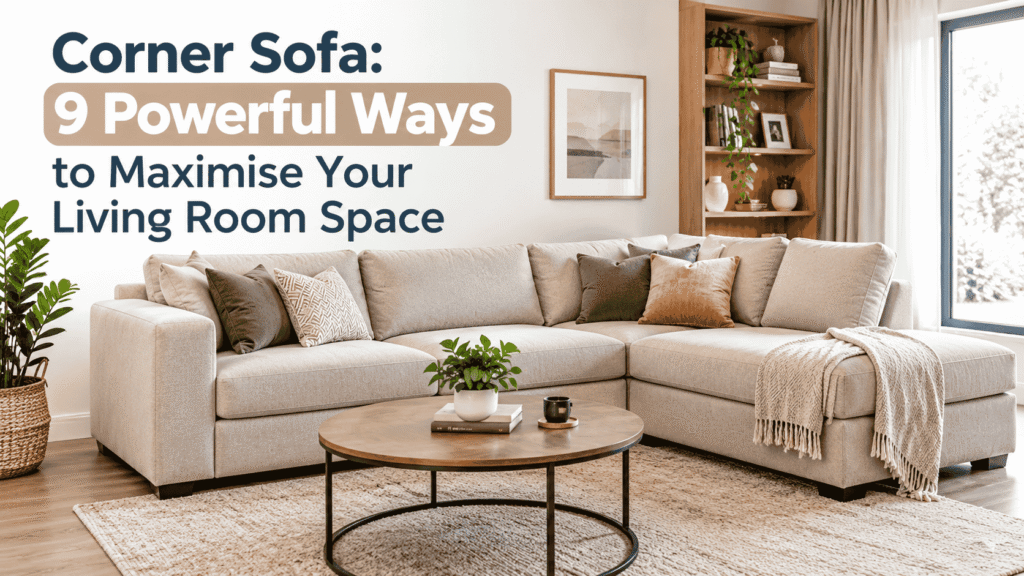
A corner sofa is a sofa made of two connected sections that form an L-shape. One section runs along one wall, and the other runs along the adjoining wall, so the sofa wraps around the corner of the room. Many people call it an L-shaped sofa, and in everyday shopping the two terms mean the same thing.
The main difference from a standard sofa is the shape. A standard sofa is a straight line of seats, usually two or three. A corner sofa adds a second arm of seating at a right angle, which creates more seating in the same area of the wall. Some designs have a chaise end (a longer, leg-supporting section), while others have two seating sections of equal length.
Corner sofas come in many versions: fixed, reversible, modular, reclining, and sofa-bed styles. We cover each one below.
9 Smart Ways a Corner Sofa Can Maximize Your Living Room Space
1. Use Unoccupied Corners Effectively
Corners are often the most wasted part of a living room. They tend to hold a plant, a stray chair, or nothing at all. A corner sofa turns that dead space into comfortable seating, and the rest of the floor stays free for walking, play, or a TV unit.
2. Create More Seating Without Adding Extra Sofas
Instead of buying a three-seater and a separate two-seater, one corner sofa can often seat four to six people. Because the seats connect, there are no gaps between pieces, and you do not need extra side tables just to make a group of sofas feel linked.
3. Choose a Layout That Opens Up the Room
Placement matters as much as size. Keep clear walkways of roughly 60–90 cm (about 2–3 feet) between the sofa and other furniture, and make sure the sofa does not block doors, radiators, or windows that open. If the main walkway runs through the room, choose a sofa with a shorter chaise so people can pass easily.
4. Separate Open-Plan Living Areas
In an open-plan space, a corner sofa can act as a divider. Position it with its back to the dining or kitchen area, and it defines the lounge without a wall or screen. A slim console table behind the sofa adds storage and makes the boundary feel more finished.
5. Select a Compact Design for Smaller Homes
If your room is small, look for a small corner sofa with slim arms, a lower back, and slightly shallower seats. These designs keep the L-shape but reduce the visual and physical bulk. Raised legs also help, because seeing the floor beneath the sofa makes a room feel larger.
6. Match the Sofa Shape to Your Room Layout
Corner sofas are described as either left-hand or right-hand, depending on which side the chaise or longer section sits. The right choice depends on where your door, window, and TV are placed. Always check the retailer’s diagram before buying, as the viewing direction can differ between brands.
7. Add Storage with a Practical Design
Many corner sofas include a storage chaise with a lift-up seat. This is handy for blankets, cushions, children’s toys, or remote controls. If you live in a flat or have little built-in storage, this feature can save you from buying an extra cabinet or ottoman.
8. Combine Comfort with Everyday Functionality
A corner sofa works well for different uses: stretching out to watch a film, reading on the chaise, family time with children, or entertaining friends. Think about how you really use your living room. If one person always lies down, a chaise is ideal. If you often host, equal-length sections and extra seats may be better.
9. Keep the Room Balanced with Suitable Accessories
A large sofa can overpower a room if everything around it is also large. Use a rug that sits at least partly under the sofa, choose a coffee table that is not too big, and add lighting at different heights. A floor lamp in the corner can soften the look and help the sofa blend into the room.
What Are the Main Types of Corner Sofas?
Standard L-Shaped Corner Sofa
This is the classic option. It has a fixed frame in an L-shape and suits most living rooms. It is usually the simplest to understand and often the best value.
Left-Hand-Facing Corner Sofa
On a left-hand-facing sofa, the chaise or longer section sits on the left when you face the sofa. To check, stand in front of it as if you were about to sit down and see which side the longer section is on.
Right-Hand-Facing Corner Sofa
This is the mirror image, with the longer section on the right. Retailers can use different viewing conventions, so always confirm the orientation using their own diagram rather than assuming.
Reversible Corner Sofa
A reversible corner sofa lets you move the chaise to either side. It is a good choice if you rent, expect to move house, or like to rearrange your room from time to time.
Modular Corner Sofa
A modular design is built from separate sections that can be rearranged, added to, or split up. This makes it easier to get through narrow hallways and tight stairs, and you can often reshape it later. If you want to explore this further, see our sectional sofa guide.
Reclining Corner Sofa
Reclining corner sofas include a mechanism that lets one or more seats tilt back. They are very comfortable but need extra clearance, so check how far the sofa extends when reclined, and keep that space free from walls and tables.
Corner Sofa Bed
A corner sofa bed converts into a bed for guests. It is useful in a home office, a small flat or a spare room. Check the size of the bed when unfolded and make sure there is enough floor space for it to open.
To compare more styles, read our guide to different sofa types.
How to Find the Perfect Corner Sofa for Your Living Space
Measure the Available Space
Measure the wall lengths where the sofa will sit, plus the depth. If there is a chaise, include its full extension. Then mark the outline on the floor with masking tape and walk around it. This quick check helps you understand how much usable space will be left.
Check the Sofa’s Orientation
Before ordering, confirm whether you need a left-hand or right-hand configuration. Look at where the door opens, where the TV or window is, and which side feels most natural for the longer section.
Consider Seating Capacity
Count how many people usually sit together. A typical corner sofa seats four to six adults, but the quoted capacity can be generous. Ask yourself whether each seat is wide enough to be comfortable for daily use.
Compare Upholstery Materials
Each upholstery option, from fabric and leather to velvet and synthetic blends, offers its own style and maintenance requirements. Choose a material that suits your lifestyle and everyday household needs. We explain each in the next section, and our guide to sofa upholstery materials goes into further detail.
Evaluate Cushion Support and Frame Quality
A good frame is the backbone of a sofa. Look for a solid, well-built frame, supportive suspension, and filling that suits how you like to sit. Foam gives firmer support, while fiber and feather fillings feel softer but need plumping. Whenever possible, test the sofa in person to check its comfort and support before making your purchase.
Choose a Color That Suits Your Interior
Neutral shades such as grey, beige, and cream suit most rooms and are easy to style. Darker tones hide marks better. Bold colors can look striking, but you may tire of them sooner, so consider adding color through cushions instead.
Set a Realistic Budget
Do not look only at the sticker price. Check delivery charges, assembly costs, warranty terms, and what is covered. A slightly higher price for a better frame and a longer guarantee can be better value over time.
Can a Corner Sofa Work Well in a Small Living Room?
Yes, a corner sofa can work in a small living room, but it depends on proportions rather than size alone. A small room with an empty corner and a clear walkway can suit a compact L-shaped design very well. A narrow room where the door opens right onto the sofa will not.
Here are some practical tips:
- Opt for a sofa with narrow armrests and a shorter backrest to create a lighter, more spacious look.
- Avoid very deep seats, which can eat into the floor space.
- Compare the footprint with a two-seater plus an armchair. Sometimes the separate pieces are easier to arrange.
- Keep at least 60 cm for walkways wherever possible.
- Pick lighter colors and raised legs to keep the room airy.
Corner Sofa vs U-Shaped Sofa: What’s the Difference?
A corner sofa has two sections, while a U-shaped sofa has three, wrapping around on two sides. This gives the U-shape more seating but a much bigger footprint.
| Corner Sofa | U-Shaped Sofa | |
|---|---|---|
| Shape | L-shape | U-shape |
| Typical seating | 4–6 | 6–8 or more |
| Space needed | Medium | Large |
| Fits small rooms | Often yes | Rarely |
| Best for | Most families and flats | Large rooms and big households |
A corner sofa is easier to fit into different layouts. A U-shape suits big, open rooms where several people need to sit together. If you are weighing up the larger option, read our U-shaped sofa article. If you want something simpler, see our guide to the standard sofa.
Corner Sofa: 9 Smart Ways to Maximize Your Living Room Space
Which Corner Sofa Material Is Best?
Fabric Corner Sofas
Fabric offers the widest range of colors and textures and is usually comfortable in all seasons. Look for tightly woven or stain-resistant fabrics if you have children or pets, and check whether the covers are removable.
Leather Corner Sofas
Leather looks smart and can last a long time with proper care. It wipes clean easily, but it needs conditioning to prevent drying. Quality varies, so check the type of leather rather than just the word “leather” in the description.
Velvet Corner Sofas
Velvet has a soft, rich look that suits modern and glamorous interiors. It can show marks and pressure patterns, so it is best for calmer households or used with regular light brushing.
Microfibre and Other Synthetic Fabrics
These materials are often durable, affordable, and easy to maintain, which makes them popular for busy homes. Always read the manufacturer’s care instructions, as certain synthetic upholstery materials are suitable for spot cleaning only.
Common Corner Sofa Buying Mistakes to Avoid
- Buying without checking measurements. Always measure the room and mark the footprint on the floor.
- Choosing the wrong chaise side. Double-check the orientation against the retailer’s diagram.
- Ignoring access. Measure hallways, stairs, doorways, and tight turns, or choose a modular design.
- Overlooking recliner or sofa-bed space. These need extra clearance to work properly.
- Not checking the care instructions. Some fabrics need professional cleaning.
- Focusing only on price. Frame quality and warranty matter as much as the cost.
- Forgetting delivery and returns. Check the delivery details, whether old sofas are removed, and what the returns policy is.
If you have a problem with a purchase, the UK’s Furniture Ombudsman offers consumer guidance and dispute resolution for furniture retailers that are members.
How to Style and Maintain a Corner Sofa
Arrange Cushions and Throws
Use a small group of cushions in two or three coordinated colors and textures. Too many can take up seating space, so keep the look relaxed rather than crowded.
Choose a Suitable Rug and Coffee Table
A rug anchors the sofa and defines the seating area. Choose a coffee table that you can easily walk around, such as a round or low-profile design. In small rooms, nesting tables are very flexible.
Clean the Upholstery Correctly
Check the care instructions provided by the manufacturer before cleaning, and try any cleaning solution on an inconspicuous spot first. Keep your sofa fresh by vacuuming away dust and debris regularly, and clean up spills as soon as they happen. For step-by-step advice, read our complete guide to cleaning a sofa.
Keep Cushions in Good Condition
Rotate and plump the cushions regularly so they wear evenly, if the manufacturer recommends it. Avoid sitting on the same seat all the time, and keep the sofa away from strong direct sunlight, which can fade fabric.
Is a Corner Sofa Worth Buying?
For many households, yes. A corner sofa gives you plenty of seating, makes good use of corners, and can look very neat in the right room. It is especially useful for families, open-plan homes, and anyone who likes to lounge.
However, it is not perfect for everyone. A very small or oddly shaped room might work better with a standard sofa and an armchair. If you move home often or have narrow access, a modular design may be the better answer.
Quick pre-purchase checklist:
- Room and walkways measured
- Orientation confirmed
- Access through doors and stairs checked
- Fabric and care needs understood
- Frame, filling, and warranty compared
- Delivery and returns policy read
For more practical home and furniture ideas, The Spruce is a helpful resource for layout and styling inspiration.
Frequently Asked Questions About Corner Sofas
How can I measure my room for a corner sofa?
Measure the length of both walls where you plan to place the sofa, along with its depth and chaise extension. Mark the proposed dimensions on the floor with tape to see whether enough space remains for easy movement.
Which upholstery material is suitable for a corner sofa?
The right fabric depends on your needs and daily routine. Fabric offers plenty of styles, leather is convenient for wiping away spills, velvet creates an elegant appearance, and microfibre is a practical option for frequently used living spaces.
Is a corner sofa a good choice for a flat?
Yes, a smaller or modular corner sofa can work well in a flat. Before purchasing, measure doorways, staircases, corridors, and other access points to make sure the sofa can be delivered without difficulty.
How many people can a corner sofa accommodate?
Depending on its dimensions and seating arrangement, a typical corner sofa can provide room for around four to six people.
Should I choose a corner sofa or a standard three-seater?
A corner sofa usually offers additional seating and makes good use of a room’s corner. A traditional three-seater often has a smaller footprint and provides a simpler layout. Consider your available space and household seating needs before deciding.
What is the expected lifespan of a quality corner sofa?
A corner sofa’s durability depends on its frame construction, upholstery, cushion quality, and frequency of use. A carefully maintained, well-built model can serve you for many years. Check the manufacturer’s warranty and product specifications before buying.
Can I buy a corner sofa with built-in storage or a sleeping function?
Yes, some corner sofas feature storage compartments beneath the chaise, while others convert into beds for overnight visitors. Compare the available storage capacity, sleeping area, and conversion mechanism to find a model that suits your home.
Conclusion:
A well-chosen corner sofa can transform your living room into a more inviting, comfortable, and practical space for relaxing, entertaining guests, and spending time with family. The key is to get the basics right: accurate measurements, the correct orientation, and a comfortable frame and upholstery that suits your daily life.
Take your time, compare product details, and always check the delivery and returns terms before you order. When you are ready, browse our sofa reviews and buying guides on SofasExpert.com to find a corner sofa that suits your home and budget.