
Introduction
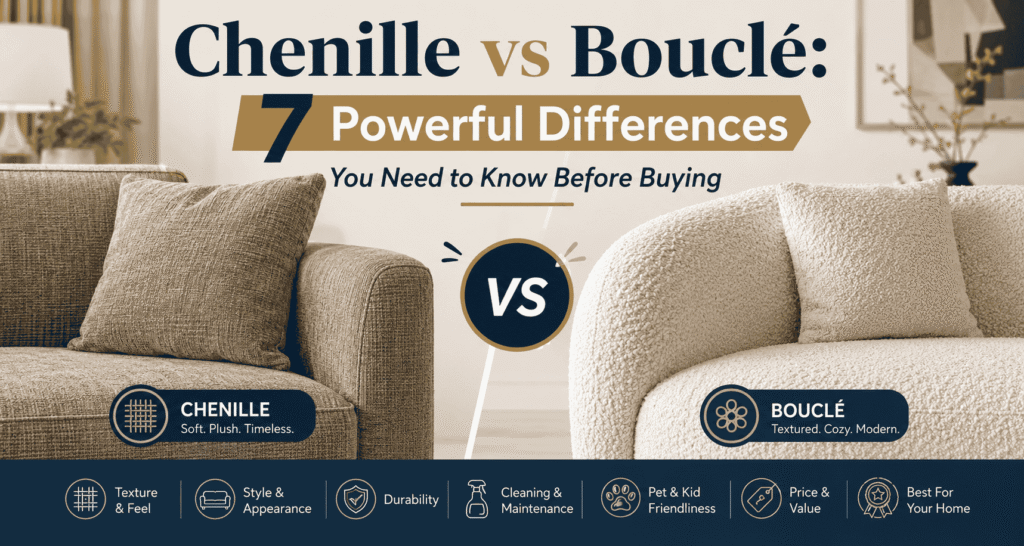
When selecting a new sofa, the primary consideration is often the choice between chenille and bouclé—determining which fabric is the most suitable for your home. Both materials have surged in popularity over the last few years, but they look, feel, and perform in very different ways.
Chenille is prized for its soft, velvety surface and classic versatility. Bouclé, on the other hand, has become the fabric of the moment thanks to its curly, textured loops and designer-inspired look. The right choice for your living room depends on several practical factors—durability, ease of cleaning, comfort, overall appearance, how your pets and kids will treat the fabric, and, of course, your budget.
In this guide, we’ll break down the real differences between chenille and bouclé sofa fabric so you can buy with confidence instead of guesswork. For a broader look at fabric options beyond these two, check out our Sofa Materials Explained guide, or read How to Choose the Right Sofa Material before you commit to either option.
Table of Contents
Chenille vs Bouclé at a Glance
| Feature | Chenille | Bouclé |
|---|---|---|
| Texture | Soft and velvety | Looped and nubby |
| Appearance | Smooth, plush look | Curly, textured look |
| Comfort | Very comfortable | Cozy and tactile |
| Durability | Generally good | Depends heavily on construction |
| Cleaning | Relatively straightforward with proper care | Can require more attention |
| Pet friendliness | Depends on weave and color | Loops may catch claws |
| Family use | Good with the right performance fabric | Better with careful fabric selection |
| Style | Classic and versatile | Modern and designer-inspired |
| Maintenance | Moderate | Moderate to high |
| Best for | Everyday comfort | Texture and visual impact |
If you want a deeper technical breakdown of how these materials are woven, see our Fabric Sofa Material article.
What Is Chenille Sofa Fabric?
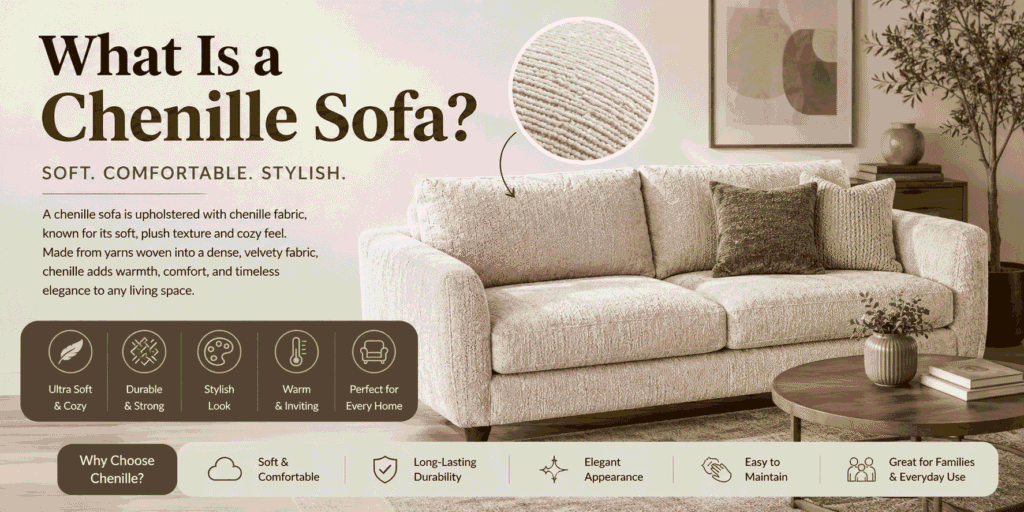
Chenille gets its name from the French word for “caterpillar”—a nod to the fuzzy, textured yarn used to create it. Rather than being a single fiber type, “chenille” refers to a manufacturing technique: short pile fibers are twisted around a core thread, creating a soft, slightly raised surface that catches light differently depending on the viewing angle. That’s why chenille sofas often appear to shift in shade as you walk past them.
This construction is what gives chenille its signature plush, almost velvet-like hand feel. It feels pleasant against bare skin, hangs well over cushions, and has a warm, inviting look that works in both casual and formal living rooms.
Not all chenille is created equal, though. The fiber content — whether it’s cotton, polyester, olefin, or a blend — has a major impact on how the fabric performs over time. Polyester and olefin chenille blends tend to resist fading and wear better than natural-fiber versions, which is worth keeping in mind if you’re shopping for a family sofa. To compare chenille against other popular options, take a look at our guides on Polyester Sofa Material, Microfiber Sofa Material, and Velvet Sofa Material.
What Is Bouclé Sofa Fabric?
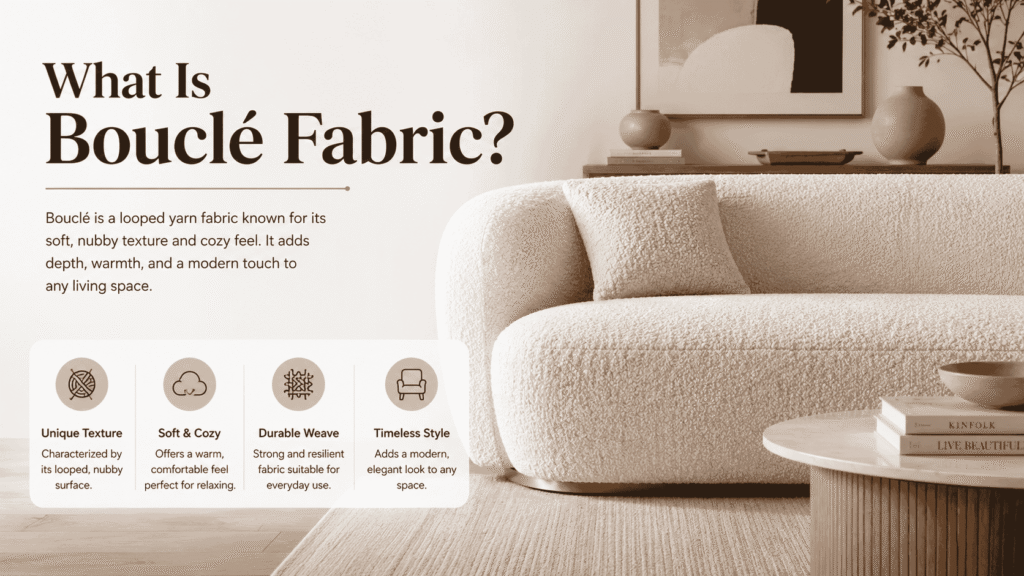
Bouclé (French for “curled” or “buckled”) is defined by its looped yarn construction. Instead of lying flat, the yarn is spun with small, irregular loops that create a bumpy, textured surface—often compared to sheep’s wool or popcorn. This is what gives bouclé sofas their unmistakable, tactile look.
Bouclé has exploded in popularity in contemporary furniture design, largely because it adds visual and physical texture to a room without relying on bold color or pattern. It photographs beautifully, which has helped fuel its rise on social media and in interior design content, but it also has real functional differences compared to smoother fabrics like chenille.
Because the loops sit slightly proud of the fabric surface, the tightness and density of that loop construction matters enormously for how the fabric holds up. A densely woven, well-constructed bouclé will perform very differently from a loosely looped, budget version. For related reading, see our Bouclé Sofa Material guide, our roundup of Luxury Sofa Materials, and our direct comparison of Velvet vs. Bouclé.
Chenille vs Bouclé: 7 Key Differences That Actually Matter
1. Texture and Feel
This is the most obvious difference between the two fabrics. Chenille has a smooth, soft, almost fuzzy surface that feels similar to a plush blanket—comfortable against bare skin and pleasant to sink into. Bouclé, by contrast, has a bumpy, looped texture that feels more textured and structured, closer to a nubby wool sweater.
If you want a sofa that feels soft and soothing to the touch, chenille generally wins. If you’re drawn to a more tactile, textural surface that adds visual interest as much as physical comfort, bouclé has the edge.
2. Appearance and Style
Chenille tends to read as classic and versatile. Its smooth, plush surface works well in traditional, transitional, and even some modern spaces, and it’s available in a huge range of colors and patterns.
Bouclé leans contemporary. Its curly texture has become closely associated with modern and designer-inspired interiors, mid-century-adjacent silhouettes, and minimalist color palettes (think cream, oatmeal, and soft neutrals). If your living room already has a modern aesthetic, bouclé can act as a statement piece. If your space is more classic or transitional, chenille is usually the safer visual match.
3. Durability
Durability is where fabric name matters less than most people assume. Both chenille and bouclé can be highly durable or surprisingly fragile—it all comes down to fiber composition, weave density, and how well the sofa is constructed underneath the fabric.
Generally speaking, tightly woven chenille with a synthetic fiber blend holds up very well to daily sitting and friction. Bouclé’s durability depends heavily on how securely the loops are anchored; loosely constructed bouclé can pill, flatten, or snag more easily than a well-made chenille.
The takeaway: don’t choose based on the fabric name alone. Always check the manufacturer’s abrasion rating (measured in double rubs) before buying either fabric.
4. Cleaning and Maintenance
Chenille is generally considered easier to maintain for everyday spills, since its flatter surface allows liquid to be blotted before it soaks in. Bouclé’s looped texture can trap crumbs, dust, and spilled liquids more easily, which sometimes means more frequent and careful cleaning.
For both fabrics, the golden rule is the same: treat spills immediately, always follow the manufacturer’s cleaning code (W, S, WS, or X), and avoid aggressive scrubbing, which can damage fibers and push stains deeper into the weave. For a full walk through of safe techniques, see our Ultimate Guide to Sofa Cleaning at Home. Bob Vila’s upholstery cleaning guide is also a useful second reference for nap fabrics like chenille.
5. Pet and Kid Friendliness
This is one of the most practical differences for many households. Bouclé’s loops can be more vulnerable to snagging from pet claws, which is worth considering if you have an active cat or dog. Chenille’s smoother surface tends to resist claw snags better, though it can still show wear over time depending on construction.
For families with young children, both fabrics can work well — but performance-rated, stain-resistant treatments matter more than the base fabric type. Darker colors and subtle patterns also help hide everyday marks on either fabric. For more household-specific advice, see our related guide on the Best Sofa Fabric for Families.
6. Comfort and Everyday Use
Both fabrics are comfortable, but in different ways. Chenille’s soft, dense surface feels warm and cozy, making it a popular choice for sofas meant for lounging and long movie nights. Bouclé feels textured and cozy in a different sense—more like wrapping yourself in a nubby sweater than sinking into velvet.
Keep in mind that comfort isn’t only about the fabric—cushion fill, foam density, and frame construction play a huge role too. Fabric choice affects how the surface feels, while the internal build determines how supportive and comfortable the sofa is over years of use. Our guide on How to Choose the Right Sofa Material covers this distinction in more depth.
7. Price and Overall Value
Prices for both chenille and bouclé sofas vary widely, and the fabric name alone doesn’t determine cost. What actually drives price includes fiber quality, weave tightness, any added performance treatments (like stain resistance or fade resistance), and the reputation of the manufacturer.
Bouclé is often marketed at a premium due to its current design popularity, but that doesn’t automatically mean better durability or comfort. Chenille, being a longer-established fabric category, is available across a wider range of price points, from budget-friendly to high-end. When comparing options, focus less on the fabric name and more on construction quality and warranty coverage.
Chenille vs. Bouclé for Different Types of Homes
Best for Families With Children Look for a performance-rated fabric with strong stain resistance and an easy-clean cleaning code, since spills are inevitable. Durability under daily wear-and-tear matters more here than texture or trend.
Best for Homes With Pets Consider your pet’s specific behavior. A cat that scratches furniture will likely do more damage to bouclé’s exposed loops than to chenille’s smoother surface. A dog that sheds heavily might show more visible hair on a textured bouclé surface than on a flatter chenille weave.
Best for High-Traffic Living Rooms Prioritize abrasion resistance and tight, dense construction over fabric name. Ask for the double-rub rating before buying either fabric, since this number tells you far more about longevity than whether the fabric is labeled chenille or bouclé.
Best for Minimalist Interiors Bouclé’s strong, curly texture can act as a design feature on its own, adding depth to a room that otherwise relies on neutral tones and simple lines.
Best for Classic Interiors: Chenille’s plush, smooth appearance complements traditional furniture silhouettes and pairs naturally with classic color palettes and patterns.
Which Is More Durable: Chenille or Bouclé?
In most cases, a well-constructed, densely woven chenille edges out a loosely woven bouclé in long-term durability—but a high-quality, tightly looped bouclé can match or exceed a poorly made chenille.
Durability ultimately comes down to weave density, fiber type, abrasion resistance, fabric density, and manufacturing quality — not the fabric category by itself. Cushion usage patterns matter too: a sofa that sees heavy daily use will wear faster regardless of fabric type if the underlying construction is weak. The safest approach is to compare abrasion ratings and fiber composition side by side rather than assuming one fabric name guarantees a longer lifespan.
Which Is Easier to Clean?
For everyday dust and light debris, chenille’s flatter surface is generally easier to wipe down or vacuum. Bouclé’s loops can trap dust and crumbs more easily, requiring more frequent vacuuming with a soft brush attachment.
For liquid spills and food stains, both fabrics benefit from immediate blotting (never rubbing) and adherence to the manufacturer’s cleaning code. Deep cleaning and professional upholstery cleaning are recommended periodically for both fabrics, especially in high-traffic households. Always check the tag for the specific cleaning code before using any cleaning product. Our Ultimate Guide to Sofa Cleaning at Home and our stain-removal resource walk through the process step by step. Homes & Gardens’ upholstery cleaning guide is a solid external reference if you want manufacturer-agnostic cleaning tips.
Which Is Better for Pets?
There’s no universal winner here—it depends heavily on your specific pet’s behavior. Bouclé’s exposed loops are more prone to claw snagging, which can be a real concern for households with cats that scratch furniture. Chenille’s smoother, denser surface tends to resist snagging better, though heavy-shedding pets may still leave visible hair embedded in either fabric.
Practical steps that help regardless of fabric choice: trim your pet’s nails regularly, use washable throws over high-contact areas, and choose a tightly constructed, performance-rated upholstery fabric designed to resist pet-related wear.
Which Is Better for Families With Kids?
Both fabrics can work for families, but the deciding factors are spill resistance, stain visibility, and how easy the fabric is to clean day to day. A performance-treated chenille or bouclé with a darker or patterned finish will generally hide everyday marks better than a light, untreated fabric of either type. For more detail, see our family-focused sofa fabric guide.
Chenille vs. Bouclé: Pros and Cons
Chenille Pros
- Soft, plush feel
- Classic, versatile appearance
- Comfortable for everyday seating
- Wide range of color and pattern options
- Generally easier to spot-clean
Chenille Cons
- Can show crushing or matting depending on construction
- Some versions require careful, gentle cleaning.
- Quality varies significantly between manufacturers.
Bouclé Pros
- Distinctive, eye-catching texture
- Modern, designer-inspired appearance
- Cozy, tactile feel
- Makes a strong style statement
- Excellent fit for contemporary interiors
Bouclé Cons
- Loops can be vulnerable to snagging, especially with pets.
- A textured surface can make cleaning more time-consuming.
- Not every bouclé is suited to heavy daily use.
How to Choose Between Chenille and Bouclé
Choose chenille if you prioritize the following:
- Softness and everyday comfort
- A versatile look that fits multiple design styles
- A classic, plush appearance
- Simpler day-to-day cleaning
Choose bouclé if you prioritize:
- Visual and physical texture
- A contemporary, statement-making look
- A cozy, tactile surface
- A design-forward centerpiece for your room
That said, neither fabric should be chosen on style alone. If your household has heavy daily use, active pets, or young children, performance ratings and construction quality should weigh more heavily in your decision than which texture you find more appealing.
What to Check Before Buying a Chenille or Bouclé Sofa
Before you buy, review these details carefully:
- Fiber composition — natural, synthetic, or blended
- Fabric construction — weave tightness and loop density
- Abrasion/wear rating — measured in double rubs
- Cleaning code — W, S, WS, or X
- Colorfastness — resistance to fading from sunlight
- Warranty — what’s covered and for how long
- Cushion quality — foam density and fill type
- Frame construction—hardwood vs. particleboard
- Manufacturer care instructions — specific dos and don’ts
- Return policy — especially important for online purchases
For a complete walkthrough of these factors, see our full sofa buying guide.
Chenille vs. Bouclé: Which One Should You Choose?
- Best for softness: Chenille
- Best for texture: Bouclé
- Best for classic style: Chenille
- Best for modern style: Bouclé
- Best for pets: Depends on construction and your pet’s specific behavior
- Best for families: A performance-rated fabric should take priority over fabric name.
- Best overall: Depends entirely on your lifestyle, design preferences, and household needs
Frequently Asked Questions
Is chenille better than bouclé for a sofa? Neither fabric is universally “”better”—chenille tends to offer more everyday comfort and easier cleaning, while bouclé offers a distinctive, contemporary texture. The right choice depends on your priorities.
Is bouclé more durable than chenille? Not automatically. Durability depends on weave density, fiber content, and construction quality rather than the fabric name alone.
Is chenille easier to clean than bouclé? Generally yes, since its flatter surface makes spot-cleaning and dust removal simpler. Bouclé’s loops can trap debris more easily.
Is bouclé good for homes with pets? It can be, but the exposed loops are more prone to snagging from claws than chenille’s smoother surface, so pet behavior should factor into the decision.
Is chenille good for families with kids? Yes, especially performance-treated versions with strong stain resistance and an easy-clean rating.
Does bouclé snag easily? Loosely constructed bouclé can snag more easily than tightly woven versions, particularly around pets or sharp objects.
Does chenille attract pet hair? Chenille’s texture can hold onto pet hair somewhat, but generally less than the looped surface of bouclé.
Which fabric feels softer, chenille or bouclé? Chenille is typically softer and smoother to the touch, while bouclé has a bumpier, more textured feel.
Which sofa fabric lasts longer? It depends on construction quality more than fabric type — a well-made version of either fabric can last many years.
Is bouclé worth the extra cost? If you value its distinctive texture and contemporary look, many buyers find it worth the investment—but always weigh cost against construction quality, not just trend appeal.
Can chenille and bouclé sofas be professionally cleaned? Yes, both can typically be professionally cleaned, but always confirm the manufacturer’s cleaning code first to avoid damage.
Which fabric is better for everyday use? Chenille is often considered slightly more practical for daily, heavy use, though a high-quality bouclé can perform just as well.
Final Verdict
When it comes down to chenille vs. bouclé, the decision isn’t about which fabric is objectively superior—it’s about which one matches your lifestyle and design goals. Chenille delivers softness, plush comfort, and timeless versatility. Bouclé delivers striking texture, visual character, and a contemporary edge.
Whichever direction you lean, remember that fiber content, fabric construction, performance rating, and care requirements often matter more for long-term satisfaction than the fabric name alone. Take the time to check the details before you buy, and you’ll end up with a sofa that looks great and holds up for years to come.
Additional External Resources
If you’d like to go deeper on fiber science, upholstery care, or fabric durability standards before you buy, these are worth a look:
- Textile Exchange — an independent, industry-wide resource for fiber and raw-material education, useful if you want to understand the composition behind synthetic vs. natural chenille and bouclé blends.
- Bob Vila: How to Clean Upholstery — a detailed, step-by-step walkthrough for cleaning napped fabrics like chenille without damaging the pile.
- Homes & Gardens: How to Clean Upholstery — general, manufacturer-agnostic guidance on treating spills and stains across different upholstery types, including textured fabrics like bouclé.
- Ningbo MH: Best Upholstery Fabrics — a practical overview of how different upholstery fabrics compare on durability, style, and price, useful context beyond just chenille and bouclé.
Further reading: Sofa Materials Explained · How to Choose the Right Sofa Material · Chenille Sofa Material · Bouclé Sofa Material · Velvet vs Bouclé · Microfiber Sofa Material · Polyester Sofa Material · Ultimate Guide to Sofa Cleaning at Home