
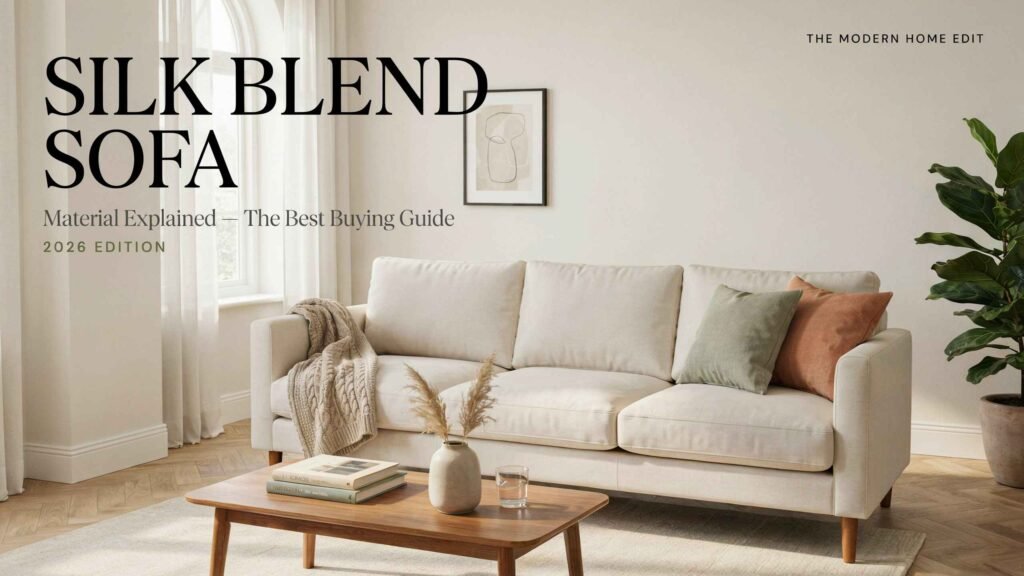
Introduction
If you love the look of a silk sofa but worry about its durability and upkeep, silk-blend sofa material might be exactly what you’re looking for. Silk blends combine the luxurious sheen and soft drape of real silk with more practical fibers like polyester, cotton, or viscose, giving you a fabric that looks elevated without the fragility of pure silk.
Choosing the right upholstery fabric is one of the most important decisions you’ll make when furnishing a living room, and silk blends have quietly become one of the more popular “best of both worlds” options for shoppers who want luxury without constant babying. For a broader look at how different textiles compare before committing to one, our guide on Sofa Materials Explained is a useful starting point.
In this guide, we’ll break down exactly what silk blend sofa material is, how it’s made, how it compares to pure silk and other popular upholstery fabrics, its pros and cons, real-world durability, cost expectations, and how to properly care for it so your sofa stays beautiful for years.
Table of Contents
1. What Is Silk Blend Sofa Material?
Silk-blend sofa material is an upholstery fabric that combines natural silk fibers with one or more secondary fibers—typically polyester, cotton, wool, or viscose—to create a textile that keeps much of silk’s signature softness and luster while gaining the strength and practicality of the blended fiber. The silk content in these blends can vary widely, from a small accent percentage to a majority share, depending on the intended use and price point, which is why “silk blend” sofas can differ quite a bit in feel and cost from one brand to another.
Unlike fully synthetic fabrics, silk blend upholstery is prized specifically for the way light reflects off the fabric surface, creating a subtle shimmer that’s difficult to replicate artificially. This is a major reason interior designers often reach for it in formal or statement seating.
2. How Silk Blend Fabric Is Made
Silk blend fabric is created by weaving or knitting silk fibers together with a secondary fiber. Manufacturers deliberately choose these secondary fibers to solve specific weaknesses inherent in pure silk, such as its tendency to stretch, fade, and develop water spots. For sofa upholstery specifically, manufacturers often favor silk-polyester or silk-cotton blends because these combinations hold color well, resist wrinkling, and offer better structural strength for a piece of furniture that will see daily use.
The weaving technique also matters. A tighter, denser weave generally produces a more durable fabric, while a looser weave prioritizes drape and softness over long-term resilience. When shopping, it’s worth asking the retailer or checking the product spec sheet for both the fiber ratio and the weave density.
3. Silk Blend vs Pure Silk
| Feature | Silk Blend | Pure Silk |
|---|---|---|
| Texture | Soft, slightly less luxurious sheen | Ultra-soft, most luxurious feel |
| Durability | Higher | Lower, delicate |
| Stain Resistance | Moderate | Low |
| Fade Resistance | Better | Prone to fading in sunlight |
| Cost | Mid-range | High |
| Maintenance | Easier | Requires professional care |
| Best For | Everyday elegant living rooms | Low-traffic, formal spaces only |
Pure silk is a beautiful but genuinely delicate material. One approach owners use to preserve silk upholstery is regularly rotating and flipping cushions, which helps any yellowing or fading happen more evenly and makes it less noticeable over time. Silk blend sofa material solves many of these issues by adding a more resilient fiber into the weave, making it a far more practical option for most households that still want a touch of that silk elegance.
For general fabric buying advice that applies across silk and non-silk upholstery alike, resources like Consumer Reports’ furniture buying guide offer helpful independent testing insights worth reviewing before a large furniture purchase.
4. Silk Blend vs. Other Sofa Fabrics
If you’re comparing silk blends to other popular sofa materials, here’s how they generally stack up:
- Silk Blend vs. Velvet—Velvet offers a plusher, deeper pile texture, while silk blend has a smoother sheen and lighter drape. If you’re still deciding between plush options, our dedicated guide on velvet sofa material breaks down how velvet performs on its own, and our velvet vs. polyester sofa comparison covers how it stacks up against a common synthetic alternative.
- Silk Blend vs. Bouclé—Bouclé has a looped, textured surface that leans casual and cozy, while silk blend leans polished and formal. See our Bouclé Sofa Material guide for a closer look at that texture-driven fabric.
- Silk Blend vs. Linen—Linen is a breathable, natural-feeling fabric with a relaxed, matte look, in contrast to silk blend’s smoother sheen. Our linen sofa material guide covers its own strengths and care needs in detail.
- Silk Blend vs. Microfiber – Microfiber is significantly more stain-resistant and budget-friendly, making it better suited for high-traffic family rooms, while a silk blend leans more toward formal or accent seating. You can read more in our Microfiber Fabric for Sofa guide.
- Silk Blend vs. Leather – Leather, particularly top-grain leather, offers far greater long-term durability, while a silk blend offers a softer, more textile-forward aesthetic that leather can’t replicate.
For broader inspiration on how different upholstery fabrics look in styled rooms, HGTV’s decorating and upholstery tips are a good visual reference point.
5. Pros of Silk Blend Sofa Material
1. Elegant, Luxurious Appearance Silk blend fabric retains much of silk’s natural sheen, giving sofas an upscale, polished look that instantly elevates a room.
2. More Durable Than Pure Silk The added fiber strengthens the weave, making it more resistant to everyday wear than 100% silk.
3. Better Fade Resistance Blended fibers help reduce the fading and yellowing that pure silk is prone to under sunlight exposure.
4. More Affordable Than Pure Silk: Silk-blend sofas typically cost less than pure-silk upholstery while still offering a similar aesthetic.
5. Smoother, Lightweight Feel Compared to heavier fabrics like velvet or chenille, silk blends offer a lighter, more fluid drape that photographs beautifully and pairs well with both traditional and modern interiors.
6. Versatile Styling Because of its subtle shimmer, a silk blend can work as a silk statement piece in a minimalist room or blend into a more maximalist, layered design.
For more on how premium fabrics compare across the board, our roundup of Luxury Sofa Materials covers silk blends alongside other high-end options like top-grain leather and genuine velvet.
6. Cons of Silk Blend Sofa Material
1. Still Less Durable Than Synthetic Fabrics Even with a blended fiber, silk-blend sofas generally can’t match the toughness of fully synthetic options like polyester or microfiber.
2. Requires Gentle Cleaning: Silk-blend fabric still needs more careful handling than everyday fabrics, especially when it comes to spills.
3. Not Ideal for Heavy Daily Use It’s better suited to formal living rooms or lower-traffic spaces rather than a family room used constantly by kids or pets.
4. Can Be Harder to Find Compared to widely available fabrics like polyester or microfiber, silk blend sofas may be a more niche offering from select furniture brands.
5. Sensitive to Sunlight While more fade-resistant than pure silk, silk blends can still lose some vibrancy over years of direct sun exposure, so placement in the room matters.
7. Durability and Lifespan
A well-maintained silk blend sofa can last 8 to 15 years, depending on the blend ratio, quality of construction, and how much daily use it receives. Sofas with a higher percentage of a durable secondary fiber, like polyester, will generally hold up longer than blends that lean more heavily toward pure silk content. Frame quality, cushion fill, and how well the piece is cared for over time also play a significant role in overall lifespan, independent of the fabric itself.
8. How Much Does a Silk Blend Sofa Cost?
Silk-blend sofas typically fall into the mid-to-upper price range, sitting above budget fabrics like polyester or basic microfiber but below pure silk or premium full-grain leather. Exact pricing varies by brand, blend ratio, frame construction, and cushion fill, so it’s worth comparing multiple retailers and asking specifically about the fiber composition before assuming a “silk” label reflects true silk content. Independent buying guides such as The Spruce’s upholstery fabric guide can help set realistic price expectations across fabric categories.
9. How to Clean and Care for a Silk Blend Sofa
- Check the cleaning code on the manufacturer’s tag before attempting any cleaning method.
- Blot spills immediately rather than rubbing, which can damage the delicate fibers.
- Avoid harsh detergents — enzymatic cleaners should never be used on silk-based upholstery, since silk is a protein fiber that reacts poorly to these substances.
- Keep out of direct, prolonged sunlight to minimize fading over time.
- Rotate cushions regularly to distribute wear and light exposure evenly.
- Consider professional cleaning for deep stains or heavily soiled areas, since improper home cleaning can permanently damage the fabric.
For a broader look at natural, at-home upholstery cleaning techniques for everyday fabric sofas, see our guide on how to clean a sofa at home naturally. Note that silk blend fabrics require gentler handling than the general methods described there. Good Housekeeping’s furniture care advice is another solid resource for general upholstery maintenance tips that apply broadly across fabric types.
10. Is Silk Blend Sofa Material Right for Families and Pets?
Silk blend sofas are generally better suited to formal living rooms, adult spaces, or low-traffic areas rather than busy family rooms. Because the fabric is more delicate than fully synthetic alternatives, households with young children, pets, or frequent guests may find a performance fabric like microfiber or polyester a more practical everyday choice, reserving a silk blend piece for a more curated, lower-use space such as a formal sitting room or reading nook.
11. Silk Blend in Different Interior Styles
Silk blend fabric adapts well across several design aesthetics:
- Modern Luxe – Pairs beautifully with clean lines, metallic accents, and a neutral color palette.
- Traditional & Classic – Complements ornate furniture details and rich, jewel-toned color schemes.
- Transitional – Bridges modern and classic elements without feeling overly formal.
- Minimalist – A single silk blend accent chair or sofa can add subtle texture without overwhelming a pared-back room.
(Suggested image: mood board showing silk blend sofas styled across different interior design themes)
12. Common Myths About Silk Blend Fabric
Myth: “Silk blend” always means mostly silk. In reality, the silk percentage can be quite low in some blends, with the bulk of the fabric made from a secondary fiber. Always check the label.
Myth: A silk blend is as delicate as pure silk. While it still requires gentle care, a silk blend is meaningfully more durable and stain-resistant than 100% silk fabric.
Myth: a silk-silk blend sofa is extremely expensive. Pricing varies widely based on blend ratio and brand — many silk blend options are more accessible than pure silk or premium leather.
13. Buying Guide: What to Look for Before You Purchase
- Check the fiber content label to see the exact silk percentage and secondary fiber used.
- Ask about the cleaning code (W, S, WS, or X) so you know how to maintain it long-term.
- Consider the room’s traffic level before committing to a silk blend over a more durable fabric.
- Look for reputable manufacturers who disclose blend ratios transparently rather than vague “silk-like” marketing terms.
- Factor in professional cleaning costs as part of the sofa’s long-term maintenance budget.
- Test the fabric in person when possible, since photos can’t always convey how the sheen and drape will look in your specific lighting.
For more general reference on caring for delicate silk-based textiles in the home, resources like Fiber-Seal’s silk care guide and Better Homes & Gardens’ furniture care tips offer helpful, in-depth maintenance guidance beyond furniture alone.
Frequently Asked Questions
What is silk-blend sofa material made of? Silk blend sofa material combines natural silk fibers with a secondary fiber, commonly polyester, cotton, or viscose, to improve durability, fade resistance, and affordability compared to pure silk.
Is silk blend sofa fabric durable? Silk blend is more durable than pure silk but generally less durable than fully synthetic fabrics like polyester or microfiber, making it best suited for lower-traffic, formal spaces.
How do you clean a silk blend sofa? Check the manufacturer’s cleaning code first, blot spills immediately, avoid enzymatic or harsh detergents, and consider professional cleaning for deep stains.
Is a silk blend better than pure silk for a sofa? For most households, yes—a silk blend offers a similar elegant look with better durability, fade resistance, and easier maintenance than 100% silk upholstery.
Is silk-blend sofa material good for families with kids or pets? It’s generally better suited to formal or low-traffic spaces rather than heavy daily family use, where a more durable fabric like microfiber or polyester would hold up better.
How long does a silk blend sofa last? With proper care, a silk blend sofa typically lasts 8 to 15 years, depending on the blend ratio, construction quality, and usage level.
Does silk blend fabric fade in sunlight? It’s more fade-resistant than pure silk, but extended direct sunlight exposure can still cause gradual fading, so placement away from harsh light is recommended.
Is silk blend fabric expensive?
Silk blend sofas typically fall in the mid-to-upper price range — more affordable than pure silk, but pricier than basic polyester or microfiber, depending on the exact blend ratio and brand.
What is the difference between silk blend and silk polyester blend?
“Silk blend” is a general term for silk combined with any secondary fiber, while “silk polyester blend” specifically refers to silk woven with polyester, one of the most common and durable combinations used in sofa upholstery.
Can silk blend sofas be used in a sunny room?
It’s best to avoid placing a silk blend sofa in direct, prolonged sunlight, since even blended fabrics can gradually fade or lose their sheen over time with heavy UV exposure.
Does silk blend fabric pill over time?
Pilling is less common in silk blends compared to pure silk, especially when blended with polyester, but lower-quality blends with a looser weave may still show some pilling with heavy use.
Is silk blend sofa material machine washable?
No, silk blend upholstery is not machine washable. It requires spot cleaning, gentle blotting, and often professional cleaning for deeper stains.
What percentage of silk is in a typical silk blend sofa fabric?
This varies by manufacturer, but silk content in blended upholstery fabrics commonly ranges from around 20% to 50%, with the remainder made up of a more durable secondary fiber.
Is silk blend sofa fabric good for allergy sufferers?
Silk is naturally hypoallergenic and resistant to dust mites, so silk blend fabric can be a reasonably good option for allergy-conscious households, though the secondary fiber’s properties should also be considered.
How do you remove wrinkles from a silk blend sofa?
Light steaming from a safe distance can help relax wrinkles in silk blend fabric, but direct heat or ironing should be avoided, as it can damage the fibers or leave shine marks.
Is silk blend fabric breathable?
Yes, silk blend fabric is generally breathable and doesn’t trap heat the way some heavier synthetic fabrics do, making it comfortable for seating in most climates.
What’s the best furniture style to pair with a silk blend sofa?
Silk blend pairs especially well with modern luxe, traditional, and transitional interior styles, where its subtle sheen can complement both minimalist and richly decorated spaces.
Conclusion
Silk blend sofa material offers a compelling middle ground for anyone who loves the elegance of silk but needs a fabric that can handle real, everyday life a little better. By blending silk with a more resilient fiber, manufacturers create a sofa material that’s more durable, more fade-resistant, and more affordable than pure silk — without completely sacrificing that signature soft sheen. Just keep in mind that it still requires gentler care than fully synthetic fabrics, so it tends to work best in formal or lower-traffic living spaces rather than a high-activity family room.
If you’re weighing it against other materials, our guides on velvet sofa material, bouclé sofa material, linen sofa material, microfiber fabric, and top-grain leather can help you compare options and find the best fit for your home and lifestyle.